Exit the stock rally now as the S&P 500 index could tumble about 22%, according to the chief market strategist at FS Investments.
The benchmark index is up about 8% so far in 2023 on hopes the Federal Reserve will soon end interest-rate increases.
“This is a golden opportunity to use this bear market rally to de-risk in advance of potentially very painful losses over the next six, nine, 12 months,” Troy Gayeski said.
Thanks for signing up!
Access your favorite topics in a personalized feed while you’re on the go.
The stock market is heading for a sharp setback that could see the S&P 500 plunge about 22% over the coming quarters, according to the chief market strategist at FS Investments.
That means investors shouldn’t wait anymore to cash out on this year’s rally in equities, and should start selling their holdings now, Troy Gayeski said during a recent episode of the “What Goes Up” podcast hosted by Bloomberg. “There’s no reason to wait. It’s not like you’re going to leave 10% upside on the table,” he said.
“First of all, the strongest rallies have always been in bear markets,” Gayeski continued.
“Usually they’re driven by technical factors. And then there’s a narrative that’s put together to justify it: the more recent one was that inflation’s going to slow enough that the Fed won’t have to hike anymore, and then we’re going to have a recession and somehow that’s going to cause the Fed to cut rapidly. But recessions aren’t bad for revenue or earnings? It really makes very little sense,” he added.
So far this year, the S&P 500 has advanced about 8%, largely driven by investor hopes that the Federal Reserve will ease up on its tight monetary policy – which is aimed at taming inflation – as it deals with turmoil in the US banking industry.
But like Gayeski, market experts including Jeremy Grantham and Morgan Stanley’s top stock picker Mike Wilson don’t expect the rally to last long. Wilson has warned the S&P 500 is set to tank over 20% later this year due to a looming earnings recession and the fallout from the banking tremors, per Bloomberg.
“We’ve always thought that this bear market would be meaningfully worse than the 2018 correction or some of the shocks we had in the post-Great Financial Crisis period, but not as bad as we had from 2002 and also the financial crisis,” Gayeski said.
“This is a golden opportunity to use this bear market rally to de-risk in advance of potentially very painful losses over the next six, nine, 12 months,” he added.
While not all dogs like belly rubs, many do, says dog behavior expert and VCA Animal Hospitals Licensed Veterinary Technician Laura Pobursky.
“It’s for the same reason humans love a big hug,” she says. “Belly rubs release ‘feel-good’ chemicals in the brain that strengthen the bond between you and your pet.”
What’s does a dog that likes belly rubs look like?
Laura says the belly is a vulnerable and sensitive area for dogs, so offering their bellies can mean many things. It could be a sign of submission or trust — and it’s important to understand the difference.
“A dog offering their belly for a comforting rub will appear at ease and not tense, with a relaxed or wagging tail, their eyes will be wide open, and they may even paw at you to encourage your touch,” she says. “Submissive dogs on the other hand will present their bellies with a tense body and tail, often the tail is curled tight to the body, the eyes are squinted and avoiding direct eye contact with you.”
Does my dog like belly rubs?
Dogs are individuals and while many enjoy belly rubs, not all do. Observe your dog’s body language and look for signs of relaxation — whether it’s on the belly or elsewhere.
“Dogs who enjoy a good belly rub are calmed and relaxed by the touch,” says Laura. “They feel safe and comfortable with you.”
Where do dogs like to be pet?
Most dogs love a good scratch. Dog’s particularly like to be pet or scratched:
around the back near the base of the tail
chest
thighs
head
Are dogs ticklish?
If you’ve ever wondered, the answer is yes. Just like humans, dogs are unique and where they are ticklish varies from dog to dog. Laura says a couple common ticklish areas are the paws and ears.
Hi, I’m Matt Turner, the editor in chief of business at Insider. Welcome back to Insider Today’s Sunday edition, a roundup of some of our top stories.
On the agenda today:
But first: JPMorgan is asking senior managers to be in the office five days a week. I break down the latest on RTO mandates below.
If this was forwarded to you, sign up here. Download Insider’s app here.
This week’s dispatch
Mario Tama/Getty
Construction is currently underway on JPMorgan’s new corporate headquarters in midtown Manhattan, so it should come as no surprise that the bank is planning on having bums on seats to fill it. The company told senior managers this week that they “have to be visible on the floor” in a memo asking managing directors to be in the office five days a week.
The memo also echoed other recent edicts that focus on the importance of IRL interactions in career development.
Killing off projects had become something of a tradition at Kittyhawk, the secretive flying-car startup launched by Larry Page. But when the Google cofounder decided to get more hands-on, what followed was a series of bizarre experiments, ostensibly intended to save the company.
A dozen former Kittyhawk employees told Insider that Kittyhawk found itself torn between the conflicting visions and shifting priorities of its billionaire founder and his handpicked CEO. In the end, the internal chaos proved unsustainable.
For millions of Americans, the past few years have redefined their relationship to money. Gen Z and millennials, in particular, have seen the critical years of their financial lives defined by the shifting sands of the pandemic economy.
Experts say the financial scars of the pandemic era run deep. And as overlapping crises only intensify in the next few decades, the behaviors young people develop around money will stick around.
Each decade brings some turning point in technology that lures college students to a new field — and right now, artificial intelligence is all the rage. Students and recent grads are embracing AI, with many hoping to be an early employee at the next big tech giant.
We spoke with a dozen professors, students, and industry professionals about how companies are raiding college campuses to mine for talent, offering six-figure salaries and unimaginable resources. “The student population is getting cleaned out,” one dean from Cornell said.
A wave of revolutionary weight-loss drugs, which includes the buzzy Ozempic, represents a watershed moment for obesity treatment. But high costs, insurance hurdles, and a surge in demand are keeping the drugs from getting to many of the people who need them.
Doctor offices are overwhelmed by patients asking for the drugs for cosmetic reasons. Celebrities and influencers are raising the drugs’ profile even further. But people who need the treatment the most are stuck in the middle.
The Australian Cattle Dog is a busy, strong-minded herding dog, who needs daily physical and mental exercise. As his name implies, this dog breed was developed in Australia to move cattle long distances and he maintains that rugged work ethic to this day.
How to train an Australian Cattle Dog
Begin training in puppyhood and continue through the life of your dog. Even the Australian Cattle Dogs who live as pets maintain a strong herding drive. His desire to chase animals and moving objects is strong. To help cattle dogs succeed, focus training on:
careful management (keep away from other pets and small children, especially unsupervised by using dog gates or a dog room)
Early and appropriate socialization is a must. Socialization is a key developmental period in a puppy’s life from 5 to 16 weeks. Positive and negative experiences that Australian Cattle Dog puppies have during this time can have an influence on their temperament and behavior for the rest of their lives.
During this period, introduce your Australian Cattle Dog to friendly people, dogs and other animals. This dog breed has a reputation for being very mouthy and nippy especially if someone rushes past them on foot, on a bicycle or skateboard. This behavior comes naturally, so include in your early socialization careful training and exposure to a wide variety of situations and stimuli to desensitize Cattle Dog puppies from these case/herding triggers.
Keep training consistent and positive throughout their lives. Just because the Australian Cattle Dog can have a reputation as a hard or challenging dog breed to train doesn’t mean that they need any kind of harsh training. Australian Cattle Dogs thrive with clear, consistent positive reinforcement training approaches. These dogs are deeply bonded to their people and do best when they have a strong working relationship with their family. They love to learn and thrive in homes where they are being taught new things.
How big does an Australian Cattle Dog get?
Australian Cattle Dogs are also known as Blue, Red or Queensland Heelers. These muscular and compact medium-sized dogs weigh between 35 to 50 pounds and are 17 to 20 inches tall if you measure at the shoulder.
Are Australian Cattle Dogs good with children and other pets?
These dogs are often not a good match for small animals as they may attempt to chase and herd. Australian Cattle Dogs may also be tempted to herd young children. Early training can teach them how to safely engage with kids. Like all dogs, the Australian Cattle Dogs should always be supervised around babies and children.
The best jobs for Australian Cattle Dogs
These dogs need daily rigorous mental and physical exercise and enrichment to be happy and healthy. Smart and active, they will not be satisfied hanging out on the couch or being home alone all day. Australian Cattle Dogs have a big personality in a relatively small package. They were bred to work cattle, who are much larger than they are and maintain the strong working drive they were bred for.
Even if you don’t have cattle to herd (which most of us don’t!), find an alternately engaging job, such as running together, practicing new tricks, playing fetch or helping with tasks around the house. An excellent way to engage and spend time together with your Australian Cattle Dog is to compete in dog sports like:
Australian Cattle Dogs excel in active homes where they can use their bodies and mind. Daily enrichment is a must for these dogs who become bored, depressed and difficult to live with if they aren’t provided with enough mental and physical exercise. They will easily become destructive to entertain themselves.
Need help with your Australian Cattle Dog?
If you’re feeling overwhelmed with your Australian Cattle Dog, don’t hesitate getting professional support. An experienced dog trainer who uses positive-reinforcement training techniques can find ways to provide appropriate work/enrichment for your dog. A trainer can also work through any behavioral issues. Find other Australian Cattle Dog fans at the Australian Cattle Dog Club of America.
Our latest lookbook compiles residential living rooms that have been given an air of playfulness through their use of the three primary colours.
In design, the primary colours are yellow, blue and red. They usually appear in this context as strong cobalt blues, vivid sunshine yellows and intense fire-engine reds.
This trio of colours is prevalent throughout design history and can be seen in paintings by Dutch artist Piet Mondrian and suspended mobiles by American sculptor Alexander Calder.
They are often used when designing products for children due to the visually stimulating nature of their bright, dense hues.
In interior design, they have a similarly invigorating effect, whether applied directly to structural elements such as walls and columns or found in soft furnishings and accessories.
They primary colours help to bring energy into living areas both when used in isolation and when appearing in tandem with one another.
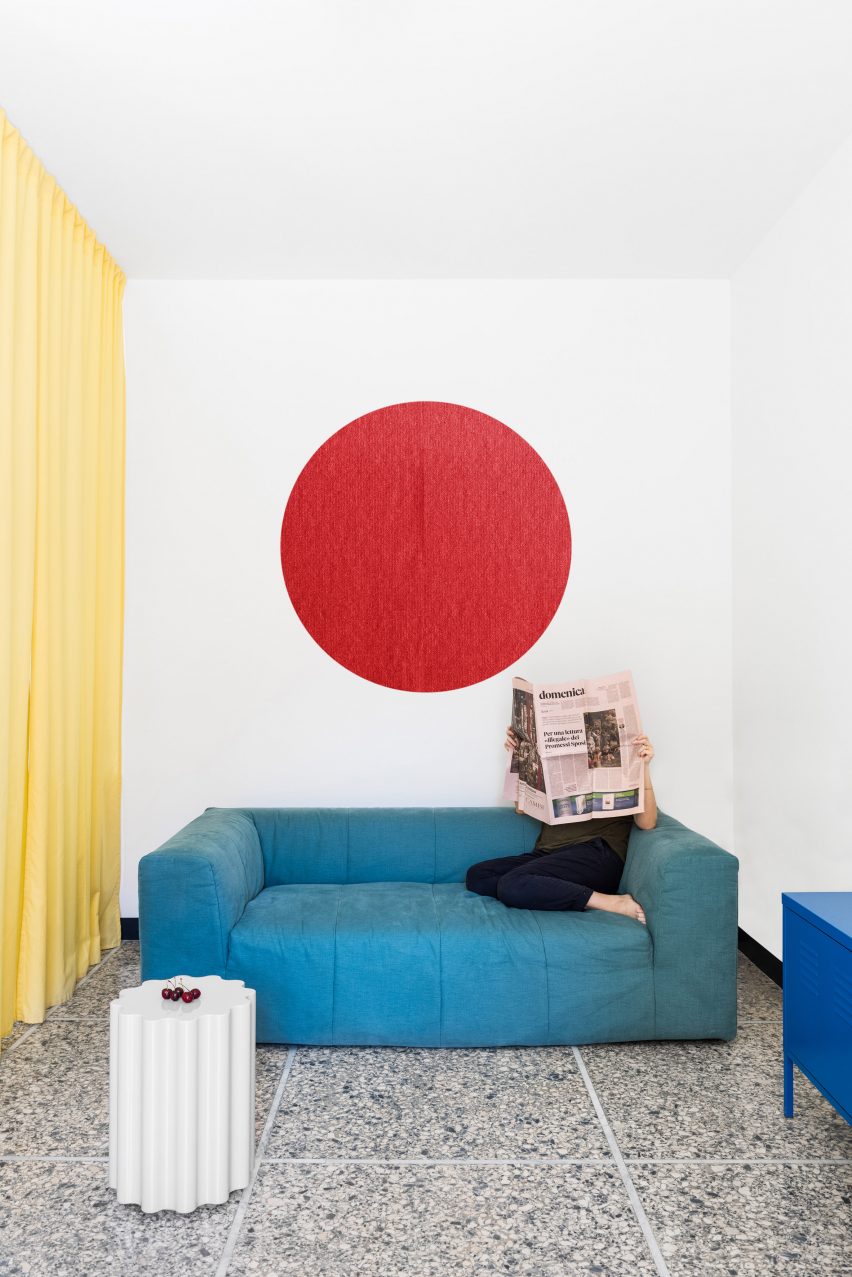
Vibrant pops of blue, yellow and red are set against a neutral backdrop of white walls and terrazzo stone floors in the living room of this mid-century one-bedroom apartment in Rome.
The space represents the distilled interior scheme devised by Italian architecture practice La Macchina Studio that characterises the apartment, which is also home to floor-to-ceiling citrus-toned curtains and bright blue doorways.
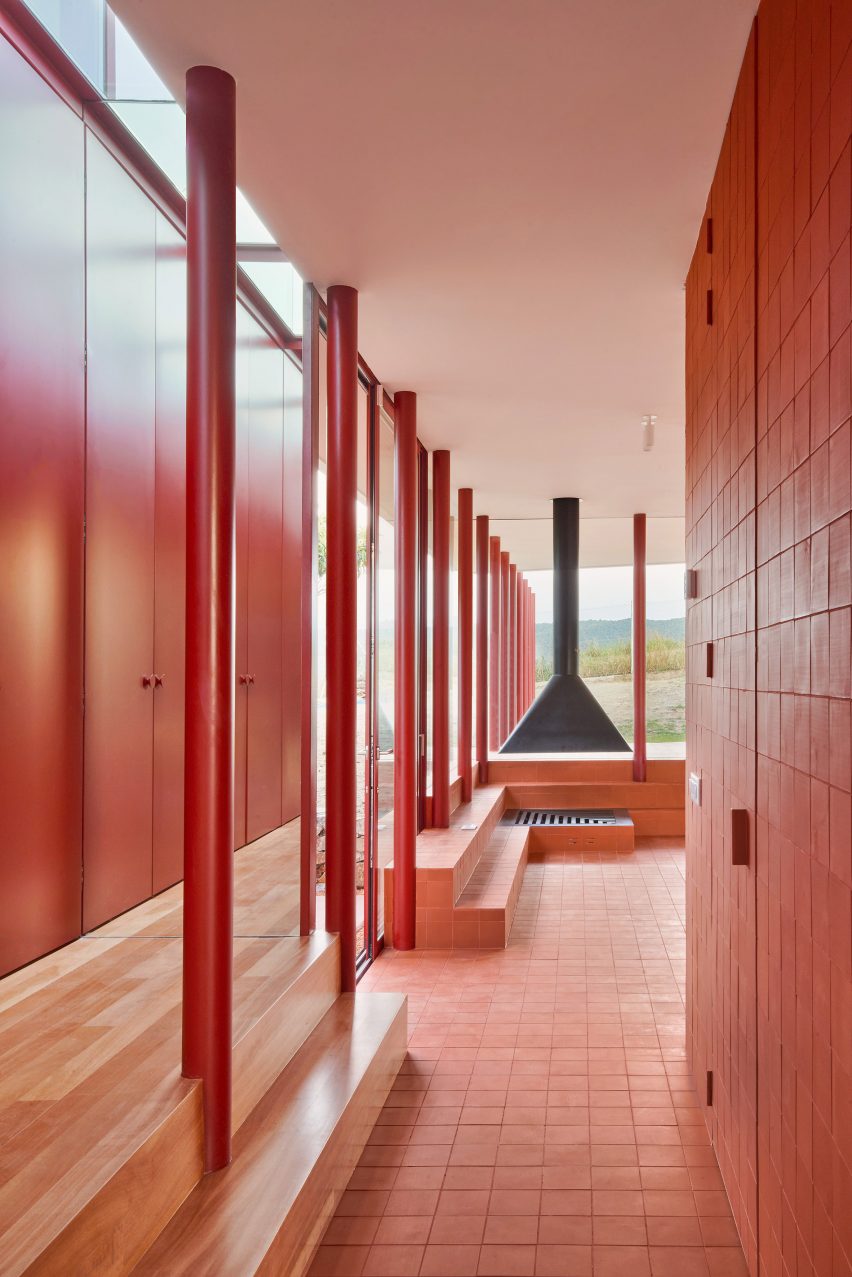
A monochromatic red colour scheme dominates both the exterior and interior of this rural house near Barcelona designed by Spanish design studio Arquitectura-G.
The split-level living space features a rhythm of striking red-painted columns and ceiling-height cupboard doors combined with rosy clay tiles.
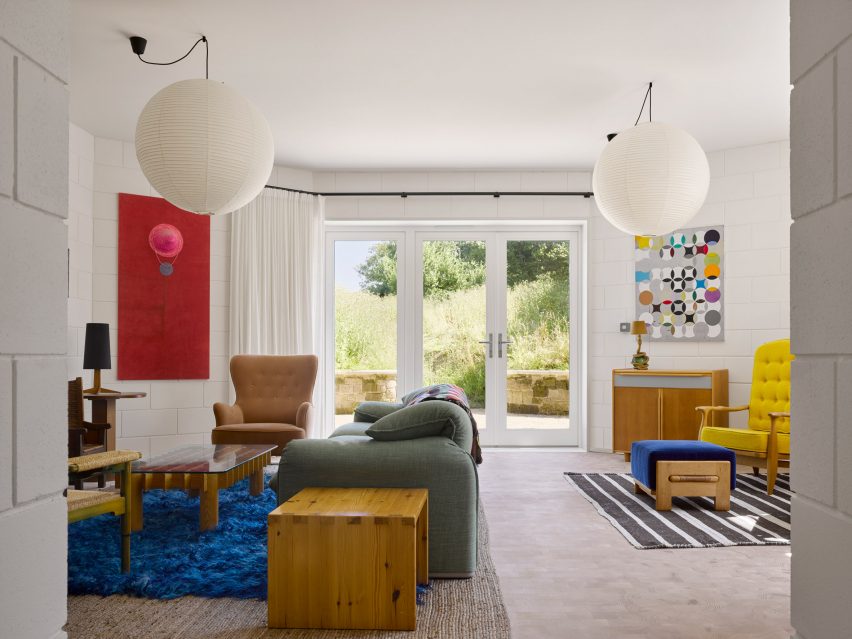
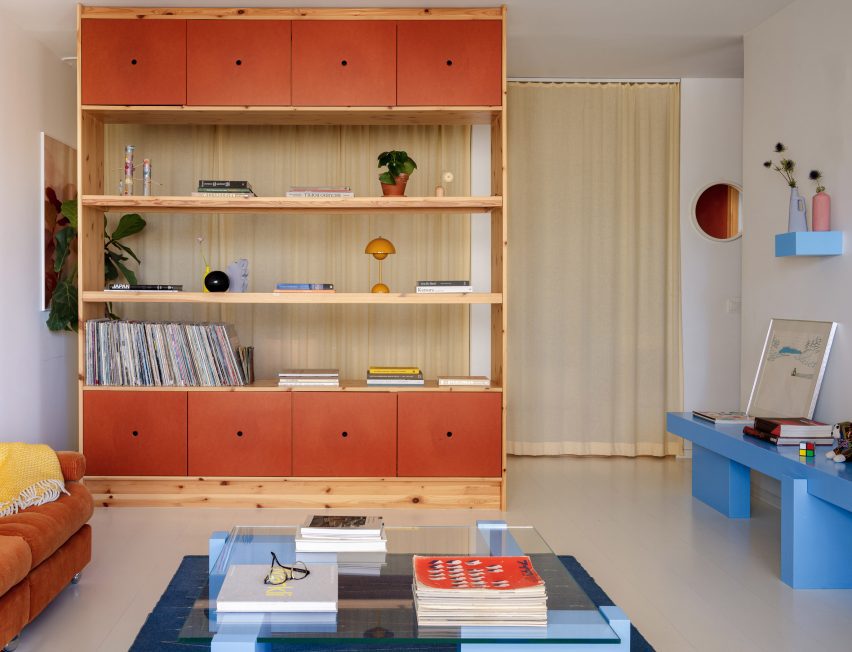
Red House in Dorset, England, was given its name by David Kohn Architects in reference to its red brick facade, however, splashes of the colour also appear throughout its eclectic interior.
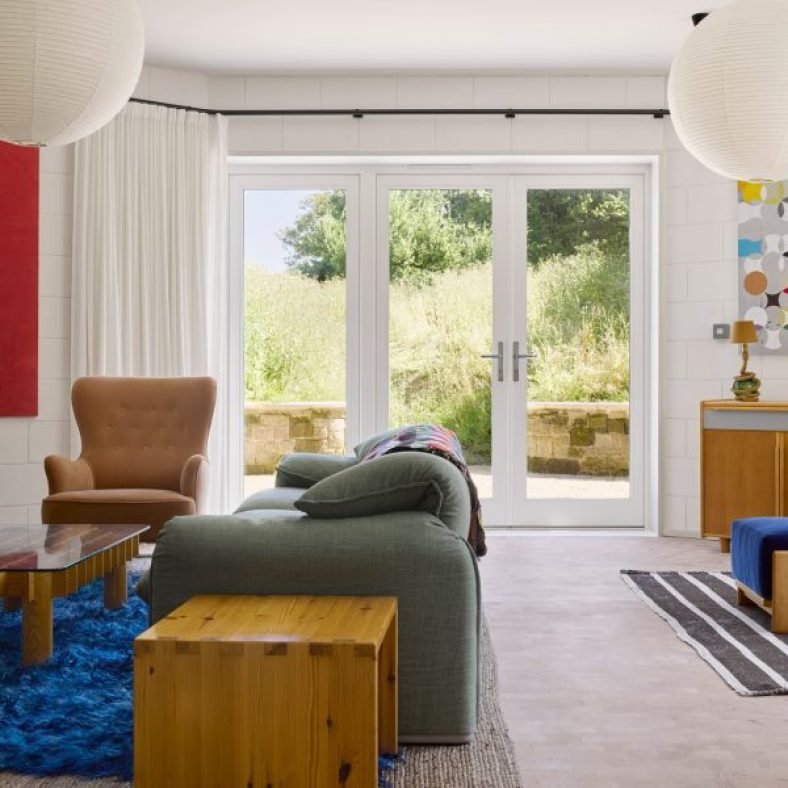
Primary coloured furnishings – including a blue rug and footstool, red wall hanging and yellow upholstered armchair – are dotted around the living space, offset by white-painted cinderblock walls and warm wooden accents.
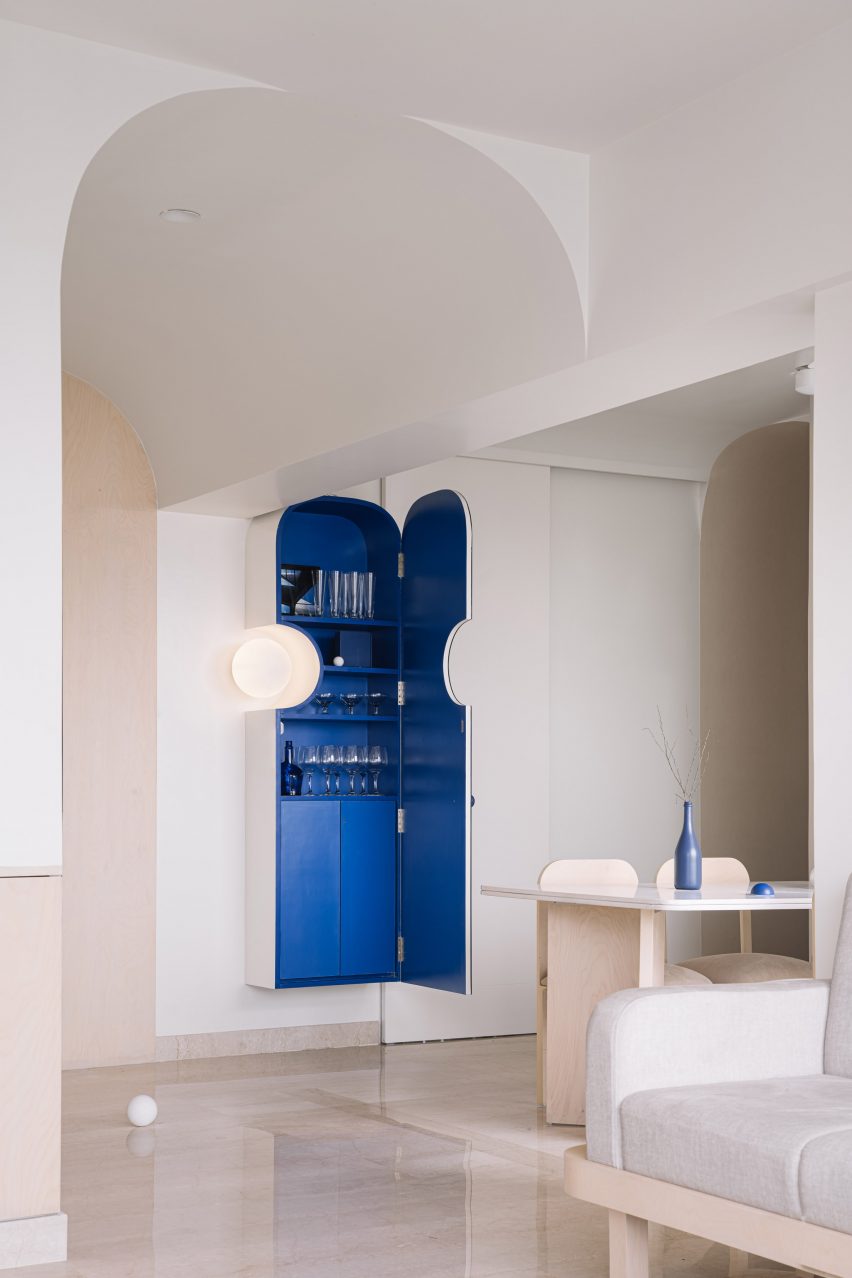
Renovated by Mumbai-based studio The Act of Quad, this apartment in the Indian city of Thane is defined by its consistent use of cobalt blue in an otherwise neutral interior.
Soothing splashes of the colour appear in pieces of bespoke furniture – including hemispherical and spherical inclusions on light fittings and tables – and line the inside of a wall-mounted drinks cabinet.
Blue, yellow and red are seen in both full saturation and muted hues on walls, ceilings, soft furnishings and furniture, creating a colourful yet cohesive interior.
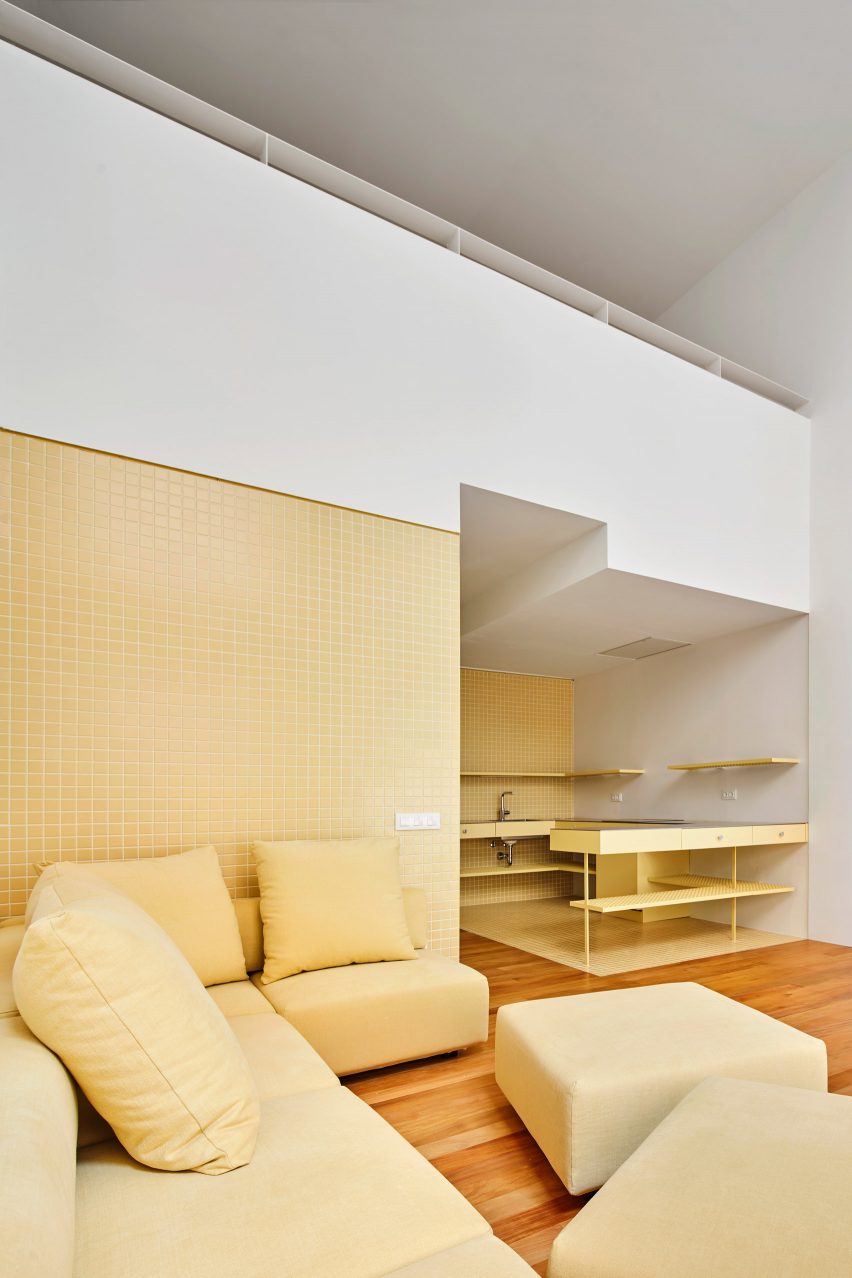
Spanish studio Arquitectura-G used a colour palette governed by shades of yellow in its refurbishment of this apartment in Barcelona.
The living space contains a sunny yellow modular sofa and matching kitchenette, with the spaces united by a backdrop of small golden wall tiles, a honey-coloured wooden floor and white plasterwork.
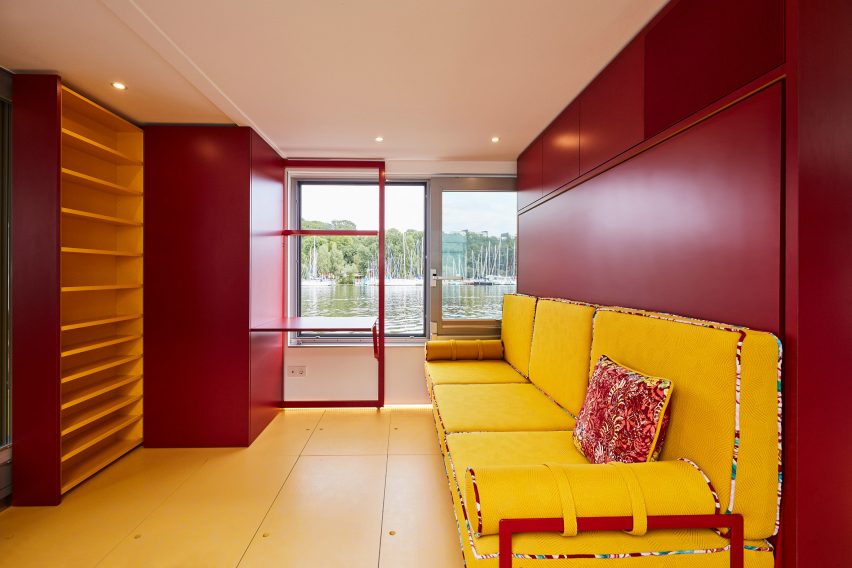
Beijing-based architecture practice Crossboundaries reconfigured the interior of a houseboat moored in Berlin, which features modular furniture and storage solutions all finished in either red or yellow in reference to the Chinese imperial colours.
An adaptable living area onboard contains a lemon-yellow sofa that folds away to support a double bed, as well as a cantilevered desk integrated into a wall panel that can be stowed away when not in use.
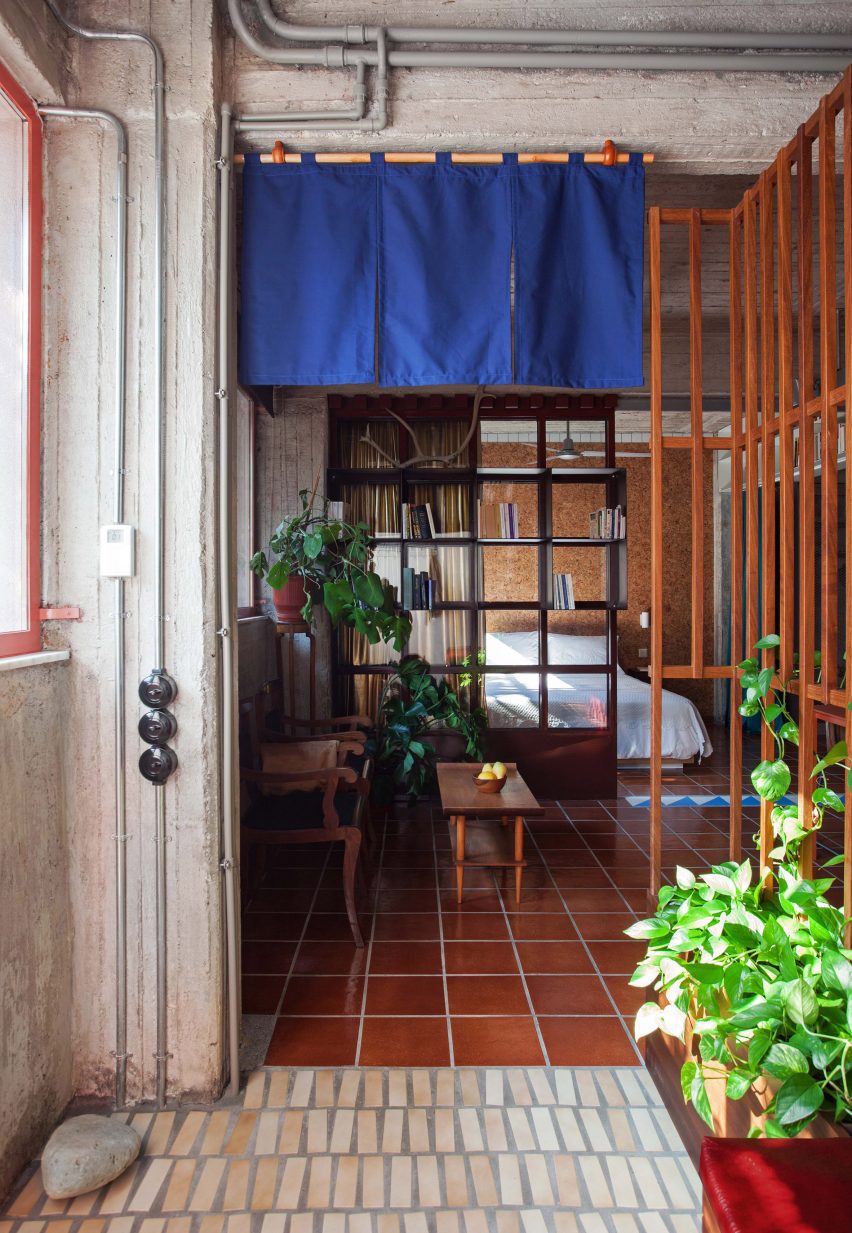
Graphic primary-coloured details are scattered around this 56-square-metre subterranean apartment in Athens renovated by local architecture studio Point Supreme.
The rough concrete walls and ceilings of the small living area are contrasted by red items – including a bench and window panes – as well as a trio of deep blue flags suspended in the entryway.
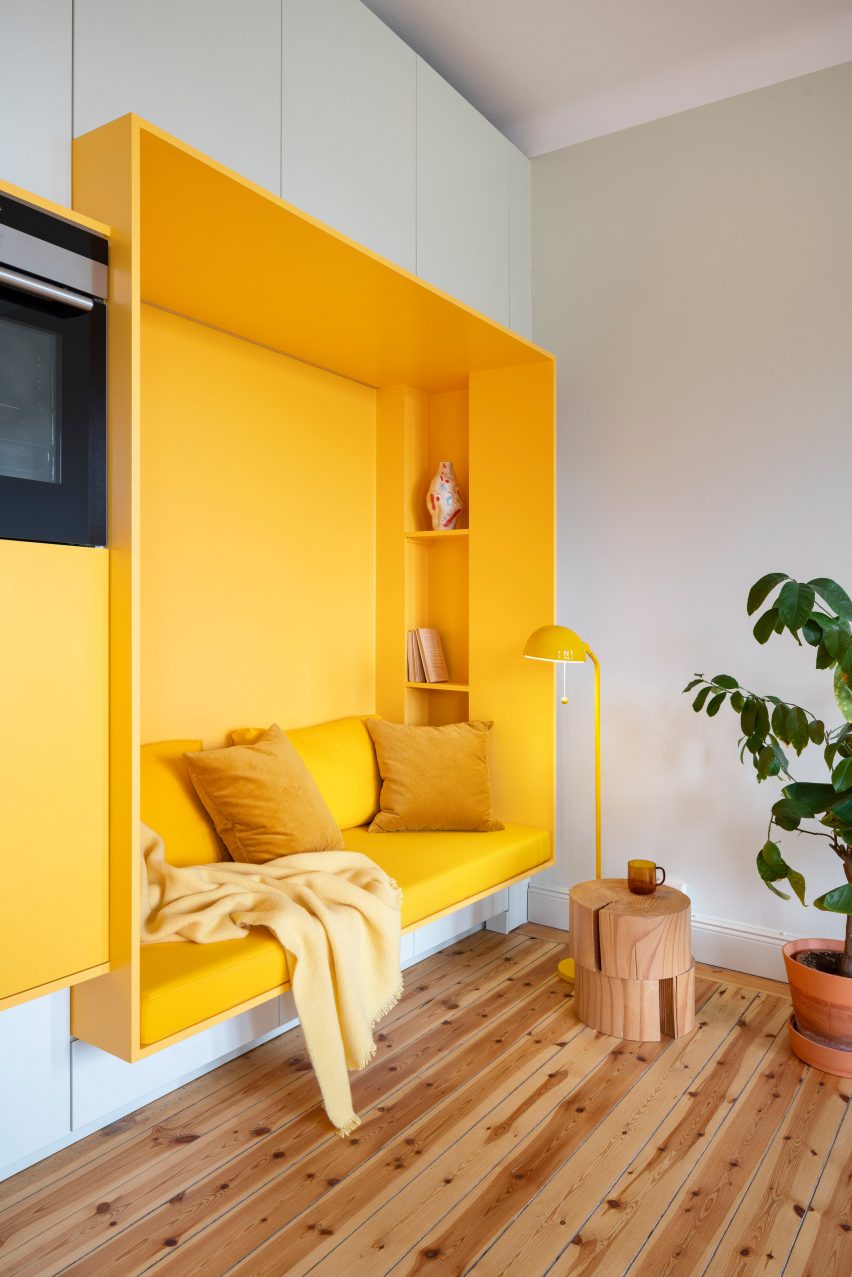
This apartment in Stockholm, which was renovated by local studio Lookofsky Architecture, is designed around a multifunctional wall that snakes through the interior.
In the living area, the zesty yellow structure contains a sofa snuggled inside an extruded frame, accompanied by integrated shelving and matching golden upholstery.
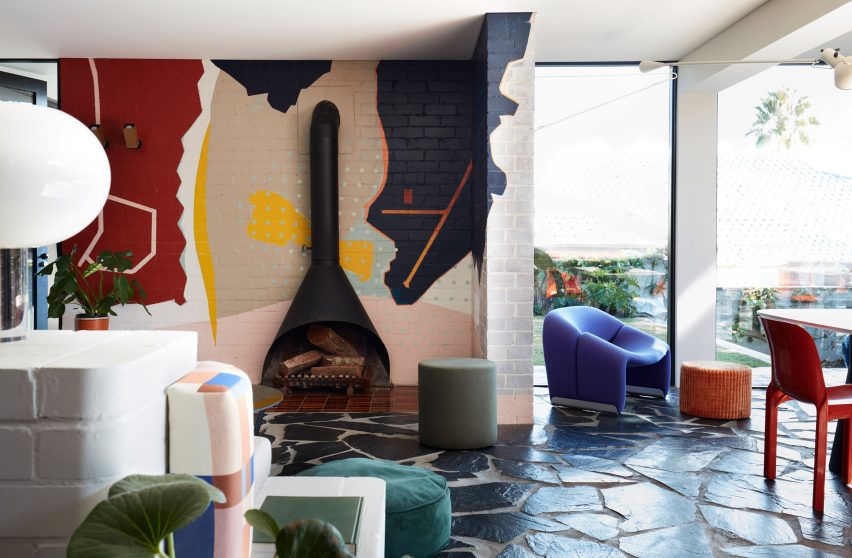
Australian design studio Amber Road worked with colour consultants Lymesmith on this house in suburban Sydney, which is charactertised by its excessive use of colour.
The aptly named Polychrome House is finished in a kaleidoscopic spectrum of colours, including in its living room where a wall mural of abstract shapes featuring red, blue and yellow is echoed by red and blue seating.
A ban would be a blow to the company’s bottom line: Used by more than 150 million users in the US, TikTok is expected to generate $8 billion in advertising revenue by 2024 from Americans alone, according to Insider Intelligence, and the company’s US business, alone, could be worth between $40 and $50 billion, per Bloomberg.
In turn, Zhang Yiming, the CEO of TikTok’s Chinese parent company ByteDance, may see his net worth — which sits at $42.3 billion as of April 14 — drop. He is one of many Chinese billionaires who got rich from starting successful tech giants.
Not only did Dior’s recent Fall 2023 show at South Mumbai’s Gateway of India capture popular imagination globally but it also put India front and centre of the spectacle. On display was the brand’s intent to play up the Indianness, as its creative director of women’s lines, Maria Grazia Chiuri, sank her teeth into all that the city and country have to offer. VERVE’S FOUNDER-EDITOR, ANURADHA MAHINDRA, looks beyond the fashionable vignettes to give her insights on how the major French brand crafted a seamless narrative around culture and inclusivity to deepen ties and cement brand presence in a burgeoning luxury market
Fish, itself, is not dangerous for your dog to consume. However, industrial pollution and toxins accumulate in fish, which makes them unsafe to eat. Large fish, such as tuna, can build up high levels of mercury over the course of their lifetime. Both fresh and canned tuna (or tuna in soft packets) rank among the top in high levels of toxins. Dogs fed tuna regularly are at risk for mercury poisoning.
Tuna should be considered a treat and therefore, fed in moderation, advises Lissa Cannady, RVT, Hospital Manager for VCA. It is okay to feed your dog small amounts of cooked or canned tuna or any other fish a few times a month. It’s not advisable to use tuna as a main source of protein in a meal.
What kind of tuna can I feed my dog?
Don’t be alarmed if your dog sneaks a bite of tuna. A small amount will not do any harm. The safest tuna for your dog is those with the least amount of mercury, such as skipjack or albacore tuna rather than any other types of tuna, like yellowfin tuna. If you feed your dog canned tuna (or tuna in soft packets) for a small treat, it should be canned in water, not oil, and with no added salt.
Feeding tuna to your dog or even yourself is a highly debated topic because of the mercury concerns. If you love the health benefits of tuna for your dog but are concerned about mercury levels, talk to your vet about what type and how much canned or cooked tuna to feed your dog considering his age and health history. Want more information on tuna and mercury levels? Consumer Report’s recently studied different types of popular canned food for mercury amounts. See the result here. And, check out the FDA’s guidelines here. Got a cat in the household and wondering about feeding tuna to your cat? The answer is pretty much the same as feeding tuna to your dog, check out our sister publication Catster’s article Tuna for Cats — Let’s Learn the Truth.
For a raw diet, opt for wild-caught tuna or consider alternatives, such as salmon or arctic char, which rank lower in pollutants. We recommend cooking raw fish before feeding it to your dog. Raw fish contains an enzyme called thiaminase, which can disrupt thiamine (vitamin B1) function. Consult your vet before making changes to your dog’s diet or if your dog consumes more tuna than advised.
Is tuna good for dogs and is it in commercial dog food?
Tuna is used in commercial dog foods, though not as much as whitefish or salmon, which are much lower in mercury. Except for the possible high mercury level, tuna is a good high source of protein, plus it’s low in saturated fats and sodium. It’s also a good source of antioxidants, and omega-3 fatty acids, as well as a variety of vitamins and minerals.
You can check the pet food company’s FAQ section or reach out on the contact page to ask about their commercial dog food that contains tuna. Some companies use lighter and younger fish that have not accumulated much mercury or test their tuna regularly for mercury levels.
What does mercury poisoning from fish look like?
If you are going to regularly feed your dog tuna, familiarize yourself with the symptoms of mercury poisoning. These can include:
A copper sink is a distinctive and chic choice for a kitchen or bathroom. Copper sinks have natural qualities that make them ideal for kitchen use. Natural copper has antimicrobial properties, making them resistant to bacteria, mold, and other microorganisms.
A copper sink is an expensive choice, so it is important you evaluate all the angles to ensure that it is the best choice for your kitchen.
Material Qualities of a Copper Sink
Copper it is also durable, stands up to heavy use, and resists damage from impacts and scratches. Copper is also heat resistant, so copper kitchen sinks can withstand damage from hot pots and pans. Copper kitchen sinks will not corrode over time.
Look for a copper sink made of a high component of pure copper metal. Some high-end manufacturers choose to use 100% copper. Others add a small percentage of zinc as an alloying element to give the sink new properties. Zinc mixed with copper increases durability and strength. It also enhances the anti-corrosion properties.
The gauge metal you choose is another factor for consideration. Gauge corresponds to the thickness of the metal. The lower the gauge, the thicker the metal. Make sure to select a kitchen copper sink that is either 12, 14, or 16-gauge metal. These are standard gauges for good quality copper kitchen sinks, though a copper bathroom sink is sometimes as high as 18 gauge.
Basin Configurations of Copper Sinks
Experts in the industry refer to the shape and arrangement of bowls in the sink as the basin configurations. Copper sinks are available in multiple basin arrangements and shapes.
Single Basin
Single basin sinks, copper and otherwise, have become one of the most popular for home kitchen design. These sinks feature one large basin. A single basin copper sink gives your kitchen a classic and traditional look. These are ideal for washing large sets of dishes and pots and pans.
Double Basin
Double basin sinks feature two separate areas. These have traditionally been one of the most popular sink configurations. Some double basin copper sinks feature different sized basins; others have basins with an equal split. Double basin sinks work well if you need separate compartments for food prep and clean-up.
Triple or Multiple Basin
Triple and multiple basin sinks feature three or more compartments. Most of these sinks feature two large basins on either side with a small basin in the middle. Multiple basin copper sinks work well if you need defined areas for your food prep. These sinks are large and take up extensive counter space.
Copper Sink Finishes
Manufacturers create copper sinks with a variety of finishes which help to determine the way the sink will age. It is also important to consider if a copper sink has any additional coating like epoxy or lacquer. These coatings help to protect the finish from scratches and stains and prevent the surface from coming into contact with moisture and air. This finish will slow down or stop the patina process.
Natural – Natural finish copper sinks have an unpolished and unlacquered surface. The lack of lacquer means that the sink will develop a natural patina over time.
Antique – Fabricators develop an antique finish copper sink by applying a chemical solution to the sink that accelerates the patina process. The aged finish gives the sink a dark and aged look.
Satin – Satin finish copper sinks have a smooth, matte finish that manufacturers develop using a light sanding technique.
Hammered – Hammered copper sinks have a dimpled appearance. Small hammers are used to create the small divots on the copper surface. Hammered copper sinks are popular in rustic and traditional style kitchens.
Oil-Rubbed – Fabricators create oil-rubbed finish by applying a special oil to the sink’s surface and then polished and buffing it to a dark and smooth finish.
Polished – Polished sinks have a high shine and glossy look. Many designers prefer the look of sleek polished copper sinks, but they are some of the most difficult to maintain.
Mount Styles for Copper Sinks
Copper sinks are a popular kitchen sink choice and work with every kind of countertop. Consider different installation methods before you purchase a specific copper sink to ensure that this method will work for your needs and counter/cabinet type.
Copper Farmhouse Sink
Farmhouse copper sinks have single basin configurations with an exposed front, or apron, with a rounded or flat profile. Like other farmhouse sinks, copper farmhouse sinks are also heavy but not as heavy as clay or cast iron farmhouse sinks. Farmhouse copper sinks will require extra structural support, but it is a good choice if you need a lighter option. A farmhouse copper sink is one of the most expensive varieties of copper sinks. The installation is also more difficult as you may need to change the configuration of your cabinets in front of the sink to accommodate the apron copper sink front.
Copper Undermount Sink
Undermount copper sinks are another option that has become a popular choice for home kitchens. Manufacturers configure this type of sink to fit underneath the counter. This leaves an exposed counter lip. Undermount copper sinks are popular with designers creating sleek and modern kitchens. This mounting style does not work well with wood countertops, as water can damage the exposed edge. Undermount copper sinks also require extra support to mount, but they are light compared to other sink varieties.
Copper Drop-in Sink
Copper drop-in sinks have a visible rim above the counter. This means that the sink gets added support from the countertop. A drop-in copper kitchen sink is easy for anyone to install as it just needs a rough-cut hole rather than the precisely measured opening that an undermount sink requires.
Copper Vessel Sink
A copper vessel sink sits on top of the countertop. This is not a practical sink style for a kitchen but a popular choice for bathrooms. This copper sink style is one of the most distinctive. Copper vessel sinks do not require a large hole cut in the countertops.
Copper Integrated Sink
Copper is a popular choice for sinks, but some people also use it as a counter material as well. Integrated copper sinks and countertops are molded together. This creates an attractive continuous line between countertops and the sink. This style works well for industrial style kitchens as there is no seam to trap food and debris.
Maintaining a Copper Sink
Maintaining a copper sink will preserve the finish of your copper sink and prolong its longevity.
Clean on a regular basis – Wipe down the sink with a soft cloth or sponge and soapy water after each use. This will keep food particles from building up or staining the surface of the sink and spoiling the finish.
Do not use abrasive cleaners – Do not use cleaners with heavy chemicals like chlorine bleach, ammonia, or hydrogen peroxide. This can damage the finish and cause discoloration. Coarse materials like abrasive powders or scouring pads will scratch the surface of copper sinks.
Do use copper cleaning solutions – Cleaning solutions formulated for copper sinks are available at hardware and home improvement stores. These will clean, remove stains, and restore the shine of copper sinks.
Remove tarnish – You can remove the tarnish from copper sinks with just a few products around your house. Apply a thin layer of ketchup to the sink. Rub in and rinse and polish dry. Do not leave ketchup sitting on the sink as this can damage the finish. You can also polish the sink with a paste of baking soda and water. Mix the baking soda with a few drops of water. Rub gently onto the sink, rinse, and dry.
Apply wax – Some sinks have a natural finish and develop a patina over time. Other copper sinks have a lacquer that manufacturers apply in the factory. Apply a wax finish if you see the lacquer begin to wear away. Find a wax that manufacturers designate for copper sinks.
Cost of a Copper Sink
The cost of copper sinks range according to size, gauge, and style. The average price range for copper sinks is between $400-$1,000. You can find copper sinks as low as $125 and as high as several thousand. In general, small sinks are less expensive than large ones. Farmhouse copper sinks are the most expensive type and undermount sinks are the least expensive.
Pros and Cons of a Copper Sink
Copper sinks are an interesting and distinctive sink variety, but they will not work for everyone’s space. Here is a quick list of pros and cons to consider before you purchase a copper sink.
Pros:
Look – Gorgeous and unique material
Durability – Strong material that resists stains, scratches, and dents
Antibacterial – Resists bacteria that are common in food preparation
Corrosion resistance – Resistant to corrosion to prolong the life of the sink
Patina – Develops an attractive natural patina
Easy maintenance – Easy to clean and maintain over time
Recyclable – Copper is a recyclable material
Variety – Wide variety of styles, basin configurations, and price points
Cons:
Cost – Copper sinks are expensive compared to some other varieties
Ongoing maintenance – Maintenance for copper sinks is not difficult but requires constancy and specialized products
Patina – Some people dislike the dark patina that develops on copper sinks
Cohesion – Copper sinks will be a different material than other kitchen fixtures
The banking fiasco will help the Federal Reserve curb inflation, the IMF’s managing director says.
“The skirmishes in the banking sector are actually helpful,” Kristalina Georgieva said Thursday.
The turmoil will cause a tightening of credit conditions that slows price growth, she added.
Thanks for signing up!
Access your favorite topics in a personalized feed while you’re on the go.
There is no banking crisis – and unease in the sector will help the Federal Reserve to cool inflation, the head of the International Monetary Fund says.
Kristalina Georgieva said Thursday that last month’s turmoil will aid the Fed in its war on soaring prices by leading to a tightening of credit conditions, as mid-sized banks try to shore up their balance sheets by raising their lending standards.
“The skirmishes in the banking sector are actually helpful because they do lead to medium-sized banks being more careful in their lending practices,” the IMF managing director told CNBC’s “Squawk on the Street.”
“They provide 30% to 40% of financing, meaning they are helping the Fed by being more prudent for the Fed not to have to do that much,” she continued. “It has been a helping hand to the Fed.”
Inflation tends to cool when credit conditions tighten. Consumers and businesses find it harder to access cash, which leads to lower levels of spending and investment — key components of overall demand in the economy and drivers of price growth.
The California lender ran into trouble after it sold long-dated bonds at a loss and moved to raise fresh capital. The scramble for cash spooked its customers, resulting in a tidal wave of withdrawals that overwhelmed the bank and spurred the Federal Deposit Insurance Corporation to seize control and guarantee all of its deposits.
But Georgieva said she didn’t view last month’s fiasco as a crisis. Some turmoil was to be expected after the Fed hiked borrowing costs from near-zero to around 5% in the space of a year in a bid to tame soaring inflation, she said.
“I don’t think there is a banking crisis, there are vulnerabilities that we should have expected,” she told CNBC.
“Let me say that we have lived through a long period of very low interest rates and ample liquidity and very quickly we moved into high interest rates and restrictive liquidity,” Georgieva added. “Of course there would be vulnerabilities to be exposed.”
The IMF isn’t the first high-profile institution to predict the banking turmoil will lead to lenders pulling back on financing. However, other market forecasters have underscored the impact a credit crunch would have on economic growth, rather than inflation.
Allianz said late last month that the US is now “headed towards a crash landing,” with SVB’s collapse heralding a credit crunch that could plunge the economy into a severe recession.