Wine expert Karen MacNeil says that: “A life with wine is so much richer and more delicious than a life without it!” And, we couldn’t agree more. Life IS better with wine (in moderation, obviously).
And, to help you love what’s in your glass even more, we asked Karen 10 of our burning vino-related questions. As the author of The Wine Bible (which, just had its third edition released and is considered the bestselling wine book in America, with more than 800,000 copies in print), she quite literally wrote the book on wine.
For someone who is new to wine, what do you think the best way to use / read The Wine Bible is?
Karen MacNeil:Just open the book anywhere and start reading! There are fascinating side boxes and stories on every page. Most people read The Wine Bible (WB) in this unconventional way. It’s also fun to buy a bottle of wine, look up that region in the WB, and read while you sip.
What are some of the updates in this version that you’re most excited about and why?
Karen: I love the brand new chapter on Great Britain, which is now making delicious sparkling wines that have a lot in common with Champagne. Climate change has hurt many wine regions, but it has benefitted England, making the climate conducive to great wine. I also love the new chapter called “In the Beginning … Wine in the Ancient World.” Fascinating!
If people are interested in trying something new and different from the usual Chardonnay, Pinot Noir, and Cabs that are found on most wine lists and grocery store shelves, are there any wine regions or grapes that you suggest people try? Any hidden values?
Karen:Spain and Portugal make sensational wines from native varieties like Tempranillo and Touriga Nacional (both red grapes). The wine culture in these two countries is ancient, the wines are fantastic and they are STEALS! Many terrific wines under $25.
If someone wants to begin learning about wine but is overwhelmed and doesn’t know where to start, where should they start?
Karen:Wine is very welcoming. It really doesn’t matter where you start. Just pick a country and start drinking wines from there. If you drink the wines of one country for say six months, you’ll discover that you have actually acquired a good idea of the flavors of those wines. Then move on to country No. 2. And so on. Just begin!
In your experience, what’s the most widely misunderstood thing about wine? Any common missteps newbies make?
Karen:People often swallow wine too quickly. If you swallow too quickly you won’t taste anything and you’ll have no idea how delicious the wine really is.
What are some of your favorite wine and food pairings? Any that you have on the regular or that might surprise people?
Karen:Champagne and potato chips are high on my list. Also rosé and grilled cheese sandwiches.
We’ve seen a lot of wines come on the market that are marketed specifically as low-calorie. Got thoughts on those?
Karen:Low-calorie wines are often highly manipulated. I would rather drink a half glass of the real thing than a glass of (usually not very good) low-calorie wine.
Have you seen any categories of wine or regions really gain in popularity this year? Any you’ve seen people lose interest in?
Karen:Wine interest is exploding across the globe. EVERYTHING is interesting.
Are there any wine trends you’re expecting to see take off in 2023? Any you wish would fade away?
Karen:Wine takes time — years of time. Often it takes 10 years or more to plant a vineyard and make and age a wine BEFORE it is released. Wine is the ultimate non-trend. I love it because of that.
We’re sure this is like asking you to pick a favorite child, but if you could only have three wines for the rest of your life in your glass, what would they be?
Karen:Champagne (from France of course), Pinot Noir from California and Oregon, German and Austrian Riesling.
A huge thanks to Karen for taking the time to answer our questions! And, for the record, we couldn’t agree more with her thoughts on low-calorie wine. Cheers, y’all! —Jenn
Elon Musk’s wealth has fallen $100.5 billion so far in 2022, per Bloomberg Billionaires Index.
Even so, Musk is still the world’s richest person with a fortune of $169.8 billion.
Musk has Tesla’s nosediving share price to thank for his declining wealth.
Thanks for signing up!
Access your favorite topics in a personalized feed while you’re on the go.
Elon Musk, the CEO of Tesla, SpaceX and now Twitter, has seen his wealth plunge almost $100 billion this year, the steepest drop ever reported on Bloomberg Billionaires Index.
Musk holds an around 15% stake in Tesla and the decline in the electric vehicle maker’s stock price on Monday shaved around $8.6 billion off Musk’s wealth in just one day.
The tech mogul draws most of his wealth from the stocks and ownership of Tesla, SpaceX, and most recently Twitter, per Bloomberg. Tesla shares have plummeted around 58.03% year to date.
Even so, Musk remains the world’s richest person, as his net worth beat that of runner-up Bernard Arnault — the chairman of the world’s largest maker of luxury goods, LVMH Moet Hennessy Louis Vuitton — by roughly $13 billion, per the Bloomberg Billionaires Index.
According to the same index, Musk’s net worth also eclipses that of Amazon founder Jeff Bezos and Microsoft co-founder Bill Gates, by roughly $54 billion and $57 billion, respectively.
Tesla’s stock price has been under pressure this year amid a broad selloff in the tech markets due to concerns of an economic downturn and on the back of the Federal Reserve’s aggressive interest rate hikes.
Investors are also worried about Tesla’s business in China, amid the country’s strict Covid-zero stance and whether Musk is able to focus on his role as Tesla CEO after acquiring Twitter for $44 billion.
Both Musk and Tesla did not immediately respond to Insider’s requests for comment.
With the number of dog training supplies available both in store and online it can be daunting to try to pick the best ones. Having the appropriate tools in your toolbox when working with your dog can make or break your training success. Your top item will be the best dog training treats, so we’ll start there.
Training treats for dogs
Food is not only your dog’s friend, but also your BFF for training. Use the term treat loosely, as food is food. More and more pet parents are swapping out kibble for alternative, human-grade foods, so why should treats be any different? Find foods your dog both likes and loves. Start experimenting! Commercial treats can be great but can be expensive and aren’t always readily available. So, head to your fridge and let the fun begin.
Of course, some foods dogs should never have https://www.aspca.org/pet-care/animal-poison-control/people-foods-avoid-feeding-your-pets but many fruits and veggies and other foods in moderation can be a great addition to your treat repertoire. You’ll likely find your dog’s faves might surprise you! Small pieces (about pea-sized) are plenty to satisfy. And since fruits and vegetables tend to be low in calories, no need to fret over weight-gain: simply adjust daily meals accordingly.
Some foods to try:
Carrots
Zucchini
Cantaloupe
Apples
Boiled chicken
Blueberries
Strawberries
Cheese
Broccoli
Sweet potatoes
Plant-based hot dogs
Cucumbers
Create a treat ladder for your dog. Lower value treats are toward the bottom of the ladder, higher value treats in the middle, and my-dog-will-do-anything-for treats at the top. The bigger the challenge, the higher the reward.
Dog not food motivated? You probably just haven’t found the right foods yet! Other possibilities include he’s used to free-feeding (stop doing this) or may not have healthy feeding habits and routines (start doing this).
Dog treat pouch
Your dog’s treat ladder, as described earlier, will clue you in on what type of treat pouch might suit you best. The most efficient pouches have multiple compartments for a variety of food stuffs so you can be ready for well-timed rewards. Magnetic closures are a nice bonus for easy access. Some pouches feature versatility with how they’re worn depending on the situation and what you’re training.
Many trainers even opt for fanny packs, as these lightweight easy-to-wear bags are affordable and typically also have multiple compartments for treats, whistles, poop bags and your phone.
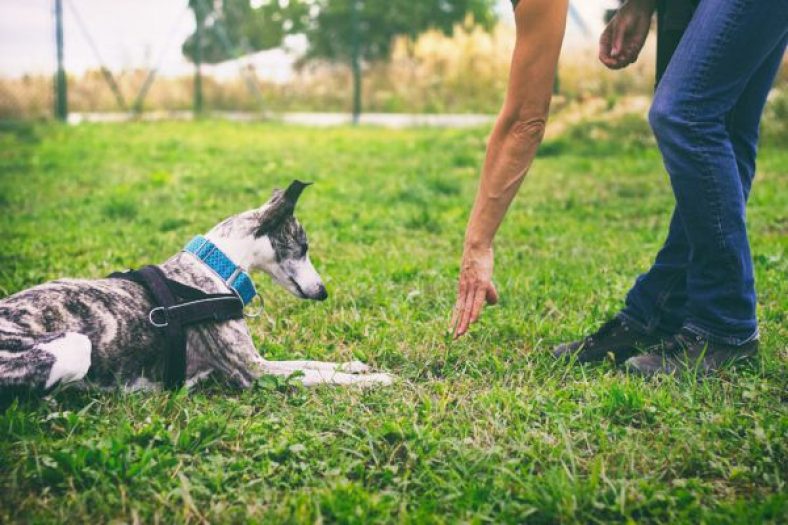
Even for the calmest of dogs, clipping a leash to a collar can put unnecessary pressure on the neck and spine. Wearing collars are fine for ID tags for example, but harnesses are typically safer (more difficult to wrangle out of) and more comfortable when fitted properly: a well-made well-fitted harness doesn’t chafe or restrict movement. Many harnesses come with a front and back clip for added support with leash walking training.
Evaluate your dog’s size, strength, walking style and your abilities when considering which type of harness to get. Larger dogs will need a more heavy-duty harness than a toy breed.
Affordable, comfortable and popular harnesses include:
A word on training collars: just say no. Prong, choke and e-collars are not only outdated methods of training, they are also proven to cause harmful lasting emotional and behavioral effects. Read these articles for more information:
Dog training leash
Leashes are about personal preference and style but must also be about safety and comfort. The ideal length is 5 to 6 ft to allow a little breathing room, but not enough to get tangled, and keeps him close when out walking and in higher traffic spaces. Additionally, many dog-friendly venues, outdoor areas and trails require dogs be on a 6-foot leash. Leashes come in a variety of materials; lightweight and strong are the most handler and dog friendly. Some also come with a traffic handle for super close encounters.
As with harnesses, choose a leash you can safely and effectively handle and that’s the appropriate strength for your dog’s size and activity level. Pay special attention to the clasp and ensure it’s a good fit for your dog’s harness so it’ll be safe and secure.
And depending on your walking style and harness choice, double-ended leashes can be a great choice. These versatile leashes can clip on both the front and back of harnesses simultaneously and even allow the handler to go hands free. Many double-ended leashes also allow for comfortably walking two dogs at once.
Be careful of retractable leashes. Retractables can get tangled very quickly and are notorious for snapping back into the handler or the dog and causing injury. They also hinder the handler from maneuvering effectively and quickly when necessary, such as in crowded spaces, sudden changes in the environment and in vets’ offices and small spaces.
Long leash for dog training
A long line is a great tool for training your dog a variety of behaviors and shaping others. They allow handlers to work with their dogs from farther away to build reliability with behaviors from various distances. Long lines are also ideal for early stages of recall training to get the initial feel of being off leash while being able to practice these behaviors safely, since the handler still has a connection to the dog.
Although length and material vary depending on needs and preference, long lines are often 15 to 50 feet in length and made of rope, nylon or biothane. Some don’t have handles/grips, although they’re recommended for safety and versatility. Never allow your dog to run off with a long line as it can get tangled and become a safety hazard.
All dogs should be trained to a muzzle. Whether it’s for vet or groomer visits, nail trims, emergency situations, pica (eating non-food items) or over reactivity or aggression, all dogs can benefit from being comfortable with wearing a muzzle should the need arise. Muzzles should allow for panting and drinking (no Velcro muzzles!) and fit properly and comfortably, which means it feels to your dog like glasses do to us: like they’re not there.
Whether puppy or adult, dogs love to chew. Chew toys are an essential part of helping puppies understand the no-teeth-on-people rule and helpful for giving them something to teethe and gnaw on instead of shoes or furniture! And bored and under-stimulated dog of any age is much more likely to fall into bad habits, so keeping a fresh and fun supply of appropriate chews is a win-win.
Food puzzles/toys are great especially for when you might be away, have company, or otherwise need a temporary positive distraction as well. But be safe about leaving your dog unsupervised with any toy and be sure he enjoys it per manufacturer’s instructions.
Be careful with rawhides as digestion can be problematic and splintering can be a safety concern with antlers. High-calorie “long-lasting” chews can be a choking hazard once they become smaller and possibly cause weight gain. Even softer chews can present swallowing/choking hazards, and marrow bones, hooves and other “real” chews can cause tooth fractures or worse. Always check with your vet before giving the green light on chew toys.
Trainer faves:
Dog whistle
Arguably the most important cue for your dog to learn is to come when called. Since 99% of dogs won’t come 100% of the time, and there’s so much on the line with this cue the more help you can get the better. Training your dog with a whistle is one surefire way to make recall more effective. Whistles can also be used for any other cues making them very handy. They’re consistent, unlike our tone of voice/mood, and free up our hands for signals, rewards and belly rubs!
Whether it’s training relaxation and calming protocols, teaching your dog a place to go in stressful situations, providing a platform for training or the very versatile Go to Mat cue, a mat is a staple in working with your dog. And they’re highly portable for a variety of situations when you might need your dog to chill on his mat .
You can most definitely just use a household rug, but it should be exclusively for your dog’s training and use. If you’d like to opt for something more try:
Last but certainly not least, the best tool is free and makes all the difference in your training. Approaching training with patience and humor not only facilitates effectiveness, but is also more fun! Training is a process, a journey, not an event or destination. Dog learning is just like human learning in that it continues throughout life. While certain tasks and cues and even sports and tricks can be learned and repeated, learning to live and thrive in our human world and still retain all the wonderful qualities that make them dogs is a delicate balance. Dogs look to us for answers, support, comfort and direction.
When gathering supplies, don’t forget that your most important asset is your relationship with your dog, so choose wisely.
Bonus tool: Training vests
Training vests get a lot of attention, and since there are several types let’s break it down:
Trainer/Handler vests
For humans and are often made of durable, flexible and weather/water-proof fabric and have a lot of pockets for various training items. Some also come with an additional treat pouch. Typically used for a variety of outdoor uses, such as for sport, gun and hunting dogs.
Dog in Training vest
For dogs who are in training, works in progress, or who want to be clear about their need for space and patience (kind of like a student driver!).
Reserved for dogs who are working in a service dog capacity or in a service dog training program. According to the ADA, a service animal is defined as a dog who has been individually trained to do work or perform tasks for an individual with a disability. The task(s) performed by the dog must be directly related to the person’s disability. Not to be confused with therapy dogs or emotional support dogs.
Emotional support or therapy dog vest
Typically reserved for dogs who have undergone training for these roles and are functioning credibly in these capacities.
A new hotel occupies 1920s bank headquarters in Downtown LA, where Jaqui Seerman refreshed public spaces to include a botanical-themed lounge and a mirror-lined arched gallery.
Hotel Per La is housed in the neoclassical Giannini Building, built in 1922 as the headquarters for the Bank of Italy, and takes the place of the NoMad Los Angeles which closed its doors in March 2021.
Hotel Per La replaces the Nomad Los Angeles in the 1920s bank headquarters
Its 10,000 square feet (930 square metres) of public and event spaces have been refreshed by local interior designer Jaqui Seerman, who used the 12-storey property’s Italian connection to inform her updates.
“A nod to the building’s storied beginning as a bank for the people, the ‘Per La’ name translates to ‘for the’ in Italian,” said the hotel.
“[The bank’s] founder, Amadeo Pietro Giannini, believed in the dignity and abilities of those commonly overlooked, signifying the hotel’s inclusive spirit and name, essentially meaning ‘for Los Angeles, and people like you’.”
A mirror-lined arched gallery opens into the main lobby
Demarcated by a pale blue awning, the hotel’s entrance has been relocated from 7th Street to Olive Street, leaving the doric columns across the grand facade fully visible.
Through the doors, guests find themselves in a double-height lounge filled with plants and comfy chairs covered in botanical patterns.
The custom front desk is by Voila Creative Studio and the hand-painted tapestry behind is by Jessalyn Brooks
An arched gallery lined with mirrors leads to the lobby, situated in what was once the main banking hall.
In the reception area, a custom-made curved plaster front desk influenced by linen fabric was designed by Voila Creative Studio, while a hand-painted tapestry that hangs in the niches behind was produced by LA muralist Jessalyn Brooks.
A purple games room features commissioned art and furniture from local artisans
A rich purple lounge features a new game cabinet, as well as commissioned art and furniture sourced from local artisans.
Event spaces range from a second-floor courtyard for private outdoor dinners, to larger spaces for up to 850 people.
A second-floor courtyard hosts private outdoor dinners
Dining options within the hotel include Per L’Ora, which serves Italian cuisine and features a light colour palette across curvaceous design elements influenced by the early 2000s.
“The bar of the restaurant acts as a dramatic centerpiece, with a custom-made marble top in shades of green, grey, and white, and globe-shaped light fixtures, while custom white plasterwork on the front of the bar offers a new sense of texture,” said the hotel operators.
Adjacent to the restaurant is a casual cafe modelled on a Venetian coffee shop, serving beverages, pastries and snacks.
On the rooftop, Bar Clara offers cocktails for poolside lounging and hosts live performances with the LA skyline as a backdrop.
Guest rooms are decorated to echo the ornate blue and gold ceiling in lobby
The 241 guest rooms and suites have retained much of the aesthetic created by French architect Jacques Garcia for the NoMad, referencing the restored gold and blue ceiling in the lobby.
Downtown LA, the city’s most walkable neighbourhood, has experienced a cultural renaissance over the past decade.
The hotel occupies the neoclassical Giannini Building in Downtown LA
Per La is the latest hotel in the US to open in a converted bank building, following the likes of The Durham in North Carolina and The Quoin in Wilmington, Delaware.
Trump’s would-be rival, Chris Christie, says GOP challengers are failing the “leadership test.”
This is because they treat Trump like “Voldemort,” Christie said, and don’t name him while calling him out.
The fictional villain is known as “You-Know-Who” and “He Who Must Not Be Named,” for fear of evoking his name.
Thanks for signing up!
Access your favorite topics in a personalized feed while you’re on the go.
Former New Jersey governor Chris Christie says Republicans who want to run against former President Donald Trump in 2024 need to start naming him while calling him out.
“There’s a number of people who are considering running for president who still treat him like Voldemort, like ‘He Who Shall Not Be Named,’” Christie told the Washington Examiner on Thursday. He was referencing the main antagonist in the “Harry Potter” novels, whose name many characters feared to even mention.
“They say, ‘Leaders who do this or that.’ But they won’t say the name. I think that fails the leadership test,” Christie said.
“You’re going to run against him? Say his name. You think he did something wrong? Say his name,” Christie said.
Christie has a point. Some of Trump’s most significant rivals, including Florida Gov. Ron DeSantis, have largely refrained from mentioning the former president at all. For one, DeSantis avoided rebuking Trump when asked last week if there was a civil war brewing between him and Trump. Instead, DeSantis dodged the question and told people to “chill out” about their rivalry instead.
The same cannot be said of Trump where DeSantis is concerned. Trump this month — in keeping with his penchant for giving political rivals nicknames — dubbed DeSantis “Ron DeSanctimonious.” He also attacked the Florida governor, calling him “average” and accusing him of disloyalty.
Meanwhile, Christie told the Washington Examiner he will decide in five to six months if he will run for president.
In December, the former governor also called the Trump team’s actions leading up to the January 6 Capitol riot a “Keystone Cops operation” that was “driven from the top” and “executed by C-team players.”
A representative at Trump’s post-presidential press office did not immediately respond to requests for comment for Insider.
Panting more. Getting tired on walks. Not wanting to go up or down the stairs. It’s normal for dogs to slow down as they age, but sometimes it’s more than getting older. The early signs of heart disease can be subtle, but it’s important to recognize them. Early diagnosis and treatment of some heart diseases can slow down or prevent congestive heart failure in dogs.
What causes congestive heart failure in dogs?
Heart disease, which can develop into heart failure, is commonly seen in older dogs. According to veterinary cardiologist Dr. Bonnie Lefbom, Dipl. ACVIM, incidence of heart disease varies from between 15% to 30% of older, small dogs and 5% to 15% of giant breed dogs.
Congestive heart failure, which can occur as heart disease progresses, is less common thanks to the veterinary treatments available today, but some dogs with heart disease will go on to develop heart failure. Dr. Lefbom says small breed dogs with a long-standing heart murmur are the most common patients with CHF. Large and giant breed dogs more commonly develop a weakened heart muscle.
One of the most common causes of heart failure in dogs is chronic degenerative valve disease (CVD). “Just like in older people, the heart valves can start to break down and leak, causing backflow in the heart and a heart murmur,” says Dr. Lefbom, who practices at the Regional Veterinary Referral Center in Springfield, Virginia. “Over time, with continued backflow through the valves, the heart enlarges. When the heart gets too big, fluid backs up in the lungs.”
Some breeds at higher risk for developing CVD include • Cavalier King Charles Spaniels
Cocker Spaniels
Dachshunds
Miniature Poodles
Miniature Schnauzers
small Terrier breeds
Another common cause of heart failure in dogs is heart muscle disease, which is called cardiomyopathy. With this disease, the valves are OK, but the muscle of the heart thins out, which means it can no longer pump blood the way it needs to. The pump failure causes fluid to build up in the lungs or the belly, Dr. Lefbom says.
Some breeds are more prone to developing cardiomyopathy, including:
Boxers
Cocker Spaniels
Doberman Pinschers
Great Danes.
Diet and Congestive Heart Failure (CHF) in dogs
In recent years, veterinarians have seen an uptick of canine dilated cardiomyopathy, especially in breeds not previously identified as being at higher risk for this disease.
“The majority of those dogs were eating new or unusual diets,” Dr. Lefbom says. “Initially, it seemed the diet problem was from foods that were grain-free. Now it appears that dog foods high in legumes (peas, lentils and chickpeas) may be causing this problem. Research is still underway to find the exact cause.”
Stages of Congestive Heart Failure in dogs
Heart failure occurs in stages. According to Dr. Lefbom, early heart failure is very responsive to treatment and dogs start feeling better quickly once they receive care. A dog in the middle stages of heart failure is harder to treat and requires more medication. The late stages of heart failure are the most severe, requiring multiple medications given many times throughout the day. In the late stages, the dog’s quality of life worsens. At this point, pet owners might face the difficult decision to consider humane euthanasia.
Signs of congestive heart failure in dogs
The signs of early congestive heart failure in dogs might not be noticeable at first, especially to the untrained eye. It could be as small as the dog not wanting to go for walks anymore or not go up and down the stairs as frequently. As heart disease progresses, you might notice light coughing, especially in the morning, or see that your dog is breathing faster, even when resting.
Reluctance to move around could also be signs of aging or arthritis. Even little changes in your dog’s behavior or activity are worth checking out with a visit to the veterinarian.
“In the middle stages of heart failure, the dog may start having trouble breathing during exercise or may not be sleeping through the night without coughing,” Dr. Lefbom says. ”The more severe stage of heart failure requires emergency care for a pet that is truly struggling to breathe.”
If you know your dog has heart disease, ask your veterinarian which worsening signs you need to look out for and bring to their attention.
How is Congestive Heart Failure in dogs diagnosed?
Your veterinarian can listen for a heart murmur to diagnose heart disease. Heart murmurs are graded from 1 to 6, with 1 being the least severe and 6 being the most severe.
If your vet is concerned your dog might have congestive heart failure, she will suggest taking X-rays of the dog’s heart and lungs to look for heart enlargement and fluid in or around the lungs.
Although your primary care veterinarian can treat your dog for Congestive Heart Failure, she might refer you to a veterinary cardiologist for further treatment. Board-certified cardiologists are heart specialists who only treat pets with cardiac issues, so they are experts at diagnosing, treating and managing CHF. A cardiologist works together with your regular vet to implement a treatment and monitoring plan for your dog.
What treatments are available for Congestive Heart Failure
Although Congestive Heart Failure in dogs cannot be cured, it can be managed with medications. The goal is improving the dog’s quality of life and extending longevity.
“Veterinarians and veterinary cardiologists treat heart failure using many of the same medicines used for people with CHF,” Dr. Lefbom says. “A common example is the drug called Lasix, or furosemide, to help clear fluid from the lungs.”
With proper treatment, most dogs with CHF can live relatively normal lives. Your veterinarian might recommend some lifestyle changes, for instance, decreasing intense activities like ball chasing. Dogs with CHF generally self-limit, seeming to know how much activity is OK and when it’s time to back off. However, Dr. Lefbom says the most important thing is to keep the dog doing at least some of what they love.
How long can a dog live with Congestive Heart Failure?
On average, dogs diagnosed in the early stages of Congestive Heart Failure and treated appropriately can live comfortably for about one to two years.
A study conducted in 2015 showed that dogs with Congestive Heart Failure live 75% longer when treated by a veterinary cardiologist who works closely with your primary care vet.
Is it best to avoid grain-free diets for dogs with heart disease?
Though no definitive conclusions have been made, veterinary researchers, nutritionists and the FDA continue to investigate the cause of diet-induced heart muscle disease (dilated cardiomyopathy). This leaves many pet owners wondering if they should avoid feeding grain-free diets, especially for dogs with heart disease or at risk for heart disease.
“Feeding a grain-free diet may have less to do with the problem, and the bigger concern seems to be dog foods with high levels of peas, lentils and chickpeas (legumes),” Dr. Lefbom says. “With so many diets on the market, there is no easy answer to what to feed each individual dog.”
Your best bet is to talk to your veterinarian about the best food to feed your dog, and what types of formulations or ingredients to avoid.
According to the Times, the final agreement for a “loss and damage fund” would require 24 countries to work together to arrange the details of who will contribute to the fund, who will receive funds, and where the money would go — the US is looking to exclude China as one of the developing countries that could benefit from the fund.
It also adds a stipulation that developing countries cannot sue developed countries for these payments.
COP 27, or the Conference of the Parties, is an annual summit put on by the UN to address the adverse impacts of climate change. Following the UN Framework Convention on Climate Change in 1992, the COP began meeting every year since in 1994, making this summit the 27 th.
Since the 1992 convention, developing countries have demanded that a “loss and damage fund,” facilitated by the UN, be implemented.
The decision will pave the way for developing countries, who are often the least responsible for the effects of climate change, to be compensated for losses and damages that they have endured as a result of the richest countries emitting the most greenhouse gases.
Dozens of developing nations, including small island nation like Vanuatu and much of Africa, pressed the rest of the world during the two-week summit in order to make headway on the fund. These countries were successful in getting it on the official agenda for the first time at an annual COP summit, the Times reported, signaling the urgency of the agreement.
Before this year’s summit, Scotland was the only developed nation that offered to begin putting money towards the “loss and damage” of other nations. Other countries, including the US, have side-stepped the agreement in order to avoid legal repercussions — a fear that experts have said is misplaced.
However, developing nations in Europe changed course during this year’s climate talks, pledging millions of dollars to assist developing nations combat damages and loss as a result of climate-induced natural disasters, the Times reported. After some pushback, the US soon agreed to the fund.
“The announcement offers hope to vulnerable communities all over the world who are fighting for their survival from climate stress,” Sherry Rehman, Pakistan’s minister for climate change, told the Times.
As skin care devotees, we aspire to a daily multi-step skin care ritual. However, on busy days, we sometimes need a quick routine that covers the essentials and prioritizes time. Enter “skinimalism” (skin + minimalism) and the necessity of the occasional simple skin care routine. For those days when you’re on a time crunch, read on to find out how to strip your skin care down to the basics. And, as always, whenever you consider new skin care products, visit an Eminence Spa Partner for the best recommendations and advice.
According to CNN, skinimalism is “all about simplifying the amount of skin care products on the face and building a regimen” that helps you achieve healthy, glowing skin. The concept focuses on using just a few multitasking products every day. “You can accomplish a lot by using a minimal amount of products to get maximum results,” agrees Eminence Organics Lead Skin Care Trainer Natalie Pergar, who says three or four well-chosen products cover the fundamentals. You can watch Natalie’s full video here.
Curating Your Own Simple Skin Care Routine
To start your simple skin care routine, you’ll need to know your skin type. If you’re unsure about your skin type, take our easy quiz here. After determining your skin type, choose these non-negotiables that should be in every pared-down routine:
A good multipurpose cleanser that ideally exfoliates and cleanses.
An eye product that targets your main concerns, such as puffiness, darkness or fine lines. Pro tip: If your skin is on the dryer side, opt for an eye product with a thicker, emollient consistency. If your skin is on the oilier side, look for a gel-style lighter-weight consistency.
A moisturizer to use during the day (ideally combined with an SPF over 30) and at night, a thicker moisturizer. Alternatively, you could use the same moisturizer for both, layering an SPF over the top throughout the day.
An SPF or skin care product that protects the skin from sun damage (if not already combined with a moisturizer). Natalie loves the Lilikoi Daily Defense Moisturizer SPF 40, which can be applied over top of your chosen daytime moisturizer. Pro tip: this SPF moisturizer works for all skin types, making it a perfect finishing step for any of the routines below!
A 5-Minute Simple Skin Care Routine For Normal Skin
Is your skin neither dry nor oily? Are your pores regularly sized? Does your skin mostly behave without much sensitivity? You might fall under the normal skin category of skin types.
Best Cleanser: Stone Crop Gel Wash
The Stone Crop Gel Wash is of our most popular products for a good reason. This gel-based cleanser is lightweight and easy to use. Plus, it’s gentle enough for almost anyone to try.
Best Eye Product: Neroli Eye Serum
Our Neroli Age Corrective Eye Serum is easily absorbed, lightweight and comfortable enough to wear through the day or night.
Best Moisturizer: Arctic Berry Peptide Radiance Cream
One of our favorite moisturizers is the Arctic Berry Peptide Radiance Cream. This luxurious cream works to soften fine lines while adding a boost of hydration to the skin.
5-Minute Simple Skin Care Routine For Combination Skin
A clear sign of combination skin is oiliness through the T-zone area (across the forehead and down the nose and chin) while also seeing dryness through the cheeks.
Best Cleanser: Mangosteen Daily Resurfacing Cleanser or the Monoi Age Corrective Exfoliating Cleanser
Natalie’s favorite eye cream is dual purpose. The metal ball applicator feels cool and refreshing while the formulation works to minimize the appearance of fine lines.
Best Moisturizer: Mangosteen Gel Moisturizer
This lightweight moisturizer hydrates as the gel formula melts beautifully into the skin, leaving your complexion looking soft and hydrated.
5-Minute Simple Skin Care Routine For Dry Skin
Does your face ever feel tight in the morning or after getting out of the shower? Does your skin sometimes appear dry, flaky or red? For dryer types, Natalie suggests opting for products with creamy textures that add longer-lasting hydration.
Best Cleanser: Coconut Milk Cleanser
Highly recommended by Natalie, this cream-based cleanser “will take you on vacation” with its natural tropical scent and leaves dry skin feeling moisturized and replenished.
Best Eye Product: Lavender Night Eye Cream
The Lavender Night Eye Cream is a beautifully lavender-scented cream with a rich, creamy texture that works to soften dry skin around the eyes, day or night.
Best Moisturizer: Coconut Age Corrective Moisturizer
Lightly scented with dreamy coconut, this rich moisturizer promises to replenish skin through day and night, leaving you with a dewy finish.
5-Minute Simple Skin Care Routine For Sensitive Skin
Do you find your skin is particularly sensitive or reactive to new environments or products? Do you see unexplained flair-ups? You could be a sensitive skin type. Natalie recommends our Beyond Organic Collection to relax and calm sensitive skin.
Best Cleanser: Lemon Grass Cleanser
The lightweight Lemon Grass Cleanser features moisturizing properties that “will satisfy and soothe” sensitive skin.
Best Eye Product: Bearberry Eye Repair Cream
With a texture that sits between a serum and a cream, the Bearberry Eye Repair Cream hydrates and softens the look of the skin around sensitive eye areas.
Best Moisturizer: Stone Crop Whip Moisturizer
Recommended for those with sensitive or combination skin and crafted from water-rich stone crop, this moisturizer softens without irritating the skin.
5-Minute Simple Skin Care Routine For Oily Skin
Do you suffer from larger pores and extra shine? Do you experience regular breakouts? For oily skin types, Natalie suggests products that help remove oil from the skin.
Best Cleanser: Citrus Exfoliating Wash
The Citrus Exfoliating Wash is a refreshing and invigorating gel-based face wash that cleanses the face without leaving residue.
Best Eye Product: Neroli Age Corrective Eye Serum
One of our most popular eye products, this lightweight eye serum is a great alternative to a richer eye cream.
Best Moisturizer: Stone Crop Hydrating Gel
Light and effective for those who want to reduce shine, Natalie recommends the Stone Crop Hydrating Gel for a hydration boost.
Would you ever embrace “skinimalism” or the concept of simple skin care? If you want to find out more about the right skin care for you, visit our Spa Locator for your nearest Eminence Organics Spa Partner. And, as always, whenever you consider new skin care products, ask your trusted esthetician at an Eminence Spa Partner for the best recommendations and advice.
There are times when you will need or want to travel without your dog. If you don’t have a friend or family member who can stay with your dog, consider hiring a responsible dog sitter. Many dogs find the experience of having a dog sitter in their home much less stressful than going to a boarding kennel or doggie daycare as they are in a familiar environment. Questions to ask a dog sitter include finding out about prior experience and qualifications, as well as his philosophy and approach for working with dogs. Just because someone loves dogs doesn’t mean he or she has the skills and experience needed to take proper care of your dog.
How to find a dog sitter
Finding a responsible pet sitter can feel overwhelming. Often the best dog sitters are found via word of mouth. When looking for a dog sitter, talk with other dog owners in your local area and ask who they use. You can also ask your vet, trainer and groomer for recommendations of experienced and trustworthy local dog sitters. There are professional pet-sitting organizations that you can also search for a professional pet sitter:
There are also pet-sitting apps to help match you with a pet sitter:
Questions to ask a dog sitter
When you get referrals, schedule interviews to get to know prospective dog sitters. You and your dog should both get the opportunity to interview a sitter. You’ll want to ask questions about a sitter’s experience and approach to working with dogs. It’s important to give your dog the chance to interact, too, so you can get a sense of how your dog feels. Here are the questions you should ask a prospective pet sitter:
Request references for past clients.
What is her experience with different behaviors, ages and dog breeds? If you have a young puppy, senior, large dog or a dog with behavioral or medical special needs, it’s important to that a dog sitter has the strength and experience to appropriately care for your dog’s unique needs.
Even though your dog sitter is not a trainer, ask about his philosophy around dog training/behavior and how he navigates when dogs do something unexpected or naughty. Prioritize finding a sitter whose handling and training approach mirrors yours and make sure she will be utilizing positive reinforcement training techniques and not aversive punishment.
Does the pet sitter have business insurance?
Is she certified in CPR and first aid?
What does her daily routine looks like and how that will include your dog? Some dog sitters only check in on a dog a few times a day, while others will move into your house. Some dog sitters are also dog walkers or have other jobs and may be away from your house for a significant part of the day, while other sitters will spend most of their time with your dog. Is the amount of time he will be spending with your dog something that you feel comfortable with?
How much and when will he communicate with you each day? Does he send a text or photo with “proof of life”? Will he only communicate if there is a problem or question? Are you comfortable with the amount of communication you will receive from the pet sitter?
Information for your new dog sitter
Once you’ve hired a dog sitter, but before you leave on your trip, provide the pet sitter with:
Your cell phone number and the best way to reach you.
Local emergency contacts in case you are unreachable.
Your dog’s veterinarian’s contact information, as well as your preferred local emergency veterinary clinic. You should leave a credit card on file at your vet clinic in case your dog needs to be seen while you are away.
Contact information for anyone else locally who has a good relationship with your dog including your trainer and/or groomer.
Establish a communication plan with your dog sitter letting him know if you want to hear from him daily or every other day, and if you’d like photos texted or emailed to you.
What your dog sitter should know about your dog
Before you leave for your trip, leave written instructions about your dog’s routine that the sitter can reference while staying with your dog. Go through these verbally:
When your dog eats.
Medications and medical history, such as if your dog has any food allergies or struggles with separation anxiety.
If your dog should be walked and what equipment to use (harness, special leash, etc.). Give special instructions if your dog has leash reactivity.
When your dog needs to go outside to potty or play.
Your dog’s favorite toys and games .
Any training rules you want to make sure are reinforced while you’re away, such as if your dog is allowed in bed, or not treating your dog for jumping up on people. https://www.dogster.com/dog-training/how-to-stop-your-dog-from-jumping-on-people
Any behavioral challenges or quirks such as if your dog is reactive to other dogs or has a fear of thunderstorms.
Have your pet sitter over to your house before you leave and walk him through your dog’s daily needs, showing where he eats meals and where all dog supplies are kept.
What your dog sitter should know about your home
In addition to making sure that your dog sitter has all the information he needs about how to care for your dog, there are details about your home you’ll want to share.
Keys to your home or the code for any alarm system.
Passwords for your WIFI if he will be staying at your home, as well as any passwords needed to access your television and any other home amenities you want your sitter to have access to.
Any other chores, such as watering plants, picking up the mail, what trash day is, etc.
Where you store cleaning supplies and extra towels in case there are any messes while you’re away.
Traveling without your dog can be a huge source of stress, but with the right dog sitter at home your mind can be put at ease. Always make sure you are comfortable with his qualifications and experience. A good dog sitter will keep your dog safe and maintain your dog’s routines as consistently as possible while you travel.
Design studio Perron-Roettinger has created a pop-up shop for Kim Kardashian‘s skincare and homeware brand SKKN in Los Angeles that showcases its products in a physical space for the first time.
The minimalist pop-up store, which is located inside Los Angeles shopping mall Westfield Century City, was designed using a limited material palette in a nod to the brand’s pared-back design.
Perron-Roettinger has created a pop-up shop for Skkn
“The SKKN [store] is about raw materials – bold, big blocks of stacked raw material – which is inspired from an inactive quarry that I visited once,” Perron-Roettinger cofounder Willo Perron told Dezeen.
“All different plaster and cement finishes echo the emphasis on the raw natural materials.”
The walls and counters are made from concrete and plaster
In the 1,330-square-foot (123 square-metre) space, homeware and skincare products are presented within curved wall alcoves or on top of sculptural counters made from grey concrete and plaster. The room is framed by two large portrait photos of reality television star Kardashian.
“Just in time for the holiday season, the pop-up will offer customers a luxurious in-person shopping experience with the entire SKKN By Kim collection – from skincare to home decor,” said the brand.
All the materials come in varying shades of Kardashian’s signature beige and grey colour palette, which she has used in her home and her shapewear collections.
According to Perron, the brand’s packaging and the store interior are united in their reliance on simple shapes and raw materials.
“The throughline idea is materials untouched, most primary and elemental state,” he explained. “Simple geometry is important to add a recognizable component to both the space and the packaging.”
Perron–Roettinger was also responsible for SKKN’s creative direction, brand identity and art direction.
The store mirrors the brand’s minimalist packaging
The SKKN pop-up shop is open until the end of the year in Westfield Century City, Los Angeles.
The longtime collaboration between designer Willo Perron and Kim Kardashian has seen Perron design other pop-up stores for the American reality star’s brands.