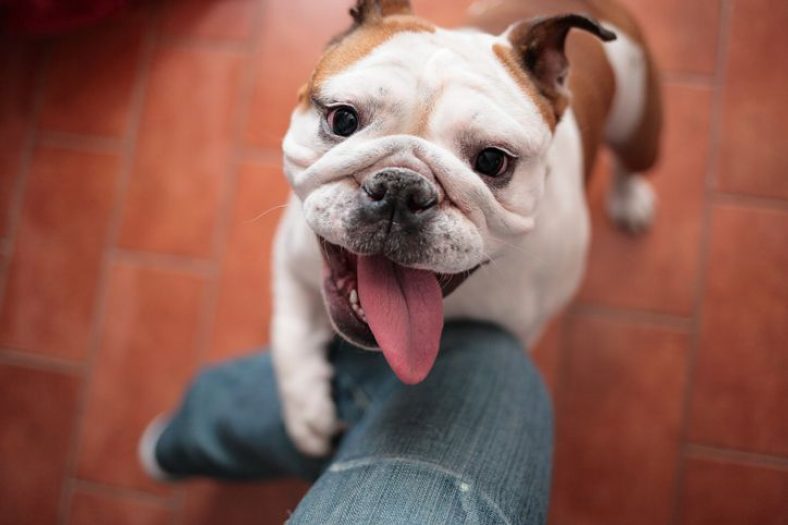
It’s common for puppies and young adult dogs to pee when excited. Instead of squatting or lifting a leg, they may urinate while standing, walking, jumping or running. They may also involuntarily pee during active playtime, petting sessions and high-energy greetings. Excitement urination is not something your dog can control, says Holly Lewis, founder of Cold Nose Canine. You should not scold your dog because he may become fearful of peeing in front of you.
Why do dogs pee when excited?
Puppies also urinate when they are keyed up because their bladder muscles are still growing. While most young adult dogs grow out of excitement urination, Holly says not all dogs do. A 2020 study published in Frontiers in Veterinary Science also found that neutered or spayed adult dogs were more excitable than intact adult dogs.
How to stop dogs from peeing when excited
You cannot teach your puppy not to pee when excited because it isn’t something he can control. Time is the best solution because most puppies outgrow excitement peeing as they reach physical maturity around 12 to 24 months old.
But Holly says that you should teach family members and guests how to interact with your dog until he gets his ya-ya’s out. She suggests using a low, calm voice. Take slow, steady breaths, and do not fidget or make small, repetitive movements. Completely ignore your dog until he settles down.
Tips for managing your dog peeing when he’s excited:
If you greet and play with your pup outside, there is no clean-up!
Put a puppy pee pad or newspaper down where your dog greets people to make cleaning up easier.
Take him on frequent bathroom breaks and walks to empty his bladder.
If your dog pees on the floor, ignore him and quietly clean it up. Seems too harsh? Praise will confuse your pooch, and punishment can cause submissive urination.
Submissive urination vs excitement urination in dogs
Excitement urination in dogs is often confused with submissive urination. Submissive urination happens when your pup is shy, anxious or scared. It is the canine equivalent of, “You are in charge, so I do not want any trouble!” Holly says your nervous or shy dog loses bladder control because he feels emotionally overwhelmed. Submissive urination helps him get ready to flee. When he empties his bladder, he is making himself lighter.
When to get your dog professional help
If your dog flattens his ears, licks his lips or hunches his back, submissive peeing might be a behavioral issue. It needs to be addressed by a positive reinforcement-based dog trainer. Health problems like diabetes and urinary tract infections can also cause inappropriate peeing. Many products on the market can soothe your canine’s stress, from dog anxiety wraps to CBD dog treats. Talk to your vet about which dog calming aids are best for your pup. Just remember he is not peeing when he is excited or scared to make you mad.
Belgian Prime Minster Alexander De Croo said the next five to 10 winters could be “difficult.”
Europe faces an energy crunch as Russia has been slowing natural-gas flows via a key pipeline.
European household energy bills have surged and could rise further.
Europe could be in for a stretch of long, hard winters as energy prices surge to record highs amid the war in Ukraine.
“The next 5 to 10 winters are going to be difficult,” said Belgian Prime Minster Alexander De Croo at an event in Belgium on Monday, as reported by broadcaster VRT. “In a number of sectors, it is really difficult to deal with those high energy prices. We are monitoring this closely, but we must be transparent: the coming months will be difficult, the coming winters will be difficult.”
De Croo’s comments come as Europe faces an energy crunch exacerbated by Russia’s war in Ukraine. The continent depends on Russia for its natural gas needs, importing about 40% of its fuel from the country. But Russia has slowed gas flows via the key Nord Stream 1 pipeline to 20% of its capacity, citing technical issues. European officials say the move is retaliation against sanctions over the invasion of Ukraine.
Belgium imports just 6.5% of its natural gas needs from Russia, according to The Brussels Times, citing official data. However, energy bills are still going up in Belgium as prices have soared on the global markets. On Monday, benchmark Dutch natural gas futures jumped almost 20% in one day to a fresh record high on news of an unscheduled three-day shutdown of the Nord Stream 1 pipeline from August 31.
Surging energy prices pushed the cost of electricity in Belgium on the wholesale market to a fresh record high on Sunday, per The Brussels Times. This in turn translates to record high energy bills for households.
Other countries in Europe are also expecting energy bills to continue rising. In the UK, household energy bills in early 2023 are expected to be four times higher than they were between 2018 and 2021, per the Financial Times. In Germany, energy bills are likely to double for households as companies pass on rising natural-gas costs, the AFP reported in early August, citing an electricity provider.
Biting is frustrating behavior for new puppy owners, but the behavior is very natural. Puppies aren’t trying to be mean or destructive when they bite at people or things, they are just exploring the world. That said, it’s important for puppies to learn to keep their mouths to themselves at a young age to prevent behavioral problems in the future: a puppy mouthing or biting is more socially acceptable than an adult dog mouthing at people. Training a puppy not to bite takes a patient and gentle approach.
Puppies bite people and objects for a variety of reasons, including exploring the world through their mouths. As a result, biting and chewing are normal parts of puppy development. Common reasons that your puppy might be biting you or things around your house include:
Teething — As they grow and develop, puppies lose baby teeth and their adult teeth grow in. This process often actively happens right around the time that puppies go home to their forever families. Just like how human babies can be irritable when teething or stick everything in their mouths while trying to massage their gums, the same is true for teething puppies. Many puppies chew or bite at things to relieve discomfort from teething.
Stress relieving — What do puppies have to be stressed about? They eat, sleep and play. But, there is a lot to be stressed about — their world is confusing and changing. Puppies are adjusting to all kinds of new situations, people, places and experiences. Mouthing and chewing help puppies reduce some of that stress.
Boredom — When puppies and dogs are bored, they look for things to chew. Chewing is fun and a way that they can entertain themselves. This is something to encourage (with dog-safe chews) because it’s good for our puppies.
Play —Young puppies often haven’t mastered a skill called bite inhibition, or awareness about using their mouths while playing. Young puppies generally learn from their littermates to modulate how much and how hard they can bite while playing. When you bring a young puppy home, they may still be developing and refining these skills.
How to train a puppy not to bite:
Step 1: Make sure the puppy has lots and lots of outlets for safe and appropriate chewing, including puppy-safe chews and toys specifically designed to be chewed. We don’t want to stop our puppies from chewing, we just want them to chew on safe and appropriate things.
Step 2: Supervision is very important for puppies. Set them up for success by not leaving them with access to things that you don’t want them to chew. Sometimes referred to as “puppy proofing,” you need to prevent your puppy from having access to things she might bite or chew that could be harmful or damaged.
Step 3: If your puppy is biting you when you play or are engaging with her, don’t yell or punish your puppy. Instead, when your puppy bites, make a high-pitched crying sound and then redirect your puppy with a toy that’s safe and appropriate for hr to bite or chew on. By making a high-pitched crying sound, you’re telling your puppy that the biting hurts. Doing this mimics, the same feedback puppies get from their littermates about how to bite softer or less while playing.
Step 4: Be consistent while playing with and training your puppy. Puppy bite training should be something everyone in the family is on board with by consistently gently redirecting your puppy to safe chew toys.
How to stop puppy biting: a recap
The best way to stop a puppy from biting is to prevent inappropriate biting as much as possible by providing your puppy with plenty of appropriate things to chew. When your puppy bites things he shouldn’t, redirect him to toys that are appropriate for tugging and chewing. If your puppy bites at you, he isn’t trying to be mean. Don’t yell at your puppy or scold him. Instead, make a crying noise mimicking what his littermates would do. Then, redirect your puppy to play with, mouth and bite an appropriate toy or chew.
James Coddington is scheduled to be executed on August 25.
His killing would be the first of two dozen scheduled to take place in Oklahoma.
Coddington’s case highlights the connection between addiction and the criminal justice system.
“If this ends today with my death sentence, okay,” a condemned inmate told Oklahoma’s Pardon and Parole Board 25 years after a dayslong cocaine bender sent him to death row.
In 1997, Coddington had gone to the home of 73-year-old Albert Hale, his coworker at a Honda shop, to borrow $50 for cocaine. Hale, who refused to give him the money, tried escorting him out of his home before Coddington picked up a nearby hammer and struck him with it repeatedly, according to court filings.
Hours later, Hale was initially found alive by his son but later died, after succumbing to the damage inflicted on his brain and skull, court documents suggest. Coddington was sentenced to die in 2003.
Addiction and abuse as catalysts for his death sentence
This Feb. 5, 2021, photo provided by the Oklahoma Department of Corrections shows James Coddington.
Oklahoma Department of Corrections via AP, File
James Coddington was born to Bill Coddington and Gala Hood on March 22, 1972. He was the second-youngest of their combined nine children and had been subject to a turbulent upbringing, according to court records.
Both of Coddington’s parents experienced addiction, which he would also endure. Starting from the time he was an infant, Coddington’s father and older brothers regularly spiked his baby bottles with alcohol, his siblings confirmed to the court.
Similarly, many of Coddington’s siblings also struggled with drug abuse and several had been in and out of jail for drug-related crimes.
His mother had been in and out of jail while he was young, leaving his father to run the household. Legal filings suggest the Oklahoma City house — where the tub was used as a toilet as pests and roaches ran rampant — was “not even fit for a rat.”
Court filings said Bill Coddington, who had his own run-ins with the law, physically abused James throughout his childhood.
His mother recalled Bill Coddington “whipping [James] hard or slapping him or hitting him or if he got too rowdy, [Bill Coddington would] throw a bottle full of whiskey or beer and just knock him out,” per court documents.
Ngozi Ndulue, deputy director of the Death Penalty Information Center, told Insider that acknowledging James Coddington’s relationship with addiction and the criminal justice system during his upbringing is necessary to understand his journey to death row.
“I just don’t want to lose track of the fact that his life, from a very early age, was affected by the criminal legal system, and then also by people with substance use disorders really shaping the childhood that he had and making it much more likely that he would end up in that cycle of drug use,” Ndulue said.
A medical examination completed by an Oklahoma psychiatrist the same year found that Coddington’s “drug-induced psychosis” led to his “impulsive” killing of Hale. Further, a psychiatric evaluation of Coddington conducted in 1998 showed that he suffered from “mild neuropsychological impairment.”
During the trial, the judge barred a psychiatrist from testifying about Coddington’s inability to form “the required intent for first-degree murder due to his intoxication,” prompting a retrial in 2008. But he was once again sentenced to die, according to court filings.
“I think thinking about this one moment where he commits this crime that he was deeply remorseful for, without taking it into the broader context of how the system actually shaped him and affected where he ended up at that time, I think is shortsighted,” Ndulue added.
Seeking redemption
Prior to Hale’s death, Coddington’s life was marred by poverty, addiction, and abuse, but the 50-year-old inmate has since turned his life around as best as possible behind bars, Emma Rolls, Coddington’s attorney, told Insider.
“I’m clean, I know God, I’m not … I’m not a vicious murderer,” Coddington said at a parole hearing seeking clemency.
Rolls said killing Hale marked a turning point for Coddington as demonstrated by his “exemplary behavioral record” and involvement in the prison: “It made him not want to live out any more moments in vain.”
During his time in the Oklahoma prison, Coddington received his GED and became a man of faith, legal filings said.
At the prison, he’d also taken on the role of unit orderly — helping with staff needs throughout the prison — and the role of run man — in which he gave other inmates their meal trays.
Coddington was even selected as one of four death row inmates to participate in a pilot communal yard time project where inmates were placed in separated outdoor yards.
In court documents, Rolls wrote: “James has lived his transformation on death row. His sobriety, service, and compliance with rules of the society in which he lives are documented. The man the jury convicted and sentenced to death no longer exists.”
Oklahoma’s Pardon and Parole Board recommended that Coddington’s death sentence be commuted to life without the possibility of parole on August 3, but it’s up to the governor to actually reduce his sentence.
“I took a life. It changed me. It changed me in a way that I can’t explain, but it changed me. It took a fire out of my stomach that I had my entire life and it made me calm. I don’t know why he had to die to do that, but it did. It calmed me. And I can’t apologize enough for what I did,” Coddington told the board during his clemency hearing.
“He lives the life of compassion, of peace, of service and atonement. And I think that’s the real testament of his belief. He is not a person who’s going to without humility, discuss his beliefs. But every day he lives out the principles of redemption,” Rolls told Insider.
“This is the purest case that the governor will likely see that involves these concepts,” Rolls added.
Many people think about helping others and contributing to a greater good. It’s not always easy to come up with ideas for how to take action, but giving back doesn’t have to be costly or complicated. If you’re unsure about the skills you have to offer, we’ve collated a few ideas to provide you with some inspiration.
1. Donate To Your Favorite Charity
When you are thinking about making a charitable donation, consider donating to a cause that is close to your heart. You’re not required to specifically donte money — food, furniture, appliances, books, hygiene products, blankets and clothing are all great options too.
It’s important to research both the cause and the structure of the organization to see how effectively the organization uses your donation. You can get a sense of the organization by researching its activities such as upcoming programs or fundraises. Indicators of trustworthy organisations include transparency, a reliance on evidence, cost-effectiveness and a strong track record.
According to Forbes.com, when choosing a charity, search for one that dedicates “less than 30% of its total costs to administration and fundraising expenses.” You can use websites such as Charity Navigator and Guidestar.org to locate this kind of information. That way you can be confident that your charity will maximize your donation.
2. Volunteer Your Time
If you’re concerned about not having any donations to give, you can also help by volunteering your time. Consider your skill set and decide which volunteer opportunities match with them. If you have a green thumb, you could volunteer at a community garden. Are you great with people? You could assist at a retirement home or a hospital. Or if you’re looking at improving your resume, in some industries, you can volunteer directly at an company that does the kind of work you’re interested in.
Volunteering impacts the community and also allows you to form new relationships, grow your network and gain experience in a new field. You may discover a new sense of purpose or new talents you didn’t know you had. Here are some volunteering ideas to get you started:
Work at a non-profit organization
Serve meals at a food bank
Join a mentorship program
Working on a community garden
Volunteer at a senior center
Work at a food drive
Give blood
Help build a home
3. Give A Gift That Gives Back
Giving is brings so much joy, so why not give an item that gives back to the community? For example, is someone on your gift-giving list a lover of skin care? Through our Forests for the Future™ initiative, for every product sold we plant a tree in developing countries around the world. When you purchase any Eminence Organics product, you’re also helping global communities restore their environment, grow more food and build a sustainable future.
Interestingly, giving has its health benefits too. Recent studies have shown that giving can actually increase your health, happiness and overall well-being. Giving can reduce stress, combat depression, keep you mentally stimulated and provide you with a sense of purpose.
causes Close To Our Heart
At Eminence Organics, we contribute to several charities throughout the year such as our very own Eminence Kids Foundation. Our company president, Boldijarre Koronczay, is a survivor of a rare form of childhood leukemia. This experience left Boldijarre with the belief that nourishing the body both inside and out is an optimal way to achieve total health and wellness. As a result, the Eminence Kids Foundation delivers seasonal, organic fruits, juices and vegetables to long-term care facilities in the United States, Canada and Hungary, where it all began.
The Foundation strives to instill healthy choices in children at a young age so they can carry the knowledge to make smart, nutritional decisions throughout the rest of their lives. A portion of the proceeds from every product sold goes towards the Eminence Kids initiative and ultimately helps provide organic fruits, vegetables and foods to sick children around the world.
As mentioned earlier, the Forests for the Future™ program trains farmers in developing countries to build productive and sustainable forest gardens. The gardens empower local people to replenish their environment, grow their own crops and build a sustainable income and future for themselves, their families and their communities. A single tree produces approximately 260 pounds of oxygen per year, while also providing a habitat for biodiversity and helping combat climate change. Thanks to this program, Eminence Organics is the first and only skin care company to plant over 20 million trees!
Are you considering volunteering, donating or purchasing a gift for someone? Let us know in the comments below! You can also visit our Charities Page to learn more about our philanthropic programs and initiatives.
Choosing an easy-walk harness for your dog requires you to look at your dog’s current training needs, age, level of pulling and size as well as your budget. The PetSafe Easy Walk Harness is one of the most popular ranging in price from $20 to $30. It is available in most pet supply stores, brick and mortar and online, as well as the Petsafe website.
What is an Easy Walk Harness?
An Easy Walk Harness’ most prominent feature is that the dog’s leash is clipped to the front of him. The advertisement of being a “no-pull dog harness,” which an Easy Walk Harness is, is often the main reason a dog owner is drawn toward this style. Trainers, who use positive re-enforcement techniques, will often choose them over prong, shock or slip collars, because of the ability to easily and safely refocus and control the dog without the risk of harming the dog physically or mentally.
Although people tend to refer to any no-pull harness as an easy walk harness, they aren’t. Easy Walk Harness is a brand name, much like Kleenex is a brand name for tissue. The Petsafe Easy Walk Harness was developed by a veterinary behaviorist in 2004. It is a simple looking harness with a strap that fits around the girth of your dog’s chest behind his front legs and a second strap that loops from the original around the front of your dog’s chest in front of his front legs sitting near the top of his breastbone. The area to clip the leash is on this front strap and is secured to a loop that mirrors that found in a martingale collar. If the leash pulls, the loop pulls out bringing the two sides of the strap together making it tighter.
The PetSafe Easy Walk Harness isn’t the only no-pull harness in the category with the martingale feature. Erin Mahoney, a dog trainer certified by the Animal Behavior College, identifies this as a safety feature that, when sized correctly, can keep your dog from getting out of the harness.
What size Easy Walk Harness should you use?
These harnesses are usually sized based on the girth or “chest width” of your dog. Using a tape measure, measure the biggest part of your dog’s chest, where the harness strap will fall. It will wrap around the rib cage from your dog’s shoulders down to approximately 1 inch behind his front legs. Some brands, like PetSafe, include a second strap measurement guide that goes over the breast bone from the two points it would connect with the first strap. Sizes range from petite or extra small to extra-large. Petsafe includes approximate weight in their sizes while other brands, like Kurgo, offer breed size comparisons. Refer to the harness brand’s website for specific measuring and sizing instructions.
Once you receive the harness, read instructions or watch videos that the brand has available to get the fit correct. It’s important that the front strap fit snuggly and doesn’t fall down. If that happens, the harness could be putting pressure on the wrong part of your dog’s body, which could injure your dog.
What is the Gentle Leader easy-walk style harness?
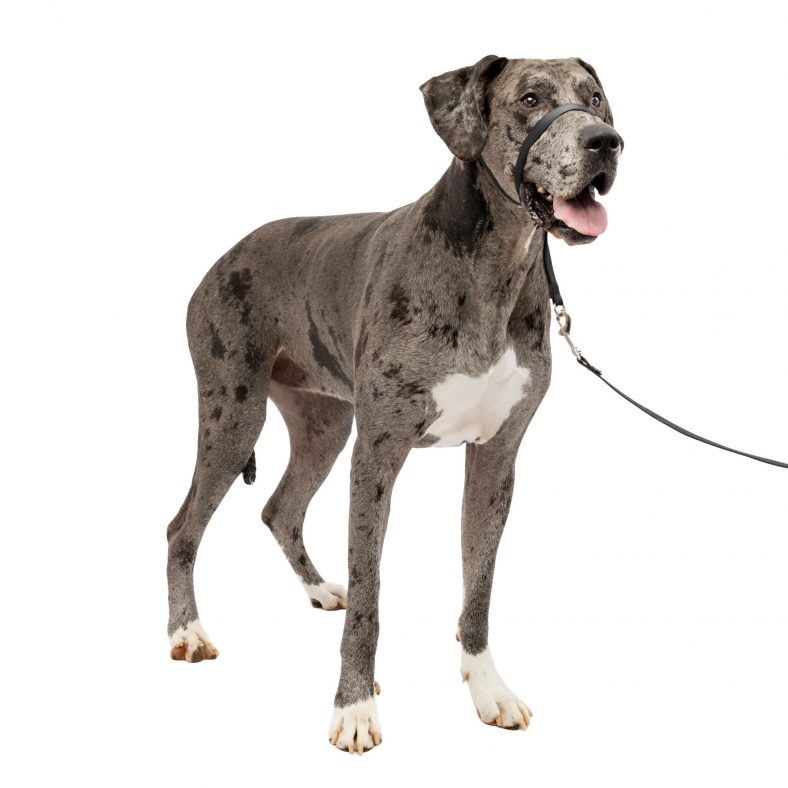
The Gentle Leader is another Petsmart product. It is a collar style easy-walk tool. It looks like a collar with an additional loop that goes around your dog’s nose. It sits high on the snout so that it does not act like a muzzle. Your dog has the ability to drink, pant, bark, play ball, etc. The headcollar style makes it very easy to redirect your dog’s focus when needed since you can control where his nose is pointing.
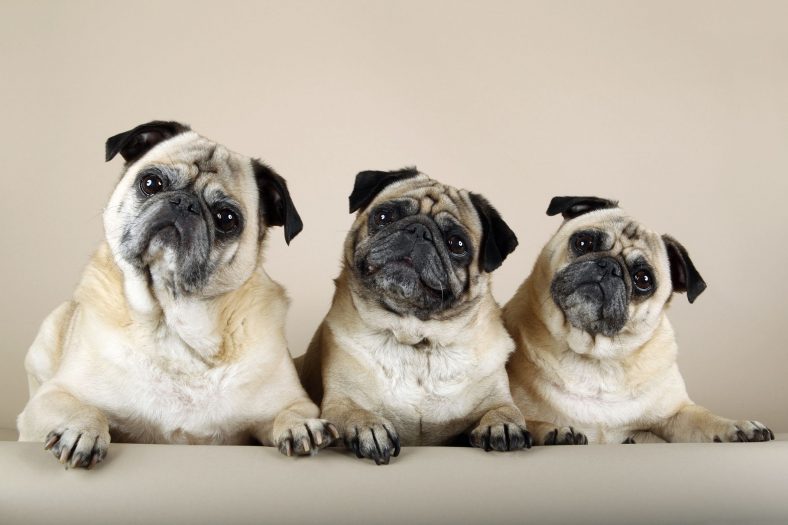
The head collar can outperform the harness in a couple of ways. Redirecting is easier and you have the ability to control a dog from lunging or jumping up. This style cannot be used for all breeds. Those with flat or short snouts won’t be able to get a fit that is effective. It also often requires additional training to get a dog used to and comfortable with the style.
There are other brands of head collars or head halters. Sizing is usually done by measuring your dog’s neck or by weight.
Who should use an easy-walk style harness or halter?
Erin uses the Easy Walk Harness when training puppies who are still developing physically, so that there is no concern with harming the trachea like there may be with a gangly and energetic puppy on a collar. She will also choose this type of harness when working with aggressive and strong pullers. Erin believes all dogs using these harnesses should understand focus/eye contact, leash pressure, “wait”/“sit” and “leave it” commands.
This style of harness will work for almost all dogs, although if fit or sized incorrectly, a dog could injure himself. These harnesses work by giving the owner control of the dog but are designed to do so with restricting as little movement as possible. In 2013 Dr. Christine Zink pointed out to Dogster’s sister publication, the Whole Dog Journal, that she, at the time, didn’t believe there are any no-pull harnesses that are non-restrictive. Since that article, there have been front clip harnesses whose design takes into account Christine’s concern.
This is the original and brand name Easy Walk Harness. It is easily available at most pet stores in store and online. The cost is approximately $23. Petsafe offers other easy walk harnesses styles, which range from $26 to $38. The Petsafe Easy Walk Harness is the brand Erin is most likely to use in her training.
The Balance Harness Buckle Neck was one of the top front clasp harnesses when a comparison was done by Whole Dog Journal in 2017. One of its key features is how its design differs from other easy-walk harnessess. This harness has a strap that sits low around the dog’s neck, one strap around the dog’s ribcage sitting further back than other styles and a strap connecting them that runs down the dogs back and down his chest. Without a strap going across the chest, this style allows for complete freedom of movement of the dog’s shoulders, limiting the issue Dr. Zink has about these types of no-pull harnesses. All straps are adjustable making the harness easy to fit to any dog and they encourage a double lead that latches to both the top and front of the harness for the most control. The Balance Harness Buckle Neck is approximately $40 and can be purchased at Sitstay.com and Amazon.
This brand looks more substantial compared to other strap styles. You can see that it includes additional padding on the straps focusing the extra cushion on the dog’s back and front chest. The model also has a handle on the back for extra control and the back d-ring leash hook option. The Walk About Harness is available on Kurgo’s website for approximately $34. It is also available online at Chewy.com and Amazon.
Ruffwear is known for its active dog gear. Its front clasp harnesses are a full padded harness style and because of this they don’t have the martingale safety feature found in the strap style harnesses. It does have more padding which means more comfort, as well as both front and back leash connection options which can be useful for dogs in active situations like hiking. Along with an ID pocket to keep dog tags quite, the harness also has a light loop for a dog safety light like The Beacon. The cost of the harness is approximately $50 and is available on the Ruffwear website as well as online at REI.com and Amazon.
The Gentle Leader discussed earlier is nylon with a padded nose loop. It is approximately $20 and can be purchased on the PetSafe website, at most pet stores in person and online as well as Walmart.com and Amazon.
Like the Gentle Leader this halter is designed to control a dog by a strap over the nose. It has a slightly different design that looks like a collar with a strap around it that then loops over the nose. It makes it easy to turn the halter into a collar and makes it more difficult for the dog to escape from the restraint. The Sporn Head Halter is approximately $30 on the brand’s website as well as Chewy.com and Amazon.
A front clasping Easy- Walk Harness is an effective training tool that, when used properly, can help you and your dog enjoy stress-free walks.
If you want to be savvy about your skin care, we have a buzzed-about ingredient that you’ll want to know about: alpha hydroxy acids, or AHAs. These skin care saviors are a group of natural acids and chemical exfoliants which, when introduced to your regular skin care routine, give you that coveted, glowing complexion. AHAs not on your radar yet? Here’s how AHAs works and why chemical exfoliation will uncover your inner radiance.
AHAs are water-soluable molecules that work on the outer layer of the skin (the epidermis). They are a type of chemical exfoliant that loosen the bonds that hold dead skin cells in place. AHAs are ideal for treating issues that lie on the skin’s surface. They’re proven to be a better solution for more dry and mature skin types because they exfoliate while also providing moisture. Read on to find out about the different types of AHAs you can use in skin care.
Different Types Of AHAs
Glycolic Acid
Glycolic acid is a type of AHA naturally found in fruits and sugar cane. It is the most popular AHA — its small molecular size allows it to deeply penetrate into the skin, making it more effective than other acids. If you’re looking to minimize the visible signs of aging (such as fine lines and wrinkles), then glycolic acid is for you. Categorized as a humectant, glycolic acid not only exfoliates, but also attracts moisture to the skin to give you some extra hydration.
Mandelic Acid
Derived from almonds, mandelic acid accelerates skin cell turnover and removes dead skin cells. This exfoliating action will leave the complexion looking far smoother than before. As Medical News Today states: “Mandelic skin eliminates damaged and older skin cells and replaces them with newer, firmer-looking skin cells.”
Malic Acid
Malic acid is one specific type of fruit-derived AHA that you can find in pears and apples. According to Byrdie, malic acid exfoliates the top superficial layer of the skin. As a result, you’ll notice a smoother-looking texture and clearer-looking pores. Malic acid is unique in that it acts as a humectant, attracting moisture to your skin. Secondly, it has a larger molecule size, reducing its penetration into the skin. This reduced size makes it a gentler than other AHAs and ideal for those with sensitive skin.
ferulic acid
Ferulic acid is a very powerful antioxidant that is naturally found in plants, including bran and certain fruit seeds. This acid is known for fighting against free radicals, unstable molecules that can cause damage to your skin cells. In terms of damage, picture premature aging and a loss of skin firmness. Free radicals are produced by environmental aggressors like pollution, smoking, the sun’s UV rays or a poor diet. Thankfully, ferulic acid will help neutralize free radicals if you use it in your skin care.
Lactic Acid
Lactic acid is a gentle AHA exfoliant that removes surface build-up for a brighter, smoother-looking complexion. Typically derived from milk, it can also be derived from corn starch, beets, and other sugar-rich foods. Lactic acid is used to smooth, brighten and even-out skin texture and tone. It also reduces the appearance of dark spots and smooths fine lines and wrinkles.
If you’re interested in using this ingredient, our lactic acid-powered Mangosteen Gel Moisturizer won the Allure 2021 Best of Beauty: Clean Beauty Product category for a reason! This non-comedogenic formula has a lightweight consistency to minimize the look of environmental stress, all while its lactic acid ingredient promotes a natural radiance and glow.
Tartaric Acid
Tartaric acid is sourced from grapes and tamarinds, as well as wine and cream of tartar. As it’s derived from antioxidant-rich fruits, tartaric acid is a great source of antioxidants. Antioxidants help defend the skin from damage triggered by free radicals and environmental factors similar to what is listed above: UV rays, pollution, and more.
What Do AHAs Do?
1. AHAs Gently Reveal New Skin Cells
AHAs exfoliate the uppermost layers of skin to encourage fresh, new skin cells to come to the surface. This process will reveal smoother and more youthful-looking skin as a result. By clearing away dead skin cells, new skin cells will come to the surface, making your skin appear more refreshed and youthful-looking. You’ll boost the wattage for your complexion and restore your luminosity.
Lactic acid is the most gentle of all the AHAs and safe for all skin types and skin concerns. This acid resurfaces the skin by breaking down the “glue” that binds together the dead layer and debris at the outermost layer of the skin. The acid dissolves away dead skin cells, promoting a more radiant-looking complexion. Our lactic acid ingredient is even perfect for people with sensitivity to animal products. Lactic acid is a key ingredient in our Mangosteen Collection, which features our proprietary Lactic Acid Complex. This complex is formulated to reveal your best, most luminous-looking skin. Although lactic acid is often derived from milk, the acid in our Mangosteen Collection is actually sourced from plant sugars, making every product in this collection vegan.
2. Brightens The Look Of The Skin
Exfoliation can visibly revive your skin, taking it from dull and tired to looking glowing and healthy. Experience a brighter-looking complexion using our Mangosteen Lactic Pro Peel 10% at an authorized Eminence spa. This professional peel removes surface buildup with immediate results and no downtime, even for sensitive skin. Or, if you want to go for the glow at home, try our Mangosteen Daily Resurfacing Concentrate, another great product for gently resurfacing and refining pores. The mangosteen in this leave-on concentrate promotes radiance while the Lactic Acid Complex removes and prevents buildup, refreshing the skin’s natural appearance.With lactic acid sweeping away your dead skin cells, you’ll find your complexion looks visibly brighter and your skin tone appearing more even.
3. Retains Hydration And Moisture
Some AHAs, such as glycolic acid, actually have the ability to help your skin retain moisture and add hydration. Glycolic acid has the ability to train the skin to become better at retaining its natural moisture. AHAs hydrate the skin in the short term, but dermatologists also believe that these acids enhance the skin’s moisture-retaining ability in the long-term so that the tissue maintains its soft, padded firmness.
You can soak up this extra hydration and moisture thanks to the lactic acid ingredient in our luxurious Mangosteen Replenishing Hand Cream. With each application, this silky formula gently resurfaces hands to reveal soft, youthful-looking skin and provides long-lasting hydration.
4. Reduces The Appearance Of Fine Lines And Wrinkles
Not only do AHAs improve radiance and moisture retention, they also reduces the look of fine lines and wrinkles. By resurfacing the complexion and evening out skin tone, your face will look revitalized and your skin texture refined.
As the number of monkeypox cases grows in the U.S. and around the world, many dog parents are asking, “Can my dog get monkeypox?” or “Can I give my dog monkeypox?” and even “Can I get monkeypox from my dog?” Let’s examine the facts about monkeypox in dogs and how you can keep your family safe.
What is monkeypox?
Monkeypox is a virus related to human smallpox. After human smallpox was globally eradicated in 1980, monkeypox has become a most important public health virus and is closely monitored worldwide. Monkeypox is a viral infection in many mammals, particularly nonhuman primates and African rodents.
Monkeypox gets its name because it was first discovered in research monkeys in 1958. In addition to nonhuman primates (monkeys and apes), African rodents (such as rope squirrels, tree squirrels, African giant pouched rats and dormice) may also harbor the virus. While African rodents are suspected to be the main monkeypox virus carrier, this has yet to be confirmed.
Even though monkeypox can infect many animal species, monkeypox virus has only been found twice in the wild: First from a rope squirrel and then from a mangabey. Both animals were found in central or west Africa, according to the Centers for Disease Control and Prevention (CDC).
In the U.S. and other non-endemic regions, scientists are concerned about spillover of monkeypox to wildlife from infected people or domestic mammals, stressing the importance of infection control measures to contain the disease.
In the U.S., monkeypox transmission to humans from animals was documented in a 2003 outbreak in prairie dogs, a pet squirrel species. The prairie dogs were infected after being housed near small mammals imported from Ghana. This was the first time human monkeypox had been reported outside of Africa.
What are the symptoms of monkeypox in humans?
People can catch monkeypox from animals, but the chance of this happening in the U.S. is currently low. Based on how monkeypox has spread outside Africa, it appears you have a higher risk of contracting monkeypox from another person.
In humans, monkeypox causes fever, swollen lymph nodes, flu-like symptoms and a rash often around the genitals, hands, feet, chest, face or mouth. The rash often looks like pimples or blisters and may be painful or itchy. Some people may experience all of these symptoms, a combination of clinical signs or only a rash.
Symptoms of monkeypox in humans usually start within three weeks of viral exposure. If an infected person develops flu-like symptoms, they typically develop a rash one to four days later.
Monkeypox is contagious from the time symptoms start until the rash has healed, all scabs are gone and a healthy layer of skin has formed. Human monkeypox infection typically lasts two to four weeks.
Can I spread monkeypox to my dog?
Dogs are susceptible to monkeypox. In Paris, France, the first confirmed case of canine monkeypox was from a Greyhound living with two humans infected with the monkeypox virus.
If you become infected with monkeypox, do not surrender, euthanize or abandon your pet because of potential exposure.
Monkeypox transmission from infected people to dogs may occur through close contact, such as:
Hugging
Kissing
Licking
Sharing beds
To keep your dogs safe, people with symptoms of monkeypox, particularly the monkeypox rash (pox-like skin sores), should avoid all contact with animals.
What are the symptoms of monkeypox in dogs?
The signs of monkeypox in dogs are similar to symptoms of many common infectious diseases. Infected dogs with monkeypox may develop:
Fever
Cough
Red eyes
Runny nose
Lethargy
Poor appetite
If these signs occur in your dog, and he has had no known exposure to someone with monkeypox, it is highly unlikely to be monkeypox. Have your dog examined by your veterinarian to determine the cause of illness.
If your pet develops at least two of these signs or a pimple-or blister-like rash within 21 days after contact with someone diagnosed with monkeypox, immediately contact your veterinarian. They will advise you on what to do, including testing to confirm if your dog has the monkeypox infection.
Is there a treatment or cure for monkeypox in dogs?
There are no treatments specifically for monkeypox virus infections in humans or dogs. Because monkeypox and smallpox viruses are genetically similar, antiviral drugs and vaccines developed to protect against smallpox may be used to prevent and treat monkeypox virus infections in humans. Treatment for infected dogs will be determined by the attending veterinarian.
If you are worried your dog has monkeypox:
Keep your dog separate from all other animals, including wildlife.
Minimize contact with people for at least 21 days after the first clinical signs first appeared or until your pet has fully recovered.
Do not share beds, furniture or engage in close contact of any kind with your dog during the 21-day period.
This is especially important for households with people who are immunocompromised, pregnant or younger than 8 years, and those who have a history of atopic dermatitis or eczema.
Do not bathe or clean your dog with alcohol, bleach or other non-dog safe cleansing agents, solutions or shampoos
Follow all CDC recommendations to protect others in the home from infection.
If someone in your home has monkeypox, take these steps to protect your dog from getting monkeypox:
If the infected person did NOT have close contact with your dog after developing symptoms, have the dog stay with friends or family members outside the home until the infected person has recovered fully.
If that person DID have close contact, keep your dog at home and away from people and other animals for 21 days after the last possible contact with the infected person.
If possible, have another person in the home care for your dog until the infected person has fully recovered and been cleared by his doctor.
Your dog may need to be isolated in a facility outside the home if there are people at risk of severe disease: immunocompromised, pregnant, children younger than 8 years old or household members with a history of atopic dermatitis or eczema.
Follow all CDC recommendations to protect others in the home from infection.
Hand hygiene – the use of an alcohol-based hand rub or hand washing with soap and water – should be used by people with monkeypox and household contacts after touching rash material, clothing, linens or environmental surfaces that may have had contact with rash material.
Cover all skin rashes as much as possible by wearing long sleeves or long pants. Gloves can be considered for covering rash on the hands when not in isolation.
People with monkeypox should use well-fitting source control (e.g., medical mask), if close contact with others cannot be avoided, such as when receiving medical care.
Other household members should wear a respirator or a well-fitting mask when in close contact (e.g., within 6 feet) with the person with monkeypox for more than a brief period.
Humans can spread monkeypox to dogs, but by watching out for the onset of monkeypox symptoms, and avoiding close contact with your dog while infected, you can help stop the spread of the monkeypox virus.
Luis Miguel, a candidate for Florida’s House, was removed from several social media platforms Friday.
Twitter, Instagram, and Facebook suspended Miguel after he posted about violence against federal agents.
Miguel said that under his plan Floridians could shoot FBI, IRS and ATF agents “on sight.”
Luis Miguel, a GOP candidate for Florida’s House of Representatives, was banned from several social media platforms on Friday after calling to legalize shooting federal agents “on sight.”
On Wednesday, Miguel, who is running in Florida House District 20, posted across his Facebook, Instagram, Twitter, and Parler accounts the same message, signed with his name: “Under my plan, all Floridians will have permission to shoot FBI, IRS, ATF and all other feds ON SIGHT! Let freedom ring!”
The post, which is still visible on his Parler account — a platform associated with supporters of former President Donald Trump — prompted Facebook, Instagram and Twitter to suspend him.
A Twitter spokesperson confirmed to Insider Miguel was permanently suspended from the platform for violating its hateful conduct policy, which states users may not make violent threats.
A Facebook spokesperson told Insider that one of Miguel’s Facebook accounts and his Instagram account were both removed, but did not respond to questions about whether the suspension was permanent.
Miguel told Florida Politics the suspension “doesn’t affect (him) at all.” The local news outlet reported he stands by the proposal, which he said is justified because the IRS has been “weaponized by dissident forces.”
The Miguel campaign did not immediately respond to Insider’s request for comment.
Miguel is running against incumbent Republican Rep. Bobby Payne in Tuesday’s primary election.
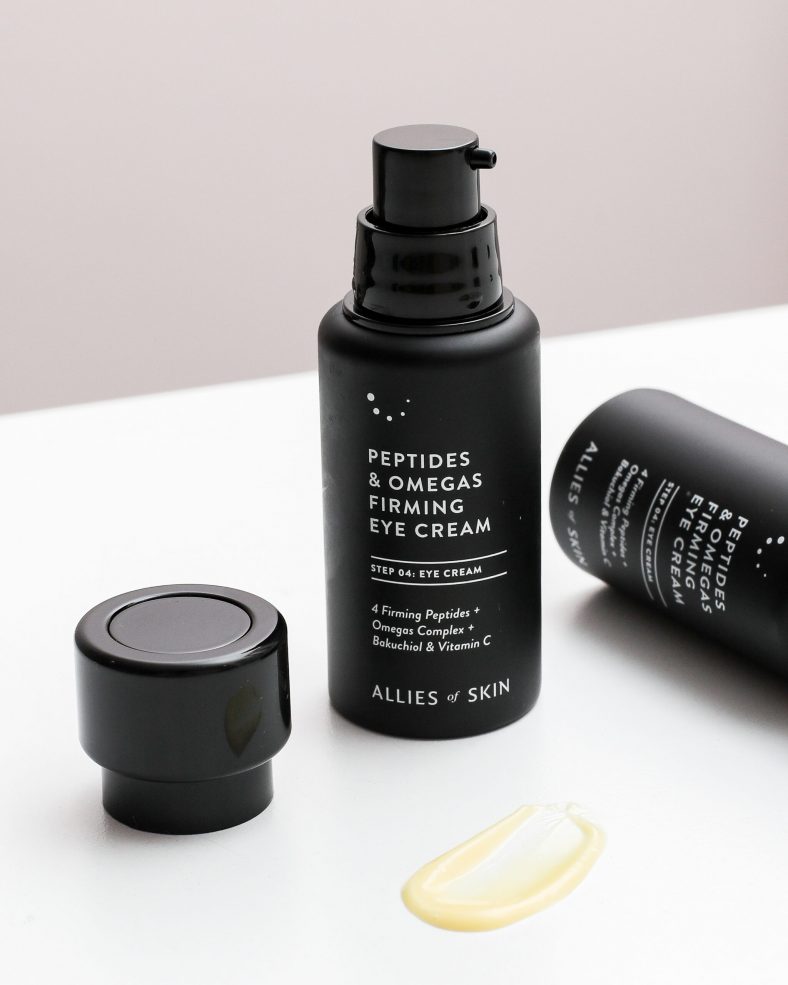
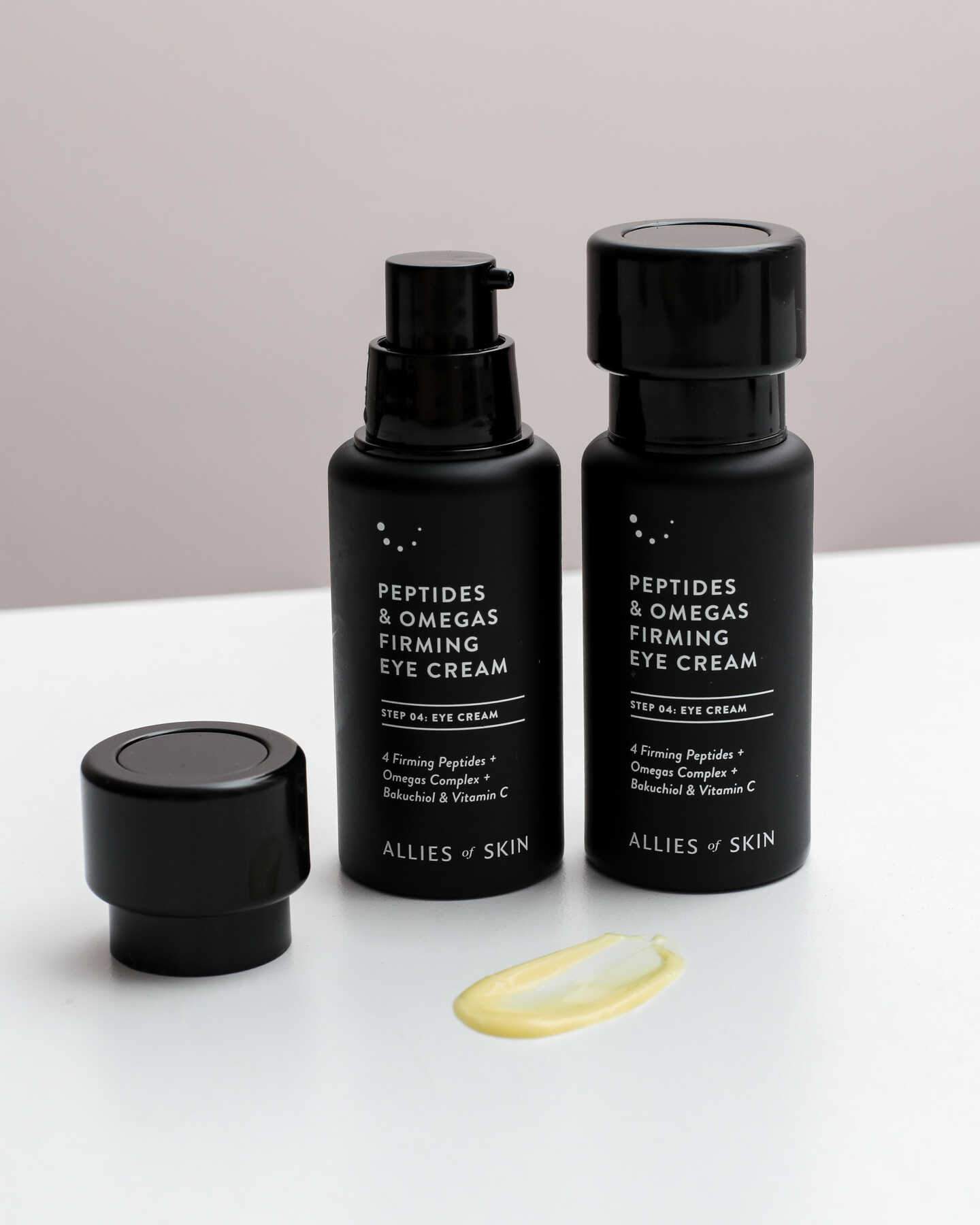
Peptides & Omegas Firming Eye Cream from Allies of Skin has been around for a year now, and has featured in my skincare wardrobe since I first tried it. This is a go-to for me if I want to look more awake, which, let’s face it, is quite often these days.
The Peptides & Omegas Firming Eye Cream instantly lifts and brightens, leaving you looking more awake. Over time, the formula stimulates collagen and elastin production to improve firmness, elasticity and dark circles. This eye cream literally does it all.
Key ingredients include:
4 Peptide blend that includes the award-winning Matrixyl® Morphomics™ and Neodermyl® actives – to firm the appearance of the eye area and improve the look of wrinkles.
Combination of periorbital (think Panda eyes) brighteners – to immediately brighten whilst working long-term to firm and reduce puffiness.
1% Bakuchiol – to improve skin elasticity and firmness
2% Squalane – to provide moisture and suppleness
Vitamin C – to target dullness and signs of fatigue
Omega-rich oils – to nourish and hydrate the eye area, leaving it soft and dewy.
This is brilliant for all skin types and slots easily into any routine. I can use this both AM and PM, as the instantly lifted look is something I need in the daytime, whilst the sophisticated formula works to reduce the signs of ageing overnight. Use 1-3 pumps, tap in (patting in circles) and follow with your moisturiser and SPF in the morning. Remember, eye cream is always before moisturiser, otherwise, as you know, it’s like putting your knickers on after your trousers, and we’re not Superman.
Allies of Skin are running a giveaway when you sign up here. You could win the entire Allies of Skin assortment or a mystery full-size product when you purchase Peptides & Omegas Firming Eye Cream.