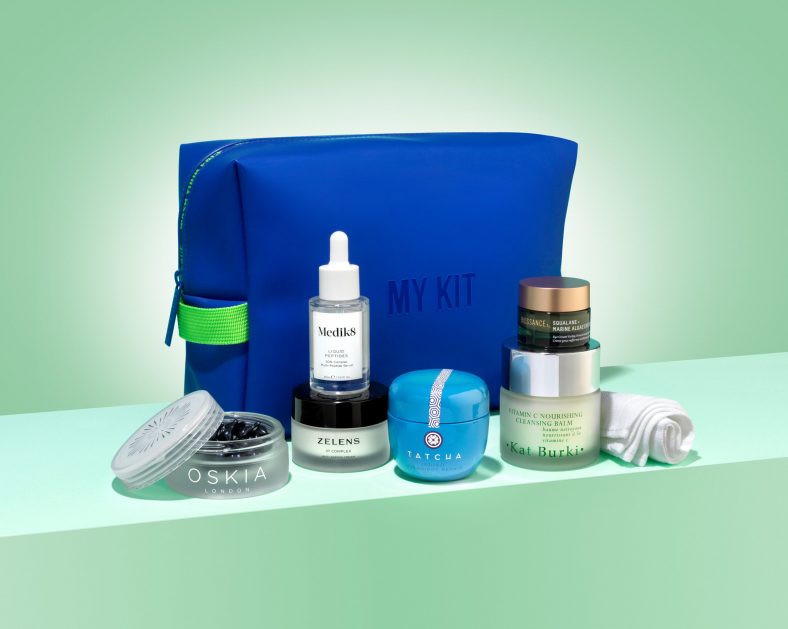
Thank you so much to everyone who purchased a Hit Refresh Kit, we hope you are loving it! This time round, we are giving you 6 weeks to use and try your products before the brand offers go live, so you can see what you love and repurchase at a brilliant price point.
Use code BIOSSANCE20 for 20% off. The offer is for 20% off the full Biossance line available on Space NK and is valid from Friday 14th October for one week only.
Use code HIRONS 20 for 20% off Medik8, internationally. Valid: Medik8.com, us.medik8.com, int.medik8.com, eu.medik8.com, de.medik8.com Excludes Kits, Travel, Accessories Press & Clear and r-Retinoate. Valid from 14th October – 18th October 2022 23:59 GMT. Not valid in conjunction with any other offer or promotion.
Use code REFRESH for 30% off. Valid sitewide until 28th October 2022. Add code REFRESH to your basket. OSKIA’s REFRESH discount offer is valid only on www.oskiaskincare.com. It cannot be used together with a different promotion or discount code. Valid until 11.59 pm GMT on Friday 28th October 2022.
Use code Caroline20 for 20% off. Valid until 23:59 BST on Thursday 20th October. While Stocks Last. Cannot Be Used In Junction With Other Offers Or Discounts. Offer is not valid on bundles, sets or kits.
Spend a minimum of £95/$185/€135 and receive a Caroline Hirons Edit GWP worth £165/$255/€218. GWP is automatically added to shopping cart when you reach the minimum 1 GWP per qualifying order. Premade bundles and Discovery Kits are excluded from the offer. Offer not valid on previous purchases or offers. Valid between Friday 14th – Friday 21st October 2022 (whilst stocks last).
Body care is part of an increasingly holistic approach to beauty and wellness. As such, you may find your Clients seeking total body experiences that treat their skin from head to toe. Meet their needs by expanding your spa’s wellness offering with results-oriented body treatments for your back bar. Not sure where to start? Here’s our suggestion for a signature body treatment protocol featuring the Stone Crop Body Collection.
Why Stone Crop?
Stone crop is a classic skin care ingredient for good reason. This Hungarian succulent is known for addressing the three H’s: hydration, healing, and hyperpigmentation. As Eminence Organics President Boldijarre Koronczaytells DAYSPA: “Not only does the stone crop plant help reduce pigmentation and [brighten] the complexion, it also assists in … firming stressed skin, toning the epidermis, moisturizing, helping reduce signs of aging and calming sensitive skin.”
Body Treatment Protocol
With its fresh scent and healing properties, stone crop is the star of this signature body treatment. Including an invigorating scrub, restorative body wrap and deeply hydrating moisturizing treatment, it is bound to leave your Clients with visibly refreshed and rejuvenated skin. Follow this body care protocol to give them an unforgettable spa experience.
Table Setup
2 linen sheets (to place on top of table)
1 wool blanket (to place on sheets)
1 Mylar blanket (to place on top of the wool blanket)
2 plastic body wrap sheets (to place on top of Mylar blanket)
3 hot, wet bath towels (optional)
7 hot, wet hand towels (for modesty towels and product removal)
1 spatula
3 bowls
Warm water or tea
Note: The amount of product used will depend on the size of the Client and the area(s) to be treated. No body lotions or body oils should be used prior to body wraps.
1. Scrub
Polish skin with the hydrating qualities of sugar and the gentle, invigorating benefits of rock salt. The Stone Crop Revitalizing Body Scrub lathers into a creamy foam and is infused with stone crop, turmeric and lemon peel to brighten and smooth your client’s skin.
Using a circular motion, apply the Stone Crop Revitalizing Body Scrub to the entire body, working from the outer limbs in towards the heart. Leave on.
2. Wrap
Extend the hydrating and brightening benefits of stone crop with Stone Crop Restorative Body Wrap. Powerful actives such as horse chestnut and caffeine make skin look revitalized and rejuvenated. A cool aloe infusion makes this gel-based body wrap the ideal treatment for clients coming in from a day in the sun.
Dispense 2 to 4 tablespoons of the Stone Crop Restorative Body Wrap into a bowl and dilute with warm water or tea in a 1:1 ratio. This wrap can be applied on its own or layered directly over the Stone Crop Revitalizing Body Scrub.
Application
Wet Room Removal
Dry Room Removal
3. Massage (Optional)
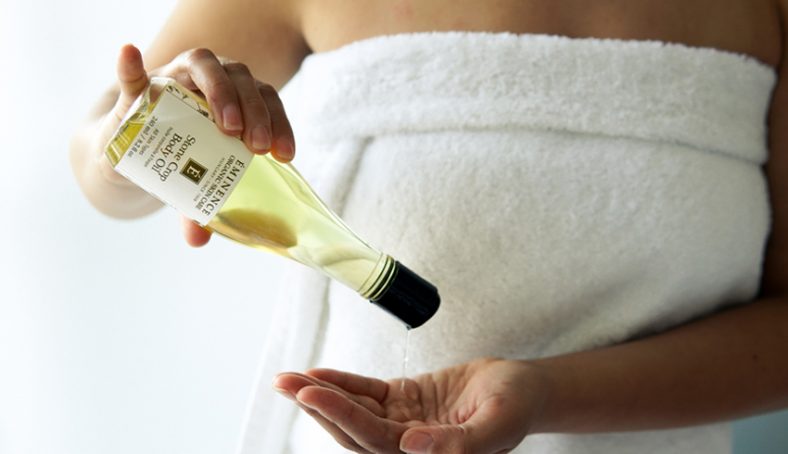
If your spa is licensed to provide massage services, take this opportunity to care for your Client’s aches and pains. Infused with stone crop and arnica, the Stone Crop Body Oil is ideal for massage, hand and foot treatments, or daily moisturizing. With its light scent and matte satin finish, this fast-absorbing body oil will appeal to both male and female clientele.
4. Moisturize
Complete your Client’s service with a deeply moisturizing body treatment. The Stone Crop Body Lotion contains stone crop and lemon to soothe, tone and refresh dry skin. Pair it with the Stone Crop Contouring Body Cream, formulated with microalgae and coffee extracts to provide additional hydration and reduce the appearance of cellulite.
Apply the Stone Crop Body Lotion Stone Crop Contouring Body Cream to target your Client’s problem areas. Follow with an application of the Stone Crop Body Lotion to the back, legs, décolleté and arms. Leave on.
Retail Tip
Have you left your Clients wanting more? Their treatment doesn’t have to end at the spa. Encourage your Clients to elevate their body care ritual with a luxurious home care routine including the Stone Crop Revitalizing Body Scrub, Stone Crop Body Oil and Stone Crop Contouring Body Cream.
How often should you use a face mask? With so many benefits to face masks, you may be tempted to go overboard and apply a mask every night before bed. But there’s no need! The other question you may ask is: How long should you keep a face mask on? Put simply, unless it’s a leave-on mask or an overnight mask, you do not need to leave it on for very long at all. In fact, masking for too long may weaken your skin barrier and cause unwanted symptoms, such as dry or irritated skin. Keep reading for details on how often you should use a face mask as well as how long you should leave it on.
How Often Should You Use A Face Mask
Face masks are formulated to nourish and treat your skin as well as address different skin concerns like acne, irritation, dry skin or fine lines and wrinkles. They provide targeted aid to problem areas to enhance your complexion. Plus, you can pick from luxurious creamy textures, thick clay or charcoal, which all feel incredibly satisfying. That’s why it’s so tempting to apply face masks every day.
When it comes to frequency, cream, gel and exfoliating masks can be applied around two to three times a week unless the product instructions specify otherwise. However, according to Healthline.com, charcoal and clay masks should only be used once or twice a week maximum. One exception: Oily skin types may benefit from a more frequent application. If you have acne-prone or oily skin, check with your esthetician or dermatologist for the best recommendation.
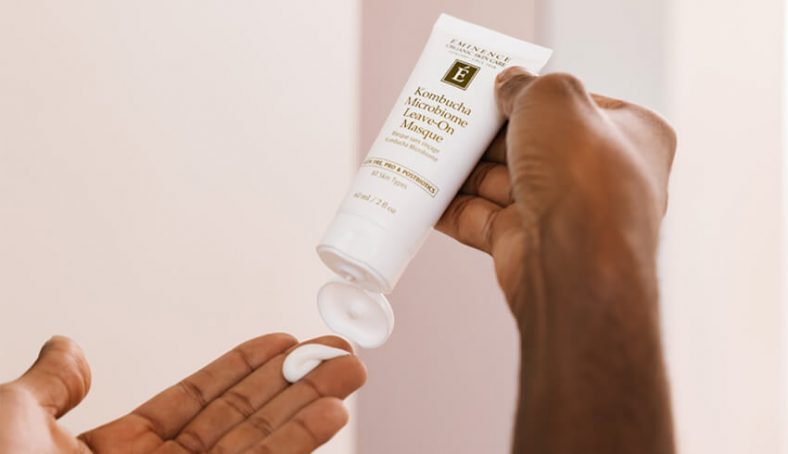
A second exception? When it comes to leave-on masks, these treatments have their own frequency recommendations. For example, the Kombucha Microbiome Leave-On Masque can be used three times a week. And because it’s a no-rinse formula, you can leave it on until it is absorbed.
How Long Should You Keep A Face Mask On For?
Apart from leave-on formulas, a standard mask should on be left on for five to ten minutes, unless specified as longer on the product instructions. It’s very easy to overdo it and indulge in a face mask every morning and night, but this isn’t helping your skin. Using face masks too often might strip your skin of its natural oils and disrupt its pH balance.
Consultant dermatologist Dr. Anjali Mahto spoke to Refinery29, stating: “Using multiple ingredients on the skin, especially if high in active ingredients [such as retinol, Vitamin C and exfoliating acids, like glycolic acid] can result in disruption of the skin barrier.” The skin barrier defends the skin from bacteria and from developing symptoms like dry, cracked skin, dermatitis, or eczema.
However, as mentioned, leave-on masks have their own set of rules and can be left on until absorbed. Read on to find out how long you should leave on cream, gel, and charcoal, as well as instructions on how to apply a leave-on mask.
How Long To Keep A Face Mask On: 5 Mask Types
Exfoliating Masks
Exfoliating masks can either be chemical exfoliating masks or physical exfoliating masks. Chemical exfoliating masks are formulated with skin-friendly acids, such as AHAs or BHAs, to remove dead skin cells, decongest pores and reveal newer, younger-looking skin. In comparison, physical exfoliation masks gently buff the skin with little, finely-milled granules. Typically, you can leave them on for 10 minutes, however, follow the instructions on the product.
Cream Or Gel Masks
Cream face masks are designed to hydrate the skin and provide moisture. Gel masks have a lighter texture and can soothe and cool irritated skin. Cream and gel masks should be left on for five to ten minutes, and rinsed off so no product remains on your skin.
Clay And Mud Masks
Clay and mud masks can be used to help with breakouts and large pores, making them suitable for problem skin, oily skin and combination skin, although any skin type can use them. They remove excess oil from your face, so most people would benefit. Again, these masks can only be left on for five to ten minutes and then rinsed off.
Charcoal Masks
Charcoal masks draw out oil and dirt from your pores to clear your skin. Like clay and mud masks, they’re an excellent option for oily and combination skin. Charcoal can easily strip the natural oils from your skin, so leave the mask on for five to ten minutes and then wash it off to avoid drying out your complexion.
Eminence Organics’ Leave-On Mask
Eminence Organics’ leave-on masks are designed to support the skin’s natural recovery process and maintain the health of the skin’s moisture barrier. For example, the Kombucha Microbiome Leave-On Masque is a no-rinse probiotic skin care formula that visibly renews your skin with ginger and pre, pro* and postbiotics. This rich, slow-absorbing mask provides soothing hydration and comfort to dry, dull skin.
To use, apply this no-rinse mask over the entire face, neck and décolleté. Apply evenly and gently massage until absorbed. Leave it on for five to ten minutes and the product should absorb. If there is still remaining product after ten minutes, you can tissue the rest off.
You can use this leave-on mask three times a week, or as often as your skin requires extra care. The Kombucha Leave-On Masque may also be used as a moisturizer to improve the skin’s defenses against dryness and balance the microbiome.
Incredibly, 92% of users noted their skin appeared healthier** after using the luxurious Kombucha Microbiome Leave-On Masque.
This leave-on mask features essential benefits. It:
Provides an occlusive, additional layer of protection from environmental stressors
Calms the look of irritation and dry skin
Helps restore a healthy skin barrier
Makes the skin appear vibrant, hydrated and healthy-looking.
Introduces beneficial prebiotics, probiotics and postbiotics to maintain the skin’s microbiome
If you’d like to try the Kombucha Leave-On Mask, you can shop the product here. Let us know in the comments below how you find the results.
* Products do not contain live probiotic cultures.
Keeping your body healthy is important, and that includes your skin. When your skin barrier is strong, it protects your skin from external stressors and locks in moisture; when it’s damaged, irritants and allergens seep in and water evaporates, leaving your skin dull, dry and dehydrated. Here’s everything you need to know about your skin barrier plus our tips to protect it and repair it when it’s damaged.
What Is Your Skin Barrier
An easy way to understand how your skin barrier works is to think of your skin as a structure made of bricks and mortar. Dr. Hooman Khorasani, MD, a quadruple board-certified dermatologic and skin cancer surgeon in New York City explains: “The skin barrier is provided by structures called lamellar sheets. These sheets are between the cells of the top-most layer of skin called the stratum corneum. These structures are analogous to the mortar between the bricks in the wall of your house.” Lamellar sheets, which are composed of fatty acids, cholesterol and ceramides, hold your skin cells in place and keep your stratum corneum intact.
These structures are analogous to the mortar between the bricks in the wall of your house.
What Does It Do?
Your skin barrier acts like a security guard for your skin. It shields your skin from bacteria and irritants and seals in moisture and hydration. Skin with a healthy barrier is well hydrated, moisturized, resilient and flexible. It can better withstand the negative effects of environmental stress and ages gracefully. On the other hand, a thin or weak barrier allows irritants in and hydration out. This causes dullness, dryness and sensitivity and can lead to inflammation and premature aging.
How Does It Become Damaged?
Over time, your skin barrier can become impaired. Aging, exposure to environmental stressors and everyday activities like over cleansing cause cumulative damage that compromises its structure. Remember our brick and mortar analogy? Without proper care, the mortar between the bricks weakens and cracks begin to emerge. These make space for bacteria and irritants to enter the skin and for moisture and hydration to escape.
Here are a few things that can cause your skin barrier to become damaged:
Natural aging
Pollution
UV exposure
Blue light
Bacteria
Stress
Poor diet
Harsh chemical skin care
Over cleansing and over exfoliating
Extreme temperatures
Genetic conditions such as psoriasis
What Happens When It’s Damaged?
One of the primary effects of skin barrier damage is transepidermal water loss (TEWL). Through this process, hydration and moisture passively evaporate through the compromised barrier, leading to dryness and dehydration. This compounds the visible signs of aging and contributes to inflammation, sensitivity and a dull-looking complexion.
In addition to loss of moisture, skin with a damaged barrier is left bare to environmental assaults by pollution, UV rays and blue light. These are three key contributors to accelerated aging, causing the skin to develop fine lines and wrinkles as well as lose volume and elasticity.
With a weakened barrier, your skin also becomes exposed to irritants, microbes and allergens. When these penetrate the stratum corneum, they can cause inflammation, redness and sensitivity. For those with genetic conditions such as eczema and rosacea, an impaired barrier can exacerbate symptoms.
Symptoms
How can you tell if your skin barrier is damaged? These are a few telltale signs that your skin barrier has weakened:
Dryness
Dehydration
Flakiness
Redness
Irritation
Fine lines and wrinkles
How Can You Protect And Repair It?
Now that you know skin barrier damage does to your complexion, how can you protect and repair it?
1. Apply Sunscreen Daily
Rule number one for a healthy skin barrier: Apply sunscreen every single day. Dr. Khorasani recommends applying a daily sunscreen with an SPF of 30 or higher and avoiding sun exposure when the UV index is at its highest (from 10am to 4pm).
We recommend our Lilikoi Mineral Defense Moisturizer SPF 40. This mineral sunscreen provides lightweight protection from UV rays as well as an additional defense against the drying effects of exposure to pollution and other environmental stressors.
2. Keep Skin Moisturized
Another way to protect your skin barrier is to keep it moisturized and hydrated. In addition to keeping your skin hydrated internally by drinking plenty of water, you can apply skin care with ingredients that replenish and retain your skin’s natural moisture.
You can protect your skin against the drying effects of environmental stressors by loading up on antioxidants – both in your diet and your skin care. Antioxidants fight free radicals to minimize the visible signs of aging brought on by oxidative damage.
Avoid chemical skin care that can disrupt your skin barrier. Instead, seek out natural, organic and biodynamic products that maintain strength and integrity. These types of ingredients infuse the skin with beneficial nutrients that optimize its health and fortify its barrier.
When shopping for your favorite skin care products, beware of counterfeit cosmetics masquerading as the real thing. These often include ineffective and even harmful ingredients – that won’t do your skin barrier any favors.
5. Protect The Skin Microbiome
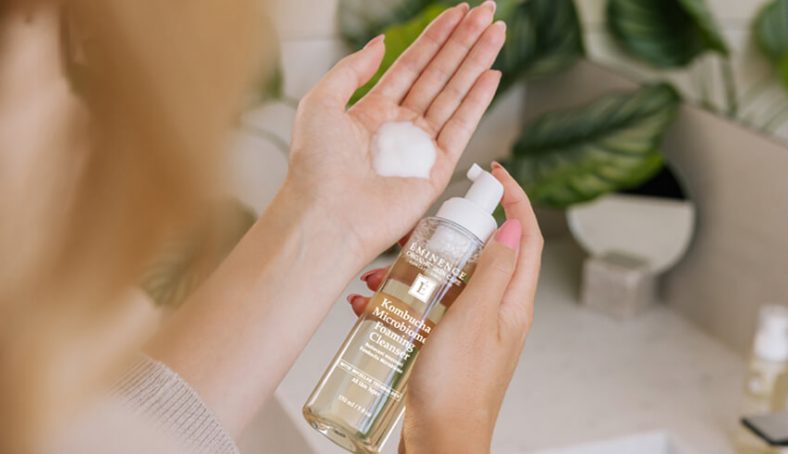
Part of maintaining a healthy skin barrier is keeping your skin microbiome balanced. The microbiome is a community of bacteria that live on the surface of your skin. Environmental stressors can disturb our skin’s microbiome, affecting the skin’s moisture barrier and leading to dry, dull, and reactive skin. Gently prime your skin and restore its natural balance with the nourishing Kombucha Microbiome Balancing Essence. A blend of pre, pro* and postbiotics work harmoniously to enhance luminosity while key ingredients like white tea and jasmine flower soothe dry, dull skin for a healthy-looking glow. You can also use the Kombucha Microbiome Foaming Cleanser. This lightweight liquid-to-foam cleanser is crafted with targeted micellar technology to gently remove impurities without over-stripping the skin.
Curious about which products to use to keep your skin barrier intact? Chat with a licensed esthetician at an Eminence Organics Spa Partner to find the best products for your skin type and skin concerns.
*These products do not contain live probiotic cultures.
This article was originally written in October 2019.
Stone crop skin care products are Eminence Organics classics for good reason. From our award-winning Stone Crop Masque to the best-selling Stone Crop Hydrating Mist, skin care fanatics will always find a place on their bathroom shelf for these perennial favorites that hydrate and brighten the appearance of dark spots. To help improve your complexion, learn how this stone crop ingredient can help soothe dry skin and minimize the visible signs of aging.
Stone crop is a small, succulent plant commonly found in Hungary, and its name literally means “a crop grown in stone.” This unique plant can thrive in rocky soil and can even grow on top of rocks alone. With its shallow root system, it requires very little soil or water to flourish. This hardy succulent does best in a moderate, dry environment but can survive almost anywhere with a little care. One fantastic application for the stone crop plant? It’s ideal for green roofs because it’s easy to grow, doesn’t attract pests and is resistant to disease.
How We Use Stone Crop
Our stone crop plants grown in Hungary are cut into quarters and then pressed to extract the fresh juice that retains all the natural hydrating qualities of the plant.
Another processing method we use is drying and pulverizing the succulent into powder before blending it into a skin care product. Watch our Made In Hungary video above to see our stone crop plants being prepared for our farm fresh products.
Interesting fact: The stone crop plant turns red in cold weather. To make sure that products like our Stone Crop Whip Moisturizer and Stone Crop Masque keep their vibrant green color, we plant our stone crop plants in trays and bring them indoors before the first cold snap!
Product Picks
Healing and calming mask
Benefits Of Stone Crop
Like other succulents (think aloe vera and prickly pear), stone crop offers deeply effective yet lightweight hydration. As Eminence Organics President Boldijarre Koronczay explained to DAYSPA: “…the stone crop plant assists in … toning the epidermis, moisturizing and helping reduce signs of aging.”
Most succulents have a very shallow root system, relying on rainfall, mist or dew to provide all the water it needs to thrive. The shape of stone crop funnels water into the center of the plant, where it is stored until the plant needs to use the water to grow.
1. Heals Dry Skin
Like other succulents, stone crop has adapted to a dry environment by retaining large amounts of water in its stem and leaves. Our General Manager, Attila Koronczay,tells Dermstore: “Most succulents have a very shallow root system, relying on rainfall, mist or dew to provide all the water it needs to thrive. The shape of stone crop funnels water into the center of the plant, where it is stored until the plant needs to use the water to grow.” This water-storing capability enables stone crop to deeply hydrate and heal dry and dehydrated complexions.
2. Soothes Irritated, Dry Skin
For centuries, stone crop has been used in folk medicine for calming dry irritated skin. The bruised leaves of the fresh plant or juice collected from its leaves were traditionally applied as a poultice to treat a wide range of skin problems, including burns, eczema and ulcers. This ability to soothe makes stone crop an ideal remedy for uncomfortable symptoms of dry, sensitive skin, such as redness and itching.
3. Brightens The Appearance Of Skin
When dark spots appear on your complexion, your skin has gone into overdrive producing melanin. This is often due to stress such as UV exposure or hormonal imbalances. Similar to other natural hydroquinone alternatives, stone crop brightens the appearance of skin by affecting some of these processes. Over time, this minimizes the look of dark spots and contributes to a more even-looking complexion.
4. Smooths The Look Of Wrinkles
Scientific studies confirm that stone crop is rich in antioxidants that reduce the visible signs of aging. Antioxidants like anthocyanin and quercetin neutralize free radicals that contribute to the look of premature aging. They help delay the emergence of the appearance of fine lines and wrinkles and help skin stay looking youthful for longer.
Skin-Saving Succulents
Lead Skin Care Trainer Natalie Pergar is passionate about the benefits of stone crop, saying: “Stone crop is an amazing succulent that been around for a really long time. Some of us may even recognize it. You may even have it growing right outside your home right now.
“We see succulents being used a lot for things like green design to better our environment, and it’s been an inspiration for us at Eminence to use as one of our signature scents and ingredients. We have built an entire range inspired by this plant, called our Stone Crop Collection.
Product Picks
High potency hydration serum
Hydrating and soothing toner
When In Doubt – Stone Crop It Out
“… At Eminence Organics, we have this fabulous little tagline that we use: ‘When in doubt, stone crop it out,’ and that’s for good reason. It is good for all skin types; everybody can use it.
“Gentlemen that I know also enjoy using it because it’s very fresh in scent (not highly floral) making it very friendly for anyone to use. Stone crop also helps minimize the appearance of redness from dry skin so, thinking about men who often shave their face, our stone crop products are great to help soothe the skin after shaving.
Product Recommendations
According to Natalie, “[the Stone Crop Collection includes] the Stone Crop Gel Wash — a Top Ten product, Stone Crop Masque, Stone Crop Hydrating Gel, Stone Crop Whip Moisturizer and Stone Crop Serum. One of my favorite parts about the Stone Crop Collection is that they give you an option of using a nice lightweight gel to finish your home care routine or you can use a cream. So, whether you’re oily-combination or combination-to-dry, this is a really great piece to introduce a collection to your friends, family or yourself.
“You’ll also enjoy our Stone Crop Cleansing Oil from our Microgreens Collection. Any of you who use cleansing oils will know that they’re fabulous for double cleansing, an incredibly valuable technique for you makeup gurus out there because it really helps to lift and pull everything off. This cleansing oil is also very effective for those of you who are dealing with problem skin. Don’t forget: oil for oil. Just because you have an oilier skin type doesn’t mean you can’t use cleansing oils. This will leave the face beautifully even in tone afterwards.
“We also added Stone Crop Oxygenating Fizzofoliant in this collection, which is like the sister or the brother to our Strawberry Rhubarb Dermafoliant. Take any cleanser you like. You could even use Stone Crop Cleansing Oil or Stone Crop Gel Wash and use a couple of shakes, adding a little bit of water. This will really help with skin that is experiencing milia, blackheads and congestion.
“For any of you who love mineral makeup or powders, the Stone Crop Hydrating Mist is useful as a setting spray. It doesn’t leave a dry residue and it really makes the skin look not super dewy, but very hydrated and you can easily throw it in your gym bag.
“We have other stone crop products as well, including the Stone Crop Body Lotion. This beautiful succulent plant truly has a lot to offer and has inspired one of the most special lines that we have.”
An ideal gift for all genders and ages, this hydrating and revitalizing set allows you to customize your routine. Try it as a flash facial, in a beard care routine, or incorporated into an extensive skin care ritual. Use individually or combine for ultra-smooth, radiant results.
If you’re already a fan of our signature stone crop ingredient, you can also elevate your body care ritual with the Stone Crop Body Collection. Visit our Spa Locator and experience it with your favorite Eminence Organics Spa Partner.
This article was originally written in December 2018.
While your bathroom might not hold a candle to a spa experience, don’t let a lack of fancy spa tools or professional-level skin care products prevent you from embracing your inner esthetician. Giving yourself a decent facial from the comfort of your home is essential to maintain your skin between spa treatments. You can even elevate the experience by setting the scene with candles and indulging in treatments like flash facials.
Here are a few steps to follow to boost your skin care regime with an at-home facial in between spa visits.
Whether you’re a facial fanatic or complete newbie, it’s important to understand what exactly a facial contributes to your beauty routine. An all-inclusive approach to skin care, a facial is a treatment or series of treatments that can target multiple skin ailments. You may be aware that the skin on our face is a map for our body’s needs, and a facial serves as an infographic to point out any nutritional deficiencies or general health conditions that need specific care.
Now, not all of these facial treatments are safe — or even possible — to achieve on your own. Due to the precision and experience required, extractions should be avoided at all costs. Professional-level chemical peels are also not wise to attempt on your own as they can cause pigment irregularities and even scar your skin permanently when they are misused. Even without these more advanced spa treatments, you can give yourself an hour of skin pampering that will reset your skin. Although nothing will replace the expertise and experience of a professional treatment, an at-home facial by yourself can maintain the health of your skin until your next opportunity to visit your esthetician. If you do want a professional facial peel, we recommend learning more information at your nearest Eminence Organics Spa Partner.
Why Give Yourself A Facial At Home?
Experts advise a facial once a month if your skin is frequently problematic, or every time your environment changes or you enter a new climate. Facials are an extension of your other skin maintenance, like exfoliation, dermaplaning or masks. Designate time for them the same way you might pencil in a manicure or tidying your eyebrows.
A facial is also a chance for you to disconnect from working at home and relax into leisure time. Simultaneously pamper yourself and tend to your skin’s needs under different circumstances. Whether you’re contending with a lack of work, relationship strain or any psychological anxiety related to the current circumstances, this is a way to decompress and boost morale. Facials should be done at night when your skin is most ready to repair, so think of it as another method to unwind. Your skin also renews every 20 – 30 days, so you’re likely to see results within several weeks of your facial.
Facial Steps At Home
Light some scented candles, put on the most relaxing, meditative music you can find and line up the facial care products you need. First up is a guide to an at-home facial for most skin types. If you have acne-prone skin, please skip forward to the next section designed for you.
Here is your step-by-step guide for giving yourself a quality facial:
Step 1. Prepare Your Facial Products
Make sure you pull your hair away from your face and secure it with a headband or towel so you can apply your skin care products easily. Now, it’s time for makeup removal! Start by applying an oil cleanser before rinsing or removing with a warm washcloth. If you’re battling against stubborn eye makeup, in addition to the oil cleanser, you can pour a little eye makeup remover onto a cotton pad and wipe your eyes gently.
Step 2. Cleanse
After removing your makeup, double-cleanse by massaging a small amount of another cleanser into your face and neck for 1-3 minutes (dilute with water if needed). Not only do facial massages allow your skin to better absorb the product, but they encourage the drain of build-up in your face that causes puffiness. Make sure to push the skin up as you massage to give your face a natural lift. Gently smooth forehead and eye area wrinkles as you go. This will relax the facial muscles. Rinse thoroughly.
Step 3. Tone
Next, spray or apply toner with cotton pads. Remember the neck and decolletage (avoid the eye area here), as they are the first areas, other than the face, to show age. Toners are essential to complete the cleansing process and protect the skin from environmental stressors.
Step 4. Steam
If you particularly enjoy facials that get a little steamy, never fear – this is something you can definitely DIY. Pour boiled water into a large bowl and place your skin six inches away while covering your head with a towel to trap the steam. This will open your pores and prepare your skin for exfoliation and absorption. You can steam up to 10 minutes, two minutes at a time.
Step 5. Exfoliate
Gently massage an exfoliant into the skin. Be careful not to scrub or drag, particularly around the delicate eye area where the skin is thinner. Massaging an exfoliant onto your skin gently removes dead cells and any remaining dirt or makeup. Rinse thoroughly.
6. Facial Masking
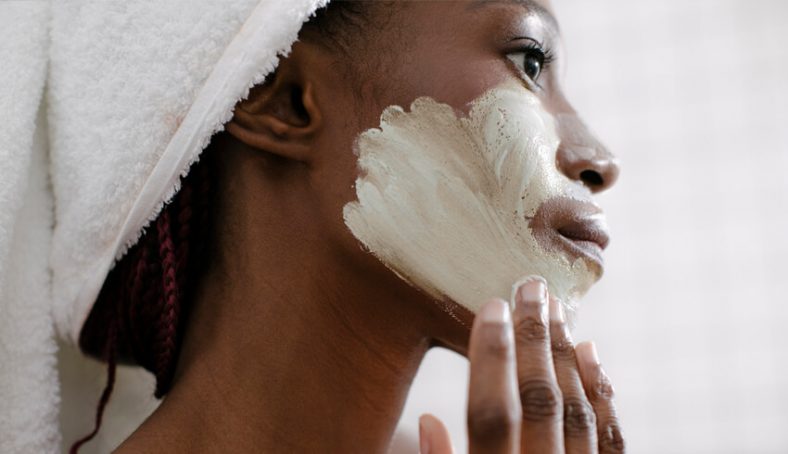
It’s masking time! Apply a thin, even layer of your mask (it may be tempting to go thick, but it’s not necessary) and leave on for five to 10 minutes before removing with a damp face cloth. For extra facial benefit, employ your former massaging techniques to maximize absorption and natural lift. Remember to include your neck and decolletage.
Step 7. Massage
To deeply hydrate the skin, reach for your facial oil or moisturizer for another massage. Make sure to avoid acne-prone areas. Gently knead your face for five to 10 minutes before rinsing the product off.
Step 8. Apply Serum
Now to lock in the moisture: Apply a serum that suits your skin and massage into the skin in circular motions. For example, the Citrus & Kale Potent C+E Serum has a potent dose of non-irritating Vitamin C that brightens the appearance of all skin types. You can leave most serums on and follow with a moisturizer (only two steps away!).
Step 9. Eye Care
Next you want to target dark undereye circles, puffiness or fine lines around your eyes. Reach for your favorite eye cream, lightly blending and tapping the product until it’s absorbed.
Step 10. Moisturizing
Take your moisturizer and apply a thin layer to the face, neck and decolletage. And you’re done with your first at-home facial! If you deal with acne, and you’re concerned that any of the steps would trigger further breakouts, up next we’ve gathered some insights on how to give yourself a facial designed for acne.
Facial Contouring
If you’d like to improve the look of puffiness, redness or conditions like rosacea, facial contouring using cold therapy can greatly assist. Cold therapy works by diminishing swollen tissue and broken capillaries to reduce redness and puffiness in the face. To do this at home, all you need are two ice globe tools that you pop in the fridge or freezer before rolling them across your skin to depuff and tighten the appearance of your complexion.
Ice globes are freezable wands with one spherical end that can be rolled or massaged on your face or the body. They are typically made from steel or glass and are ideal for lymphatic drainage as it relieves sinus pressure. The technique is easy to do at home.
Step 1. Place Your Ice Globes In The Freezer
Place your ice globes in the freezer or fridge until they feel cool.
Step 2. Apply Moisturizer
Apply a lightweight moisturizer, lotion or oil onto your face before using your ice globes to help them glide along the skin. For example, the Mangosteen Gel Moisturizer works easily with all skin types. You don’t need a lot of product, but just enough to allow the globe to slide easily.
Step 3. Roll The globe To Lift Your Eye Area
Starting from your under eye area, swoop upwards towards your temple. When you reach your temple, pause to place a small amount of pressure. Swoop up and down approximately six times on each side of the face.
Step 4: Glide Under And Across The Brow
Next, you can roll the globe under the brow as well as across the top of the brow. Start by placing the globe near your nose and rolling it outwards across your eyebrow and eyelid towards your temple, pausing at the temple spot again with gentle pressure. You can repeat around six swoops on each side of the face and left side of your face. These actions should depuff and lift the eye area for a more contoured appearance.
Step 5. Use Lifting Motions Across Your Brow
Place the globe from the bride of the nose and roll across the eyelid and eyebrow, pausing at the temple. With each swipe (around six on each side of the face), roll with a lifting motion. Then, you can also glide the globe upwards from the center of your brows to your forehead and then across to your temple in an L-shape.
Step 6. Contour Your Chin And Jaw
To contour your chin and jaw, place the globe from your chin, gliding the globe upwards across your cheekbones, pausing at the temple, at the top of the ear. For the jaw area, pull the globe up from the base of your jaw and upwards towards your temple, placing gentle pressure on the temple. You can even release tension by gliding the tool under your chin and down your neck.
Step 7. Cleanse
Continue with your facial cleansing routine. Lightly exfoliate your face, if needed. Apply your moisturizers and serums as you normally would.
Facial Steps At Home For Acne Prone Skin
If problem skin is your specific concern, you may wonder if it’s still possible to give yourself a facial at home. Although you will need to take special care, an at-home facial can still be accomplished in a safe and effective way. Here is our step-by-step facial at home guide:
Step 1 to 4: Same As Above
Follow the same first four points in “Facial Steps At Home.”
Step 5. Exfoliation
If you’re experiencing active acne breakouts, you’ll want to avoid physical exfoliating scrubs in those areas. You can use a light chemical exfoliating peel that has gentle acids that exfoliate without irritation with natural ingredients like salicylic acid from willow bark.
Step 6. Mask
Apply a thin layer of a mask with fingertips to cleansed skin, avoiding the eye area. Dilute with water for easier application. Leave on for five to 10 minutes. Remove with a damp face cloth. Tea tree oil, absorbing charcoal, clay and salicylic acid are going to be the active ingredients to clear your pores and help with those breakouts.
Step 7. Serum
Treat your skin with a spot treatment or a serum all over that contains acne-fighting ingredients like salicylic acid or tea tree oil.
Step 8. Moisturize
Don’t forget this finishing step, even if you do experience breakouts. Apply eye cream and a thin layer of a light moisturizer to the face, neck and decolletage.
Even after completing one of these two facials, the pampering is not complete!
How To Do A Flash Facial At Home
Needing to refresh your skin in 10 minutes? We don’t always have a lot of time to dedicate to skin care when we’re rushing around in the morning.
Flash facials embrace multi-purpose products that provide visible results and benefits in a short period of time. These quick little facials make for great weekly or daily maintenance in between visits to the spa to help you maintain glowing skin and smoothness. We have two quick yet effective flash facial options for you.
1. Stone Crop Gel Wash And Stone crop Oxygenating Fizzofoliant™
Here is a flash facial application you can try at home:
Step 1. Mix
Mix 1:1:1 ratios of water, Stone Crop Gel Wash and the Stone Crop Oxygenating Fizzofoliant™.
Step 2. Apply
Apply the mixture to your skin with a fan brush for an even application.
Step 3. Massage
Use your fingertips to apply gentle circular movements over the face, neck and décolletage. Do this for 2-3 minutes. For oilier skin types, you may want to also leave it on for an additional 2 minutes.
Step 4. Remove
Remove by rinsing thoroughly with water and patting your face dry.
Step 5. Complete Routine
For a complete facial, continue with additional Eminence Organics products, such as an essence, toner, serum, moisturizer and SPF.
2. Mangosteen Daily Resurfacing Cleanser And Strawberry Rhubarb Dermafoliant
Step 1. Take a chickpea-size amount of the cleanser into your palm. Step 2. Pour 2-3 shakes of Dermafoliant into your palm. Step 3. Add a little water into your hands and rub them together. Step 4. Apply on the skin using micro-circle movements. Start with the forehead and move to the temple and then to the jawline, neck and chest. Step 5. Remove by rinsing thoroughly with water and patting your face dry.
This article was originally written in April 2020.
If cleansers, toners and moisturizers are the basics of skin care, then serums, oils and concentrates are the high-level superstars. Building on the simple skin care routine, serums, oils and concentrates add the powerful steps your complexion needs to optimize its health. They deliver potent benefits directly to the skin by correcting concerns, nourishing the skin and boosting hydration.
With the wide variety of products available, you want to pinpoint the best serum, oil or concentrate to target your skin concerns. Here’s a handy guide to help you choose the best one for your unique complexion.
First things first: What are the differences between serums, oils and concentrates?
Serums
Serums are lightweight treatments brimming with a high concentration of active ingredients that target specific skin conditions and concerns. They are fast-absorbing and penetrate deeply into the skin, delivering potent skin-restoring and hydration-boosting ingredients. Serums have a light fluid or gel-like consistency and should be applied after cleansing and toning.
Oils
Oils are chock full of essential fatty acids and lipids that restore the skin’s moisture barrier. They are often composed of plant oils like jojoba, rosehip or seabuckthorn, which are rich in antioxidants and replenishing emollients. Facial oils can be beneficial for all skin types (even oily) and should be applied as the final step before a moisturizer.
Concentrates
Concentrates are similar to serums in that they contain — you guessed it — a concentrated amount of active ingredients. Unlike serums, which have a gel-like consistency, concentrates are lightweight lotions with both absorbent and protective qualities. Because of this versatility, they can be layered with serums and moisturizers, or simply used on their own.
Read on for the best oil, serum and concentrate for your particular skin type and concerns.
Oils, Serums & Concentrates By Skin Type
Your skin type comes down to genetics. Your genes determine the amount of oil secreted by your sebaceous glands, the size of your pores and the texture of your skin. Each of these factors contributes to the dryness — or oiliness — of your complexion and, in turn, dictates how your skin looks, feels and behaves. Your skin type cannot be changed, but it can be managed with active ingredients that are beneficial for your complexion.
Normal Skin
Normal skin can best be described as “well-balanced”: It has even sebum production and moisture content. According to Dermascope, “Normal skin displays a smooth texture and rosy, clear surface, with fine pores. There are no visible blemishes, greasy patches or flaky areas.”
All skin can benefit from potent antioxidants that can improve the visible signs of aging. We recommend the Eight Greens Youth Serum to protect skin from the drying and aging effects of environmental stressors like pollution, blue light and UV rays.
Dry Skin
Dry skin produces less sebum than normal skin. This skin type lacks the lipid and oil production needed to retain moisture (which is what gives skin its soft and supple feel) and therefore appears tight, flaky and dull. Those with dry skin often have nearly invisible pores and display more prominent visible signs of aging.
Oils are the perfect addition to a dry skin routine. These treatments are composed of essential fatty acids and ingredients that boost skin’s hydration and moisture. We recommend our Camellia Glow Solid Face Oil and our Rosehip Triple C+E Firming Oil. The Camellia Glow Solid Face Oil contains camellia oil, pink tourmaline gemstones and marula oil to hydrate and soften the appearance of the skin. The Rosehip Triple C+E Firming oil contains rosehip, jojoba and seabuckthorn oil to improve moisture, soothe dry skin and fight the visible signs of aging.
Combination Skin
Combination skin is neither oily nor dry; it’s both. This skin type is characterized by non-uniform oil production: more active oil glands in the T-zone and less active oil glands elsewhere. As a result, it tends towards oiliness on the forehead, jaw and nose, and dryness on the cheeks, jawline and hairline.
Believe it or not, combination skin can benefit from our Cornflower Recovery Serum. This serum is enriched with results-driven, Biodynamic® ingredients like cornflower and chamomile to calm and soothe dryness.
Sensitive Skin
Sensitive skin is caused by a genetic predisposition to skin sensitivity and irritation. According to the Eminence Organics Product Support Team, it is typically described as “skin that endures the regular occurrence of unpleasant sensations such as heat, stinging, burning and tingling caused by forms of stimulation that wouldn’t normally create this type of reaction in a ‘normal’ skin type.”
If your skin is the sensitive type, opt for a gentle treatment like the Facial Recovery Oil, infused with clary sage oil and ylang ylang to keep skin looking even and perfectly balanced.
Oily Skin
The opposite of dry skin, oily skin has overactive sebaceous glands. These produce an excess of oil which enlarges pores as well as coats the skin’s surface. For this reason, oily skin is often shiny and can be prone to breakouts due to blocked pores.
For oily skin, we recommend a lightweight option like the Citrus & Kale Potent C+E Serum. This fast-absorbing advanced serum immediately sinks into the skin to deliver potent antioxidant and vitamin-rich ingredients. We explore this serum in depth below.
By Skin Concern Or Condition
You may struggle with a skin concern or condition on top of your general skin type. Skin conditions are influenced by various internal and external factors such as hormonal changes, lifestyle choices and environmental stressors. Unlike skin types, they can be changed and treated, and it is not uncommon to tackle more than one at a time (for example, breakouts as well as an uneven skin tone).
Fine Lines & Wrinkles
As we age, intrinsic and extrinsic factors contribute to a depletion of hyaluronic acid, elastin and collagen in the skin. These materials are essential for a plump and firm complexion and, as they diminish, skin begins to sag and fine lines and wrinkles start to set in.
When it comes to wrinkles, you’ll want to add Vitamin C into your skin care arsenal. This vitamin helps improve the appearance of skin exposed to environmental stressors such as UV rays and pollution.
Formulated with Vitamin C, the fast-absorbing Citrus & Kale Potent C+E Serum reduces the appearance of uneven skin tone. Vitamin E and leafy greens such as kale and spinach provide additional support for your skin — you may notice a brighter appearance in your complexion and an improvement in the look of fine lines and wrinkles. Learn more about what a serum does here, or the correct amount to apply here. Otherwise, you can learn all about the effects of free radicals and oxidation on the visible signs of aging by watching this In The Mix video demonstration:
In addition to Vitamin C, you can counteract the visible signs of aging with skin care reinforced with botanical peptides and natural retinol alternatives. Our Marine Flower Peptide Serum delivers concentrated plant peptides to plump skin and smooth the appearance of wrinkles. The Bamboo Firming Fluid is infused with a Natural Retinol Alternative Complex derived from chicory root and tara tree to improve the appearance of firmness and elasticity.
Uneven Skin Tone
Do you struggle with dark spots? Whether from sun damage, hormonal changes or bouts of acne, hyperpigmentation can be tricky to tackle. When your skin is exposed to stressors, it protects itself by going into overdrive and releasing melanin – a type of pigment in the skin. The result: dark spots and uneven skin tone.
Before you reach for hydroquinone, try a natural alternative. Our Bright Skin Licorice Root Booster-Serum contains bearberry and licorice root extracts, tara tree, African potato and Swiss Alpine Plant Extracts to improve the appearance of dark spots.
Large Pores
Large pores are a common skin concern. While everyone has visible pores, some naturally produce more oil, causing them to stretch and enlarge. Pore size can also increase with age as skin loses its elasticity and ability to “bounce back.”
Up to 85% of Americans report having experienced acne-related symptoms at some point in life. Whether you tackle tiny whiteheads or painful cysts, acne is treatable and you can find relief. We recommend adding the Clear Skin Willow Bark Booster-Serum to your skin care routine. This concentrated serum is infused with willow bark and tea tree oil to improve the look of breakouts and problem skin.
Dehydration
Dryness and dehydration are two separate skin care issues. While dryness pertains to a dry skin type and is characterized by a lack of moisture (sebum), dehydration is a skin condition that is caused by insufficient hydration (water). Dehydrated skin often suffers from itchy patches, increased sensitivity, inadequate skin cell turnover and accelerated signs of aging.
Hyaluronic acid is a miracle worker for dehydrated skin. Our product pick is the Strawberry Rhubarb Hyaluronic Serum, which is infused with our Botanical Hyaluronic Acid Complex designed to deeply hydrate the skin and replenish moisture.
As expert esthetician Brian Goodwin tells us: “Hyaluronic acid is a skin essential that provides hydration and protection. Our Botanical Hyaluronic Acid Complex restores deep hydration for radiant looking skin.”
Find out about the best serums for glowing skin from our Lead Skin Care Trainer Natalie Pergar:
Layering Serums 101
Now that you’ve narrowed down your most suitable serum by concern and skin type, here is a crash course on layering or mixing serums the right way. Have a look at your skin type below to see which serums you can neither mix together and apply or which serums you can layer over each other.
Essential Serum Trio Gift Set
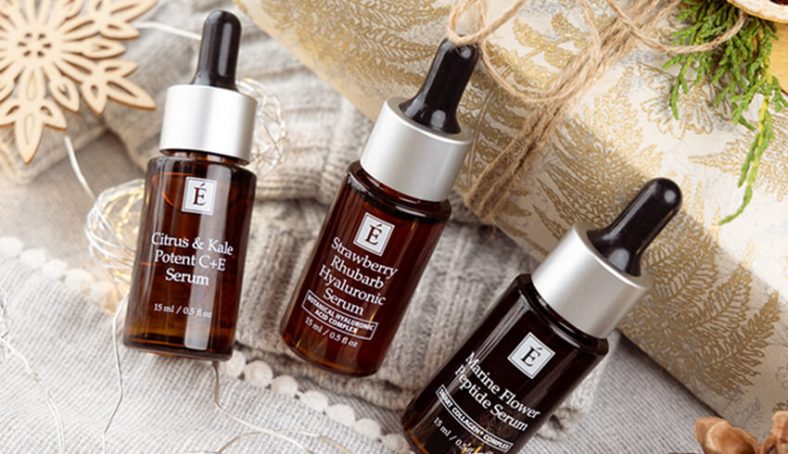
These Holidays we’ve released the Essential Serum Trio Gift Set so you can gift yourself or others radiant skin! This Gift Set includes the Citrus & Kale Potent C+E Serum, the Strawberry Rhubarb Hyaluronic Serum and the Marine Flower Peptide Serum. Simply layer them together for the ultimate glow.
Step 1: Begin with the lightweight Citrus & Kale Potent C+E Serum, packed with visibly rejuvenating Vitamin C.
Step 2: Follow with the Strawberry Rhubarb Hyaluronic Serum to plump and hydrate.
Step 3: Finish with the rich Marine Flower Peptide Serum to visibly smooth and firm skin.
There are many buzzwords in beauty, but few have arrived on the scene with as much force as “serum.” Almost overnight it seemed like the three-step cleanse-tone-moisturize system was abandoned in favor of a more elaborate skin care routine involving this mysterious new liquid. Many of us still are shaky on what serums actually do and when they should be worked into our routines. Don’t worry, you don’t need an esthetician’s licence to understand serums. Not only are they simple to use, they’re even easier to understand as we break down the purpose of using a serum and how to apply it.
We’ve had cleansers and moisturizers since the dawn of time, but there were no products that addressed skin concerns by delivering high concentrations of ingredients. Enter: serums. Packed with actives, botanicals and antioxidants like Vitamin C, A and E, serums target specific skin concerns like dark spots, fine lines and wrinkles or acne.
In terms of texture, serums are generally water-based and come in liquid or gel form, making them incredibly lightweight. While many moisturizers are so emollient that they can only sit on the outer layers of the skin, serums absorb quickly into the deeper layers of the skin. They’re non-comedogenic, which means they don’t block pores or leave any residue, but their molecules are also small enough to really penetrate pores and work their magic from the inside out. As such, they’re able to target your skin concerns with impressive precision, and are known to be among the most effective topical skin care products on the market. In short: Serums get you what you want out of your skin, and faster.
What’s The Difference Between Serums, Concentrates & Facial Oils?
Serum is often mistaken with another late arrival: face oil. While they might be from the same family, serums and oils are very distant cousins and not to be confused. Remember those small molecules in serums? Well, the molecules in oils are often much larger, although there can be a variation in size. While facial oils are chock-full of antioxidants, nutrients and fatty acids that nourish the skin, the oils with larger molecules will sit on the outer layer of skin. Other oils, like jojoba, have a smaller molecular size and can penetrate the skin deeply. Facial oils that absorb easily can be applied before your moisturizer, whereas other oils, which sit on the skin, can be used as the final flourish of nutrition and protection from environmental stressors.
If oils are serum’s cousins, what does that make concentrates? Well, more of an older sister. While the two products are very similar in appearance and consistency, a concentrate usually only offers an intensified dosage of one ingredient (read: Vitamin C or rosehip) to address one particular skin issue. Serums can target a multitude of concerns at once, like acne, hyperpigmentation, redness, wrinkles and dryness. For those looking to revitalize their skin with a one-two punch, serums and concentrates can be used in conjunction with each other.
How To Use A Serum In My Routine
Now we’ve covered the what and why, you’re probably wondering how and when to apply a serum. The serum step falls right after you cleanse, exfoliate, tone and apply an essence. You can use a serum morning and night with your regular skin care routine to achieve stellar results. Ensure you start with a freshly-washed face so that your skin is free from product or daily build-up, which allows serum to more effectively penetrate the outer layers of the skin. You can use a toner and essence, but nothing more emollient should come in between your cleansed face and the product. If you’re using multiple serums to address different skin needs, start with the lightest formula and work your way up to the heaviest — the same principle of the remainder of your skin care products.
You only need to apply a thin layer because serums are concentrated — a small, pea-sized amount should do. Serums can also be applied to your neck and chest, to fight the visible signs of aging. For even more detailed information, read this guide on how to apply serums, oils and concentrates. Or watch this In The Mix video that explains what a serum is used for and how to fit one into your skin care routine.
Different Types Of Serums: Which One Is For Me?
Whether you’re wrestling with aging, sensitivity or breakouts, Eminence Organics Senior Product Development Manager Colette Lieberman has a serum to suit any skin concern.
Perhaps you’re dealing with dull, dehydrated skin instead? Botanical hyaluronic acid (from marshmallow plant extract) is deeply hydrating as well as the delicious-smelling strawberry. You may be surprised to learn that strawberry is a great serum ingredient that contains salicylic acid to gently exfoliate and remove impurities to brighten the look of skin and shrink the appearance of pores.
Worried about wrinkles? If you’re hoping to improve the appearance of fine lines and wrinkles, choose a serum with peptides which can significantly smooth the skin’s appearance. Algae extract is another ingredient to search for as it is nutrient rich and contains vitamins, minerals, and amino-acids to increase the look of firmness on the skin and minimize the appearance of wrinkles and fine lines.
Citrus fruit oils are a useful serum ingredient to tone and refresh the skin. They are sourced from naturally occurring Vitamin C that helps protect skin against the visible signs of aging.
If skin has lost its natural radiance and luminosity, it may be because of a compromised skin barrier due to an unbalanced microbiome. You can apply probiotic skin care such as a serum that contains pre, pro* and postbiotics. These ingredients are important for restoring the microbiome and enhance the skin’s luminosity.
Stabilized Vitamin C (L-Ascorbic Acid) brightens the look of skin and minimizes the appearance of fine lines and wrinkles as does Vitamin C salt (also referred to as Sodium Ascorbyl Phosphate). Both versions of Vitamin C can assist with improving the appearance of the skin. For fighting the appearance of hormonal problem skin, organic phytoestrogens are active ingredients that can help target problem areas as well as the visible signs of aging. Remember, you never have to stop at one serum — layer according to your needs, and enjoy a fully refreshed visage.
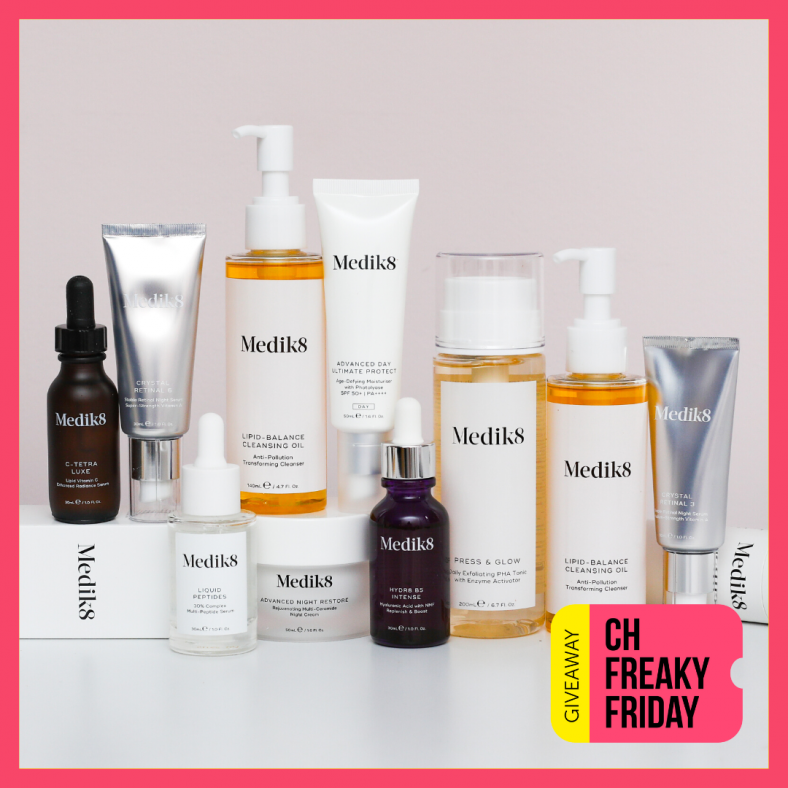
Happy Friday! This week, Medik8 are offering one lucky winner a year’s supply of Medik8 products to the value of £3000 with a personal consultation to build your dream regime.
A facial cleanser should be an integral part of your daily skin care routine. Cleansers help remove dead skin cells, dirt and unwanted debris from your complexion. Clearing the skin helps us avoid harmful bacteria-building or breakouts caused by dirt becoming trapped in your pores. But sometimes we can get a little too passionate about our skin care routine and actually over-cleanse, causing damage to our skin barrier while overstripping moisture. So, how often should you wash your face? And which types of cleanser should you use? Read on to find out.
With today’s long-wearing makeup and exposure to environmental stressors and pollution, it’s necessary to take the time to fully cleanse your skin at the end of the day. In addition to removing makeup and impurities, cleansing also helps prepare your skin to better absorb the active ingredients in toners, masks, serums, moisturizers and oils. Eminence Organic Skin Care’s lineup of cleansers allows for this routine to fit for a variety of skin types. Here are some of the main benefits of facial cleansers:
Removing Build Up
Removing all the grime, oil and makeup that was built up throughout the day is essential for healthy-looking skin. The skin on your face is continually exposed to pollution, dirt, bacteria and is also subject to a buildup of skin cells. We recommend cleansing daily to target all these factors while keeping your skin clean and fresh. Failing to wash your face means your skin undergoes prolonged exposure to a layer of sweat, dirt and grime which you would then layer on other products on top of. This traps debris into your pores. If your pores are filled with oil, bacteria or dirt, then you’re far more likely to develop breakouts.
Allowing Sebum Oil To Reach The Surface
Sebum is the waxy, oily secretion produced by tiny sebaceous glands under your skin. These glands use hair follicles to let oil reach the surface of the skin, keeping your hair and skin moisturized. Sebum is crucial for keeping the skin hydrated and protected from bacteria and fungi. Regular cleansing clears away blockages and buildup, allowing the sebum to reach the surface, which reduces your chance of breaking out.
Maintaining Hydration
Cleansing helps manage pH levels of the skin, keeping skin hydrated and balanced. Particularly if you use a hydrating cleanser, your skin will maintain the proper level of hydration so that you avoid developing dry skin.
Types of Facial Cleansers
Gel Cleansers
Like the name implies, gel cleaners tend to have a gel-like consistency, designed for unclogging pores while removing excess oil and acne-causing bacteria from the surface of your skin. As a result, gel cleansers are ideal for oily skin types. Gel cleansers would be ideal for those wanting to remove excess oil and minimize the appearance of pores by keeping the skin free of gunk.
Cream Cleansers
Cleansers with a cream base deeply nourish and moisturize the skin while washing away makeup and other impurities. Cream cleansers are ideal for dry skin or sensitive skin types because they rehydrate the skin while also removing unwanted buildup from the previous day, such as dirt, sebum or makeup. Cream cleansers are a typically thicker texture and cleanse your skin without stripping it of any of its natural oils.
Foam Cleansers
These lightweight skin care products create a foamy lather when dispensed from a pump package. They remove excess oil as effectively as gel cleansers and are great for combination skin. Avoid foam cleansers if you have dry skin as the consistency will leave your skin feeling tight and dry.
Cleansing Oil
Cleansing oils provide an easy removal of all oil-based products, such as makeup and sunscreen, while also keeping your skin smooth and silky. Oils are a special type of solvent that are naturally attracted to other oils, which allows for quick dissolving of oil-based products.
Exfoliating Cleanser
An exfoliating cleanser can be in the form of a physical or chemical exfoliating cleanser. A chemical exfoliating cleanser simultaneously cleanses and gently exfoliates the skin because its formula contains a small percentage of an acid. A physical exfoliating cleanser may contain tiny granules also designed to slough off dead skin cells while providing a cleanse at the same time.
Now that you’ve decided on the best type of cleanser for you, how many times should you actually cleanse and wash your face each day?
How Often Should You Wash Your Face?
According to Healthline.com, “Every person should wash their face both morning and night.” If you can only commit to a wash once daily, do it before you go to bedtime, so you’re not putting your face on the pillow and trapping the dirt and oil deeper into the skin. Some people with dry skin don’t like cleansing twice a day as it feels too drying for their skin. If that’s the case, re-consider the type of cleanser you are using or you can simply cleanse once before bedtime.
Overcleansing (three or more times a day), or using a harsh cleanser such as a bar of soap, may weaken the skin barrier, leading to dry, dull or irritated skin. Cleansing should never lead to irritation, so if your skin is starting to feel tight and dry after washing, you may be going overboard. A healthy, functioning skin barrier means the skin looks firm and plump. The skin barrier should block environmental irritants out naturally, while keeping all the good stuff in like natural oils, and moisture.
How To Cleanse Properly
According to the Academy Of Dermatology, here are the best tips and steps for cleansing correctly.
Apply lukewarm water to your face. Then apply your cleanser, gently rubbing it in with your fingertips. Using a washcloth, sponge, or anything other than your fingertips can lead to irritation.
Refrain from scrubbing with something other than a specially formulated physical exfoliant. This can cause redness and irritation.
Rinse the cleanser off with lukewarm water and pat dry with a soft towel.
Apply moisturizer, especially if you have dry or itchy skin.
Limit washing to twice a day maximum, although if you have sweated profusely you can also wash your face afterwards.
Wash your face once in the morning and once in the evening, as well as after profusely sweating.
Follow the instructions of the cleanser. The cleanser brand will also provide how best to use their cleansers.
How many times a day do you cleanse? Check out our lineup of cleansers to see which type is for you.