
Category: Fashion

  • Ash Unplugged: Yeh Hi Hai Right Choice Baby, Aha!

    Ash Unplugged: Yeh Hi Hai Right Choice Baby, Aha!

    [ad_1]

    On the last Saturday in May, as the sun set over the azure waters of the French Riviera, the Croisette would have worn a deserted look, as tourists, media and celebrities packed their backpacks or Louis Vuitton luggage, as the case may be, and bade farewell to the 76th Cannes Film Festival, held every year at the resort city that hugs a neat curve of France’s south-east Mediterranean coastline. The red carpet, mottled with stiletto jabs, would have been rolled up, denuding the renovated Palais des Festivals building of the pomp and grandeur it had sported since May 16.

    But as life plods back to normal, the kaleidoscope of images generated during that fortnight remains embedded in our consciousness, making us, in fact, view celebrity life refracted through the camera’s lens. More so with the delicious prospect of stumbling onto the quotidian which, thanks to the histrionics on the ’gram, then often gets transformed and metastasised into cringe-worthy content.

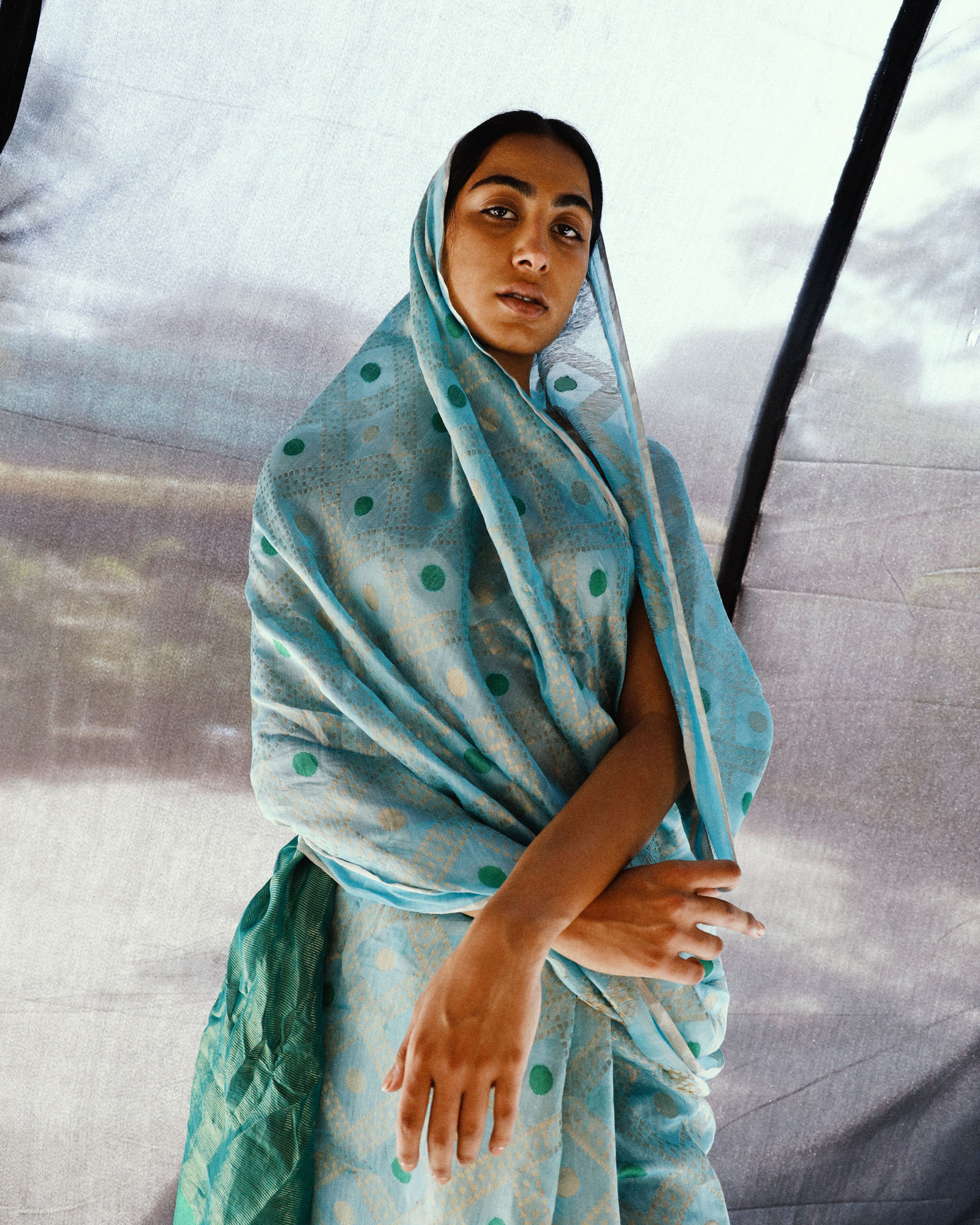
    Aishwarya Rai Bachchan at the 2023 Cannes Film Festival, in a Sophie Couture gown, crafted with aluminium paillettes.

    So, while Aishwarya Rai Bachchan might have returned to Mumbai to a somewhat regular shooting routine, we are still overwhelmed by her appearance in an oversized, shimmery, silver, hooded creation that was cinched at the waist by an equally oversized black bow. Her winged eyeliner and red lips were also ubiquitous on every media feed where her “hoodie” couture popped up, and still does. The trolls had a field day, describing her in various ways: from a samosa to a paratha rolled up in aluminium foil.

    Regretting that I had extended my daily Instagram limit beyond 15 minutes to dissect the couture at Cannes, I felt a sense of personal disruption by the negative reviews. Those hazel blue-green eyes had mesmerised me and other baby boomers, right from her modelling days, when Prahlad Kakar cast her in the Lehar Pepsi ad film, as the unforgettable Sanjana, circa 1993. (Lehar was added as a sop to the anti-foreign lobby, in order to Indianise the label). Having spotted her cool and unaffected irreverence, I knew she was made for bigger and better things.

    Aishwarya Rai Bachchan, in a green sequinned midi by Valentino.

    This is her 21st year at Cannes — no small feat at age 49 — when some of the debutantes who comprised the Indian contingent were twenty-somethings. Age is no deterrent to this veteran, and Rai Bachchan displayed a seemingly unrehearsed ease and nonchalance as she appeared for the premiere of Indiana Jones and the Dial of Destiny. The Miss World charm and gloss of 1994, just one year after the ad film was aired, was still well in place. Yet, neither her sequinned Christmas-green cape-sleeved Valentino midi that she donned at one of the L’Oréal-hosted events, nor the Sophie Couture gown crafted with aluminium paillettes drew encomiums with the fashion police, a privilege that Rai Bachchan has rarely experienced through two decades of her red-carpet appearances at Cannes. Her fans moan and groan at this fact, though hardly discouraged from withdrawing the label “Queen of Hearts”. After all, they say, she still has the face that could launch a thousand ships.

    Today, those benchmarks of who is actually “fair and lovely” have thankfully changed. The doe-eyed, sinuous and sultry Sobhita Dhulipala, for one, has been grabbing her share of the limelight for a while now, and dazzled as a speaker on diversity at the India Today Conclave South 2023 recently. However, I get the sense that Ms. Rai’s sartorial follies now, and those of the past, have begun to hurt our collective pride. For the giggly, Jai Hind and Ruparel college graduate, who had after all, graced the cover of Time magazine in 2003, and had gone on to become the poster girl of the country — fuelling its soft power — keeps tripping up and falling short of another global win. So, do we now feel a displaced sense of self-worth?

    Sara Ali Khan’s posts caught the whole Cannes scene from the beach to the India Pavilion, but she didn’t make us feel like we had been adopted by the bigwigs hobnobbing at Cannes. While Rai Bachchan somehow comes across as a Cannes insider, given that in 2003 when she was just 29, she was the first Indian actor, and one of the youngest actors, to be selected on the Cannes jury. If the festival bills itself as an event with a conscience, Rai Bachchan definitely missed photo ops along the years; like being seen riding in one of the official fleets of electric vehicles. Instead, she concentrated purely on what she could put out on the red carpet, purple lipstick included in her appearance in 2016. Her series of debacles of dress at Festival de Cannes thus put a dampener on our own aspirations that were embodied by her girl-next-door debut in the Pepsi ad.

    The 1993 Lehar Pepsi ad, directed by Prahlad Kakar.

    The unknown model and Raja Ravi Varma-esque classic beauty came to symbolise a certain enigma that her character, Sanjana, bestowed on the modern young woman, dressed in just a simple white shirt and trousers, thank you. “Sanju”, as she was referred to in the ad film, added to the mystery, as it was a play on gender — was this imminent Sanju, who was yet to appear on screen, male or female? Few seconds later, sporting red lips and rain-drenched hair, appeared Aishwarya Rai as Sanjana, oozing all the confidence of a new-age woman looking for a Pepsi, that iconic drink that is emblematic of a liberal West. Yet, the native ring of “Sanju” synced without dissonance as she boldly asked, “Got another Pepsi?” Overnight, the Sanjana sensation had captivated the country, as girls born that year became namesakes, with parents hoping that all of their yearnings for a progressive India would see fulfilment by dint of this new-age name. Suddenly, without her knowing it, Rai became the face of a liberalised India, and drinking Pepsi was just one of the new habits that this outward-looking generation would adopt.

    Today, we are still looking for the Sanjana in Aishwarya. But, over the years, she has allowed her persona to be shaped by an ersatz Brand Aishwarya instead of the spontaneous, jeans-clad Sanju who was confident enough to want it all. We seek that Kakar-directed oomph, but we are subjected to subservience to the multinational label L’Oréal and its coterie of image makers and spin doctors. Maybe fashion is just not her thing, and she should surrender that territory to the likes of Deepika Padukone, Alia Bhatt and Sonam Kapoor Ahuja who however, are not idolised for beauty in the same way as Rai Bachchan is. They have a certain savoir faire and also personify different moulds of feminine appeal, each of which in its own way has changed the perception of what constitutes an Indian woman who is to be hero-worshipped.

    Aishwarya Rai Bachchan, seen with daughter Aaradhya at Nice Airport ahead of the 76th Cannes Film Festival earlier this year.

    Was Rai’s over-the-top gown a desperate attempt at surpassing these newly minted ambassadors of India’s soft power? Or maybe the gravitas post marriage, and all the inherited trappings of the Bachchan mantle sit heavily on her shoulders? Although, she has definitely carved her own individual niche of parenting, one that celebrates her career-driven celebrity motherhood to include and acclimatise her daughter, Aaradhya to the inevitable spotlight of being not just a Bachchan, but also the daughter of Aishwarya Rai Bachchan. While this may have raised eyebrows among family and friends, she has received little public criticism, and has remained devoted to her choice.

    But someone has to inform Rai Bachchan, or rather give her the good news, that with the distinction of being “statue-ised” at Madame Tussauds also comes the ongoing responsibility of finding more ways of paving the way for Generation Next, and next, and next. Was the beauty of Sanju’s enigma also an underlying hint at the multitude of aspirations bubbling underneath? Were the character and actor interchangeable in encapsulating a new vibe that captivated parents to name daughters, born in that year, Sanjana, asks author Sanjana Ramachandran, in her essay, aptly titled, The Namesakes. Is the trolling actually a backlash to her selling out?

    Our national treasure, billed on Oprah Winfrey’s show as “the most beautiful woman in the world”, is no longer ours. Where are the rousing speeches to lift women out of their mundane diurnal duties? Maharani Gayatri Devi, another legendary beauty, often seen in Onassis-style dark glasses, was known for living life on her terms, and shunned the purdah system, an age-old convention for royalty. Rai Bachchan, a Padma Shri awardee in 2009, has vowed to donate those incredible eyes to the Eye Bank Association of India but we want to exploit her agency to the hilt during her lifetime. For one who speaks close to four Indian languages and has, according to latest reports, acted in about 48 films in five different languages, she is an appropriate candidate to advocate the advantages of our country’s immense diversity. Way back in 2003, she told Verve, “Language is not the issue, whether it means doing movies in Tamil, Bengali or Hindi…. Titles of Hollywood, Bollywood or Tollywood…it’s cinema, man — that’s what it really is for me.” In 2023, she’s definitely walking the talk with the release of Mani Ratnam’s much-acclaimed epic historical films, Ponniyin Selvan: I and II, based on a Tamil classic, where she plays Nandini, a Madurai-born, Pazhuvoor queen. Interestingly, her screen launch was also in the director’s Tamil political drama, Iruvar.

    So, while still on the cusp of turning 50 on November 1, 2023, Rai Bachchan has to grab every opportunity to premiere the real, unmodified Ash — and if that does happen, we can all prepare for Season 2 of “Ash Unplugged”.

    Till then, join the movement, #BringBackSanjana. 


    [ad_2]

    Source link
  • The Art Of Sartorial Activism Grabbed Eyeballs At The 2023 Met Gala Celebrating Karl Lagerfeld

    The Art Of Sartorial Activism Grabbed Eyeballs At The 2023 Met Gala Celebrating Karl Lagerfeld

    [ad_1]

    It might be a little late in the day to enter the discourse around the Met Gala. Reams have already been written, and the internet and Instagram have hit it out of the park with their relentless coverage.

    But, I have a concern: it’s been over two weeks since the party, and I am still ‘doping’ on the papped and snapped. Why? It’s doing something fuzzy to my brain, this red-carpet thing, and shutting down my soul, just as the dazzling celebrities had “shut down the red carpet”, to borrow from MC La La Anthony’s lingo, as she interviewed the A-listers from her perch on top of the Met stairs.

    I’ve been desperately searching for my own verdicts, my own judgement, and indulging in some serious existential reflection, over and above all of those that have already been voiced. This mega event — one that has notched up a staggering “916 million total video views” — is it really a good thing or a major badass moment for our new-age, Insta-fed voyeurism?

    Michaela Coel, co-chair of the Met Gala 2023.

    Going down the rabbit hole of news bites, videos, reels, Insta posts, I found that I couldn’t take my eyes off co-chair Michaela Coel’s Schiaparelli gown that was studded with over 1,30,000 crystals and 26,000 mixed stones. I bet even the Mona Lisa wouldn’t merit such repeat eyeballs from me, having already honoured her with a couple of dekkos at the Louvre. How many dabs of paint did Leonardo da Vinci plaster on the canvas? Or how many man-hours did it actually take him to put the finishing touches on the masterpiece? Google doesn’t come up with that fine data. Alas, without this trivia, the Mona Lisa deteriorates into a pointless repeat watch in my data-fed brain.

    Kim Kardashian in a costume by Schiaparelli that was layered with pearls.

    Rihanna in a Valentino dress with a cape — the outfit boasted 30 giant camellia appliqués made of 500 petals and a billowing train.

    However, in an interesting twist to this year’s online broadcasts of the Met Gala, was the prominent mention of technicalities of innumerable hours and painstaking workmanship that went into the construction of each garment, which were flaunted by both, wearers and designers, on their social media. So, I learnt to my satisfaction that the one and only OG influencer, Kim Kardashian, previously forbidden from attending the Met Gala, wore a Schiaparelli naked dress, strung together with approximately 50,000 freshwater pearls and draped over skin-coloured shapewear, and nothing more. That Rihanna’s show-stopping Valentino cape included 30 camellias — that pristine Lagerfeld leitmotiv — comprising 500 petals whose sheer number was meant to transport this all-white, silk faille creation, like the many others, beyond fashion and into the realm of art.

    Now, these are heavyweight fabrications of historical importance which, presumably, makes them eligible to be archived in one of the precious glass cases at The Metropolitan Museum of Art’s Costume Institute. Ostensibly priced at 50,000 dollars a pop this year, the celebrities showed up in full support of swelling the coffers of this venerable wing. And they took their mandate way beyond this year’s theme, Karl Lagerfeld: A Line of Beauty, which is also the title of the Costume Institute’s spring exhibition that opened to the public a few days later. Though whether the fanfare surrounding the mega night leads to a run on tickets for the show remains to be seen.

    Andrew Bolton, head curator of The Metropolitan Museum of Art’s Costume Institute in a conversation with the Business of Fashion editor-at-large, Tim Blanks, had said, “To me, his (Karl Lagerfeld) greatest disguise was a black-and-white uniform he created because it deflected away from anything. It was his greatest duplicity; he was creating this sort of, what he called the dolly or the puppet, which became this sort of image that people were obsessed with. I find that fascinating about him and was one of the reasons why I didn’t really want to focus in the exhibition on him, the man and the words. Because I feel as if that’s not authentic. What is authentic, and what is true to him is the work.”

    Cardi B in a gown by Studio Cheng Peng.

    There were, for sure, a few examples of celebrity couture that were clearly focused on creating historical archival value. Notably, Cardi B’s sculptural gown, had velvet camellias which seemed to be chiselled on its skirt. And, the top and bottom parts of actor-director Olivia Wilde’s white Chloé dress were connected by an appliqué with a violin-like contour.

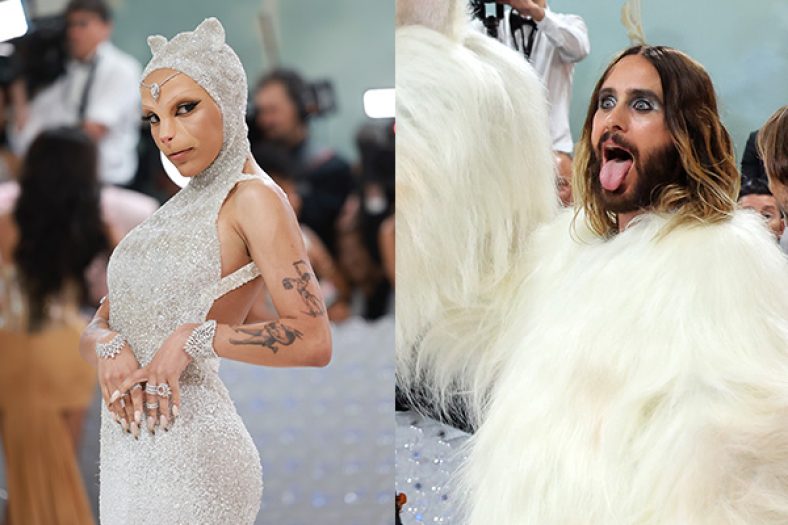
    Doja Cat in a gown by Oscar de La Renta. Her look was inspired by Choupette, Karl Lagerfeld’s cat.

    Shapes dominated, mainly in the feline form, in deference to Lagerfeld’s pampered cat, Choupette. Art history students might well classify actor-comedian Chloe Fineman’s pink cat clutch and heiress Isha Ambani’s doll-shaped Chanel evening purse as objets d’art. Then there was singer Doja Cat’s prosthetic make-up that transformed her face to look more cat-like. She finessed her kitten couture with pointed ears topping the hood of her shimmery Oscar de la Renta gown. Actor Jared Leto in his furry cat costume introduced shades of grotesque-via-Halloween, holding the cat’s head in his hand. The more charitable critics compared him to a Disney character. A hand-drawn black-and-white portrait, with the likeness of Lagerfeld, appeared on actor Jeremy Pope’s 30-foot-long Karl cape by Balmain; the ghost of Andy Warhol had made a guest appearance. There was every shape and genre of art strutting as statement wear on the 2023 Met Gala red carpet.

    I want to see real fashion, something I can borrow from, or aspire to, talk to my mother and daughters about, so I stay up one more night, scrolling till I emerge inundated with more titbits about the art and science of each outfit. Yes, British-Indian sculptor Anish Kapoor — known for his extensive use of mirrors — may have been exhilarated to spot Serum Institute of India’s executive director Natasha Poonawalla’s futuristic, mirrored Schiaparelli dress, which deserves posterity in the Costume Institute’s closets. I, however, much prefer to check out the street style Insta accounts any day! To imbibe the fine art of mixing and matching or possibly not matching at all.

    Jared Leto in a fur suit inspired by Choupette, Karl Lagerfeld’s cat.

    The Met Gala could boast no Bill Cunningham moments of pure spontaneity. His images captured on-the-move, instinctive fashion. I speak to fashion industry veterans to see if previous Met Galas threw up more fashion that I could have related to, in any sense. An old-timer, who had attended the event, went to the extent of saying that in her time it had been “a neighbourhood affair and not a Mardi Gras-type costume party”! The invitation to raise funds for the Costume Institute has today clearly translated into meaning “dress up in costumes, not real fashion”. I was surprised to find that the 2013 theme, Punk: Chaos to Couture, had less subversive fashion and more aspirational ensembles. Even though it lent itself to anti-establishment statements. Most of the celebrities, however, had played it safe and, among those who didn’t was who else but Madonna, outfitted in a studded plaid jacket adorned with chains and spikes. No coincidence that the exhibition that year actually flopped.

    Is that perhaps why celebrities have been prescribed to up the ante, even at the risk of introducing a bizarre or an over-the-top quotient into dressing up. So, no wonder that, today, all the looks, down to every eyelash, have been carefully masterminded and curated by a professional army of highly trained, experienced designers, stylists and hair and make-up artists to make ’gram-worthy statements for their clients. These pros are the new Monets and M. F. Husains, unsung heroes of the Met Gala.

    Actor Alia Bhatt’s Cinderella-like ball gown, constructed by the Nepalese-American designer Prabal Gurung’s New York atelier, was made of 1,00,000 hand-beaded pearls. More power to the behind-the-scenes Indian karigars who must have sewn them on, pearl by pearl, possibly burning the midnight oil. And at the other end of the world were 70 seamstresses who worked on over 500 metres of silk chiffon to create Pope’s cape that is mentioned above.

    Jeremy Pope (left) with Balmain creative director Olivier Rousteing.

    Another hint of pop art showed up like a breath of fresh air, in Balmain creative director Olivier Rousteing’s tote bag that read, “Karl Who?”. If we had looked around, we might have seen that the late German designer, Lagerfeld, who apparently got his inspiration from everyday life around him — including music, literature, film, sculpture and art — had, in fact, been immortalised in “fashion’s biggest night out”. Not only because of Anna Wintour’s emotional endorsement of her friend, Karl, at the start. It was the interpretation of Lagerfeld’s eternal black-and-white theme that went way beyond everyone’s individual imagination, and, collectively, the oversized bows, billowing trains and veils, enveloping capes and opera gloves had also created a sense of cohesion. A dress code that in its sheer repetition was transformed into an art form — pointillism achieved through collective homage.

    The Met Gala has successfully mythologised fashion as high art — unwearable fashion, but wearable art. And watching the spectacle only helped me realise that the art of fashion-as-fashion no longer belongs to the individual. It’s now being composed and created primarily for viewing pleasure and the wearer is just the canvas. Illustrating this point literally was Lil Nas X who was dressed in precisely nothing but silver paint and a G-string, with glitter, pearls and crystals covering his entire body. No wonder that on the first Monday of May, when the Big Apple almost shuts down for a night, the hottest ticket in town is the Met Gala and the imposing carpeted staircase that leads one to the Metropolitan Museum of Art. Here, as the frenetic paps wait to snap their big scoop, each celeb invitee looks for their 15 seconds of fame by blurring the distinction between fashion and art and focusing on the message. In this case, the couture — the medium — is the message. Call it a form of Insta-instigated sartorial activism, perhaps.

    Lil Nas X — whose look was created by Pat McGrath — is seen in silver body paint, glitter, pearls and a G-string.

    A bit of interesting trivia to note here: according to a recent column in The Times of India, 2012 statistics indicated that in the modern art section of the Met, less than 4 per cent of the artists who had shown at the fabled museum till then were women and 76 per cent representation was through female nudes. Until the 19th century, women were not allowed to “observe human anatomies”, said the same article. And, ironically, the disrobed woman was frequently the muse.

    Seeing how the massive line-up of gowned and costumed power women at the glamorous fundraiser — including four of our own — far outnumbered the men, it can be viewed as a form of communal resistance against giving men the upper hand in the art and fashion world (Donald Trump was reportedly not invited from 2012). But then again, should we concede that the annual Met Gala spectacle enables social media-fuelled propaganda of all types?

    Alia Bhatt appeared in a gown by Prabal Gurung for her first MET Gala.

    Fresh from her wins as Best Actor in the powerful role of Gangubai Kathiawadi, who stood up for the rights of professional sex workers, Bhatt’s arrival at the Met Gala was an acknowledgement of her coming of age as an actor, who could stand on her own feet in a global arena. She did not need to be escorted by her beau who comes from one of India’s foremost and illustrious film families. Is the most elitist, and the hugely viewed event, then, also giving a voice or rather a stage to open up all conversations, even those that might create a backlash that could actually undermine its exclusivity? Did the steely arbiter of all things fashion, Wintour, officially give a nod to Leto’s irreverent theatre of the absurd in his life-size cat costume on the red carpet? Or is he having the last laugh, and cocking a snook at what the hefty ticket price and hoopla really mean to him?

    I now have my answer, my personal manifesto for why I was stuck to the screen: that behind the obsession there is, perhaps, a curiosity for the zeitgeist which, for me, adds to the gala’s viral clickbait appeal.

    Dim the lights, I’m just settling in to watch my, er, fifth replay.


    [ad_2]

    Source link
  • The Ultimate Sabya Moment? | Verve Magazine

    The Ultimate Sabya Moment? | Verve Magazine

    [ad_1]

    Photograph: Sabyasachi Mukherjee/Facebook

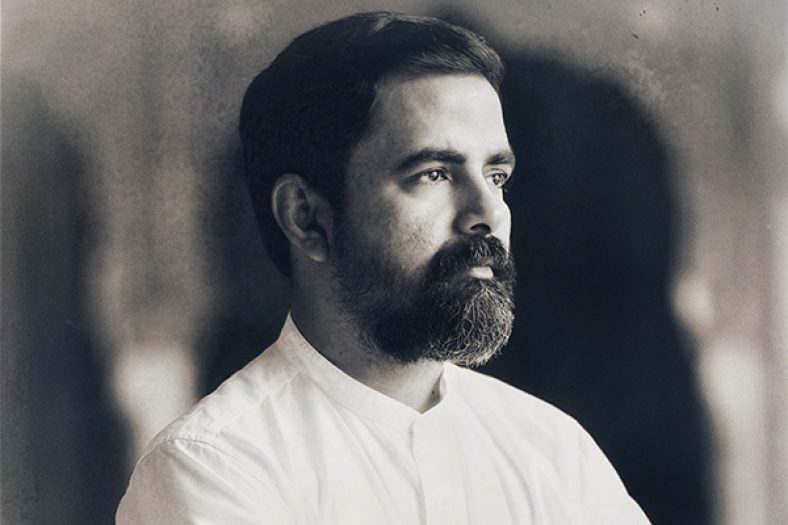
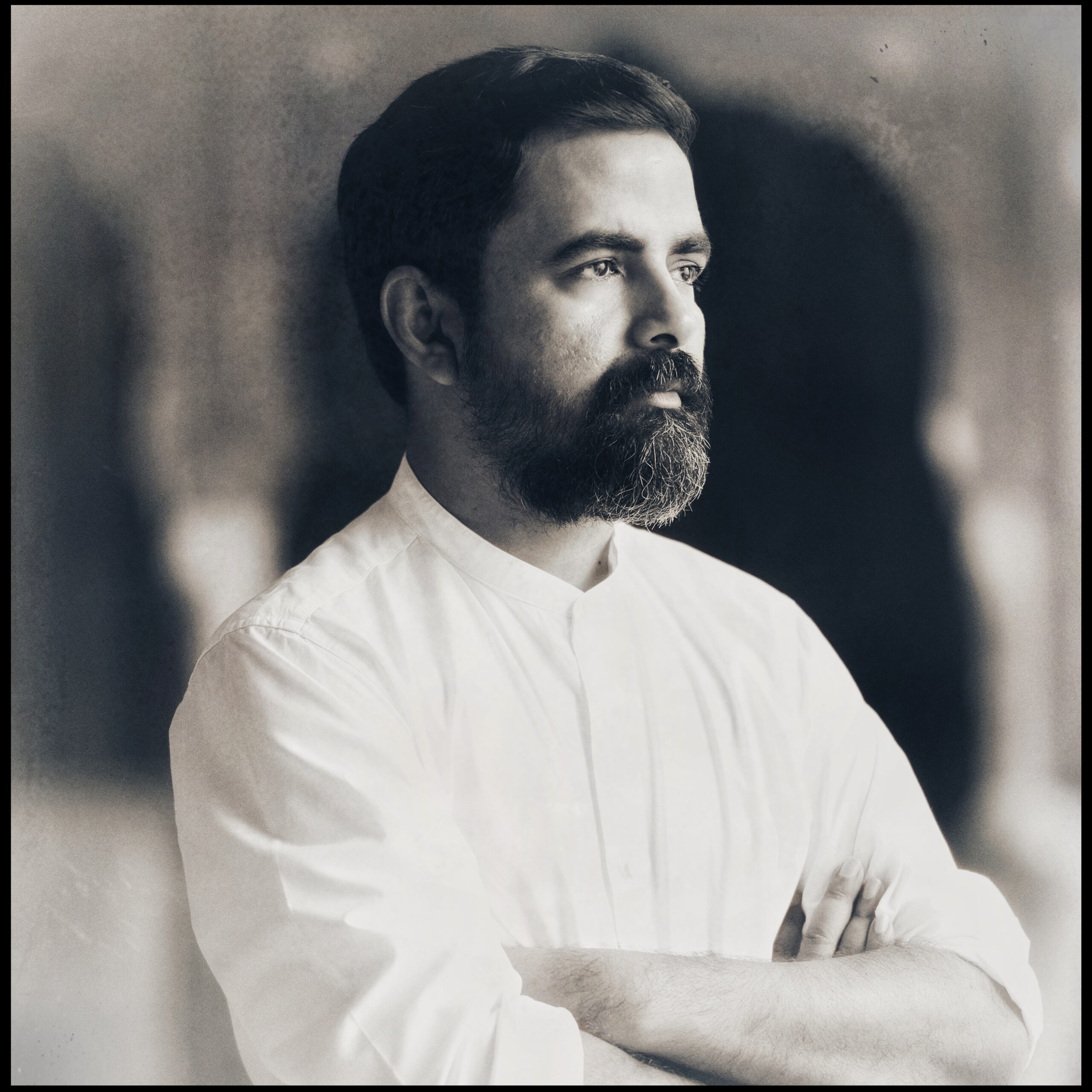
    I have always been intrigued by the fact that Sabyasachi Mukherjee never considered moving out of the City of Joy to the Maximum City. With the opening of his newest store, he has instead, in some way, transported his hometown to the teeming metropolis of Mumbai. When I entered through the cavernous doors, glancing at the gleaming word “Sabyasachi” above the entrance, for the first time, I missed the “Mukherjee”. A few steps inside the multi-chambered space, three reclining brass tigers stood guard on either side of a narrow, thickly carpeted hallway. Strains of folk Rabindra Sangeet wafted in, and a polite staff member, wearing a black bandhni sari, enlightened me about the fact that the music too had the design maestro’s personal touch. As I turned a corner, where a wooden cabinet was neatly ensconced, I noticed a sindoor-red bucket bag with a wide cloth strap embossed with the word “Calcutta” in bold lettering.

    Sabyasachi, I know, is the brand. I’m told by an early landlord and crafts enthusiast that his very first store in Mumbai was apparently self-consciously called “Sabyasachi by Sabyasachi”, which was abbreviated approximately within a year to “Sabyasachi”. It had felt okay, seeing just the first name on the front-page ads — that announced that the new store is open in Mumbai, seven days a week — in the The Times of India. But, without the “Mukherjee” across the facade of the store — which is a sort of a homecoming that celebrates everything that the designer adores about Kolkata — it occurred to me that he had actually created a vacuum, a kind of distance between himself and his label.

    Is the 49-year-old designer actually ready to hyphenate himself, I wondered, as I wandered the space. The global brand, and luxury house, with stores dotted across continents, and cities — New York, Dubai, Hyderabad, Kolkata, Delhi and Mumbai — on one hand and the bespectacled, reserved, Alipore-residing Bengali Brahmin on the other. Throughout the store, I encountered poetically written plaques with inscriptions of personal odes, to old-time haunts like the grand tea room and cabaret at Firpo’s and the company of Presidency College and Bengal School of Art students. That the logo has been customised to carry “Calcutta” underneath it for print ads in magazines is then understandable.

    Mukherjee’s spoken English too discloses that mildly lilting Bengali cadence with the rounding of the vowels. It’s endearing coupled with his innate shyness. Is this an affectation, now serving as just a marketing ploy? Given his enormous business acumen, is he more marketing genius than intellectual creative, some ask. Looking at his immaculate appearance, mostly dressed in his own pristine sherwanis, bandis, kurtas and churidars, an occasional shawl or scarf rolled around his neck, he seems to fit perfectly into that hallowed club of the cultured elite or babumoshais. Kolkata’s own intellectual culturati who have cut their teeth on the likes of Thackeray and Proust. So, I was least surprised to see Sabyasachi jewellery and accessories rubbing shoulders with leather-bound tomes within the library-styled nooks of the store. A copy of Charles Dickens’ The Pickwick Papers with antique gold lettering and a burgundy cover stood out.

    Ah! The bhadralok. The Bengali word that best describes its educated class. Think of fellow kinsperson, Nobel Laureate Abhijit Banerjee, who paired a velvet bandhgala with the traditional dhoti-panjabi — the latter being a knee-length kurta made of cotton or silk — when he attended the Swedish awards ceremony in 2019.

    Known to be reclusive and antisocial, and choosing to stay behind the scenes, the retailer and couturier seems to prefer that his roots are felt more through the ambience and mood, so vividly expressed in the much-talked-about interiors of his newly minted flagship store, housed in a neoclassical building. While describing the sprawling space, he says in a recent interview to fashion journalist Suzy Menkes, who flew down for the mega opening, that it’s like bringing the customer into his home. The same soft-spoken store staff member admits in genteel fashion to me that a cleaning staff, comprising 40 to 60 members, rotate in two shifts to ensure that the space crowded with bric-a-brac is kept spotless, and the glass-fronted armoires and gilded mirrors are always shining.

    Kolkata’s old-world charm allows a specific brand of nostalgia wrapped up in aristocratic glamour to creep into his work everywhere — his photography campaigns, styling overtones, choices of models. And, most recently of all, the new bari  (home) where his exquisitely crafted creations take centre stage: ICP Fort Heritage, the erstwhile British Bank of the Middle East; a Grade II A heritage structure, built in 1913 in the Italianate tradition, located off Horniman Circle. Luxury’s latest address in the city. The Ballygunge boy, who always harboured a fascination for all things larger-than-life, grew up to adopt a maximalist approach, both in his creations and the interiors of his eponymous stores. There is a lavish excess that is visible in his wall-to-wall aesthetic that has become so popular, and there isn’t an inch of space that isn’t crammed with clusters of antiques and curiosities, many that he has hand-picked. It doesn’t come as a surprise to find out that early on, the designer was influenced by Ralph Lauren, whose stores reek of old-world WASP America. Lauren, by his own admission, has long been invested in selling a lifestyle, one that symbolises the American dream.

    As Sabyasachi the label expands its tentacles into many more metropolises in India, his evident display of sentimentality only seems to grow stronger, which implies that the duality might be somewhat of a struggle, a form of inner conflict. Yesteryear, and scenes reminiscent of bygone eras, consistently seem to capture the imagination of the NIFT graduate who, at one point, also designed costumes for the silver screen. A montage of diffused images that bring to mind scenes from Shyam Benegal and Merchant Ivory films play on loop on his under-construction website. Black-and-white and sepia frames featuring coiffed women behind dark glasses — so maharani-like in their gait and manner, shown at ease playing pool in diaphanous saris, with their turbaned consorts — evoke mystery and intrigue. The only bit of text on the website reads: “Crowded narrow lanes with balconies jutting out of beautiful old mansions and homes, jostling for space in North Calcutta. So rich in its nonchalance, between the clamour of grandeur and decay. It’s almost spiritual, the neglect of luxury and the casual existence of glamour. It makes Calcutta unforgettable.”

    Like his newly opened Mumbai store, ubiquitous Sabyasachi imagery persistently exudes heritage and grandeur, so typically suggestive of many old Kolkata homes that have filled the designer’s psyche since childhood. How could he have better expressed this? No wonder that the press release reinforces his hand in the creation of this majestic space: “Interiors and overall creative direction: Sabyasachi Mukherjee”. In the making of this Taj Mahal, Badshah Sabyasachi has shown a total engrossment with his whole self.

    As the 25,000-plus-square-foot store dripping with chandeliers, antique wooden cabinetry, and stacks of crystal and porcelain recalls the times of the Raj and a certain post-colonial style interior, a staple in Mumbai’s Parsi-owned bungalows, one can tell that Sabyasachi also has a strong penchant for throwbacks and romanticising the past. How many modern-day Bengali brides are seen with their hands covered with the red stain of alta? But, we saw it in the brand’s Instagram posts in the second week of April. Donning long kurtas or wide triangular lehngas, with the typical stacking and mixing of gold-embroidered and brocade borders — “multimedia borders”, as the staff member had informed me during my tour of the store — most of the female models had their hands adorned with the red dye that is made from lac and traditionally applied on the feet during marriage ceremonies and festivals. No wokeism here, as we didn’t see it on the men.

    For his Fall 2011 grand finale, nostalgia came from outside of his home state, from Mexican painter Frida Kahlo, as models strutted in braided hair, rose headbands, and wire-rimmed glasses. Sabyasachi’s Kahlo fascination has lingered on; I noticed many artworks of women with that famous unibrow, as well as coffee-table books on the painter whose autobiographical works often mixed realism with fantasy. Recently, The Times of India dated 22nd April showcased consecutive full-page ads of a medley of black-and-white clothing styled in a contemporary way, and one couldn’t help but think of Coco Chanel. Pussy-bow shirts and boxy jackets, paired with black-and-white saris, instead of skirts and trousers. Fashion can never be original as someone or something must come before. But the one thing that can be original is the designer’s muse, and for good old Sabyasachi Mukherjee’s mood board, despite his occasional departures, it remains the bhadralok gentry. (Apologies to Rani Mukerji here.) A quick giveaway was a book titled Elite Clubs of India, placed conspicuously on a shelf, under precious glass decanters.

    Owning a Sabya lehnga or planning a Sabya wedding is no doubt a privilege among the already privileged. If you want to literally go the whole way, then zero in on “Sabya Red” too, a salesperson in black proudly states. Now, in addition to getting the largest flagship, Mumbai’s been gifted a refurbished neoclassical landmark in close environs of other historic buildings like The Asiatic Society of Mumbai and St. Thomas Cathedral. A 21st-century altar of aesthetic hedonism, straight out of the late 19th-century Decadent movement, for our own chattering classes.

    As I walked out of the magnificent building, removed my spectacles and donned my sunglasses, was I caught in the ultimate Sabya moment. I stood still as if ensnared in a time warp. The bespoke Crimson Soil fragrance — another Sabya concoction — that permeates the store enveloped me as I stepped out into the grit of Mumbai.

    Had I just successfully imbibed the Sabyasachi experience? Mood before product, experiencing the label back to front. I, too, was reminded of the decaying heritage homes of Kolkata, with colonnades, stained-glass windows, balconies with filigreed railings, and windows with wooden shutters. Stolid in past grandeur, frozen in heritage, these images of current decay had become indelible for me too, a “non-Bengali”, through films like Balika Badhu, 36 Chowringhee Lane and The Namesake that was adapted from the novel by immigrant author Jhumpa Lahiri.

    Nostalgia imbues the Sabyasachi brand, and vice versa, the brand imbues nostalgia. No wonder many have referred to this larger-than-life store as a living museum.

    It’s left to be seen if Mukherjee, the designer who did his early education at Sri Aurobindo Vidyamandir in Chandannagar, will find a unique contemporary language for the modern woman, mutated beyond his own inheritance of culture, and its currency. If he does, he will truly be leading the fashion pack from the front. He needs to draw from the same pluralistic heritage he often talks about in reference to the diverse hand-crafted techniques of India that his workshops around the country employ, be it ari, kashida, gota, kasuti, or chikankari, all of which are specific to certain regions across the nation. Calcutta Rouge, Nani Bucket, The Mangrove Bracelet, The Baghbazar Necklace, and the India Tote ring with romanticism, true, but there’s still hope that the “syncretic legacy of India”, which he wished for when he opened in New York, will be pushed further through his future clothing, jewellery and accessory collections.

    The legacy is, undoubtedly, visible in each thread of zardozi, in each weave of Benarasi, each blot of indigo and each impression of block print. Today, however, this legacy and heritage need a 21st-century kalakaar  (artist). Mukherjee did wish to introduce a certain “Indianness”; this was intentional, as his early days coincided with the period when post-liberalised India was beginning to embrace Western luxury, with the onset of brands like Louis Vuitton opening in tony areas of Bombay and Delhi. But, as a creator and designer, can Mukherjee blaze a trail, with greater and more frequent innovation, and give new meaning to decadence beyond aesthetic hedonism? Beyond the “patti-patti” look, which actually drew inspiration from the mixing and matching of clothing he observed on the streets and was, by 2011, turned into a template.

    The limited New York edit I saw at the far end of the top floor, with its printed parrot green and rich salmon-coloured velvet co-ords hemmed with a black sequinned fringe, the rust-coloured “micro-kantha” trench and the oversized silk shirt dress with Kahloesque colours, are appetising for a woman who seeks freedom of movement and multiplicity of usage in her everyday wardrobe. But, only if he pushes the envelope further as a revivalist, providing that modern twist to the heritage techniques, will Mukherjee successfully bridge his two sides — the global and the regional.

    It is this potential that I saw when I watched his first collection in 2002, at Lakmé Fashion Week in Delhi. So much so, that I had to have one of his patchwork brocade pants right after. Those who have known him from his nascent days wonder if his uber-nostalgia stemmed from something deeply aspirational as well. Instead of building his brand through the sheer weight of an eight-kilo lehnga or the might of the Tanjore paintings, Persian carpets, Tang Dynasty pottery, Canton vases and curiosity showcases he has personally sourced and amassed (a few under the aegis of the Sabyasachi Art Foundation), maybe Pepsi — Mukherjee’s daak naam (nickname) — needs to take himself a little less seriously as a tastemaker? For he has that certain je ne sais quoi that will stand the test of time.

    The hot blue summer sky suddenly felt welcome as I left the dark, wood-panelled, air-conditioned environs, which barely showed a window. I instinctively shook my shoulders, as if to throw off the burden of trying to fully understand the deeper impact of culture. Did I just miss something that was meant to signify a Renaissance? Out of a habitual reflex, my eyes followed the uneven street in front of me, leading towards the Horniman Circle garden, originally known as Bombay Green. And I breathed out everything that I had been holding inside.

    And soon, the honking from the street took over.


    [ad_2]

    Source link
  • “Tarq is an open-house invitation to anyone interested in artistic practices and questions.” – Hena Kapadia

    “Tarq is an open-house invitation to anyone interested in artistic practices and questions.” – Hena Kapadia

    [ad_1]


    Text and Photography by Asad Sheikh.

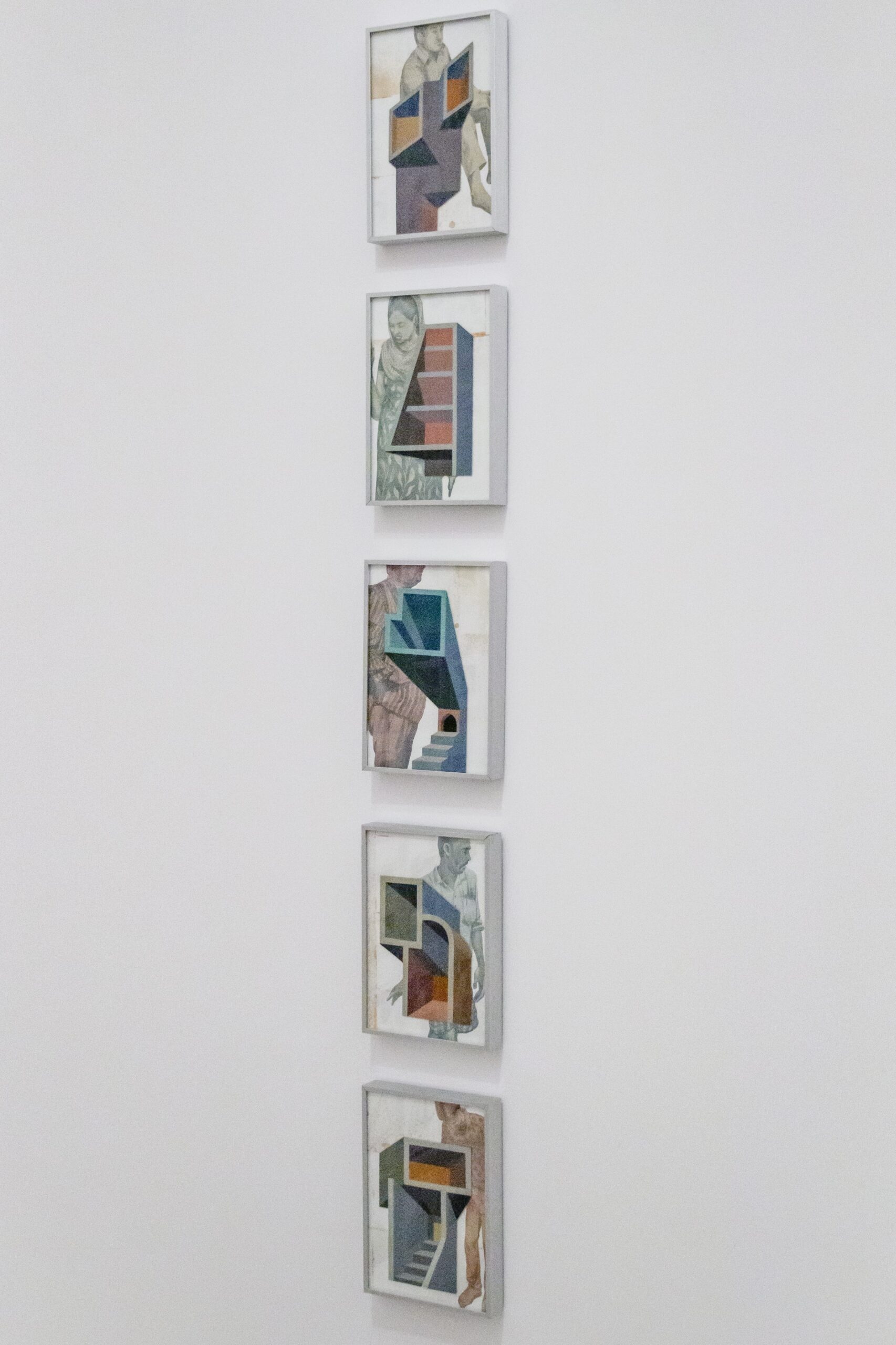
    Tarq’s new location is characterised by an extreme verticality of space.

    Ever since Tarq’s inception in 2014, the gallery has been at the forefront of the contemporary art scene in Mumbai. It has represented a gamut of young, upcoming artists who have gone on to make their mark both nationally and globally.

    Now, nearly a decade later, the gallery’s founder Hena Kapadia decided to shift its location from its first home at Dhanraj Mahal, an art-deco building in Mumbai’s art district. Tarq can now be found on the ground floor of KK (Navsari) Chambers, a 100-year-old building in one of the bylanes near the iconic Flora Fountain. Kapadia collaborated with Mumbai-based Japanese architect Katsushi Goto on the new space’s architectural details. In its new avatar, its design aims to strategically maximise a sense of verticality.

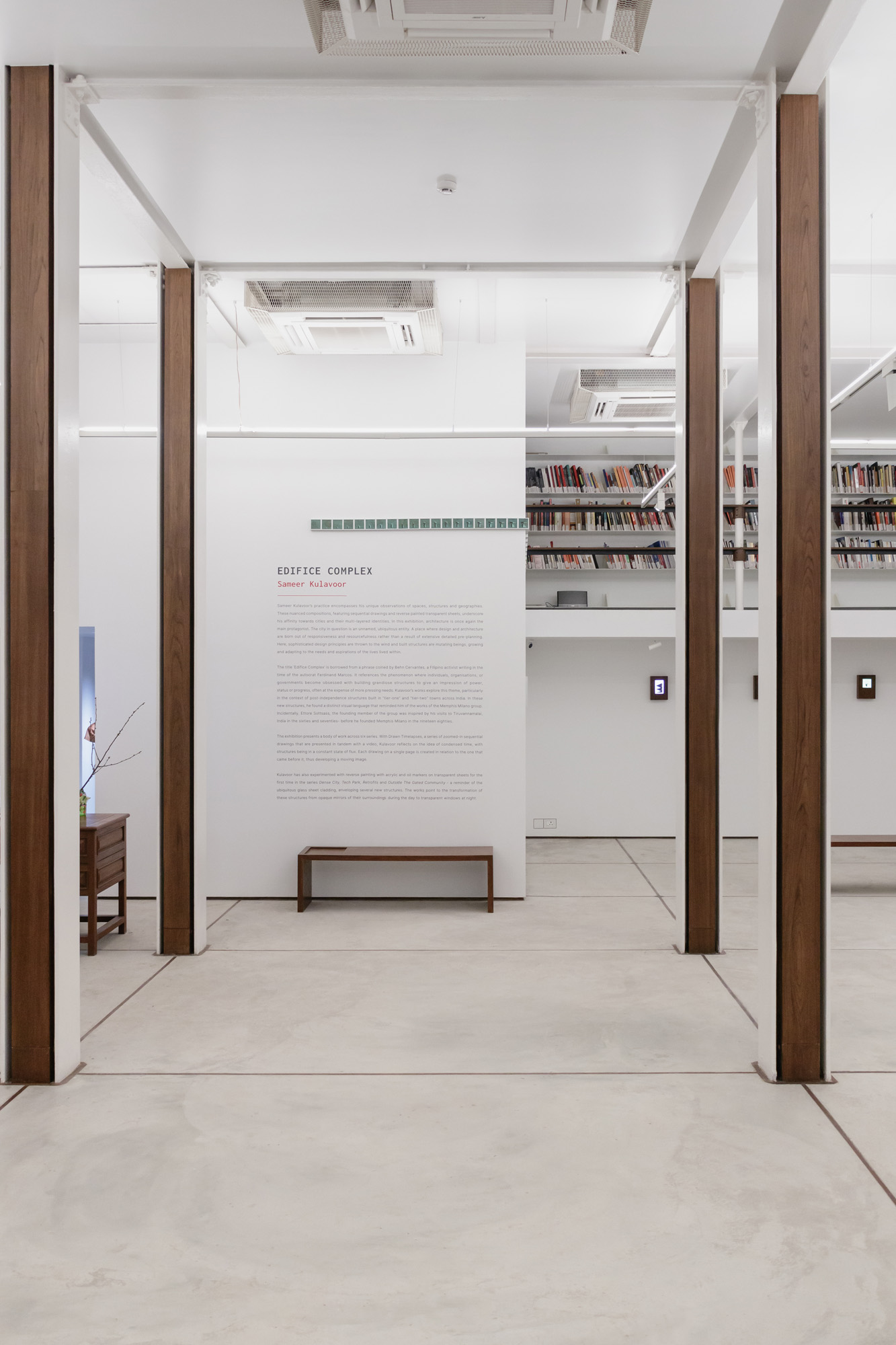
    In an earlier interview with Verve when the gallery was founded, Kapadia had emphasised, “The essence of Tarq is that it is open to vibrant conversation.” She hopes to carry the dialogue ahead in the new premises that is, for starters, distinctly larger than its previous one. As one walks into the gallery through its tall door, one is immediately conscious of how high the ceiling is. The gallery boasts a large open area flanked with teakwood pillars that further add to the verticality of the space. The entrance and the windows — with dark brown panels and brass hardware that stretches from the floor to the ceiling — are easily its most eye-catching aspects. Cleverly placed steel frames enhance the interiors of the gallery.

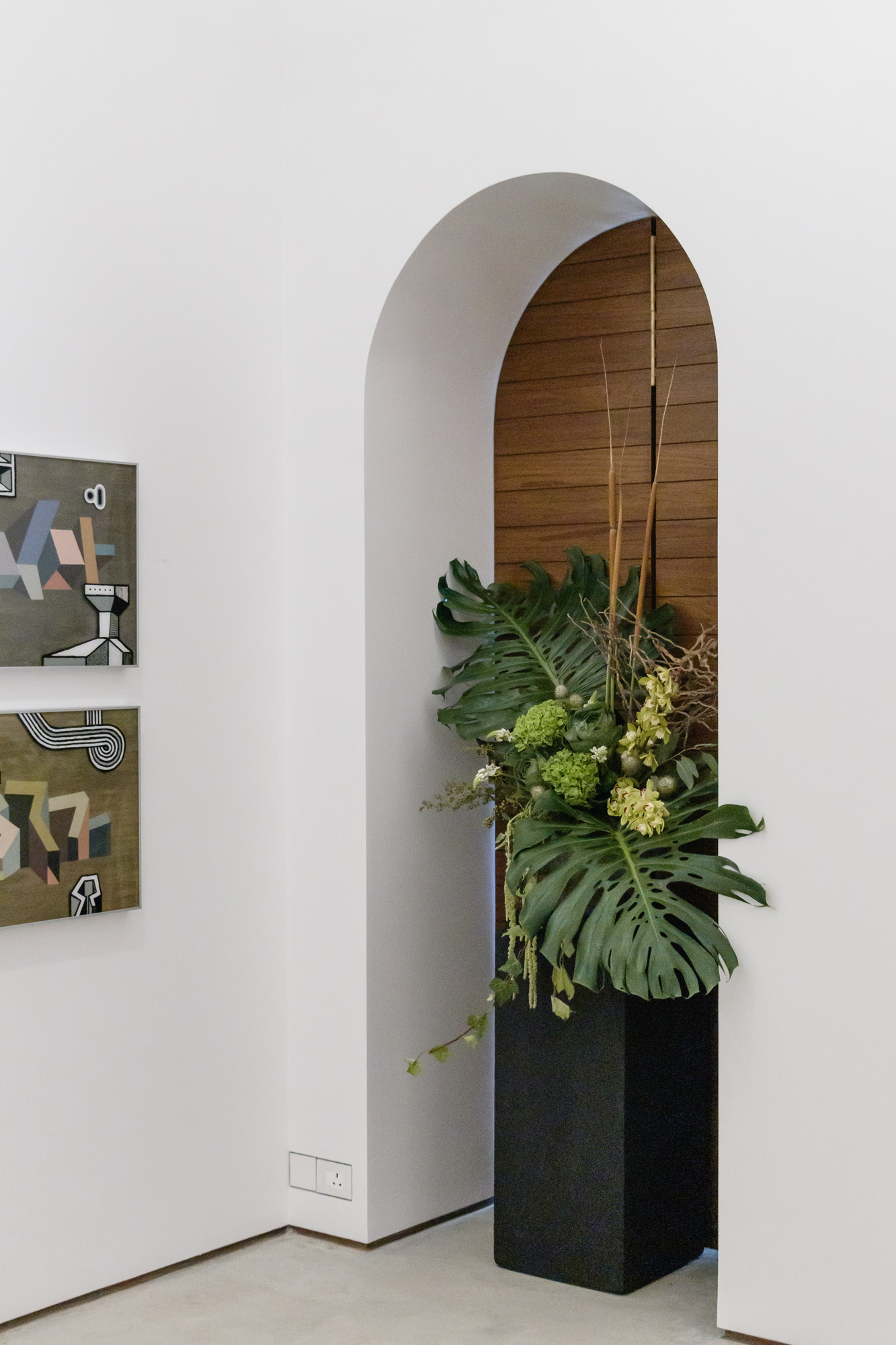
    Floral arrangements by Nazneen Jehangir adorn the space during the gallery’s opening weekend. Tarq also has lighting designed by Tripti Sahni.

    When I visit Tarq, massive green floral arrangements by Nazneen Jehangir of Libellule, adorn the window alcoves. I am informed that these would be on display for the gallery’s opening weekend — later the huge windows swivel open to let in light and enable passersby to get a peek of the exhibits, inviting them to walk in. Long floating strips of light, designed by Tripti Sahni, dance around the pillars and the perimeter of the gallery — and the windows that are lined up on one wall promise to let in natural light. Teakwood lines form the grouting on the peach-grey tile work. As one walks further into the gallery, having explored the space with the pillars, one is led into a smaller area also dotted with artworks. The library — with its detachable teak wood railing — which highlights Kapadia’s personal collection, is visible from the lower level.

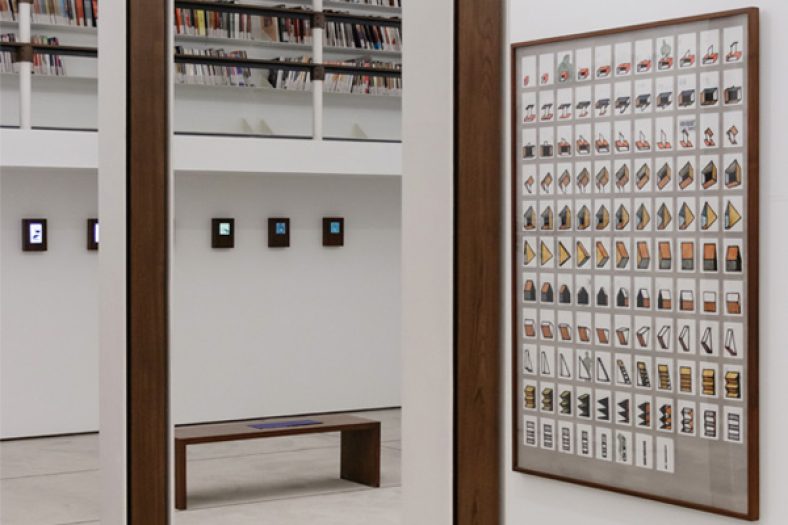
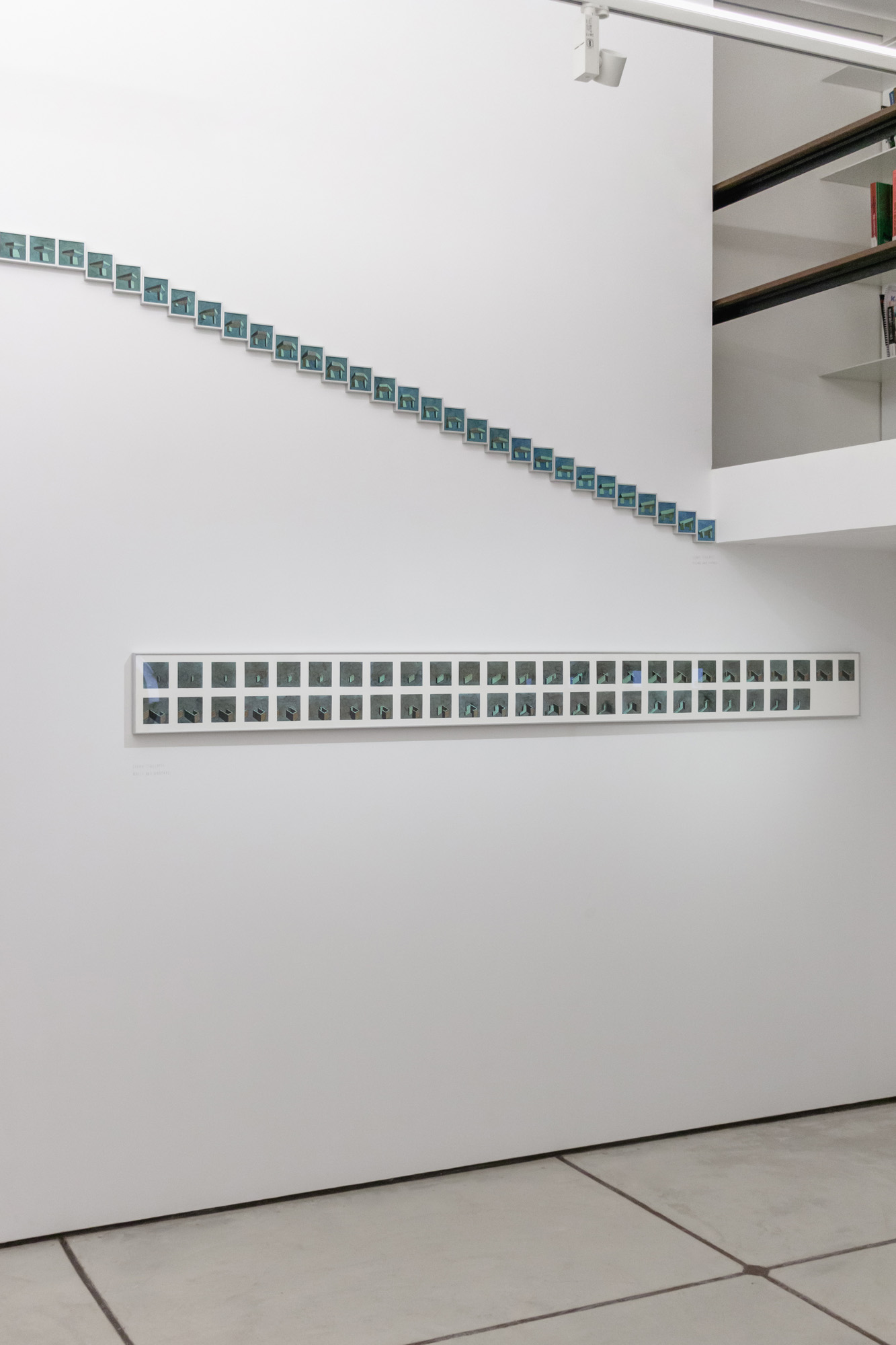
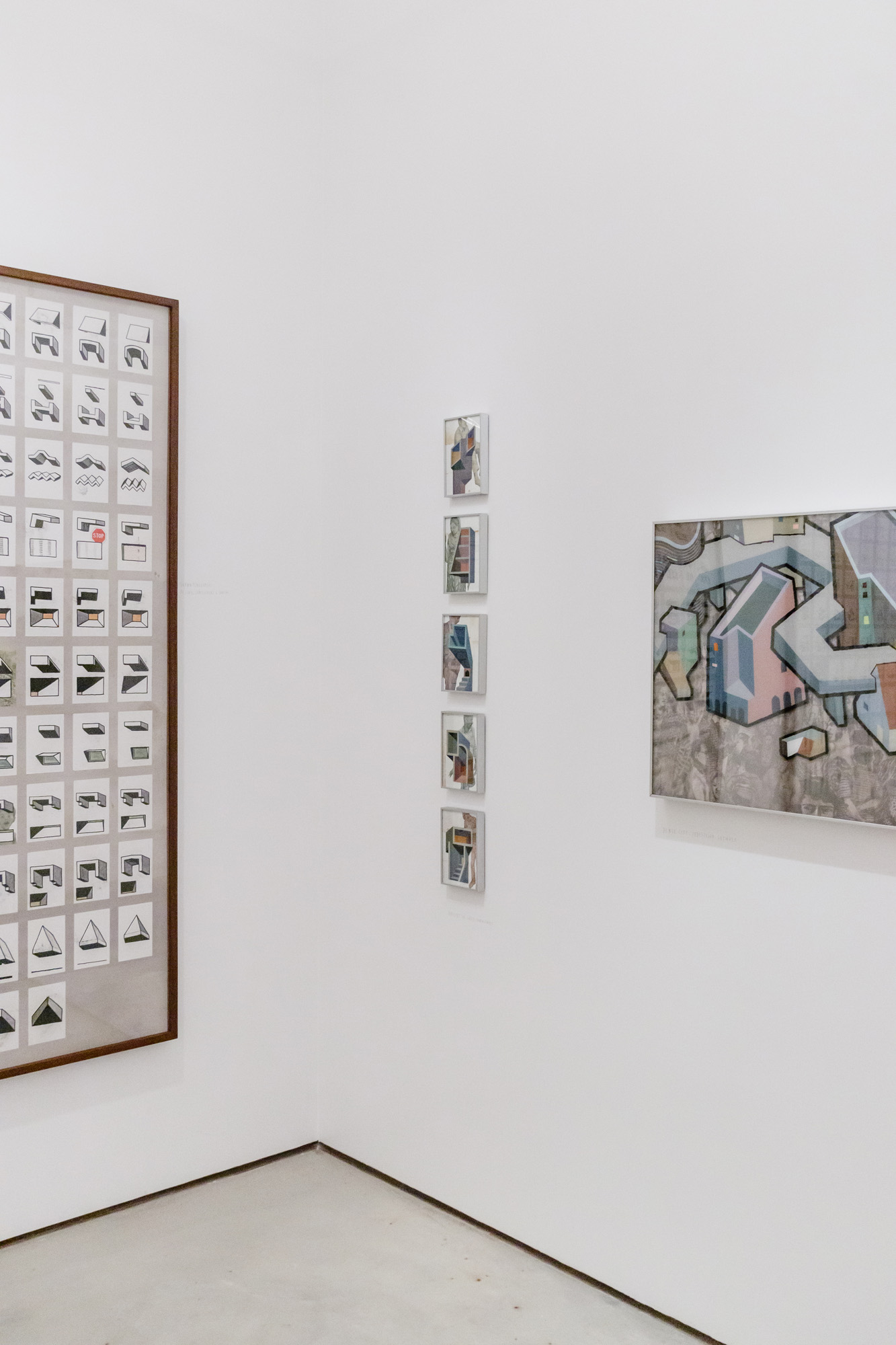
    The gallery’s inaugural exhibition is quite aptly a solo show (Edifice Complex, on show till 10th June, 2023), by Sameer Kulavoor, an artist whose creatives express his unique observations of spaces, structures and geographies.

    In a walkthrough at the gallery, a day before its official opening, Verve speaks to Kapadia about her vision, her motivation for the shift, and her future plans.

    Excerpts from the conversation….

    Why did you feel the need to move from your original prestigious location?
    Very frankly, we outgrew Dhanraj Mahal at some point. We had reached a stage where we needed additional space for storage. So, for example, if we needed to hire someone, we didn’t have the physical bandwidth to do that. Realising the crunch, I started looking around for viable options. And when I found this place it had actually been khali (empty) for about 20 years. It was just an abandoned place because there had been some issue with the landlord. That was resolved and we were able to rent it. It took us about eight months to get it ready. We’ve retained some elements like the pillars, which are the original ones.

    The office at the rear can be accessed through a narrow corridor.

    What have you brought across from your old space at Dhanraj Mahal?
    Of some of the things we wanted to use architecturally in our new premises, one was the teakwood assets. We have also reused most of our old furniture. I would also like to think that the warmth of the people that worked there will continue here. Now, the library is visible to everyone, which is nice and different from earlier, where it was inside my office. But access to the library is still restricted.

    Who did you work with to create the new interiors?
    We work with an artist called Vishwa Shroff. Her partner Katsushi Goto is an architect and he’s the one who has actually helped us design and put everything together — the pillars, the windows, the flooring, all the detailing.

    I’ve been working with Vishwa since 2014 and I’ve known Goto since 2015 so we’ve developed a great personal and professional rapport. He’s paid incredible attention to detail, especially in terms of functionality and other things which mean a lot to us. In fact, Goto is moving his architectural practice to the fourth floor (of the same building) and I found out about this vacant space through him.

    Teakwood furniture from its original location at Dhanraj Mahal finds a place in the new gallery.

    And the contractors who worked on the Dhanraj Mahal gallery worked on this one too. I firmly believe that Tarq is built on its relationships, so I wanted that to carry on.

    What was your brief to Goto?
    I wanted to maximise the natural light that the gallery has. Apart from that I allowed him to do whatever he wanted to do, as long as we retained the warmth of our old space. The design also had to be practical for us. But it was his vision entirely; I think my inputs were more functional.

    There are a few specific things that Goto did for us, but they are storage-related. For example, most of our storage is upstairs so he made the library railing removable for easy access. So, what needs to be stored can thus be easily transported straight up from the gallery space and we do not need to lug it up via a smaller staircase.

    The library features a detachable railing for functionality.

    Speaking about design, there is a funny story behind the sound of the doorbell. Its chirping bird sound belies its appearance. I asked the electrician to change its sound, but I was told, ‘Madam, this is the sound given for this design’. And I decided to retain it because Goto liked it.

    What do you love most about your KK Chambers space?
    Creating it has been a labour of love and though we had our challenging moments, the space in its final form carries the imprint of a process rooted in collaboration and care. I really value the natural light and verticality — both these qualities are going to push us to explore interesting curations. I’m anticipating some very long installation days to bring some mad and wonderful exhibitions to life!

    What makes it reflect the essence of Tarq?
    I think we have managed to retain the warmth and authenticity that is at the heart of Tarq’s spirit. And the space has been designed to allow us to grow our gallery programme that is quite simple — an open-house invitation to anyone interested in artistic practices and questions. Everyone is welcome to the table.

    At Dhanraj Mahal due to the gallery’s structure, you were unable to display many three-dimensional pieces, apart from say works by artists like Rah Naqvi. Given that the new Tarq is larger and airier, do you have any plans to shift to presenting artists who work in more diverse mediums of art?

    We have worked with a couple of sculptors like Parag Tandel or with painter and ceramic artist Savia Mahajan in the past, but we haven’t done a show with either of them for a long time. Both have solos lined up this year. I think it is exciting that it’s a different set up here, so everyone’s going to be a little challenged in their practices.

    Apart from exhibitions, are events also on the agenda?
    Events are something that we have always done; they’re in the gallery’s DNA. But post the pandemic we have been getting mixed responses to these. Although online ones are slowly becoming a thing of the past, I feel that in the case of in-person events, it’s a very specific type — perhaps of the more interactive kind — that would pull in a crowd.

    Where do you think the art gallery scene in the city is headed?
    I feel like it’s growing. When we started in 2014, it was so different — to get people to come to the gallery was like pulling out their teeth! But now people are up in arms asking ‘Where are you moving?’, ‘Why are you moving?’. It feels so amazing to see them so invested in the gallery. It’s wonderful.

    And to those who ask why we moved, I say, moving was essential. There are a lot of utilities and operational things that our visitors won’t see but the obvious change for them would be its larger expanse, including its main facade.

    Take for example Sameer’s show. In Dhanraj Mahal, our walls would not have been able to accommodate more than two of these big works. Showing four of them simultaneously would have been impossible there, but here it’s been done.

    The inaugural exhibition was a solo show, Edifice Complex, by Sameer Kulhavoor

    Was it a strategic decision to have Kulavoor do the inaugural show here, given that his work is rooted in the idea of building spaces?
    Yes definitely! But, Sameer was ready with his show Edifice Complex much before the gallery was. I requested him to wait — to be the opening show — and thankfully he said yes. And it works right? It’s very space centric!


    [ad_2]

    Source link

  • New-Age Banarasi: Ekaya Continues to Challenge The Status Quo Through Its Collaborations

    New-Age Banarasi: Ekaya Continues to Challenge The Status Quo Through Its Collaborations

    [ad_1]


    Text by Mallika Chandra. Photography by Nishanth Radhakrishnan. Art Direction by Mallika Chandra and Asad Sheikh. Styling by Asad Sheikh and Sarah Rajkotwala. Models: Noreen Parinaaz and Vee at Feat. Artists.

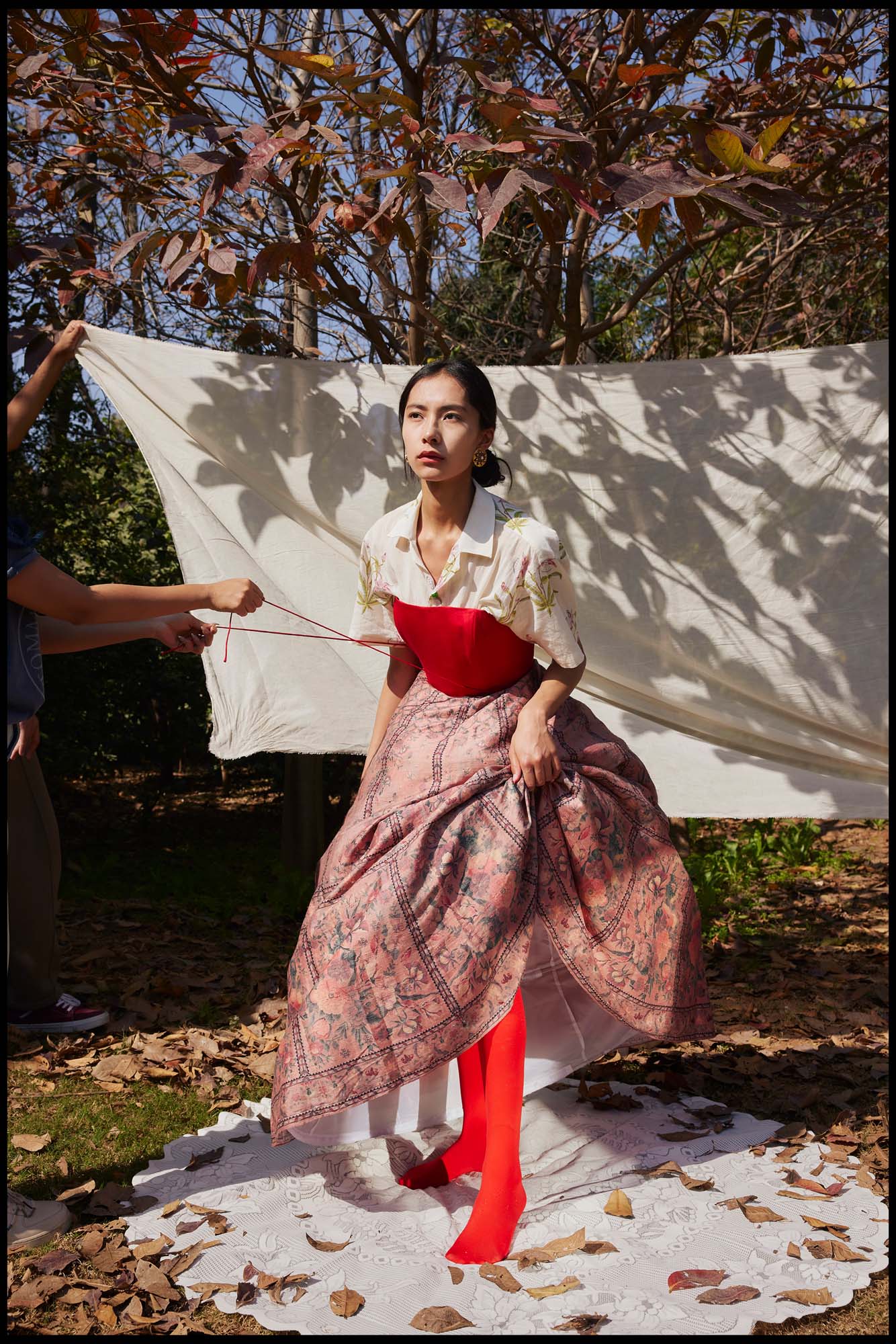
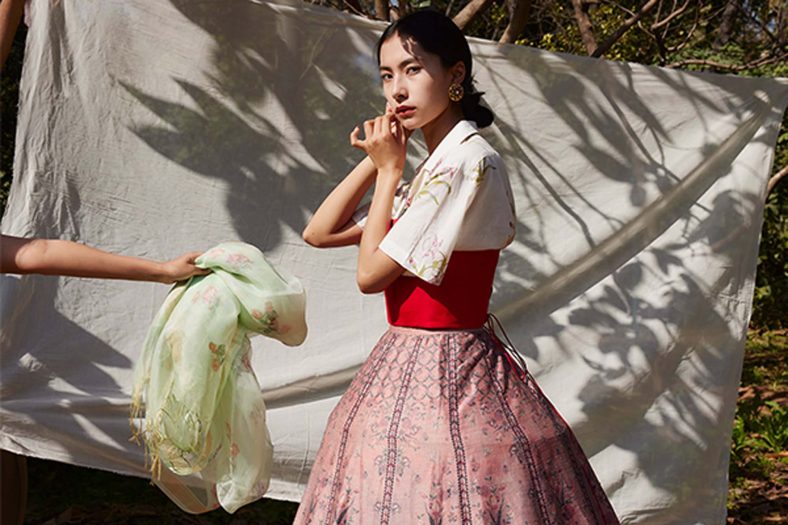
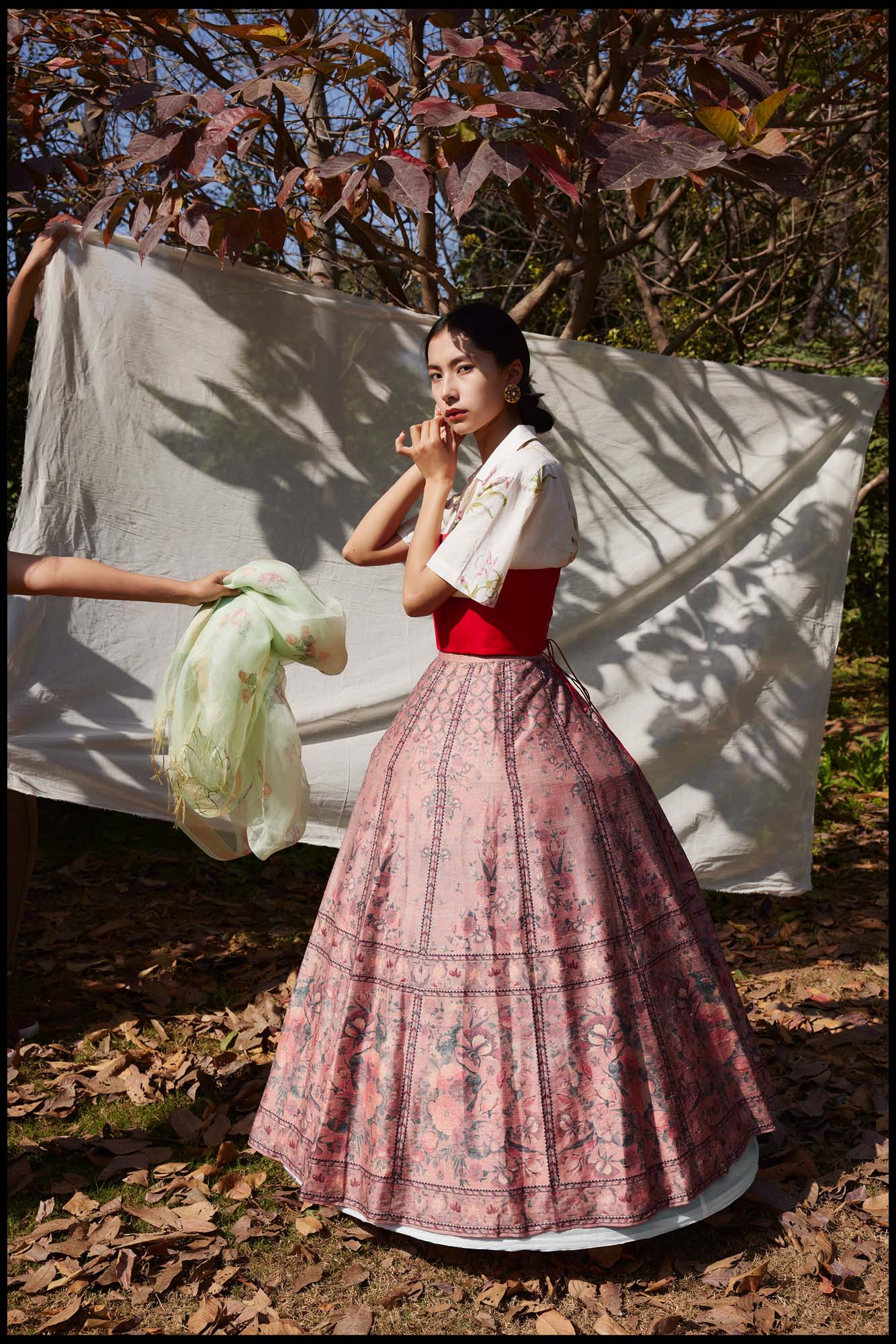
    Digitally printed silk skirt, corset blouse in red satin, printed organza dupatta, all from Ekaya Banaras; silver floral earring from Amrapali; shirt, stylist’s own.

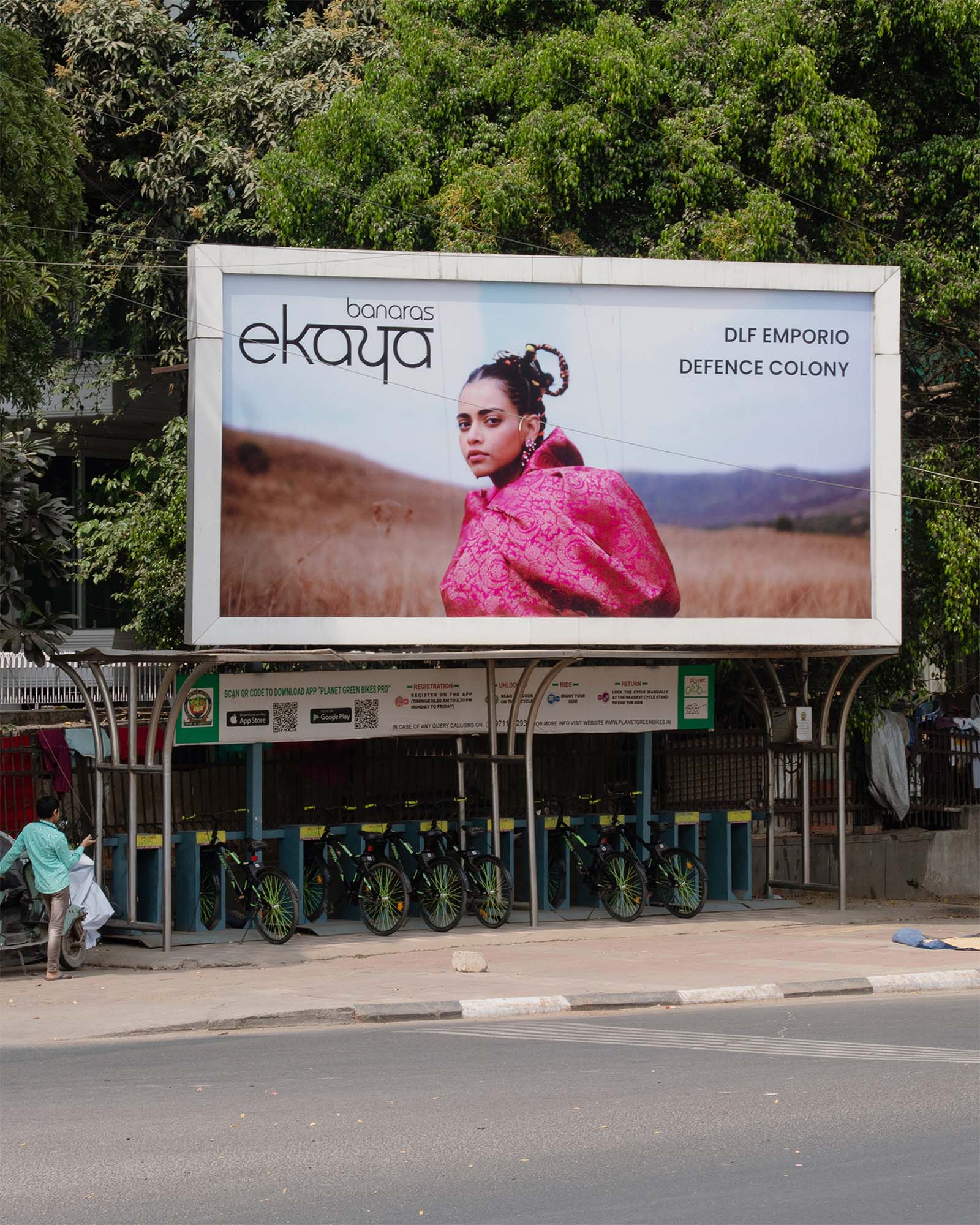
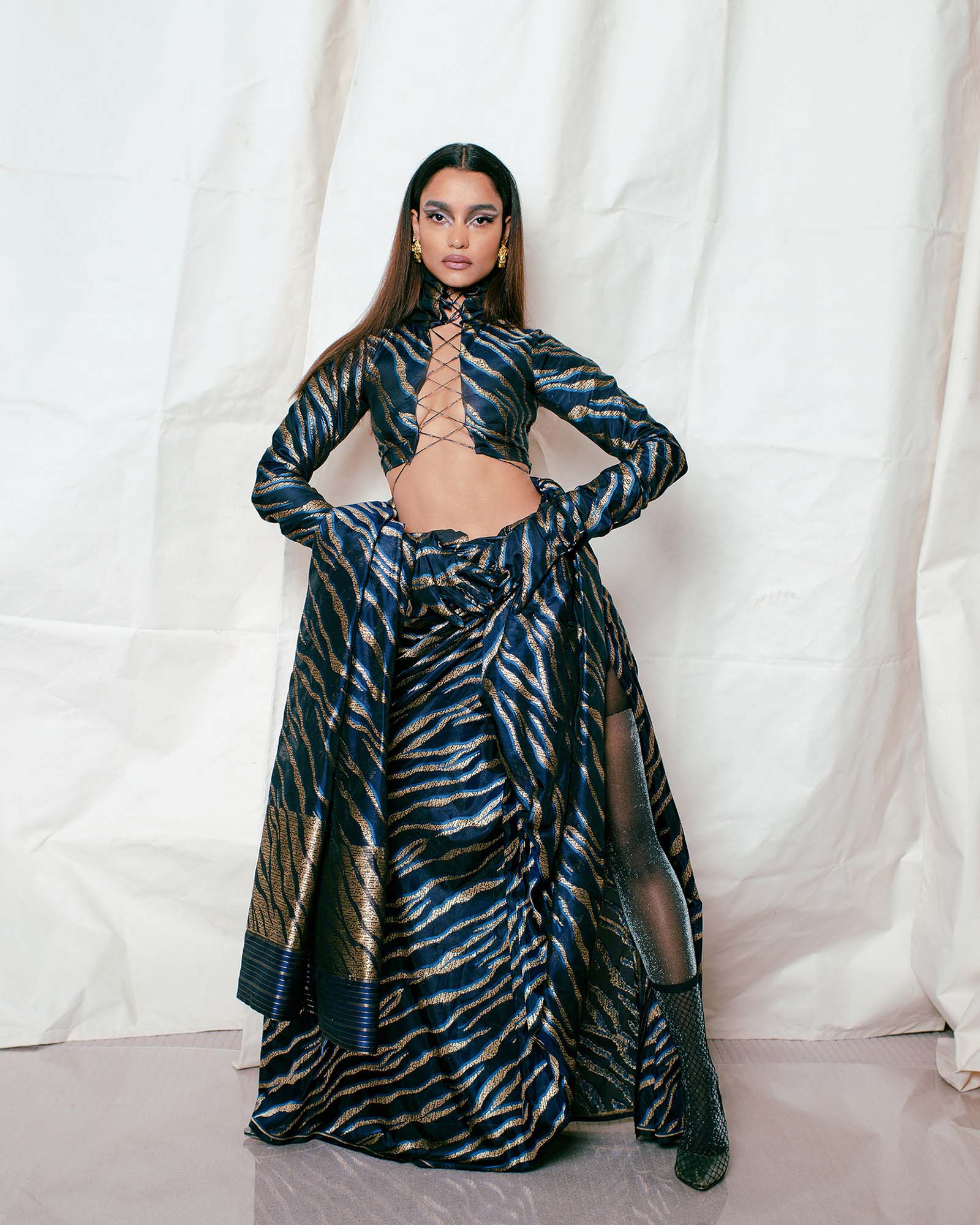
    Palak Shah is not your typical CEO of a typical Banarasi brand. And the secret to her success lies as much in asking the right questions as it does in the answers. “How would Kim Kardashian wear a sari?” she had once asked her long-time collaborator Nikhil Dudani of Feat. Artists. It was while conceptualising Ekaya Banaras’ campaign for their latest collection of saris and lehengas, Ambush, a modern interpretation of the Banarasi handloom speciality Shikargah, which is identified by its hunting scenes and wildlife-inspired motifs. Nothing about the campaign is conventional. Rather than in a jungle or the outdoors, the scene is set in sleek marble interiors, keeping this influential entrepreneur and her sex appeal in mind. Flash photography highlights ensembles featuring a zebra-striped peekaboo blouse with criss-crossing strappy accents in one instance and hot pink tights that are paired with a body-shaping slit sari in the same colour, in another. Presenting such novel pairings is exactly what exemplifies the kind of work Shah and Dudani intend to create each time they work together.

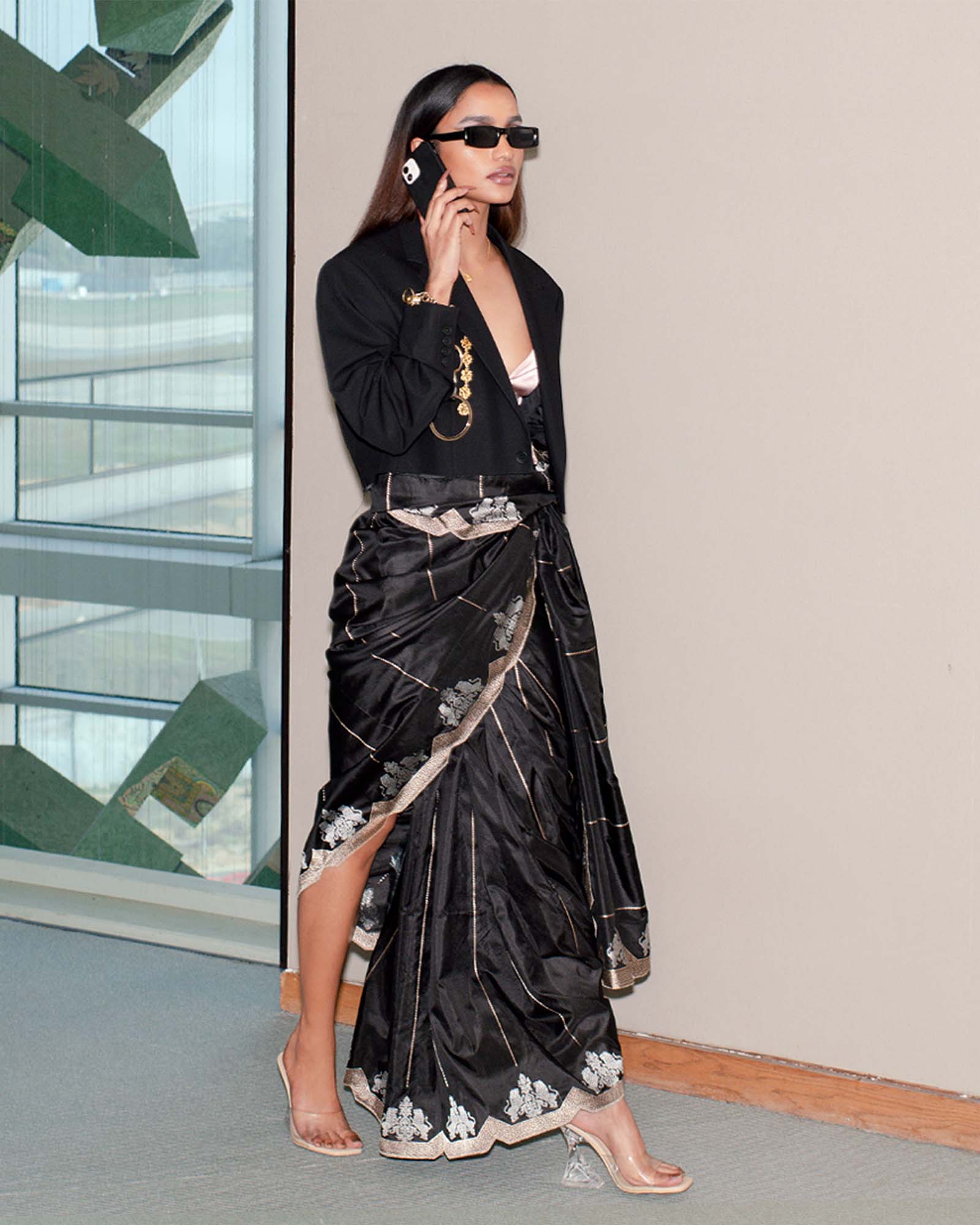
    Whether it is offering Banarasi brocade in Western silhouettes like pantsuits and thigh-high slit skirts, or anticipating a demand for selling luxury woven fabric by the metre under the concept of Thaan, Shah has led the cultural dialogue of how traditional textiles can be featured in contemporary wardrobes, for over a decade now, building on her family’s 120-year-old legacy of working with Banarasi crafts.

    Her Instagram page serves as, one could argue, one of the brand’s best endorsements. Shah’s love for saris is evident as she posts selfies wearing different drapes with equal ease at weddings, vacations and in her home. “You have to present the product in a way that allows consumers to view the full breadth of mood, occasion and styling it can cater to,” she tells us. With each scenario, she makes the case for wearing Indian textiles anywhere, in a multitude of ways. She isn’t afraid to make bold statements, be it with her unconventional blouse pairings or personal observations. “Thaan Pink > Valentino Pink?” she asks in one caption.

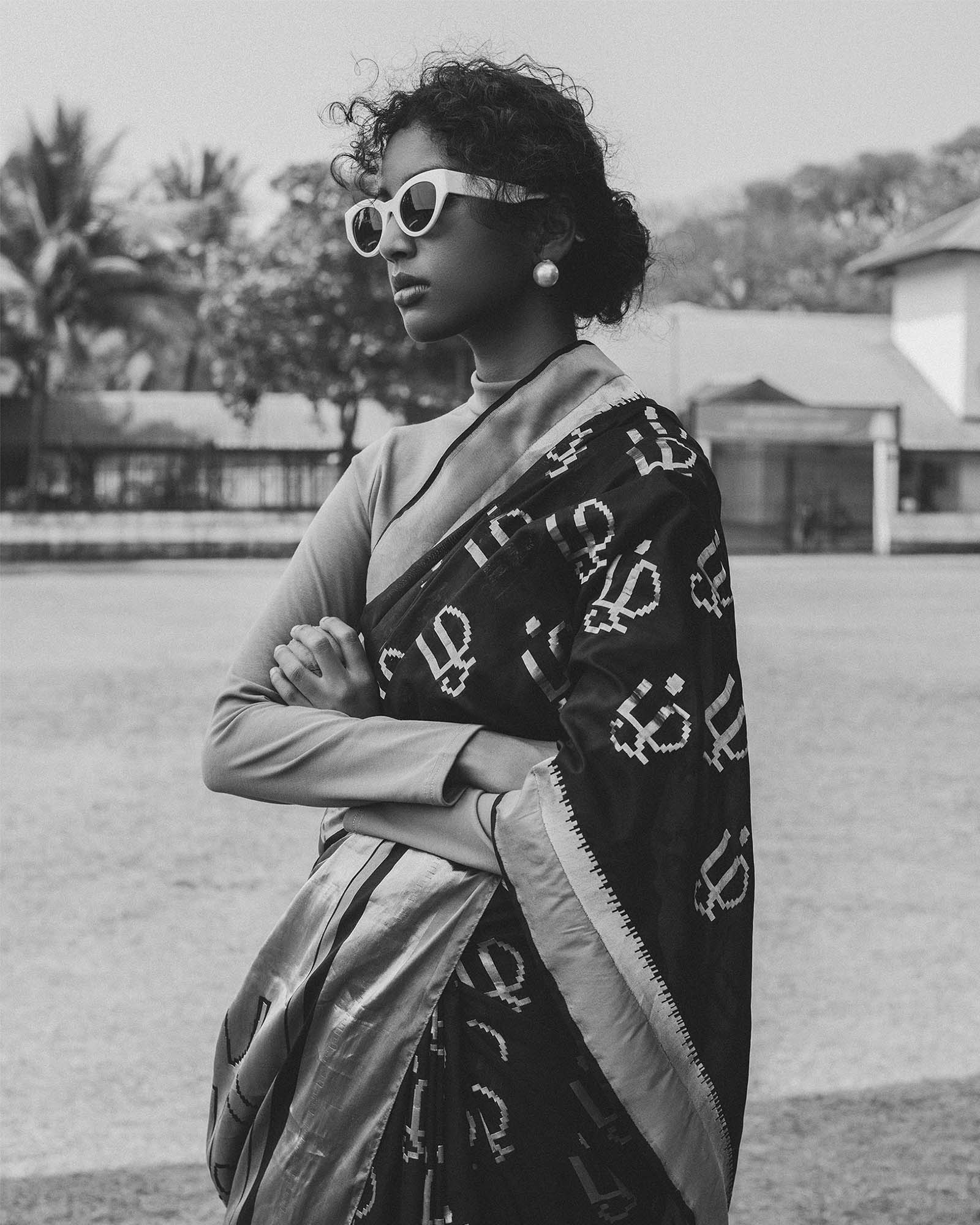
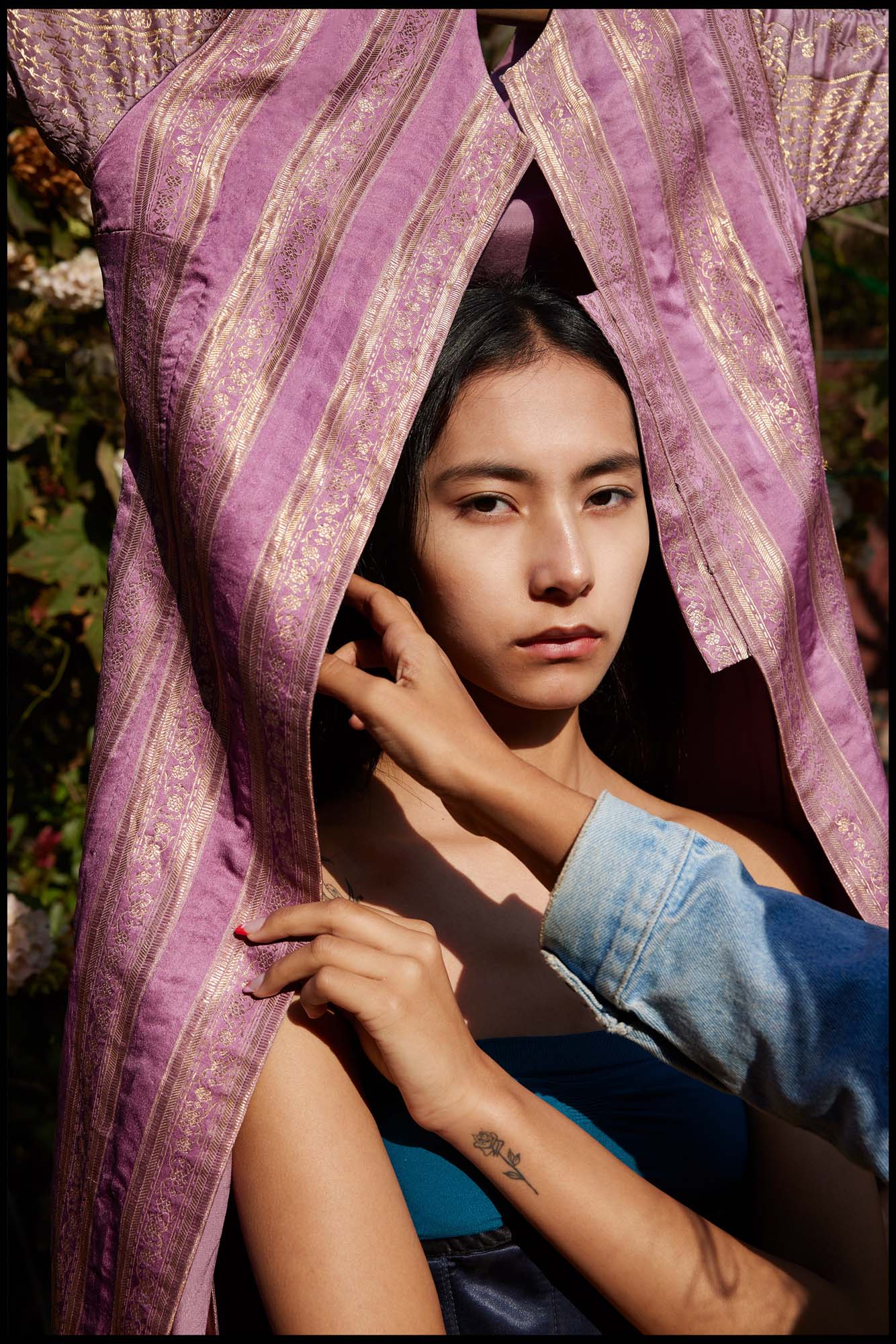
    1. Handwoven blue-grey silk sari, from Ekaya Banaras; silver ear cuff and silver ring, both from Amrapali. 2. Handwoven striped lilac brocade coat, from Ekaya Banaras; silver floral earring, from Amrapali; blue corset, stylist’s own. 3. Handwoven blue-grey silk sari, from Ekaya Banaras; silver ear cuff, from Amrapali. 4. Handwoven striped lilac brocade coat, from Ekaya Banaras; skirt, corset and leggings, stylist’s own.

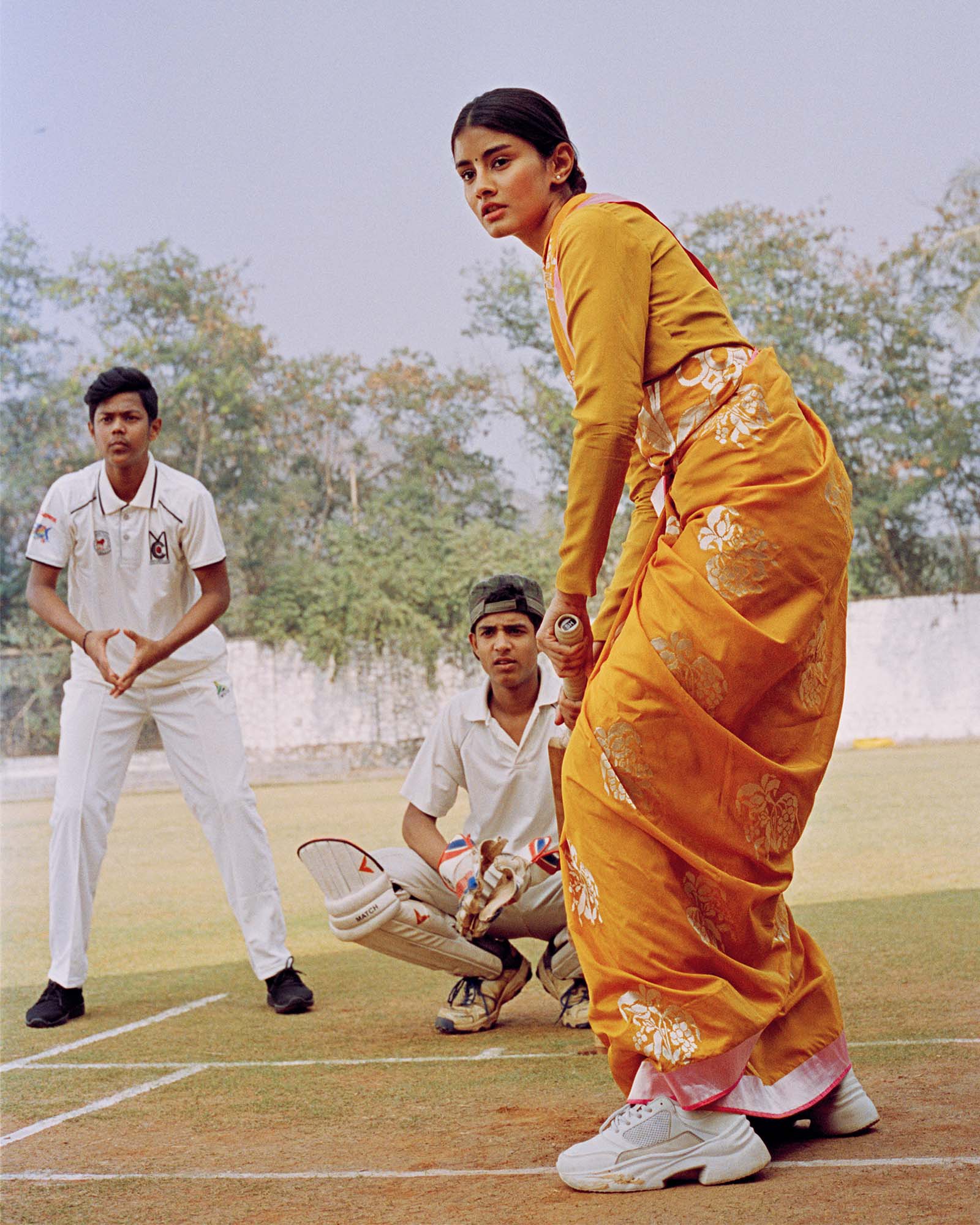
    Shah’s innovative briefs have attracted lasting partnerships with like-minded creatives like Dudani, who are challenged by the opportunity to reimagine Banarasi textiles. For Dudani, creating extensively researched looks and unique drapes with Ekaya’s handwoven brocades over the years is akin to “creating sculptures”. Certainly, these experiments have led to memorable campaigns that have presented the sari in surprising sites — like the cricket pitch, as was the case with Ekaya’s collection of saris designed in collaboration with Masaba Gupta in 2019 — and styles, like the hood drape that he created for Ekaya’s Sakura campaign.

    Admittedly, Dudani’s favourite campaign was for the brand’s first ready-to-wear line, Kashi in the Clouds. “For that shoot in 2020, my energy was focused into making it as different and memorable as possible.”

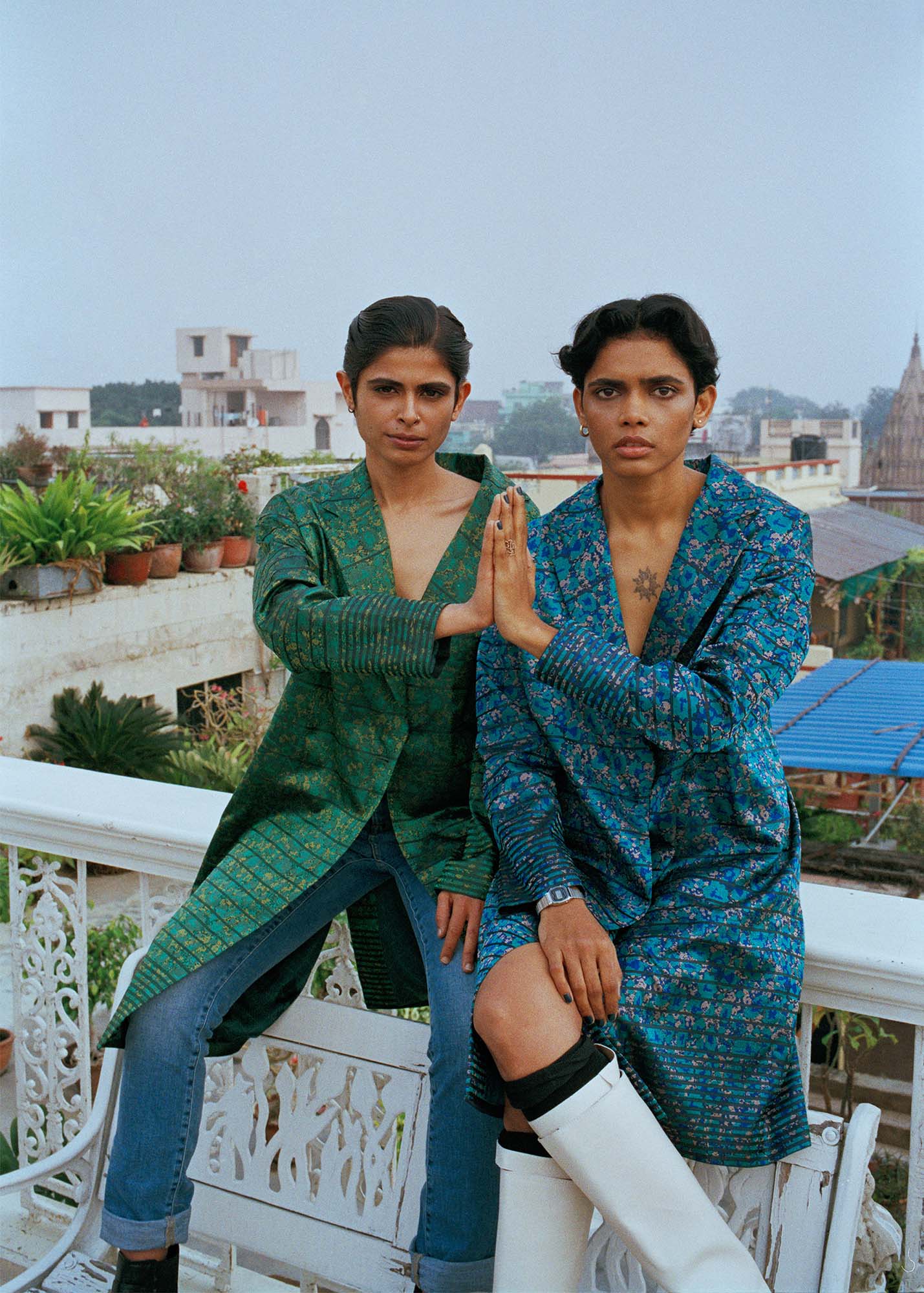
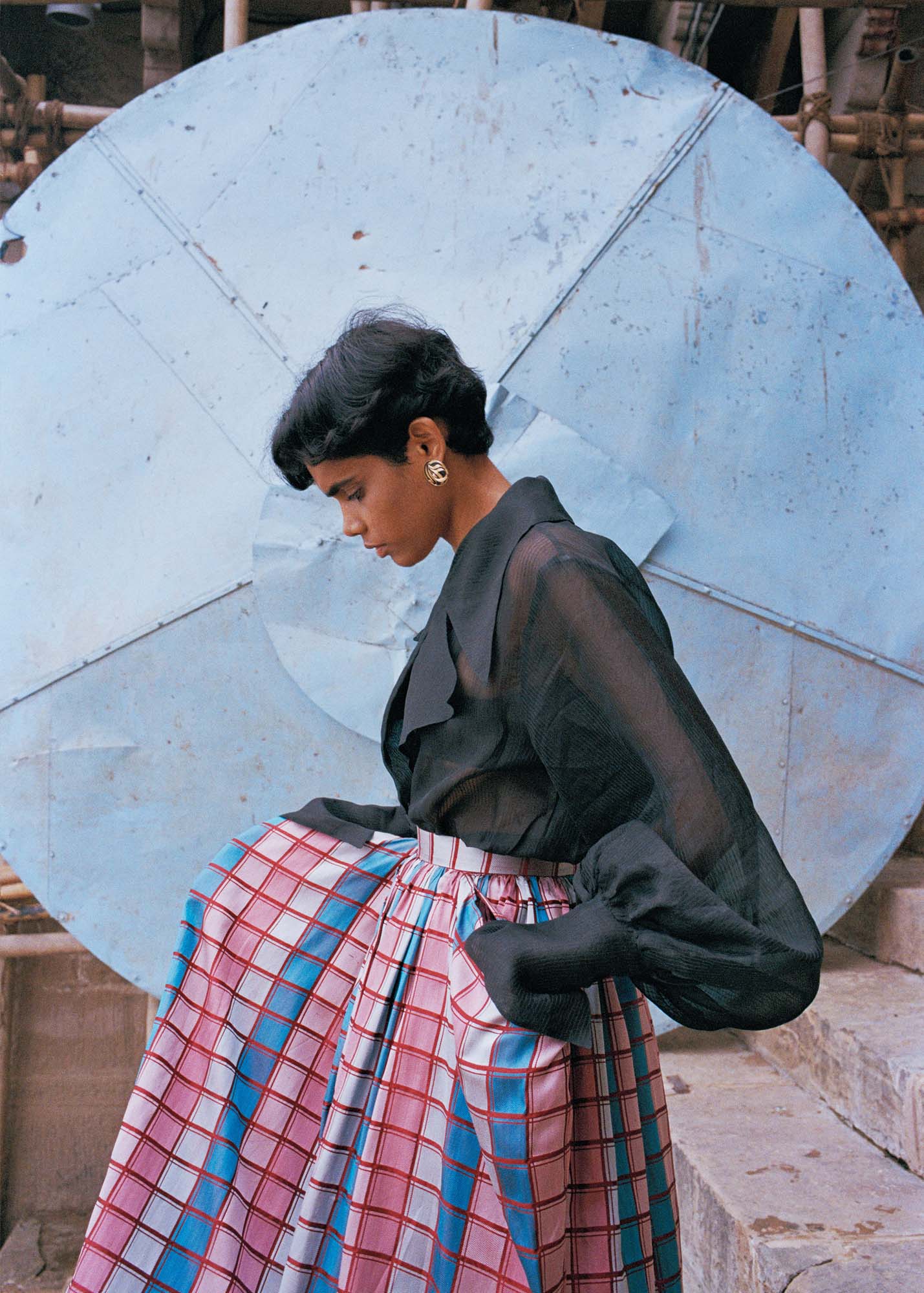
    Kashi in the Clouds, Ekaya Banaras’ Spring/Summer Ready-to-Wear 2020 collection, shot by Rid Burman.

    On a foggy morning in Varanasi, two short-haired women were seen striking a relaxed pose in front of peeling walls, rusty bridges and painted brick towers. They were wearing impeccably tailored Banarasi brocade trousers, paired with casual black tank tops. In another instance, they wore handwoven snakeskin-inspired jackets that were styled with baggy denims straight out of the ’80s. That night, they adorned their faces with pink and green paint while sitting astride a Royal Enfield. One was wearing a bright pink Banarasi brocade pantsuit while the other sported a two-piece set, consisting of an oversized blue jacket and shorts. From the casting to the hair and make-up, the result was a paradigm shift from how Banarasi textiles are usually shot, especially in Varanasi, where a mystical presentation of the town’s renowned ghats and sacred riverbank often takes centre stage.

    As a result of their relentless experimentation, Shah and Dudani have come to be known as a formidable duo over the years. Verve asks them to reflect on the various factors that have fuelled their journey….

    Excerpts from the conversation….

    What are the qualities you look for in a collaborator, and what do you think you bring to a creative collaboration?
    Palak Shah (PS): I have always believed in collaborating, for my brand and as a person. Whenever I have collaborated with Nikhil, he has brought in a fresh perspective that has opened my mind to new ways of seeing things and looking at my brand. It’s a way for me to unlearn, learn and grow. He is also a person who I greatly trust, which is why we’ve been working together for so many years.

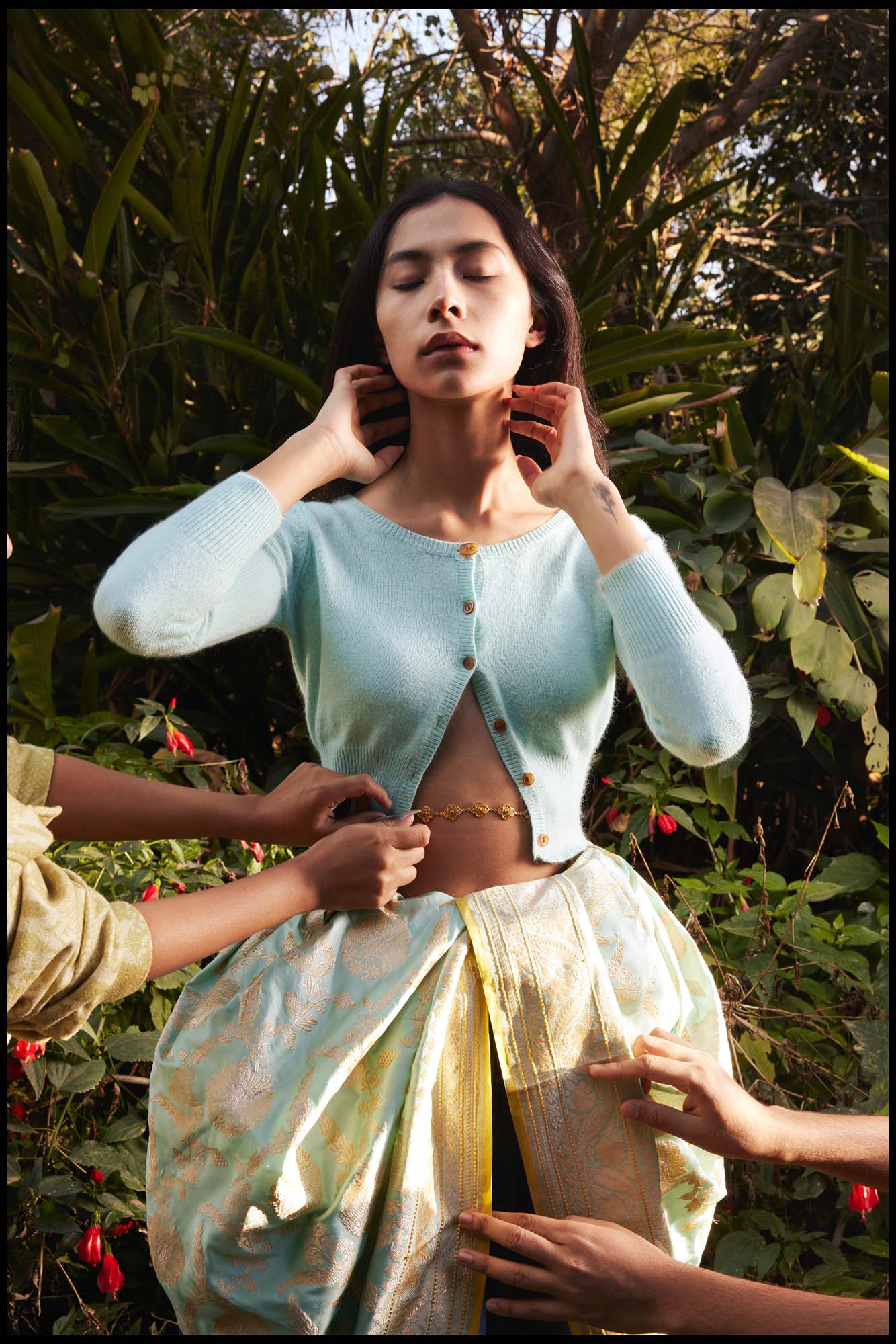
    1. Red tussar silk fabric (used as lungi), from Thaan; handwoven orange tissue dupatta (used as tie), from Ekaya Banaras; coat, stylist’s own. 2. Handwoven blue and golden silk dupatta (used as balloon skirt), from Ekaya Banaras; gold-plated bracelet (used as waist chain), from Amrapali; cardigan and trousers, stylist’s own.

    Nikhil Dudani (ND): We had first discussed working together when she had just started [out]. Then in 2017, Palak mentioned that she was looking to shoot her first campaign for Thaan and she asked me to pitch an idea. The kind of freedom that I was given to make that mood board come to life drove me to keep working with her.

    There was growth in terms of my own work as well. Someday, we could create a photo book from the work that we have done together and it would have a distinct language. Palak gave me the space to keep coming back and continue developing the narrative from where we had left off.

    Valley Of Flowers, Ekaya Banaras’ Fall/Winter 2022 collection, shot by Adil Hasan.
    [Photographed by Asad Sheikh.]

    Nikhil, what was the brief like? Were you familiar with their work?
    ND: I was aware of what the brand was doing and that they [Palak’s family] had been working with Banarasi textiles for a long time. I was clued in to how Palak saw the brand growing. She had made it clear that she wanted Ekaya’s Banarasi saris to look very different from how these saris are portrayed by other brands. That got me excited to work with them. I thought to myself, “I can think of a million things to do with this brief.” A chance like this doesn’t come by often.

    And, Palak, where else did you want the focus to be — apart from showing Banarasi textiles in a new way?
    PS: I’m an accidental entrepreneur. I’m not from the fashion field. I had studied business management and had intended to get into accounting and finance. So, for
    me, the whole idea was to get someone who is an expert at what they do, and Nikhil, in my view, is more than a stylist. He is a mentor. I can bounce ideas off him. There’s never been a situation where I haven’t gotten any input from him. It’s more of a discussion. Over the years, we’ve understood each other’s pulse and discovered what will work and what won’t. I always wanted to create something that is out of the box and breaks stereotypes, but not so conceptual and arty that only we would understand it.

    Nikhil is the perfect blend between a businessman and an artist — what my father and I wanted, respectively.

    ND: We always review each campaign once it is out. When I find that a campaign isn’t producing the desired numbers in terms of sales because it is too far out, we have a discussion on how we can tweak it the next time. So, we aren’t using the same formula every time. We’re constantly evolving and taking feedback from the customer.

    PS: When I started out I was just 21 and we went with the typical formulas: pretty models in “properly” draped saris. Over the years, I started breaking away. Nikhil has helped with that.

    For our first collaboration, Thaan, I had said, “Let’s create a buzz and do something really crazy.” And that made headlines like nothing else did. We shot a beautiful campaign together called Mehfooz, in Lucknow, in 2018. That campaign stood out, but it wasn’t due to oddly draped saris or peculiarly shaped blouses. It wasn’t too fashion-forward but proved to be a turning point, a soft transition into that arena. Nikhil and I have tested the waters as we’ve gone on. And we have talked about creating something different each time.

    Pixels, Ekaya Banaras’ Spring/Summer 2023 collection, shot by Farhan Hussain.
    [Photographed by Asad Sheikh.]

    Are you present at every shoot?
    PS: Yes. I was present at the Feat. Artists shoot for the Pixels campaign in Assam in February although I was getting married that month. I have learnt so much from our shoots — be it the Masaba campaign or our Ambush shoot. I have specifically learnt a lot from Nikhil — by observing the way he’s styling, how he is thinking. At most, I tell him if it is working or not.

    Nikhil, you have been very experimental when it comes to draping. I remember the Sakura campaign, where it felt very new.
    ND: I am a keen observer so I do keep tucking away ideas in the back of my mind until someone is ready to use them. Palak is very open to new concepts. Sometimes, they don’t work out and I spontaneously take a different route. With Ekaya, I often look at what we have done in the past and try to update it. From the beginning, I’ve kind of liked “messing” with saris in some sense. It will still look like a sari but it isn’t how we’re usually expected to wear or pleat it. To be given the leeway to display it in an unusual way is key, and it works most of the time. Very rarely will you see two saris draped similarly in two different Ekaya campaigns. For Sakura, which had a very minimal look, I researched Japanese drapes. We decided that they wouldn’t hug the body too much and this formed the crux of the campaign.

    PS: But with Ambush, we wanted a more fitted look.

    Ambush, Ekaya Banaras’ Spring/Summer 2022 collection, shot by Tenzing Dakpa.

    Let’s discuss that campaign. What I found interesting is that the textiles have motifs of hunting and wildlife but none of that is in the imagery.
    PS: I sent Nikhil a picture of Kim Kardashian in her bathroom in these thigh-high boots, looking absolutely stylish, and I told him that I wanted my saris to be positioned like that — I wanted them to look as sexy and sensual as she did. Then came the slit sari, the jacket and the glasses, and the shoot became more about the vision and aesthetic that we wanted to portray than the motifs on the products.

    ND: When I’m given jungle motifs, the last thing that I would do is place it against the backdrop of a jungle. Since we were looking at Kim as the starting point, I was keener to visualise a space that she would probably inhabit. Marble, stone and grey walls came to mind — I could see her in a minimal space like that.

    We made use of rings to drape the saris and this gave them a more fitted look and showed more skin. The blouses had deeper necklines with a lot of tie-ups, and they exactly matched the saris. This is a woman who would wear a head-to-toe print…. Everything was inspired by Kim Kardashian, even in terms of hair and make-up. We cast girls who are perceived as sexy. The research was also about understanding the new-age influencer, a woman who is being photographed wherever she goes, all the time. She doesn’t feel the need to wear a suit at a press conference or a meeting; she can pull off a sari wrapped in a way that doesn’t feel fussy.

    The Masaba x Ekaya Banaras collaboration, shot by Bikramjit Bose, for Ekaya Banaras.

    Tell us about the Masaba x Ekaya campaign, which got rave reviews.
    ND: Masaba was very involved in the process. She had many creative discussions with photographer Bikramjit Bose. They wanted to incorporate movement and depict the sari as functional. They wanted action. At that point, I remembered Masaba’s direct connection with cricket. I was worried it would be too obvious to pitch this, but I did it because I’d never seen an Indian sari campaign showing women playing cricket. So, we built the whole narrative around that.

    Shooting it was really fun. The girls had to learn how to play cricket. We intended to cast girls who knew how to play the game, but we didn’t find many models who knew how to. We did find one who could bowl so those shots were quite convincing. And, of course, we made them wear sneakers so that they were comfortable running around.

    1. Handwoven striped lilac brocade coat, from Ekaya Banaras. 2. Handwoven blue and golden silk dupatta (used as balloon skirt), from Ekaya Banaras; gold-plated bracelet (used as waist chain), from Amrapali; cardigan, stylist’s own.

    How do the weavers react to the campaign imagery? What kind of feedback do you get from them?
    PS: The weavers may not have a very positive reaction to every campaign because the campaigns are so unconventional. Even in terms of creating different products, many are hesitant at first. They say,“Yeh chal payega ya nahi chal payega? Yeh kya bana rahe hain?” [Will this work or not? What are we making?] Once, Nikhil and I were trying to see if we could use the back of a weave. My father was working with the weavers, who were quite unconvinced. But, luckily, my father is open to experimentation. The weavers don’t always understand our vision, but there are certain campaigns that they love.

    How would you describe your role?
    PS: My role is to motivate the various team members at all points, and give them access. Also, to always reiterate that we have to bring something new to the table. The goal of the brand is to not cater only to one audience segment.

    Has there ever been any negative response to the campaigns?
    PS: I’ve never faced any backlash as such. But a part of the audience found the videos for The Crossing — Natives of Nowhere campaign (2019) unnerving. But again, I think that it was way ahead of its time.

    Nikhil, in what direction would you like to see the brand grow?
    ND: It’s important that I introduce Palak to individuals whose work is right for her brand. I have facilitated meetings between Palak and stylists who work at my talent agency, and I like what they have conceptualised for her. It fits into the bigger story that we have created and when we make that photo book, I would be happy to see their work in there.

    Ekaya is ahead of its time and will be remembered for that. When you look at Instagram, the imagery is very similar when it comes to brands that are dressing women in saris. When we shot for the Kashi in the Clouds collection in Varanasi, it was photographer Rid Burman’s idea to shoot girls who wore their hair short and looked boyish. That was very new for a Banarasi brand. In a sense, they look like two boys walking on the ghats, and that, to me, was pushing the envelope for a commercial brand selling ready-to-wear to women; their clients were not expecting to see something like that. It looked like the kind of imagery I would want to see if I were going to a brand to shop. It wasn’t just the images that spoke to me but also the individuals in the images; they reflect a certain lifestyle that I associate with and relate to. So, these are the kind of campaigns that I would like to continue to be part of.

    1. Handwoven green organza sari, from Ekaya Banaras; knit tube top, stylist’s own 2. Digitally printed silk skirt, corset blouse in red satin, both from Ekaya Banaras; shirt and tights, stylist’s own.

    PS: We’re going to do more of these campaigns soon.

    ND: The Crossing — Natives of Nowhere campaign was also special.

    PS: I love that campaign. It’s one of my favourites.

    ND: We did push boundaries a lot with that one. The drapes and the headgear were inspired by tribal women. It was a strong campaign, and actually that’s when the talk of the book started.


    [ad_2]

    Source link
  • Maria, the Mumbaikar?

    Maria, the Mumbaikar?

    [ad_1]

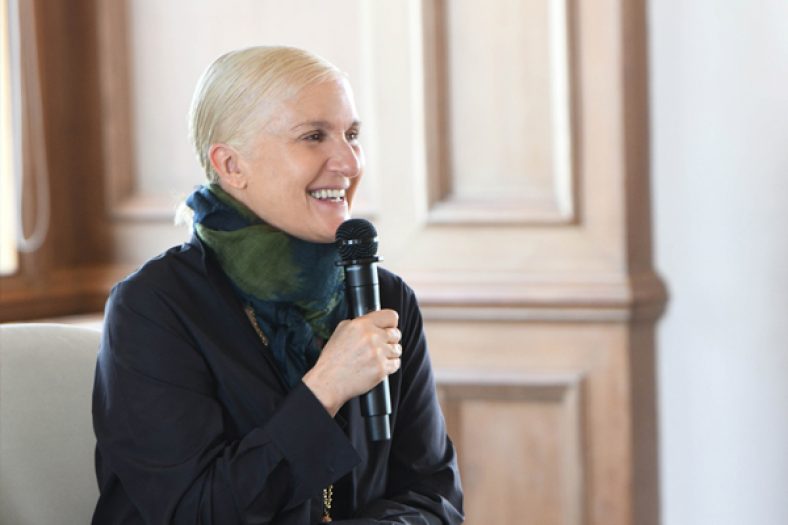
    Not only did Dior’s recent Fall 2023 show at South Mumbai’s Gateway of India capture popular imagination globally but it also put India front and centre of the spectacle. On display was the brand’s intent to play up the Indianness, as its creative director of women’s lines, Maria Grazia Chiuri, sank her teeth into all that the city and country have to offer. VERVE’S FOUNDER-EDITOR, ANURADHA MAHINDRA, looks beyond the fashionable vignettes to give her insights on how the major French brand crafted a seamless narrative around culture and inclusivity to deepen ties and cement brand presence in a burgeoning luxury market

    The post Maria, the Mumbaikar? first appeared on Verve Magazine.

    [ad_2]

    Source link
  • Should we consider the Dior Fall 2023 collection presentation in India a new age, soft-sell-with-a-big-bang marketing endeavour?

    Should we consider the Dior Fall 2023 collection presentation in India a new age, soft-sell-with-a-big-bang marketing endeavour?

    [ad_1]


    Text by Shirin Mehta and Asad Sheikh.

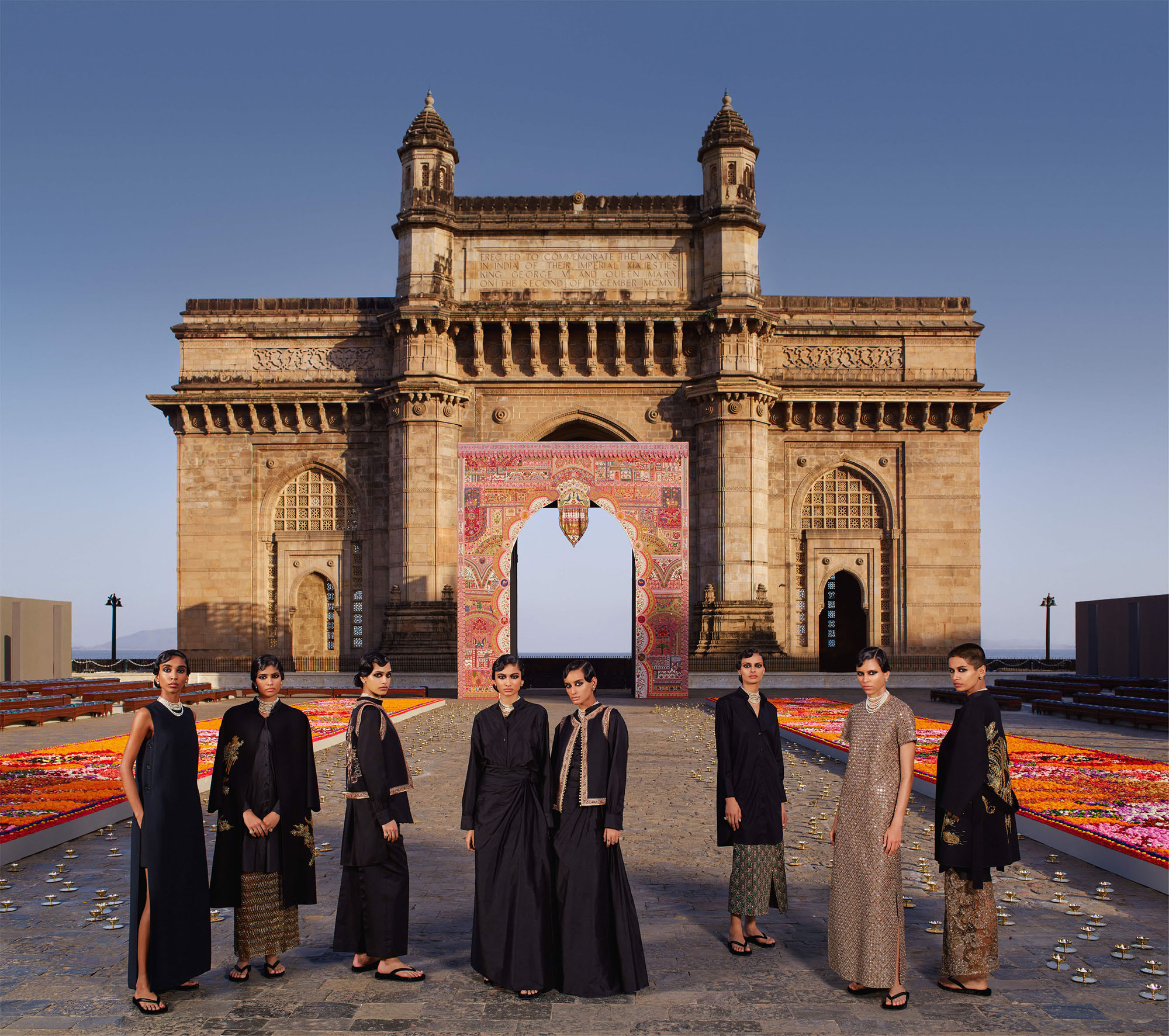
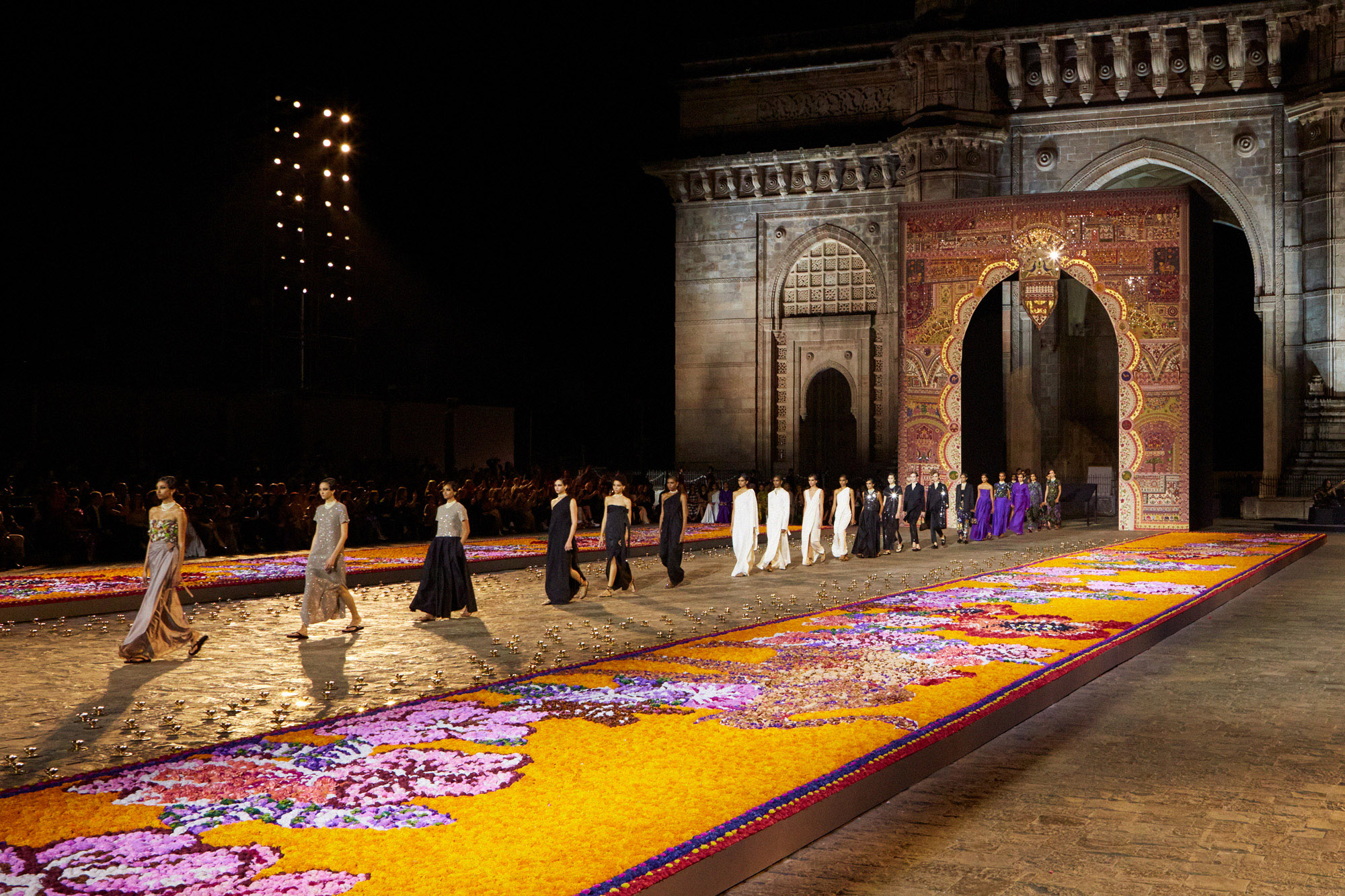
    Models strike a pose at the Gateway of India, Mumbai — the venue of the Dior Fall 2023 show.
    Photograph: Dolly Devi, © Dior

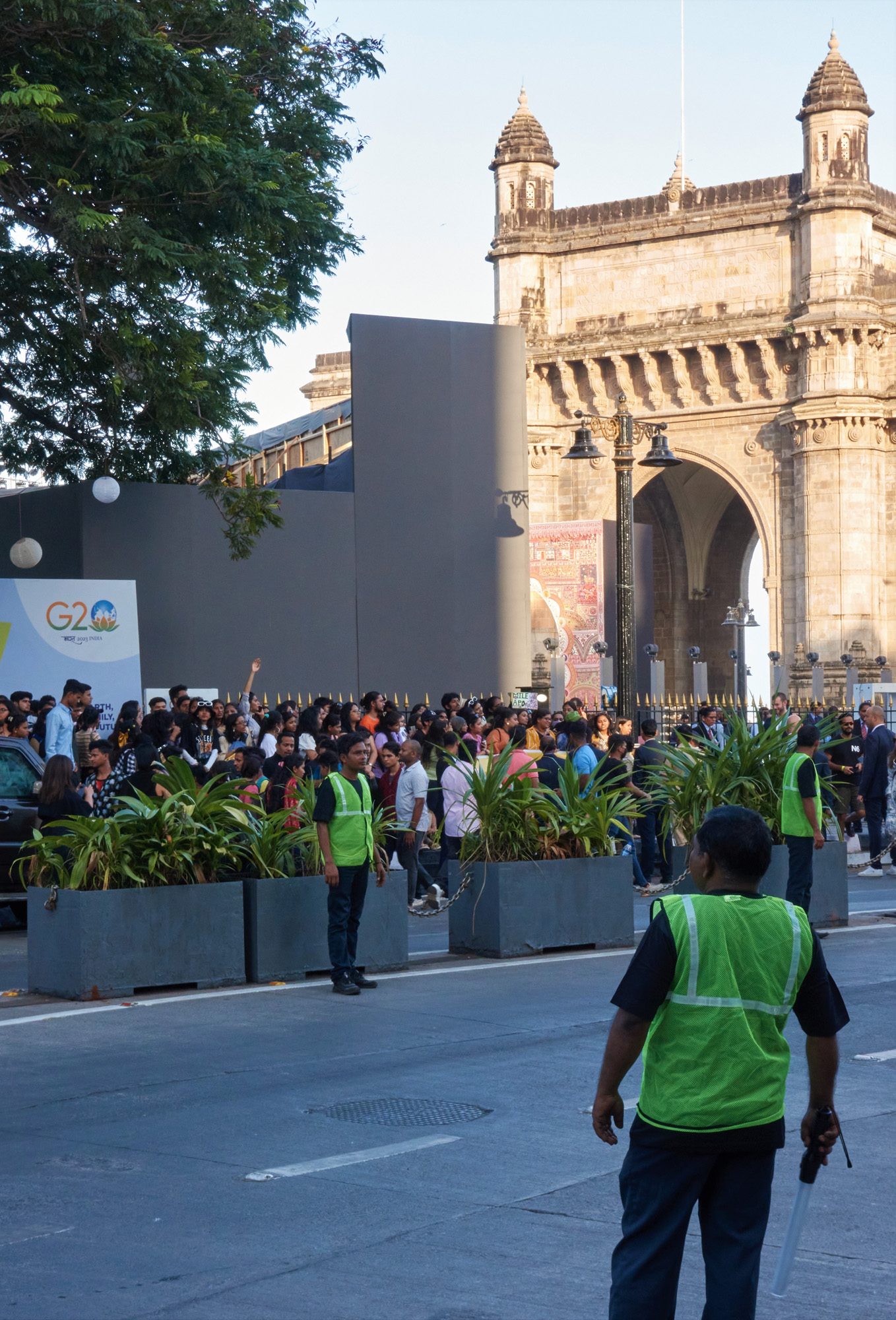
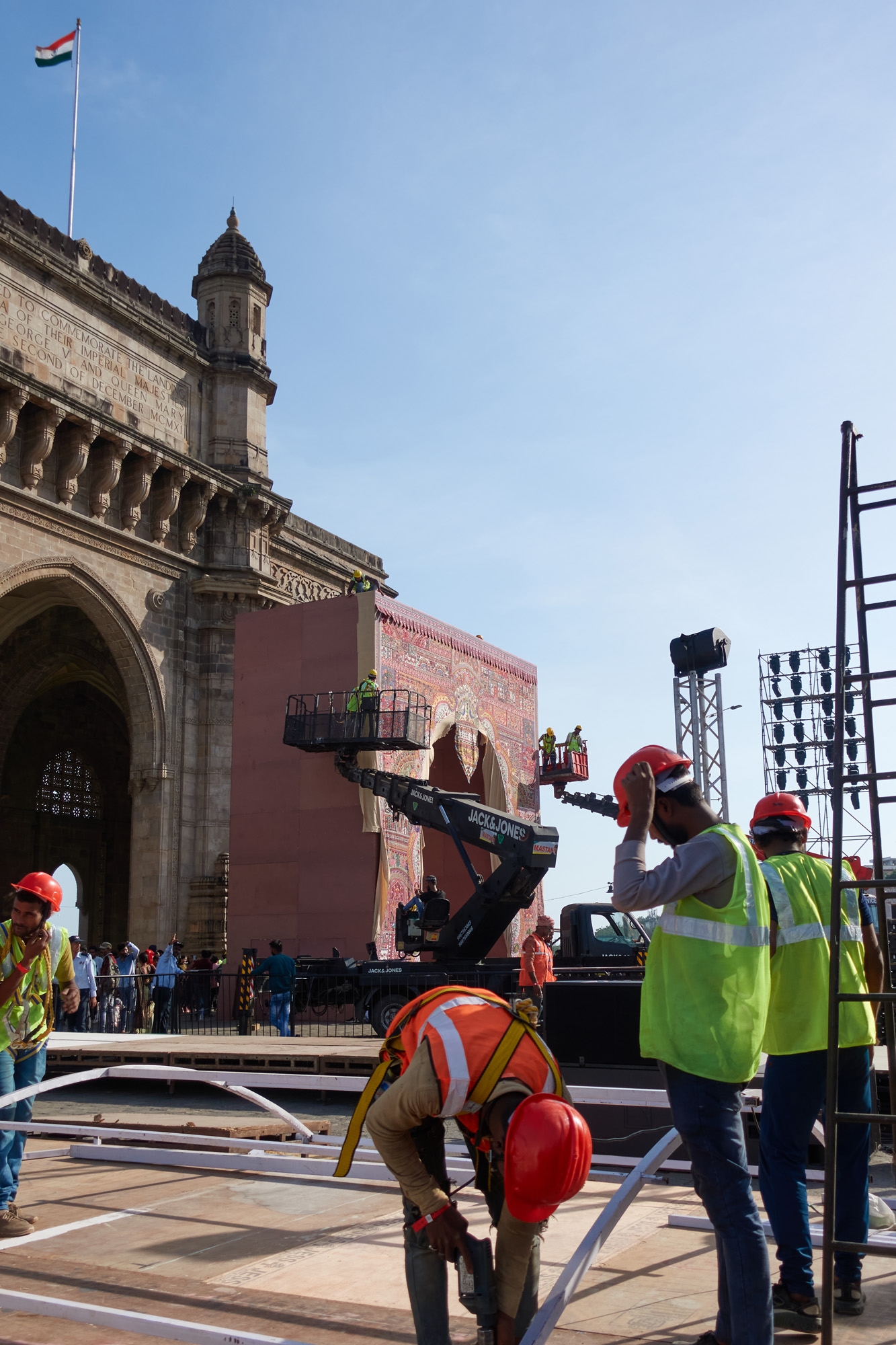
    There is a buzz, long overdue, in South Mumbai, specifically around the magnificent arch of the Gateway of India. We imbibe the excitement even as we regret the partitioning off of large swathes, as we spy preparations underway for the Dior Fall 2023 collection to be presented here the following evening. Not to be outdone, the vendors and milling public stand just beyond the cordoned-off area, against the towering monument built to commemorate the visit in 1911 of King George V and Queen Mary.

    The pre-show preparations create a buzz at the Gateway of India well before the commencement of the event.
    Photographs: Naomi Shah

    The curious crowd presses against the closed gates, against the chowkidar who forbids photography, to capture themselves and their families on mobile phone cameras. Of particular interest is the archway of embroidery created against the stone entrance of the monument, erected as a toran to welcome models and high-profile guests to the event. Unfinished, it seems to resemble a wedding mandap and has been created in patches of indigenous embroideries by the artisans of Mumbai’s Chanakya School of Craft.

    Backstage details from the Dior Fall 2023 show.
    Photographs: Prerna Nainwal, © Dior

    The bustle at the bay invariably touches the Taj Mahal Palace hotel right across the street, where dozens of Dior delegates, models, photographers and clients, flown in from around the world especially for the event, are housed. There’s the energetic Dior team with their prominent white badges. The Ballroom, laden with props, stage equipment and other paraphernalia gleaming under its sparkling chandeliers, is getting ready for the afterparty. The Crystal Room has been transformed with lines of cubicles set up for hair and make-up, and trials are underway. Sadly, photography is not allowed. The editor of Vanity Fair walks past in the Taj corridor while a photographer friend informs us that she is covering the event for a prominent Chinese magazine.

    The set design for the Dior Fall 2023 show.
    Photographs: Niveditaa Gupta, © Dior

    The show, on the following evening, seems strategically targeted to evoke a nostalgic image of Indian glamour, through a non-Indian lens. The Taj Palace facing the public venue helps, as models glide past each other, the Gateway behind them and the brightly lit Taj in front. You can’t help but feel the emphasis on the grandiosity of the setting, especially for the myriads watching the live stream, given the exclusivity of the event. It is almost as if Dior, which has made a fine art of transforming spaces and creating experiences, has designed the entire setting to look photogenic. Everything, in aerial view, appears perfectly aligned with the archway of the Gateway. And it is only from a distance that one can appreciate the remarkable symmetry that has been created.

    Making of the set design, garments and toran at the Chanakya Ateliers.
    Photographs: Sahiba Chawdhary, © Dior

    Chuiri has repeatedly stated that the show is above all about showcasing Indian craftsmanship. It also reflects her over 25-year-old friendship with Karishma Swali, the artistic director of Chanakya Ateliers. This then is about two determined women coming together to empower the country’s women artisans, and more. And is it a mere coincidence that the orchestra highlights a tabla virtuoso Anuradha Pal, while the afterparty at the Ball Room features DJ Nina Shah on deck duty? Or that the photographers commissioned by Dior for the show are all women — Niveditaa Gupta, Dolly Devi, Madhu Akula, Sahiba Chawdhary, Prerna Nainwal? This is a French collection presented by a French luxury house, celebrating Indian inspiration and savoir faire.

    Looks from the Dior Fall 2023 show highlighted Madras checks and handwoven silk brocades.
    Photographs © Dior

    Our chats with industry mavens reveal that the question uppermost on people’s minds at this time seems to be, ‘Why now?’ Why has Dior chosen this moment for its first major show in India? Are we being substituted for the collapse in other markets? Or is there an expectation that the wide coverage of the India show will result in a boost to dwindling markets? Anul Sareen, senior research analyst at the business intelligence firm Euromonitor said to CNN Style, “Luxury retailers (are) betting on the Indian market to maintain their growth, which is otherwise experiencing stagnation in Western markets and China. Many retailers are looking to increase their operations in the country.”

    Of major consideration also is the Indian middle class which, while small, is growing rapidly across the nation. “It’s a hugely untapped market with middle class on the rise and lots more, by the year, millionaires,” Deborah Aitken, senior analyst for luxury goods at Bloomberg Intelligence said to Mint, adding, “It’s vibrant, it’s new design, new colour, new technologies into the luxury space, which is hugely needed.”

    India, as the third largest economy in Asia with a healthy HNWI (high-net-worth individual) population on the rise, is a market in which luxury brands would want to create a firm footing. Our teeming billions do, in fact, represent rising aspirations. Happenings like the Russia-Ukraine War and sluggish markets have made it a logical decision for luxury brands to taper any potential over-reliance on their sales to just one region.

    Fittings with Maria Grazia Chiuri, Dior’s creative director for women’s lines, for the Fall 2023 show.
    Photographs: Dolly Devi, © Dior

    Can the Dior Fall 2023 collection show be considered then to be a masterpiece in new age, soft-sell-with-a-bang marketing? While Dior has only two stores in India, expanding the brand’s footprint and revenue stream beyond existing markets, would play in Dior’s favour. The guest list, the set location, and the build-up to the event perhaps signal a striving on Dior’s part, for a direct association with the term “luxury fashion” in an underexposed region.

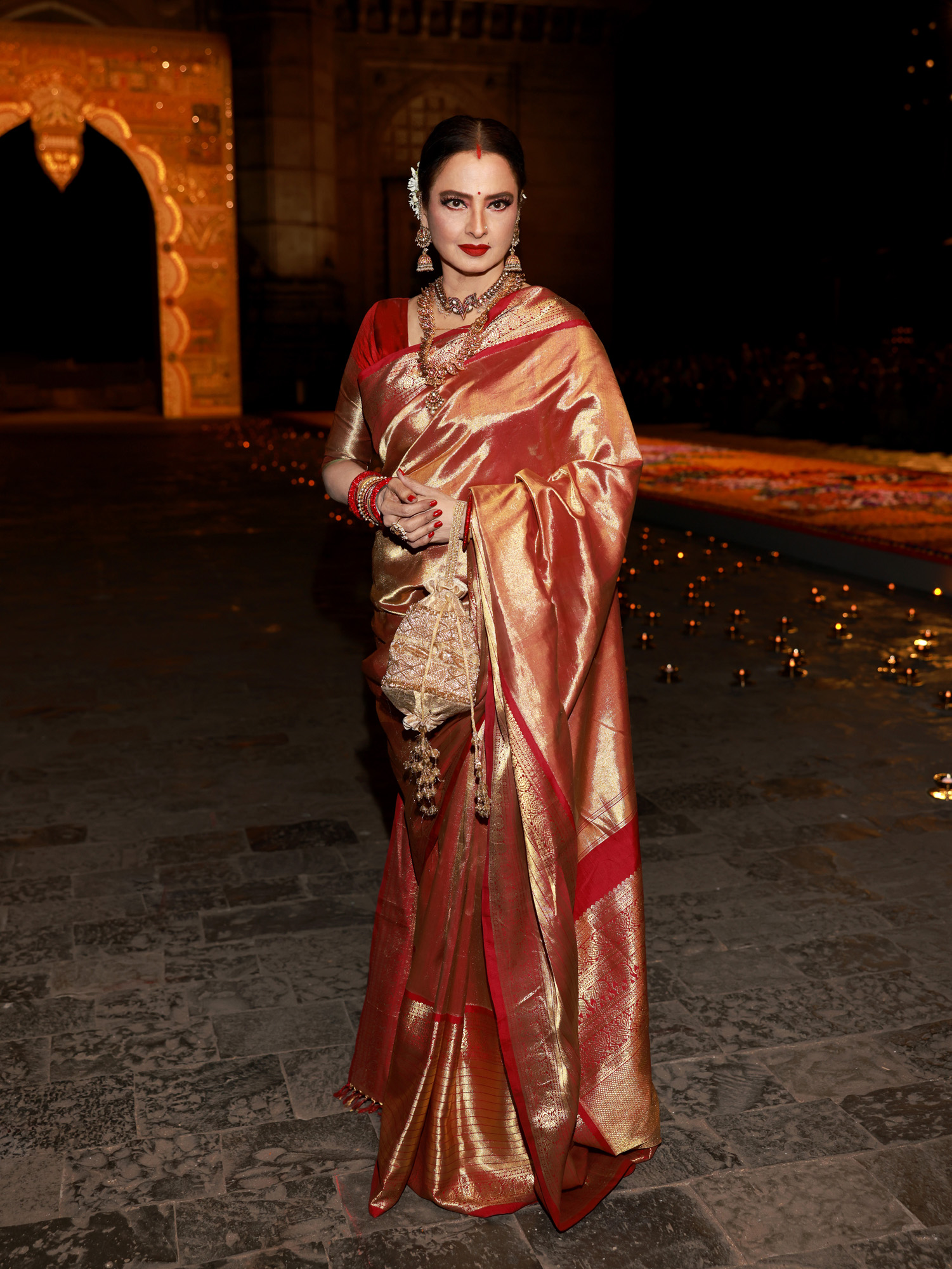
    Rekha’s statement-making red Kanjeevaram sari at the Dior Fall 2023 show.
    Photograph: Getty Images

    Perhaps the most striking aspect of the show is the concerted effort on Dior’s part to invite the silver screen icon Rekha who has great cultural capital and continues to dominate nostalgic Instagram accounts and Pinterest boards far beyond India. Incidentally, Rekha is the only major celebrity attending who did not wear Dior; she opted for a red Kanjeevaram sari.

    In her Kanjeevaram saris, she is an image closer to the late Elizabeth Taylor and her diamonds. Both megastars are quintessential to the equation of what makes an icon, an icon. And this is an icon Dior opted not to tweak or tamper with. The sheer association between Rekha and Dior implies a presence of Dior inside the idea of high-brow culture, and this was deemed so important that the show apparently did not begin until she made her appearance.

    The finale.
    Photograph: Niveditaa Gupta, © Dior

    Chatter and speculation have been rife following the Dior show. If anything, the show will have at least served the role of a far-flung location for the brand. And if this was also due to a strategic business decision, will it perhaps help to establish Dior as a familiar household name — like Liril, Nirma and Hamara Bajaj — for an audience of almost 1.4 billion people?

    Mera wala Lady Dior?


    [ad_2]

    Source link
  • The Chanakya School of Craft and the House of Dior Continue To Bring The Artistry Behind Indian Embroideries Centre Stage

    The Chanakya School of Craft and the House of Dior Continue To Bring The Artistry Behind Indian Embroideries Centre Stage

    [ad_1]


    Text by Shirin Mehta. Photographs by Naomi Shah.

    Chanakya Atelier — The Dior Retrospective

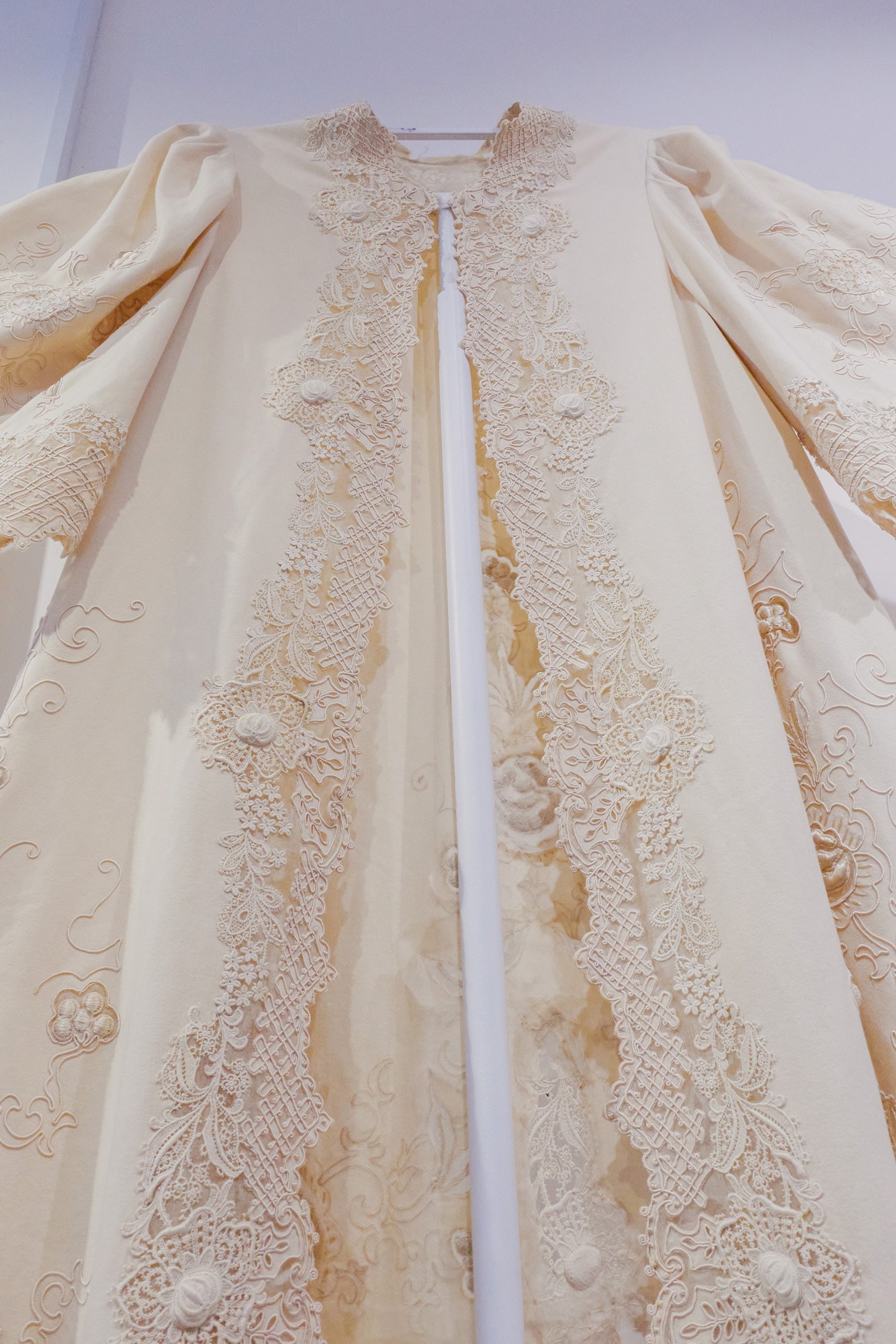
    A visual and sensual treat was in store for us at the Chanakya Ateliers, which opened doors for the very first time to visitors from India and across the world, a day before Dior’s Pre-Fall 2023 show at the Gateway of India. Earlier, a press conference at the Taj Mahal Palace hotel had introduced Maria Grazia Chiuri, Dior’s creative director of women’s collections, and Karishma Swali, who directs the Chanakya Ateliers and the Chanakya School of Craft, to local and international press. The synergy between the two women as well as their commitment to endorsing India’s artisanal heritage became apparent as Swali reiterated, “What she (Chiuri) is talking about is creating a new language for craft together…. One that people are able to celebrate since it is more contemporary….” Earlier, in an Instagram post, Chiuri had referred to Chanakya as “the treasure chest of Indian craftsmanship”. Both the women displayed a strong will to preserve the craft of embroidery while imbibing it with modern savoir faire.

    Chanakya Atelier — The Living Museum

    The Chanakya School of Craft, co-founded by Swali in 2017 and supported by Chiuri, is a non-profit institute that aims to create a platform of multidimensional learning. It particularly attempts to empower and provide autonomy to women artisans by providing them with an education in hand embroidery and craftsmanship. A 25-year-old friendship, a shared “sisterhood”, and the desire to empower other women, while projecting artisanal techniques into the modern world, are the foundations on which the Chanakya School of Craft was built.

    Chanakya Atelier — The Dior Retrospective

    Exceptional collaborations between Dior and Chanakya, have extended the boundaries of embroidery and blurred the lines between craft, art and couture. The amazing virtuosity of traditional Indian practices have been underlined while ensuring that these have been expressed in contemporary ways. A monumental feat of textile art, for instance, was witnessed at the Dior Spring/Summer 2022 Haute Couture Collection, where the set design created by Chanakya reinterpreted the artworks of renowned Indian artists Manu and Madhvi Parekh.

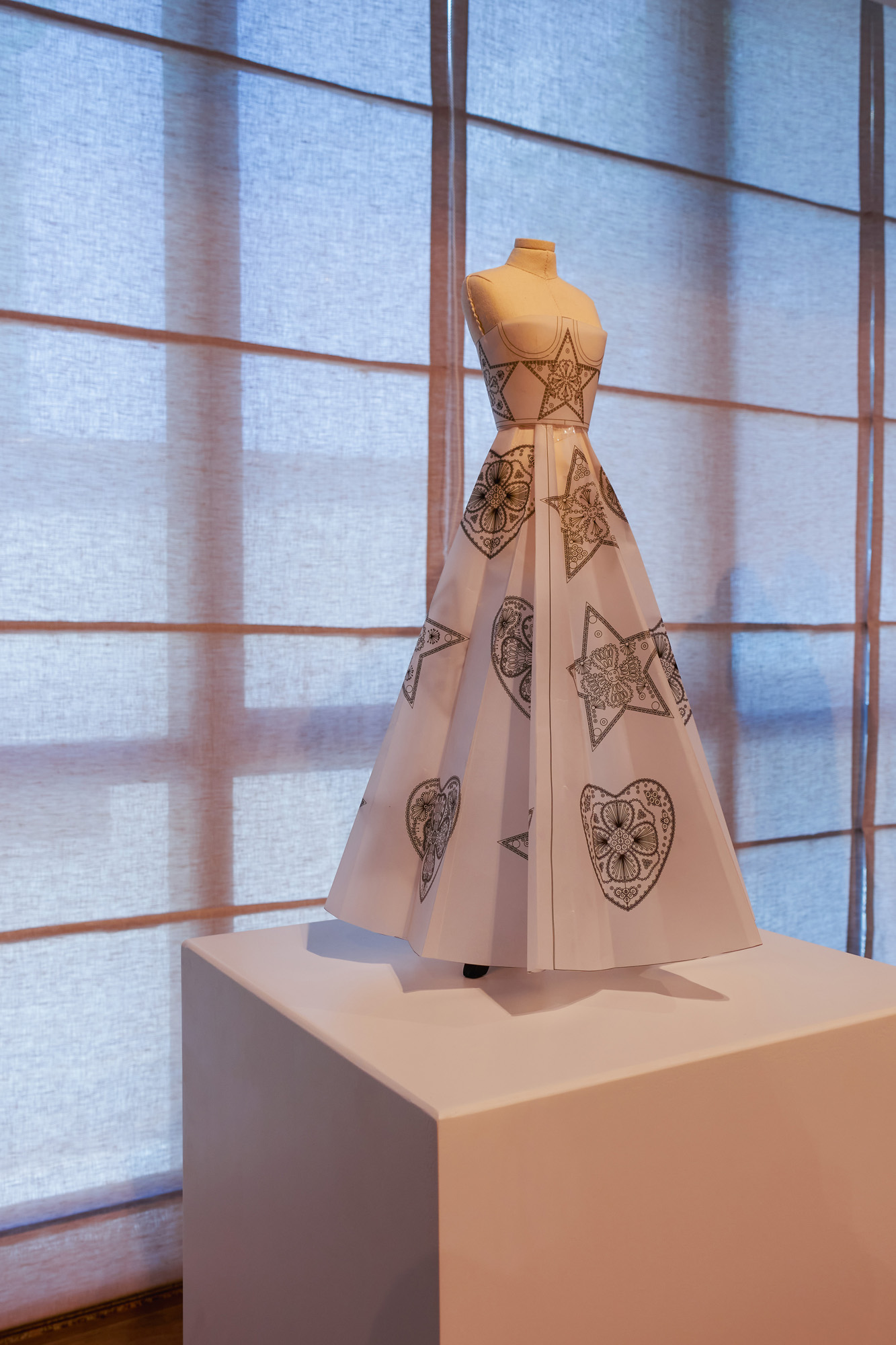
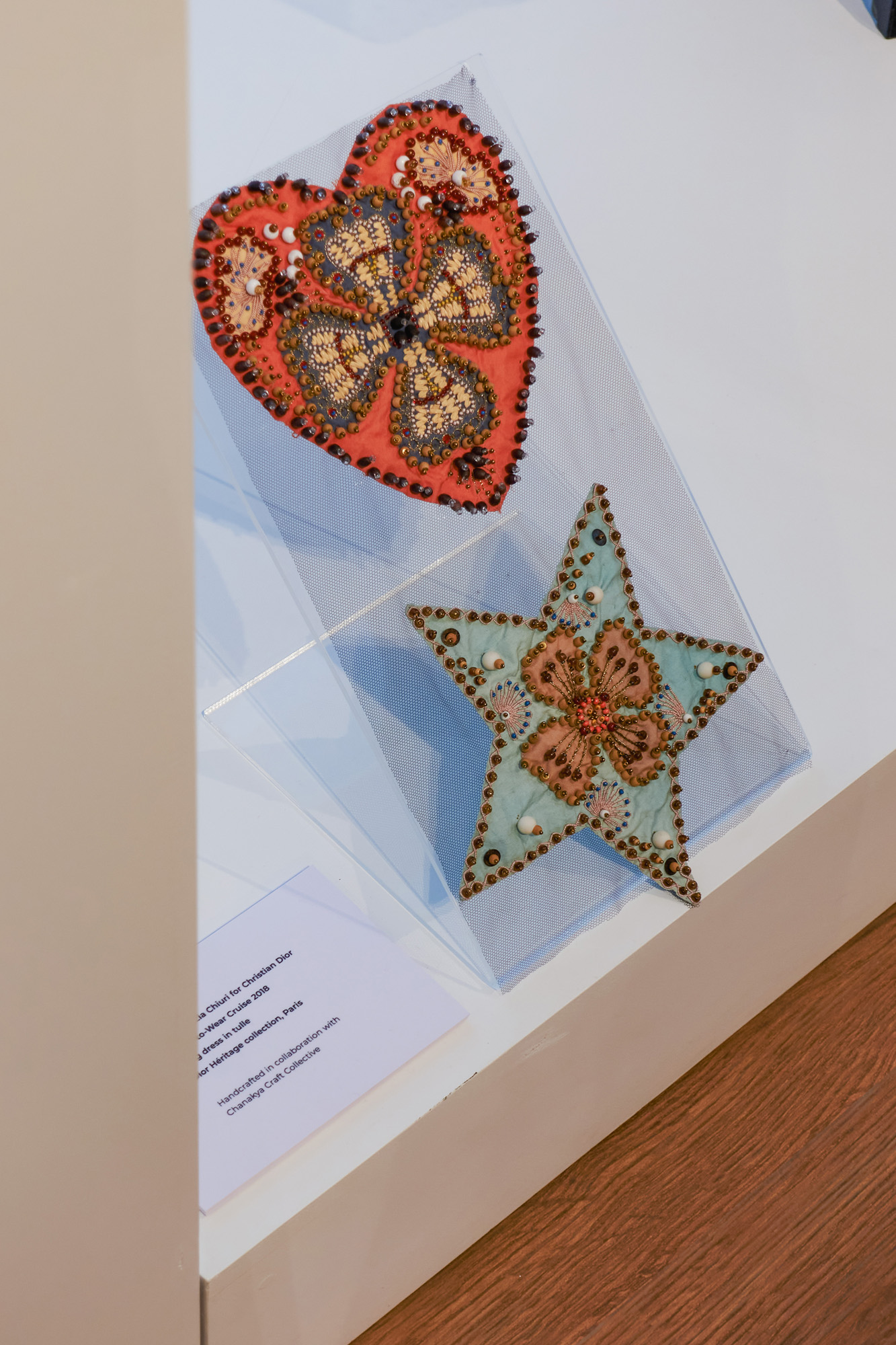
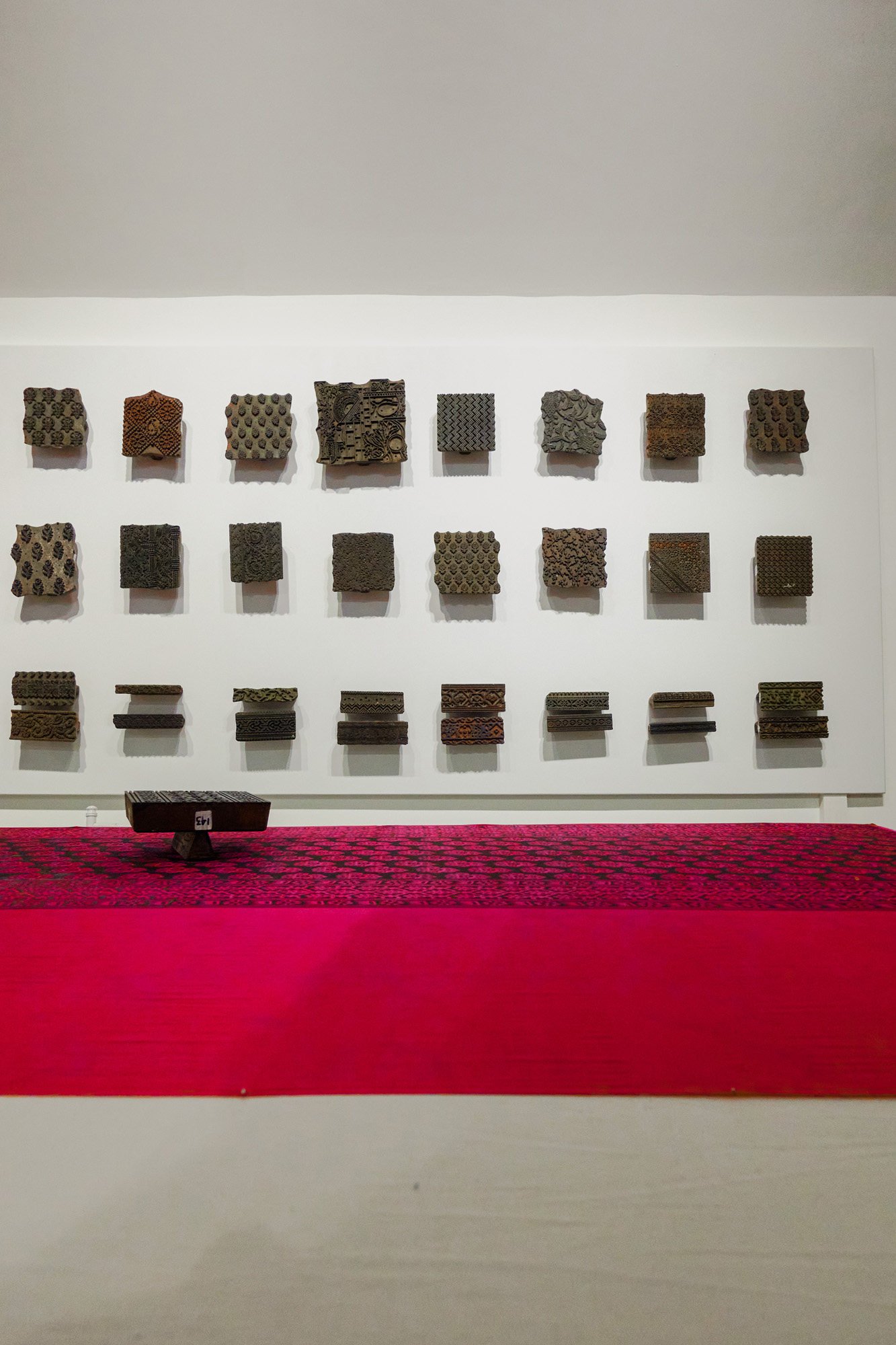
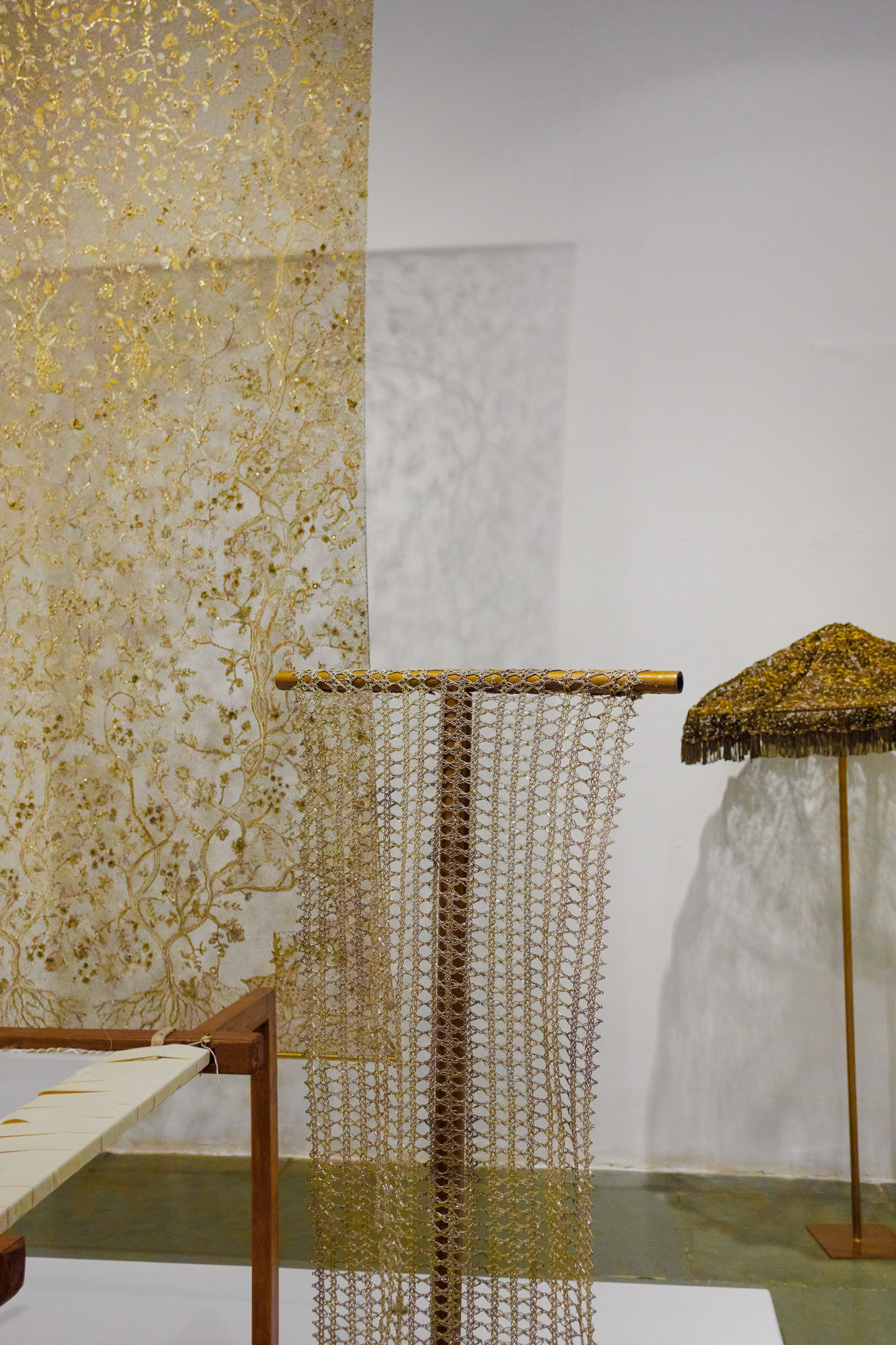
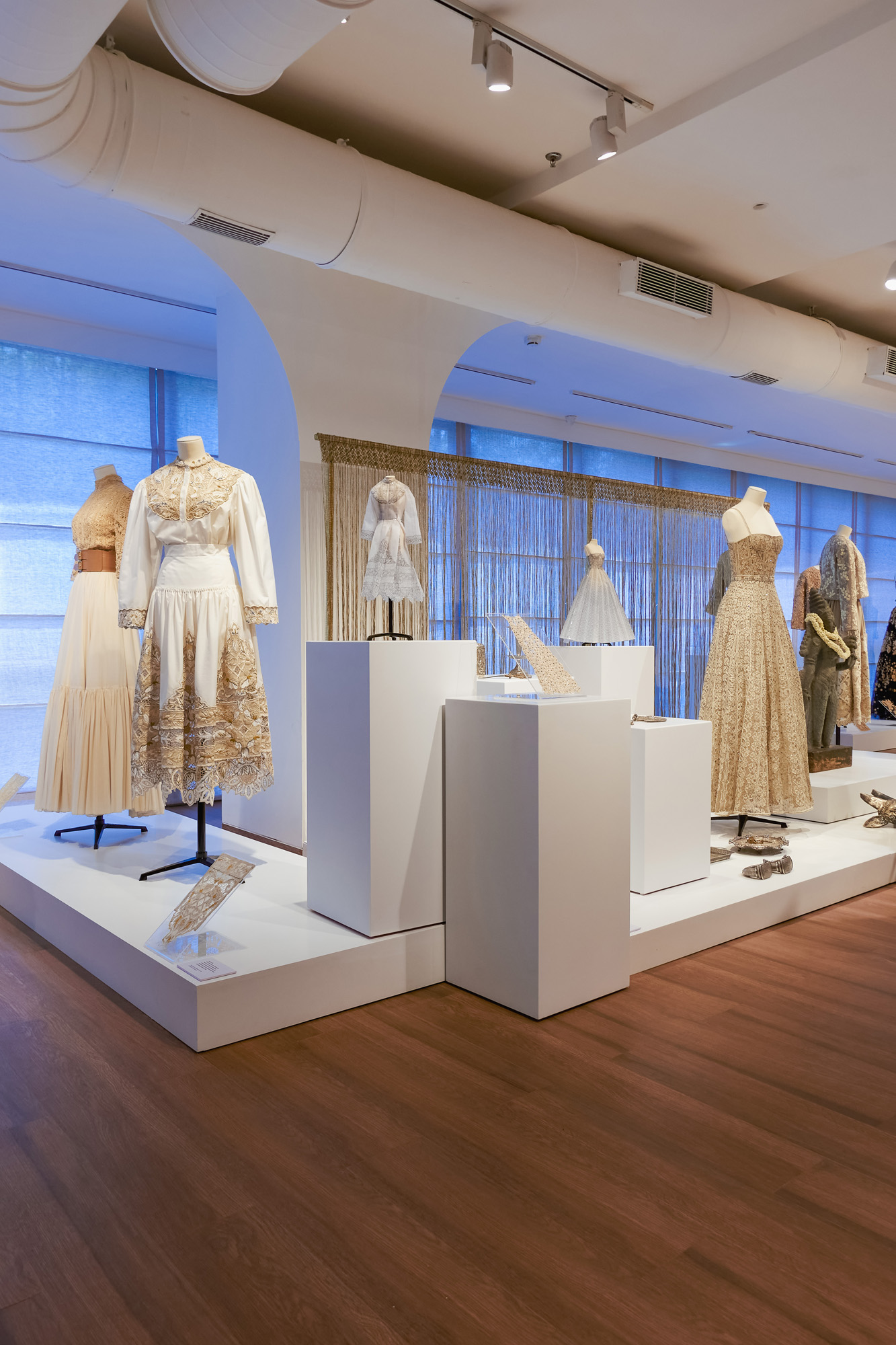
    Interestingly, Dior has had a decades-long relationship with Chanakya. For visitors to the Chanakya School, therefore, the presentation that welcomed them, was indeed an eye-opener. An exclusive Dior retrospective featuring pieces from 50 haute couture and prêt-à-porter collections made in collaboration with Chanakya, a curation of Chanakya’s private archives (with a focus on rare global art, antiquities and craft objects some spanning over 1,000 years), a living museum of 13th-generation ustads (master artisans) demonstrating live the savoir-faire from the Dior Pre-Fall 2023 show and a preview of the soon-to-be-opened Chanakya Cultural Centre were the showstoppers.

    Chanakya Atelier — The Dior Retrospective

    Chanakya Atelier — The Living Museum

    Excerpts from a conversation with Karishma Swali….

    What does the association between Dior and Chanakya mean to you? It has led to Indian embroideries and artisans finally getting the acknowledgement that they deserve for their work for various European fashion houses, something that luxury brands have avoided talking about until now.
    We are so deeply honoured to have been able to share this collective celebration for craft excellence with Dior and Maria Grazia Chiuri, and to be able to have this aligned vision coming to life. And also for this deep reverence that we together have had for craft through the decades. For all of us at Chanakya, it’s a momentous coming together that we will cherish forever. For the artisans who watched the show with us, it will be etched in their memories and hearts forever.

    How do your artisans and our age-old crafts benefit from Chanakya School of Craft’s association with Dior?
    My father [Vinod Maganlal Shah started the business in 1984 creating fine hand embroidery for international fashion houses] wanted to share India’s impeccable craftsmanship with the world. And so, over the decades, our vocabulary (at Chanakya) has always been one of contemporising it to keep it alive for future generations. When something like the Dior show happens in India, where our artisans are acknowledged for their skills — and lauded for being the finest at what they do — it obviously plays a huge part in being able to keep the crafts alive for our future generations. This is because it becomes aspirational. It is a culture that we are standing for, it’s a culture that we are taking forward…and so, of course, you are talking about a larger benefit.

    For years we have had global compliances in place. But this is about so much more, isn’t it? It’s about being able to stand together for a global vision for craft and express a deep reverence for our artisanal legacies. We work very closely with the artisans. Most of my time is spent in the atelier and most of my inspiration comes from there.

    Chanakya Atelier — The Dior Retrospective

    How has Chanakya been contemporising traditional embroideries?
    Let’s say that I look at a Lucknowi ceremonial jacket from our archives — we are very fortunate because my father started collecting antiquities and textiles and my husband’s (Shyamal Swali) family has been doing so as well. Earlier, the zardozi work on it would be heavier. If we want to make it relevant for the generations of today, we consider making it more fragile, more poetic…. It’s really about taking a technique and a skill and making it adapt to a new language so that it has a fresher perspective. It is also an exercise in revival….

    What does embroidery mean to you personally? Have you tried your hand at it?
    While my skills are very poor compared to that of our artisans, I am aware of how to do it. For me, embroidery is a very personal reflection, something that I learnt from them. I see their approach to it and for them the riyaaz (practice) of embroidery is also a way to align with yourself — there is a certain discipline and excellence that comes along with it…. So, for me, craft and diving deep into a craft, is really associated with not only the cultural aspects that inform me hugely but it’s also about your own personal journey.

    Chanakya Atelier — The Living Museum

    And how has that been for you?
    I feel very fortunate to be able to do something I love every day. And it’s something that I can learn from every day. It’s exciting because every season you are able to find a new language and you discover how to look at it through a different lens. So, craft is infinite.

    What are the principal techniques used in Dior’s Pre-Fall 2023 collection?
    For this season, we have created geometric grids with the micro bullion technique, which is part of the zardozi school. We also used appliqué where we created the toile de Jouy. We ended up celebrating Indian symbolism so we had the elephant or the banyan tree worked with the appliqué technique. We also used mirror work; we treated mirrors like little jewels, and the colourful mirrors were placed all over jackets and dresses. We also had zari embroidery….

    What has it been like working with a brand like Dior and with Maria Grazia Chiuri in particular?
    Maria Grazia Chiuri and I have known each other for over 25 years so it’s been a long relationship. She began working with my brother Nehal [Vinod Shah] in 1992 and I started working with her a few years later. We have constantly tried to celebrate craftsmanship together. She has also been a mentor and someone that we founded the Chanakya School of Craft with. She really is a champion of crafts throughout the world and inspires us tremendously.


    [ad_2]

    Source link
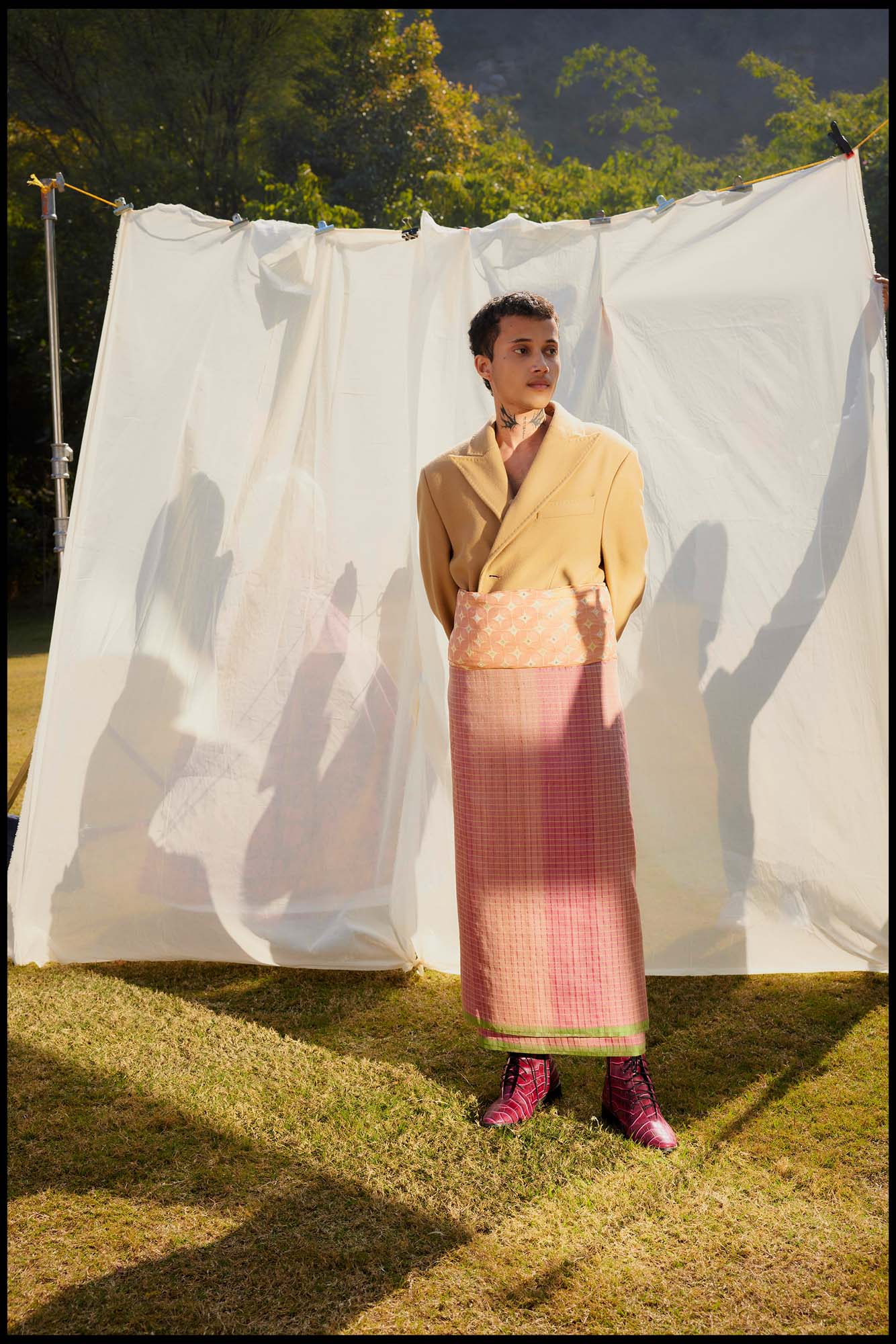
  • Magic | AKANKSHA REDHU

    Magic | AKANKSHA REDHU

    [ad_1]

    I didn’t realise when I set out the intention of receiving life changing experiences which would be perfectly aligned for me, that I’d ACTUALLY be getting bombed by them faster than I could blink my eyes. The most gorgeous shit just kept on coming and lining up perfectly – like a game of Tetris that you FINALLY manage to finish.
    My journey of healing didn’t have the prettiest start (as most healing journeys go I suppose). Infact it started with me having to row against the flow I was taught and conditioned to believe was the only flow for me based on nothing more than a faint gut feeling. All on me, because I never once sat down with my self and questioned it. I was letting life do me instead of building a version of life that was best suited for me.
    It led to a beautiful rock bottom, a year of dragging whatever sense of self I had out of that pit with the support of a few close folks I consider myself to be extremely lucky to have in my life and my own sheer will to get out of bed every morning – that’s atleast one good thing that came out of being that person that ‘goes with the flow’ – you learn to compartmentalize and manage your shit so that you can continue to function on a basic level. Survive, not thrive.
    Relief didn’t come anytime soon. I had more self sabotage on my mind because I had never truly learnt or had practice in how to be kind to myself and figured I needed to punish myself for choosing me in the course of which I had to let some people down. It seemed it still was not the right time for me to start gathering my fragments and begin the process of integration. I wanted to throw them all up in the air to see what landed where. It wasn’t pretty.
    But somewhere along the way, something did crack open. And it allowed my intuition to gain a stronger voice – loud enough that I could, for the first time in a very long time, actually hear her speak properly. As if miraculously, things that weren’t meant for me started dropping out of my life even though I didn’t yet have the courage to eliminate them myself. Life kicked me hard on my ass and finally opened my eyes to the art of ‘editing’ my life. Turns out, you CAN just not entertain whatever it is you think does not serve you in your life. Just drop it, like a fly.
    My people-pleasing ass practiced it, with much feelings of horror and dread that I’d be cursed forever if I caused another person to dislike me (all in my own mind, running like a movie). Nothing happened. I didn’t die. Mama Earth kept moving, the sun rose and then so did the moon. Additionally, I also gained something new from this practice, something that I had not experienced in a very long time – mental space.
    The more I edited and let go of, the more space I created. Think of it as my cup – full – but of shit that wasn’t serving any purpose. So now, my cup was finally being emptied – blank space.
    By this point I had started taking better care of myself – consciously – continuously asking my self, everyday – is this aligned for me? Would my highest version take this decision? Do I really need this in my life? Does this habit, place, person, project enhance my being in any goddamn way? No? Put it in the fuckitbucket. Yes? Invite it further into my life. I had started looking into healing modalities. Building a routine that was based on my needs with an almost feral love towards my personal development. For the first time, yet again, in a very long time, I started investing in myself again.
    This invited more magic in my life – My healing journey really put the pedal to the metal at this junction – I discovered my calling, something that has truly taught me what having passion towards something feels like – an almost familiar feeling – the magic you used to play with when you were a child but slowly forgot on the way. I discovered breathwork – which not only healed some early traumas that ran deep and overlooked for over three decades, but also showed me just how simple, profound and abundant growth can feel like and how rewarding spreading this vibration of healing can feel. I ofcourse, straight up dove into the practice of conscious breathing, signed up to train to be a facilitator, immersed myself into whatever knowledge I could find about breathwork, the mind-body connection, trauma, emotions & energy, worked with mentors and connected with my breath daily since. In many ways it feels like just the beginning because I know I have far to go but at the same time it feels like I have already come SUCH a long way.
    After this it was like a rolling stone – only this was was rolling uphill, towards higher, better vibrations, jumping hills too and collecting just pure fucking magic on the way.
    I also kept getting more and more used to the practice of editing my life. I was changing, evolving, growing and I was and am in no mood to stop till the day it’s time for my breath to leave me.
    Here’s the thing about getting better – it keeps stacking up, getting better and better, each step being just the beginning. It’s what you allow to be stacked up. That is the secret I feel.
    You learn to look at the shitty stacks as lessons and simply let them fall off after integrating with the lesson at hand.
    When you consciously take steps everyday to move closer to what feels aligned in your body and saying no to the things that don’t, it feels just like walking and the path simply appearing in front of you as if by magic.
    More magical things, experiences, places, people started stacking up in my human experience, my connection with my intuition started getting stronger, I had space in my life and mind – to just breathe – no clutter.
    I released so much that it could now be my middle name.
    I kept going back to my breath and consulting my body instead of my mind and received wisdom I didn’t even know I had within me. I learnt magic. I realised I live in sheer abundance every day.
    And as a closing to this vague share (since I didn’t want to dole out personal details but still keep it as close to my heart as I could) I wanted to share my most recent experience that came my way.
    In October last year, just a month after having my mind, body and soul blown out of the concept of this 3D existence by the simple work of breath, in a moment of fearless and inspired action, I booked myself a trip to The Shaka Surf Club, to learn how to surf – as a birthday gift to myself in March this year.
    I had always been very fascinated by surfing, wondered if I could pick it up and figured I’d have the sea and the sand still even if surfing was not meant for me.
    5 months after booking I showed up, lived in a tent for 6 days between the backwaters on one side, the sea on the other and a handful of people I really fucking liked in the middle.
    It was – no prizes for guessing here – magic.
    Not only did I literally receive the permission to open my eyes and recognise the fact that my cup has been, what seems like for the first time in my life, full for a while now (I was just resisting admitting it to myself), and this time brimming and overflowing with things consciously curated by me, for myself, all serving me. Which meant that I could now start pouring from it – something that I have always enjoyed doing – just that when you’re pouring from an empty cup or a cup full of trash, you feel depleted and start feeling like shit yourself more often than not.
    And just like magic, the very next day after I had this download, a few of the folks I was enjoying sharing space with (with breaks of alone time no doubt coz that shit fuels me at this point) asked me if I would do a breathwork workshop for them. For a flash second – nerves – but when you know, in the deepest of your layers that you are meant to do something, nerves also melt away as quick as they appear. I heard this somewhere and it stuck with me – fear is excitement without the breath. All you have to remember to do is breathe. And that is what I did. I breathed, I reminded myself this was not about me, this was about the breath, being introduced to humans in the exact moment it was meant to be discovered by them, for them.
    We breathed under the stars and palms swaying in the wind that reminded you spirit is everywhere, laying on the grass – our energies coming together in the midst of nature, sea, salt and sand, creating a container that will forever be special to me. We connected with our breaths and human experiences and came out on the other side feeling just a little bit lighter and in light.
    This is it. This is me. Pouring. Because now I know how to keep my cup overflowing.
    Thriving, not surviving.
    Oh and I did manage to stand and surf a few waves but I busted my knee and stepped on a sea urchin on 2 separate occasions before I could learn how to surf without the assistance of an instructor. But I still had the sea and the sand and the people 🙂
    This is just the beginning ❤️

    I felt inspired and wrote this post at the Mangalore airport while waiting to board my flight to Delhi 🙂
    Sharing a few pics below from my time at Shaka.


    I used to pour drinks. Now I pour magic 😉
    What a life. What a life. What a life.


    [ad_2]

    Source link
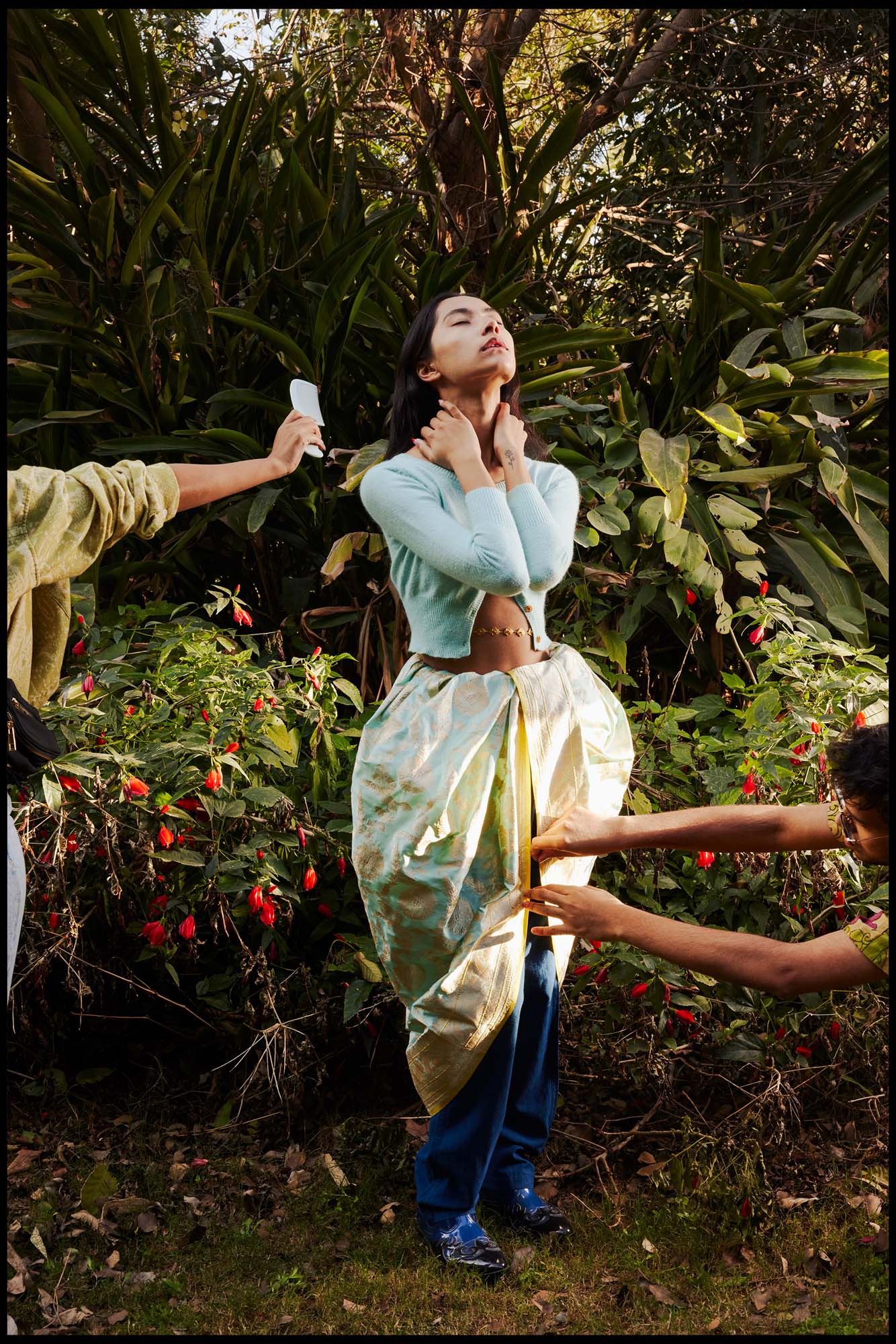
  • The Mystic of The Unstitched

    The Mystic of The Unstitched

    [ad_1]


    Text by Shirin Mehta. Photography by Bhumika Sharma. Styling by Akanksha Pandey. Art Direction by Akanksha Pandey and Naomi Shah. Hair and Make-Up by Lulua S and Pallavi Pathodia at Orane. Models: Khushi at A Little Fly, Naayaab Sheikh at Anima Creatives, Tre Munroe.

    Handwoven khun sari, from Kubsa; hand-block printed linen scarf (used as a tie around the waist), from Eka.
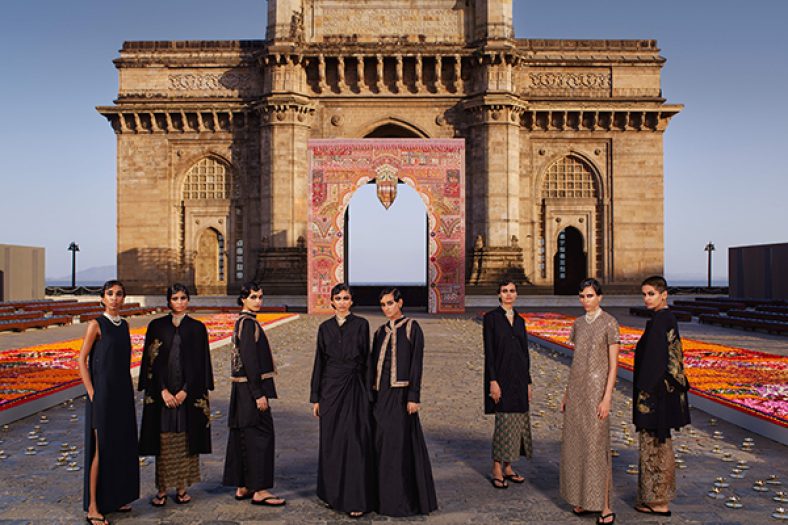
    No one can dispute the magic of a beautiful length of textile that can be twisted any which way, draped in magnificent folds around the body or at a strategic window, wrapped tightly around a favourite object, or bulked up to generate volume and balance. A piece of tasselled fabric over a conjuror’s stool, an exquisite tablecloth across a trestle table, a shawl laid over the back of a chair, a parcel wound around with colourful cloth meant to be gifted to someone dear — these are some of the images involving textiles that we take for granted — seldom actually noticing the metres and fibres involved. But so much of what we see around us in the streets and in our homes — besides what we cover ourselves with — is tied up in a variety of fabrics. We have, in fact, been surrounded by virgin weaves since Mauryan times when men and women wore unstitched garments like the antariya (lower body garment) and uttariya (upper body garment), before sewing was known to man.

    Mystical matka (pots) performances, ubiquitous set-ups of roadside dentists partitioned from pedestrians simply by a stretch of fabric, and pervasive visions of enormous bales of cloth tied to the backs of meandering trucks on Indian highways — these are a few of the inspirations that moved our stylist to showcase saris, turbans, gamchas (thin towel usually with a design of checks) and dupattas in unique ways….

    1.Handwoven cotton sari (draped as dhoti), from Raw Mango. 2. White kurta, white cotton churidar, both from Rajesh Pratap Singh; handwoven fabric with treated textiles, from Kuru Kuru (on body); samples of artisanal works (tied around the head), from Kalhath Institute; shoes, model’s own. 3. Yellow soy Chanderi silk sari, red soy Chanderi silk sari (wrapped around the table), blue soy Chanderi silk sari, all from Meekhalio; old safa cloth (wrapped around the table, over the red sari), Meekhalio founder Somya Tambi’s own. 4. Hand-block linen scarf, from Eka; old printed safa cloth, Meekhalio founder Somya Tambi’s own.

    Industry insiders share their thoughts on the drapes, layers and illusions that only seamless fabrics can create….

    Ajay Bhoj, Antique Textiles From India

    Centuries-old zardozi work on velvet, preserved by Ajay Bhoj.

    “Wearing unstitched cloth had a religious as well as spiritual connotation in ancient times, as it was believed to be endowed with the power to shift the energy from the earth to the body and then back to the earth again. Unstitched cloth was considered the purest form of clothing and in earlier times the technique of knotting was used while wearing the cloth. It remains a very popular choice in India where it forms the primary part of many of our traditional garments.”

    “The influence of textiles starts with our own needs and spreads to every other possible industry like food, building materials, transportation, health. And can be seen especially in our own homes.”

    Ashish Satyavrat Sahu, Khadiwala Designer and Johargram

    Handwoven bamboo mat (wrapped around the body) and handwoven cotton pants, both from Johargram; vegan leather sheet (wrapped around the shoulder), from Malai.

    “In comparison with historical drapes, unstitched textiles as worn today, have been modernised and have fewer variations. Although they are considered outdated, vintage draperies are reviving in style and are considerably more valuable.”

    Seema Tiwari, Tarini Studio

    Kotpad cotton tribal motif handloom saris, from Tarini Studio; handwoven purple mulberry silk brocade fabric, from Joskai; red handwoven naturally dyed cloth, from Purvi Doshi.

    “The concept of unstitched garments is as ancient as civilisation itself. From Egypt and Mesopotamia to Guatemala, China and India, it has evolved and is still evolving, and the state of Odisha is part of this amazing cloth-making culture. Tarini is focused on protecting Odisha’s rich handloom heritage and driving its generational legacy. The aim is to exemplify the richness and diversity of Odisha’s culture along with the artistry of the weavers creating these unstitched garments in length and breadth.”

    “Historically, unstitched garments were pieces of cloth woven by hand from materials grown locally. In many cultures, they indicated the social status of various members of society. As stitching was not known, the fabric was simply draped around different parts of the body. Tarini is inspired by our handloom heritage and custom of draping.”

    Anuj Sharma, Button Masala

    1. Underwater-fauna-inspired artwork (used as surface detailing), from Vaishali S; yellow soy Chanderi silk sari, from Meekhalio; white tent dress, from Button Masala. 2. White tent dress, from Button Masala; upcycled fabric (around the neck), from Paiwand Studio; white cotton churidar, from Rajesh Pratap Singh; shoes, model’s own.

    “The role of the sari is well known but it’s on a huge decline. The ability to drape a fabric is an important skill that we are in the process of losing. All my clothes are uncut, unstitched and draped. They are made using buttons and rubber bands. It’s a simple and extremely sustainable method. The clothes can be worn in many ways because they can be opened up and put back together again.”

    Ashita Singhal, Paiwand Studio

    1. Hand-embroidered cashmere bedspread (as head covering), from Andraab; upcycled hand-embroidered cloth (draped around the body), from Paiwand Studio; white cotton salwar, from Rajesh Pratap Singh. 2. Bandhni scarf (top), from Studio Medium; upcycled embroidered textile (middle), from Paiwand Studio; striped organza fabric (bottom), from Poochki.

    “Unstitched cloth offers a collaboration between a piece of fabric and the wearer. The versatile and nonconformist nature of fabric gives freedom to wearers to express themselves. It also offers inclusivity and breaks the rules that Western stitched clothing has set and blinded us with. While Indian fashion is often represented by embroideries and weaving patterns, we often forget to embrace the zero-waste garments (like the sari and dhoti) that have come from our roots, way before anyone was concerned about production wastage.”

    “Textiles have always been an inseparable part of our lives. We are surrounded by fabrics. From a baby’s swaddle to rugs, quilts and more…fabrics play an important role in providing comfort and protection from harsh climates. At Paiwand, we upcycle textile waste and turn it into fabric for apparels and home furnishings in order to provide an alternative to the virgin textiles that are used in these industries. Our sustainable, upcycled textiles reduce waste while reviving traditional Indian craft.”

    Riddhi Jain Satija, Studio Medium

    1. Red tie-dye scarf, from Studio Medium; striped linen sari, from Anavila; lavender striped handwoven cashmere shawl (tucked in the front), from Andraab; old printed safa cloth, Meekhalio founder Somya Tambi’s own. 2. Green handwoven bandhni silk scarf, from Studio Medium; handwoven purple mulberry silk brocade fabric, from Joskai; Kotpad cotton tribal motif handloom saris, from Tarini Studio; hand-stitched cotton shirt, from RaasLeela; handwoven cotton sari (draped as dhoti), from Raw Mango; red handwoven naturally dyed cloth, from Purvi Doshi.

    “A silhouette comes with a story of its own, it’s already had a journey. A piece of unstitched textile will always be a starting point, the beginning, the point from where a journey will commence.”

    Purvi Doshi, Purvi Doshi

    Hand-embroidered fabric, from RaasLeela; kala cotton with extra weft cloth (draped like a skirt), from Purvi Doshi; white cotton salwar, from Rajesh Pratap Singh; flip-flops, model’s own.

    “Unstitched textiles constituted the only garments in ancient times. In India, these were used creatively by different communities: from Assam’s mekhela chador to Gujarat’s chaniya (wraparound skirt). Today, unstitched garments are limited to occasion wear. They are no longer the humble ensembles that were once worn every day.”

    Somya Tambi, Meekhalio and Capra (Shefcoz)

    1.Red tie-dye scarf, from Studio Medium; striped linen sari, from Anavila; lavender striped handwoven cashmere shawl (tucked in the front), from Andraab; old printed safa cloth, Meekhalio founder Somya Tambi’s own; white cotton churidar, from Rajesh Pratap Singh. 2. Blue soy Chanderi silk sari, from Meekhalio.

    “In earlier times, the unstitched was considered ‘holy’. It was never treated as a ‘product’. It was never attached to livelihood. There were familial and community values attached to it. There was mythology attached to it. It was community-driven work. It helped in binding people and also maintaining harmony. For instance, people from some parts of the country would make particular motifs, while those from other parts would sing songs during the making process. During the British rule, it became a movement for self-reliance and dignity. Such was the power of the unstitched.”

    “At Meekhalio, our way of designing is very attuned to the ‘Indian way’ of design, which has been extremely different from the West. We design unstitched garments, like say a sari, keeping in mind the functionality, feel, drape, dimensions and aesthetics. At Capra, we are making garments out of the tant sari. We let the weavers use their own design sensibilities and we don’t interfere in their creativity. This way, we are making them a vital part of the supply chain and giving them authority to design their native textiles while preserving the cultural textile of the cluster.”

    Interns: Shruti Agarwal and Hrishikesh Saji


    [ad_2]

    Source link