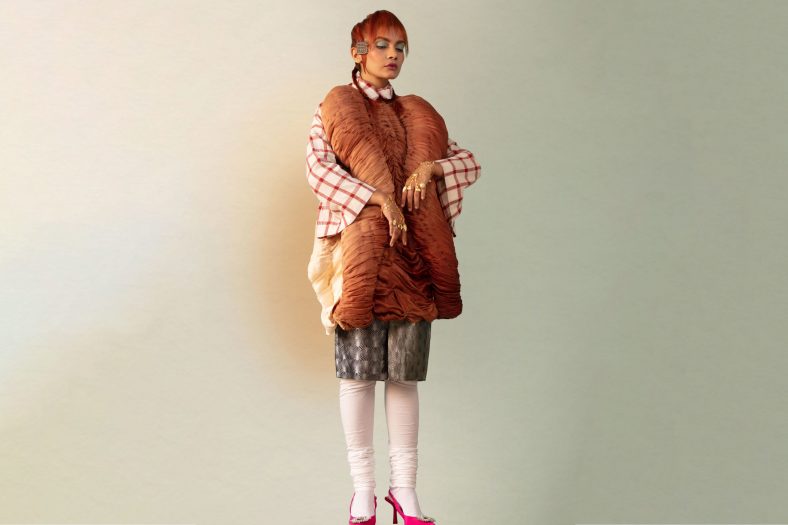


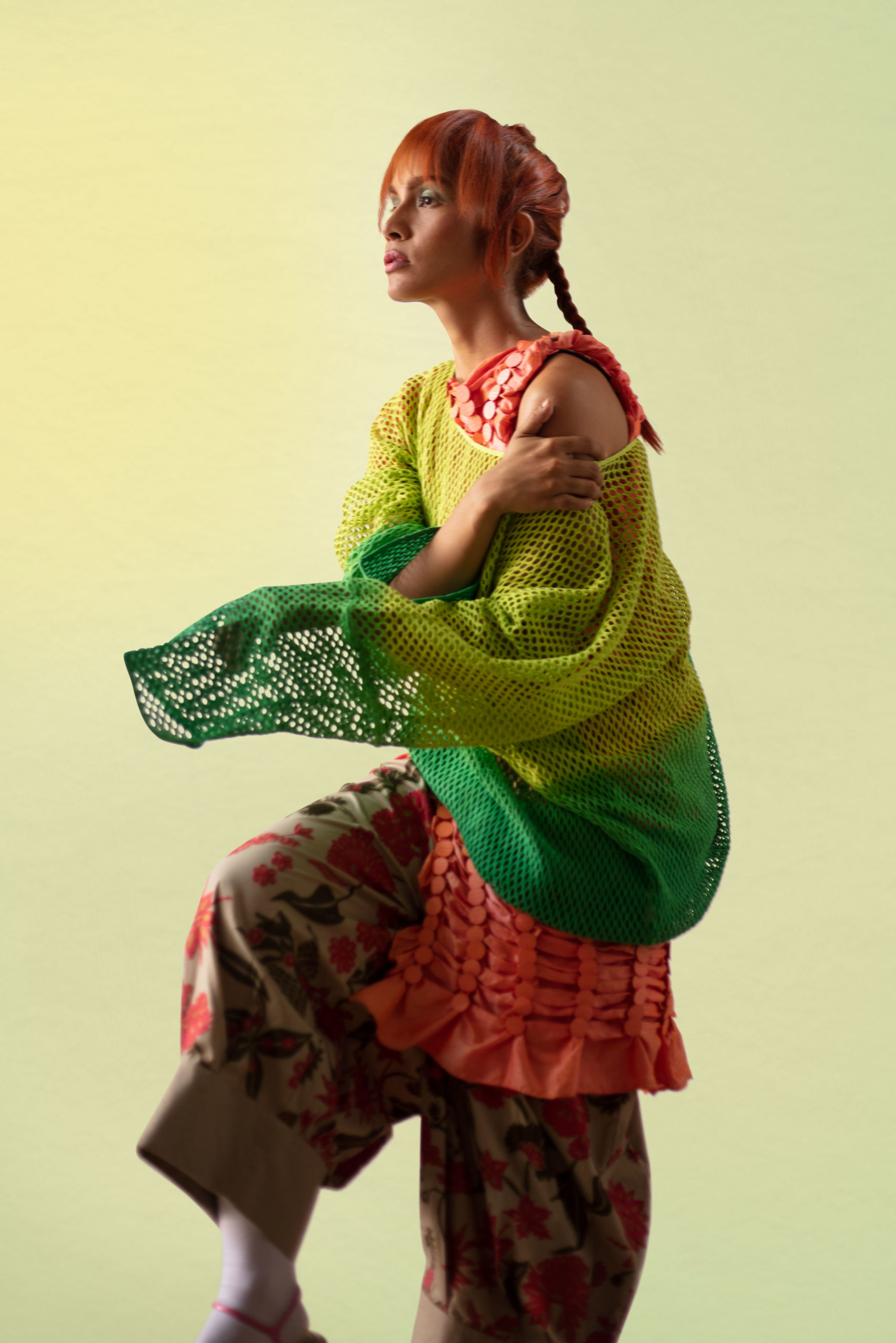




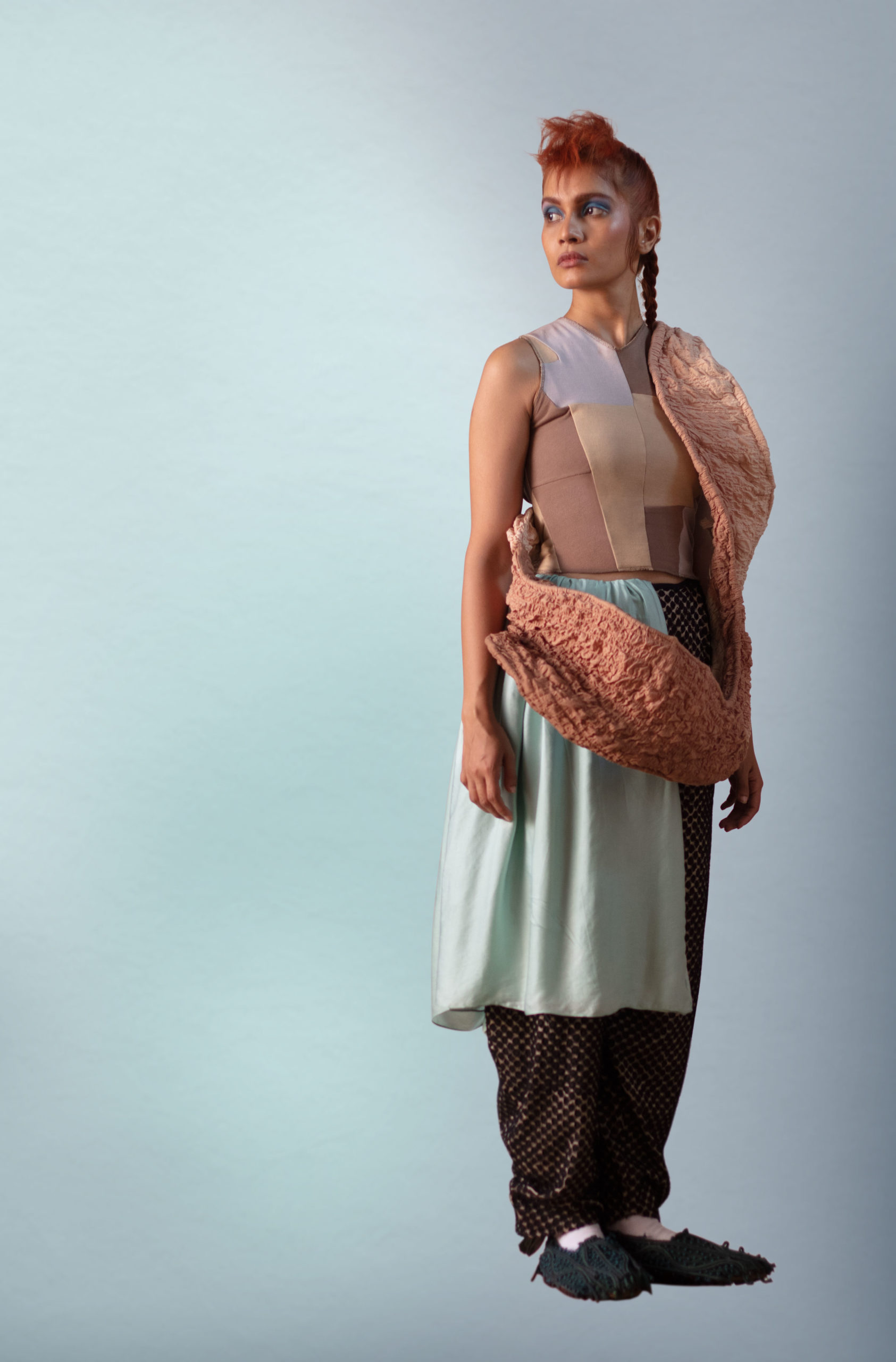
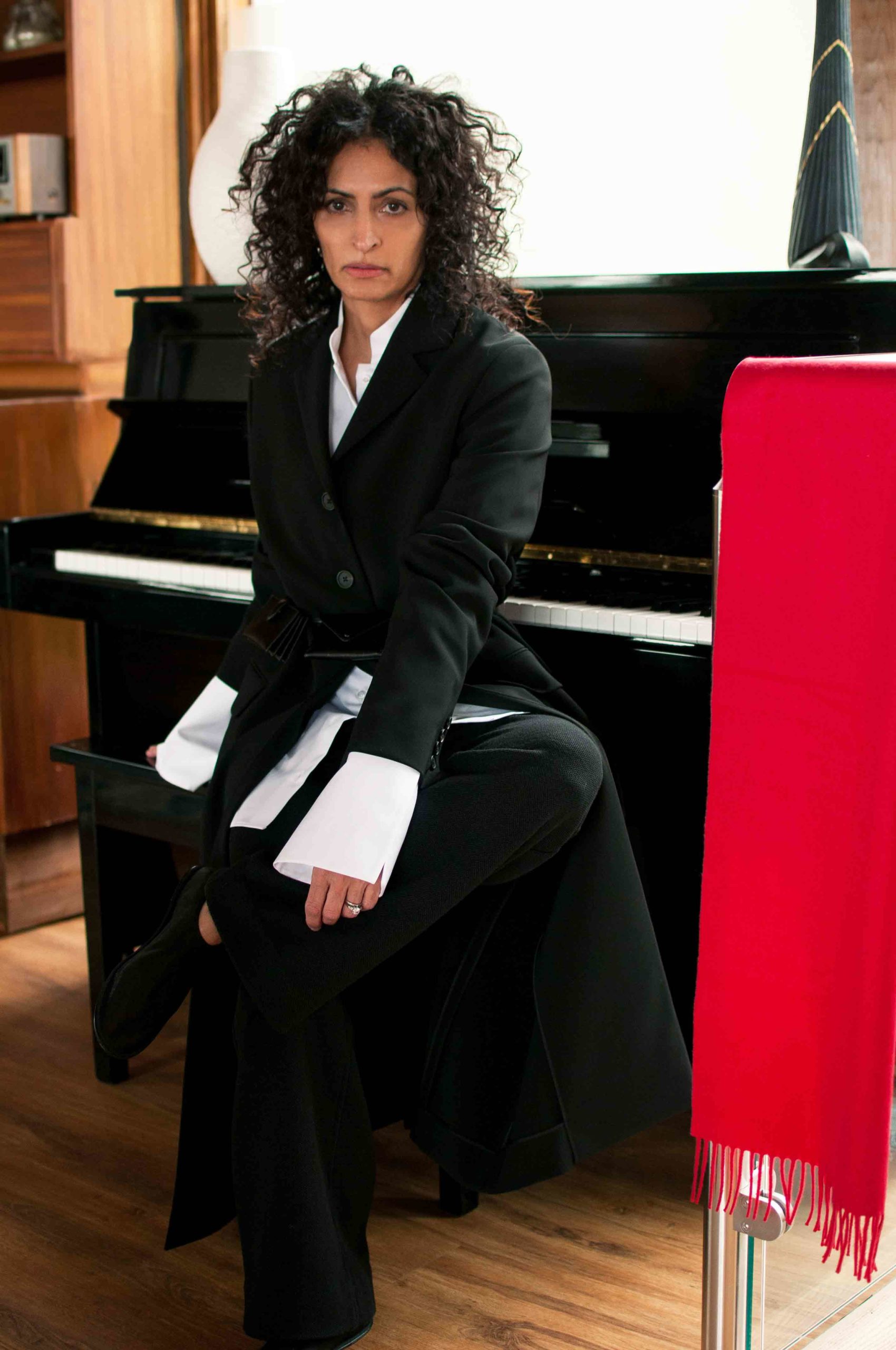
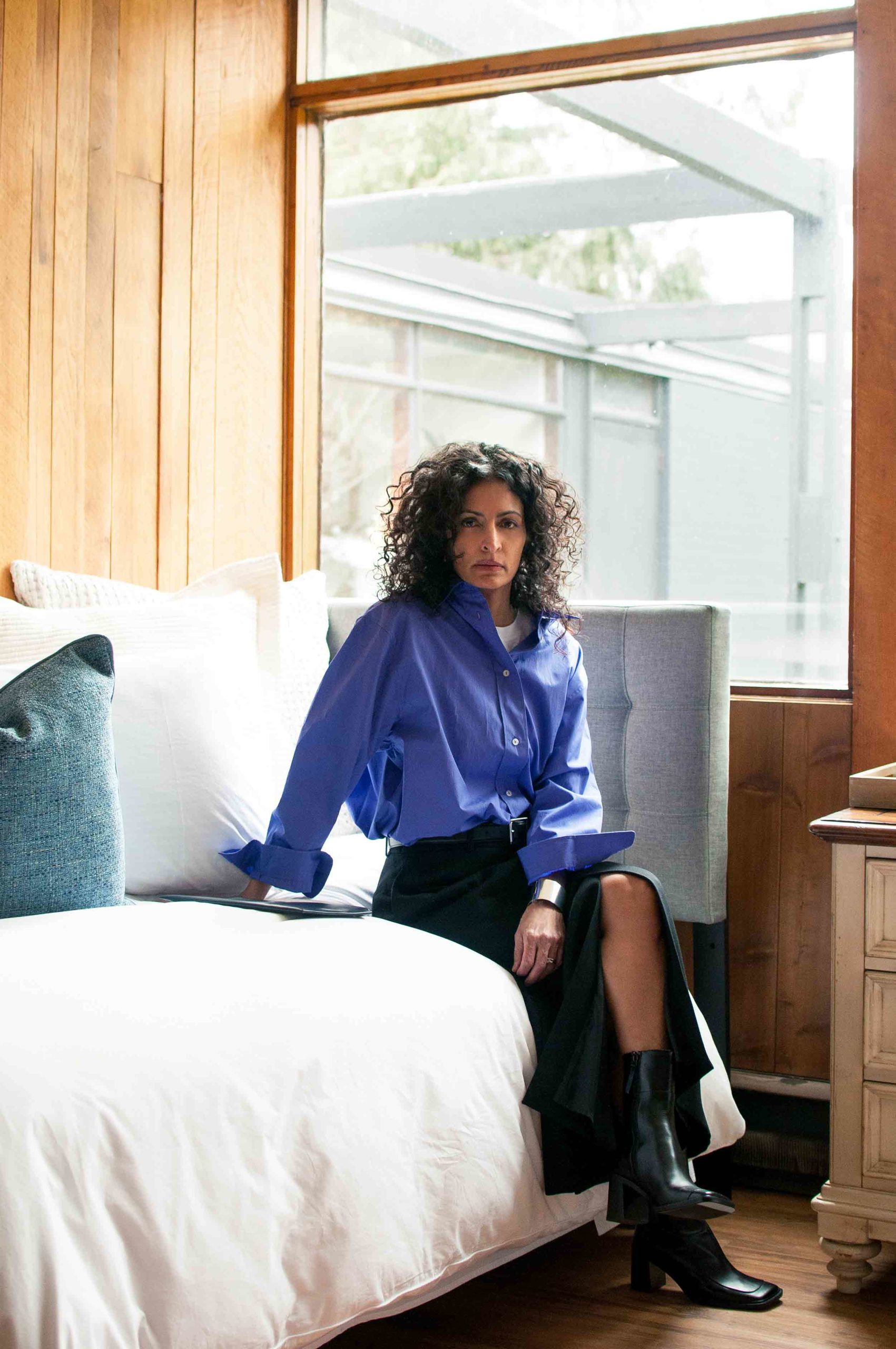
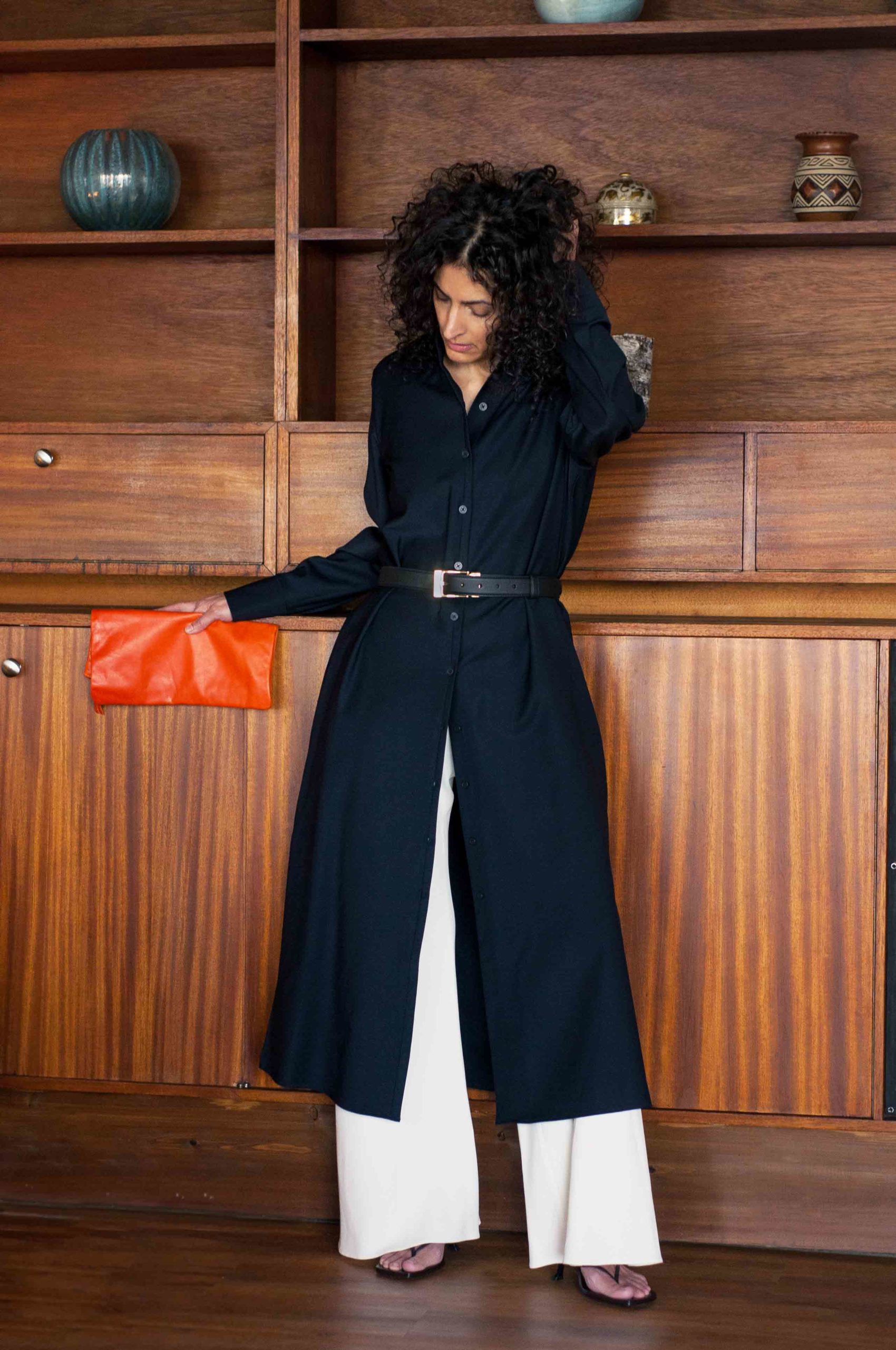
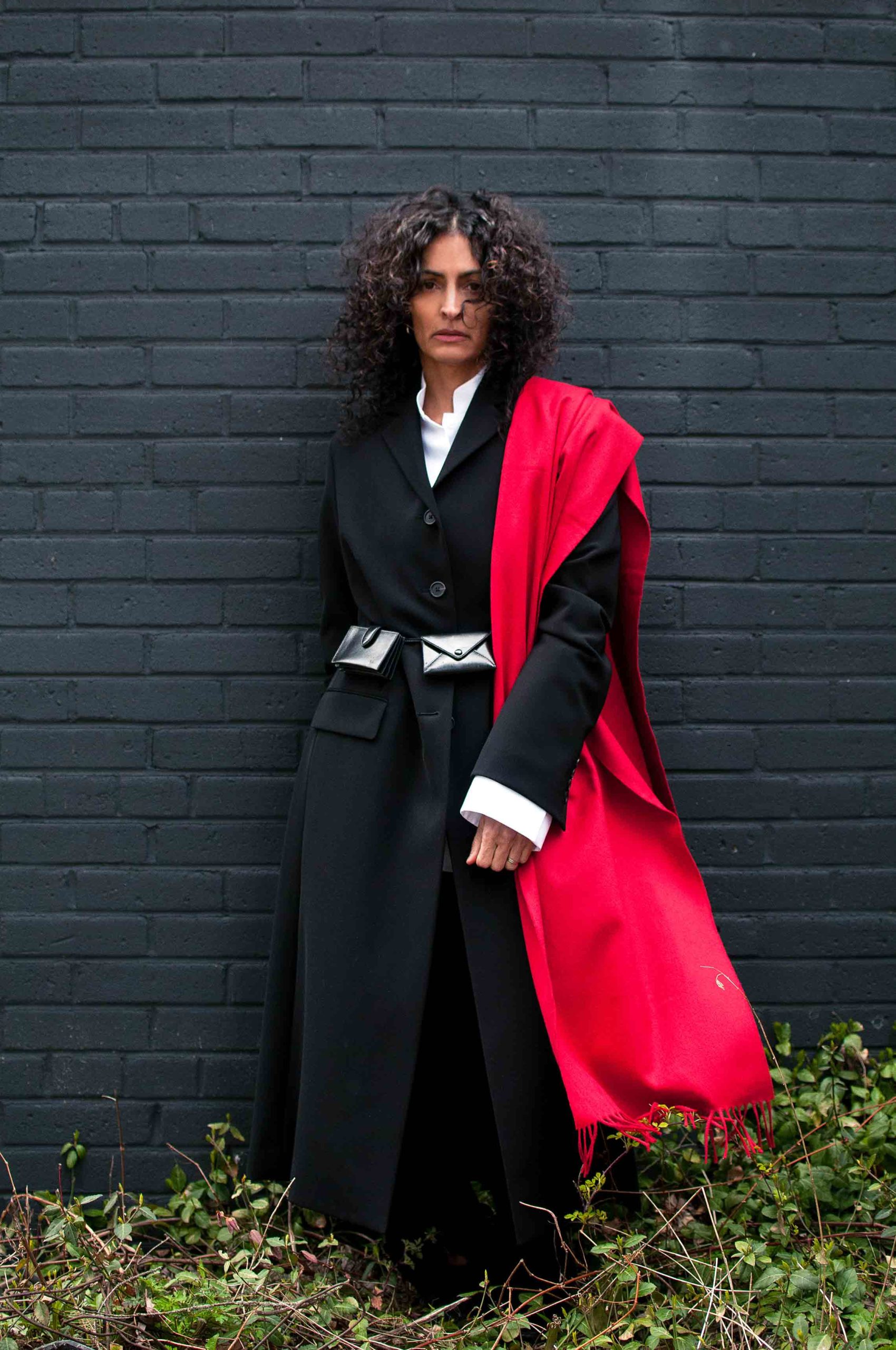
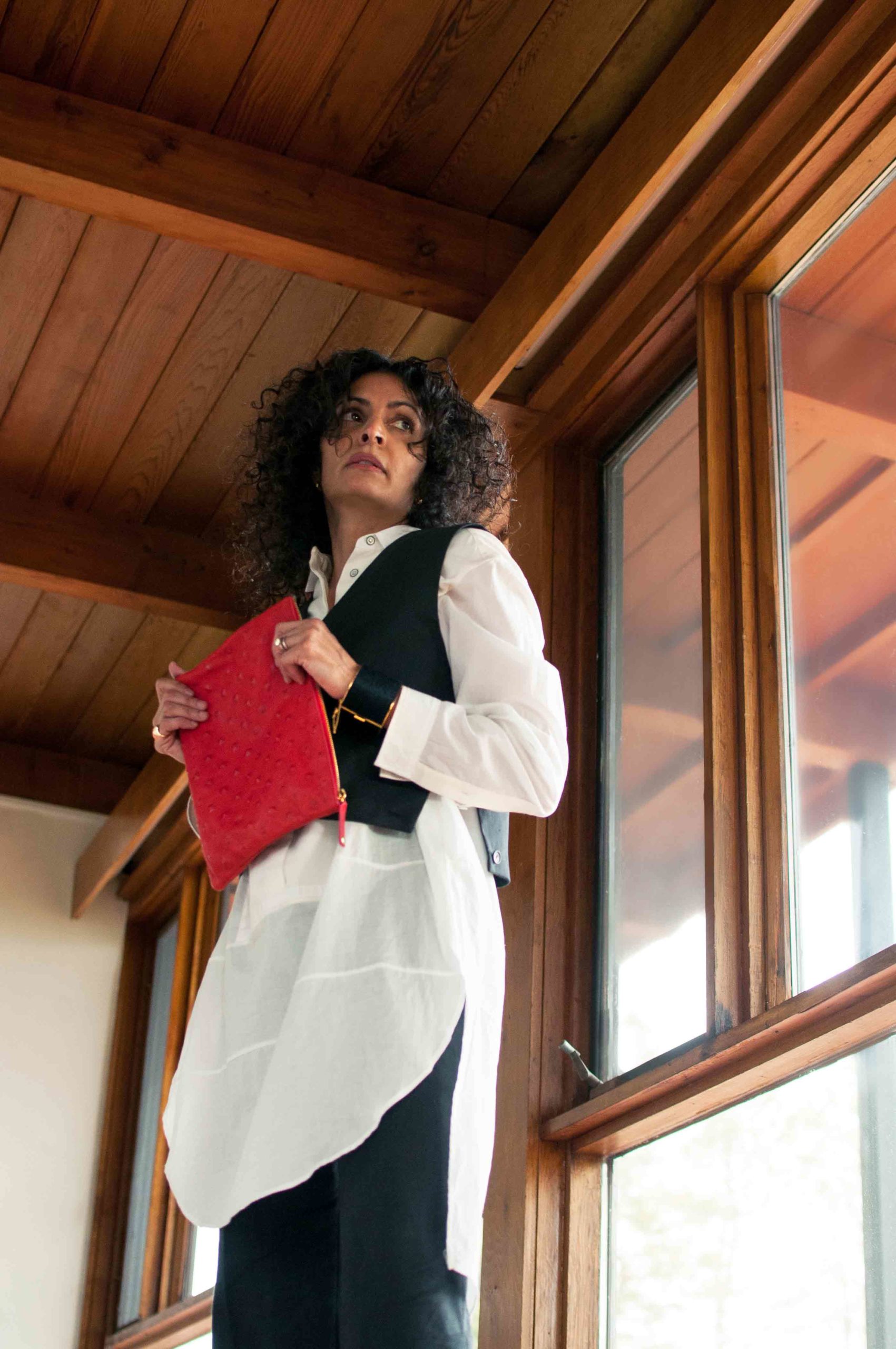
Photographed by Anish Sarai. Styling by Akanksha Pandey. Hair and Make-up by Shivani Joshi. Model: Doyel Joshi. Assistant Stylist: Sarah Rajkotwala.
“The way that we think about clothing has changed; we are more oriented towards individuality now, and what feels true is what goes! And so, I had to discover the different personalities in each of the garments while bringing them together for the looks.” -Akanksha Pandey, Senior Fashion Editor, Verve
Shirt, from Naushad Ali; structured dress, by Abhishek Kumar; skirt, from Tui Tui; churidar salwar, from Rajesh Pratap Singh, hair clips, from Amrapali Jewels; haath phool, from Olio; shoes, socks, both stylist’s own.
“I used to think that the salwar was a set until I made an actual pattern for the garment. I don’t particularly like the salwar. I prefer a cleaner look, but I am certainly open to seeing both women and men in more comfortable trousers for day-to-day wear.” -Abhishek Kumar, designer
Shirt, from Leh; jacket, from Chola; salwar pants, from Naushad Ali; belt (worn around the neck), by Payal Khandwala; shoes, from Vaishali S.
“I keep on shouting that this is the decade of India. The world is looking desperately for the forgotten world of slow fashion with its detailed and skilled workmanship, sustainability and social impact, innovation, comfort, design: these are all attributes at which India can be number one, and the salwar itself should be at the forefront of it.” -Vaishali S, designer
Mesh top, from NorBlack NorWhite; dress (worn inside), from Button Masala; salwar, from Abraham & Thakore, shoes, from Fendi; socks, stylist’s own.
“It mimics the trials and triumphs of each generation’s quest for freedom. While the salwar enabled movement for women, it was far from the inner liberation that the pantsuit gave to women in the West. The beauty, for me, has been our ability to navigate our past and heritage while being in full resonance with the present experience of life.” -Doyel Joshi, interdisciplinary artist and creative director
Top, from Payal Khandwala; skirt from Vaishali S; draped salwar from Payal Pratap; belt, from Chola; shoes, from Fendi; socks, stylist’s own.
“It’s all about delving into your cultural heritage and embracing elements that are relevant in a modern context. The salwar is really a version of the baggy comfortable trouser; twisting it slightly in terms of functionality, volume and cut can result in a cool avatar that resonates with today’s youth.” -Payal Pratap, designer
Top (worn inside), from Ōshadi; sheer kurta (worn inside), from Rajesh Pratap Singh; dress, from NorBlack NorWhite; waistcoat, from Āroka; salwar, from Abraham & Thakore; brooch, from Amrapali Jewels; socks, stylist’s own.
Top, from Ōshadi; white pants (worn inside), from Lovebirds; black structured salwar from Rajesh Pratap Singh; sweatshirt (worn around the waist), from Chola; mesh bodysuit, stylist’s own.
Top, from Leh; dress (wrapped around the waist), from Āroka; salwar from Abraham & Thakore; structured drape (worn around the torso), by Abhishek Kumar.
“I don’t think that young people will give up their blue jeans for the salwar. But there is always room for innovation and cultural shifts.” -Abhishek Kumar, designer
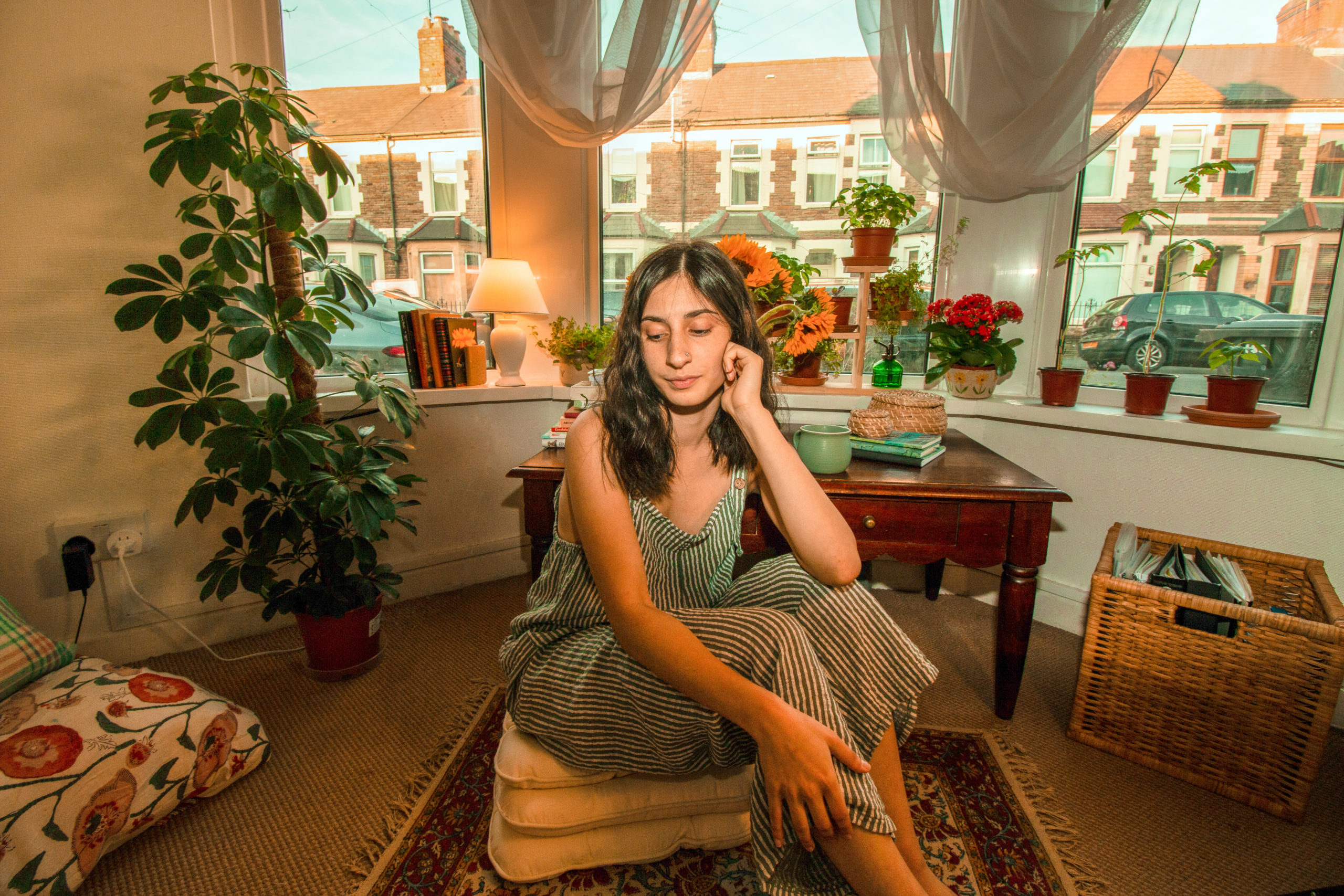
During our Zoom call last year, she was seated on the floor of her newly rented Cardiff flat, where she had finally been able to fulfil her long-standing dream of living by herself. “This is the first time I’ve lived alone, and I love it. It’s a whole new state of independence and excitement!” she exclaimed of this definitive milestone in her life. Within minutes, she opened up about a host of personal topics, including self-evaluated lapses in judgement. The earnestness was rimmed with a nervousness that I found surprising, given that she’s been talking to the press on and off since her teenage years. Yet she also drew succour from the more difficult lines of questioning, using the interview process as an instrument to leaf through and critique her trains of thought, in an effort to reaffirm her truth.
“I wouldn’t say I’m a private person,” she reflected. “But I’m not willing to go the conventional route and do every single interview, and it’s because of this moment at one of my gigs in 2017. The whole crowd was singing along to the words of my songs — which I hadn’t even put out in an album. I suddenly got a feeling and went, ‘Oh shit, this is a big deal!’ I realised that people are listening. And it hit me that this comes with a lot of responsibility.”
Singer-songwriter Aditi Saigal, who goes by her stage name, Dot., often finds herself at a tricky crossroads. Between promoting her material and stepping back to protect her privacy, between giving into lucrative corporate offers and preserving her values. Between obligation and free will. Ego and education. “It’s a give and take between what I want to create and what I have the freedom to create,” she tells me straight up.
Despite a self-admitted “tendency to seek the spotlight”, actually being in it took Saigal some getting used to. When her casual social media upload, Everybody Dances To Techno, went viral in 2017, she was 19. Along with widespread recognition came public glare and a multitude of pressures: to perform, to put out new music. And after a slew of gigs, when it became overwhelming, she found herself retreating from the same technology that had brought her fame. She resurfaced on her professional Instagram and YouTube channel after two-and-a-half years, a few months ahead of the release of her litmus test of a debut EP, Khamotion, which dropped in mid-July last year to positive reviews.
Image Courtesy: @dotandthesyllables/Instagram
Intentionally stepping away from the media arc lights that were trained on her — instead of capitalising on it — and coming back with an album she co-produced with like-minded collaborators, was a rather purposeful, maybe even prescient, move that belied Saigal’s years.
Her stellar debut EP certainly proved that good things come to those who wait but, more importantly, the time off provided her with a much-needed reset, equipping her with the tools to adjust to life in the limelight and replenish her creative juices. And now, having squared her shoulders, the 23-year-old is perfectly poised to create new career trajectories, as is evident in the recent reveal of her role in Zoya Akhtar’s newly-announced Netflix musical The Archies. The lack of over-exposure could have been a factor in her being cast as well, considering that one of the draws of the film is that it will be the debut vehicle for a bunch of young faces, and it does, interestingly, indicate a break from Saigal’s erstwhile reticence.
*************
I find Khamotion brimming with flavours: sweet, zesty, saucy, bittersweet.
The sheer power of her propulsive vocals, which she can slow down in the blink of an eye to create a sense of ebb and flow, coupled with her natural ability to alchemise words into poetry, resonates with me. It dawns on me that she is well attuned to her substantial talent, which is like second nature to her.
Don’t You Worry from Khamotion
The seven-track EP that is infused with elements of jazz and pop will take you on an exhilarating joyride that will leave you breathless. Engaging lyrics suffused with cheekiness — Somebody call Grace, pulchritudinous face, such beautiful hair, head as empty as air — are thrown in for ballast. In the love song Taxi Fare, where she goes — I don’t even care ’bout the taxi fare, forget about the tab, let’s just sit and gab for a while, I’ll be keeping all your memories, don’t need trinkets to put me at ease, and tomorrow if you forget me, I won’t believe you darling — she could well be alluding to the costs of journeying into stardom, which she lightly tosses aside in favour of her fondness for her niche organic fanbase.
The name Dot. was inspired by her mother (actor and theatre practitioner Shena Gamat), who had impressed on her the importance of the unassuming symbol while drawing dots outside the lines in a colouring book — Saigal recalls that she had only been 12 or 13 at the time, but this stayed with her. Dots, her mother had told her, increase the interest quotient. I suppose this is especially the case when they lie outside a formalised structure, defying its limits. Not unlike Saigal.
Dots, in my head, can be aesthetic or functional. Raza saw the bindu as a focal point. They could also signify an ending. Or, as in the case of an ellipsis, a pregnant pause or an unfinished thought. All of it signals the inevitability of re-emergence….
Edited excerpts from a Zoom conversation
Where do Dot. and Aditi Saigal intersect? Dot. is my stage name. But when I moved to the UK five years ago for university, I started introducing myself as Dot. Back home, everyone knows me as Aditi. I have been struggling with this identity question because they intersect all the time.
I’m the same person. I don’t change my personality depending on where I am. It is….[breaks off] What is it? It is a hard question. I changed my name because I thought I can be whoever I want in university — I could start over. If you’ve seen videos of me back then, I had a boy-cut. So, I cut my hair, and I changed my name. This is the first line of my song, Sunny Days — I’ve cut my hair and changed my name — and the line refers to this time in my life. I didn’t really change in terms of who I am, but I definitely gained confidence. Dot. represents a new me that is more present and self-aware.
What did you learn about yourself after going viral at 18? One, I have a tendency to seek the spotlight and think that I am a lot more than I am. I have to be very careful not to cross that line. If I start thinking that way, then the music suffers. And this has happened. After one-and-a-half years of being in the spotlight, I found I couldn’t really write. I need groundedness. And the second learning was that I am very self-aware. If I wasn’t, I would probably have continued on that path. I don’t know if that would have been a good idea for me as a person. Could have been great for my career…. I went to counselling, and I’m much better for it. And I’m really thankful that I caught myself at that point.
What are you trying to communicate about yourself through your online persona? It’s all about the music. I want to write music, and I want to perform and record it. I’m not really that fussed about whether I’m the next Madonna, and I’m largely doing it for myself. To some extent, I do want to make my channel bigger, but it can’t rule my life or be the main concern. It may sound cocky, but it’s actually coming from a place of honesty. Also, I’m a person before I am a musician, and that thought informs my approach to social media; I have to take care of myself even if it means going against the grain. So, when I share about how my plants are doing or about my crochet projects or my private space, it is really personal. I have pondered over it. The main reason I want to present this side of my life to the public is because there has been this narrative that has been shoved on me. There is a “passion narrative” when it comes to artistes. You only do music and that’s your whole life, you have to live and die on this promise of fame. My music is fed by these other aspects of my life. And there’s this famous quote — famous in my family — by the guitar player of HFT, Arjun Sen, a family friend, who says that you can only play what you have lived. It speaks to me.
Your fans often write to you and engage with you. What are some of the issues that concern you about social media, given the importance of internet presence in this day and age? Internet presence is everything; image is everything. And you can look at that in a negative way or you can take that as a positive, which is what I’ve decided to do. So, I’m thinking if internet presence is such a big deal, then how do I keep checks and balances so that I’m not losing myself in the chaos that is the internet? I’d rather talk to the few who are invested in connecting with me than millions who are half in it. My fans are dedicated, and they know obscure songs which I have taken down from YouTube or my SoundCloud that hasn’t existed for a long time now. On social media, there’s a huge temptation to slap on a filter, but for my own self-image, it was important for me to portray my real self.
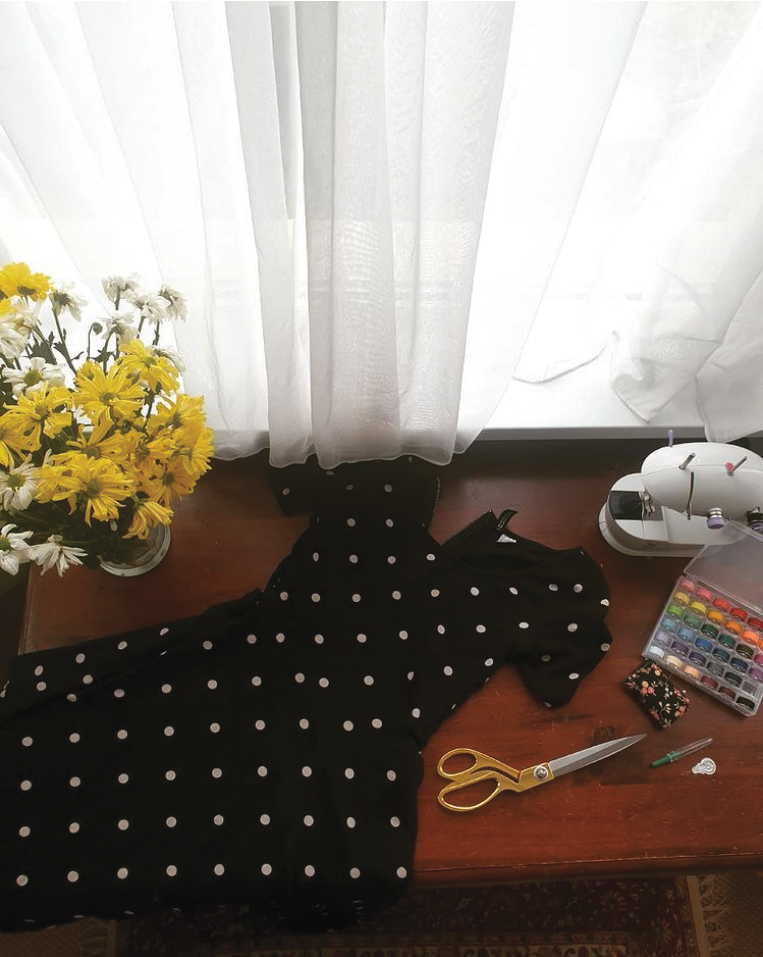
I gathered from one of your Instagram posts that you can also sew clothes. Is this a new creative hobby? Are you a slow fashion enthusiast? I am trying to learn how to sew. I’m in the process of sewing a dress out of muslin [holds it up]. I don’t talk about it much but slow fashion has had a huge impact on my life. The shirt that I’m wearing is a charity shop shirt. I try to shop second-hand or sustainably when I can afford it. I have a capsule closet so I don’t overbuy; I used to have a lot of clothes but I chose to scale down. I try to make conscious choices and while sewing is a part of that, I don’t have a knack for it, like I do for crochet.
Image Courtesy: @dotandthesyllables/Instagram
Is it scary on some level to have people know so much about you? And especially before you had even come out with an album — before Khamotion happened? It is, because people know quite intimate details. I haven’t received a lot of hate, which will be another struggle when it comes — I’m sure it will come at some point. The bigger you get, the more that tends to happen. On the other hand, I’ve also had some deep, intimate conversations with complete strangers. Sometimes, I take screenshots and put them in a folder. These kinds of exchanges outweigh the fear and discomfort I feel about having my life out there.
What’s the story behind the name of your EP? “Khamotion” is basically a portmanteau of khamoshi [silence] and motion. And it’s essentially a simple but complex idea of being still but moving. Being peaceful and quiet but simultaneously rushing. Practically, what it embodies is a mode of transport. When you’re sitting in a train, it is moving but there’s a kind of a rocky silence. I love being on modes of transport — even just taking the bus or auto somewhere. What inspires me normally are the really ordinary things. Khamotion embodies the magic in the ordinary. So, it’s those kinds of juxtapositions.
It can also apply to contradictory life aspirations — the hustle and bustle, and slowing down; the applause and the quiet; materialism and inner peace. Are peace and ambition at odds with each other? Spot on.
Since we know that the idea of Khamotion was sparked during a commute to college and the experience of taking public transportation formed the larger inspiration behind the songs, how would you articulate your feelings about the pandemic when that part of life came to a stop? It’s so all-encompassing that I can’t fully comprehend it although I’ve had it so much easier than so many. A lot of my listeners have claimed that the song This Train has held a very strange significance during the pandemic, even though it was written before [the pandemic]. The idea of having to keep on moving, regardless of the fact that the world is completely frozen, has echoed for a lot of people. Life goes on, and although it’s a lot harder now, we have to carry on. I haven’t been able to see my mother in two years because of the pandemic. I’m lucky that I’m not a social creature, that I’m comfortable being on my own.
I could describe your sound as blues- and jazz-inspired. How would you (though I know you may not want to label it as a musician)? I used to claim that my music doesn’t belong to any particular genre, but I don’t think like that anymore. When you’re writing a book or an essay or a short story, half of the work is done by the writer and the other half by the reader. The work is not complete until the reader has read the words on the page. This philosophy borrows from the theory of Constructivism, which states that learning or interpretation happens exponentially when the learner has absorbed the learning as an active participant. Then, the cycle is complete. I put out whatever music comes to me — without thinking of the genre when I am writing — and my listeners have said that my music has got a bit of jazz, blues, pop, rock and, sometimes, soul or funk as well.
Who were your collaborators on this album? The album was such a great experience because of my collaborators. They took me out of my musical rut. I went in there with a head full of ideas of what I wanted, but I was also open to what the others could add.
I co-produced the album with James Gair, a fabulous recording and mixing engineer, who provided a lot of creative inputs.
Then there’s this band called The Armchair Captains, who are friends from university but now based in Liverpool. I wanted to work with them because we have a similar wavelength. We have Luke Lomax on drums, Joe Gordon-Potts on saxophone — he’s a multitalented musician who plays bass, piano and loads of other instruments — and Thomas Evans on trombone. He’s a crazy character, who came in with a broken trombone [laughs, her dimples deepening]. It was so broken that when he would play it, the slide would just come out! And then they were mock fighting with it, like they were in Star Wars — it was so stressful!
Then we had Jack Ledsham on trumpet, Owen Lloyd-Evans on double bass and Matt Bicknell on saxophone. He is actually a saxophonist but he said, “Shall I play some clarinet for you? I’m not really that good” and then he comes to the session and is done within five minutes.
We were going to do a livestream gig together but we haven’t been able to, for financial reasons. This is a new phase in my music and what I’m really getting into is what others can do to change my music and make it more interesting.
Image Courtesy: @dotandthesyllables/Instagram
And could you tell us a little bit about Labonie Roy, who is behind your album art? Labonie is a really good friend of mine and I’ve known her since I was little; we went to the same school in Delhi. I’ve always admired her art. She is currently engaged in creating environmental illustrations for schoolchildren, which I find really interesting. I would have approached her regardless of whether I knew her or not. She creates animal characters with humanoid characteristics, and they could be doing ballet or writing a book. I really wanted a character for myself. And when she asked me what animal I could most relate to, I thought of a squirrel, which she devised for me.
You have previously stated that the reason you haven’t dropped an album before this is because studios scare you. I was always made to feel really guilty for not using a click track. This is a big thing. Honestly, I don’t consider myself to be a singer or a piano player. I am not highly skilled at either of the two technically, say, in terms of form and breathing techniques. There are much better singers and piano players out there. First and foremost, I am a writer. For me, it’s all about the writing — the lyrics — and the music. So when the studios were telling me what to do, the songs were sounding clinical and overcompressed. I had a bad feeling that my kind of music and the sound I had in mind was just not going to be possible under those kinds of environments.
You studied music and creative writing from Bangor University, and you are currently pursuing a master’s in education, studying curriculum and policy from Glasgow University. Can you shed some light on what drew you towards these diverse choices? I’m genuinely interested in all the different ways in which my life could take shape. After my second year of university, I took up a job as a data analyst for a year. The reason I didn’t just pursue music at Bangor is because I wanted to have a broader kind of an education. I also took classes in game design and film. I thought about it for a long time and realised that getting into education — not in terms of a teaching degree, which is very specific and not my thing — and the way we learn is something I’ve always had a huge interest in. Learning is probably the single most important matter to me; it’s how I define myself, even before I say that I am a musician, who is Indian.
Sometimes, I think of becoming a researcher or getting into curriculum design and looking into the Indian education system. It doesn’t come across in my public persona that much — though I have posted about it a few times — but it’s a very important part of my life.
Your parents have worked in creative industries. As a child, what did you want to do when you grew up since you have so many interests? At first, I wanted to be an architect. At one point, I dreamt of opening my own music school. I shared my thought with a very close friend of my mother’s, who is a human rights activist, and she brought up the affordability factor. I understood that I would have to do it in a way that would make it accessible. Otherwise, there’s no point in opening a school. On one hand, we need schools that experiment and are not bound by the system, but on the other, the system is what’s accessible and one has to work within those frames in order to make the biggest impact.
What are your most enduring music-related memories growing up? I was a bit of a diva, and I took any opportunity to be on stage. I am a bit embarrassed about it, but I suppose I have always had that streak. I remember getting up on stage and singing Demi Lovato’s This Is Me when I was eight or nine, in Goa. I was obsessed with it! I even did the whole turn-around thing [laughs, demonstrating].
We’ve caught a couple of glimpses of you singing in Hindi and Garhwali. Have you ever considered writing in a second language? Initially, I didn’t write in Hindi because I speak very bolti or colloquial Hindi. It’s what you hear in the streets. When I speak to my friends, there is a lot of slang and gaali. I always thought that there is this one way to write in Hindustani, and that is in Urdu — although I don’t understand most of it, it is the more poetic side of Hindustani for me. But then I realised, if I write the way I speak, that’s more honest. And so now I’m writing three or four Hindi songs, with different sorts of influences. And it’s working. When we listen to music, we listen to unique perspectives. My unique perspective now is that I’m not going to worry about being poetic.
You’ve been reluctant to hire a promotional strategist or follow standard release cycles, fearing it would interfere with your personal process. How important is it for you to be able to assert creative control? My manager [Anirban Chakraborty, director at music publication Rock Street Journal that was founded by Saigal’s late father] completely understands that my aim is not to gain fame and fortune at this point but to produce good music that is accessible to people who want to listen to it. I would like to grow bigger, but I’m not in any hurry. So, we both decided together that an organic approach will work best for me. I cannot imagine someone handling my social media or telling me to produce a particular song by a certain date. Mujhse nahin hoga [I won’t be able to do it]. I can only write what I write when I write it, and I’m not bothered about gaining a huge following. What’s important to me is that the fans I do have are intimately connected with the music. My listeners are internalising my music, and that’s what I value. That doesn’t mean I don’t want to earn more from my music. But I’m not going to compromise on my values. I am taking up the corporate opportunities coming my way — because I need to earn — but I am picky. So even if big companies offer me a lot of money, I can say no. I’m very lucky that I don’t need a lot of money to survive. I have a job. I have a lot of other interests that I can pursue in terms of jobs.
At the core, would you say there is a deeper focus on self-fulfilment or self-care versus success? I’m going to be happy regardless of whether there are 10 or 10,000 people listening to me. What I really want is the freedom and space to write the kind of songs I want to write. If I wanted to write a beautiful jazz piece with a big horn section but didn’t have the platform I have now, I wouldn’t be able to afford to hire the musicians I want. So, there’s a bit of a give and take between caring for yourself and wanting to create. That’s where the tension is.
Almost sounds like your plan is to sidestep the conventional template for success. For me, success is a very complicated notion. It’s definitely not correlated to money or popularity. Ultimate success would be to be able to create whatever music I want, whenever I want [her eyes light up], and have people wanting to listen to it. By no means am I there yet. Being able to constantly learn would be a measure of my personal success. It’s really funny: when you’re 17, you think you know everything. I thought I was at the top of my game, but now that I am older, the main realisation has been that I don’t know anything [laughs].
Text by Shraddha Jahagirdar-Saxena. Images courtesy Ulysse Nardin
Siddhant Chaturvedi wearing the Ulysse Nardin Diver 44mm
The “outsider” to Hindi cinema — who had earlier made small-screen appearances in the coming-of-age comedy series Life Sahi Hai (2016) and the sports-drama about cricket, Inside Edge (2017) — grabbed eyeballs with his natural turn in his film debut as the deep-thinking rapper MC Sher in Gully Boy, despite the presence of superstar Ranveer Singh. Siddhant Chaturvedi followed this success by ensuring he didn’t get typecast and was next seen as Kunal Singh, a con man (Bunty aur Babli 2, 2021), and the tragic lover Zain Oberoi (Gehraiyaan, 2022).
Earlier in May of this year, the understated heartthrob added yet another “role” to his growing repertoire by signing on as the Indian Brand Ambassador for Ulysse Nardin — the innovative Swiss horological house that extends the boundaries of watchmaking with timepieces that are inspired by the seas. Here, Chaturvedi talks about his muses and career choices….
You are a self-confessed film buff. Tell us more about who or what has inspired you. I have always been an ardent fan of Aamir Khan — and I am a huge fan of cricket as well. So, when I saw Lagaan and, later on, watched the documentary on how it was made, I understood the true authenticity and aspirations of what it takes to make a film in Indian cinema. Lagaan was the story of an underdog, and it taught me how to overcome my limitations and rise above them.
What do you remember about the first time you set foot on a set? The first time I set foot on a set was during the shoot of Inside Edge. Of course, I was extremely nervous, but as soon as they said, “Action”, it was as if something inside me switched. I thought I was terrible, but much to my surprise, they were very, very happy. They took two takes and the director said, “Moving on”.
It was my first role, and so I had prepared well in advance for it. I do not think I have ever really “acted”; I just behave like the character.
How did you react when Zoya Akhtar told you that you would be playing MC Sher? Would you say that this role established your credentials as an actor? And, as an “outsider” to the industry, how long did it take for you to adjust to life in the spotlight? I remember it was 10 in the morning when I got Zoya’s call about being a part of Gully Boy and that I would be playing the role of MC Sher. I ran out to the dining room and told my parents. But I never thought Gully Boy would have the impact that it did.
It has established itself as a cult film, with everyone, everywhere wearing or saying the “apna time aayega [your time will come]” phrase. It has become a sort of anthem along with MC Sher’s character becoming iconic. I long to do more such roles.
I do not think you can plan to be a star; you just have to be true to your art. I still have not adjusted to life in the spotlight. I love to perform and be on stage, but when the lights turn off, I cut out all the noise and just find my comfort with my family.
Chaturvedi wearing the Ulysse Nardin Marine Torpilleur 42mm in brown
Gully Boy, Gehraiyaan, Bunty aur Babli 2 and now Phone Bhoot — different movies, different roles. What draws you to a character and how do you prepare for each one? Do you believe in going with the director’s flow completely? I am attracted to different genres and diverse characters because I do not want to repeat myself. I read the script multiple times so as to know the situations my character is going to be in and maintain a character diary.
I believe that film-making is like a marriage, where the director is the creator of a world and the actor brings in the character which fits into that world. It is a collaborative effort.
With Phone Bhoot, you make the pivot to horror-comedy. What did you learn about yourself as an actor while shooting for this film? What I have learnt is that you are only as good as your co-actor[s], and I have been blessed with having partners in crime like Katrina [Kaif] and Ishaan [Khatter] in Phone Bhoot.
Today, with the extensive scrutiny in the public eye, it seems as if the off-screen “brand” of an actor — looks, social media presence, fashion sense and so on – has become as important as talent. How much significance do you give to this aspect and the choices that come with it? It is actually the other way around. As actors, we need to focus on the craft. There is no brand as such — my motto is to be kind and do good work, and if that equals to my “brand” then so be it.
It is a philosophy, not a strategy.
Freak X Magma
How do you stay connected with your followers across digital platforms? I come from the audience, and they are the ones who have made me. I am just myself, online and offline, so I do not have to try hard.
Have you always been fond of watches? As a “Ulysses” what excites you the most? Yes, I have always been excited about watches. Ever since I was little, I saw my dad wear watches and how they immediately lifted an outfit. As a “Ulysses”, I appreciate the rich aesthetic sense of the brand. Every watch feels like it has been personalised for the specific wearer.
Would you call yourself a free spirit and an out-of-the-box thinker? And is that what drew you to Ulysse Nardin, a brand that has always celebrated doing the unusual? Yes, of course. It is clearly visible with my film choices. I never liked sticking to norms or trends, and that is why the brand resonates with me.
Ulysse Nardin’s timepieces are inspired by the sea. Which of their diver’s watches are you drawn to? I really like the Diver 44mm due to its vintage look, and the Marine Torpilleur 42mm in brown. I also would love to have a Freak X on my wrist soon. These are some of the timepieces which I would enjoy sporting, depending on my mood and look.
Diver 44mm
Two years ago, the brand launched the R-strap, made from recycled fishing nets. How does their commitment to sustainability — to the marine circular economy – resonate with you? In today’s world especially, “sustainability” and “the environment” are words we cannot ignore. I try my best to cut down on my carbon footprint whenever I can. I also maintain and follow a vegetarian diet.
Tell us a little about the notes that you post on Instagram. Are you a romantic at heart? I am old school at heart when it comes to love and romance. It is fading with time, but I want to hold on to it.
You have often talked about your hustle and ambition — what keeps you grounded now that you’ve “made it”? I never think that I have made it. My ever-growing ambition is what keeps me going. My goal is to always be one step ahead when it comes to my own hustle, so I am never satisfied. The fun is in the chase.
Interview by Mallika Chandra. Photographs by Denver Rodrigues. Styled by Neelam Ahooja. Assisted by Akanksha Pandey.
Tunic top, from COS; pants, shoes both from The Row; clutch bag, from Clare Vivier.
How often do we still hear of professions not pursued, opportunities not taken up, or passions left unfulfilled by the women we know or encounter? And when it comes to choosing a career in social media over continuing in a more “acceptable” line of work, the dilemma is compounded by the perceived pressure of needing tangible achievements before you hit your thirties – leaving most older women convinced that they are well past the “expiration date” to venture into this fast-paced, trend-driven world that prioritises youth.
At 51, Toronto-based fashion influencer and blogger Neelam Ahooja – who is also a mother of two and a qualified chartered accountant – isn’t allowing these ageist notions to deter her. Like many born to immigrant parents, she was advised to choose a traditional career path, and her love for fashion didn’t initially translate into a viable option. It was only when her kids grew up that her “creative dam broke”, she says.
Ahooja launched her Instagram account (@neelam.ahooja) in December 2012. Today, she dispenses quick styling advice to 79K followers, with longer videos on her YouTube channel, while sharing her extensive collection of luxury pieces (both second-hand and new) from The Row, a brand that has played a significant role in shaping her minimalist personal style.
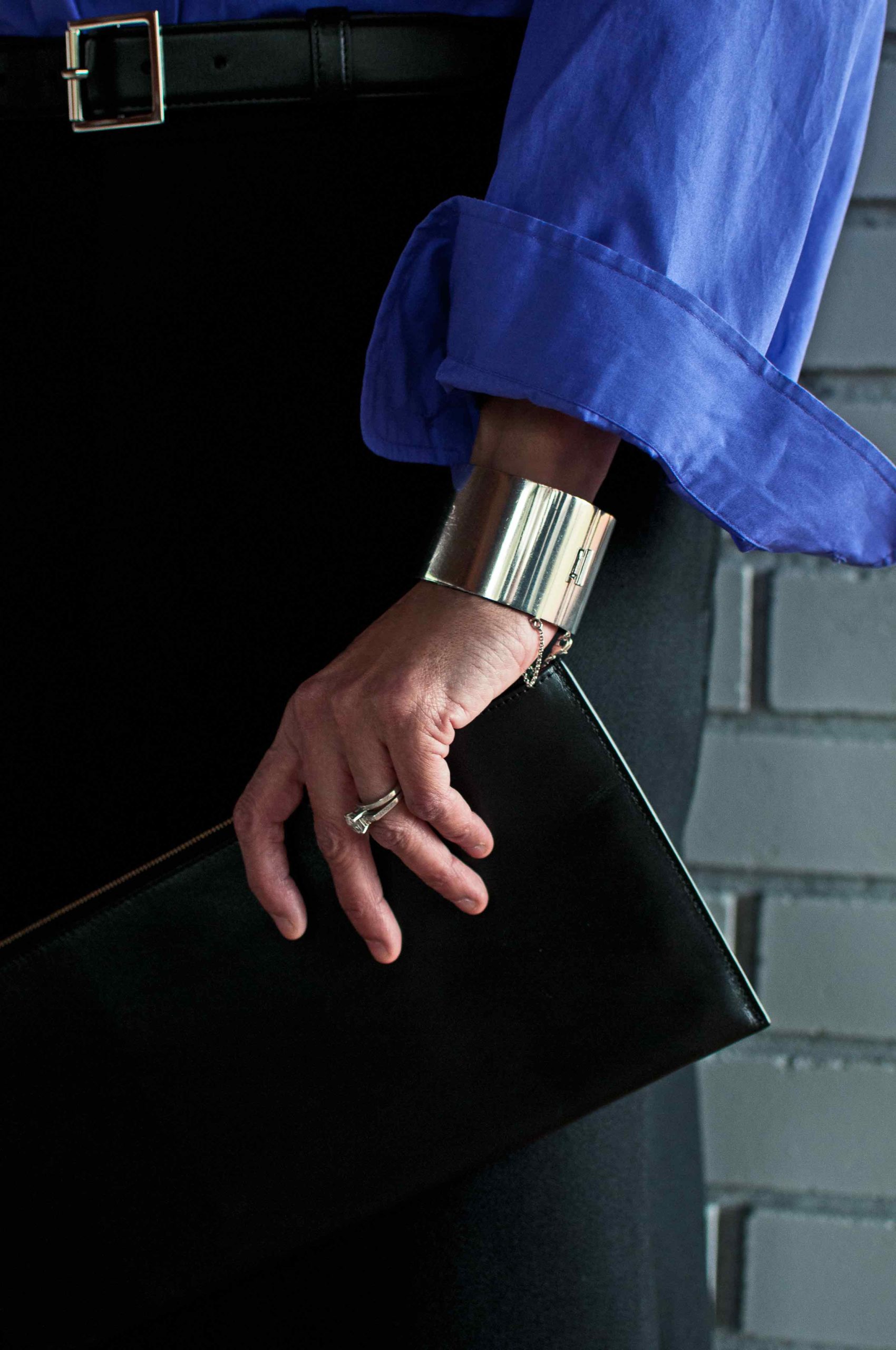
Shirt, from Massimo Dutti; belt, clutch bag; both from The Row; bracelet, from Celine.
Although this influencer is certainly “influencing” (we will be trying her recommended shirt-layering technique), she does so with the kind of restraint that signals a sense of comfort with who she is: a woman not inhibited by the need to look young. And perhaps it isn’t so much her unfussy aesthetic and effortless chicness that keeps her fashion-forward follower count growing as the fact that she’s advocating for self-expression and acceptance by showing how simply being yourself is enough.
In an exclusive with Verve, Ahooja reflects on how she got her start and all that she is yet to learn and explore in her creative pursuits.
Edited excerpts from the conversation….
Did you always have a strong fashion voice? Or did it grow over time? I’m a textbook Libra – left-handed too – and was organically drawn to the arts. I’m a classically trained Bharatanatyam dancer, I played the piano, dabbled in painting and immersed myself in fashion whenever I could. For as long as I can remember, I’ve been designing in my head and experimenting with style whenever an opportunity presented itself. I had to temper my sartorial spirit to stay focused on academics.
Coat, shoes, both from The Row; pants, from Helmut Lang; scarf, from Dries Van Noten.
What drew you to styling as a career? As the daughter of immigrants, I was advised to choose a traditional career path with a guaranteed income (I chose chartered accountancy). Fashion burned in my heart, but I didn’t see it as a viable career option. This passion was just waiting to be unleashed. When my kids grew up, my creative dam broke; I began to share more of my styled self on Instagram, and it was well received. That turned into something of a career. My passion organically led me to this place – and I’m blessed to be able to do it.
How would you say your childhood and upbringing have influenced your current style and aesthetic? I grew up in the ’70s and spent much of my free time flipping through the latest fashion magazines, devouring every detail. And before the age of the influencer, we had runway models and Hollywood stars to look to for style inspiration. By the time I was a teen, some successful sitcoms had made their mark and one character in particular really spoke to me – Denise Huxtable [played by Lisa Bonet on The Cosby Show ]. She, like me, was a petite woman of colour with curls and a quirky sense of fashion – somewhere between boho chic and boy meets girl – it resonated.
Shirt, from Julie Josephine Essentials; coat, belt bag, both from The Row; scarf, from Johnstons of Elgin.
What are your views on the influencing industry? Do you consider yourself a fashion influencer, and how did you find your unique voice on the internet? I think the term “fashion influencer” has a stigma attached to it. We’re all influencers. I believe each of us has a gift to share – something to teach and something to learn. The issue with the fashion industry as a whole is the sheer volume of consumption and the resulting impact on the planet. I’m culpable as well, of course. To minimise my footprint, I’m shopping pre-owned, looking at sustainability in the brands I work with and the longevity of the pieces I buy – another reason I stay away from trends.
Yes, I do see myself as an influencer in fashion, as that’s my strength and what I feel I can help others with.
I was able to carve out a unique space online because there was a gap that needed to be filled. I’m a 51-year-old petite Indian woman with curly hair and an affinity for The Row; it’s a niche presence. I’m intensely passionate about minimalist luxury designs and that comes through. I think my individuality peeks through how I style from The Row, which isn’t always a direct copy from the runway. I’ll often get feedback from people who say, “I never thought to wear it that way.” When there’s an authenticity and purpose in your spirit, people will make space for it. I’m humbled by the open arms that received me.
I read somewhere that you grew up watching your mother dress in colourful saris with ornate designs. How did that influence your aesthetic? My mom’s almari [cupboard] was like a candy shop. When she dressed up, I paid attention. Ornate suits and saris in vibrant tones, glittering jewels hanging from her ears and neck, and bangles layered to the elbow. It was magnificent.
My current aesthetic is much more minimal, but there’s always a little something that gives my ensemble an edge. An embellished or colourful piece, a Nehru collar, unconventional styling like a half-tucked shirt or an asymmetrical hem. That’s the Eastern influence. I still love embroidered pieces and am an avid collector of Dries Van Noten scarves. I recently scored a vintage one that I love (and the most brilliant Dries scarves are almost always made in India!).
Skirt, from AMI Paris; boots, from The Row.
Given the varied creative – sometimes colourful – influences of your childhood, what drew you to The Row as a collector? Why do you think you gravitated towards its minimalist luxury aesthetic? There are a few mature brands in the minimal luxury category, but nothing resonated as seamlessly with me as The Row; it offers something different – they have an edge. Yes, it’s classy and elegant, but there’s always a little something that makes it feel a little “undone” in just the right proportion to balance out the look.
How do your curls and clothes act as an extension of your personality without being tied to your identity publicly? My curls used to be an issue. I desperately wanted to fit in when I was young, and that was difficult because of how I looked. The ’70s in a small town in Canada wasn’t the easiest place to be for the child of Indian immigrants. That, coupled with a lack of proper curl care tools and products – there weren’t many options back then – and it made for a messy do. It took years to fine-tune the perfect recipe, but now that I have, I’m fully embracing my curls.
My height never really bothered me. I don’t think of either too much now, other than in a practical sense. When it rains, my head needs coverage, and when I’m looking at a lengthy coat, I have to be able to hem it or I won’t buy it.
Clothes are only one piece of the puzzle from a personality perspective. We’re all complex and layered, and I think it’s a mistake to assume we can gauge who a person is based on what they’re wearing. I tend to dress how I feel in the moment, so how I look may be a mood signal if nothing else – especially if I’m in sweatpants!
Tell us a bit more about how you approach sustainability. I need to pay more attention to sustainability. I’m getting better at it. I shop pre-owned stuff (The RealReal is a favourite of mine) and I look for garments created with recycled materials where I can.
Given the price point of The Row, it would be interesting to hear about the financial aspect of collecting luxury fashion. How do you save up to invest in these pieces, and how do you sustain that? That is an excellent question. Yes, it’s pricey, which means I have to budget – I can’t have it all. I make lists, check them twice, continually cull, shop pre-owned, sell pieces that I’m not wearing and don’t consider collectibles, and shamelessly tell my husband that the best gifts are The Row designated bills!
Besides high-end luxury pieces, what are some of the high-street brands you shop from to supplement your wardrobe? How do you create that high-low mix? Massimo Dutti is a favourite, as well as COS and Arket, vintage Levi’s, and occasionally Mango. High-low, high-high, or low-low all work the same – the outfit has to flow; I don’t pay attention to the price when creating a look.
Which was the first piece you ever acquired from The Row? My first piece was an oversized salmon-coloured viscose top with 3/4 sleeves. There wasn’t anything overtly special about it, but the quality and the cut were incredible for such a simple piece.
Tunic top, from Rag and Bone; vest, pants, both from La Collection; bracelet, from Celine; clutch bag, from Ela.
What advice do you give your followers across Instagram and YouTube, who may all come from different economic backgrounds? I’m keenly aware that not everyone can afford The Row. I did not grow up affluent, and I understand what it means to worry about finances. I have a lot of gratitude for what I have and try to offer affordable alternatives when I can. I spend a lot of time going over the minute details of the items I review so that people can make informed purchasing decisions. I tell people to budget and make lists, and shop pre-owned. It saves their wallets and the planet.
In general, what are the different things you consider before deciding whether something is worth the value you’re paying for it? First and foremost, I have to love it. Once I pass that point it’s a matter of how often I will wear it, and if I won’t, is it a collectible piece that will hold its value? I do consider the quality of the item of course, but when it comes to The Row, it’s a no-brainer.
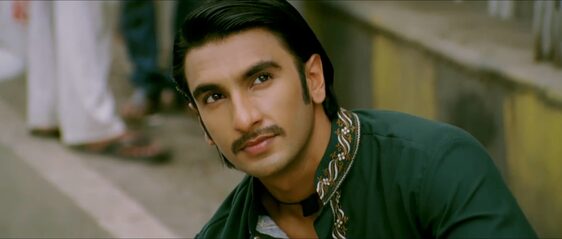
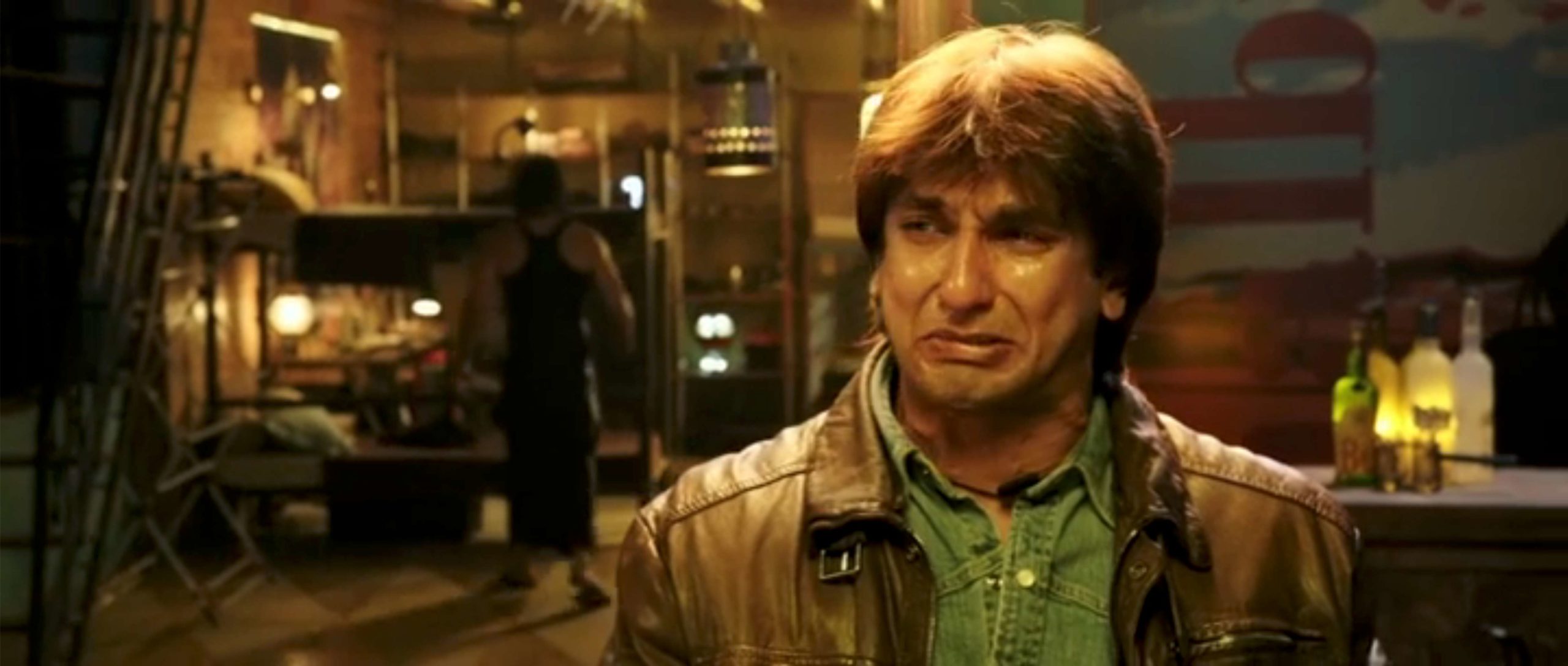
As Ricky Bahl/Iqbal Khan in Ladies vs. Ricky Bahl (2011)
In an early scene in Yash Raj Films’ rustic social-comedy Jayeshbhai Jordaar, Jayesh (Ranveer Singh) is speaking to his wife Mudra (Shalini Pandey). They are on their bed, at night, and in between his kindness and her coldness, what immediately electrifies is the way he looks at her, dipped in earnest prayer for a pappi — a kiss — the inner corner of his eyes curving downwards, intensity and yearning intact. This intensity feels familiar, the kind we saw him perform with a soft-blur focus in Lootera, with gruff entitlement in Padmaavat, with dignified distance in Bajirao Mastani, with routine affection in Gully Boy, with licentious and libidinal intentions in Ram-Leela,andwith braggartly boyish charm in Kill Dil as well as Befikre .
The gaze is a less-discussed yet extremely potent part of stardom: to draw people in with your eyes — fans, sceptics, fence-sitters, lovers and co-stars. It is a crucial, necessary element of cinematic intensity — something few actors can perform with ease — without making the intensity itself feel like a performance as opposed to a lived-in, ravaged part of one’s being. Guru Dutt had that. Shah Rukh Khan has that. (Shrayana Bhattacharya has dedicated a book to what Shah Rukh Khan’s gaze means to his female fandom in Desperately Seeking Shah Rukh : India’s Lonely Young Women and the Search for Intimacy and Independence.) Ranveer Singh has that. It is, in fact, what is missing from so many of the designer-ready new crop of actors — to look at someone as though they were all that is worth seeing.
Ladies vs. Ricky Bahl
The first we see of Singh on the silver screen, it’s a silhouette of his arms outstretched — not a gesture of love as we have come to recognise it — but an early-morning tiredness, a swaggering yawn. It is 2010, and he sauntered onto centre stage with blazing charisma in his debut performance as Bittoo, a Delhi University slacker student from small-town Uttar Pradesh in Band Baaja Baaraat.
A built but not obviously muscular body, an unkempt, patchy evening shadow, with lacking sleep showing in his squint-eyed charades, he does not possess what we would call “easy beauty” — incontestable, immediately palpable and universally acclaimed. He grinned like a chomu (idiot); he winked with such conspicuous arrogance, and his face looking lost was indistinguishable from his face looking stupid.
Here is a masculinity that was not embarrassed by its rough edges, and, in fact, seemed to take a shameless amount of pride in it. Puncturing the cinematic landscape of the late aughts was also one of the most erotic, involved on-screen kisses with his co-star Anushka Sharma. Both — the subversive masculinity and the on-screen kiss — would become his calling card over the next decade as he would refashion himself as court jester to the country, the first noted Hindi film actor to be in a condom advertisement, to speak of eros as eros, to be silly, sometimes even banal, and to be okay with it.
His filmography, for the most part, feels like a corrective to the machismo that has become irretrievably fused with masculinity. While he rode the wave of muscularity — one that slowly but certainly became an indispensable demand of a Hindi film actor since 2007 with Om Shanti Om and, later, Ghajini — showing his sculpted body often (and once, in Befikre, even the crack of his butt)— he was also displacing certain notions of this stoic muscular hero. Band Baaja Baaraat and Ladies vs. Ricky Bahl, both directed by Maneesh Sharma for Yash Raj Films,end with him becoming partners with a woman — business partners, the “tumhari brains, meri daring” (your brains, my daring) genre of partnership. In this sense, the masculinity in a lot of his films, including the early ones, is built around women in a way that also elevates them, and not just him.
His was also a complicated masculinity. He will play a sharpshooter who weeps, sipping elaichi milk with a straw, charming even when he’s gawking like a lech. Look at the choice of words when he first lays eyes on a girl on a dance floor in Kill Dil, “Laundiya badi pyaari hai” (That girl is very lovely). “Pyaari”as opposed to any number of reductive, raunchy adjectives. The first time we hear the word “jordaar” (mighty) in Jayeshbhai Jordaar, it is Jayeshbhai using it to call his wife — a woman whom he is teaching to drive in the thick anonymity of the night.
As Dev in Kill Dil (2014)
It is a trend that has been commented upon, that women in Hindi films are rarely seen eating. As Sohini Chattopadhyay noted in an article for Verve, when women are seen eating, it is, more often than not, pani puri — symbolic of their one-dimensional feisty insistence, but also, if read deeper, an invitation to oral sex, given the way the mouth opens for the puffed, leaky puris. In Singh’s films, food becomes integral to how he engages with his coterie of lovers. Flashes from his filmography — the bread pakora in Band Baaja Baaraat over which Bittoo and Shruti first discuss the idea of becoming business partners, crunching into it, moving their mouths, speaking with the bolus swirling from cheek to cheek;the women plotting to take him down over croissants, coffee and milkshakes in Ladies vs. Ricky Bahl;feeding the woman he wronged in Lootera. One of the first visuals we had in Befikre was of him and Vaani Kapoor eating a crepe, with a warm Paris simmering below them, out of focus in the background.Then, there is this scene from Jayeshbhai Jordaar that has been running in my mind for the sheer novelty of the gesture, of Jayesh gently unwrapping chocolates and feeding them to his pregnant wife. They eat dinner and then, slowly, Jayesh collects all the plates and utensils from his wife, his daughter Siddhi (Jia Vaidya) and walks away — a casual motion of cleaning up, with neither him nor the film bringing attention to it, for the next dramatic plot-point is immediately sprung upon them, and this rare gesture in cinema is swept away. Perhaps, the last actor who used food so evocatively towards establishing love was Shah Rukh Khan: cooking in the kitchen with the women in Dilwale Dulhania Le Jayenge; dreaming of wiping off the coating of ketchup on his lover’s lip in Kabhi Alvida Naa Kehna; and in a charmed blurring of actor and character, he cooked Italian food for David Letterman on his talk show.
As Sultan Alauddin Khilji in Padmaavat (2018)
Then, there are the male friendships in Singh’s films that are not just hinting but also winking at their homoerotic tension, like sleeping provocatively in the same bed with his bosom buddy in Gunday, inadvertently scratching the balls of his crime-partner in Kill Dil, and being sung to from the other end of a swishing bath by his slave-boy in Padmaavat. He’s pursuing women in all three films, and yet, the peripheral eros is entirely for the man. While there was always the unspoken tradition of sexual tension girding the “dosti -yaarana” films that focused on male homosocial bonding — Dosti, Anand, Sholay — Singh yanked it out, making unintended subtext very much part of the intended text.
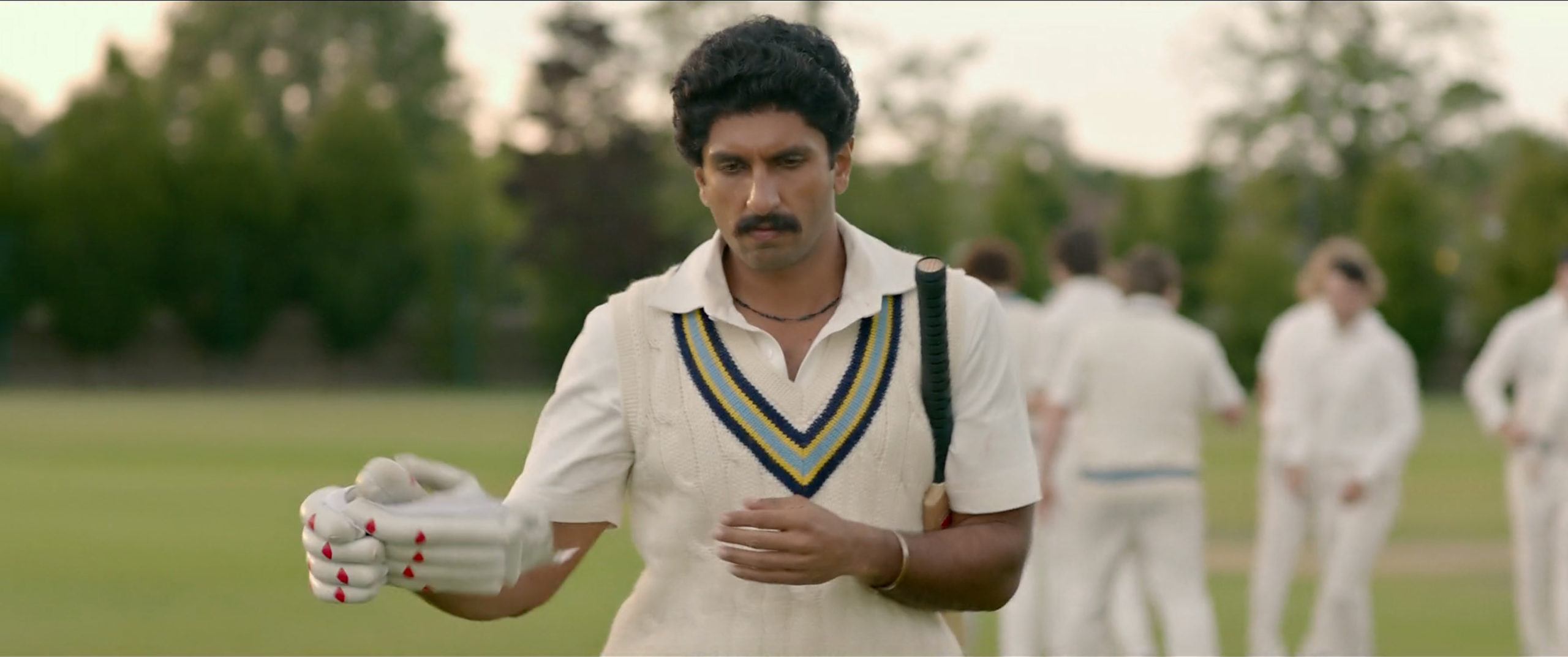
As Kapil Dev in 83 (2021)
Even in the sports biopic, a crowded genre that requires one to flex masculinity, Singh retreated, bringing a quiet, dignified restraint to his performance of Kapil Dev in 83 — a film co-produced by Deepika Padukone, his wife. There is something gentle about his ambition in the film. It is not about wanting any other country’s team to lose a match as much as it is about wanting his country to win, about “aukat se zyada khelna” (performing out of your league). There is no malice in this ambition. In a lovely throwaway scene, he even hugs Imran Khan, who was then captain of the Pakistan cricket team. In the current political environment, when the Khan-Modi prime ministership has corroded any possibility of reconciliation, there is something both neat and notorious about this. (Singh, himself, to be clear, isn’t so much engineering any of these radical moments as much as he is enthusiastically participating in them. He can be both the Muslim villain of the Hindutva imagination in Padmaavat and also the enterprising Muslim of secular idealisation, bursting with talent and torque in Gully Boy).
I marvel at the thought and discussion behind a scene in the film — entirely peripheral to the story — of Kapil Dev learning to wash his trousers. In a film without the staple sports training montage, one that allows for pumping aggression, the choice to instead throw light on the mundane speaks to the rose-eyed pitch of the film-making vision. That Singh is at the helm of this story, buoying its spirit and sportsmanship, is unsurprising.
Masculinity is, after all, both mask and mantle — it is a performance and also a cultural tradition that is passed on through the grapevine till it is internalised as fact, as fused to one’s DNA, as incontestable. Structuralists called the bluff, that the performance is constructed by custom, ratified by culture, cascaded by time. A question, thus, arose: can culture intervene?
Even as Singh has willingly fallen into these traps — his desire to play the mass hero, the “single screen” star in Simmba, for example — he has also chipped away at the convention. If the woman in this film is a beautiful doll on two legs who needs to be protected, so be it. Instead, he infuses the film with silly banter, brazen homoerotic flashes (“Kiska zyada bada hai…entry?” [Who has the bigger…entry?] in Sooryavanshi) and a jolly do-gooder vibe that refuses to be taken seriously. His choice of films is instructive of the grasp he has over his image.
If you want to paint broad brush strokes, you can see the recent tilt in Hindi cinema towards reformist movies set in small-town India, as a cultural intervention, however heavy handed, flat, and shrill. Yash Raj Films set the ball rolling in 2015 with Dum Laga Ke Haisha, tackling fatphobia and pushing Ayushmann Khurrana into the sub-genre of Tier 2 superman. This pursuit to make socially conscious cinema continues with Jayeshbhai Jordaar, which follows the corrosive insistence on male heirs, a cultural demand that runs all the way back to the Atharva Veda. Given the disastrous performance of the film at the box office, though — its lifetime earnings, perhaps, won’t even go beyond 20 crores — one wonders if this is now a closed loop, a dusted deal. And if it is, then how will masculinity mutate, and within that mutation, what will Singh claw at?
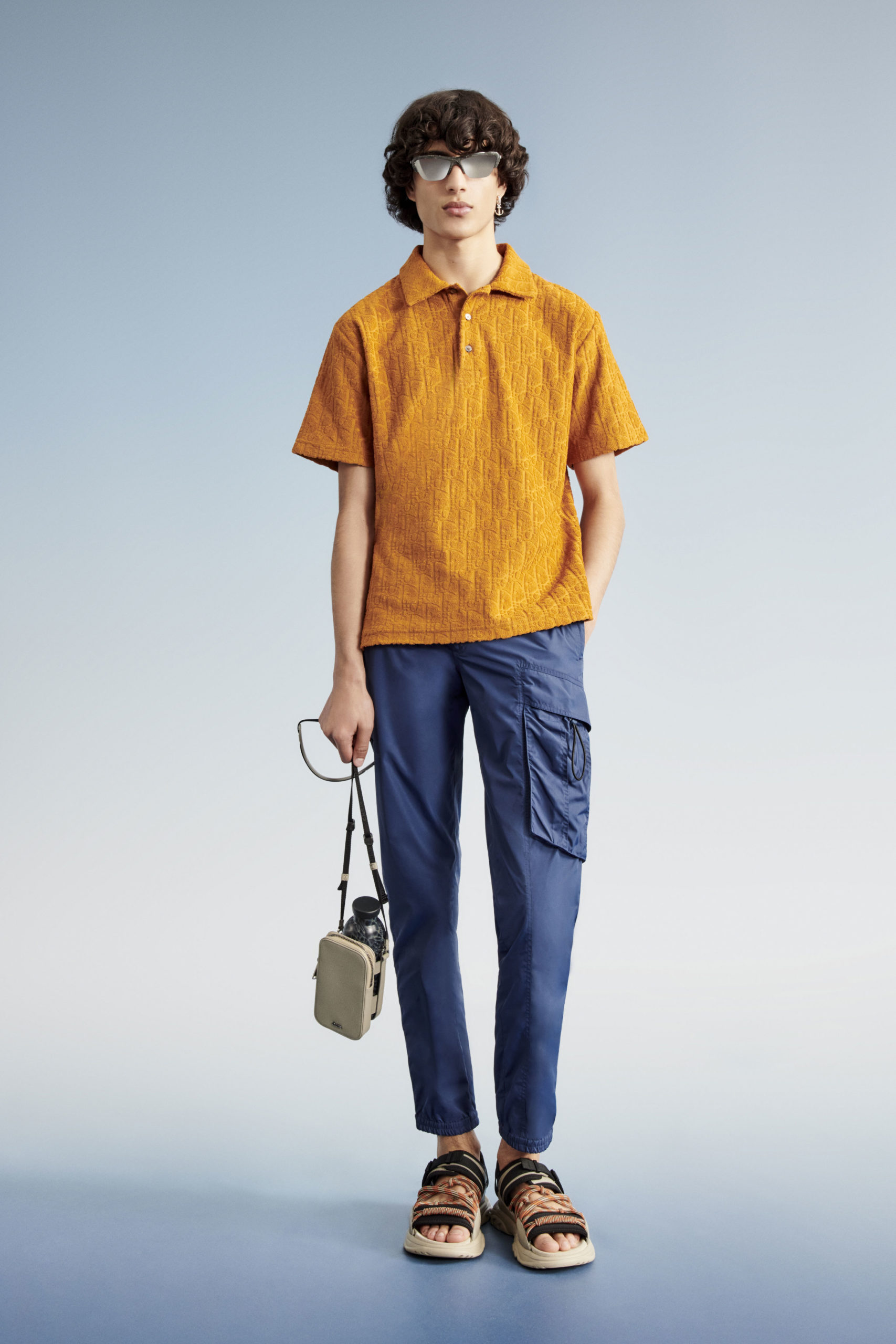
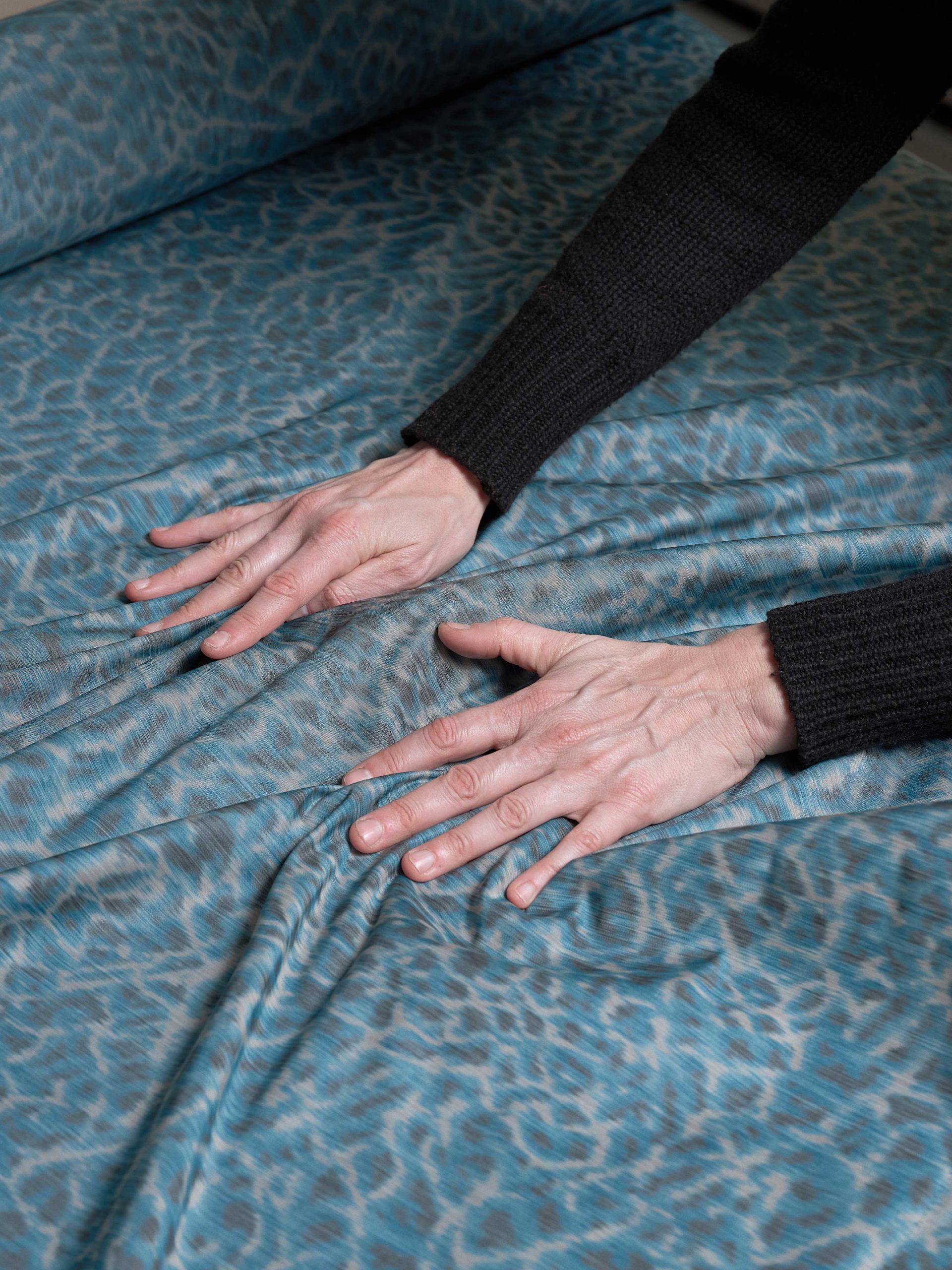
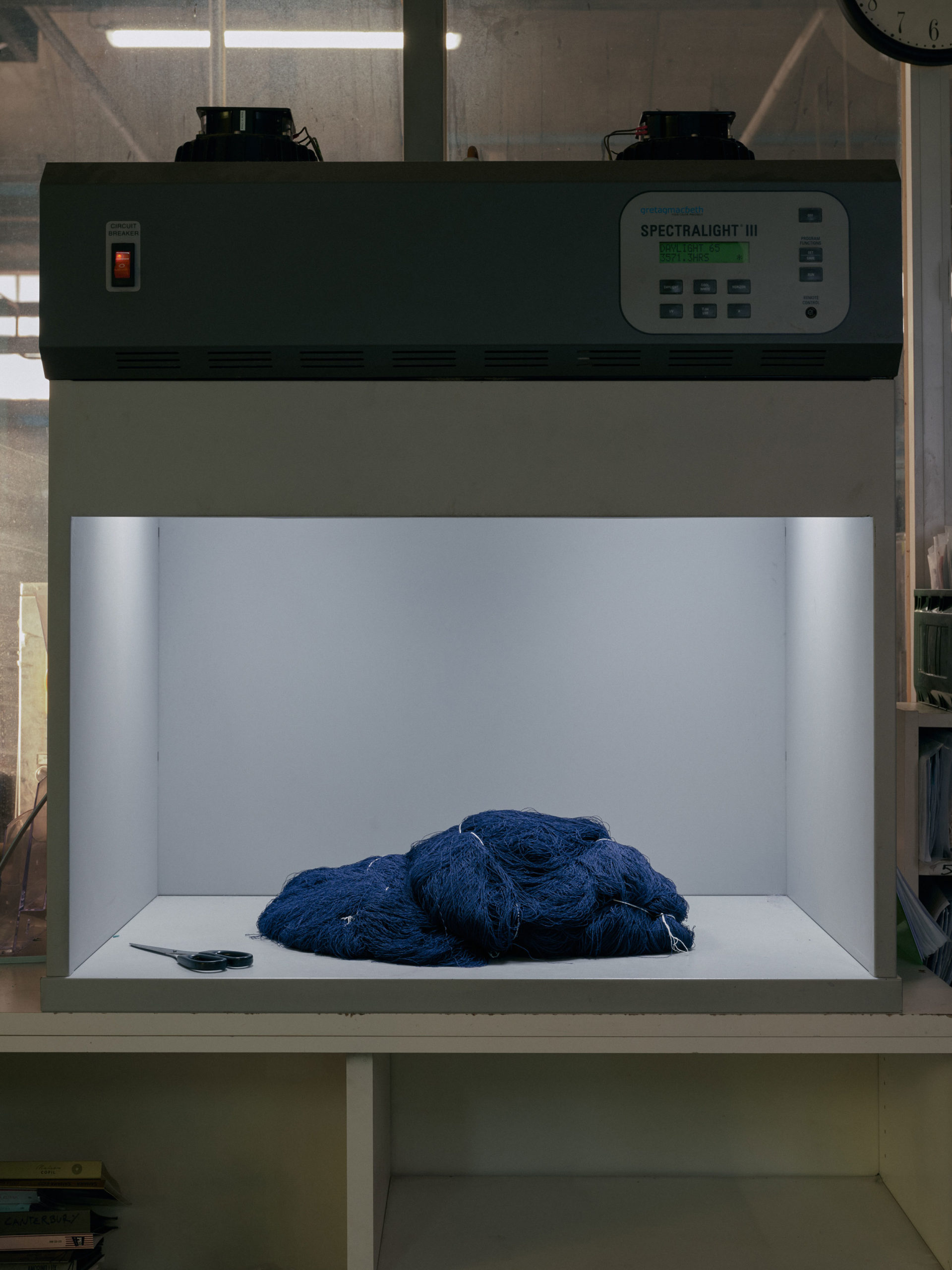
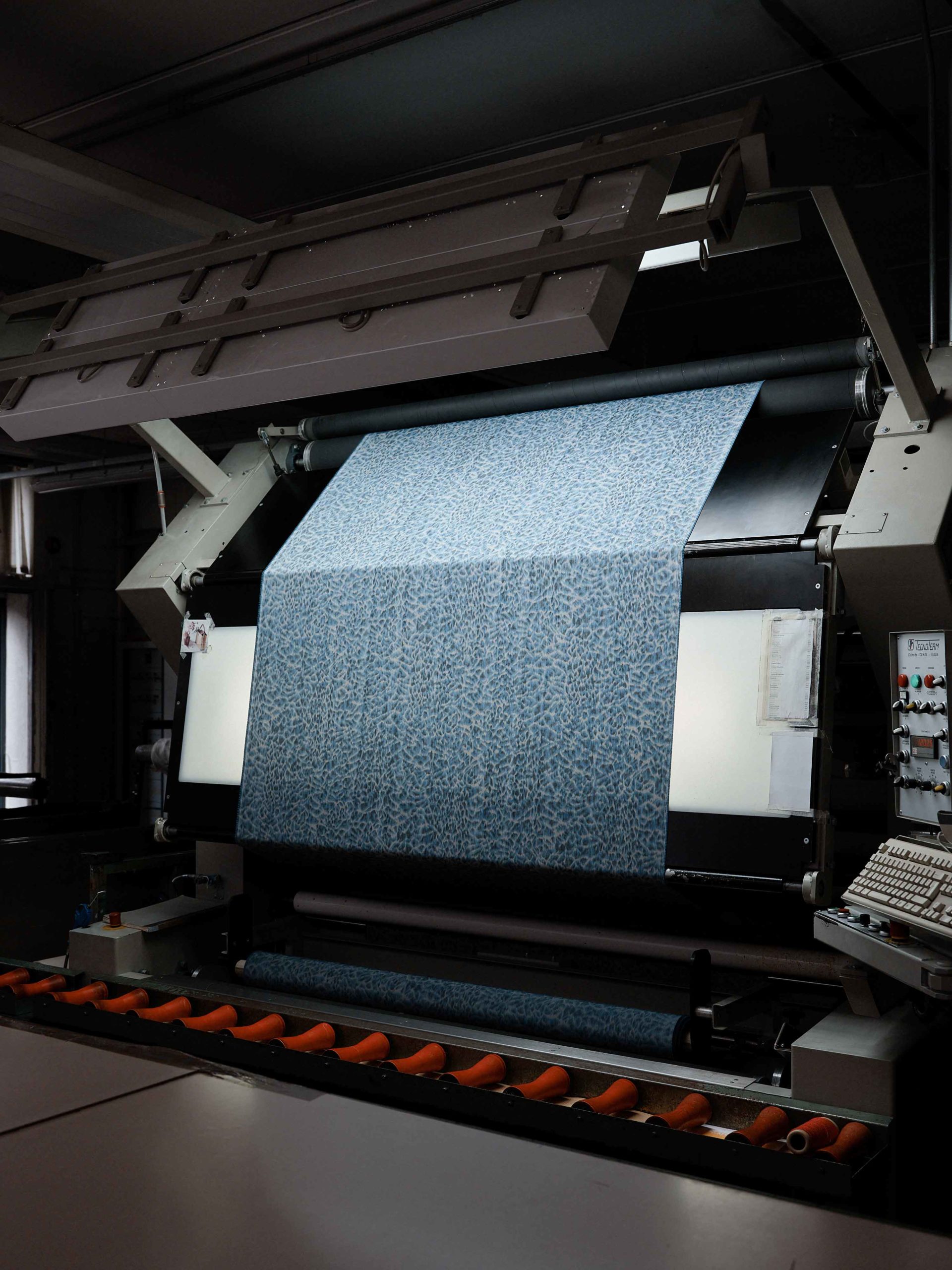
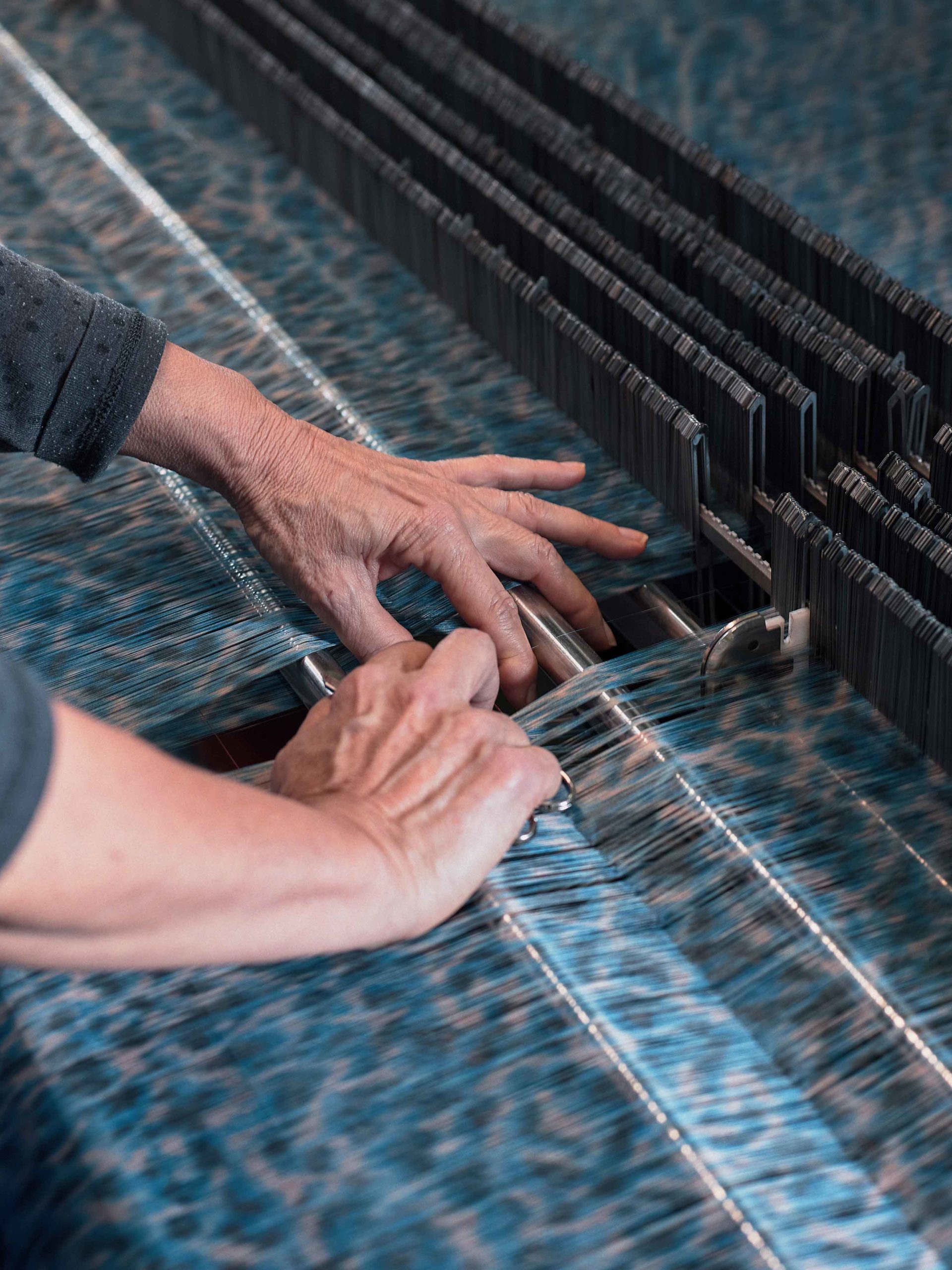
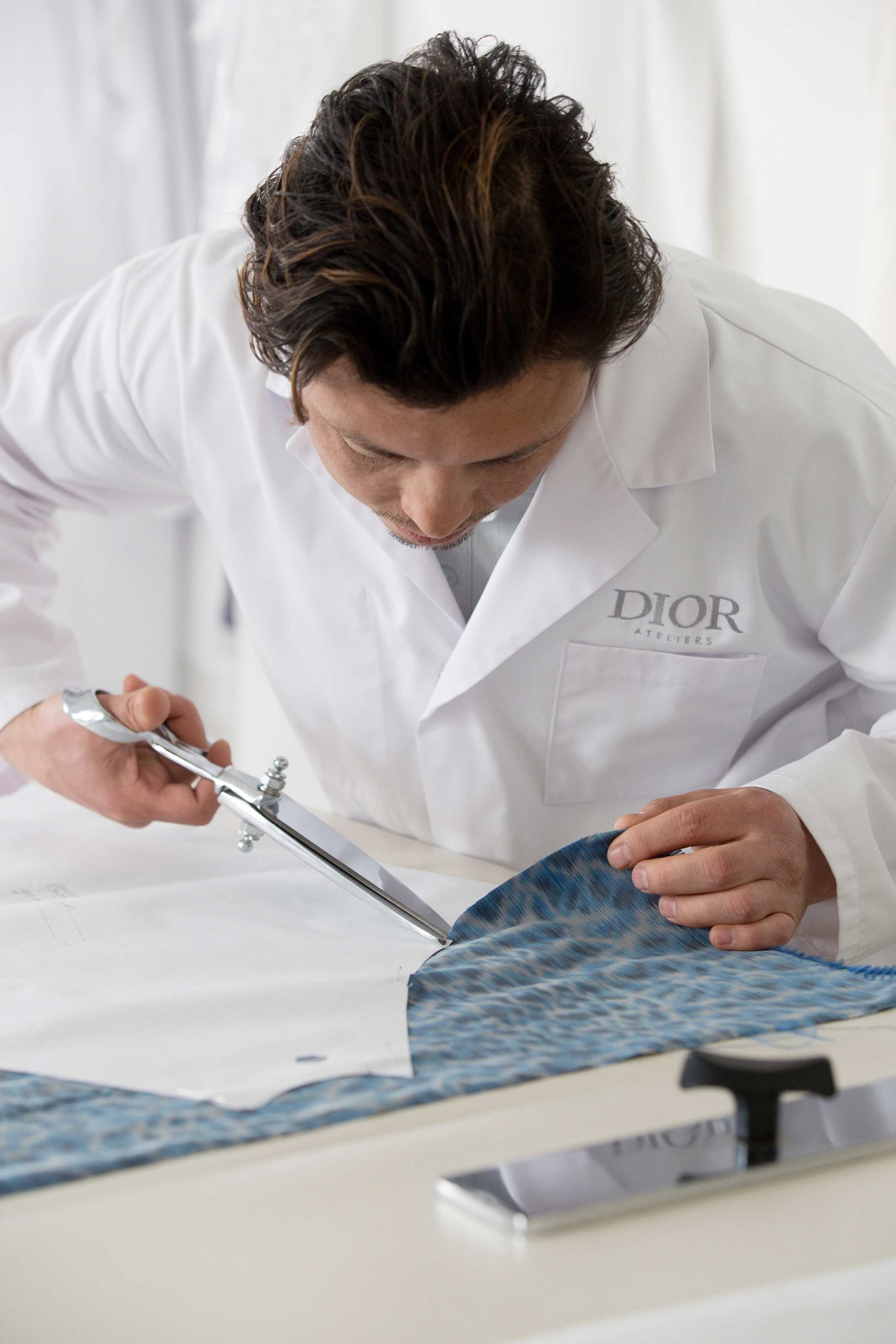
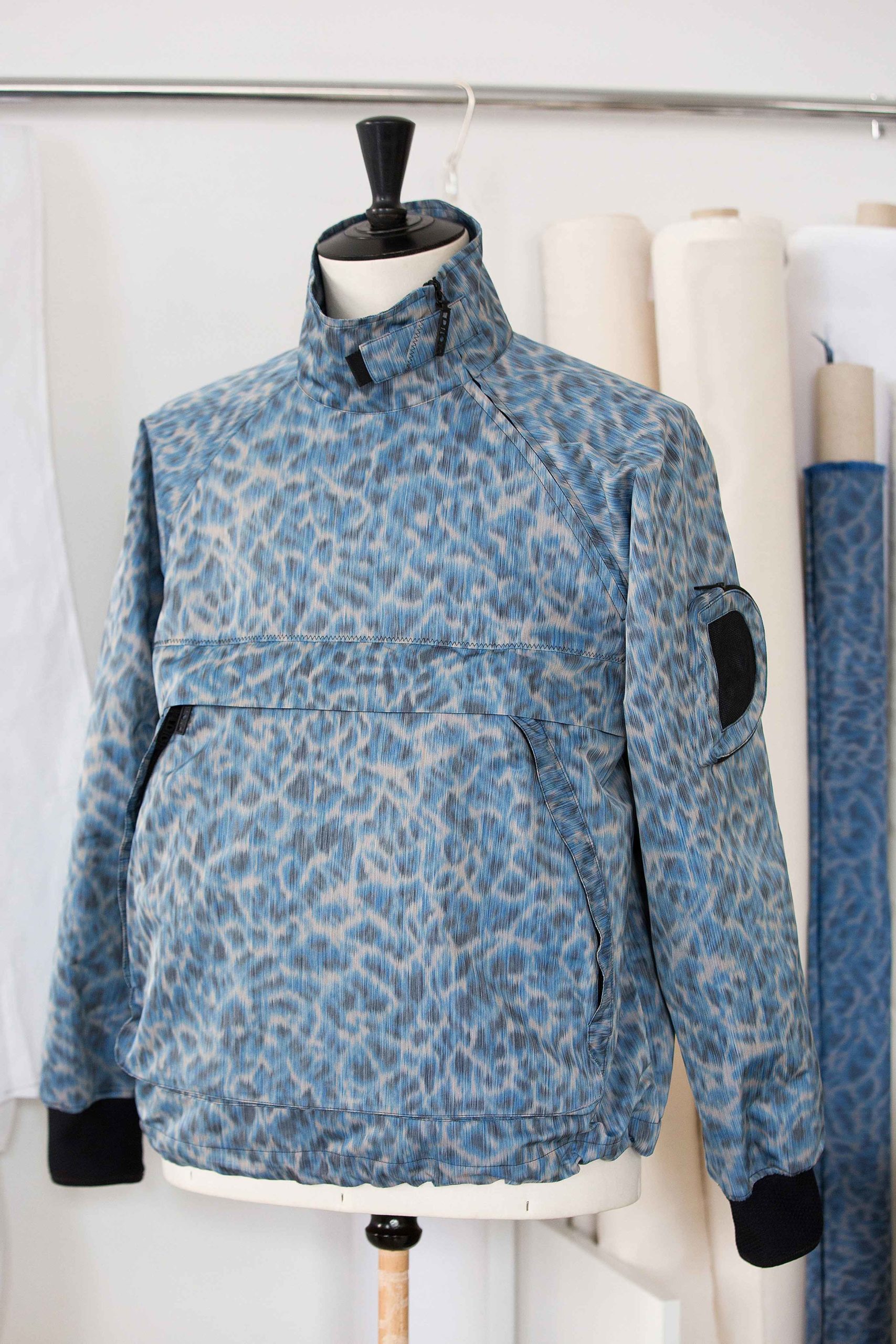
Dior’s artistic director of menswear, Kim Jones, in a leading-edge association with environmental organisation Parley for the Oceans, gave the fashion house a new direction towards a much more sustainable future, as seen through the Dior Men Fall 2022 Beachwear Capsule collection. Parley for the Oceans and its collaborative network are all about taking action against ocean threats with a strategy called Parley AIR: Avoid, Intercept, Redesign. Creating eco-innovative yarns and fabrics that include jacquard, mesh-knot, and technical canvas from upcycled plastic has been the focus of this joint research project. The French luxury fashion house’s ateliers surmounted the technical challenge of incorporating Parley’s alternative to virgin polyester — Parley Ocean Plastic® — into their couture material production processes. As Dior describes it: “Marrying desirability with sustainability, these highly singular materials — made ever-more sublime by a palette of blues and ochres — are adorned with iconic patterns, such as the Dior Oblique, timeless bayadères, as well as the Adriatic graphic motif, drawn from the house’s archives, showing up on a silky jacquard and chiné for a bewitching three-dimensional effect.”
With this eco-aware collection that aims to preserve the beauty of the deep seas, Dior is building on the ties that it has always had with nature and the sea, beginning in founder Christian Dior’s well-known passion for flowers and gardens.
A couture collection from marine plastic waste is no longer a far-fetched dream:
Kim Jones sought to use responsible materials created from upcycled marine plastic debris and fishing gear recovered from coastlines and remote islands around the world.
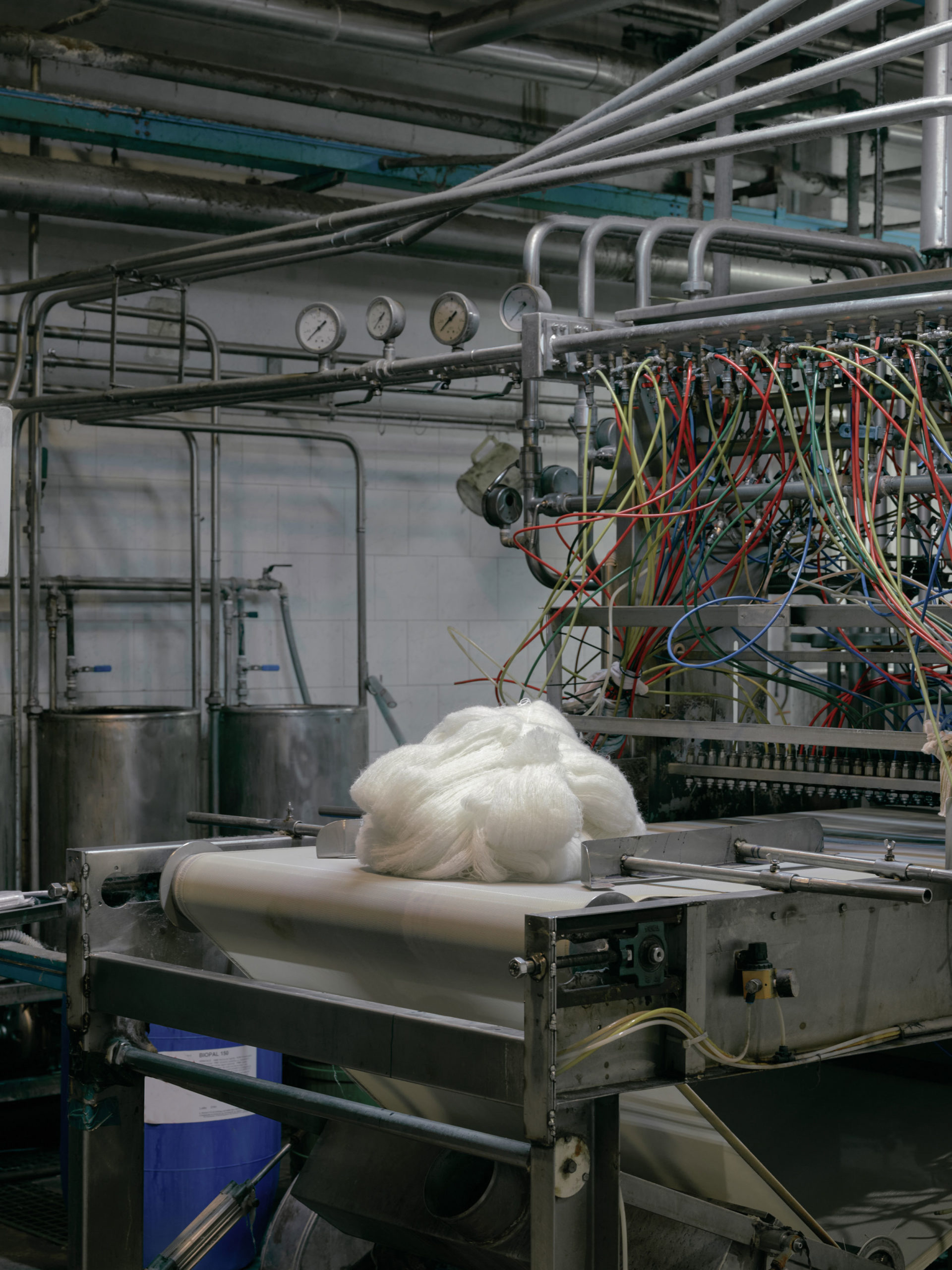
A joint research project started in 2019 generated original yarns and materials engineered with Parley Ocean Plastic®, created by Parley and its global network.
The artisans of Dior’s ateliers mastered the technical challenge of incorporating Parley’s upcycled alternative to virgin polyester into the house’s couture material production methods.
My maternal grandmother was a woman who loved to read. She wanted her children to study and make a life for themselves. ‘She used to fly into a temper if she felt we were slacking off in our studies,’ my mother remembers. ‘She once tore up my books because she thought I was not being serious enough. She knew education was the only thing that would ensure we didn’t end up with her life.’ From my mother’s account of her mother, I can glimpse signs of depression. She rarely smiled. She read a lot, she kept to herself, and flew into unexpected rages. In her description, I see my mother. In my mother, I often see myself. My grandmother came from a well-off family. Her brothers held high-ranking government jobs (they took good care of my mother and her siblings, ensured they finished their education after my grandmother’s death; later, my mother joined the police force, and her siblings ended up in high-ranking government jobs, too) but she was not ready to live on their handouts forever. She was upset about having to depend on her brothers to bring up her children once the savings her husband left behind began to peter out. She was stuck — she had nowhere to go, no one to turn to, no hope of living her life with dignity. Seven decades later, I, the granddaughter she never met, stared at a gaggle of pink, yellow, and blue pills. They were prescription pills, my psychiatrist had prescribed them for six months. I couldn’t tear my eyes away from them. They were supposed to be happy pills but actually were quite useless. They didn’t make me feel happy, they didn’t lessen my exhaustion, a spiralling fear of never being enough, not doing enough, not being happy enough, grateful enough, talented enough, intelligent enough. They could surely end it all, end the constant streams of monologues in my head, putting me down, pulling me apart. My conflict with my father was at an all-time high — I could no longer ignore how he constantly mistreated my mother. I felt a helpless anger towards my mother because she wouldn’t continue her treatment for depression, something that loomed over her, and our relationship, ominously. Every time we would speak on the phone, I would come away feeling absolutely wretched at her unhappiness. I couldn’t make peace with the fact that she had become resigned to living this life and had to helplessly watch her suffer at an age when she should have been enjoying her retirement years. When she was younger, she had been confined to our home and her workplace. She was not allowed to have friends or meet her colleagues outside of work or invite them home. She wouldn’t even give out our telephone number. And while my father was never physically abusive, at least not in our presence, there was a lot of emotional and verbal abuse. My father continued to control her until only recently when the combined forces of Parkinson’s disease and dementia overpowered him. ‘It’s like being a prisoner,’ my mother has often told me. Years later, a friend in her early forties would tell me the same. ‘He wants to know who I am texting, what I am talking to my friends about, we have to do everything together. I don’t think I have ever taken a walk alone. If I want to listen to something, he would ask me to instead put it on the speaker so he could also hear. I know you think that these are very small things — but they choke you. You can’t breathe. Tell your mother I understand how she feels. I feel like a prisoner, too,’ she had told me. ‘Sometimes I feel like I am choking.’ Two women, separated by four decades. Different times, same lives. A casual acquaintance once said to me about her husband, ‘There’s this subtle annoyance when I hang out with my friends. When we plan a girls’ trip, he wants to come. It’s all very passive-aggressive. But it’s suffocating.’ I have no such clouds hanging over me — my partner and I have allowed each other to grow in our own individual spaces. Despite various ups and downs, we have stayed with each other out of choice. But I live my mother’s life vicariously. The mental baggage of my childhood and my mother’s continuing unhappiness sit on me like a rock. Some days are very hard. And on days that are especially difficult, I wish I could run away to my childhood hiding place — the water tank on our terrace in my parents’ home in Kolkata — and lie there staring at the stars. But that house is not there anymore, neither is the tank; sometimes in the search of a happier place, we end up somewhere darker.
Excerpted with permission from Aleph Book Company.
Text by Mallika Chandra. Images by Hansraj Dochaniya (courtesy Jaipur Rugs)
Brahmaand collection
One positive change the pandemic effected was to bring city dwellers closer to natural rhythms. For one, we started to look up. No longer was the rising sun just a mundane fixture signalling the start of a hectic workday. No longer was the moon a mere orb in the sky, which one only saw if one remembered to look away from a screen and out the window. Stars were visible (again) and the clear, pollution-free skies became a daily respite from the harshest of lockdowns.
For architect-designer Ashiesh Shah, the starlit night skies inspired age-old questions about the mysteries held within them, which he explored through a series of watercolour paintings. Over the course of two years, these original paintings laid the foundation for his first collection of luxurious hand-knotted carpets in collaboration with Jaipur Rugs — Brahmaand. The collection launched in Milan at the Salone del Mobile 2022 on June 7th.
Dyed in hues of deep indigo, the rugs become cosmic portals to the vast universe; subtle gradients pull you into their depths, organic forms recall ancient geometries, and textures are carved or embossed into each piece through the 15th-century art form of gultarashi. Each rug also holds within it celestial motifs such as the phases of the moon, as seen in Chanda, and the constellations, in Nakshatra, which are intricately woven in or crafted with zardozi embroidery. Dwaar and Mathan complete the core collection.
We caught up with Shah and Yogesh Chaudhary, Director, Jaipur Rugs, just before the unveiling of the collection in Milan, and it was evident that this collaboration had been a long time coming. Shah, who is known for his high-profile interior projects, simple design aesthetics and revival of traditional techniques in contemporary ways, recently added product designer to his repertoire via his latest venture, Atelier Ashiesh Shah, a contemporary crafts studio of limited-edition design objects. For a design-led, artisan-centric company like Jaipur Rugs, collaborating with Shah was a no-brainer because not only does he understand and value the work of the artisans, but he is also able to bring them immense exposure to current trends and innovations from the industry. The resulting collection is a testament to the creative synergy between Chaudhary’s human-focused approach and Shah’s meditative lens that, together, nurtured fine craftsmanship and pushed new boundaries.
Chanda
Edited excerpts from an interview with the two collaborators:
You made the original “meditative” watercolour paintings during the lockdown. What was the starting point? Did you revisit them often during your design process? Ashiesh Shah (AS): Through the progression of my practice as an artist over the years, the watercolours resonated with my aesthetics as a designer. They helped ascertain the overarching form of these hand-knotted rugs, which in turn served as an extension to these meditative paintings.
This isn’t the first time you have designed rugs. Were there any new learnings? What was most challenging this time? AS: Certainly. Through the process of designing these rugs, we tried incorporating cut-outs and hand embroidery techniques to highlight the intricate details, thereby pushing boundaries in terms of process and technique.
As with everything that arises from time-based decision-making, we faced a few challenges — mainly, the two waves of COVID impacted the pace of the process.
What kind of synergy do you hope for between a designer and your community of artisans? What are some of your considerations when you decide to facilitate these collaborations? Yogesh Chaudhary (YC): Every designer whom we have collaborated with till now understands the effort and long working hours our artisans put into weaving a rug. Fortunately, we have never faced a situation where there is a lack of synergy between our artisans and our collaborators. We have always believed in the knowledge and experience of our weavers. They have the potential to execute any new development and can create design wonders if given proper guidance.
As a practice, we invite each designer to the villages and have an ice-breaking session with our artisans. Then they discuss the various facets of the collection. It is almost like taking a holistic approach towards a new product innovation — from knowledge production, application and, lastly, diffusion and absorption.
We provide every opportunity to our artisans to be part of this industry and broaden their horizons. These collaborations give our artisans not only the opportunities to interact with leading designers but also the requisite exposure to understand current trends and what is happening in the industry. Several of our artisans went to global platforms to meet and interact with people and even collected international awards like the German Design Award, European Design Award, etc.
Manthan
Tell us how the designs evolved once you interacted with the artisans? AS: The process revolved around several conversations and exchanges with the weavers, including their stories and beliefs about the cosmos.
Can you tell us a bit more about gultarashi and its history in the craft communities that you work with? YC: Gultarashi is an art of carving and embossing, which was introduced in the 15th century. It has been passed down from several generations in traditional weaving families and gradually spread over to significant regions.
Khadi gultarash is also known as carving. This is a method to give cuts in the design. During this process, the artisans hold the scissors straight up and make a cut in the design.
Put gultarash is also known as embossing. This method is used to give a high-and-low effect on the rug. During this process, the artisan keeps the scissors bent and moves it around the design to provide a three-dimensional look.
Dwaar
The collection challenges the archetype of a rectangular rug. How has your experience as an interior designer, as well as your transition into a product designer, fed into the design of these innovative forms? AS: While the meditative watercolours were a point of departure for these rather organic forms, they also drew inspiration from the ancient geometry of India, the cosmos and the architecture of the Jantar Mantar. The rugs, with their distinct forms, lend their environment a sense of calm and can be seamlessly plugged into interior spaces.
It is interesting to observe the evolving vocabulary used to describe rugs as “contemporary works” or “masterpieces” — terms that elevate them from ubiquitous household objects to works of art in every sense. Is that a deliberate effort on the company’s part to encourage consumers to perceive them as such? Or do you find that for most people, purchasing a rug has always been synonymous with purchasing contemporary art? YC: We want our consumers to understand that rug-making is a painstakingly long and tedious process — it takes months to finalise a rug. Besides purchasing wool, creating yarn and dyeing, 18 different processes go into making a final product.
At Jaipur Rugs, we have always strived towards creating a distinct brand identity and presented it as a piece of art rather than a ubiquitous household object. Earlier, buyers used to look at it as a household object, but over the years we have been successful in changing their perception. Now, they look at it as a piece of art which can be savoured and passed down to the next generation. We have devoted years to giving them the best in contemporary and modern designs, and today, people only expect world-class designs and aesthetics from Jaipur Rugs. The journey was long and hard, but we are proud to be in this position.
Nakshatra
Sometimes, certain designs work well in our minds but end up being almost impossible to make. Out of the core collection — which piece was the most complex to execute and why? AS: The Nakshatra rug, inspired by ancient Indian astronomy, architecture and constellations, unveils a blanket of stars foregrounded by sun signs. This thought-provoking piece, although complex, was a result of a series of meticulous processes. The radiant lines, the gultarashi process along the steps on the rug were inspired by the cosmic architecture of India and particularly that of Jantar Mantar — I incorporated the staircases seen there, which seem to work towards reaching the stars, in the rugs — and the intricate zardozi embroidery, although challenging, ultimately helped us push boundaries in terms of form and technique.
What was the creative process like when it came to shooting the collection campaign? Did the exhibit in Milan recreate that universe? YC: Brahmaand is a concept that speaks about our positioning in the widest context of all. To shoot it was to realise the idea of talking to and interpreting the messages from the universe — its signs — and reciprocate with beliefs and connections. Each woven rug opens a cosmic door that transcends us into the vastness of the universe. It tells a story from “why to why not”. The team has tried to showcase the artist’s [Ashiesh] mind and weave a surreal story with varied sequences of dreams and reality.
Nakshatra
Do you think presenting bold, culture-specific concepts like Brahmaand are sure to be well-received at events like Salone, or is it a risk? When it comes down to it, what are international buyers looking for? YC: Organisations that are serious about engaging with consumers on a global level need to offer more than just a product. There is a need to move away from repeated concepts, and the focus should be on what works with the audience. Bold, culture-specific concepts are very popular with the international audience — they prefer contemporary designs — and we are sure to be the cynosure of all eyes. Events like Salone are a perfect platform to showcase such collections, as they attract audiences from across the world, and we believe that this unique concept will be a major draw for buyers.
What does it mean to be a design-led producer in India today? YC: Since our inception, we have focused on two things: first, we want to be a human-centric organisation, and second, we want to be recognised as a company that focuses on design.
Today, we are very fortunate to have global recognition as a design-led company. We always strive to present new designs to our target audience. We currently have more than 20,000 designs, and we are constantly working to increase that number and come up with new concepts and designs every day.
Text by Ranjabati Das. Photographs by Asad Sheikh. Styled by Sarah Rajkotwala.
“Less Is More”, her black T-shirt proclaims in contrasting white capital letters, offering a glimpse into her psyche at the outset of our Zoom conversation (she is at her studio in Haripur, a tiny township in the Kangra district of Himachal). It coheres perfectly with the deliberate restraint that marks much of her work – as an actor, painter and writer – lending nuance while avoiding heavy-handedness. In her upcoming memoir, A Country Called Childhood, Deepti Naval continues down this path, steering clear of ostentatious language and, therefore, tedium, even though she packs it with exhaustive details, leaving nothing to the imagination, as is the wont of writers of non-fiction.
Charting the first 19 years of her life, in the vein of an origin story, the memoir is brought to a close just as the Naval women are about to begin the first leg of their journey, from Amritsar to America, to the much-bigger stage that is New York. It’s a cliffhanger of sorts, inserting the intrigue that is integral to the commercial viability of the next part that she is already contemplating. In a way, this juncture of her life serves as the bifurcation between innocence and experience, the before and after. “Going away to America brought about a different worldview. With this move, a very naive phase of my life came to an end,” says the 70-year-old Naval, a few seconds into our conversation.
That she wrote from the perspective of a young girl – the book comprises guile observations and is devoid of any form of post-mortem – is clever. Not only did this narrative device safeguard her from revealing the more intimate details she would rather not, but it also allowed her to paint a realistic portrait of her life in small-town India of the ’50s and ’60s, complete with the foibles, little victories, angsts and desires.
Naval’s real self is the antithesis of her popular “good girl” screen image; her innate urge to reframe societal expectation is almost palpable. At one point, she tells me about how her equation with her mother, “as in the case of most Indian girls”, empowered her greatly. It was thanks to her that Naval witnessed and internalised a pushback on conventional thinking early on: “While other children would hear stories from the Ramayana and Mahabharata at home, I would instead hear stories about my mother’s girlhood in Burma’s Mandalay, where she was brought up. These never left me and sensitised me to my environment. I was forever looking for the beauty in little things, looking for aesthetics everywhere.”
It follows that her Instagram bio reads “artist” and not “actor”.
Edited excerpts from a conversation….
Are artists predominantly dreamers? Undoubtedly. If I were practical and had a worldview, and not just my own little dream world inside my head, if I had asserted myself more and had been able to discuss matters with my parents — whether it was my experiences during puberty or my ambition about what I wanted to do later on — I might have been better prepared. My parents became my friends later on, not during my growing-up years. I was in awe of them; I loved them to death, but I couldn’t confide in them. For a long time, I couldn’t tell my parents that I actually dreamt of being an actor, nor seek advice on how to go about it. No way [her voice drops a notch as she smiles and stretches out the last word]. I couldn’t even bring it up.
My parents always maintained a distance. Certain things were never discussed. If only we were better prepared for relationships, marriage, life hurdles. I remember when Mama finally spoke to me about menstruation. She had left it to Didi and Munni [their neighbour] to tell me about it, and then she took over later when she knew I had been briefed.
In those days, we drew our own conclusions when we stumbled upon new territories. We were never told how to deal with attraction; instead, we were told not to have boyfriends. We didn’t know that the first attraction cannot be taken seriously, that this kind of attraction will happen again! [laughs] And to say nothing of the guilt that was induced in young girls for breaking the rules — for going to see a movie with a boy, which is such a normal, healthy thing to do! Back then, parents were concerned about society. Many lived out their marriages simply because “log kya kahenge?” [What will people say?]
This tendency to expect people to fit into a certain mould – does it push us to lose ourselves either way, whether or not we conform? We perhaps do, but to not play safe all the time and explore life is a personal choice. It’s so easy to just remain constraints mein [in constraints]. And you can still lead a wholesome life. You will have many other deeper experiences and feel fulfilled. But there are some people like me who want to see what is on the other side.
It’s alienating. It is. But that’s when I feel I can be my true self. To me, what is interesting as an observer and someone who has led life on her own terms is that I’m constantly watching myself react to situations while reacting to them as an actor. The writer in me is simpler. Here, I am confronting a situation and making a note of that. So that’s where I feel my work as a writer is a bigger challenge. What I knew as a child is what I put down in the memoir. It was a simple process. I didn’t want this book to be written from the perspective of an actor or a mature person. I didn’t want to analyse my childhood. The aim was to write it without alarm or trying to mould it in a different way. Anything that I learnt later has not been included. Nor did I let it colour my perspective.
Inward Bound. Black and White Self-Portrait. Charcoal and Oil Paint on Canvas. 17 in x 17 in.
Not many people remember their early years with such precision. I may not be able to recall my film experiences in such detail, but when it comes to my childhood, I can write another 300 pages. Being a keen observer, I made it a habit to observe the residents in my locality from an early age. At that time, I was unaware that I would tap into this reservoir in my later life as an actor.
When I was writing A Country Called Childhood, I was flooded with memories and my head was reeling. I recreated – recalled, this is not fiction – and put them down as separate standalone units, whether it was about running away from home [in Amritsar] at the age of 13, the Indo-Pak War of 1965 or the chapter where I write about young girls’ experiences of dealing with the male gaze after puberty. I recounted them in the way that I understood them then. The harder part was to connect the different memories in order to structure the memoir.
The process started 20 years ago, although the concentrated work has been done in the last six to seven years. I remember minute details. For instance, I clearly remember leaning over the edge of the terrace of my childhood home one Diwali night, and taking in the rangoli and the diyas that lit up the mochi [cobbler] mohalla in the gali next door – as if from a top-angle shot.
Where do you feel most at home? Either when I’m in New York City, where I habitually take long walks down the avenues. Or when I’m hiking out in the mountains. This is when I can hear my inner thoughts that tend to get fogged out by day-to-day living. For me, these are very serious rendezvous with myself.
In the memoir, you mention that it was particularly difficult for you to write about running away. Did it take an emotional toll to excavate and access those memories? It’s very strange. That night I spent on the Pathankot railway platform after running away, I was able to write about it in one go. But before that, all my life, I’d never been able to talk about it. It’s only after writing it down that I actually found myself confronted with it. I wrote it in a flow, and I remembered every detail; the whole night played out like a film reel in my head.
Had you previously blocked it out? I spoke about it only once, to my parents, after I was brought back home in the morning. I had reached Pathankot the previous night and was at the station till 5 in the morning. I was so embarrassed about the episode because I had no good reason to run away. I felt that it won’t be looked at as normal [laughs]. Like I write in the book — whoever runs away from home to see the mountains? I just wanted to go to Kashmir.
Is that why you chose the format of a memoir — for catharsis? I chose to write about real life because it is challenging. You’re putting out your most vulnerable self and not hiding behind a character or role. Here, I have no guard, nothing to protect me.
I’m not that eager to write an autobiography, where you write about your whole life. I may not be so comfortable writing candidly about the latter part of my life — there are topics I may not want to lay bare. Luckily, this logic doesn’t apply to my childhood.
But if you read Black Wind & Other Poems, it’s completely autobiographical. It’s all about the darker side of life that I have experienced, and it’s very real. Those poems were written at a time when I was down and out, and going through a large trauma. Nothing seemed to be working out – my marriage had gone wrong, and nothing was happening on the career front. I was plagued with self-doubt. I found myself at a dead end. When I wrote the poem Black Wind, I was drowning in suicidal thoughts. I knew I was hitting rock bottom. Although my study of psychology came to my aid, I struggled for months.
Self-Portrait with Burnt Sunflowers. Mixed Media on Canvas. Pencil, Brush and Knife Work. 79 cm x 102 cm.
Did poetry and the study of psychology play a part in your understanding and expression of the human condition? I have written about my brilliant school friend Neetu, who I saw committed to a psychiatric institution and suffer. She was prone to testing boundaries; I was intrigued by what went on in her mind. I felt the need to understand this zone of human psychology, and it led me to study the subject in New York. It was called “abnormal psychology” back then — maybe the term has changed to something better now.
Years ago, I wrote a screenplay about an actor tasked with playing the role of a mentally unbalanced woman. The filming process leads her to confront her inner demons, and by the time the shoot comes to an end, all the masks and facades drop. I couldn’t raise the money because producers found it too dark. While I was writing about the character, I went and stayed in a woman’s psychiatric ward, and it was an eye-opener. I desperately wanted to share my experience and the deeper understanding I gained of the women inside, the ones we put away and discard. I try to show what I experience as a writer so that you can share in those experiences. That’s my style of writing.
The last 24 poems in Black Wind, under the section called The Silent Scream, are all about these women. I spent years putting that script together – the screenplay is called Split. My friends would ask me why I put myself through the ordeal of repeatedly visiting the ward when I always came back disturbed by the experience. But I had to do it.
There’s a poem called The Stench Of Sanity in the section. It is from the perspective of an inmate. She is essentially saying, “You’re going to rot in this ‘sanity’ of yours – what you call sanity will finish you. Keep playing sane and never touch life.” It’s a very hard poem for me. This poem was the outcome of my constant encounters with her in the wards. She challenged me as the outsider, the so-called sane person.
Could you relate to her in some way? I understood her. I was going in there to look at these women, to observe them, take notes, write my scenes. She would lash out at me because I had the audacity to do that — to enter their world — because she considered it a privilege to be labelled insane. And me with my sanity, go to hell [laughs wryly]. She was telling me, “You will never know”. When I came out, I never looked at life in the same way.
Did your diverse interests in the arts help you to overcome turbulent times and provide the groundedness that is so essential to face the ups and downs of an acting career? During traumatic phases, it is only painting and writing that helped me. Otherwise, I would have cracked.
I always felt compelled to express myself creatively one way or the other, and I could choose to paint or write when I was frustrated with not getting challenging-enough roles in the industry or disillusioned with playing the sweet-girl-next-door – I thought I had so much more to offer. I longed for layered, intricate roles and narratives to come my way, but they were few and far between. I could have been working every single day of my life if I chose to do whatever comes my way, [if I thought] bas karte jaana hai, acting karna hai [I just need to keep acting]. That wasn’t my objective. I wanted my work to somewhat reflect my take in life.
[Pauses] The sweet girl next door is not me. You read this book and you know — this is not a memoir of that girl. I started with those kinds of characters in Chashme Buddoor and Katha, but very quickly I was playing women who knew who they were and who were ready to assert themselves. One of my favourites is my character in Panchvati [where she played a painter who ultimately decides to leave behind the material world].
Having different mediums of expression at hand kept me afloat. It has been my survival kit, especially writing. Whenever I was confronted with trauma, it was the writer in me that would take over.
You’ve always been against stereotypical portrayals of women, choosing to do films like Leela, Freaky Chakra and Listen… Amaya – stories that need to be heard. It surprises me that my fans don’t talk about the roles I consciously picked in order to tell the stories of strong women – including those in Main Zinda Hoon and Ankahee. It disappoints me. These roles are worth talking about.
Maybe because they are not easy to consume…. I get upset – why don’t they talk about Andhi Gali, Saath Saath, Mirch Masala. These are the characters that should really matter. My role in Kamla. If you’re an actor, your popular films establish your screen image. People think, “Oh, she is an actor, and she also writes.” That’s the price I’ve had to pay for being a known face. For an actor, everything else gets dismissed. Yeh “also” jo hai [this “also”]…I don’t look at my work as “also this” and “also that”. I act, I write, I paint. That’s who I am in totality. And if you really want to know who I am — I write and I paint. The acting part of me is in collaboration with other people…the director, writer, editor and so on.
Is social media also a tool you use to connect with authenticity – introduce the real you, your other passions – while many use it to achieve the complete opposite: to create and maintain a fictional image? Hemaji [Malini] once said to me, “Despite the number of films and roles I have done, my fans choose to remember me as Basanti of Sholay.” After 30 years of cinema, my fans still profess their love for Miss Chamko [her character in Chashme Buddoor]. And I thought, “The artist in me will never see the light of day, it will be stifled, all because of one successful celluloid image of a girl selling soap door to door. This will be my biggest tragedy.” I was frustrated, and this is why I took to Facebook. I use social media so that people can essentially get to know me.
Was writing this book a liberating experience? Very. I could have gone on and on, delving into my memory, matching it [to the text] exactly, and cross-checking…I was very concerned about [not] misrepresenting my memories.
Do you feel drained after writing with such immersion? The process is draining. I feel lighter after having written. Bol diya hai, ho gaya [I’ve said it, it’s done] — it’s out of my system. It had to be spelt out, and I’ve done exactly that. I took a huge sigh of relief when my publisher said, “Not a word can you change now, it’s going to print.”
One instance from the book that stayed with me was what you engraved on the pillar of your veranda, after Neil Armstrong’s moon landing: Deepti Naval, Chandraavali, Katra Sher Singh, Hall Bazaar, Amritsar, India, World, Universe, Cosmos, SPACE. It was a subtle way of claiming space. It’s a sensibility that you have very much owned. Except at that point when I was writing it I did it spontaneously. I was curious about my place in the brahmaand [universe]. I remember thinking, “Maybe I’m a speck but I am part of it.” And that could mean immense possibilities.
You have a flair for drama. I was intrigued by the burning of your diary before leaving Amritsar… [Laughs] I was always drawn to drama. People would come back from watching a movie and discuss all the lighter parts, but it was the intense scenes that I retained from the movies and songs, the ones that philosophised on life. Those made a deeper impression on me. The entertainment factor of cinema and music never appealed to me.
Does your upcoming film Goldfish, which talks about dementia – a condition your mother suffered from, along with Alzheimer’s – hope to create a deeper understanding of the disease? Was it unnerving to relive the experience? It doesn’t deal with it at great length, but wherever it does, I felt I could bring something real to it. After Mama passed away, all I have been doing is working on the book. I did a web series or two – nothing thought-provoking – and I was waiting for a subject to sink my teeth into. Then I heard about the premise in three lines. Rajit [Kapur] called me and said that the unit is ready to shoot a film, and they have a role for me. I was being added at the last minute. When he briefed me about the role, my first reaction was that I wanted to write a whole film about a woman suffering from Alzheimer’s. It’s a mother-daughter story, and I asked who’s playing the daughter. He said Kalki [Koechlin] had come on board. This was one film I said yes to without my usual line: “I’ll read the script and then I will decide” [laughs]. I wondered why it came to me. There is probably something from my experience that I can bring to the role. I felt compelled to do it.
What will your next book be about? Will you ever write about your life in New York and as an actor? I will. Someday I would also like to do a travelogue. In my short story The Mad Tibetan, I’ve written about crossing this very stark terrain between Leh and Stok, where I encountered a Tibetan nomad, who lives by the Indus riverbank in a tent. He is “mad” in a delightful kind of way. In a kind of way that every artist wants to be.
Have you experienced this? I indulge in it very often.