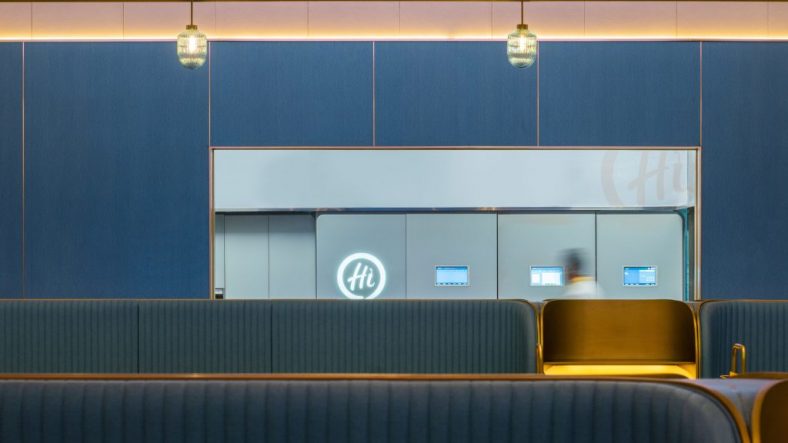
Shades of blue and green feature throughout this hotpot restaurant in Shenzhen, which has been updated by Chinese studio Vermilion Zhou Design Group.
Haidilao, which was established in 1994, is the biggest hotpot restaurant chain in China, with overseas branches in cities such as London, New York and Sydney.
When its Shenzhen location was in need of a revamp, Vermilion Zhou Design Group was brought in to lead on the design.
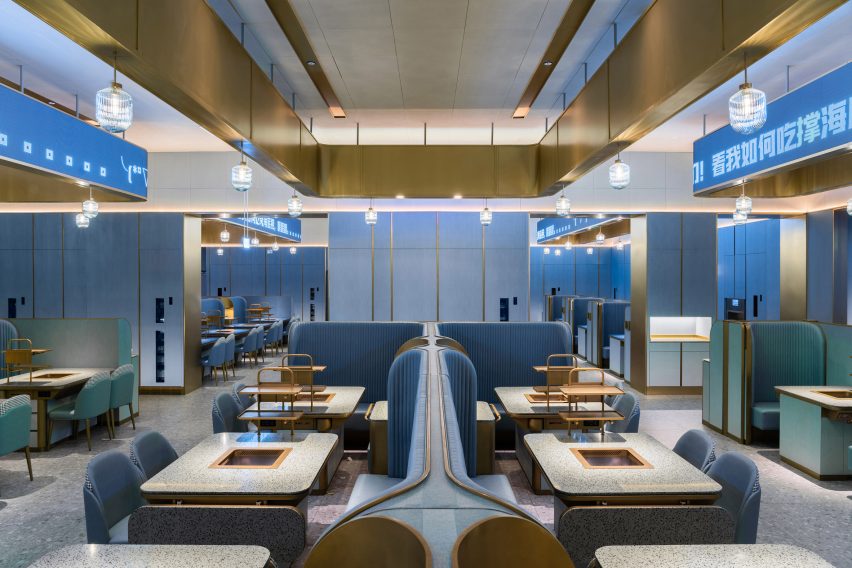
Sky-blue seating lies at the centre of the restaurant
From the outset, the Shanghai-based studio knew it wanted to avoid the red and black colour scheme that has previously been used in Haidilao restaurants.
The space has instead been decked out in shades of blue and green that are meant to nod to the chain’s use of natural, fresh ingredients.
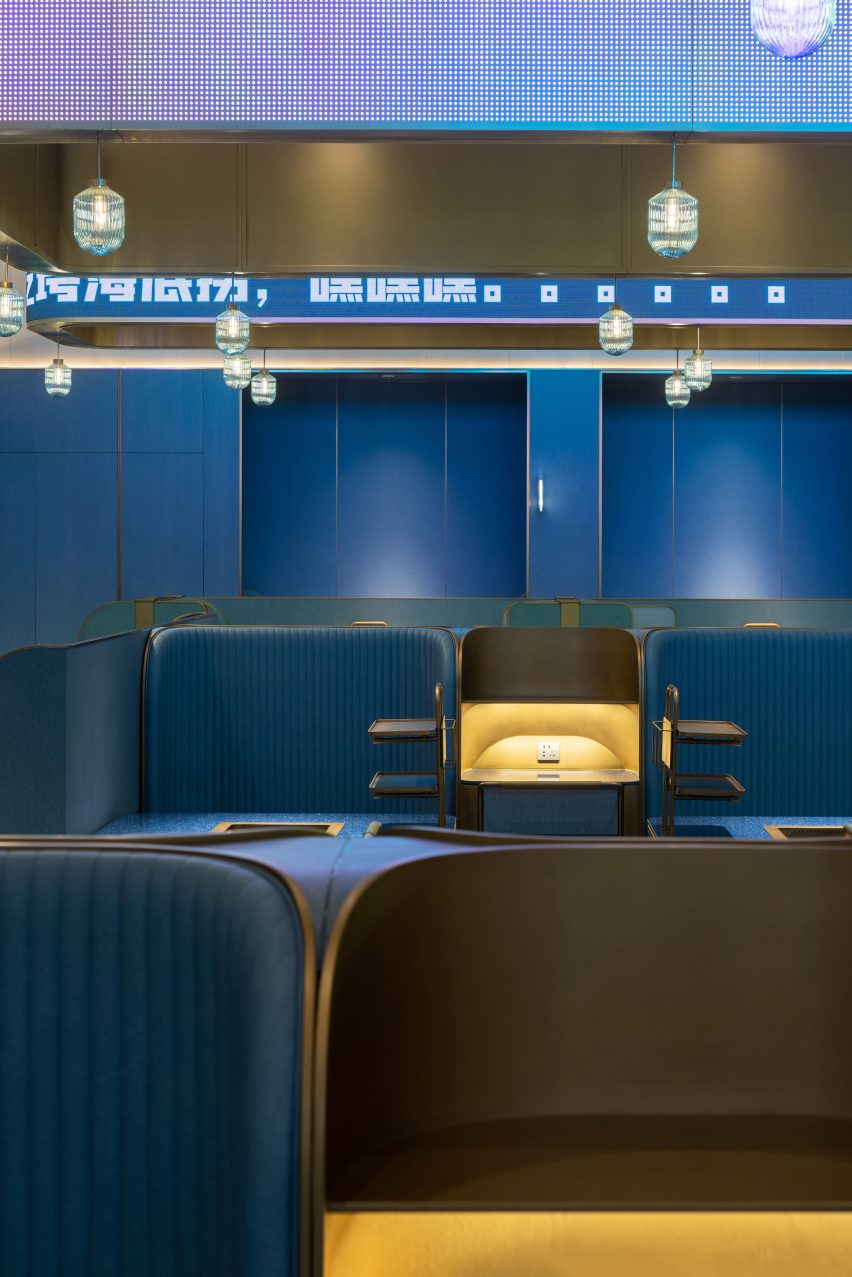
At the periphery of the floor plan are jade-green dining cabins
At the heart of the restaurant is a bank of sky-blue dining chairs accompanied by tables with flecked, terrazzo-style countertops.
Bands of shiny brass panelling have been suspended from the ceiling overhead, inset with LED ticker boards that project interactive messages to diners.
A large LED screen has also been integrated into Haidilao’s facade; it displays moving silhouettes of different people, hinting at the buzzing activity of the restaurant’s interior.
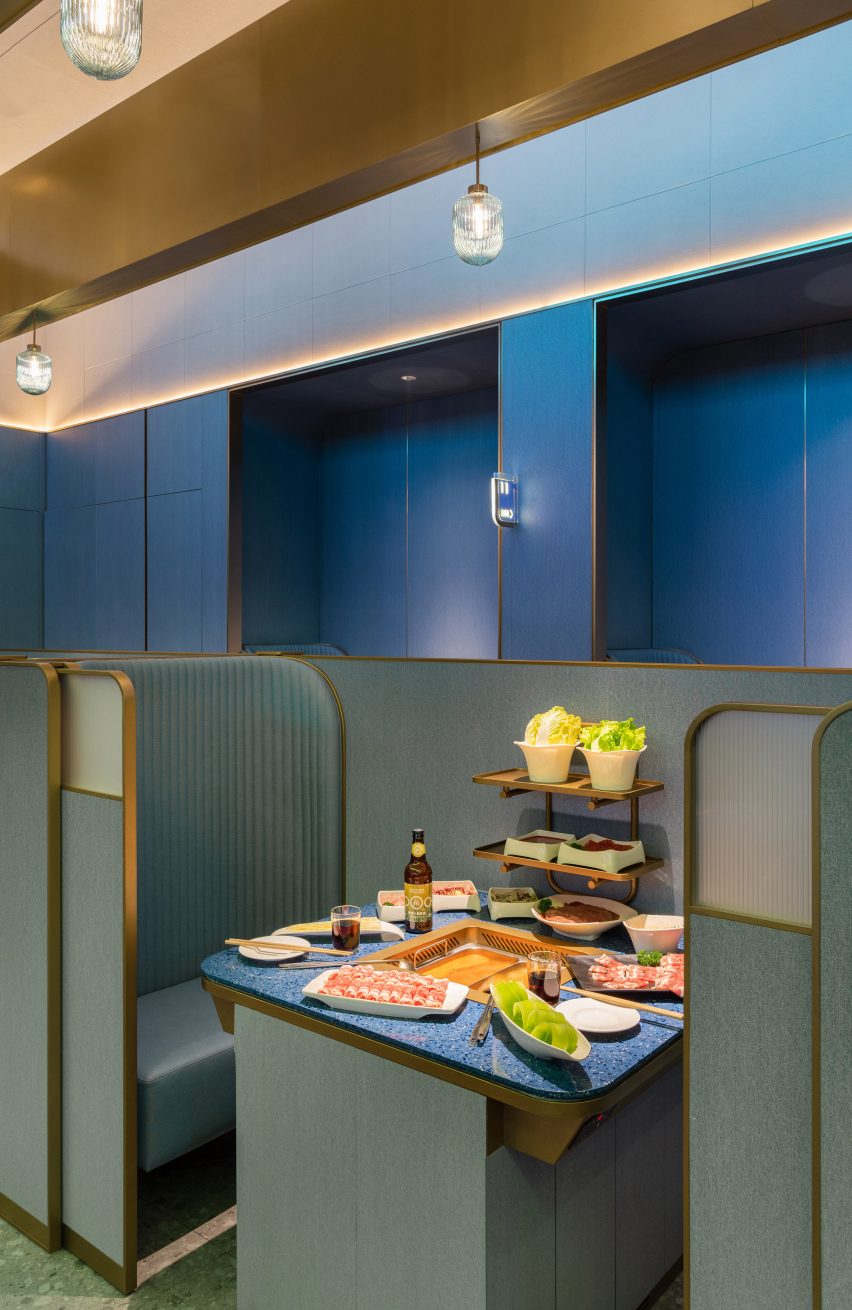
Tables have terrazzo-style countertops
Around the periphery of the main dining room is a sequence of high-backed, jade-green booths that form intimate “cabins” where small groups can enjoy their meals.
There are also a number of cosy nooks designed to accommodate solo diners.
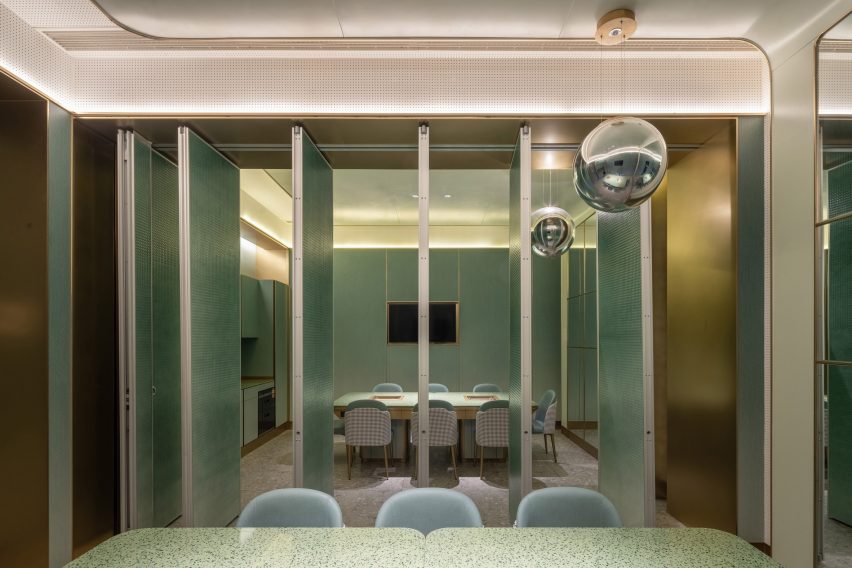
Jade-coloured fixtures and furnishings also appear in the private dining room
Towards the rear of Haidilao there is a drinks counter and a private dining room that can be hired out for special occasions. Tall pivoting doors help close the space off from the rest of the floor plan.
In keeping with the rest of the restaurant, it features jade-coloured walls and brass-edged furnishings.
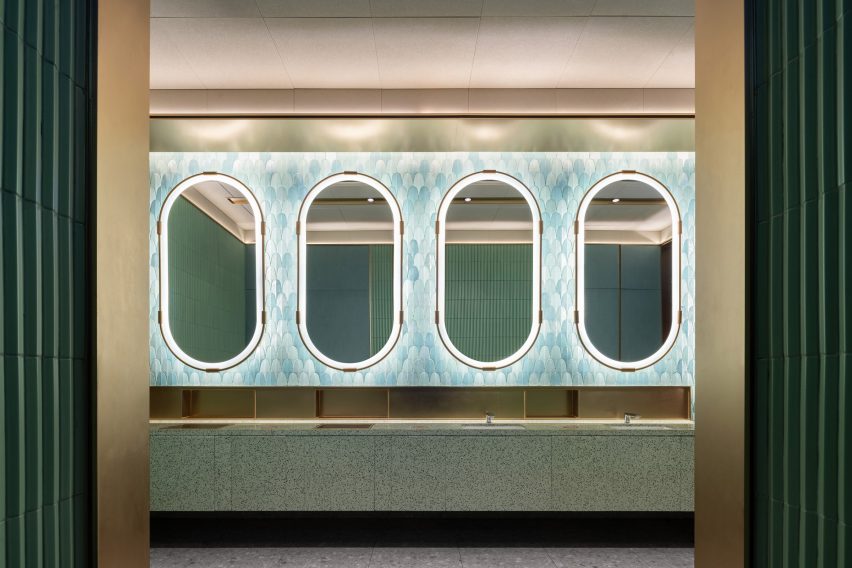
In the bathrooms, terrazzo washbasins meet scalloped walls
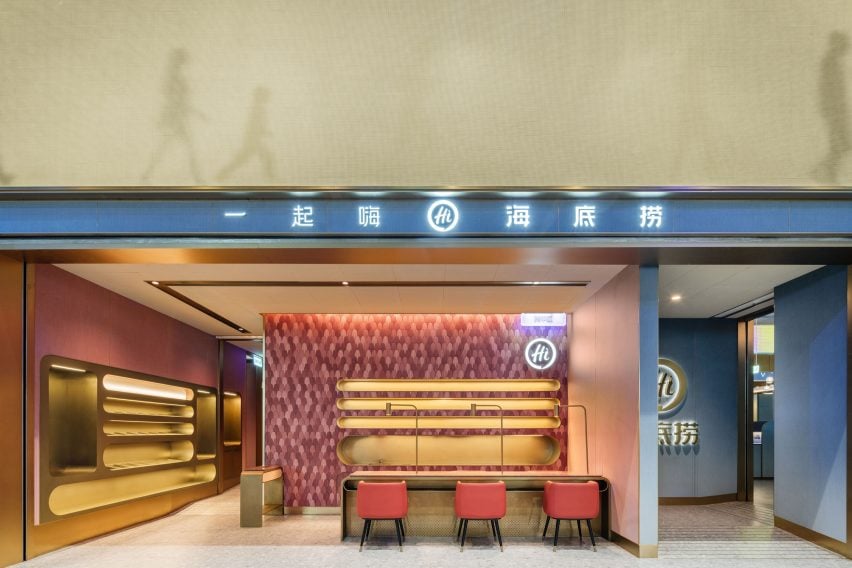
Vermilion Zhou Design Group has created a small manicure bar within the restaurant’s entryway – not only is it meant to lure in more passersby, but it also gives prospective diners a fun way to kill time while waiting for a table.
The bar has been rendered blush-pink, boldly deviating from the restaurant’s colour scheme, and has a scallop feature wall.
Scalloped surfaces go on to appear in the customer bathrooms, which have been finished with oblong mirrors and terrazzo-like washbasins.
A pink nail manicure bar has been created in Haidilao’s entryway
There are a number of visually striking hotpot restaurants across China.
For our latest lookbook, we’ve collected 10 brutalist interiors from the UK to Brazil and Indonesia that show how textiles, plants and colours can be used to soften monolithic concrete spaces and create a cosy atmosphere.
Brutalism as an architectural style often makes use of concrete to create large, sculptural buildings. These interiors in brutalist buildings feature plenty of concrete and hard angles but still manage to feel both warm and welcoming.
Colourful tiling, wooden details and tactile textiles as well as an abundance of green plants were used to create inviting living rooms, bathrooms and even workspaces in these brutalist buildings, which include the Barbican in London and Riverside Tower in Antwerp.
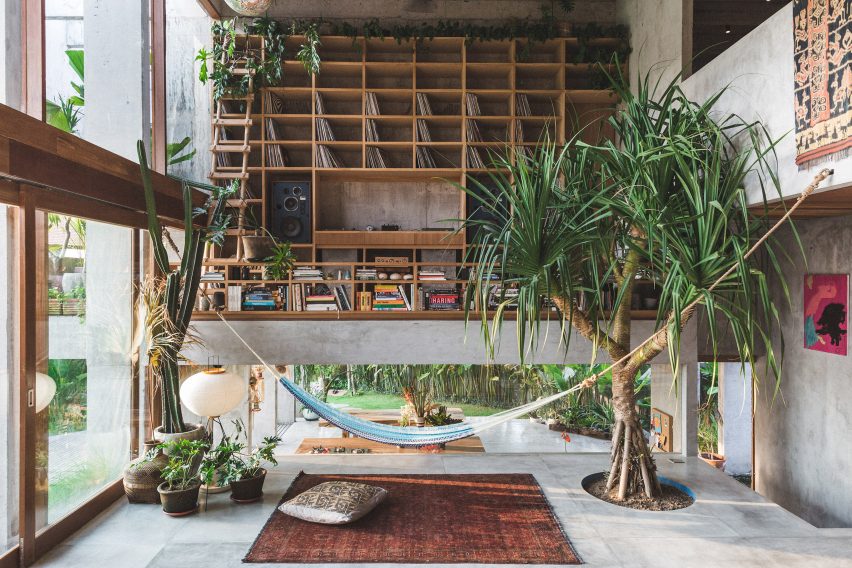
Designer Dan Mitchell worked with architecture studio Patisandhika to create this brutalist home in Bali, which features a double-height living room filled with books, records and green plants.
The house has a split-level design that was modelled on modernist architect Ray Kappe’s Kappe Residence. Inside, colourful objects, textiles and furniture draw on the work of Clifford Still, Ellsworth Kelly and the Bauhaus movement to make the house feel homely.
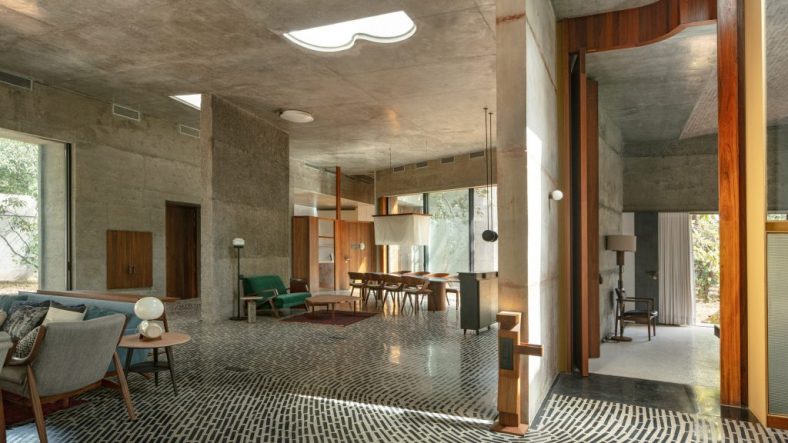
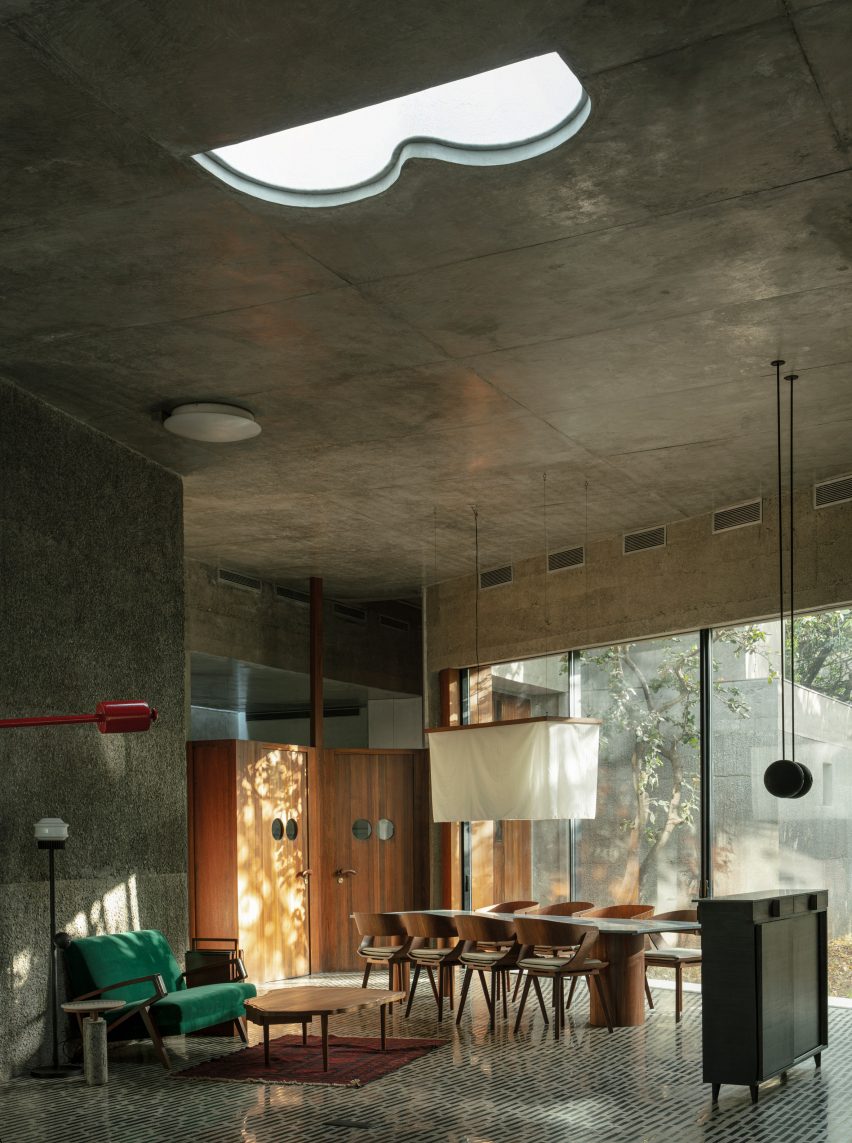
As the name suggests, House of Concrete Experiments features sculptural concrete walls. Warm wood detailing offsets the grey hues, while the concrete floor has been inlaid with black stones to create an interesting pattern.
Large windows and geometric skylights help make the room feel bright and inviting.
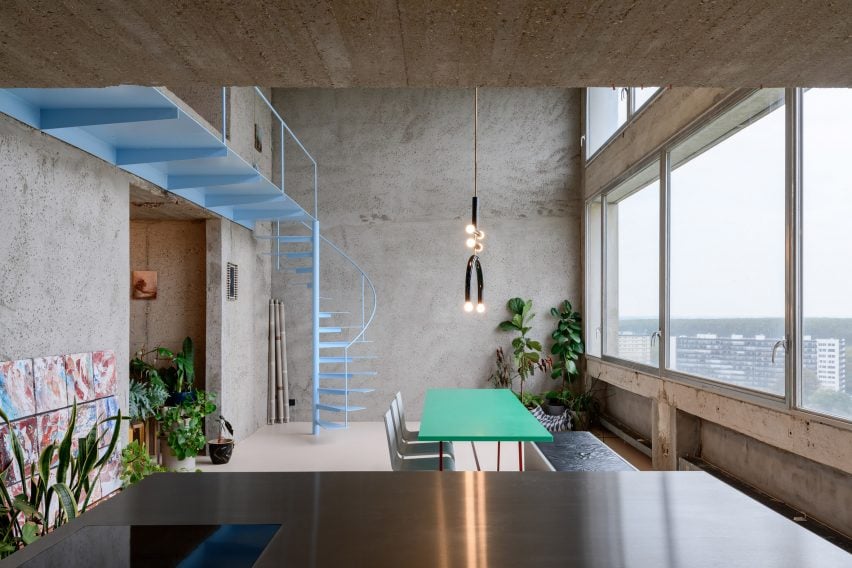
Studio Okami Architecten stripped the walls of this flat in Antwerp’s Riverside Tower to let its original structure take centre stage.
Colourful details such as a turquoise table and baby-blue spiral staircase and a playful, sculptural lamp make the home feel contemporary, while plenty of green plants give more life to the otherwise grey interior.
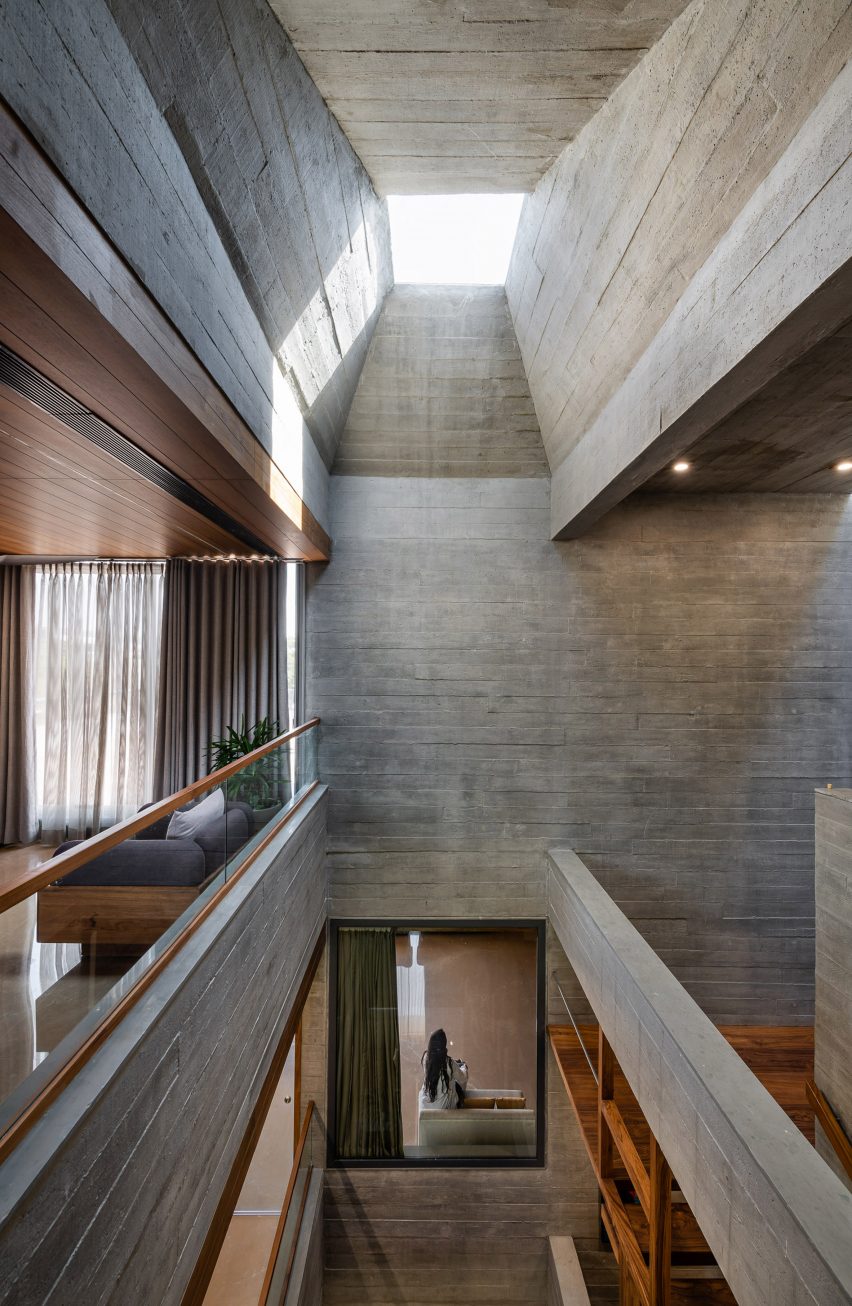
Designed as a “neo-brutalist” house, Beton Brut in India has a number of dramatic features, including a skylit atrium that extends through the home.
The Grid Architects described the home as “typified by bare concrete, geometric shapes, a monochrome palette and a monolithic appearance”. Wooden flooring and furniture and plenty of textiles soften the house’s brutalist interior and potentially stern appearance.
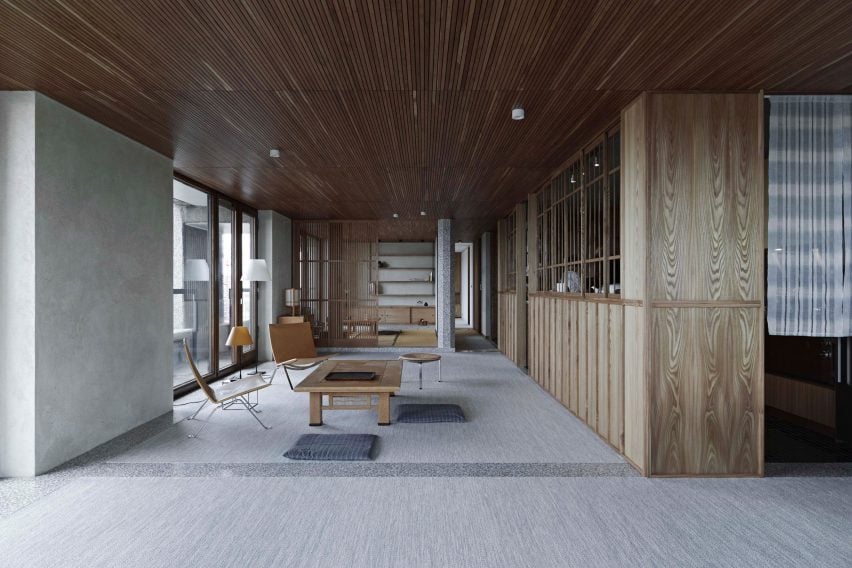
This flat in the Shakespeare Tower of London’s brutalist Barbican estate was overhauled by Takero Shimakazi Architects in a nod to the client’s strong ties to Japan.
Details such as gridded timber panels and timber joinery were added throughout the flat, which also features Japan-informed details including an area lined with tatami mats.
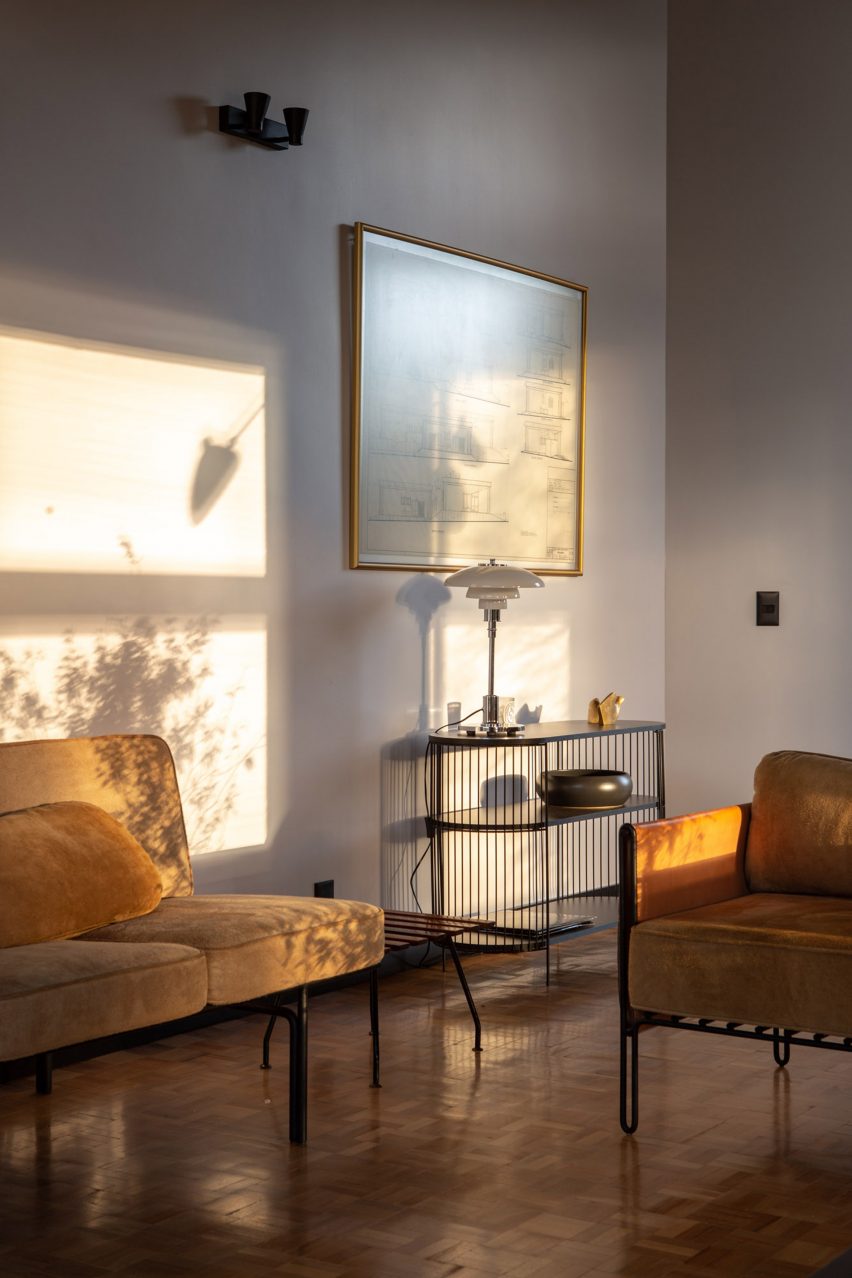
Debaixo do Bloco’s design for this sculptural house in Brazil is divided into three sections to provide a clear distinction between the various programmes.
Inside, the interior has a mid-century modern feel, with gleaming wood parquet flooring and a glass PH table lamp by Danish designer Louis Poulsen decorating a side table.
The brutalist Smithson Tower in Mayfair is the location for this “homely” office designed by ConForm Architects. The studio split the space into eight zones defined by the strong structural grid of the existing building, and added low-level joinery.
The result is a design that softens the stark office spaces and makes the rooms feel more intimate.
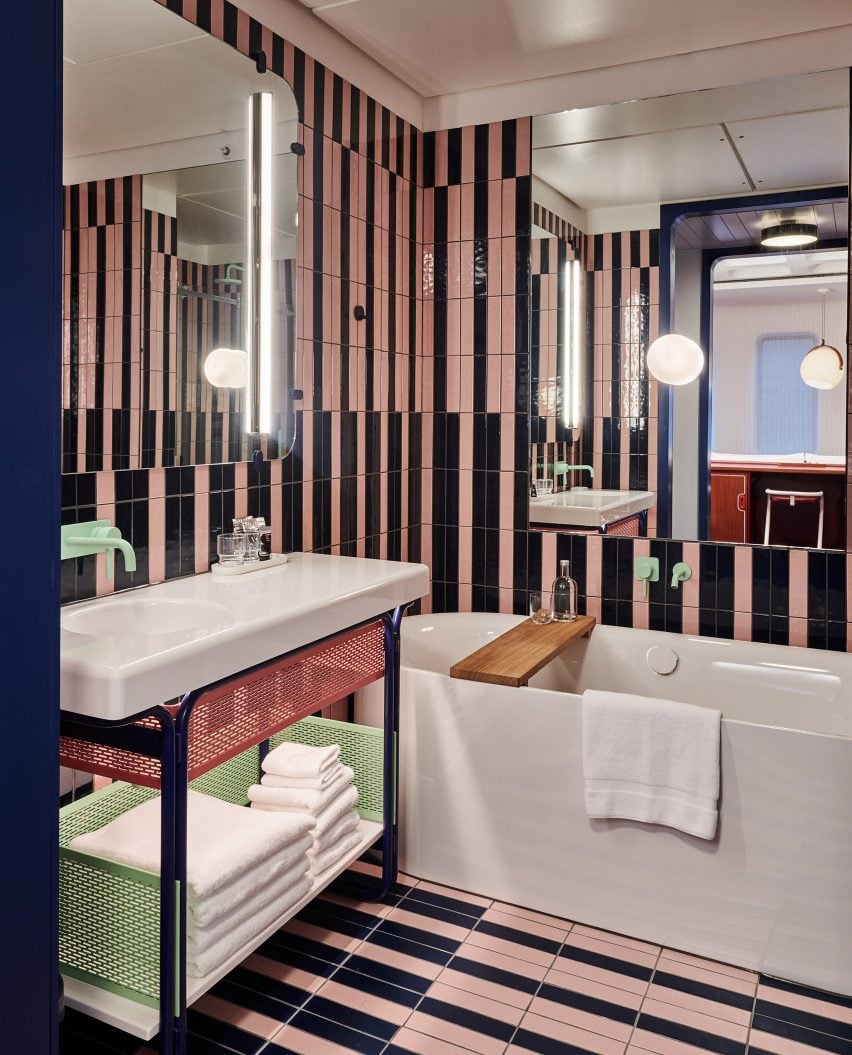
Designer Shawn Hausman created the colour-drenched interior of hotel The Standard in London, which is located in a brutalist building, to contrast “the greyness of London”.
“I would say with this property we were a bit more colourful than usual, and I think part of that is acting in contrast to the brutalist building that the hotel’s in,” explained Hausman.
In the bathrooms, stripy pink-and-black tiled walls and pops of pale mint green give the room a fun, playful feel.
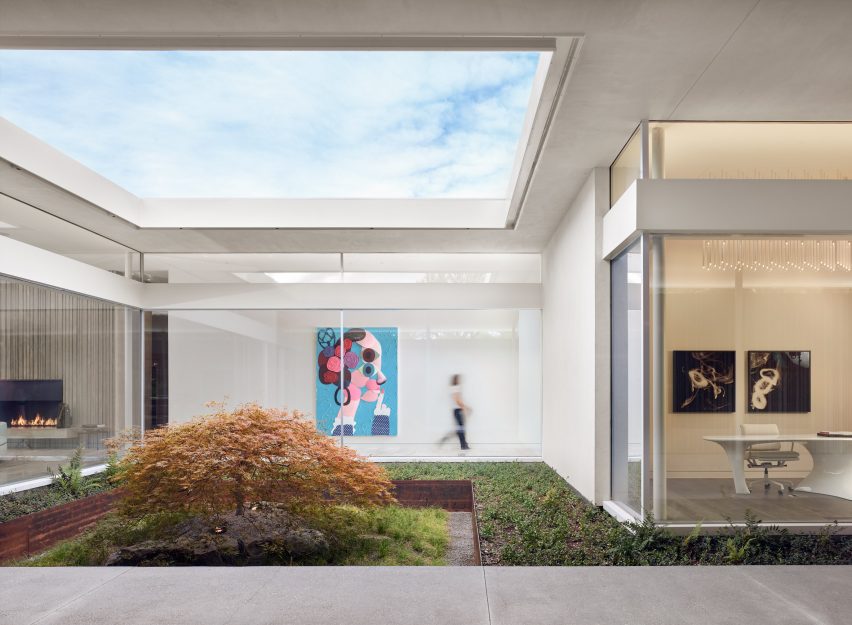
The long corrugated concrete volumes of Preston Hollow in Dallas were designed to reference brutalist Texan architecture from the 1950s and 60s, but the house was built to wrap around courtyards, creating a lively, open impression.
Inside the low-slung buildings, mid-century modern-style furniture nods to the home’s architectural references but the interior is brought up-to-date with the addition of modern art.
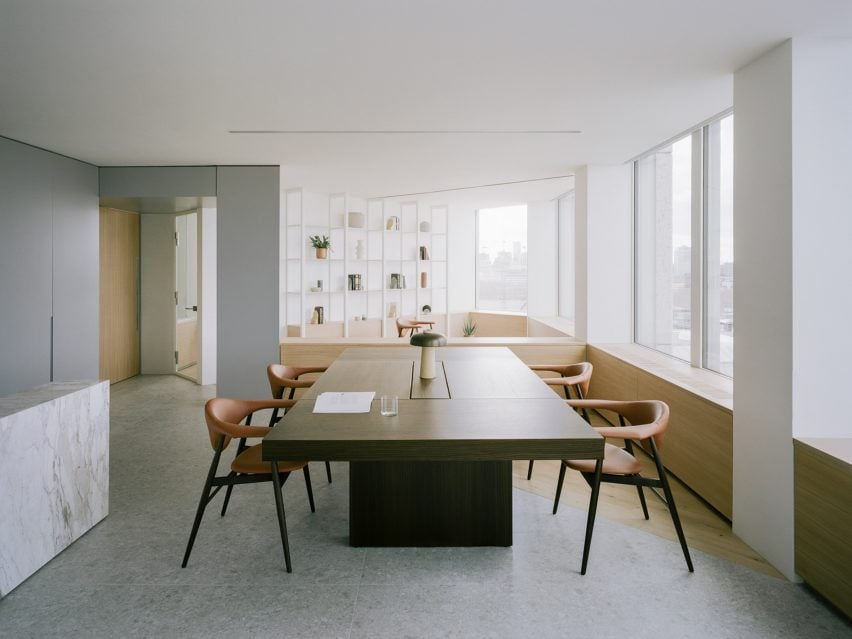
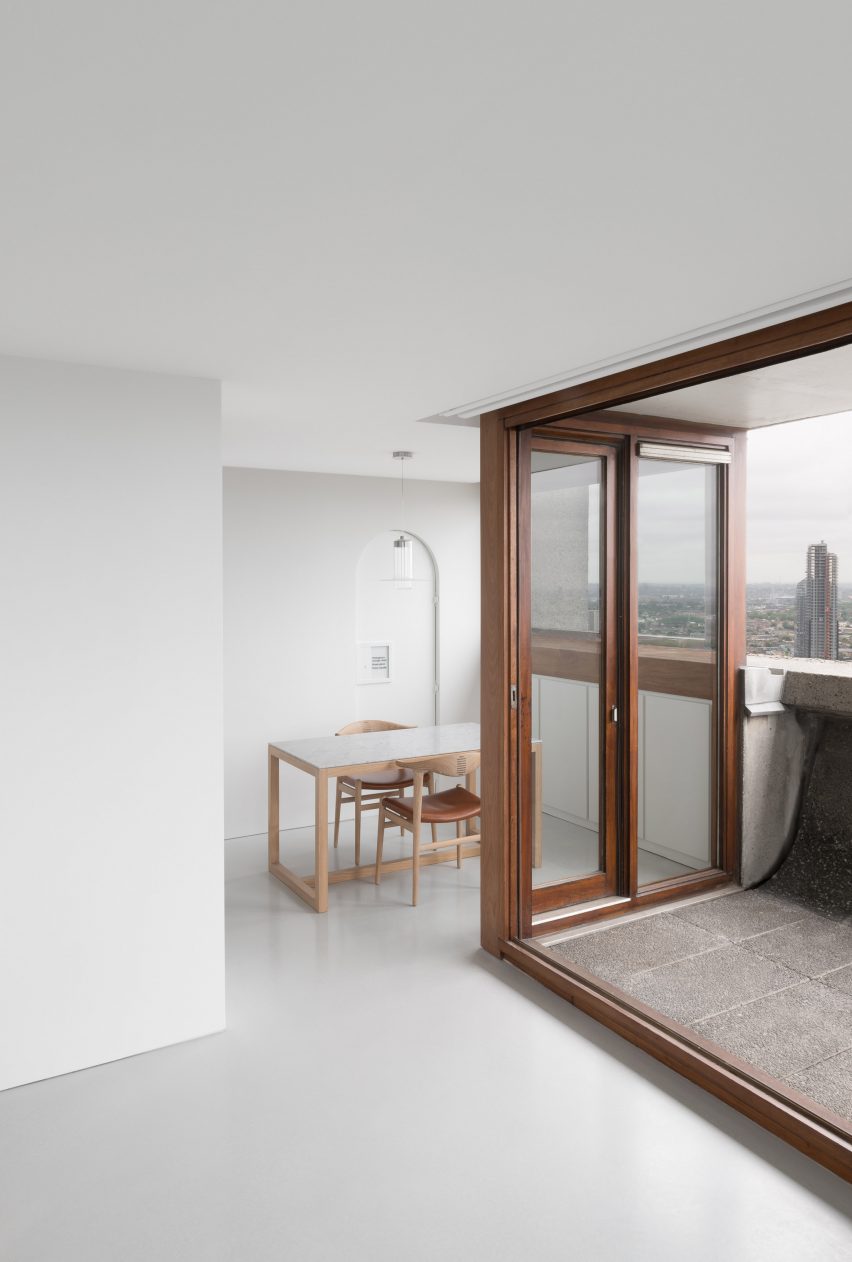
British architect John Pawson created this flat in London’s Barbican building using his signature minimalist aesthetic.
The flat, which overlooks central London and has a small concrete balcony, has been kept almost empty with just a smattering of furnishings and pale wooden surfaces. Three artworks, a Buddha sculpture and a grandfather clock are the only decorative elements in the space.
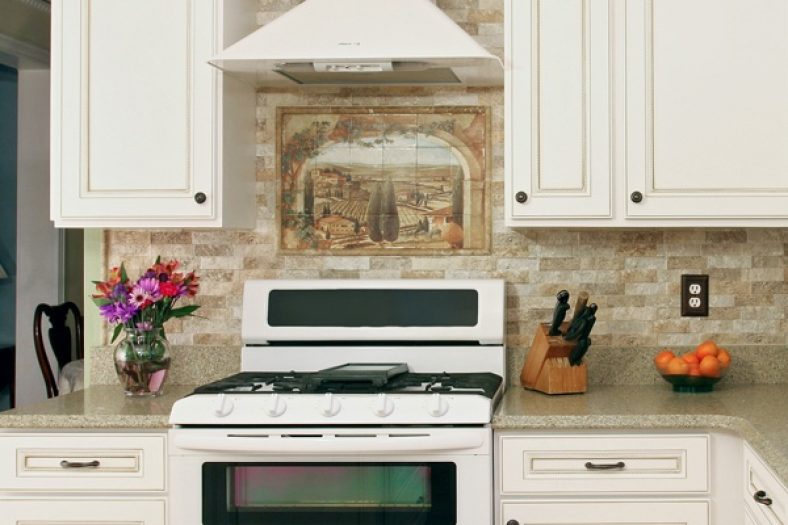
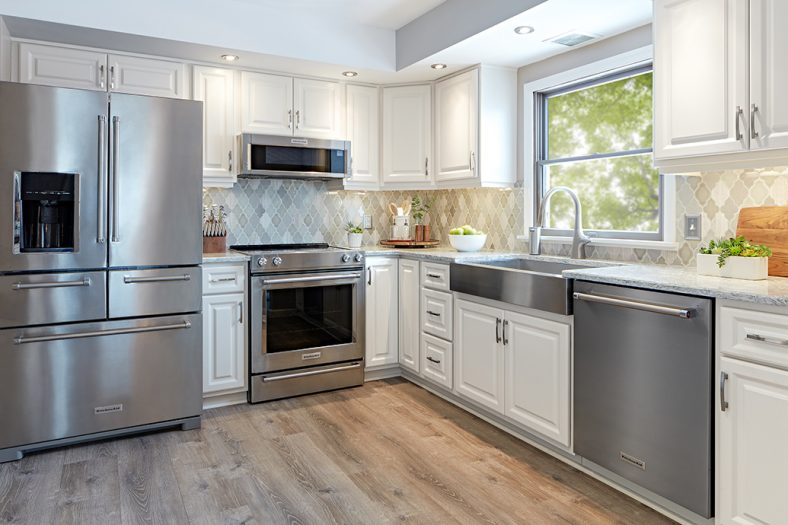
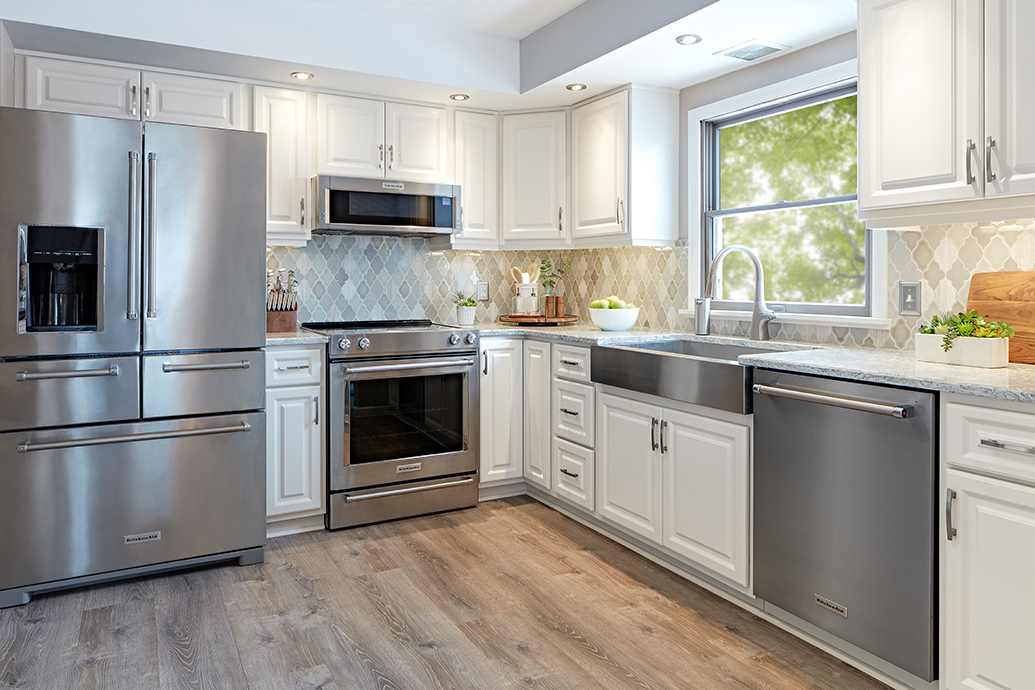
Many homeowners are having their backsplash serve as the feature of their kitchen design. With so many choices in the material, style and color, a backsplash can be added anywhere there is countertop space. When planning your kitchen remodel, be sure to speak with your designer about the available options for your backsplash because this design feature matters!
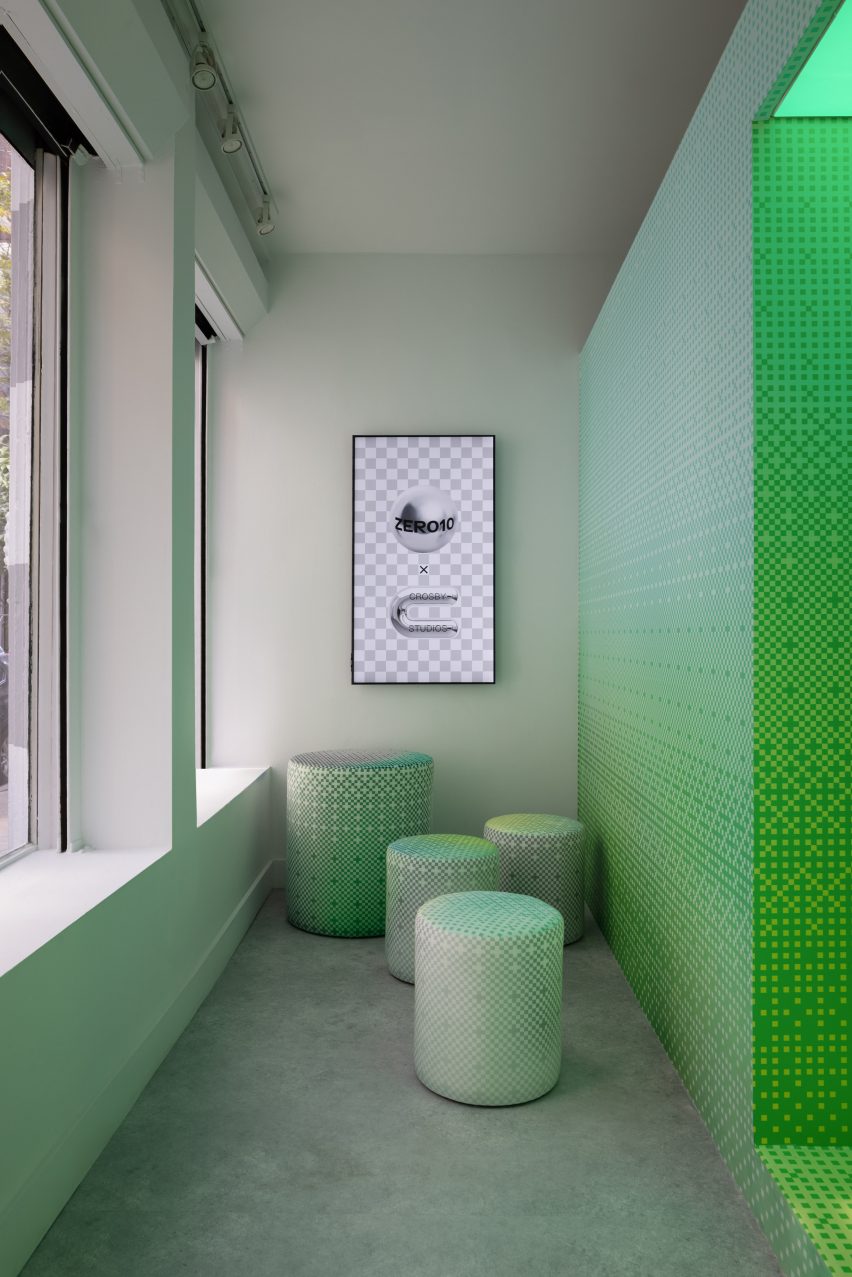
Design firm Crosby Studios has teamed up with augmented reality technology company Zero10 for a pop-up store in Manhattan that aims to provide a virtual retail experience.
The pop-up, which is located in Manhattan’s SoHo neighbourhood, lets visitors digitally try on a selection of outfits in interiors designed by local studio Crosby Studios.
Crosby Studio designed a store oriented around AR fashion technology
The physical space of the pop-up was designed to complement the augmented reality (AR) experience and be a “physical entrance into the metaverse”, according to the team.
“This is my first experience working with digital clothes and rather than try to blend the digital with the physical — to soften the virtual reality aspect of it if you will — I instead sought to celebrate the digital nature of the collection,” said Crosby studio founder Harry Nuriev.
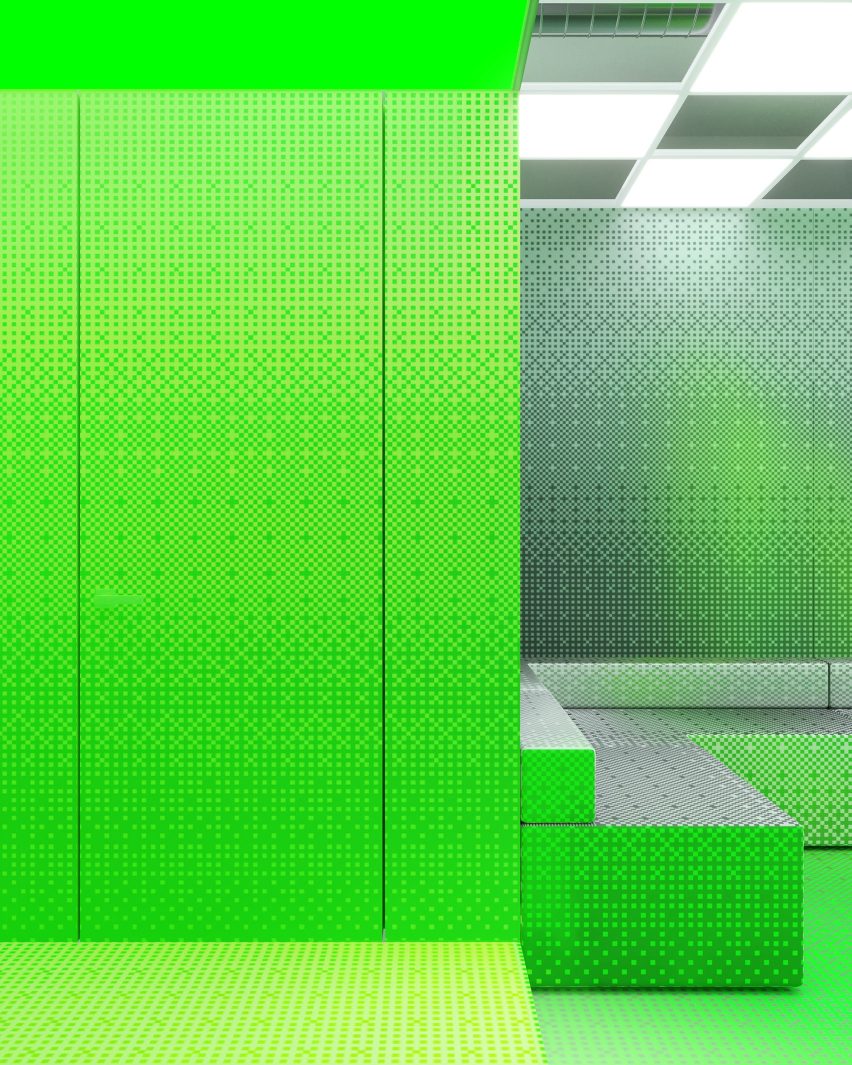
The interiors are covered with a pixelated design
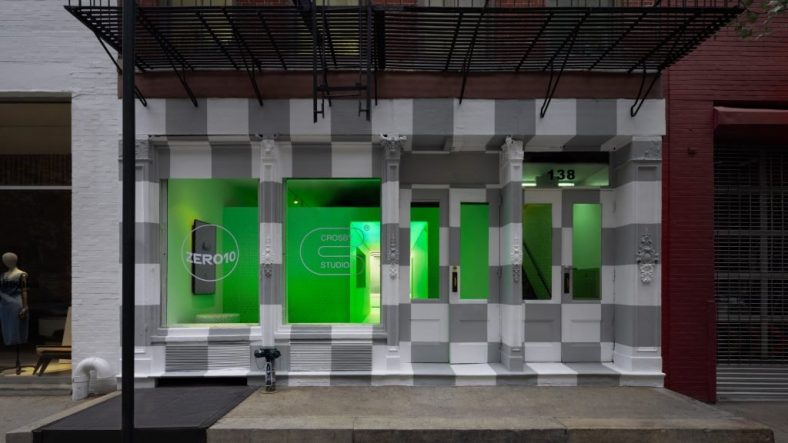
The facade of the store features a classic pillared SoHo storefront painted over with grey-and-white checkers to suggest the integration of the physical and virtual.
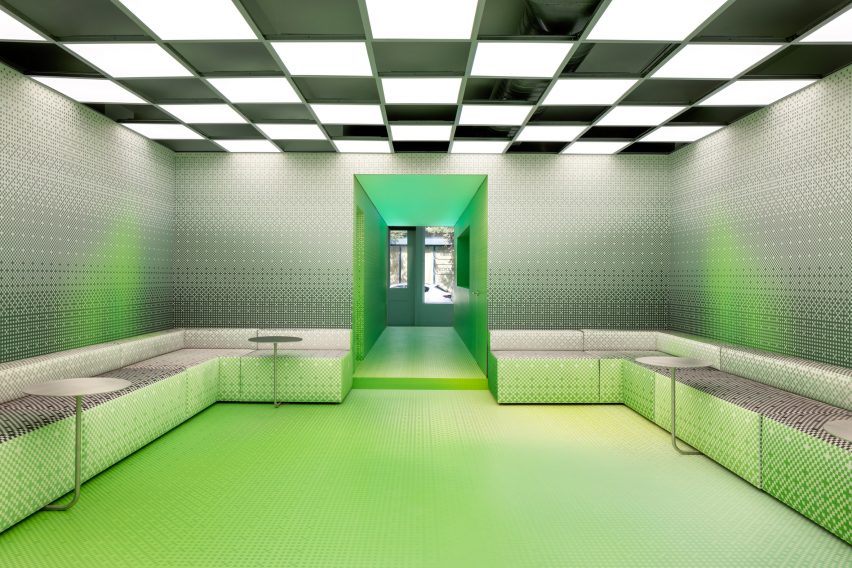
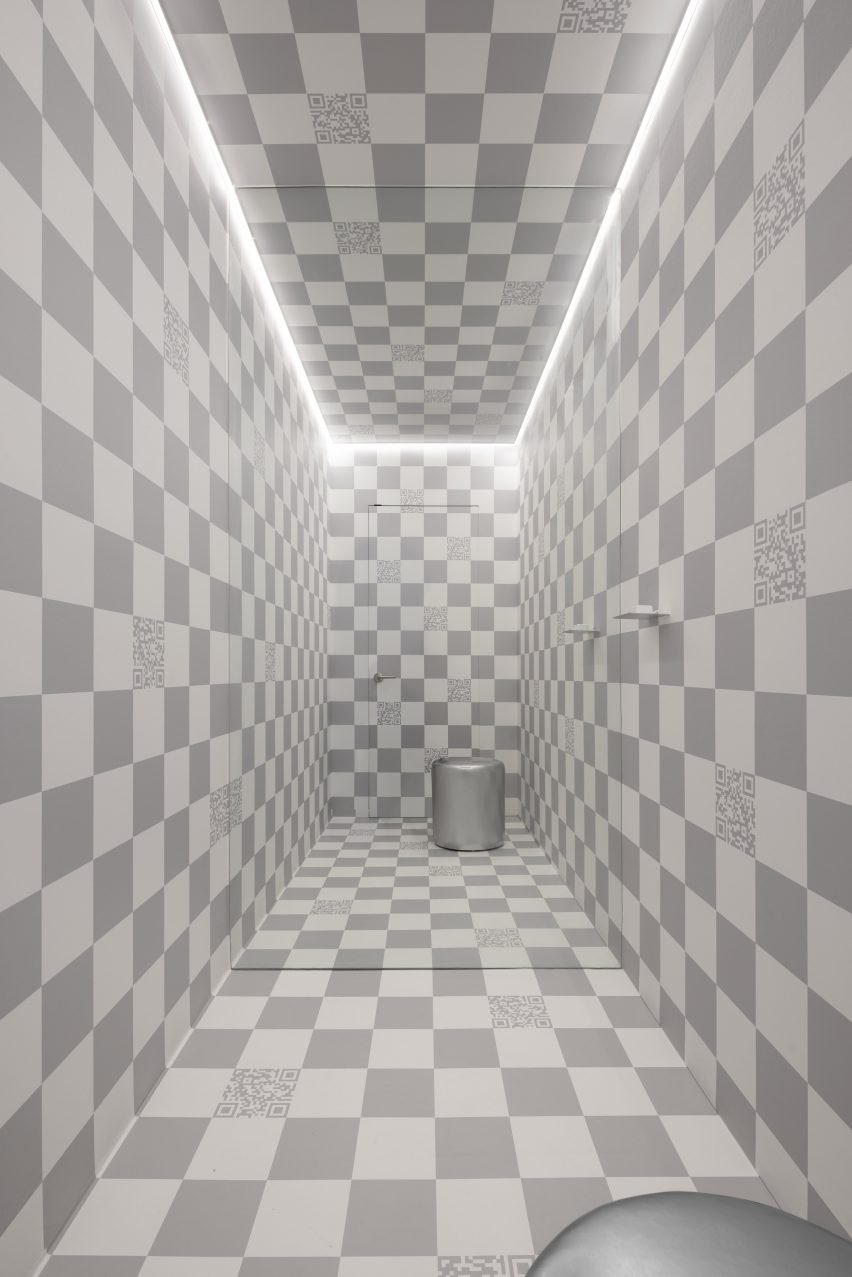
Visitors enter the space into a stark-white antechamber that leads into a hallway covered with a checkered fluorescent “pixel” pattern that features in many of Crosby Studios’ designs.
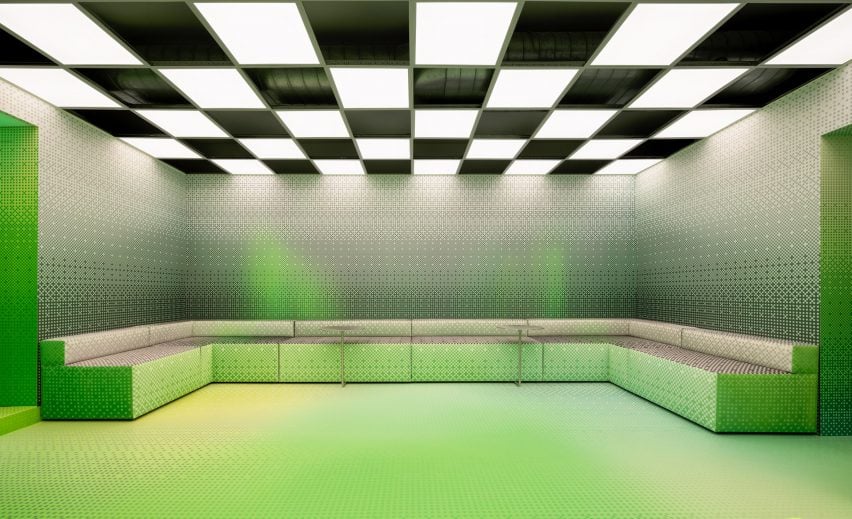
The entrance hallway leads to a large lounge area
On one side of this hallway is a bar area where the team provides boba tea to visitors.
At the end of the hallway is a large lounge area with booths lining the walls, as well as plush stools and cocktail tables. The same pixelated pattern continues in almost every aspect of this room, and ceiling tiles have even been removed to suggest the pattern.
The space is geared towards the digital fashion experience
From here, visitors can enter “changing rooms” equipped with QR codes that streamline the digital retail experience.
A digital-only fashion collection featuring five different was also developed by Crosby Studios together with Zero10.
The space has no physical clothing
Visitors try the clothes on by downloading an app on their smartphones and then point the phone at themselves in the mirror to see how the clothes would look on them, or at another person to project the clothes onto them.
The collection features a series of glossy, futuristic outfits that change size depending on the body type of the wearer.
The goal of the project was to make consumers more comfortable with digital fashion by integrating it with the familiar routine of visiting a physical storefront, according to the team.
“Our project with Crosby Studios is a showcase of how the design and technology could co-exist in both physical and digital worlds that merge more and more,” said Zero10 CEO George Yashin.
Changing rooms with QR codes allow visitors to “try on” the clothing
“We wanted to create a new concept of pop-up space responding to retailers’ needs to attract a new generation of consumers but also evolving the format of pop-ups that are not about product display any longer,” said Yashin.
The pop-up is open to visit from 7 to 18 September in SoHo. See Dezeen Events Guide for an up-to-date list of architecture and design events taking place around the world.
Refacing and refinishing are two different restoration methods used to improve the appearance of damaged, worn or simply outdated cabinetry. They also do not leave you with the same results.
Cabinet Refinishing
A do-it-yourselfer, or a carpentry or cabinet company crew, disassembles the kitchen cabinets, strips and sands away existing paint or stain and replaces it with new paint or stain in the same or different color scheme. When refinishing, you are left with the same wood door style but in a new finish.
In some cases, older doors are ill-fitting or warped. Refinishing in a new stain color will not correct this. Also, if you have external hinges, you are left with the holes to deal with, should you choose to change to internal hinges.
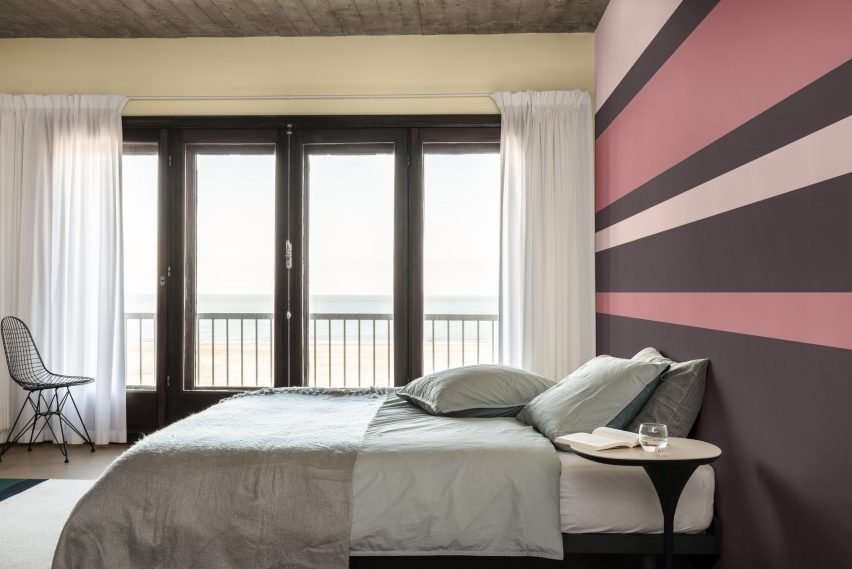
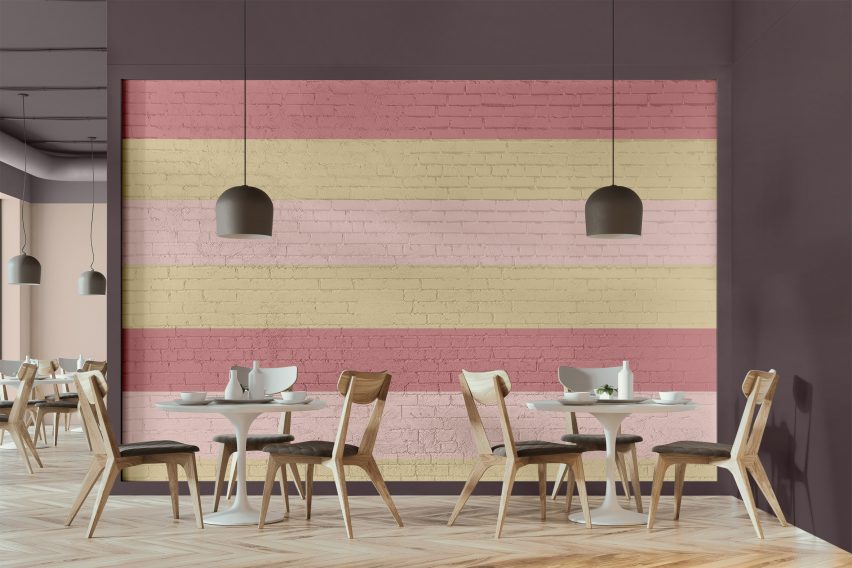
Paint brand Dulux has revealed Wild Wonder, a pale yellow paint colour that it described as “a soft gold with hints of green” as its Colour of the Year for 2023.
Wild Wonder was selected for its close association with nature. The brand said this echoes the global shift toward sustainability, reconnecting with the outdoors and wanting to be more grounded, particularly following the recent period of uncertainty.
Wild Wonder is a golden green paint colour
“Our relationship with the natural world feels more precious and precarious than ever,” said Dulux UK.
“Wild Wonder is a soft gold with hints of green inspired by fresh seed pods and harvest grain,” the brand added.
The colour was selected for its association with nature
As well as its affiliation with nature and raw materials, Wild Wonder is also intended to capture the collective quest for better mental health, which has become increasingly important in light of global events such as the climate crisis and coronavirus lockdowns.
“As people search for support, connection, inspiration and balance in the world today, they’re diving into the wonders of the natural world to find it,” said the brand.
“Wild Wonder is a positive, natural tone that, by connecting us with the natural world, can help us feel better in our homes,” it continued.
“As well as understanding the value of nature more keenly, with climate change becoming a reality for all of us, we also feel the urgency of reconnecting with nature and the necessity of working with rather than against it.”
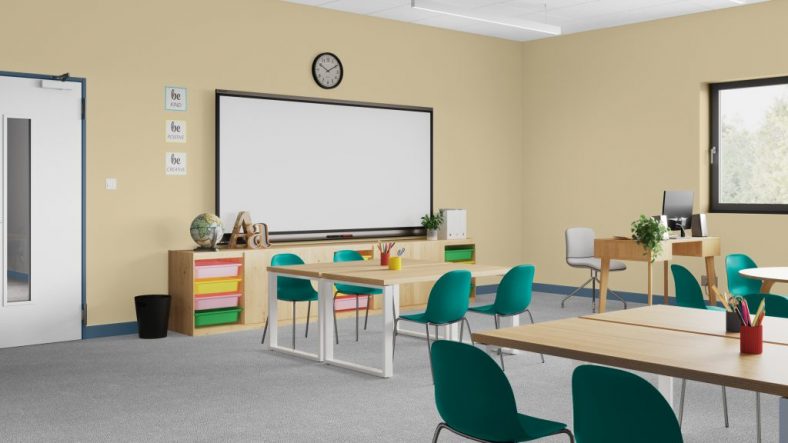
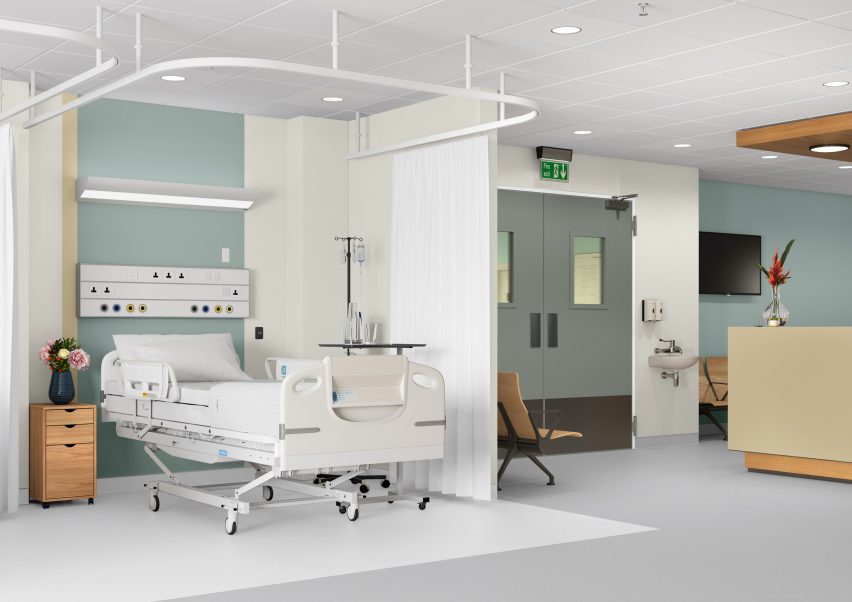
According to the brand, the colour can be used to add colour to areas in the house, such as living rooms, that require warmth and light. The brand also said that the hue is suitable for commercial spaces across all sectors including schools and hospitals.
“Wild Wonder and four complementary, versatile colour palettes can be used to create stunning spaces across all sectors,” explained Dulux.
The paint colour is suitable for all commercial sectors as well as residential interiors
Dulux’s parent company AkzoNobel decided on the shade, which is the 20th colour to be chosen as a Dulux Colour of the Year, after a three-day workshop with a panel of industry experts from across the globe and months of researching with the paint company.
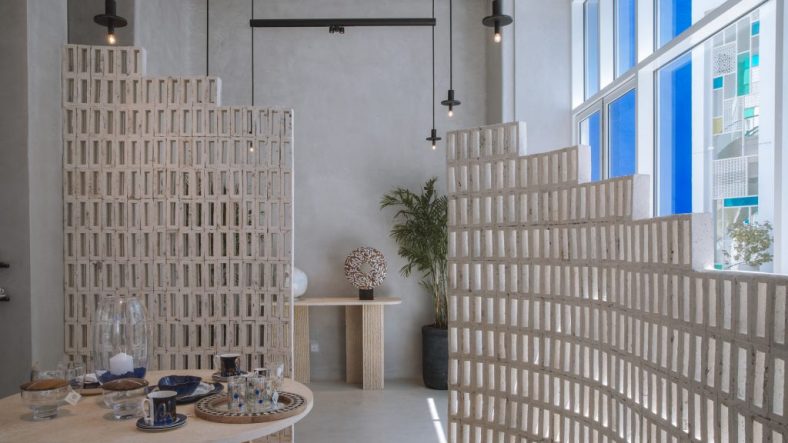
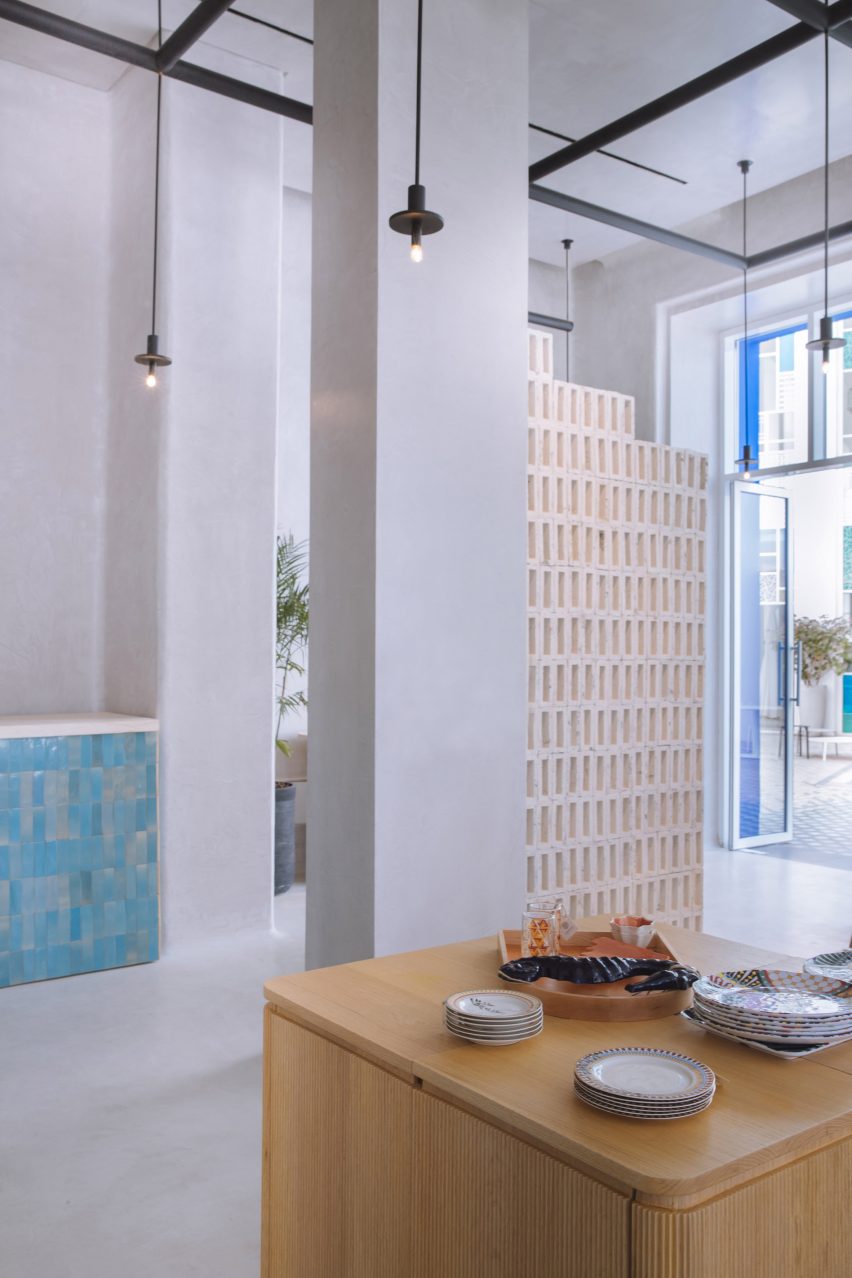
Crushed shells were used to form the bio-brick partitions at this store for a decor brand in Aqaba, Jordan, by architecture studio FADAA.
Designed by the Jordanian studio for Decoration One, the D/O Aqaba retail space is a flexible showcase for the local brand’s craft-focused homeware and ornaments.
Bricks made from crushed shells act as sun shades and spatial dividers in the D/O Aqaba store
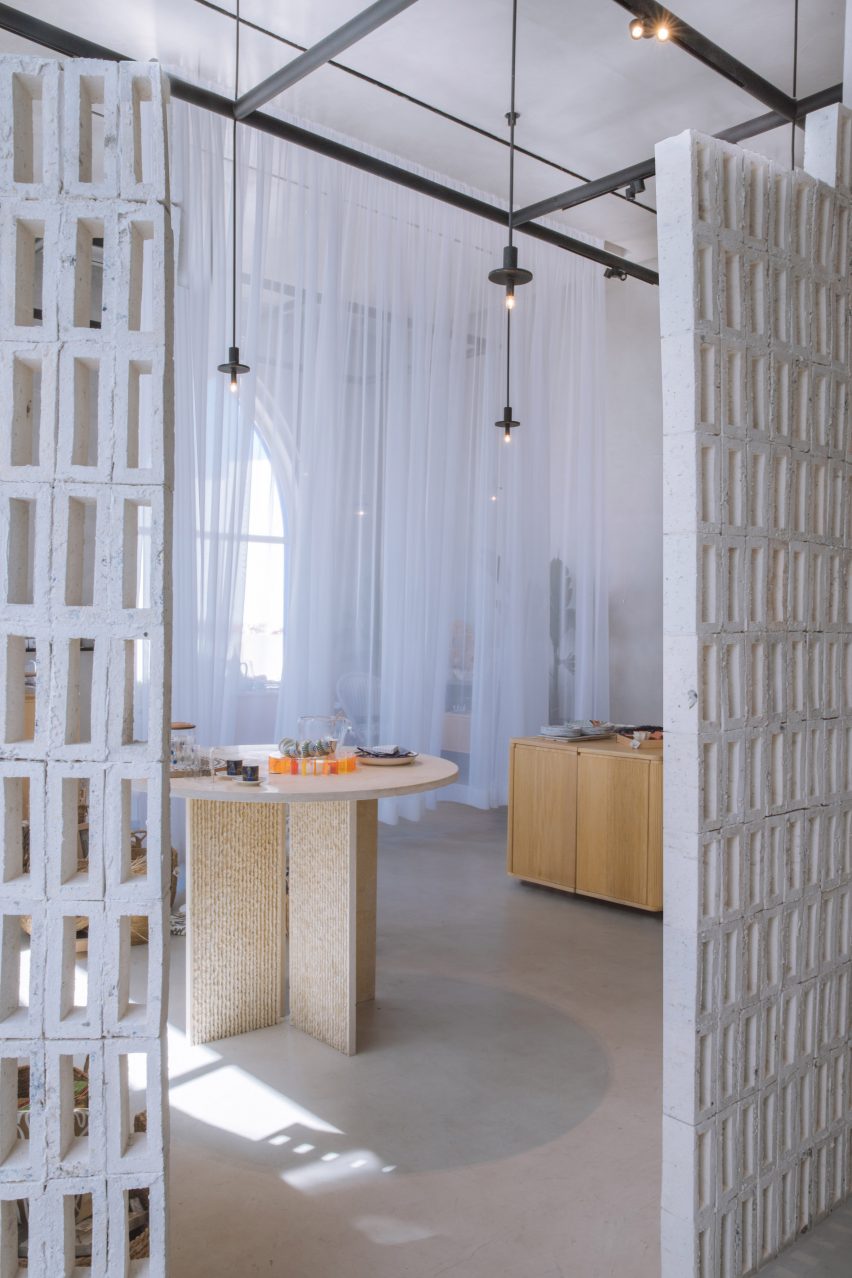
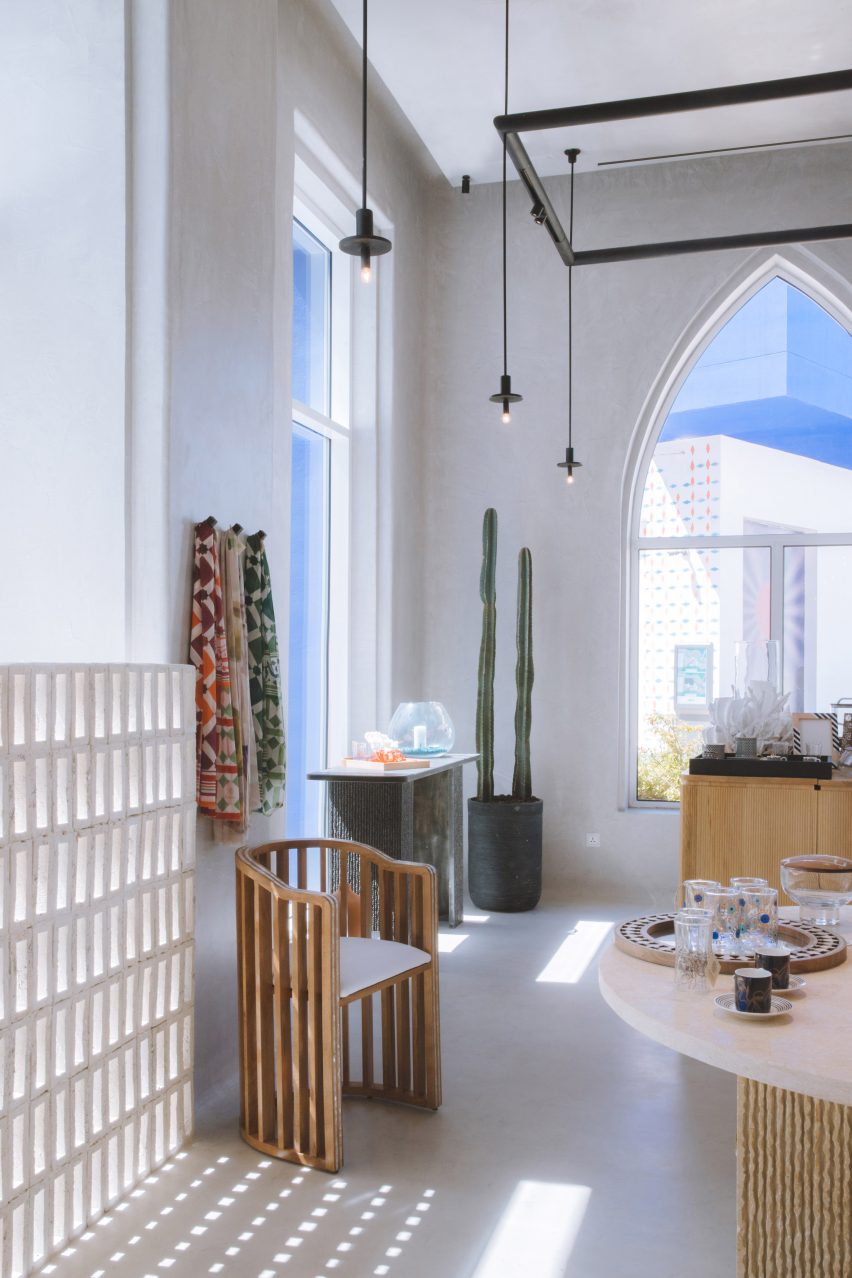
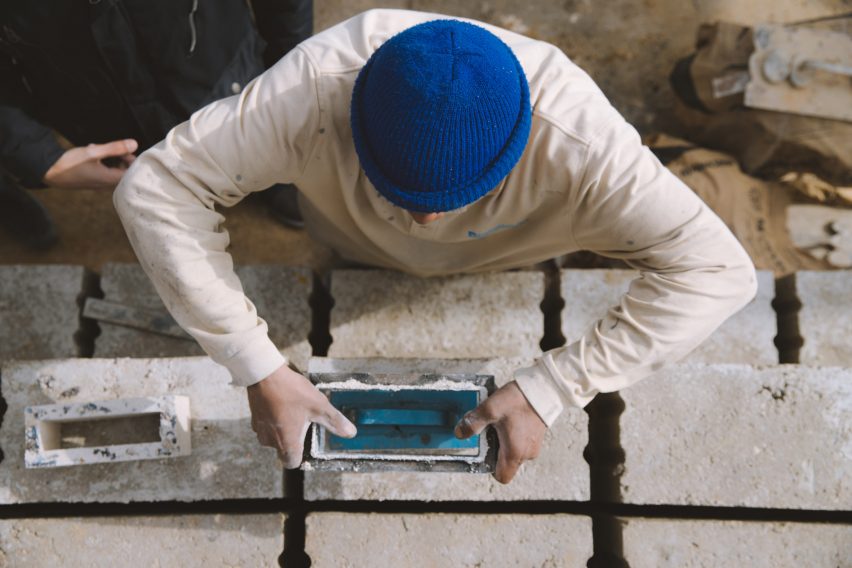
To protect the interior from the harsh south sun, the studio implemented partitions of stacked hollow rectangular bricks based on the traditional mashrabiya screens found in Islamic architecture.
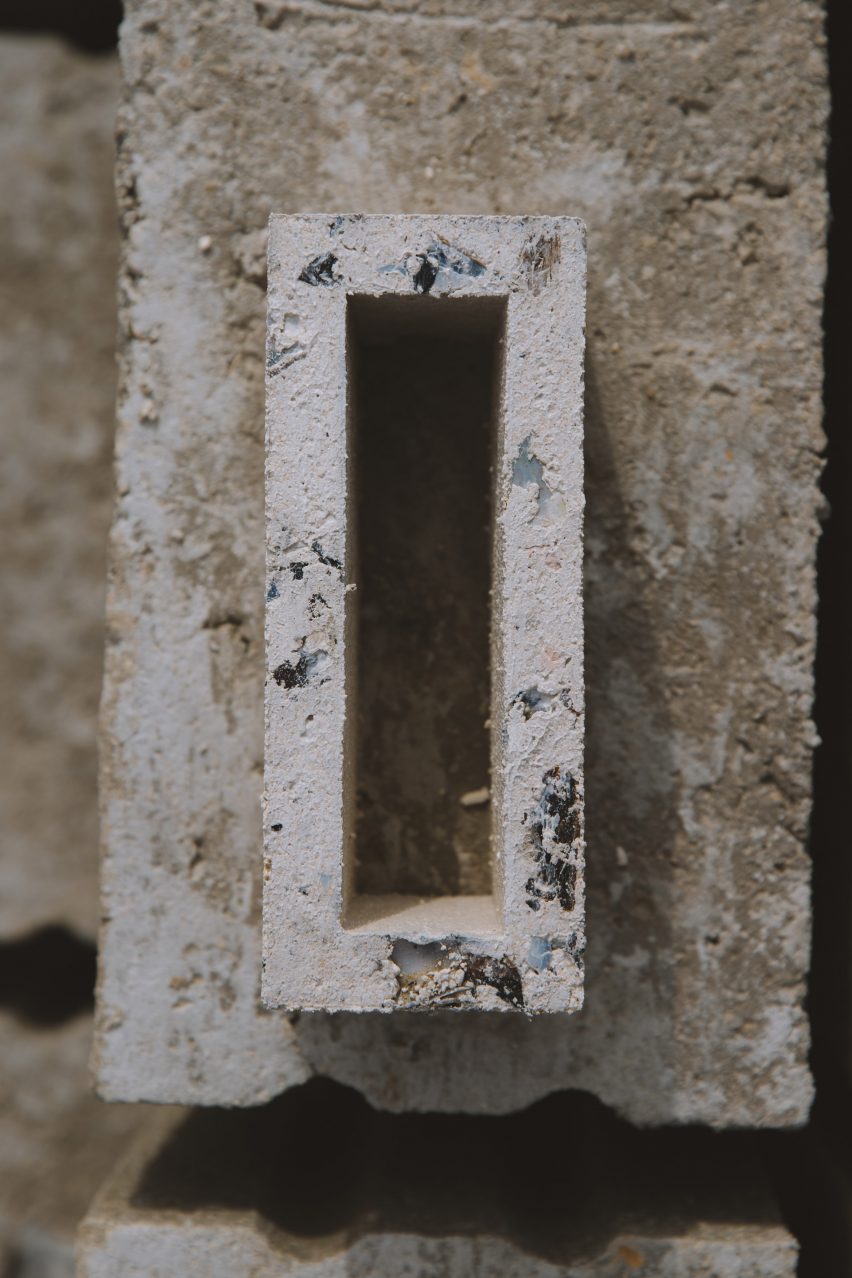
These bricks are made from the shells of oysters, mussels and clams left over as waste from the coastal city’s seafood restaurants.
The bio-bricks are stacked into gridded screens
The shells were crushed and used as aggregate for a bio-based concrete that sequesters the carbon from the molluscs’ protective calcium carbonate coverings.
This material is pressed into a mould to form the brick shapes, dried to harden, and finally assembled into the gridded screens.
As well as shading the shop, the partitions help to divide the boutique and guide customers around the interior.
“Working alongside Decoration One’s craftspeople, a materiality-driven approach created the concept of a flexible retail store that embraces craft and low-carbon materials,” said the FADAA team, led by architect Bisher Tabbaa.
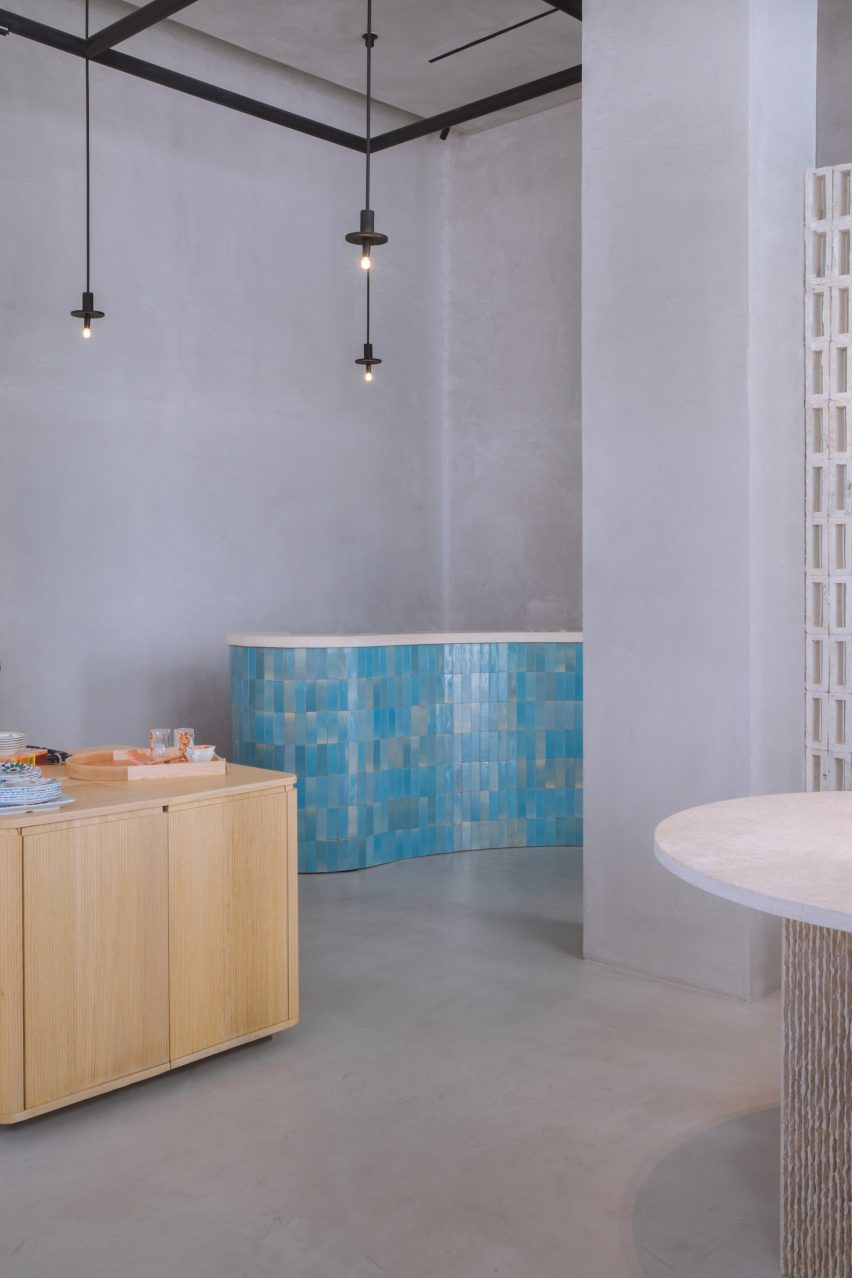
Colour is introduced through blue zellige ceramic tiles cladding the sales counter
Lime-plastered walls and native plant species also feature in the store to create a “healthy indoor environment”.
To accommodate Decoration One’s ever-changing collections, modular oak tables and sheer curtains can be moved and rearranged to organise the space as desired.
More tables, made from hand-chiselled local basalt and limestone, contrast the wood furniture and offer alternative ways to display the products.
A splash of colour is introduced by the zellige ceramic tiles that clad the curved sales counter.
The bio-bricks are formed in moulds and feature hollow centres
“Embracing the craft nature of the project as well as economically supporting local industries, materials such as zellige and mother of pearl inlaying were used throughout the design,” FADAA said.
As part of Stockholm Design Week, Swedish design firm Form Us With Love has opened the doors to its new studio space featuring modular furniture informed by pegboard walls.
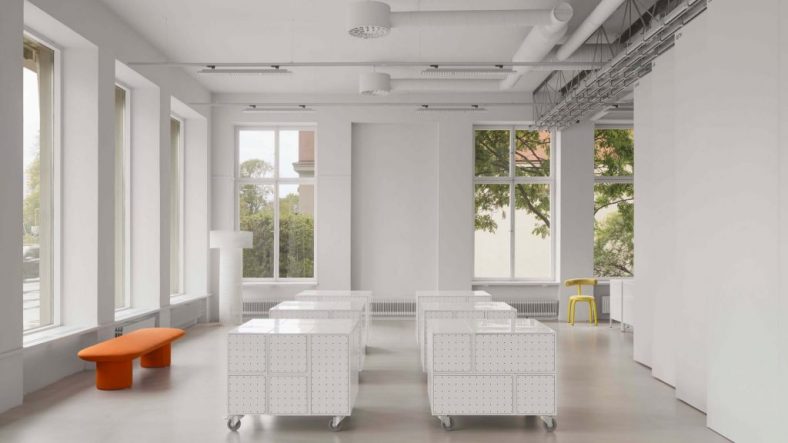
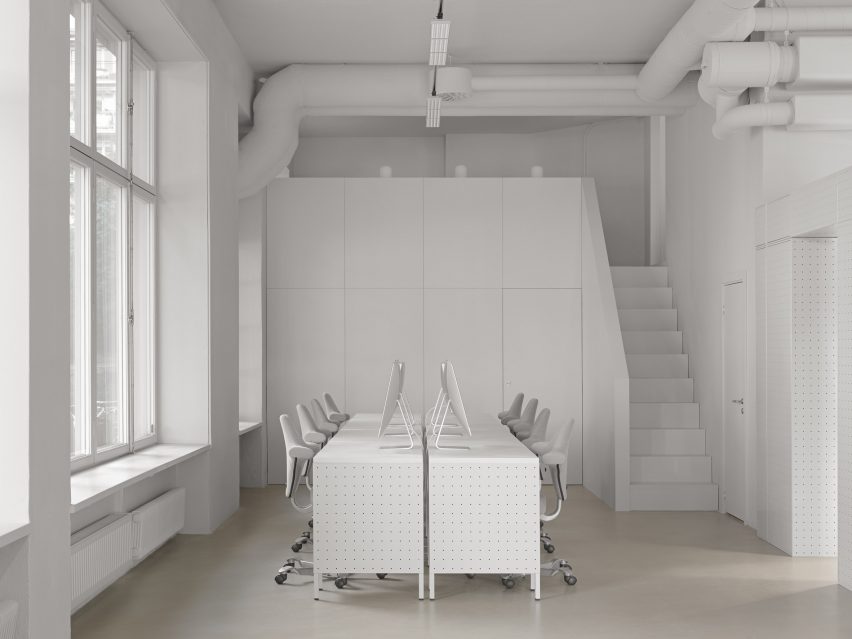
Perforated steel units are dotted throughout Form Us With Love‘s (FUWL) Stockholm studio, which is housed in a former travel agency.
Form Us With Love’s Stockholm studio has furniture made from perforated steel
“We’ve been dealing with this space for a good year and a half, and thinking about it for a good ten years,” FUWL co-founder John Löfgren told Dezeen.
“It’s definitely a place that is a catalyst for what we’re doing – and we’re doing quite a lot of different things, so we need a really flexible space and we need a mobile space,” he added. “We tried to be smart about how you store things and logistics in general, really being economical with each square metre.”
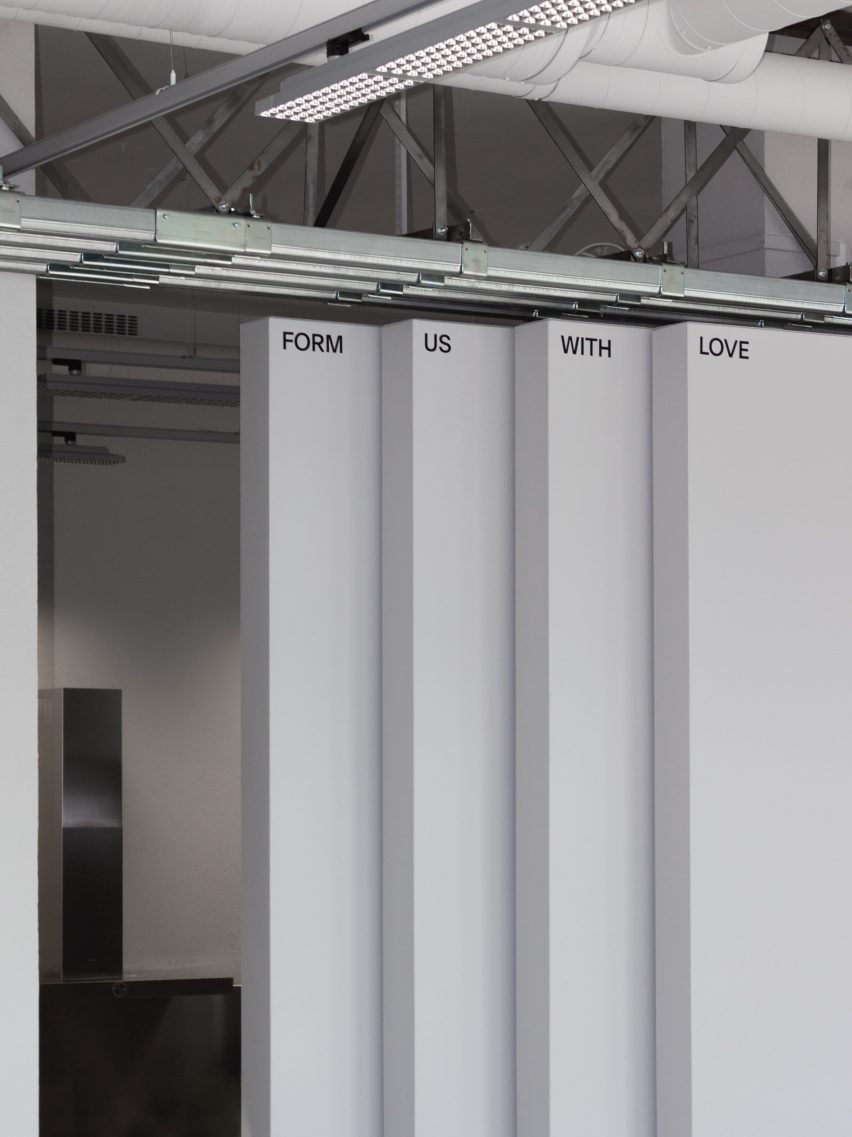
Large hangar doors can be used to divide the interior
The 200-square metre studio space, which was created in collaboration with architecture studio Förstberg Ling and branding studio Figur, was designed to suit the needs of the FUWL team.
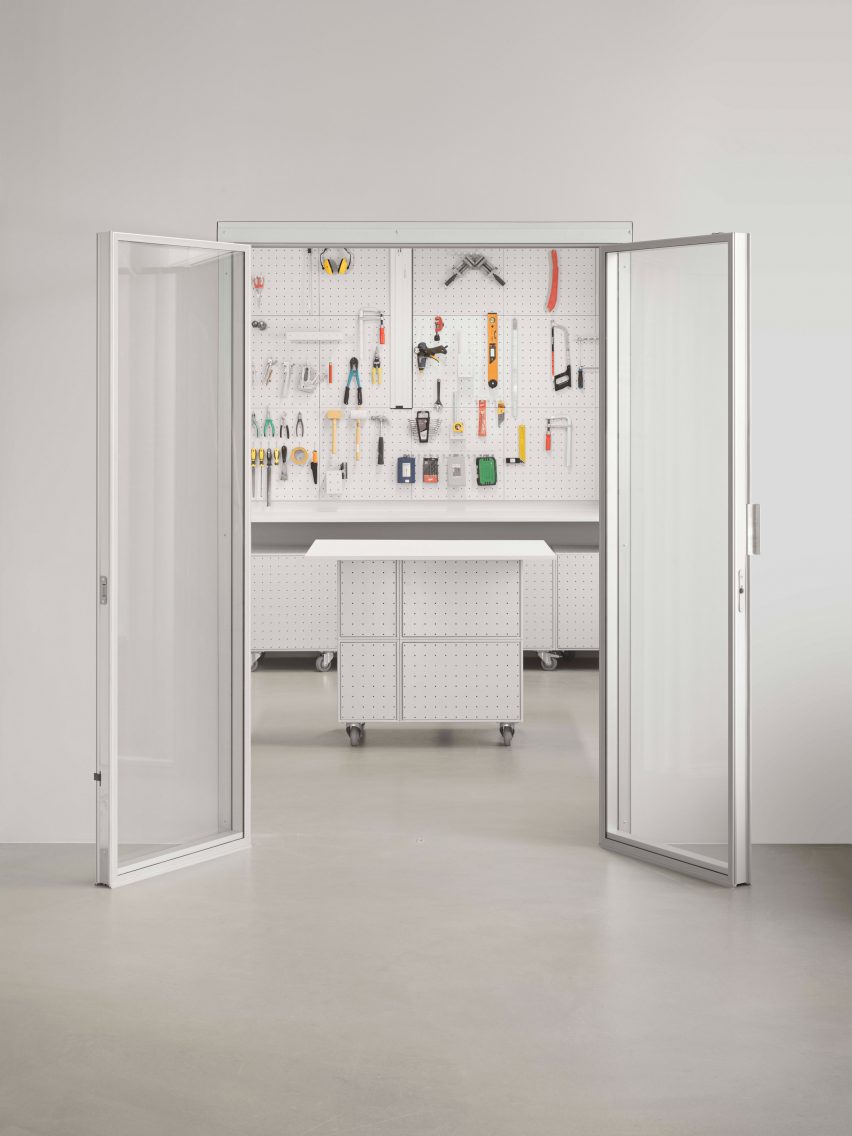
Large floor-to-ceiling hangar doors hide an office area, workshop and kitchen while allowing the front of the studio to be sectioned off from the remainder of the space.
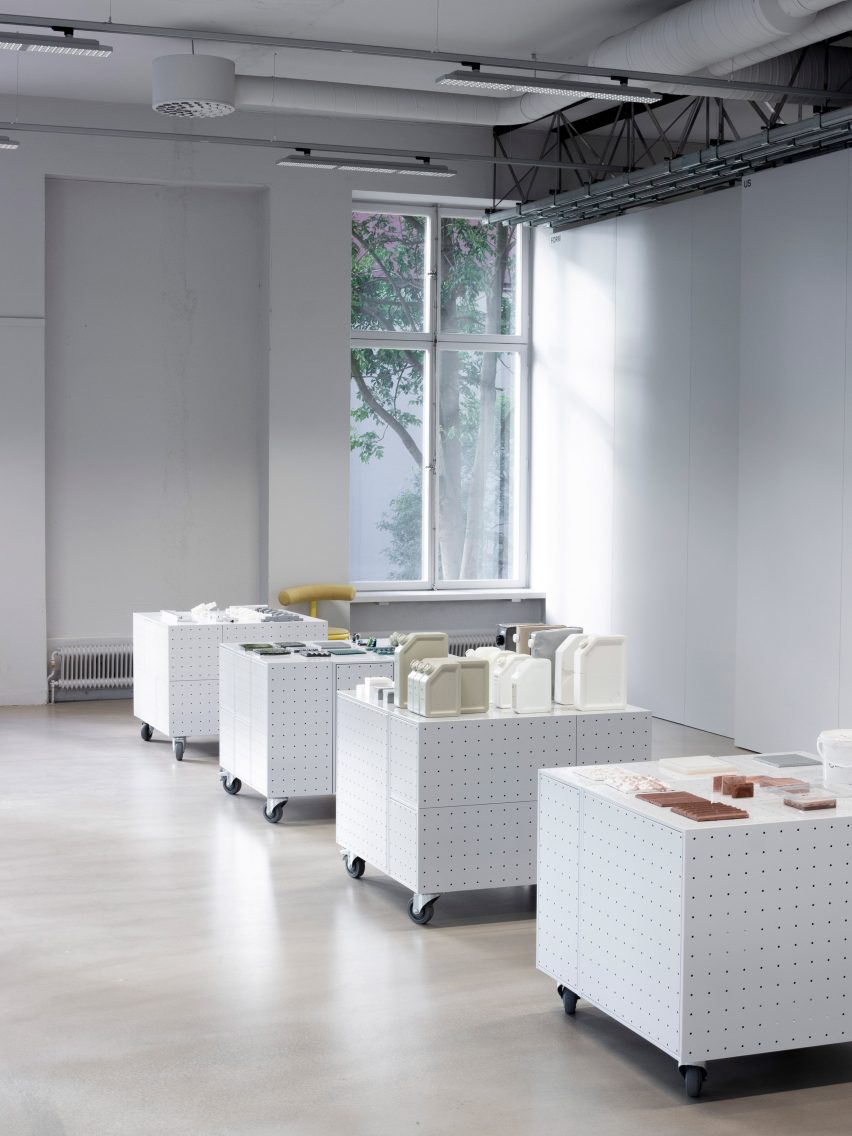
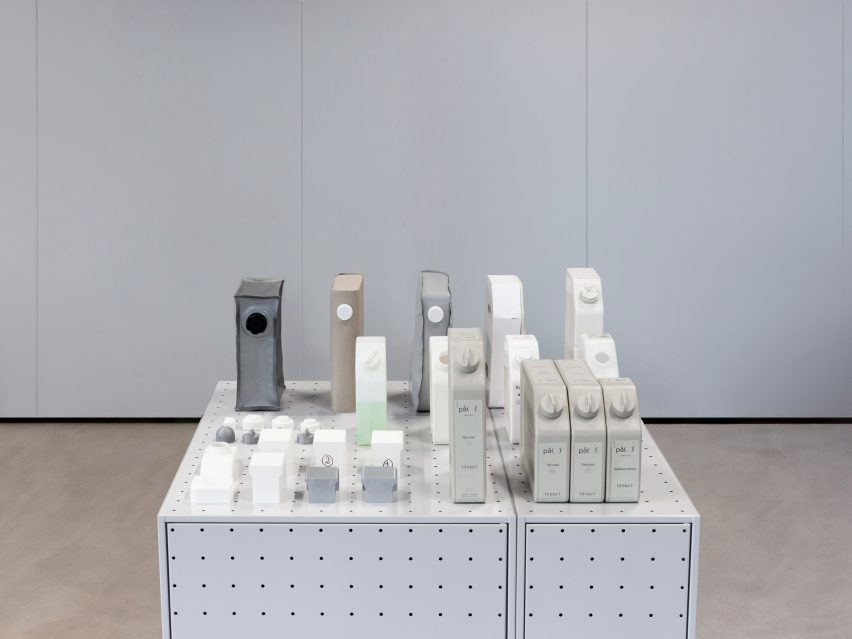
The studio is showcasing material experiments on wheeled cabinets
This allows the area to be used as an exhibition space, where FUWL is displaying some of its ongoing projects during Stockholm Design Week.
Among these is a project that explores how toxic glass – a waste material from the glass industry – can be treated to separate the toxins from the glass.
Five low, wheeled cabinets made from perforated steel were used to display the projects.
FUWL has created multiple different storage units
These are just some of the storage units and room dividers that FUWL has made for the studio, drawing on materials found in its own workshop.
“We have these boxes that were derived from the workshop, like ones you would have in the garage,” Löfgren said.
“We started wondering what would happen if we move these things out in the open,” he added. “It started off as dividers and walls, but add some wheels and all of a sudden we are in the open space.”
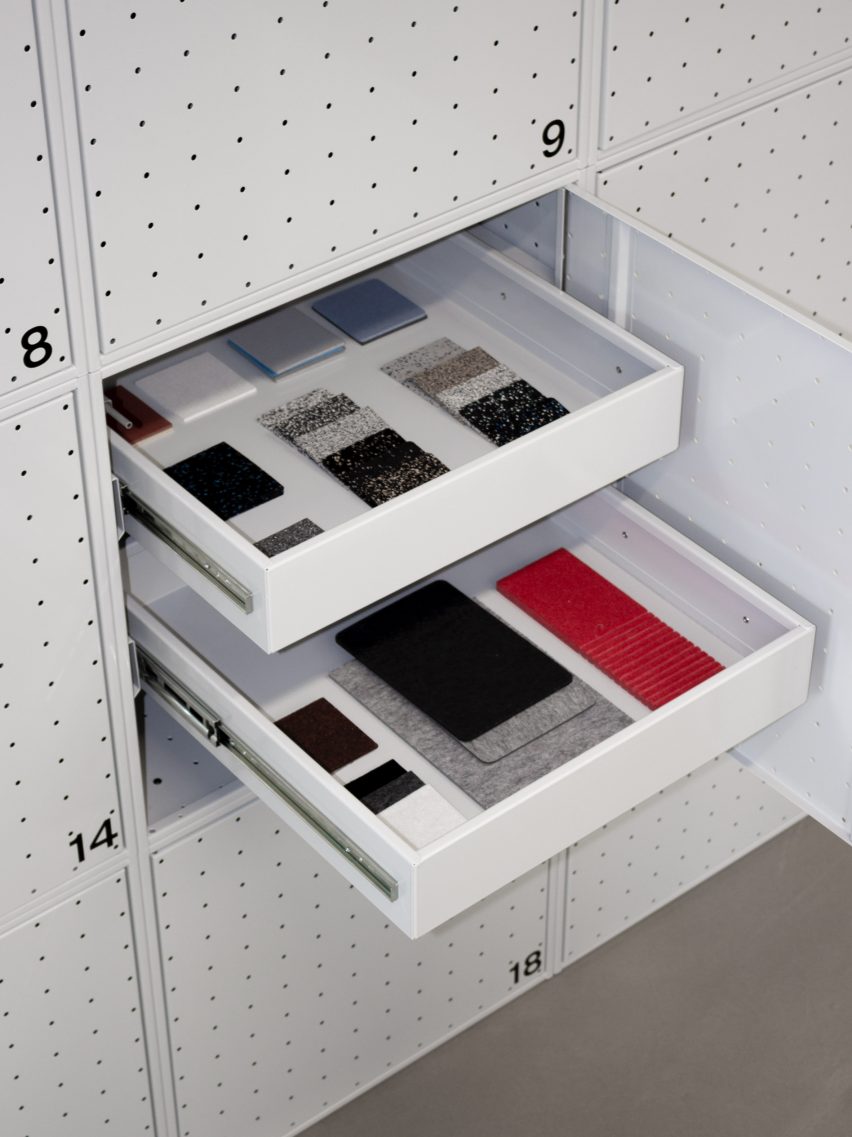
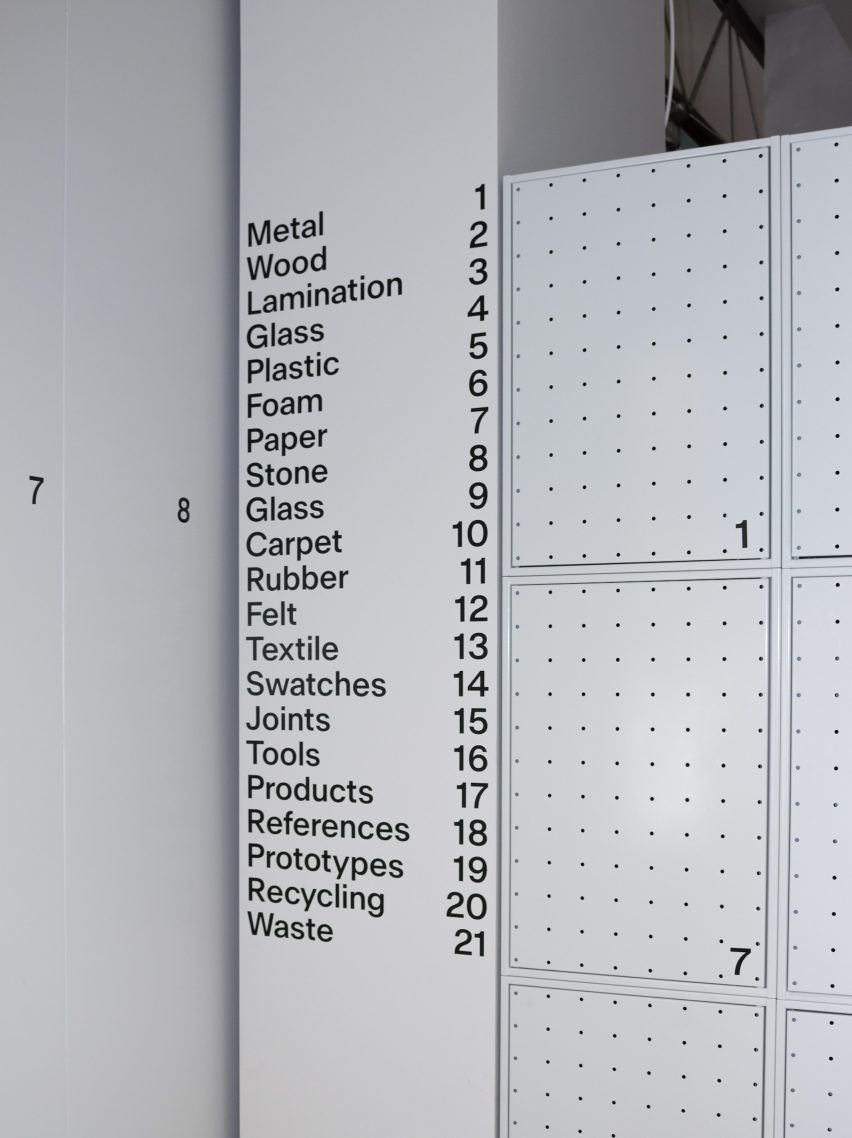
The studio is currently using the modular units as a material library, a tool wall and storage for personal and studio use, as well as experimenting with new functionalities.
Produced by Tunnplåt – a company that normally supplies lockers to schools, gyms and other public-sector interiors – the containers have a pattern of symmetrical holes.
A material library is housed in their drawers
This was designed to make the reference to pegboard walls immediately recognisable.
“We definitely experimented with patterns,” Löfgren said. “We still wanted people to have a smile on their face like: I can see where it derives from.”
The pegboard-style furniture was informed by tool walls
Realising that the perforated steel units could be used to create a flexible interior was just a coincidence, Löfgren said.
“I think it’s definitely a tool that incorporates how we want to work in the interior,” he said. “And I think that’s just been a coincidence.”
“We were always looking for something that would help us have this kind of full flexibility, and still be able to do something both fun and functional,” he added.
The studio was designed to be both practical and flexible
In the future, the studio said it might also create the units in other colours. For its own office, soft grey tones were chosen to aid concentration.
“We worked with tones of grey as a backdrop throughout the space to put focus on the creative processes taking place within,” architecture studio Förstberg Ling said.
Form Us With Love’s studio is open to the public between 5 September and 9 September 2022 as part of Stockholm Design Week. See Dezeen Events Guide for an up-to-date list of architecture and design events taking place around the world.
Modern-day cabin kitchens have a wide variety of styles. From the rustic modern log cabin kitchen ideas to sophisticated cabin chalets, there are designs that will interest anyone.
Above all, coziness is key in cabin kitchens. For her own cabin renovation featured in House Beautiful, Heidi Caillier valued comfort and designing a space that has a lived-in and layered look.
Cabin Kitchens: Popular Design Elements
As different as cabin kitchens look, there are some cabin kitchen decor elements that tie these spaces together and make them distinct from other kitchens.
Wood Tones – Most every cabin kitchen has wood-tone elements on one or more features in the kitchen. This can be in the flooring, cabinets, exposed beam ceilings, or decorative wood accents.
Cozy and Welcoming Textures – Each cabin kitchen has a distinct look, but the best ones create a warm and welcoming presence. You can do this with the addition of natural textures like wood, leather, wool, and stone. Also, be sure to include comfy seating for relaxing in the kitchen while the coffee is brewing.
Natural Stone or Brick – Exposed stone or brick goes a long way to creating the cozy look that is common for cabin kitchens. It also gives the kitchen a more relaxed and rustic look that fits with the natural setting of a cabin. Also, natural stone is an important element of cabin kitchen backsplash and countertop design.
Layered Lighting – One single fluorescent or bright white light will not create the best look for the modern cabin kitchen. Layered lighting is the best way to achieve a lighting style with depth and interest. Use pendant lighting, under the counter lighting, and recessed ceiling lights to create the best lighting.
Open Floor Plan – Whether they are small or large, most modern cabins have open floor plans that open the kitchen to other rooms like the dining room and living room.
Metal Accents – Most cabin kitchens feature warm metal accents like copper, bronze, black iron, or brushed brass. Modern and contemporary cabin kitchen designs also feature stainless steel and chrome.
Cabin Kitchen Design Ideas
There are some amazing cabin kitchen designs out there. We have rounded up some unique ones to give you some ideas for your own cabin kitchen. Or, you can just use these ideas to give your own kitchen a more rustic style.
Urbaine Home designed this rustic modern cabin kitchen. The designers, Urbaine Home, used a mixture of wood colors and types in the wood cabinets and exposed ceiling beams.
The flush doors on the cabin kitchen cabinets help keep the style simple.
Notice the combination ofwood and natural stone for the backsplash and countertops.
For her own cabin kitchen renovation, Heidi Caillier chose to create a comfortable space in this small kitchen. She did this by painting the paneling a dark and moody hue and accenting the space with elements of warm wood.
Small touches like the copper tea kettle and the kilim rug contribute to the snug kitchen vibe.
This is one of the most interesting log cabin kitchen ideas that we have seen. The designers, CLB Architects, remodeled this dark log cabin kitchen into this bright and cheery space.
They left the floors dark but painted the exposed logs inside.
They added simple and modern kitchen decor that contrasts well with the rustic look of the cabin.
Studio West designed this farmhouse cabin kitchen for the Pioneer Hotel. Farmhouse and cabin style blends well together as both feature simple but textured design elements.
These cabin kitchen cabinets feature a simple shaker style painted in light gray.
The light wood paneled walls and ceiling balance the warm wood elements like the open shelving and vent hood.
Studio Schicketanz designed this classic rustic cabin-style kitchen. They have kept the kitchen color palette simple, using the natural tones of wood and stone to be the dominant colors.
This is a small kitchen, but the galley layout gives the owners easy access to all the storage and appliances.
The exposed windows allow in as much light as possible to maximize the visual space and presence of the room.
This is a gorgeous contemporary rustic kitchen from Reid Smith Architects. The finishes in the kitchen are sleek and sophisticated from the flush panel kitchen cabinets to the natural stone waterfall island.
The rustic elements are subtle but definite. The leather bar chairs and the gray wood walls add depth to the sleek design.
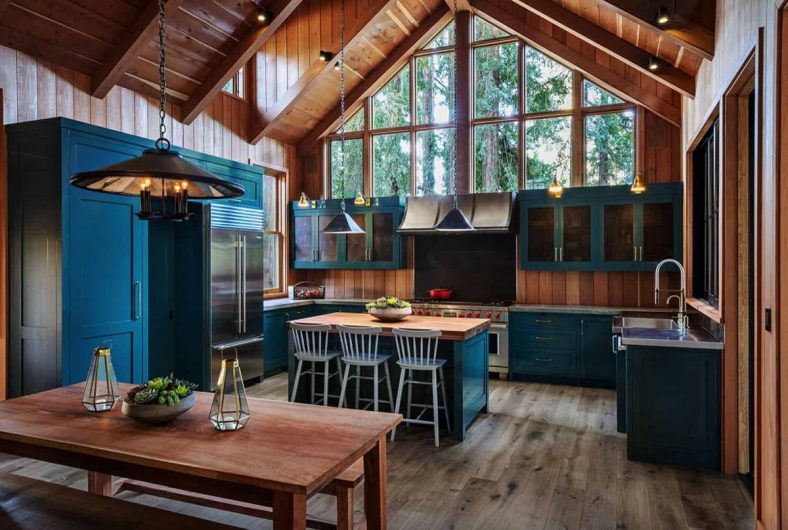
Dotter and Solfjeld Architecture + Design created this striking rustic cabin kitchen. The warm wood ceiling and wall paneling contrast with the bright blue cabinets, but the warm tones blend overall.
While the cabinets create a gorgeous visual, the real focal point is the cathedral ceilings and the large gable window view.
This kitchen layout from Arcanum Architecture features a U shape with an island in the middle. This is one of the most efficient ways to use space.
The designers used medium-toned stained wood on the walls and ceilings to create a pleasing continuity. They also used a mix of lighting elements including recessed lighting and the large home chandeliers over the island.
The Reed Design Group chose to keep the design of this cabin kitchen simple and let the gorgeous view speak for itself. They keep the windows uncovered to maximize the view. They added rustic elements including the natural stone backsplash and countertops. The design balances these stark elements with wood to bring warmth and texture to the design.
Frequently Asked Questions (FAQ)FAQ
What is a common color in cabin kitchens with painted cabinets?
Some cabins feature painted cabinets rather than stained cabinets. Most of the colors for cabinets in cabin kitchens mimic the colors of the outdoor spaces in which they are situated. Gray, cream, blue and green are all common cabin cabinet colors.
What are common features of a luxury cabin kitchen?
Luxury kitchen designs for cabins feature common elements like natural stone like slate and granite for countertops, backsplashes, and floors. They also have high-tech appliances, ample square footage, custom cabinet designs, gorgeous lighting,
What are some elements that I can add to my kitchen to make it more rustic?
If you want to add some rustic elements to your kitchen you can do it through accessorizing your space with items made from wood, leather, and stone. For example, add decor like rustic wood trays, leather baskets, wooden cutting boards and utensils. Add a textured wood accent wall to your space. Crockery like pitchers and bowls filled with fruit are good options to add a more rustic style to your kitchen.
What are the best kitchen layouts?
The best kitchen layouts are those that utilize the work triangle. The work triangle connects three areas, the sink, the stove, and the refrigerator. These areas should be connected by three legs. These legs should be between 4-9 feet in length. The total of all three legs should be between 13-26 feet in total.
Conclusion
Cabin kitchens have wonderful variation in style, but the best kitchens utilize elements like layered lighting, exposed wood and stone, and warm textures to create an inviting atmosphere. Use these elements to create a kitchen design for your retreat or just bring in some rustic elements to your own home kitchen.
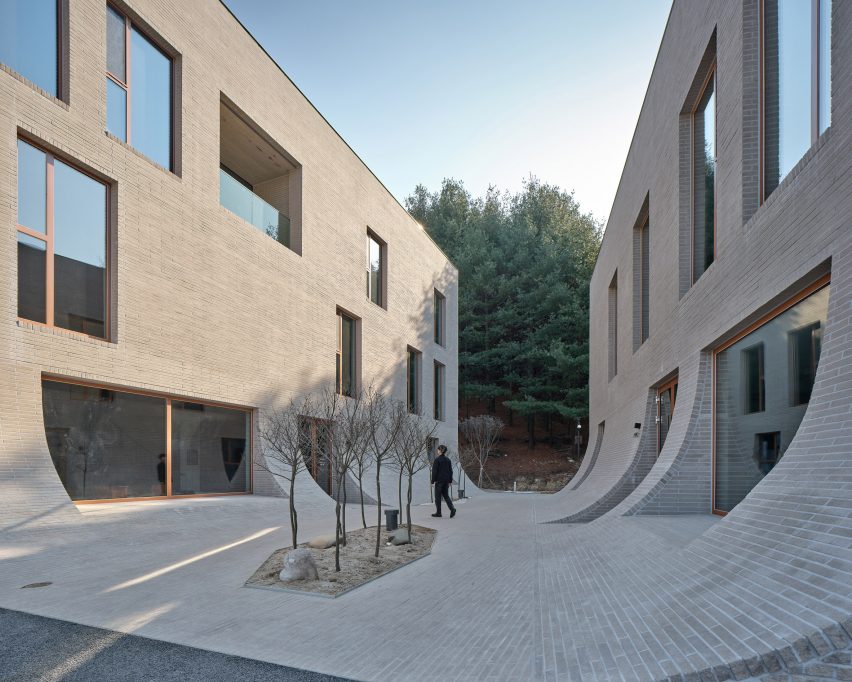
Architecture studio Nameless Architecture has completed the Café Teri bakery in Daejeon, South Korea, in a pair of buildings that flow into a central courtyard.
Located at the foot of the Gyeryongsan Mountain in Daejeon, Nameless Architecture designed the two buildings to frame the entrance to a hiking trail that continues up the mountain.
The cafe’s courtyard leads onto a hiking trail
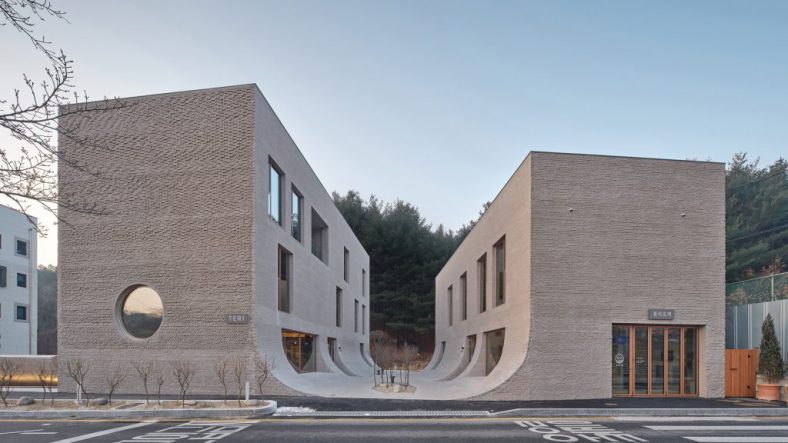
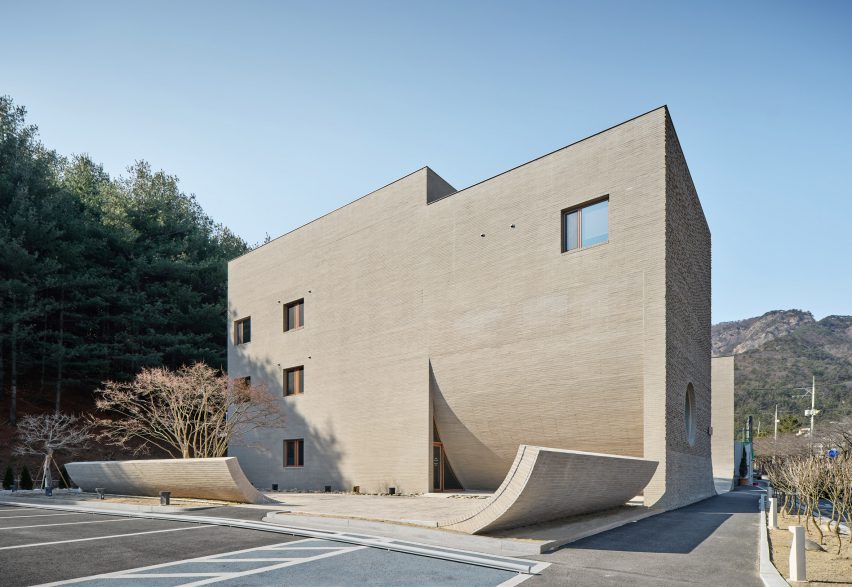
The two rectangular buildings were angled, creating an outdoor space that narrows towards the mountain path. The three-storey building contains a cafe and the two-storey building opposite is a bakery.
“The artificial valley, where the distinction between the wall and the floor is blurred, creates a flow towards the forest and becomes the yard to the cafe and a path for walkers,” Nameless Architecture co-principal Unchung Na told Dezeen.
“We intended the building to become a path and courtyard that guides the flow of nature and visitors rather than blocking the promenade.”
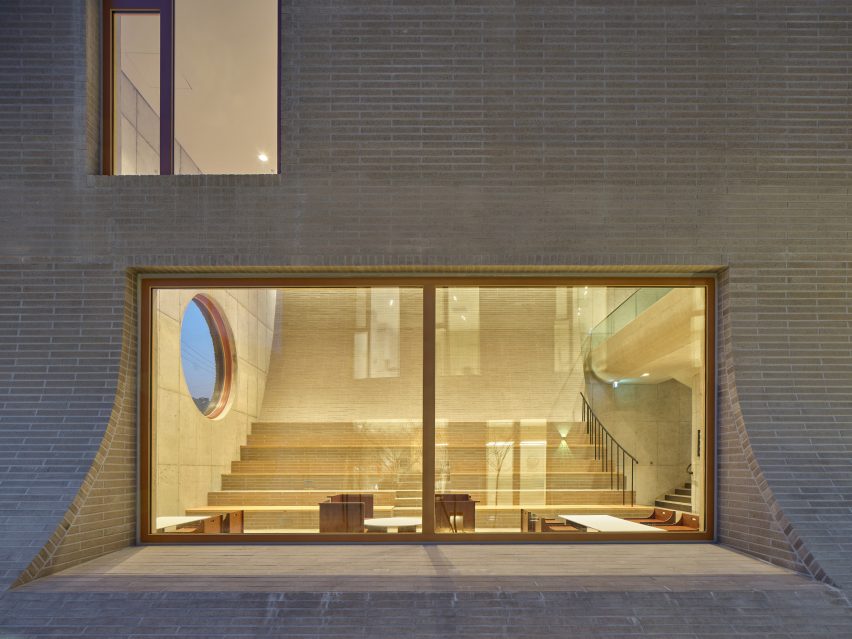
Concrete brick walls slope down into the floor of the courtyard at Café Teri
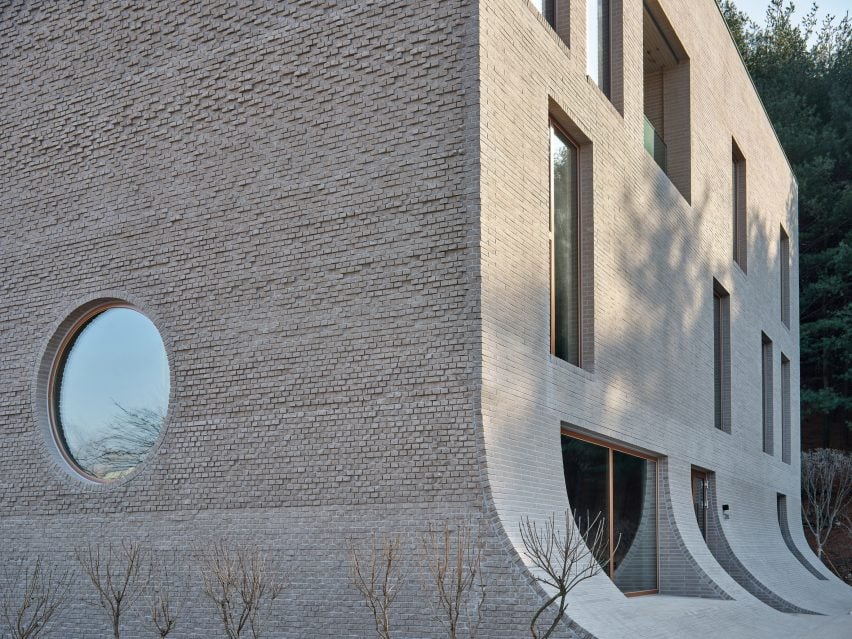
The 900-square-metre project was finished in concrete bricks, creating a rough texture on the exterior walls.
“The concrete bricks used to construct the architectural topography emphasise the continuity of the flowing space,” said Na.
“On the other hand, the facade wall made of rough broken bricks creates a difference of boundaries through the change of light, shadow, and time.”
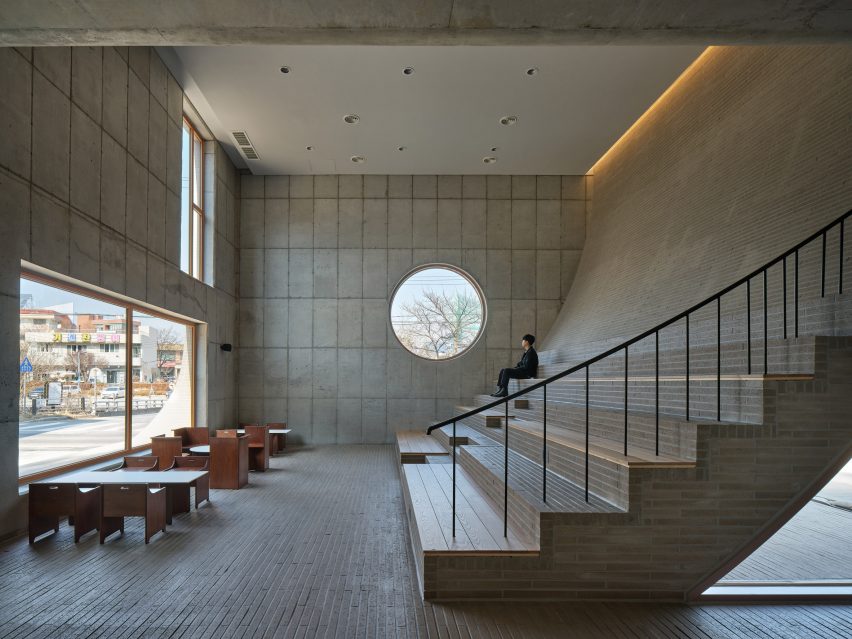
Nameless Architecture used concrete brick for the interior of the cafe as well as the exterior
The flowing exterior walls of the project are replicated inside the ground floor of a cafe, where the back wall of a double-height space curves down into stepped seating.
The floor, curved wall and stepped seating inside the cafe were finished in concrete bricks, and the remaining walls were finished in polished concrete.
“The fluid wall is continuous not only in the yard but also in the interior space, connecting the inside and outside scenery through a stepped space,” Na explained.
A backyard area features uplifted terrain that mimics the curved concrete brick walls of the cafe and bakery, which Nameless Architecture designed to provide a spatially interesting place for people to enjoy food outside.
Nameless Architecture used curved walls to create a distinct “architectural topography”
The architecture practice designed the curved elements that appear to emerge from the ground with the aim of blurring the lines between what is wall and floor.
“The basic elements of architecture can be reinterpreted to induce various experiences and actions of people,” said Na.
“In particular, the two elements, wall and floor, are defined as fundamentally different architectural elements, but we tried to reconsider this strict relationship.”
The project aims to reinterpret how walls and floors are used as architectural elements
“The mutual relationship in which the wall becomes the floor, and the inside becomes the outside can be interpreted in various ways through the experience of the place,” Na continued.