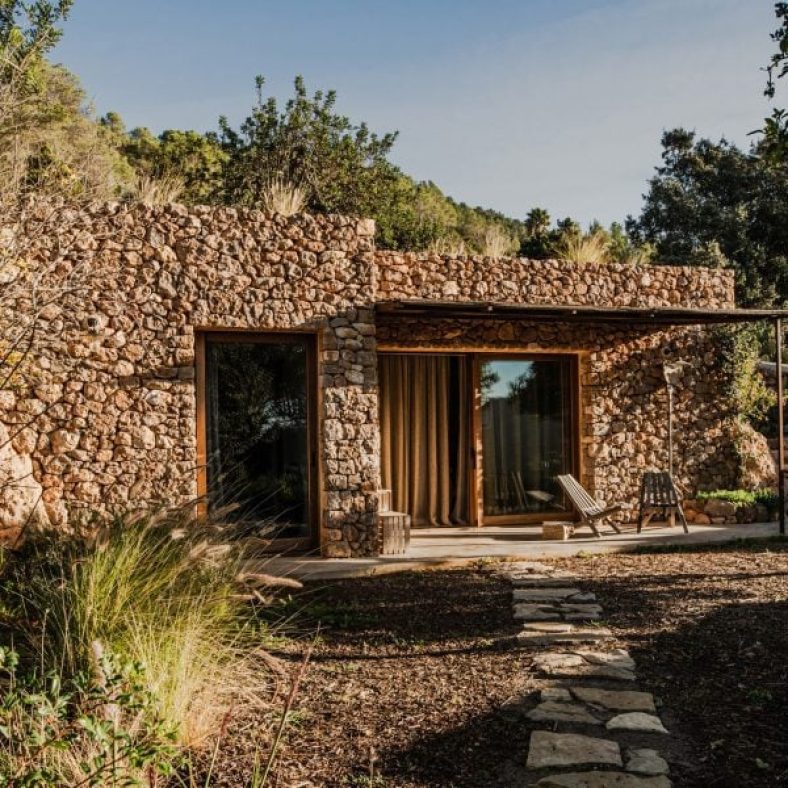
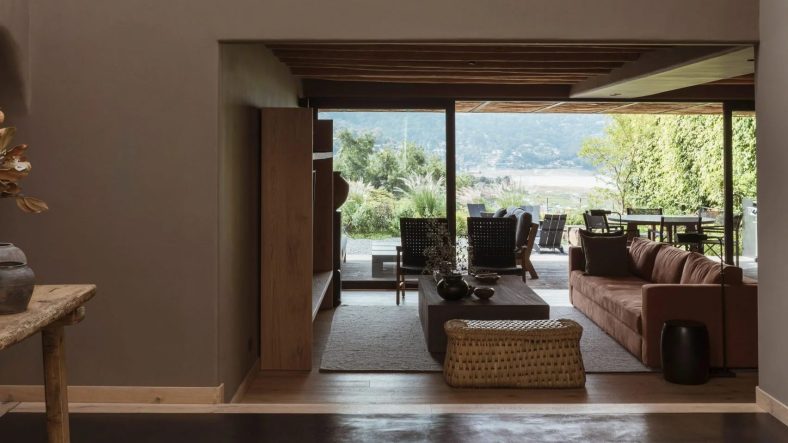
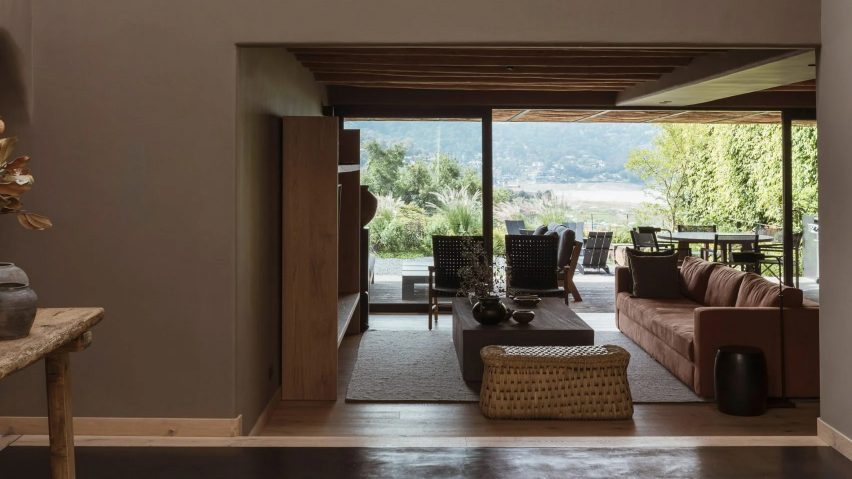
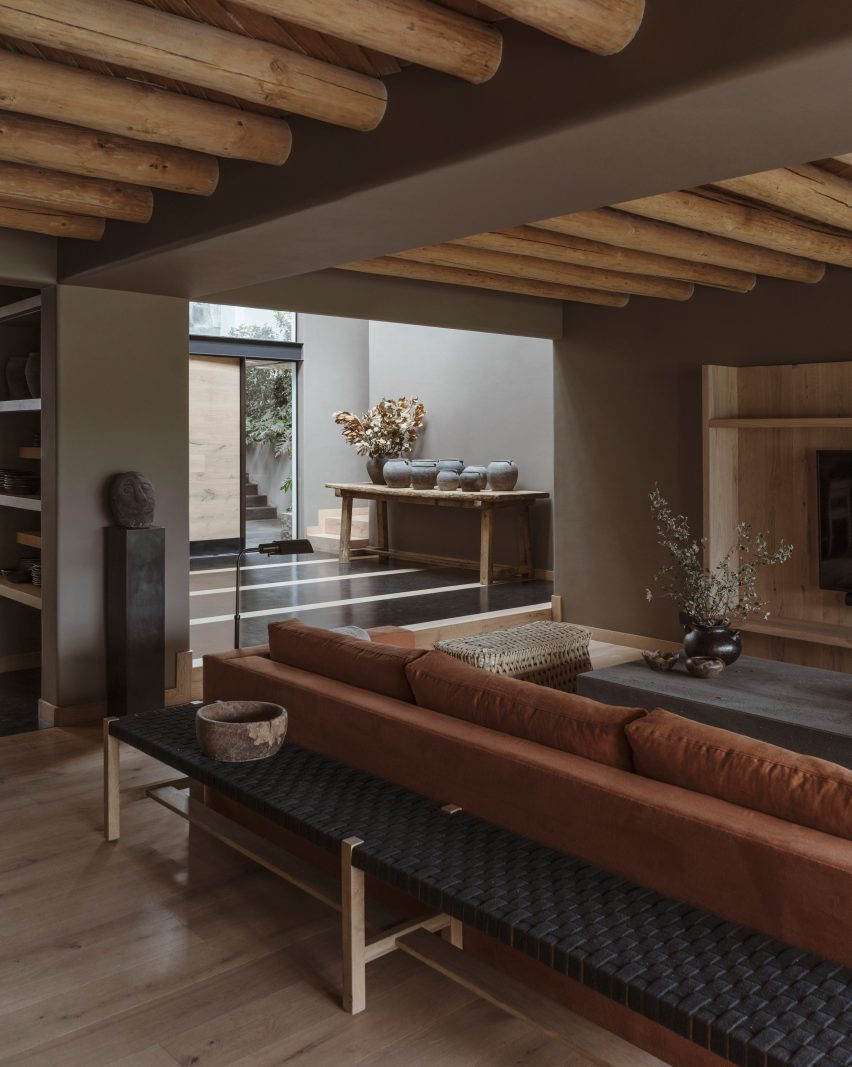
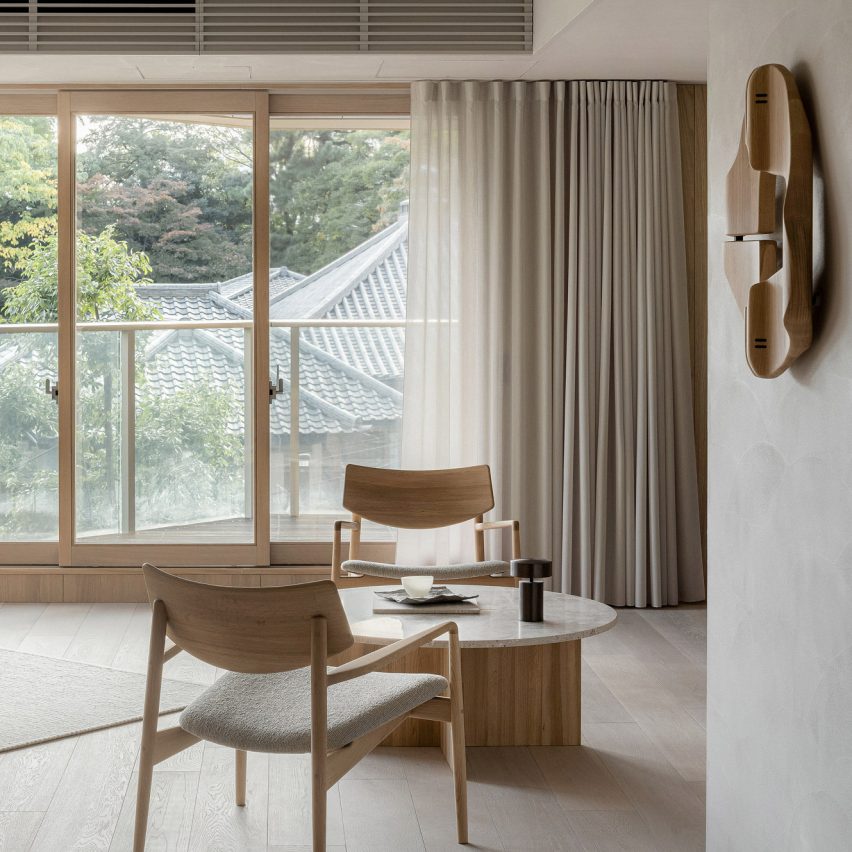
A 200-year-old stable building in the mountains of Ibiza has been converted into a vacation home by local studio Ibiza Interiors.
The Atelier is one of four dwellings that make up Campo – a group of rentable guesthouses set in a finca, or farmstead, in the island’s Morna Valley.
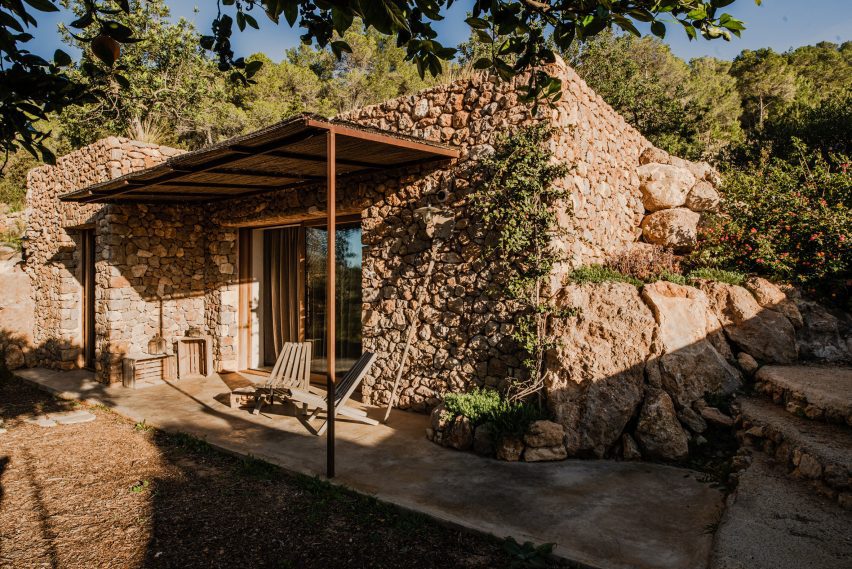
Campo Atelier is located in a renovated dry-stone stable building
Ibiza Interiors founder Jurjen Van Hulzen has renovated these buildings one by one to enhance their original features and create a series of tranquil getaway spots.
“Nestled between carob and orange trees, the Atelier […] appears at the end of the path as a haven of peace,” said the Dutch architect, who founded the studio in 2014.
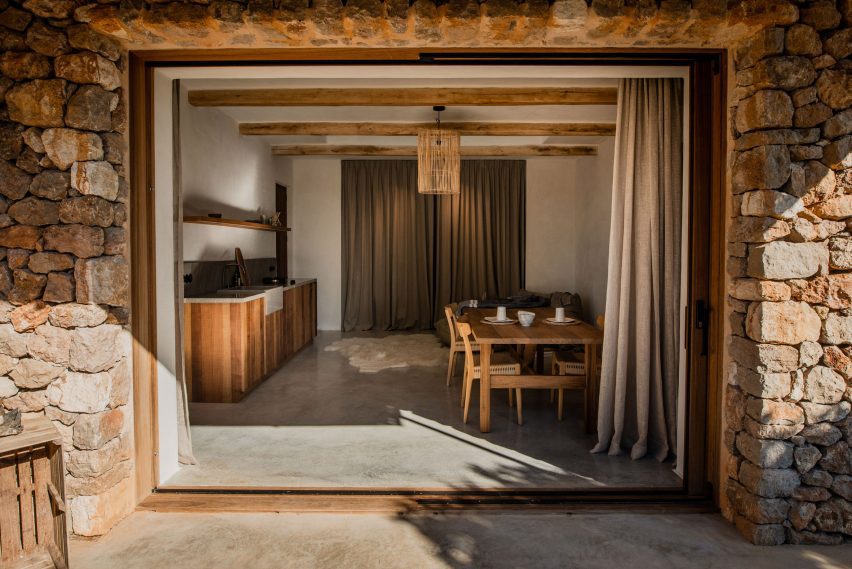
The main space is designed for flexible use
The single-storey dry-stone structure is typical of the local vernacular but now features a large retractable glass wall across its front.
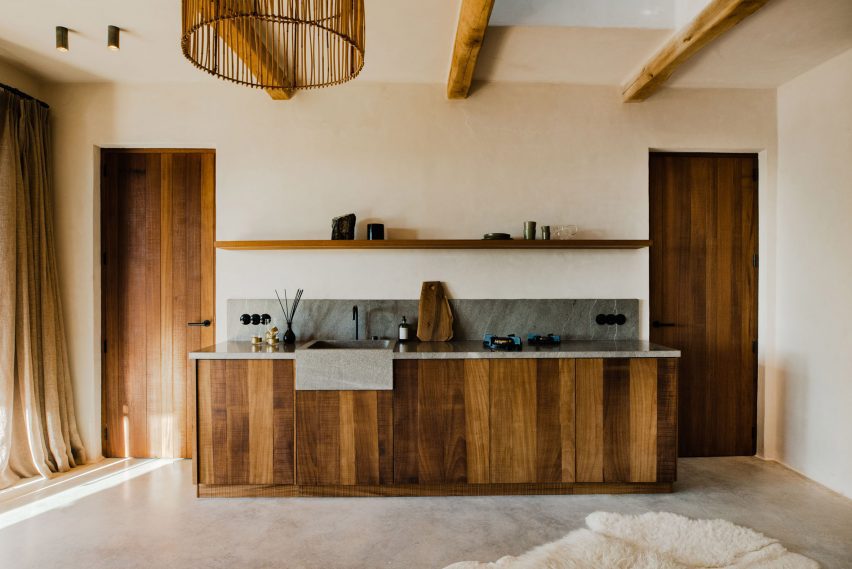
A polished concrete patio continues inside, where exposed timber ceiling beams and wooden doors complement the neutral colour palette.
“Textures and styles are not afraid to cohabit and the emphasis is on the interplay between old and contemporary, elegant and rustic,” said Van Hulzen.
A small kitchenette with wood-panelled cupboards matches the doors on either side
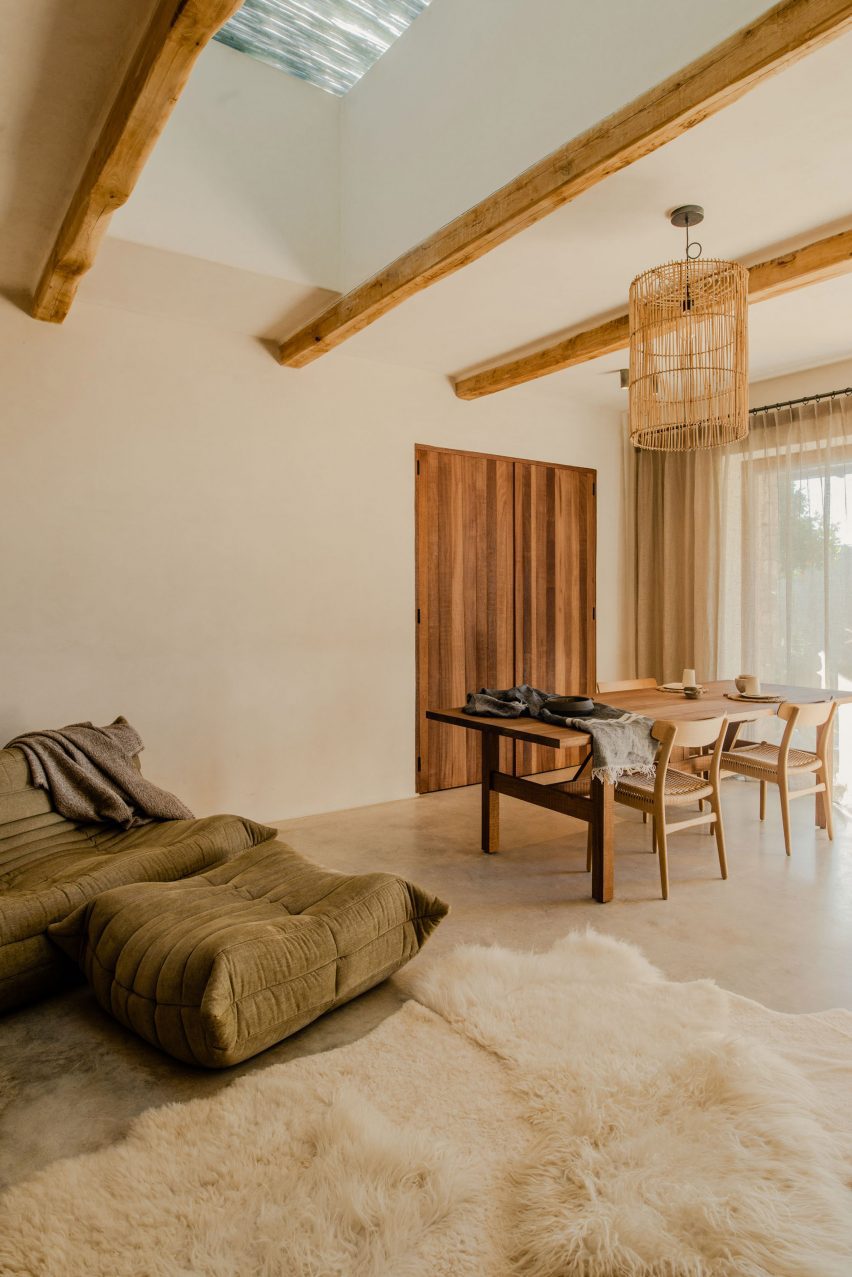
The main space contains a small kitchenette on one side and a dining table that doubles as a workspace on the other.
A seating area comprising low, comfy sofas is positioned towards the back.
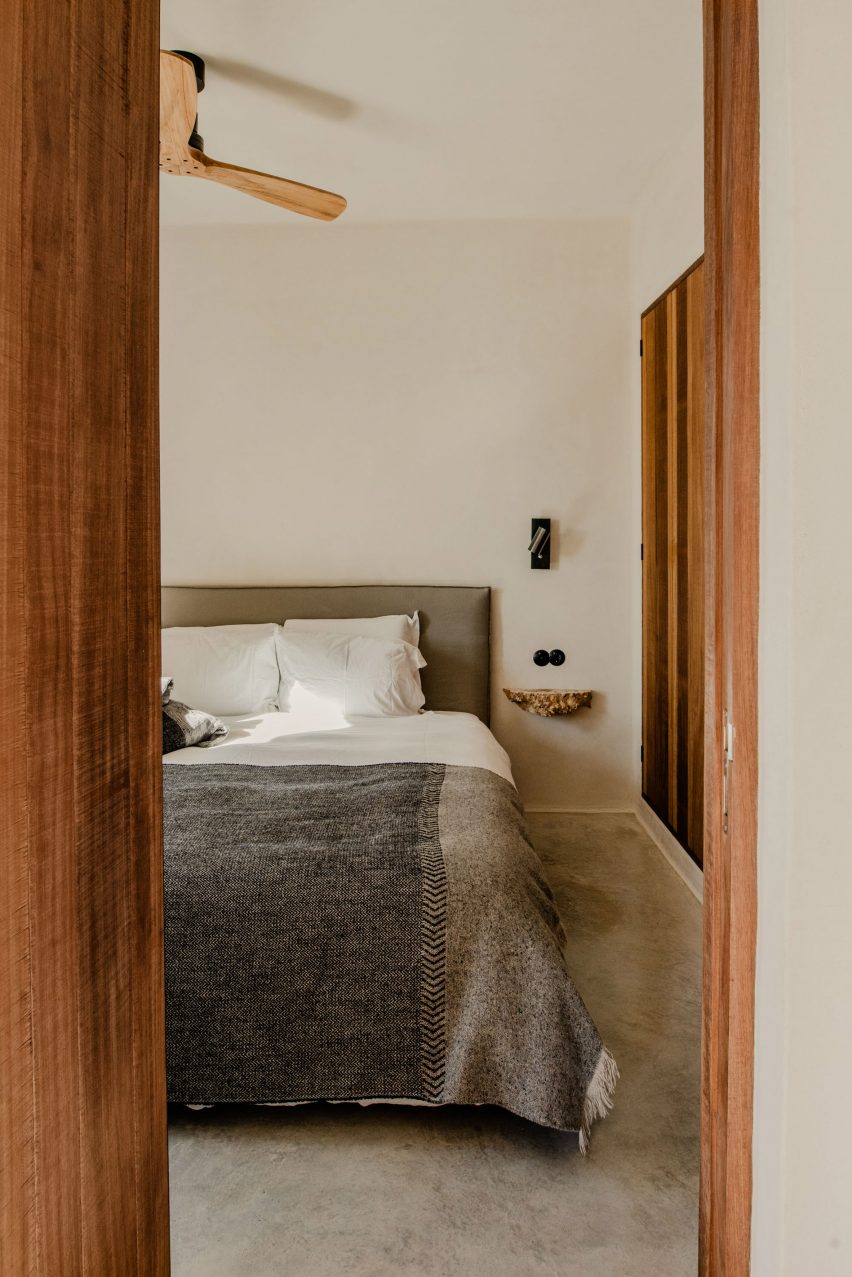
The minimally furnished bedroom includes built-in storage
The interior is designed to be as flexible as possible, with all of the furniture except the kitchen counters moveable to provide space for exercise or meditation.
Equally, the linen curtains can be drawn and the sofas reoriented for watching movies on a projected screen.
The bedroom is minimally furnished but guests can store their belongings within built-in closets while another glass door opens to the exterior.
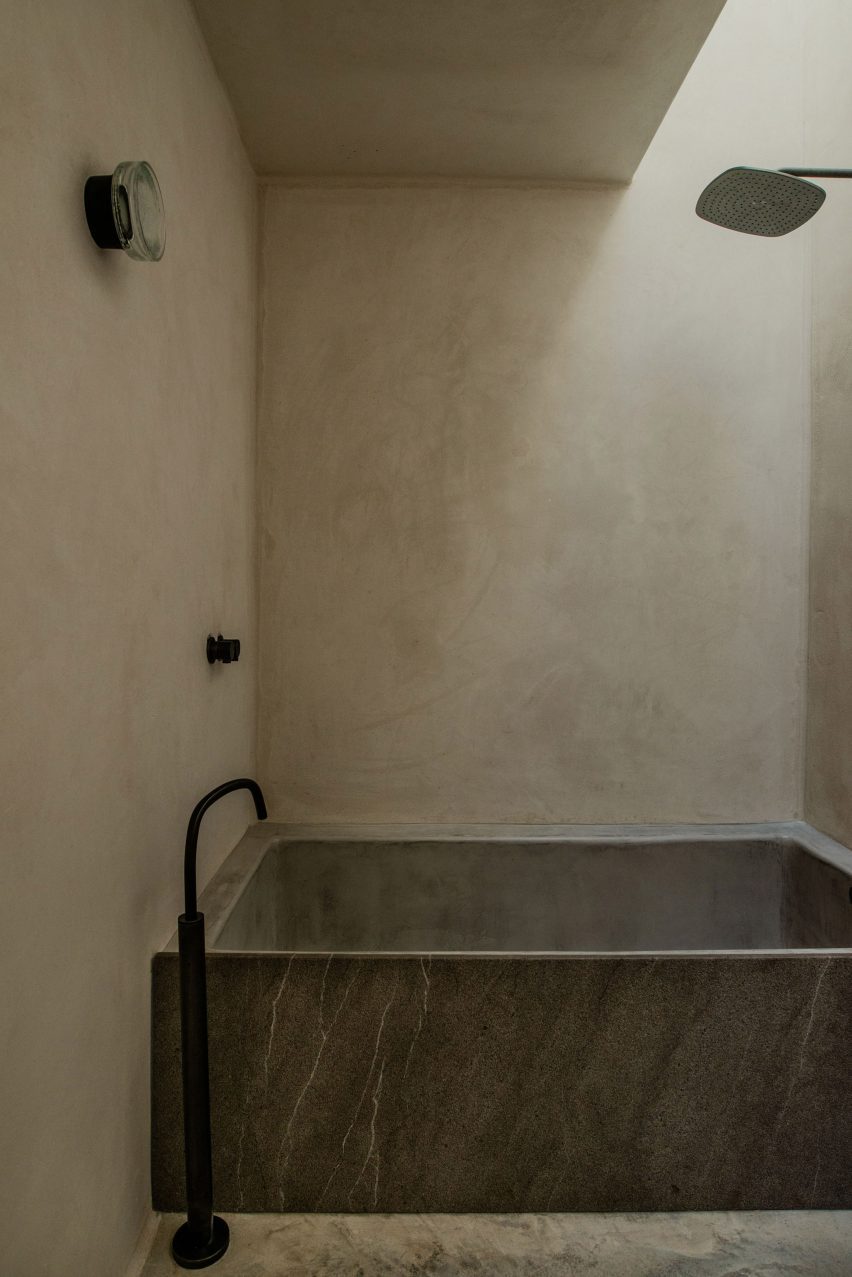
In the bathroom, lit from above by a skylight, a large tub made of dark stone is accented with matte black hardware.
In the bathroom, a grey stone tub is illuminated by a skylight
The landscaping around the Atelier was designed by Ibiza Exteriors, a new offshoot of Ibiza Interiors created by Van Hulzen and Alicia Uldall.
The pair chose local flora attuned to the island’s climate that requires minimal maintenance such as stipa grasses, aloe, rosemary and mastic trees.
The 200-year-old building sits on a hillside, with its flat roof accessible via stairs
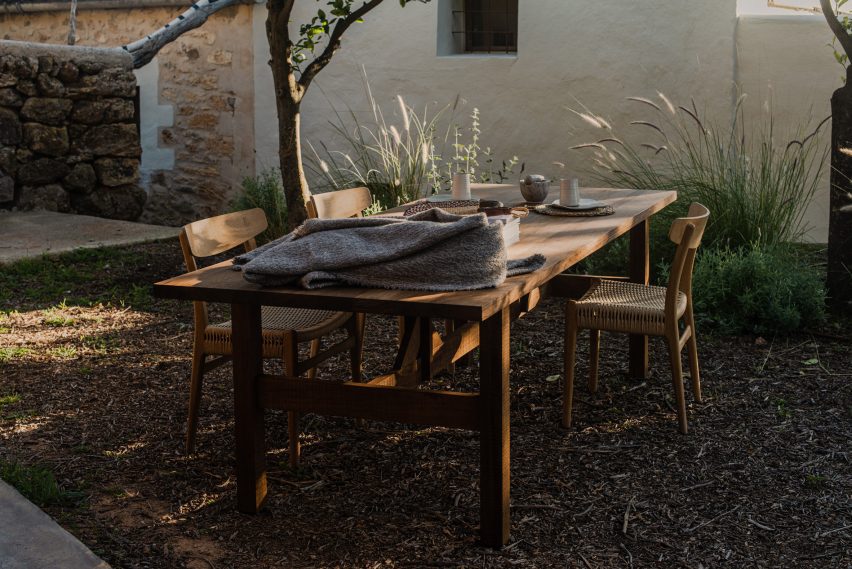
Deep steps lead up to the flat roof that serves as a picnic or sunbathing spot overlooking the valley. The dining table and chairs can also be brought outside for al fresco dining among the vegetation.
“Like the Atelier, the garden preserves the wild essence of this land and its genuine beauty,” Van Hulzen said.
The dining table can be brought outdoors for al fresco meals
Better known for its party scene, Ibiza is becoming ever more popular as a wellness and relaxation destination – particularly away from its coast.
Many of the island’s historic fincas have been converted into secluded accommodations including the remote Aguamadera resort and the members-only retreat La Granja.
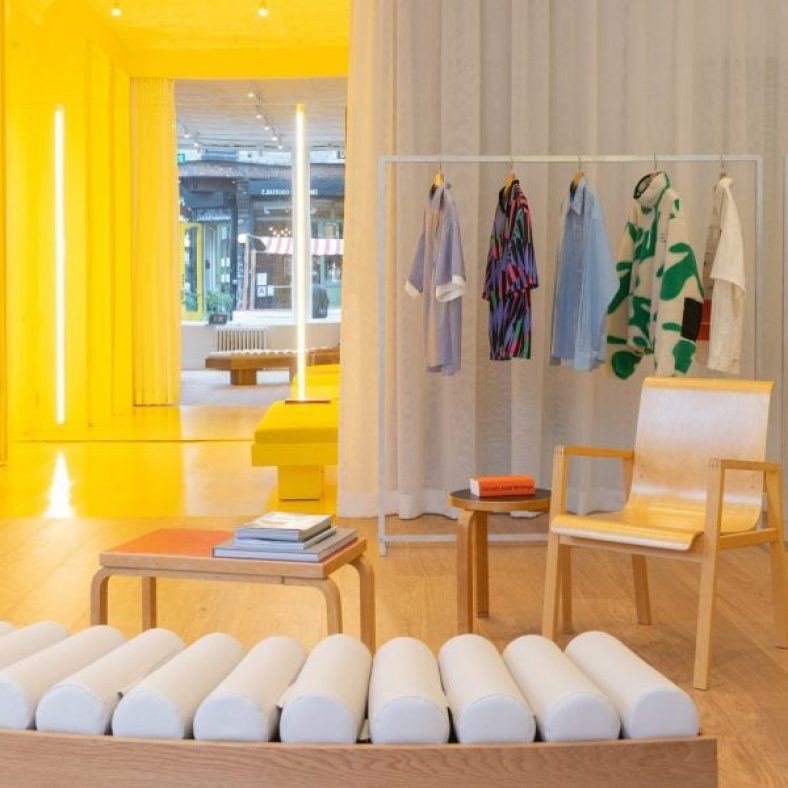
New York architecture studio BoND has used tubular lighting to create a bright yellow glow inside this men’s apparel store on Manhattan’s Lower East Side.
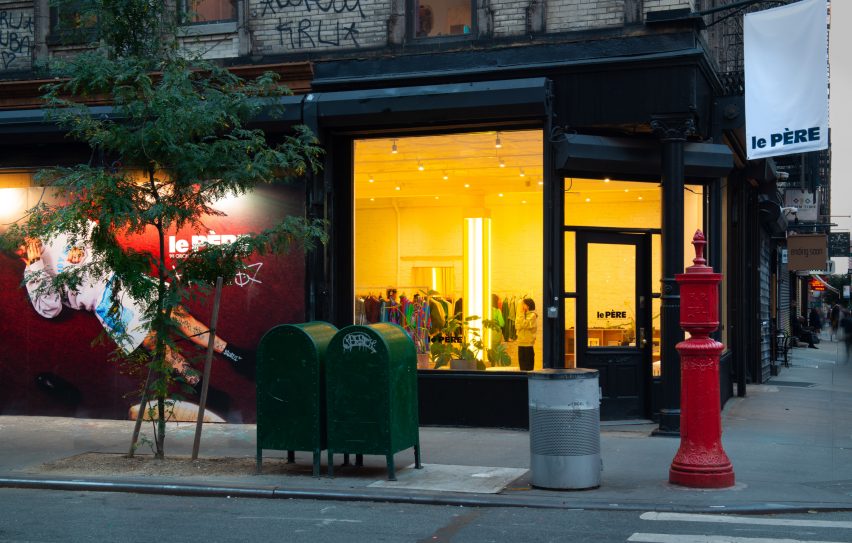
The first flagship for cult fashion label Le Père occupies a 1,000-square-foot (93-square-metre) corner unit on Orchard Street.
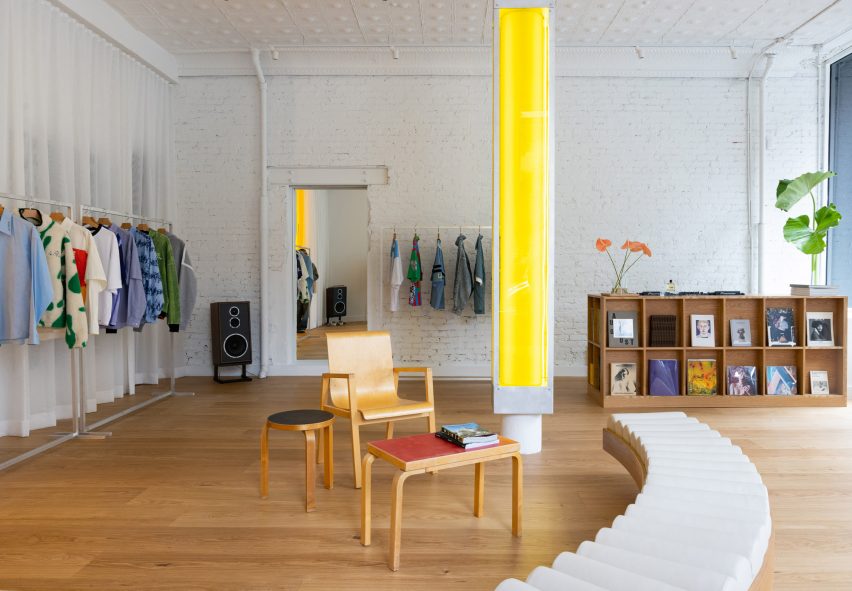
The flagship store for Le Père is largely painted white to allow the bright clothing to stand out
Utilising the store’s large exposure to the street, BoND opted to create an interior that would be just as impactful from the exterior as it is once inside.
“BoND designed the store to feel like a canvas, highlighting the design elements of the clothes while ensuring the space is a place that creators feel encouraged to spend time in,” the team said.
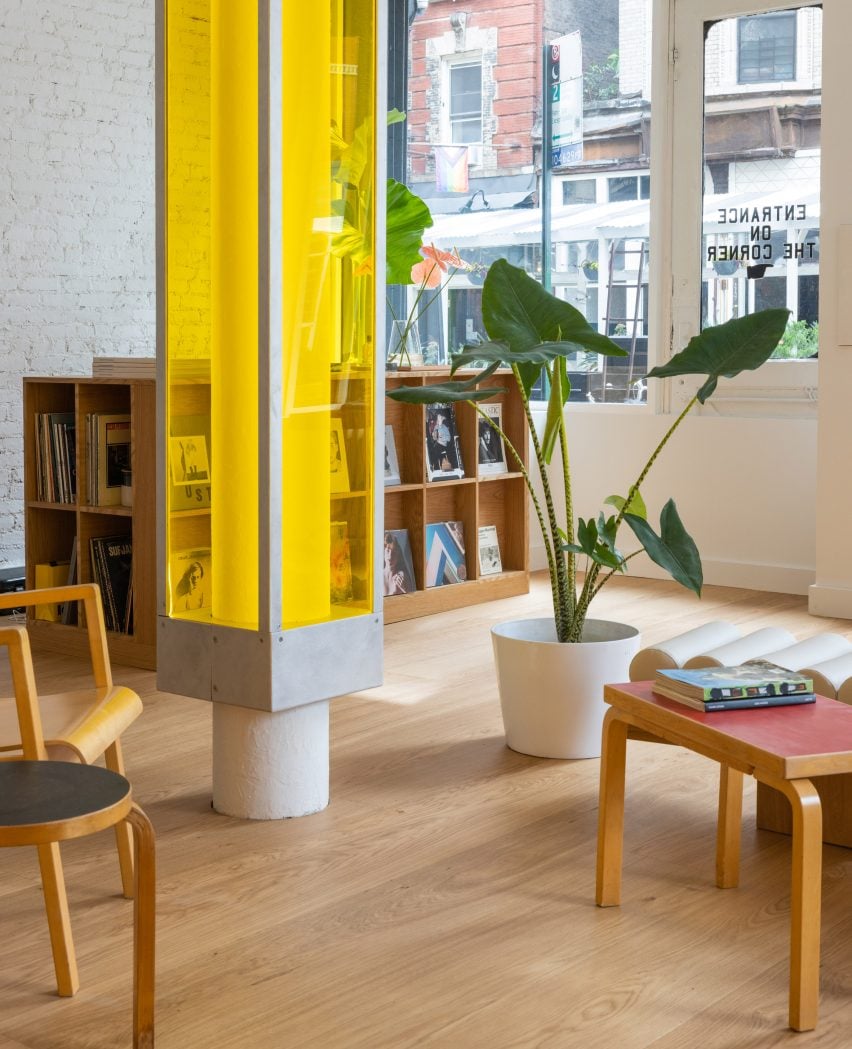
A central column is encased in a translucent yellow box
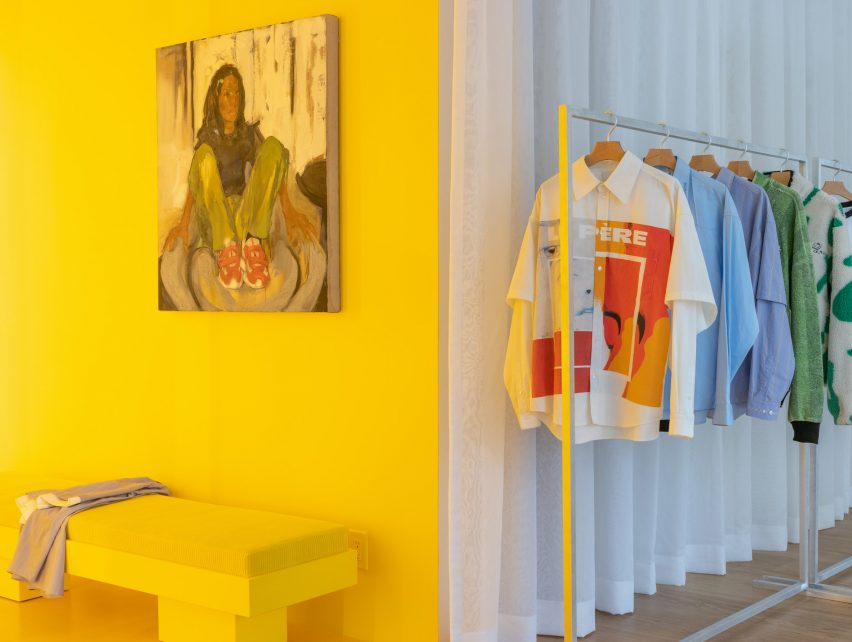
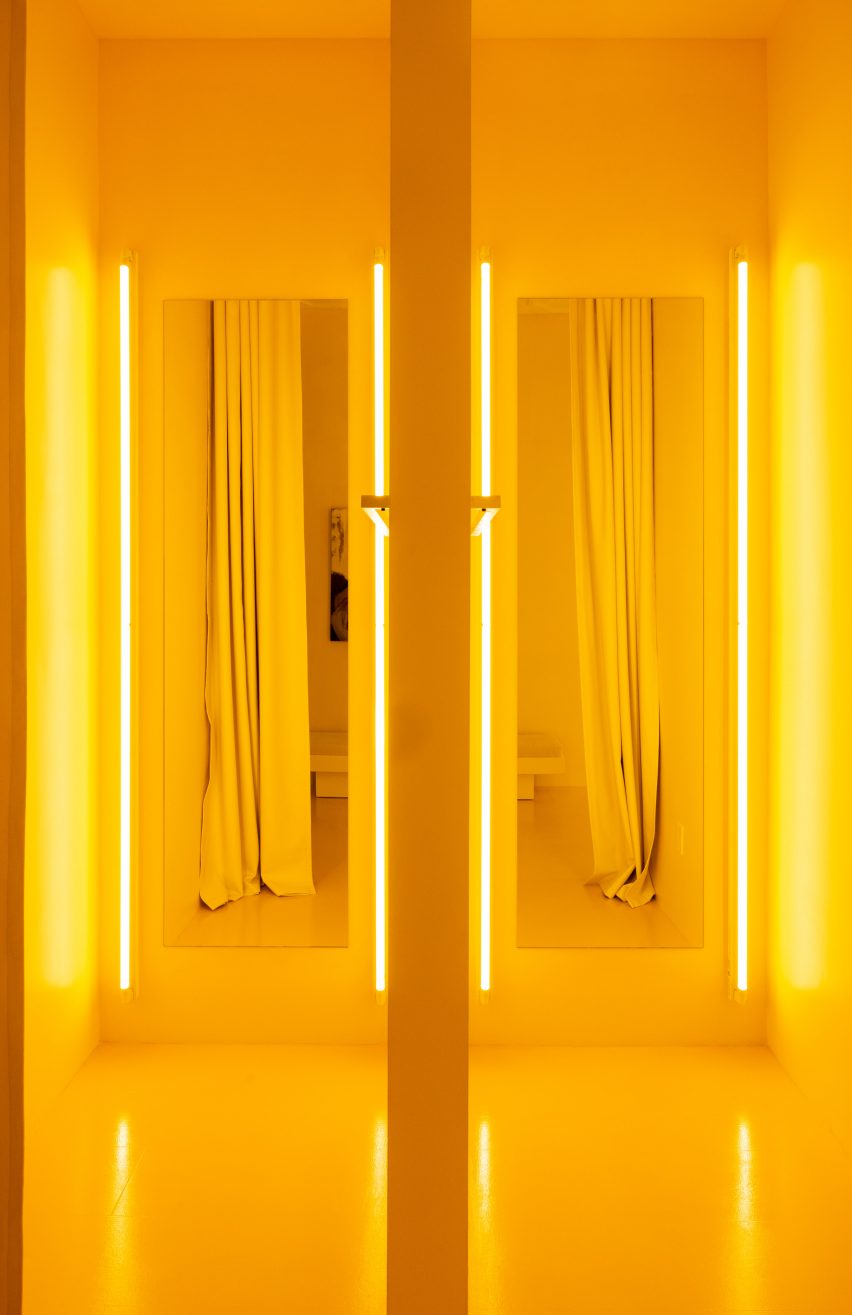
The firm’s approach was to leave the majority of the space white, allowing the boldly patterned clothing to stand out, then highlighting the fitting rooms using bright yellow lighting and surfaces.
A structural column in the centre of the store encased in a translucent box is also fitted with lights to give off a sunny glow.
Yellow lighting installed in the fitting rooms emits an inviting glow
This yellow aura is immediately apparent from the street and is meant to entice passersby to step inside.
Neon lighting has seen a resurgence in retail and other commercial interiors of the past year, appearing everywhere from a Brooklyn cafe to a Calgary chicken shop.
The tube lights were installed on either side of mirrors in the fitting rooms, which are also yellow
At Le Père, other elements like the tops of vintage Artek furniture are coloured red and black, to borrow from the street signs across the neighbourhood.
Floor-to-ceiling curtains along the back wall create a soft and neutral backdrop for the apparel, which is displayed on industrial metal racks.
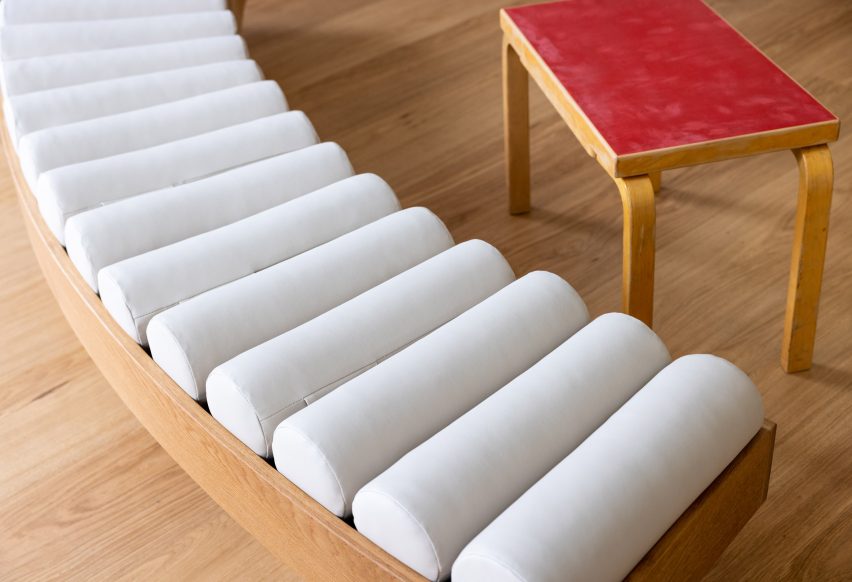
Custom furniture pieces were designed by BoND and fabricated by Lesser Miracle
Wide-plank wood floors are laid across the main shop floor, which doubles as a space for gatherings, conversations, exhibitions and events.
Custom furniture pieces including a curved bench were designed by BoND and fabricated by Brooklyn design and art studio Lesser Miracle.
“The design scheme blurs the lines between a store, a home and an art studio – a space that is both aspirational and livable, combining contemporary and historic elements as a playful strategy,” said the studio.
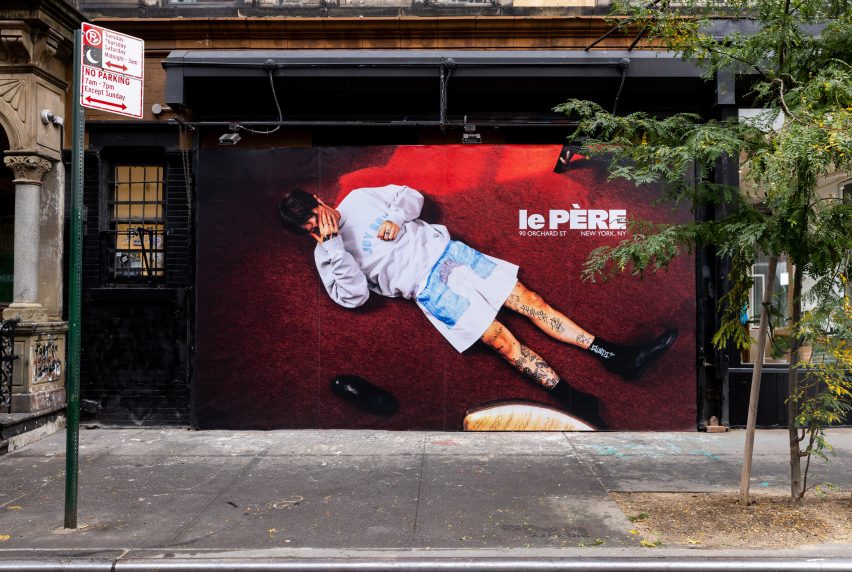
On the exterior, a generous portion of the facade is given over to a giant billboard that Le Père will use to present its seasonal visual campaigns and artwork by the brand’s collaborators.
A large portion of the facade is given over to a billboard to display the brand’s campaigns
The debut placement for Fall/Winter 2023 was titled And Sometimes Boys and influenced by the work of Korean visual artist Nam June Paik.
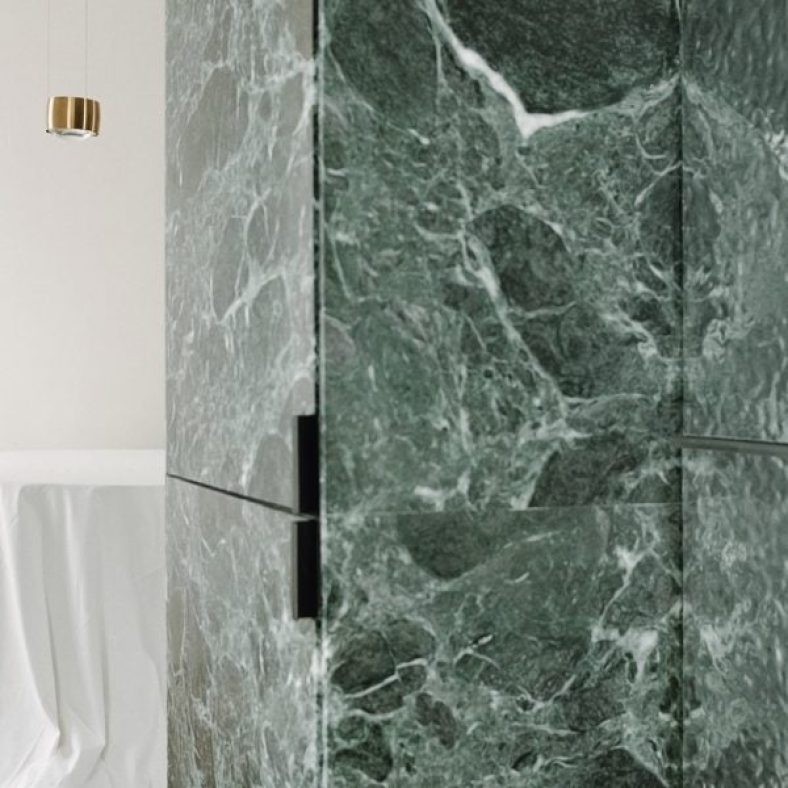
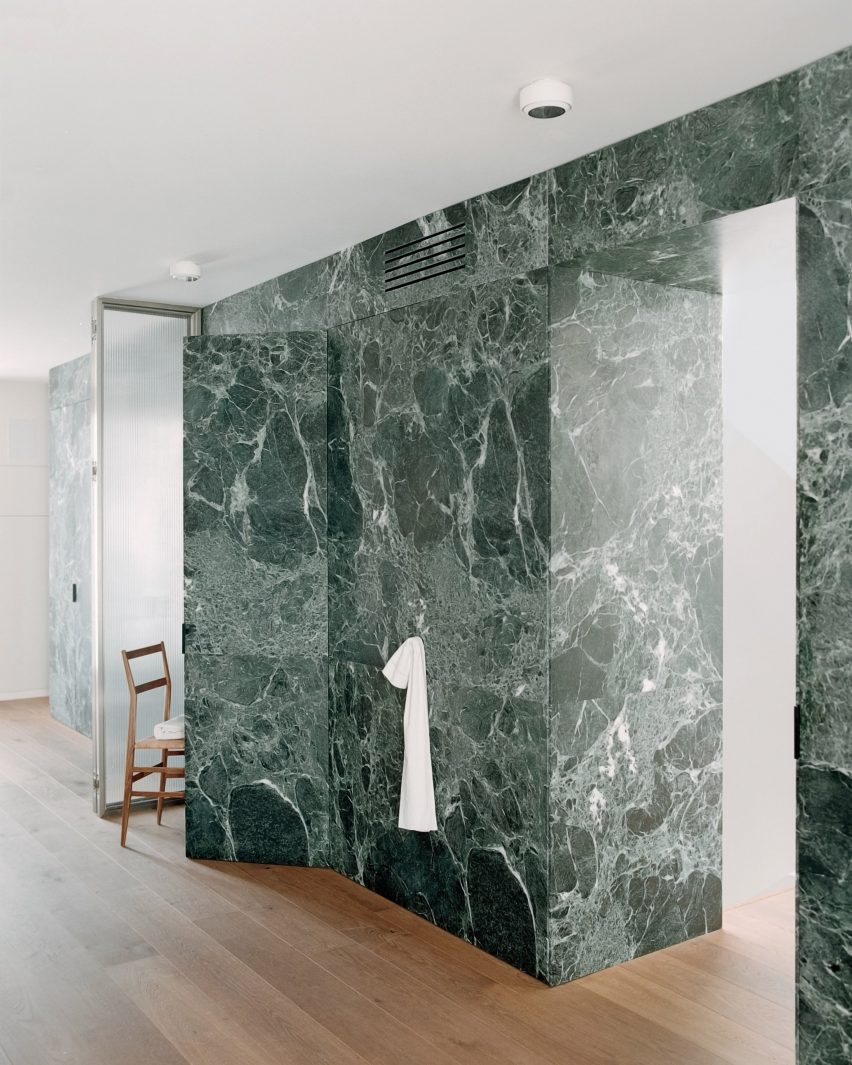
Italian studio AIM has designed a compact, multi-level apartment interior in Milan organised around a floor-to-ceiling Verde Alpi marble partition.
Created in collaboration with local marble artisans Bianco67, AIM Studio used the wall to divide the various functions of Green Nest, aiming to create an elegant backdrop for a dynamic domestic experience.
Monolithic green marble carves apartment interior by AIM Studio in Milan
“The design challenge [for] Green Nest was to combine the compact size of the dwelling with the desire to create inviting, functional and representative spaces pleasant to live in at all times of the day,” AIM Studio told Dezeen.
“We were looking for a single gesture to characterise the apartment [and were] inspired by the idea of a majestic wall [running] through the heart of the house,” the studio continued. “This massive element, both because of its solid presence and its intrinsic beauty, is the focal point on which the entire design revolves.”
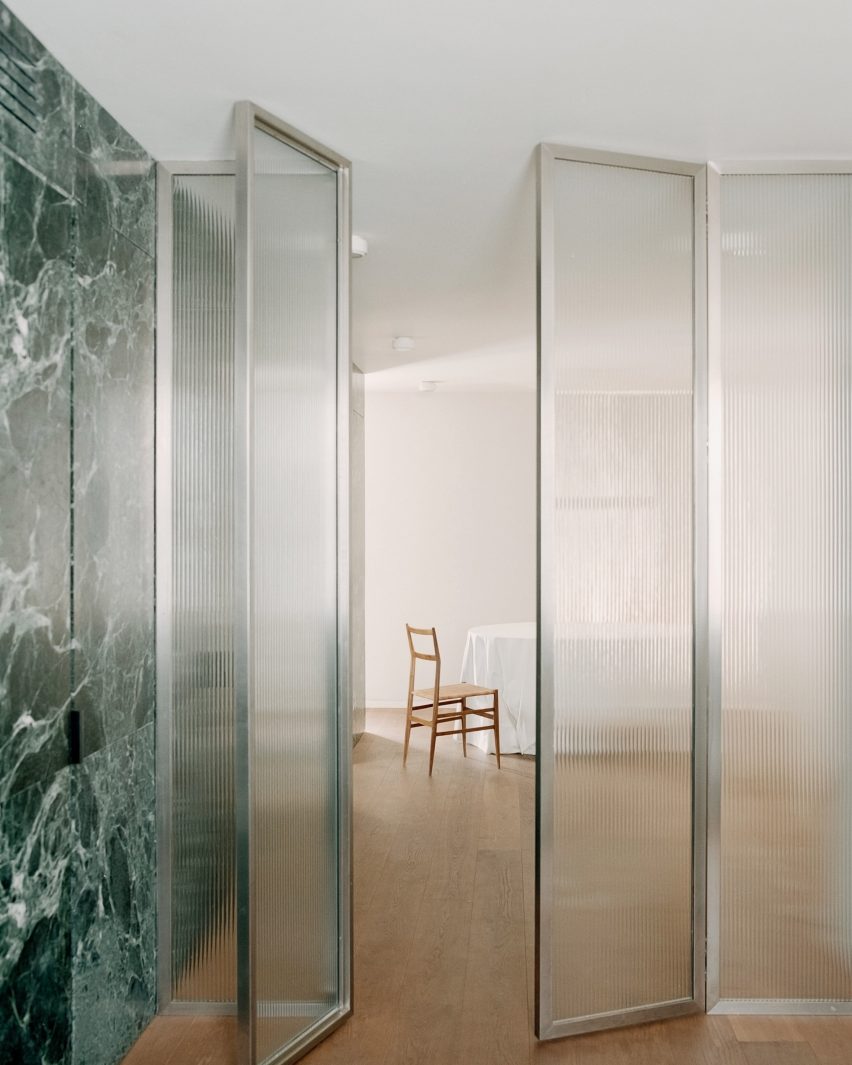
The fluid living spaces can be divided by an operable ribbed glass door
The marble partition was constructed as a permeable threshold between the apartment’s lower level living spaces and a staircase leading to the habitable roof terrace above.
Designed as a single, fluid area, the main living room and bedroom can be separated by full-height ribbed glass doors.
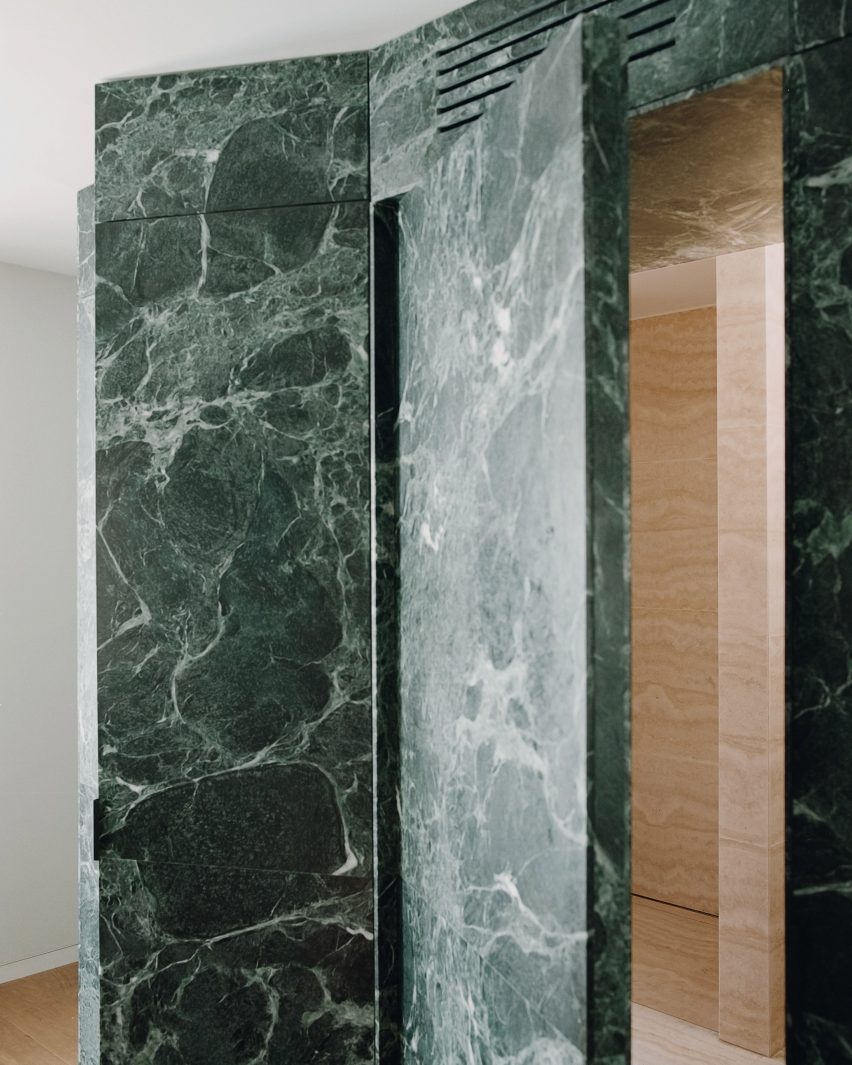
The studio used the marble wall system to host functional storage and compartment spaces
AIM Studio sought to meet the practical requirements of small-footprint living by using the Alpi marble to conceal a series of deep storage compartments.
“More than a monolith, the volume is an inhabited wall whose thickness is continuously perforated, crossed and interrupted to host the different functions of living,” AIM Studio said.
“[It] was designed as a precious shell but [leaves] nothing to chance in terms of containment and management of the space. Every compartment, every opening, has been designed [for utility].”
Behind the marble partition, the staircase to the rooftop terrace was completed with a central lightwell to draw natural light into the space below.
The studio also integrated large windows into the main living area to encourage an interplay of light on the reflective marble surface and to evoke a chiaroscuro-like effect.
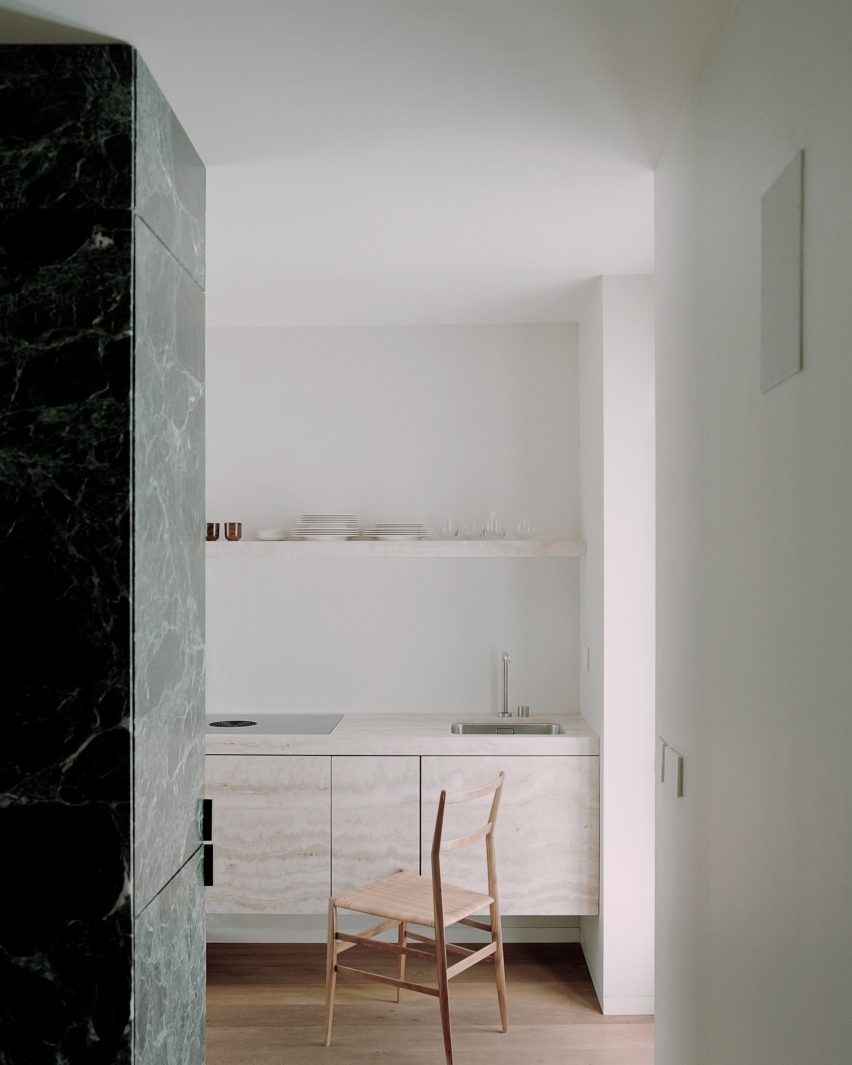
The compact kitchen was formed by suspended travertine joinery
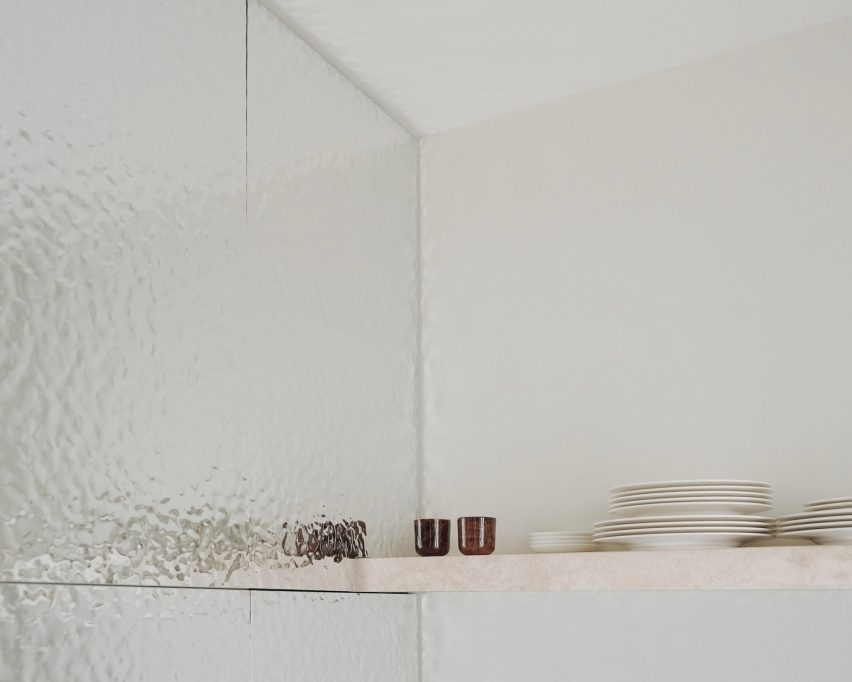
Tucked into a corner of the living room, the kitchen was demarcated by suspended travertine joinery and an embossed mirror feature wall.
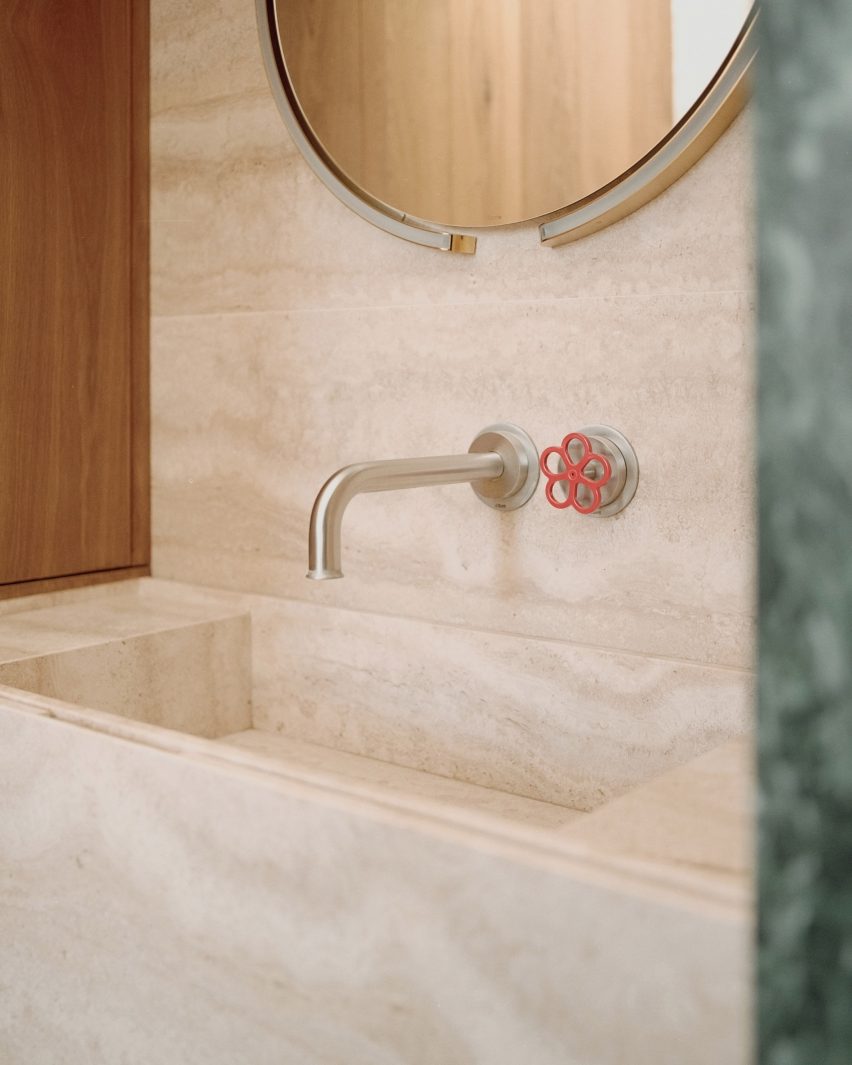
Neutral-toned fixtures and restrained furniture pieces were selected to balance the apartment’s modern aesthetic and emphasise the drama of the green marble.
An embossed mirror feature wall was connected to the kitchen nook
“We conceived this project as a search for authenticity; a minimal but at the same time welcoming and functional design created through natural, precious [and] timeless materials.”
“We hope that this search for authenticity will be perceived by those who will inhabit these spaces and that it will translate into family atmospheres and elegant, but convivial, environments.”
The studio selected a neutral material palette to emphasise the green marble gesture
Founded in 2012 by Claudio Tognacca in Milan, AIM Studio has projects spanning across architecture, interior design and product development both in Italy and internationally.
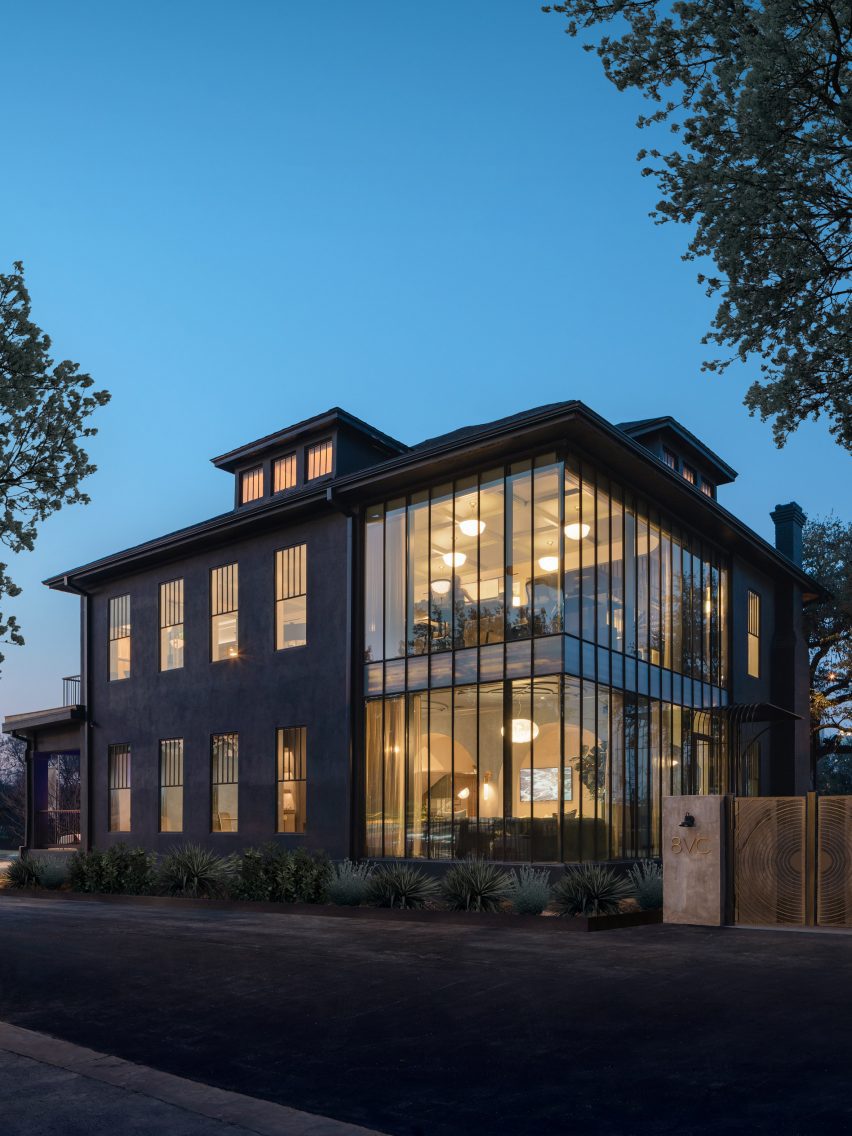
Completed in 2023, 8VC’s new Austin headquarters are located on a half-acre lot along South Congress Avenue, a busy entertainment district of the Texas capital.
Michael Hsu Office of Architecture renovated an early 20th-century house in Austin
Originally constructed in 1912, the home was once a brothel and had many renovations, becoming the first building south of the city’s Colorado River to have power.
“This project preserves one of the few remaining stately houses on South Congress,” Michael Hsu, founder of his eponymous studio, told Dezeen. “The design takes cues from its past by providing a fresh take on vintage inspirations and opens up the space to accommodate modern uses.”
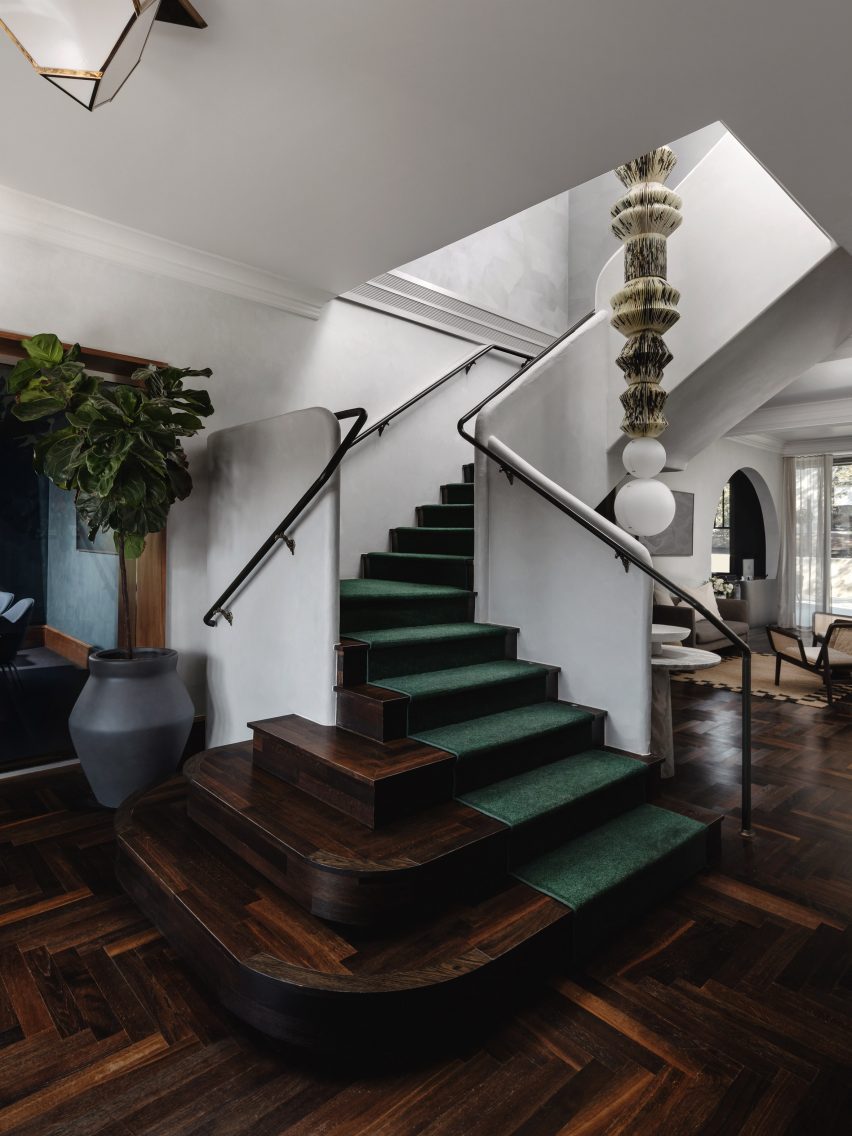
The design preserved many original details
Using the client’s desire for “an office that felt like a home,” the team revamped the two-storey house into a 4,845-square foot (450-square metre) workspace with multiple production, meeting, and gathering spaces — including a 557-square feet (52-square metre) clubhouse tucked at the back of the property.
The preserved exterior of the building draws on the home’s original stately design but was updated and sealed in a dark matte finished stucco with low-profile dark window frames.
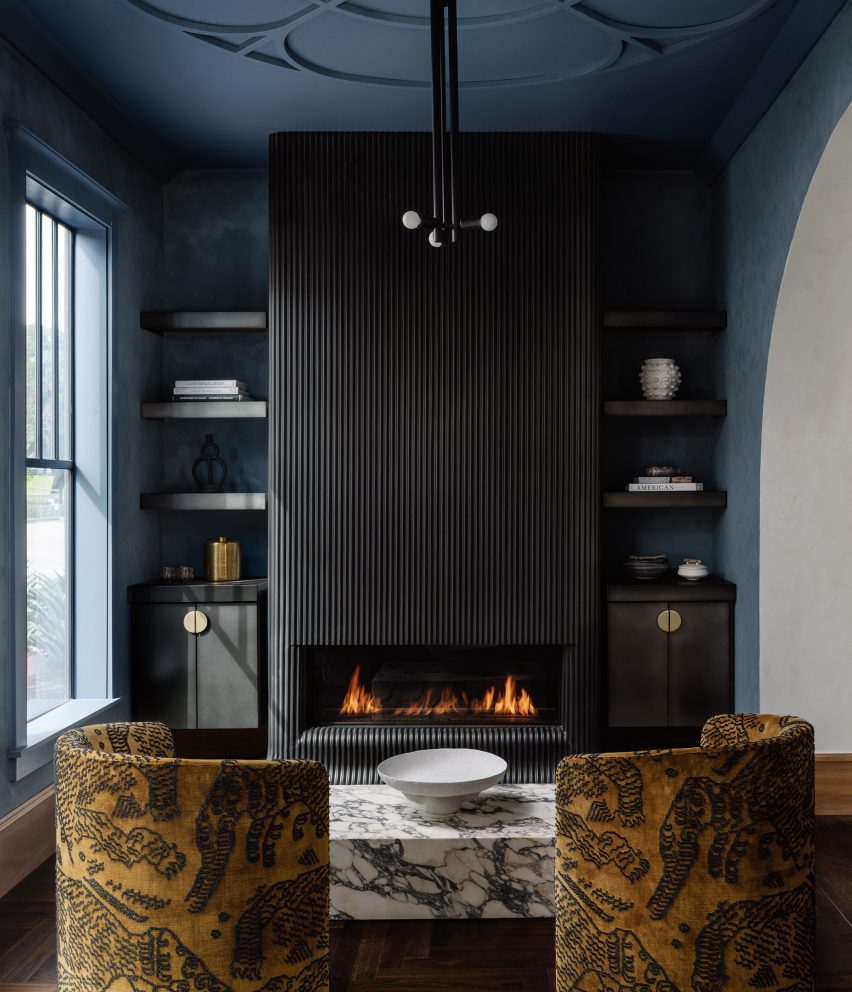
The ground floor is oriented around hearth spaces
Relocating the entry around the side of the property with a grand wrap-around plaza, the home’s original screened porch was traded for a glazed exterior corner that connects the exterior and interior spaces.
The ground floor consists of multiple indoor and outdoor gathering spaces. The interior is organized around a central enfilade and two hearth spaces inspired by the original brick chimneys.
The clients wanted a home-like feel to the interior
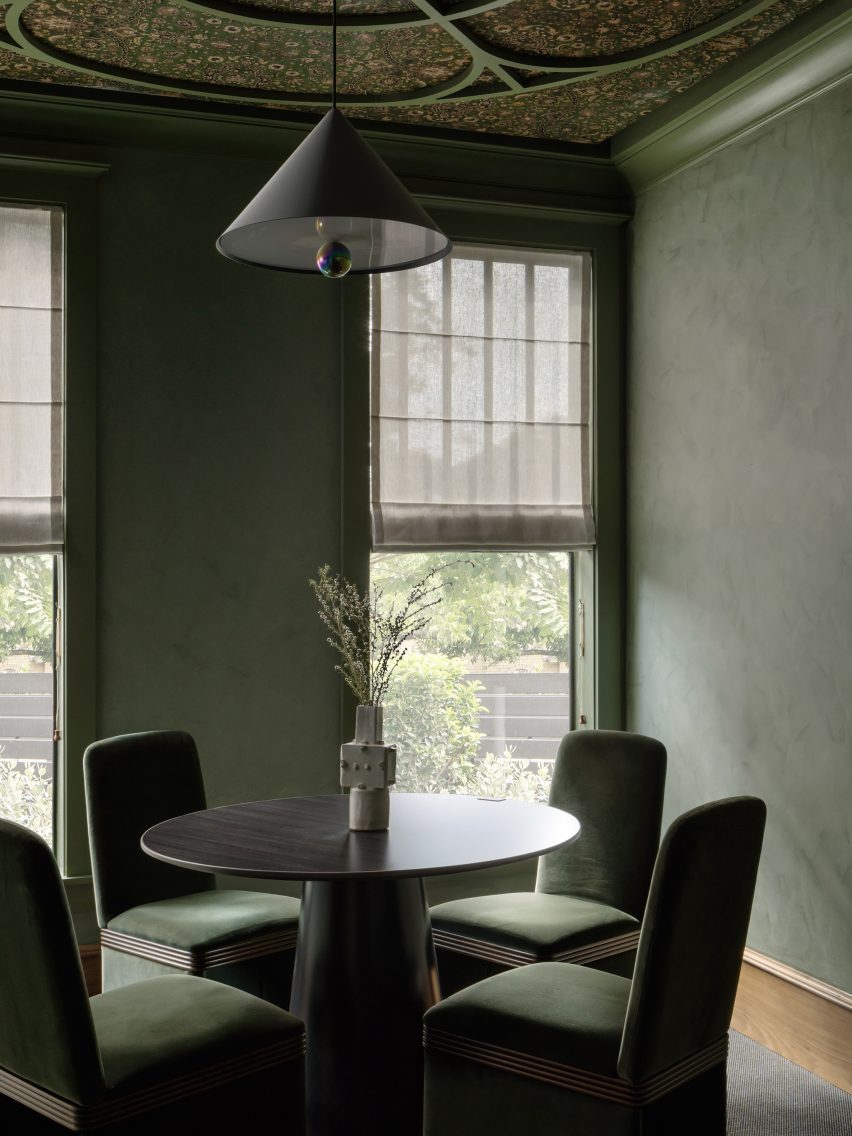
The rich, warm-toned interior has a “sophisticated study-like atmosphere is achieved through the careful selection of materials and color-mapped palettes, including walnut wood floors, lime wash paint, striking wall coverings, plaster arches and marble finishes,” the team said.
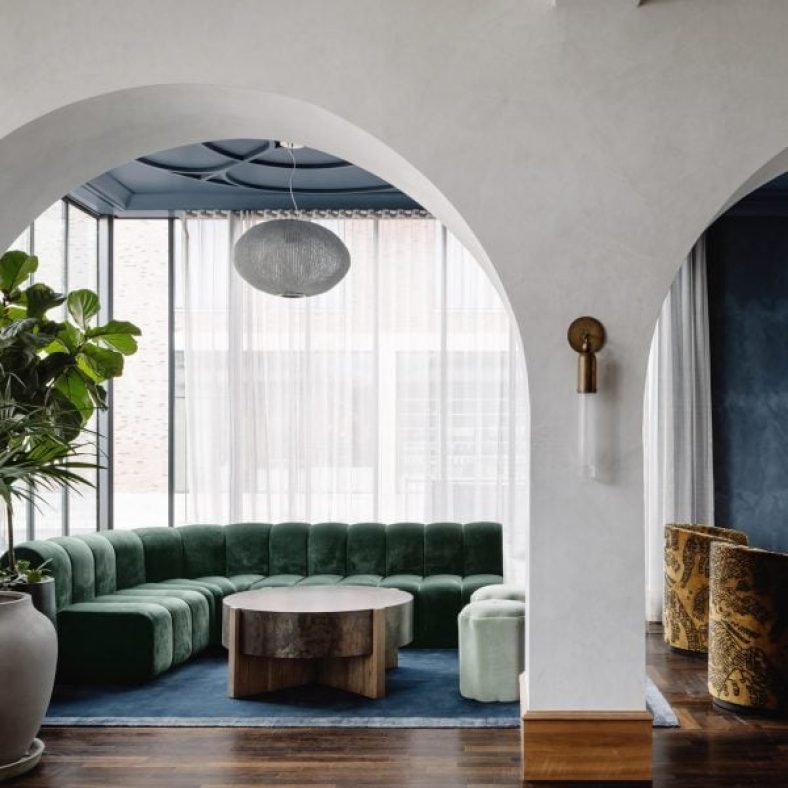
Plaster arched openings pass from the white central lounge to jewel-toned gathering spaces – one of which features a ribbed black fireplace that appears to melt into the floor in front of a marble coffee table.
A mix of modern and antique furniture was used
“The furnishings, a mix of vintage and modern pieces with luxe fabrics and textures, create a sense of intimacy.”
Designed to be “luxurious but not ostentatious”, the office features textured and sculptural accents like a leather-wrapped reception desk by David Ambrose and a grand chandelier by Karen Hawkins that hangs in the centre of the staircase.
Above, the plan was reorganised with a large open desk layout in the southern corner along the glazed wall and private offices lining the northwestern and northeastern walls.
“The interior was inspired to feel fresh but like it was original to the house,” the team said with “multiple moments of surprise and intrigue depending on where you are in the space”.
Between the main office and the separated clubhouse is a large outdoor gathering area shaded by the heritage tree canopy that the team preserved during construction.
“It was important to us that the building and its design reflect the values of our company and our mission,” 8VC founder Jake Medwell told Dezeen. “It took years to find and build out the right place and we are very happy with the outcome.”
Recently, Michael Hsu Office of Architecture adapted a 1930s church in Austin into a studio for argodesign.
Landscape: MHOA General contractor: The Burt Group MEP: AYS Structural: Structures Owner’s rep: Darrell Arevalo, Urban Terra Waterproofing: Acton Civil: WGI Signage: BIG
Carrara marble countertops are a popular choice because of their timeless elegance and natural appeal. Carrara marble has been used in European homes for countertops and backsplashes for many centuries, but it is a relatively recent addition in American homes. It first became popular in American kitchens in the first half of the 20th century. Since then, Carrara marble has become one of the most popular choices for countertops in recent years. This is one of the most universally popular natural stones in existence, and it will always have adoring fans.
Despite its beauty, Carrara marble is a more problematic material for countertops than other choices. In this article, we will take you through the basics so that you understand what you are taking on before you invest in a marble countertop.
White Carrara marble is a classic choice for countertops, but it is not the best option for some people or situations.
Pros:
Appearance – Carrara marble countertops have a traditional and elegant look that is hard to match. The veining is attractive and brings a natural texture to the kitchen or bathroom.
Resale – Using this stone on a kitchen or bathroom countertop can increase the value of your home and make it more attractive to potential buyers.
Longevity – With the proper maintenance, marble can last for many years and remain beautiful.
Cost – Carrara marble is one of the least expensive varieties of marble. If you are set on having marble countertops, this is a cost-effective choice.
Cooking prep– Marble stays cool to the touch, so it is a great work surface. However, it is not resistant to all heat, so do not set a hot pot on the surface of marble.
Cons:
Scratching and staining – Carrara marble is a soft and porous material that is easy to dent and scratch. It will also stain if you leave spills of tomato sauce or wine on the countertops.
Etching – The finish on the marble will etch or dull if acidic substances like citrus juice are left on the countertops.
Cost – Compared to countertops of other varieties like wood, laminate, and quartz, Carrara marble countertops are expensive.
Maintenance – These countertops are not low maintenance but require constant upkeep to keep looking beautiful.
Marble is a metamorphic stone that has been subjected to enormous pressure over time. It begins as limestone and is transformed into a harder and denser stone through recrystallization. Carrara marble is quarried in mountains in the Carrara region of Italy and is one of the most common types of marble in home design.
Carrara marble for countertops goes by many names, such as white Carrara marble or bianco Carrara. Carrara marble has a white or light gray background with feathery gray veining throughout. No two slabs ever look the same, as some have more dramatic veining than others. This means that it is vital to get your marble from the same slab when choosing Carrara marble for countertops.
Carrara marble is similar in appearance to the pricey Calacatta marble and Calacatta gold marble, but Carrara marble is one of the least expensive varieties of white marble. Even so, the look of luxurious Carrara marble countertops elevates the style of any kitchen or bathroom.
Caring
Countertops in a busy kitchen or bathroom can take a beating, but with care, your Carrara marble countertops can be gorgeous for many years.
Maintain with a sealer
Make sure that you are sealing your marble countertops on a regular basis, or at least once a year. A sealant is not difficult to apply. First, make sure the countertop is clean and dry. Next, apply a penetrating sealant with a soft cloth. Let the countertop dry before use.
Keep it clean
The most important thing is keeping the countertops clear of things that will etch or stain them. Wipe down the counters every day to make sure they are dry and clean. Do not use abrasive cleaners on a regular basis.
Deal with stains and etches
If your countertops are etched or stained, use a more aggressive and specialized cleaner to deal with these marks. Once you have cleaned with a stronger cleaner to the best of your ability, you will need to reseal the area that you cleaned. Honed Carrara marble countertops will hide more imperfections than polished marble.
Avoid harsh chemicals
Do not use harsh cleaners that contain acid or allow acidic substances like lemon juice or vinegar to sit on the counters. These substances will quickly etch the surface of the countertop and mar or dull the finish.
Prevent damage
Actively prevent damage to your countertops by always using cutting boards when working with knives. Also, use trivets or hot plates for hot cookware. Marble is susceptible to scratches and heat damage, so prevention of damage is vital. Chipping and cracking are also common on marble countertops. Be careful when handling heavy objects around the Carrara countertops, and use preventative measures when possible.
Learn to live with imperfections
Carrara marble will develop imperfections over time, but this is part of an overall patina that can be attractive in its own way. Learn to appreciate this patina by accepting that the wear and tear on the countertops is part of a well-used and loved kitchen.
Carrara Marble Countertop Designs
Marble is a luxurious addition to any room of the home. Carrara marble is a popular addition to the kitchen, but Carrara marble bathroom countertop options are beautiful too. We have rounded up some stunning images so you can gather inspiration.
Carrara marble kitchen countertops and decorative backsplash
Carrara marble countertops are a timeless option, but they can look fresh and modern too. These owners have paired the classic look of marble counters and white cabinets with these stunning mosaic tiles. These tiles and countertops work well with the warm textural decor, like the window blind and wood floors.
Carrara white marble countertops with earthy tones
The contrast of these medium toned green cabinets with the white Carrara marble countertops is striking. The designer has added earthy elements, including the woven sconces and basket, to balance the smoothness of the counters and backsplash.
A marble backsplash with Carrara marble countertops
A continuous marble slab is also popular as a backsplash option. The simple and unfussy look of this backsplash complements the flat and modern cabinet style in this kitchen.
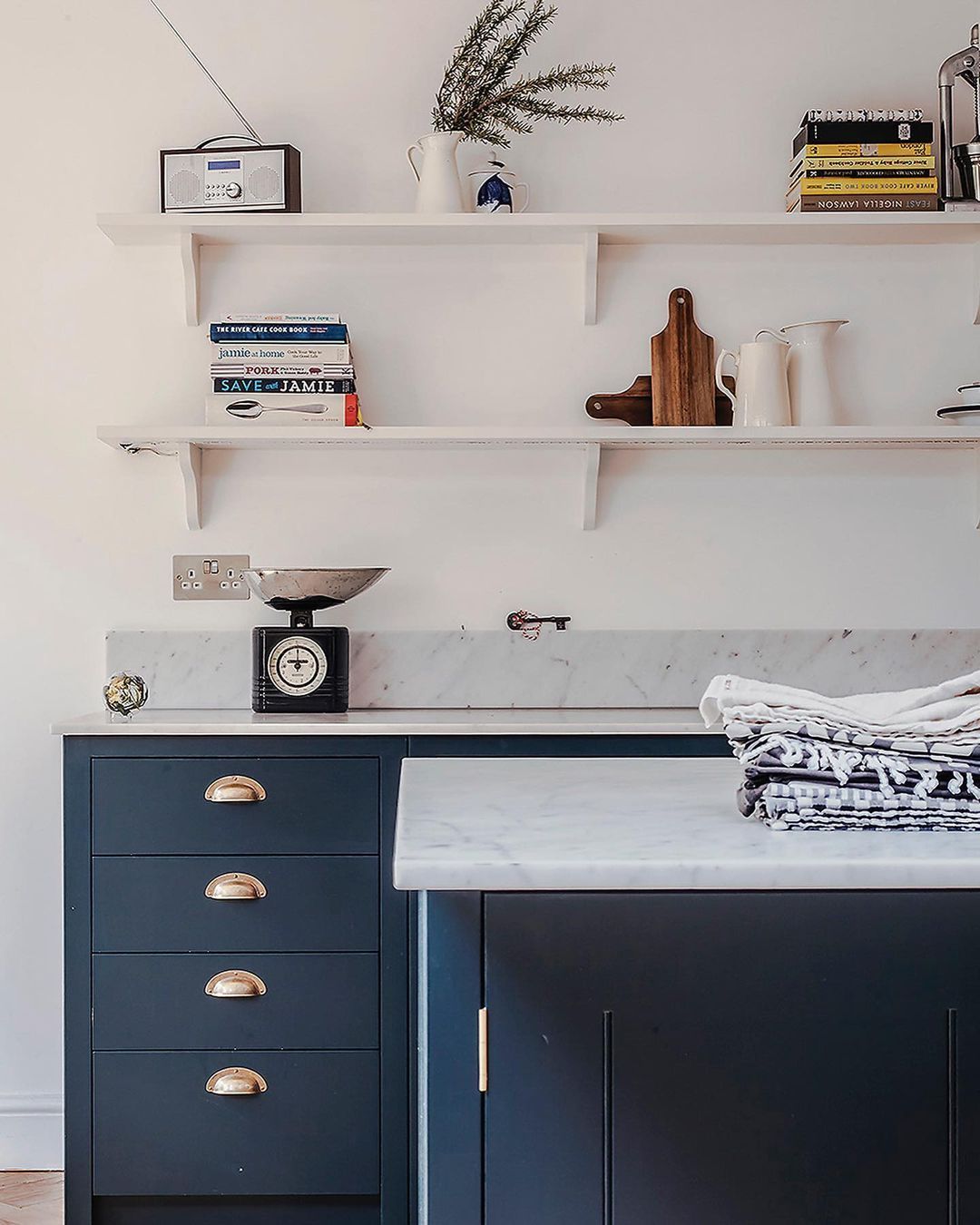
Give your kitchen a look of quiet sophistication with a pairing of white marble and dark blue cabinets. The key to this look is a sense of openness and space. The white open shelves blend with the white walls and the marble countertops, creating a harmonious color story.
In this bathroom, the designer uses a blend of Carrara marble on every available surface, giving it an opulent yet simple look. Gold fixtures, the bright element of the design, are used as spare accents.
This kitchen has a modern and sleek design with flat fronted cabinets and leather pulls. The soft gray color echoes the veining in the marble and provides contrast to the white subway tile backsplash.
Carrara marble may be out of the price range for some, but you might consider a laminate option. This kitchen is from blogger/designer Sarah Jane Christy. She chose to use a thick laminate marble look-alike with a crescent edge for the laminate countertop. This choice means that there is no exposed raw edge, creating a more authentic marble appearance.
This bathroom is a meeting place between the old and the new in the style of modern-traditional. The homeowners have paired the sleek and tailored mirrors with a sumptuous vanity. The interplay between the dark mahogany vanity base and the white Carrara top is effective.
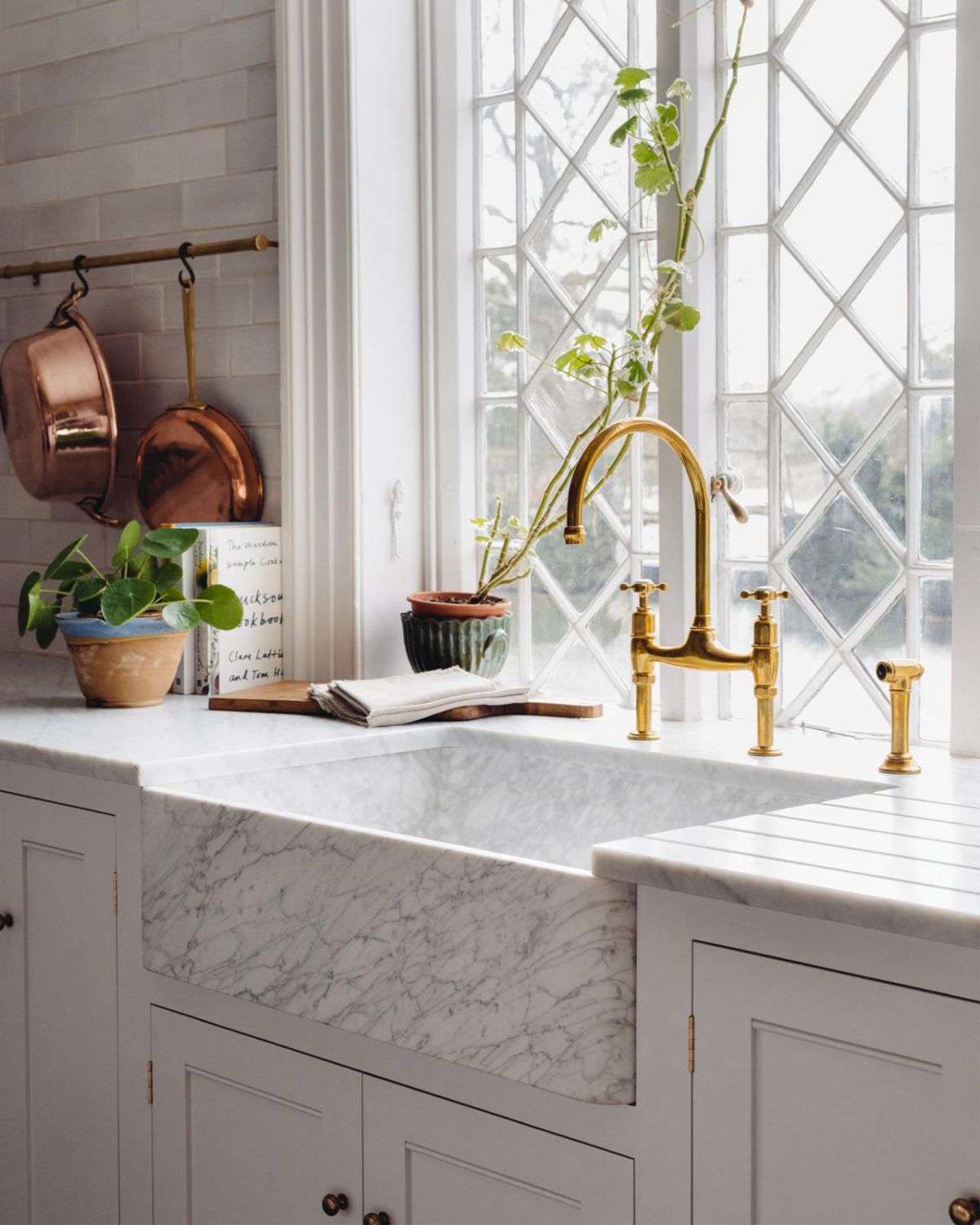
Beyond just the use of marble for a counter, marble sinks elevate the look of the kitchen. The drain lines on the countertop leading to the sink are practical as well as elegant.
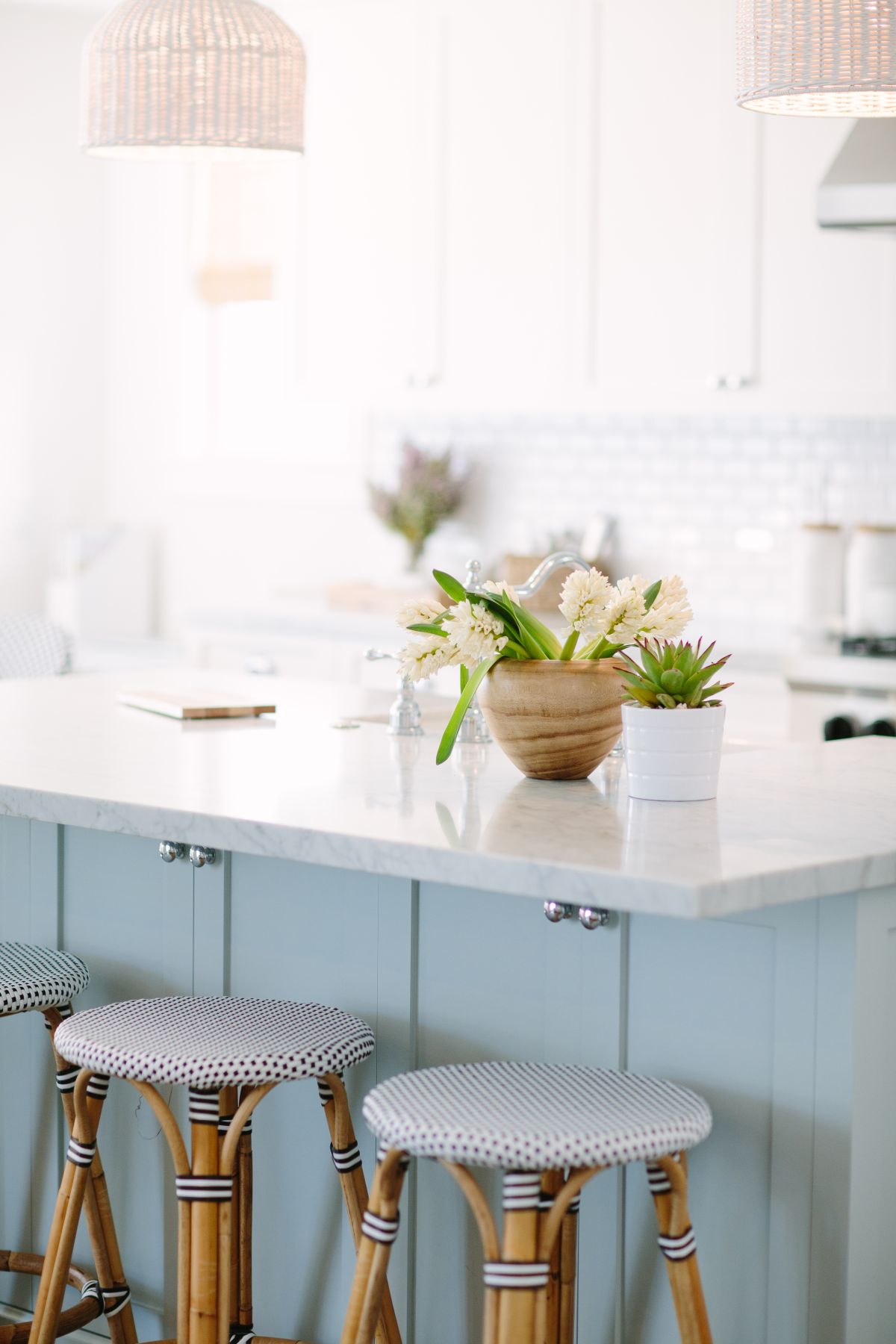
White marble works with many house design styles: modern, traditional, and farmhouse. It also looks beautiful with a clean and airy contemporary style. The woven pendant lights and bar stools bring a comfortable warmth to the sleek design.
One of the benefits of marble countertops is their timeless character. They look stunning in many different styles, including this traditional kitchen. The contrast between the elegant countertops and the simple shaker cabinets is striking.
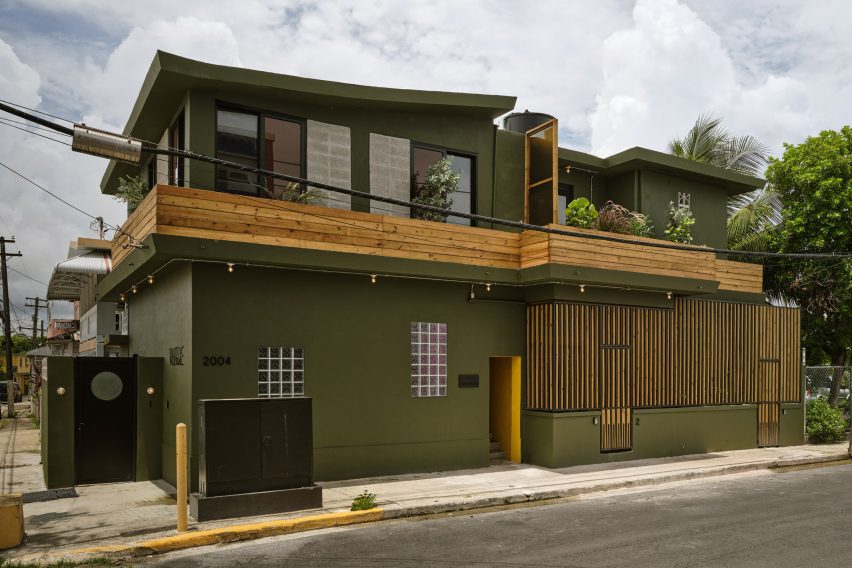
Four vacation rental apartments within a green-painted building in San Juan, Puerto Rico, are each designed with a slightly different take on “minimalism meets retro-chic”.
Verde contains four minimalist apartments: two studios and two one-bedroom apartments, all a 10-minute walk to Ocean Park Beach.
Each of the four apartments in Verde has a different interior, including the cool-toned Verde 1
The units were designed and are operated by LGBTQIA-owned hospitality group Dreamers Welcome, which manages over 60 rentable rooms across hotels, multi-unit properties and single-family dwellings in Puerto Rico and North Carolina.
All of the spaces at Verde are designed to create a “cohesive contrast where minimalism meets retro-chic charm”, according to the owners.
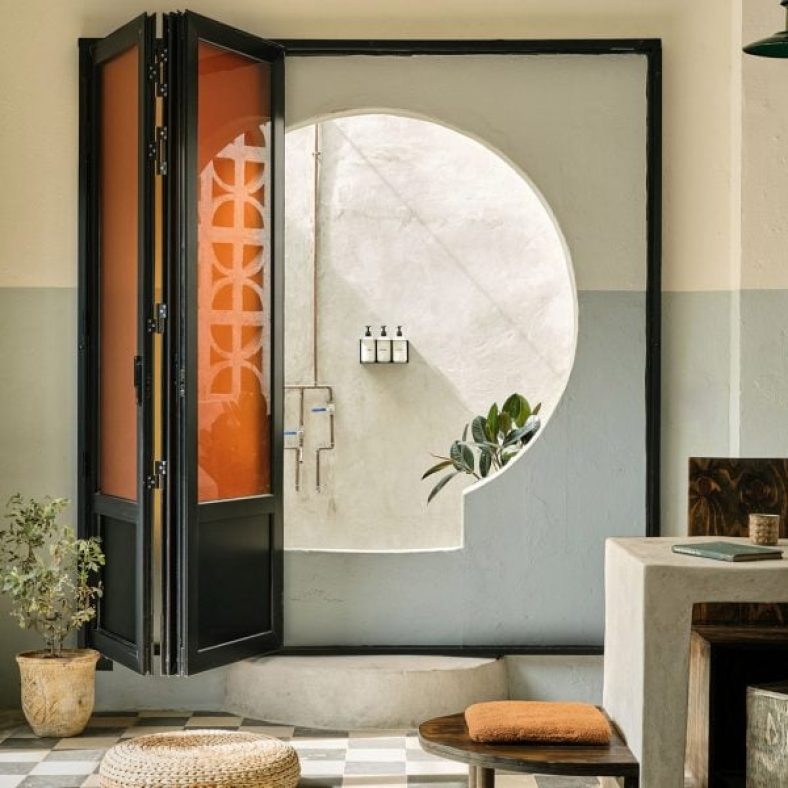
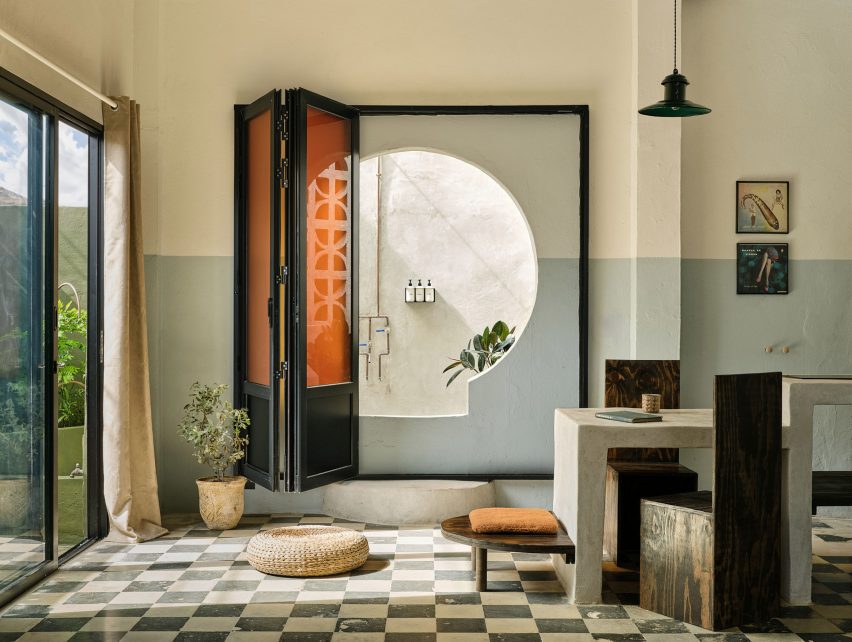
Verde 1 studio features concrete furniture and a giant keyhole that leads to an outdoor shower
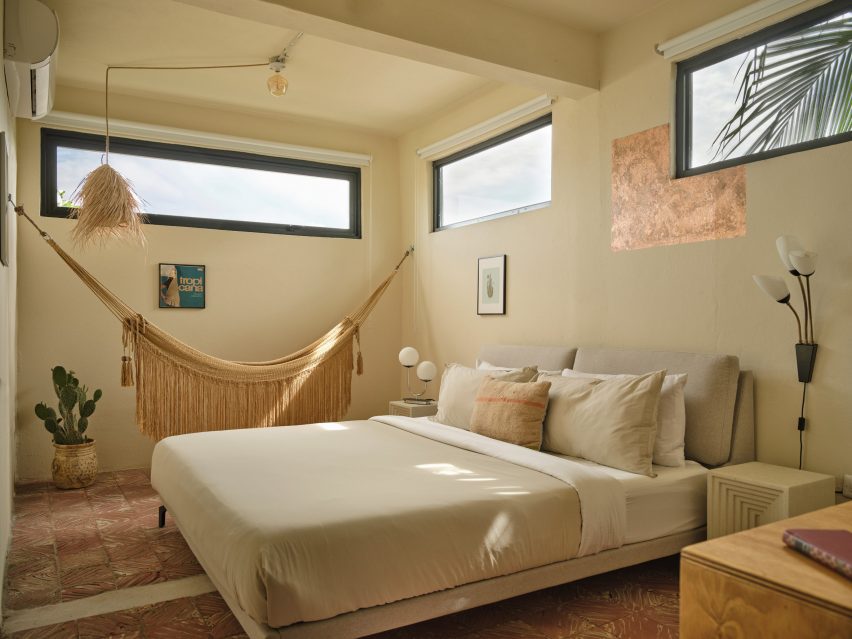
The loft-like Verde 1 studio boasts 12-foot (3.7-metre) ceilings and opens onto a private terrace, complete with a water feature and hammock.
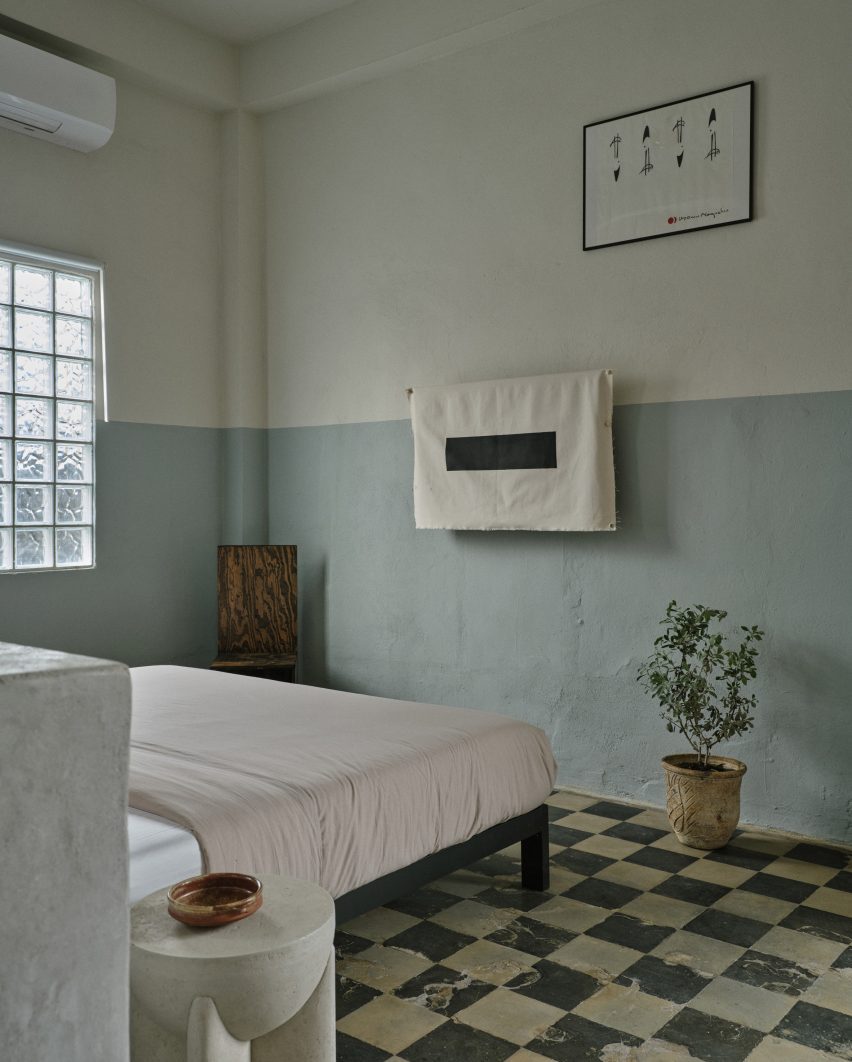
Inside, antique checkerboard tiles cover the floor and polished concrete furniture elements including a table-cum-counter and a centrally positioned headboard add Brutalist touches.
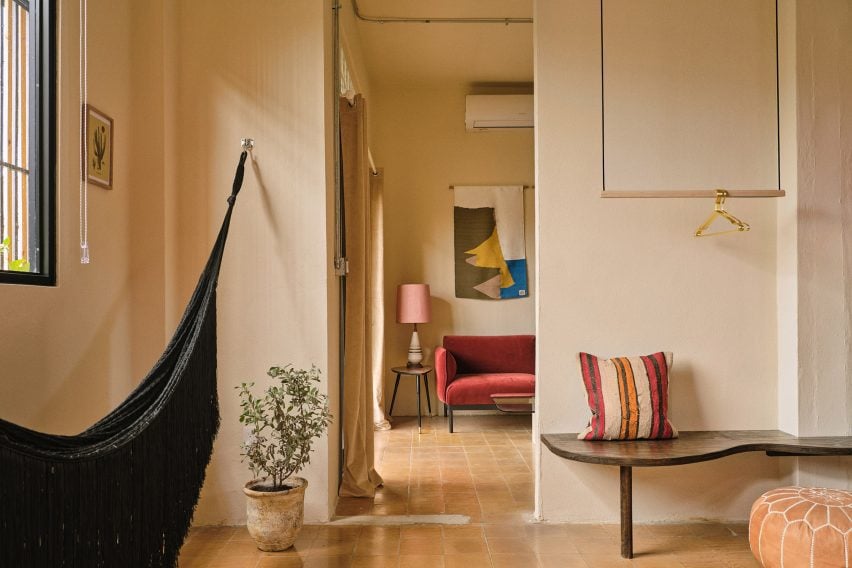
Verde 2 has a warmer palette, with honey-toned floors and colourful accents
Walls are painted pale blue until halfway up, then replaced with beige that continues across the ceiling.
A giant keyhole behind folding glass doors provides access to a small outdoor pool with a shower.
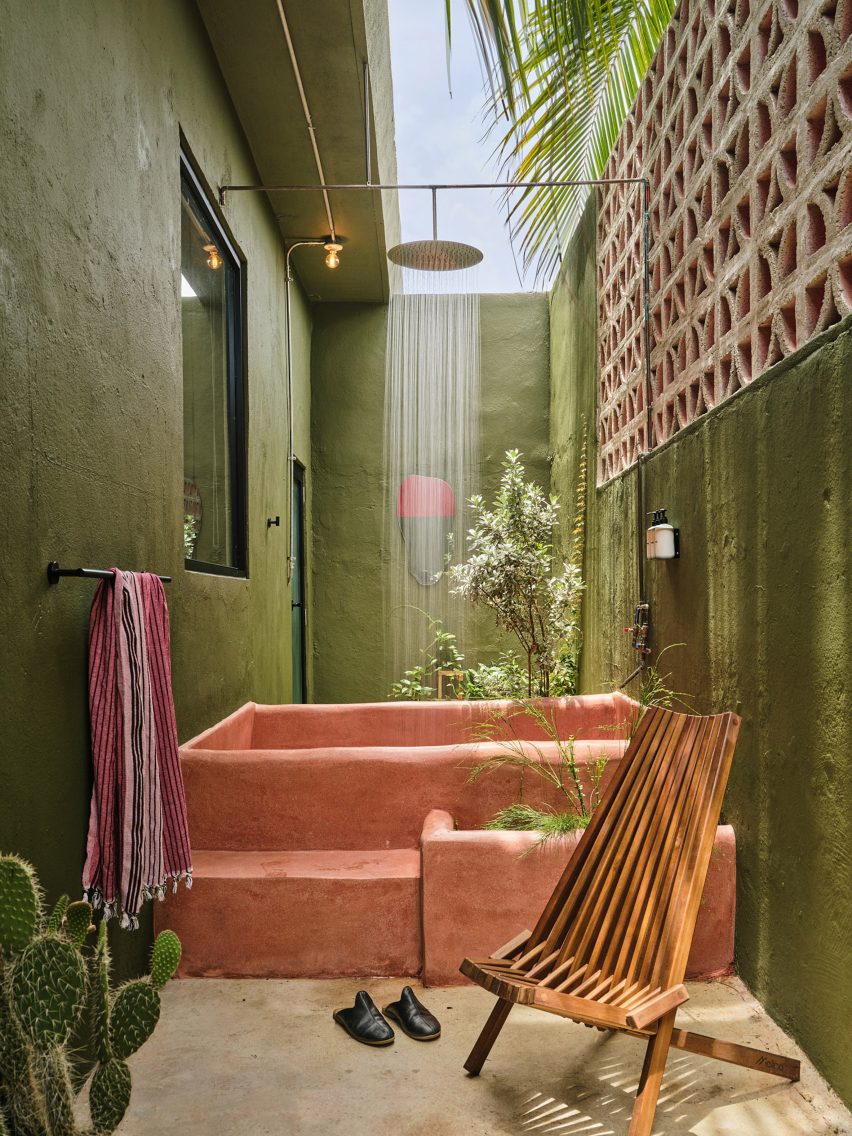
Verde 2 has access to two outdoor spaces, including one with a pink concrete tub and rain shower
Verde 2 features a warmer palette, with honey-toned floor tiles and pink concrete surfaces including the outdoor shower and soaking tub.
This one-bedroom apartment has access to an additional terrace, wrapped with wood slats for privacy, and has colourful accents throughout.
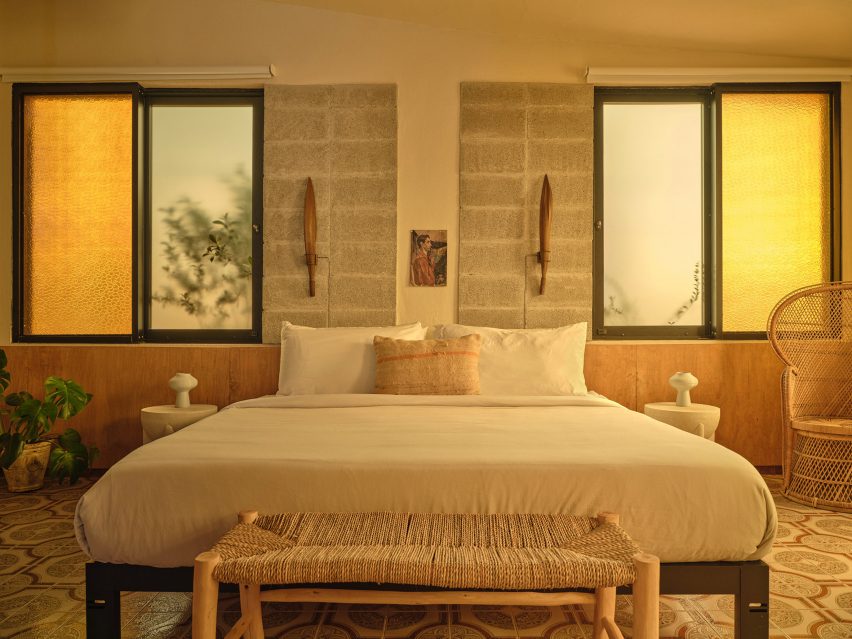
In Verde 3, tinted glass gives the room an amber glow
“The oversized windows overlook a verdant plant enclosure allowing for plenty of natural light to pour in,” said Dreamers Welcome.
Upstairs, Verde 3 is another studio unit, where retro-tinted glass gives the whole space an amber glow.
Neutral hues are used through the majority of one-bed Verde 4
A compact kitchenette opens onto a balcony enclosed by concrete blocks and more tinted glass.
“Midcentury modern pieces like lamp fixtures, peacock chairs, and wood panelling create a unique contemporary vibe rooted in the past,” Dreamers Welcome said.
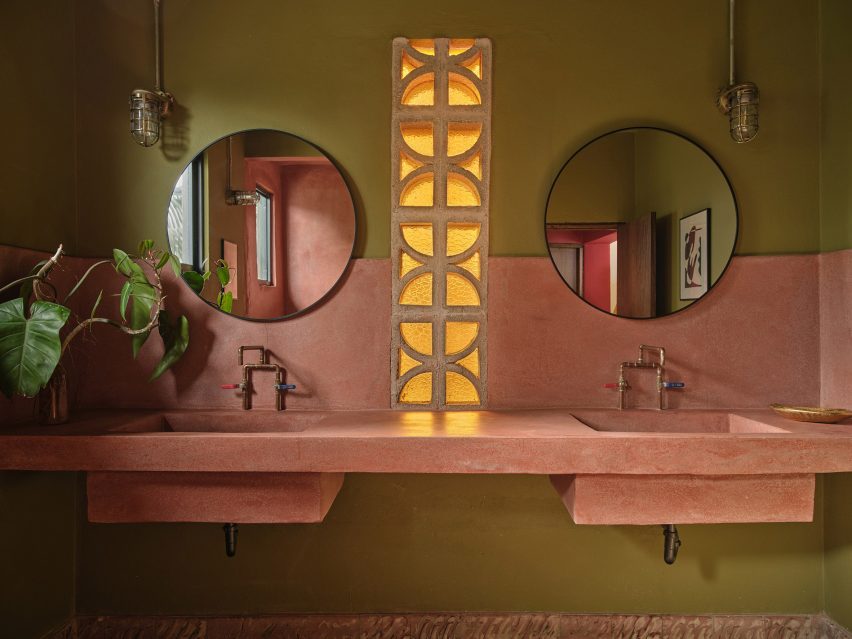
In contrast, Verde 4’s bathroom features olive green walls and a pink double vanity and shower
The final one-bedroom apartment, Verde 4, is decorated in neutral tones apart from the bathroom, which has olive green walls and pink concrete double vanity and shower.
A hammock is installed in the bedroom and a corduroy sofa in the living area can sleep a third guest.
There’s a full kitchen for those who wish to cook for themselves, and a balcony for eating and relaxing outside.
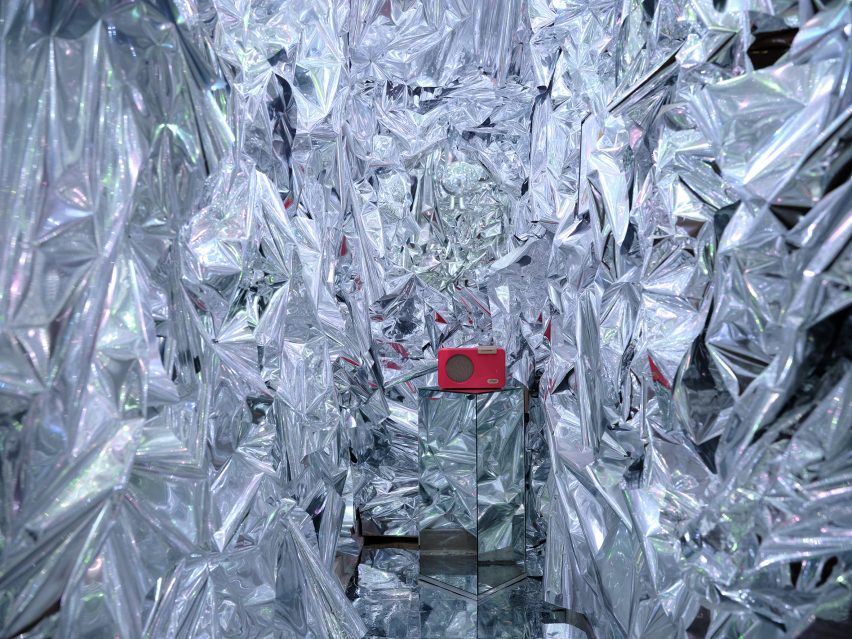
Two of the four apartments also have access to a secret room, which is lined entirely with silver foil as an homage to Andy Warhol’s Factory in New York City.
Two of the units have access to a Warhol-themed secret room
Guests won’t know if the space they’ve booked is one of those with access until they arrive and discover the room by exploring for themselves.
Dreamers Welcome was founded by entrepreneur Stephan Watts and artist Roy Delgado, and the duo design the interiors for each of their properties themselves.
The apartments are housed within a green-painted building 10 minute’s walk from Ocean Park Beach
Puerto Rico’s Caribbean climate makes it a popular tourist destination, particularly for American tourists, and the island has a wealth of accommodation options to cater to them.
A 1920s residence that was destroyed by Hurricane Maria and then converted into a luxury holiday home in Dorado, and pairs of apartments stacked in rectangular concrete blocks to form a self-sufficient guesthouse are among other choices for holiday makers.
After 400 votes, the project in Mexico was the clear winner, with almost 35 per cent of people picking it from the poll that ran throughout December.
Dezeen readers named Casa Tres Árboles best home interior of 2023. Photo by Fabian Martinez
Informed by “monastic sanctuaries” and designed to celebrate light and shadows, Casa Tres Árboles is a weekend home in Mexico‘s Valle de Bravo.
Mexican studio Direccion, used combined natural materials and an earthy colour palette for the interiors of the split-level home.
Dezeen readers picked the home form a shortlist that included projects from Spain, The Netherlands, UK, Australia, Japan, South Africa and USA.
The rest of the vote was pretty evenly split, with the Hiroo Residence in central Tokyo, the second most popular choice – receiving 12 percent of the vote.
Designed by architect Keiji Ashizawa, the 200-square-metre apartment features numerous wooden finishes combined with subtle tones of grey and beige.
Hiroo Residence was readers second favourite project. Photography by Tomooki Kengaku
Already thinking about your next getaway post-Christmas? Here is Dezeen’s pick of 2023’s top 10 hotels, put together as part of our review of the year.
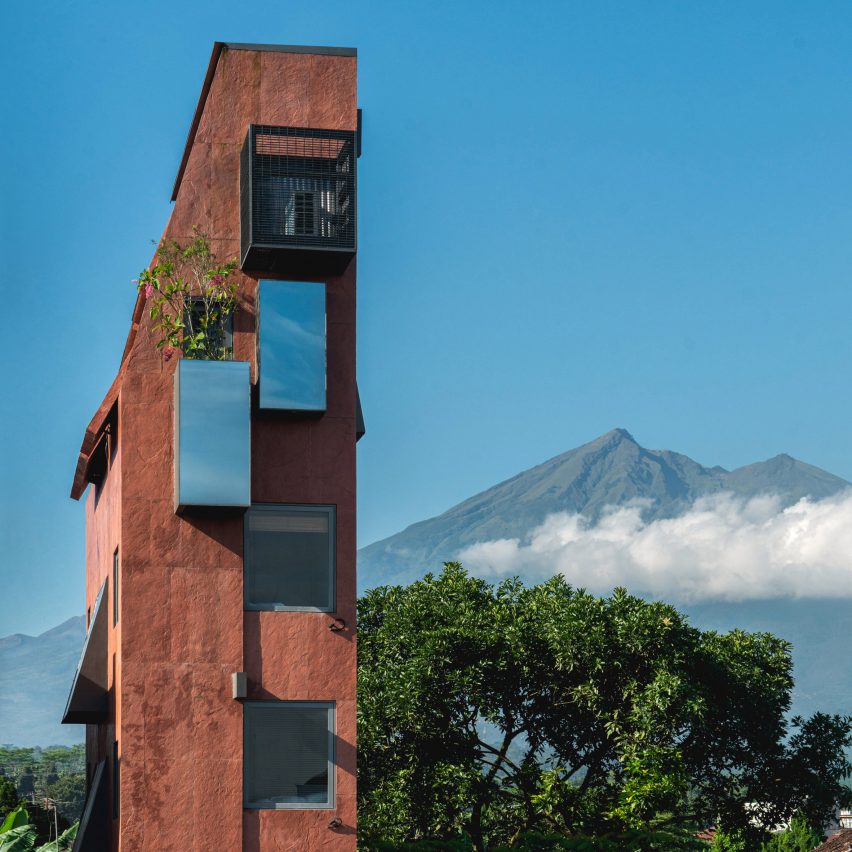
Our selection of the most popular and noteworthy hotels featured on Dezeen this year includes what is possibly the world’s skinniest in Indonesia, the grand conversion of a 1940s bank building in Rome and a place in Tbilisi that aims to make guests feel like they’re inside a movie.
This seven-room hotel in Central Java is just 2.8 metres wide. Each compact room contains a double bed and bathroom pod with a toilet and shower.
“Aside from the technical difficulties, the biggest challenge was the typical mindset surrounding the hospitality industry that is used to superlative words: biggest, tallest, most luxurious,” Sahabat Selojene studio founder Ary Indra told Dezeen. “Here we are skinniest.”
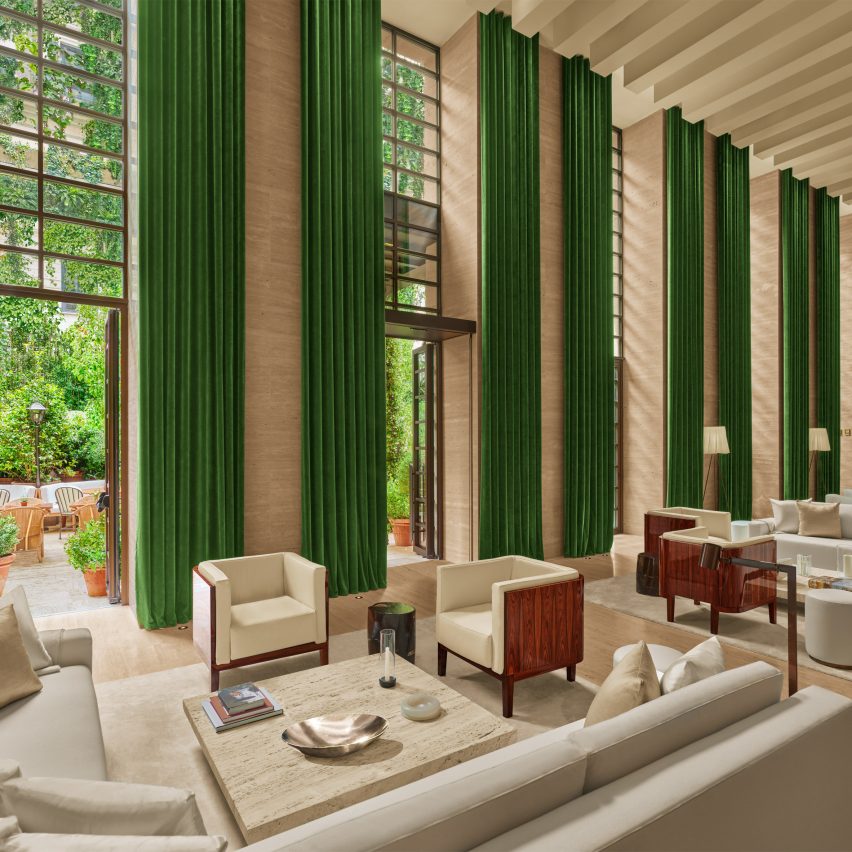
Dramatic seven-metre-high ceilings, full-height windows with green curtains and travertine surfaces grace the lobby of The Rome Edition.
Created by Amercian entrepreneur Ian Schrager’s hotel group The Edition, the 91-room hotel opened this year in a 1940s bank building. Other highlights include the intimate Jade Bar, which is fully lined in deep green antique marble and furnished with emerald-coloured velvet seating.
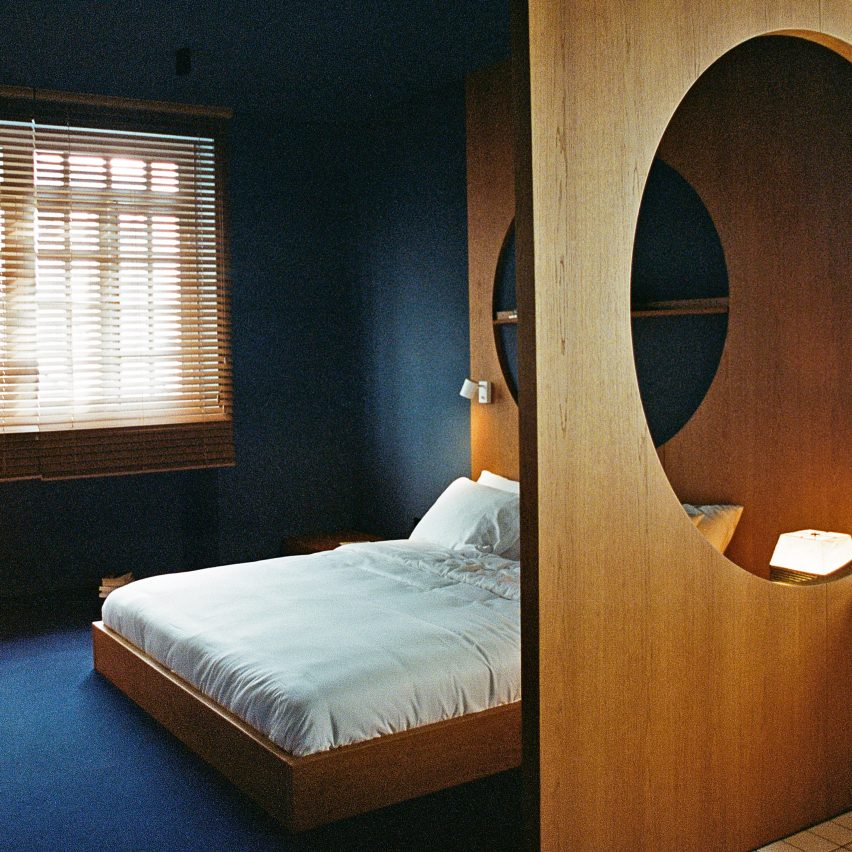
Georgian architect Sandro Takaishvili wanted Tbilisi‘s Blueberry Nights to make guests feel “like they’re inside a movie, where everything feels slightly familiar but otherworldly at the same time”.
With a theatrical colour scheme and cinematic moody lighting, its design evokes the visual style of directors such as Stanley Kubrick and David Lynch, while film projectors feature in all 16 rooms.
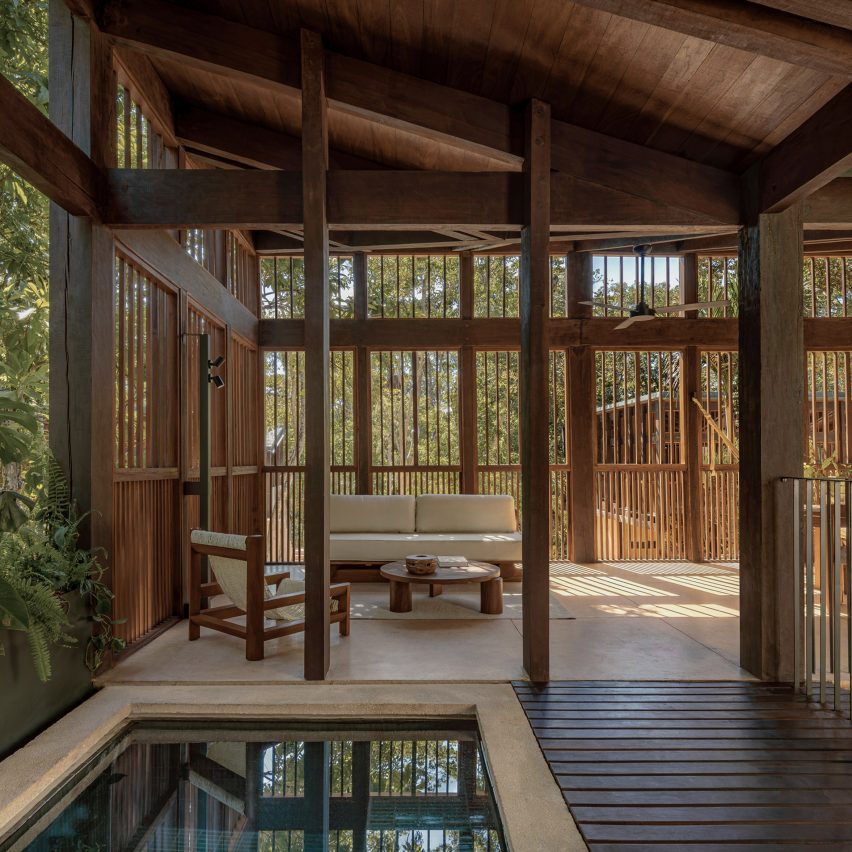
Wooden guest quarters perched on stilts characterise Boca de Agua, a resort in the Yucatán Peninsula designed by Mexican architect Frida Escobedo
The villas – including one with a private pool and terrace – were raised up to reduce the environmental impact of the ground plane and to raise guests into the leafy jungle landscape.
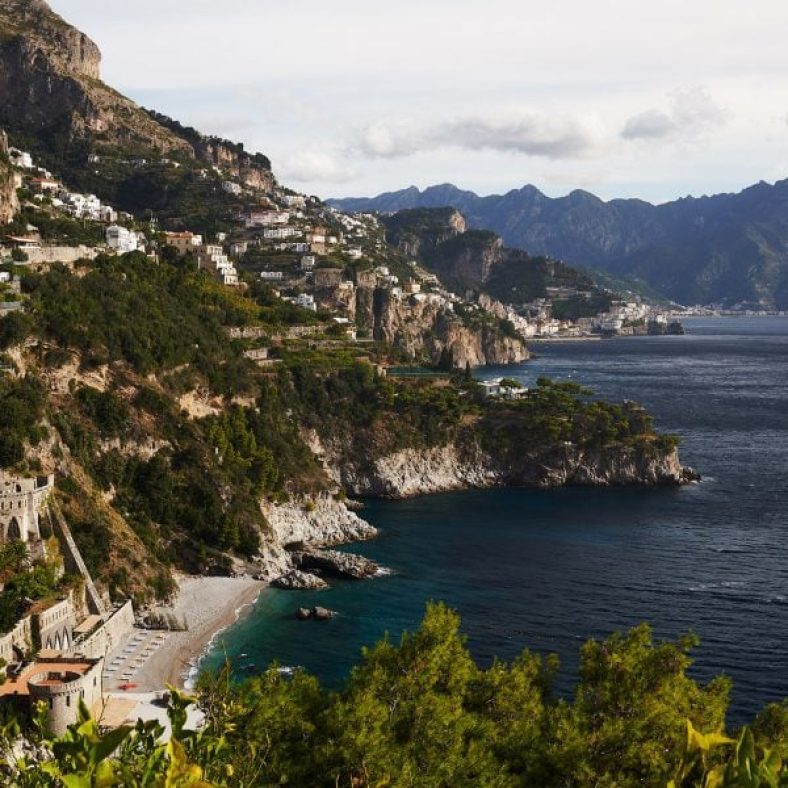
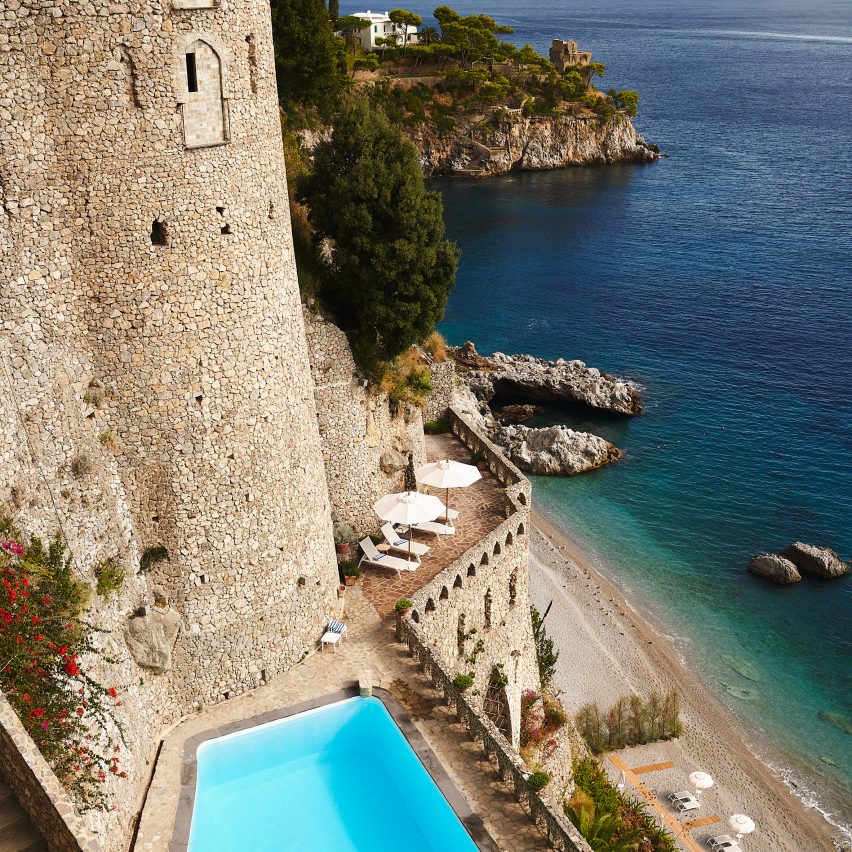
Overlooking the historic fishing village of Conca dei Marini on the Amalfi Coast, the 1960s Borgo Santandrea hotel was restored by architect Bonaventura Gambardella and interior designer Nikita Bettoni.
The hotel incorporates the atmospheric medieval stone fortifications carved into the cliff below, with some of the guest rooms built into the old ramparts.
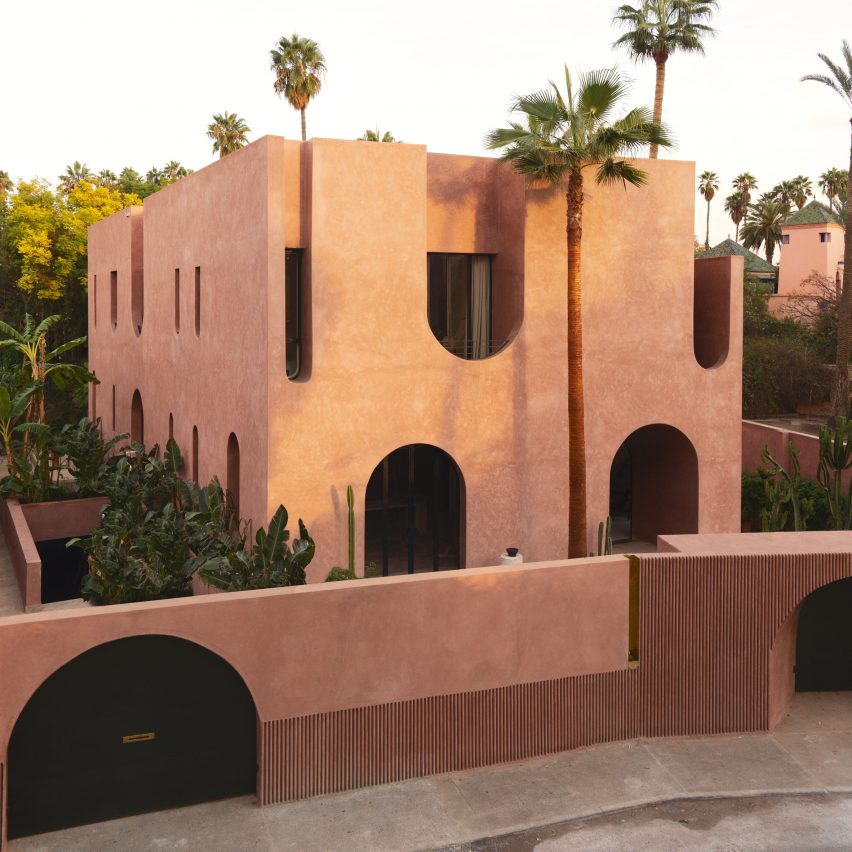
Located next to the famous Majorelle Gardens in Marrakech, this boutique hotel was designed by New Zealand studio Bergendy Cooke in collaboration with Moroccan architect Amine Abouraoui.
With its sculptural, monolithic aesthetic and recurring arched openings inside and out, it was intended as a playful contemporary twist on the site’s history and the city’s traditional architecture.
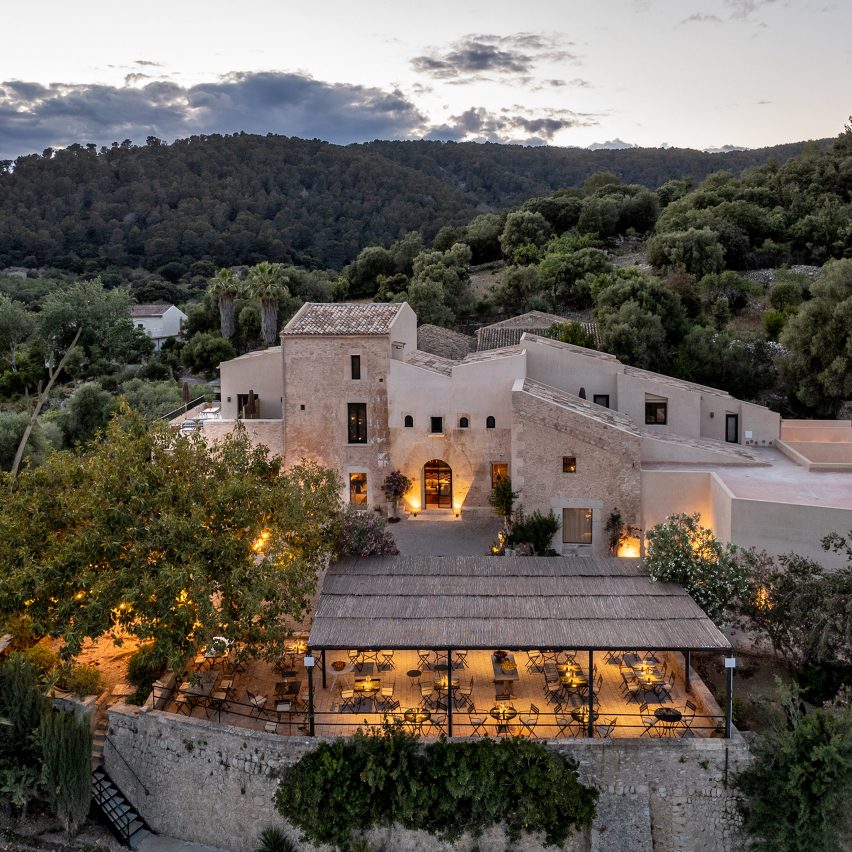
From Único Hotels, The Lodge occupies a 500-year-old farmhouse in Mallorca on a 157-hectare estate filled with almond and olive trees, lavender fields and hiking trails.
Interior designer Pilar García-Nieto kept the interiors mostly clean and minimal but left traces of the building’s agricultural past visible – most spectacularly an old stone mill for pressing olive oil, which stands in what is now the hotel reception area.
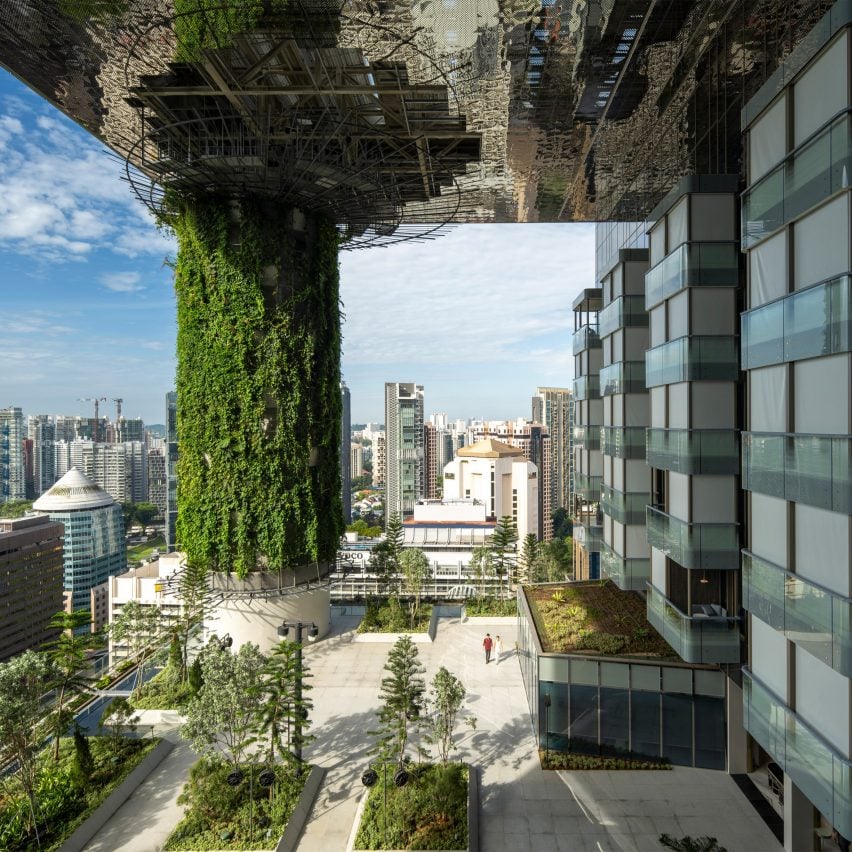
Large, elevated garden terraces are cut into the form of this tall hotel building in Singapore designed by architecture studio WOHA, including one 18 floors up.
The studio wanted the hotel to have verdant views on all storeys despite its urban location, while the terraces also provide passive cooling in the humid climate.
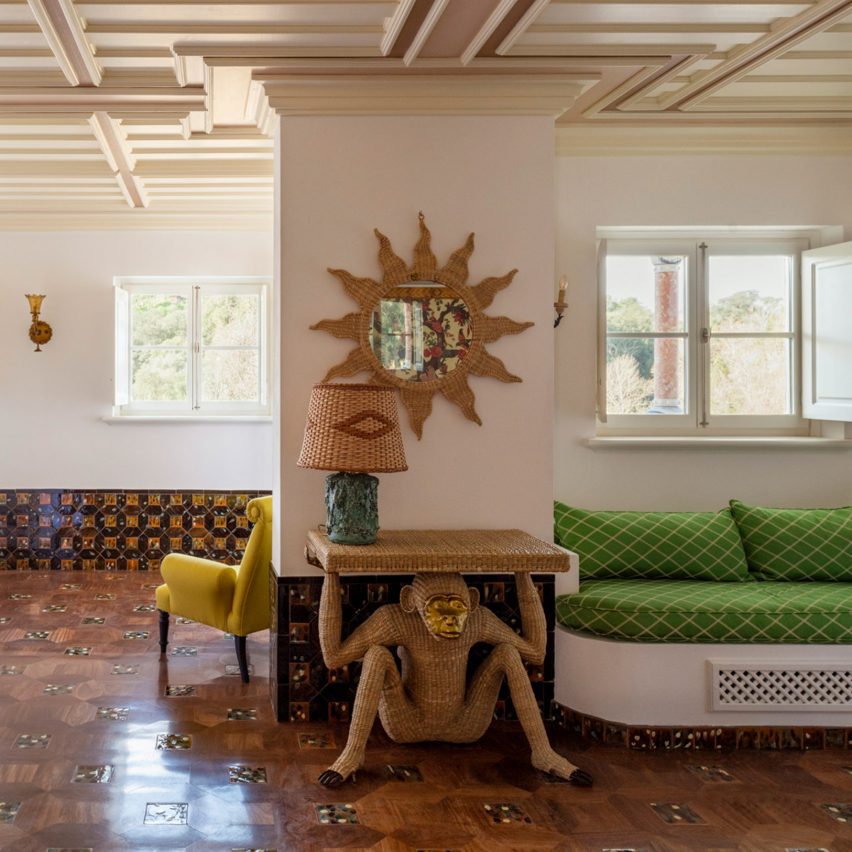
Fashion designer Christian Louboutin teamed up with architect Madalena Caiado to create this 13-room hotel in the Portuguese village of Melides.
Its traditionalist architecture meets maximalist interiors, with the rooms containing furniture from Louboutin’s personal collection as well as objects produced by local craftsmen. Louboutin talked to Dezeen about design process behind the hotel in an exclusive interview.
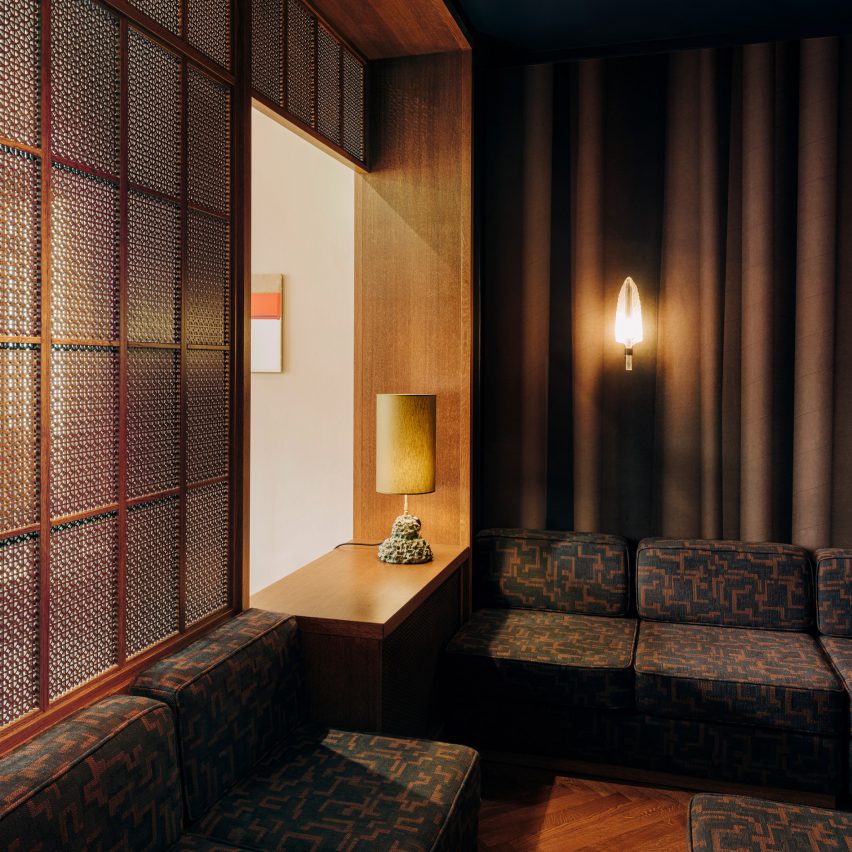
Berlin‘s renovated Château Royal references the German capital’s heyday at the turn of the 20th century through abundant oak panelling, art nouveau tiles, sisal carpets and hardware in brass and nickel.
The 93-room hotel comprises two buildings dating from 1850 and 1910, in addition to a newer building and roof extension designed by David Chipperfield Architects.
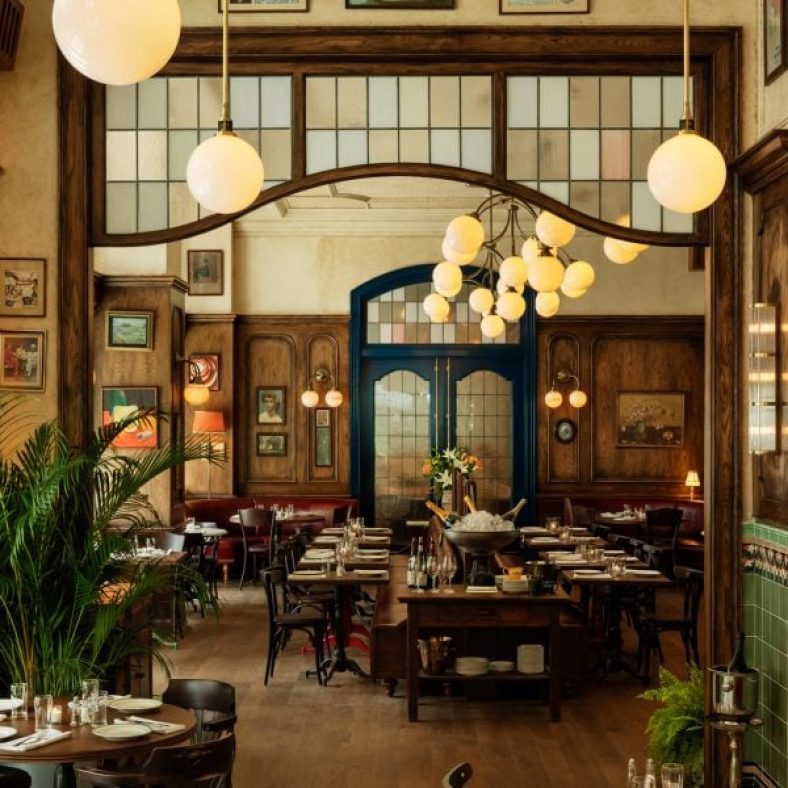
Several restaurants and a hotel have opened within Detroit‘s historic Book Tower as part of a years-long restoration project of the building undertaken by its developer and architecture studio ODA.
The 1920s skyscraper has undergone extensive restoration work over the past seven years by local developer Bedrock, which has transformed the former office building into a mixed-use space.
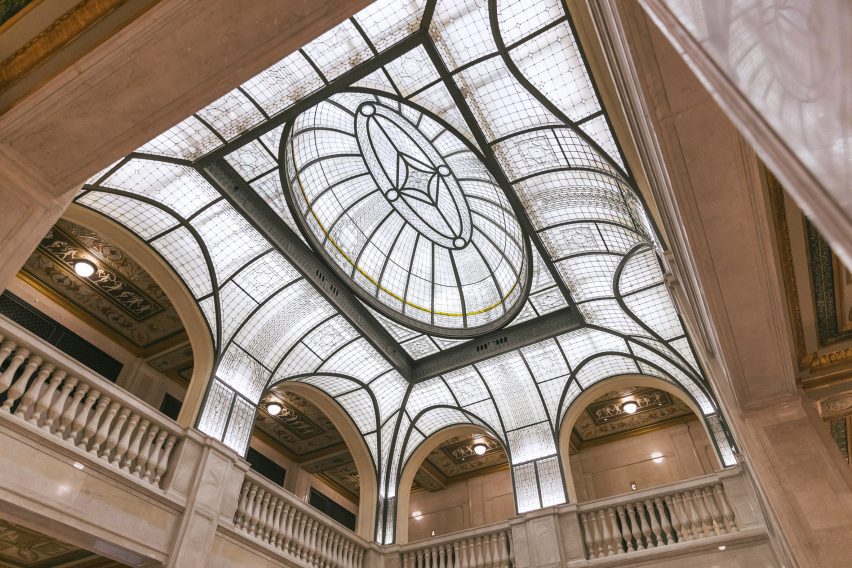
Among Book Tower’s restored features are a grand glass dome, which sits over the lobby’s Bar Rotunda
A collaboration with Method Co has led to the first phase of restaurant and bar concepts, which were introduced through the course of 2023.
“We have been ever-mindful of what the restoration of Book Tower means to this city,” said Randall Cook, CEO and cofounder of Method Co, “and we’ve worked hard to create hospitality concepts that will excite and reconnect Detroiters to Book Tower once again, and at the same time honour the heritage of this magnificent property.”
Developers Bedrock worked with architects ODA on the restoration of the 1920s neoclassical building
Located on Washington Boulevard in Downtown Detroit, the 38-storey neoclassical building was designed by Louis Kamper – a prolific and celebrated architect in the city during its Gilded Age.
New York architecture firm ODA was hired to update and expand the programming and existing structures, resulting in half a million square feet (46,450 square metres) of mixed-use space.
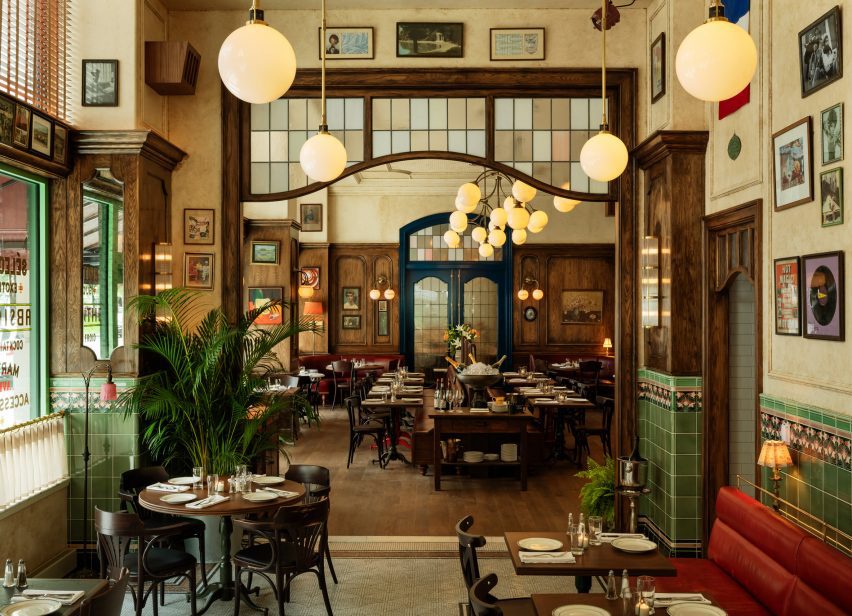
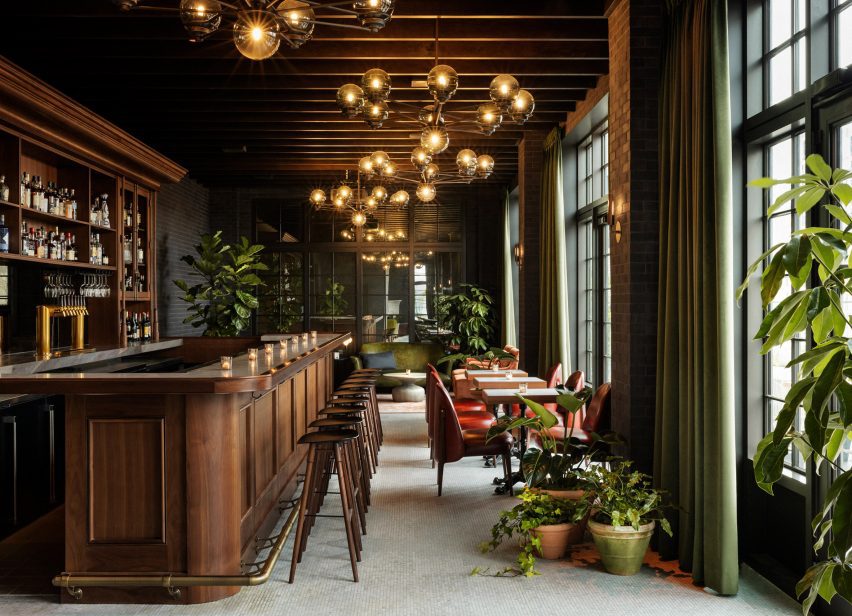
Method Co was brought on to conceptualise and operate multiple culinary offerings within the building, including Le Suprême brasserie at street level
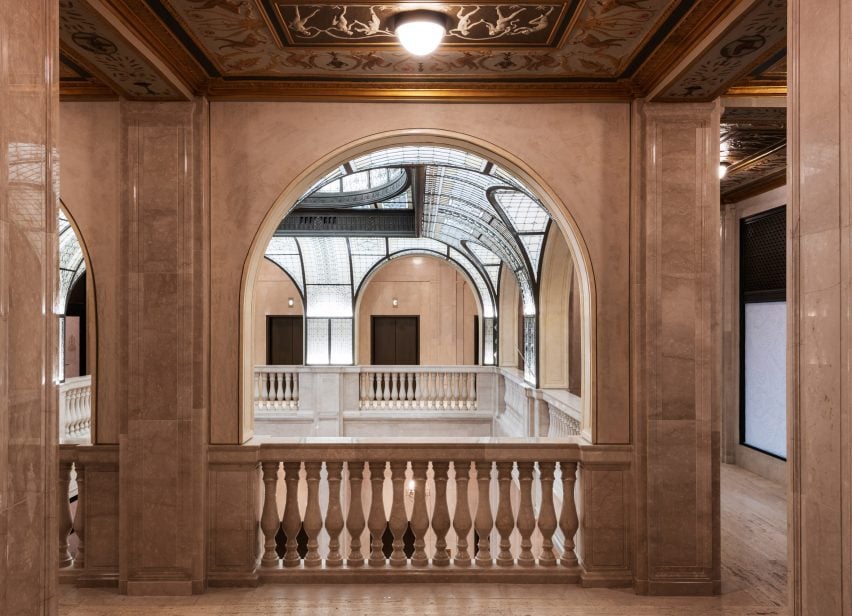
The work included restoring the exterior windows and stonework and bringing an ornate domed glass ceiling back to life.
Method Co was then brought on to conceptualise three restaurants and bars, as well as a hotel, and operate each of these venues within the building.
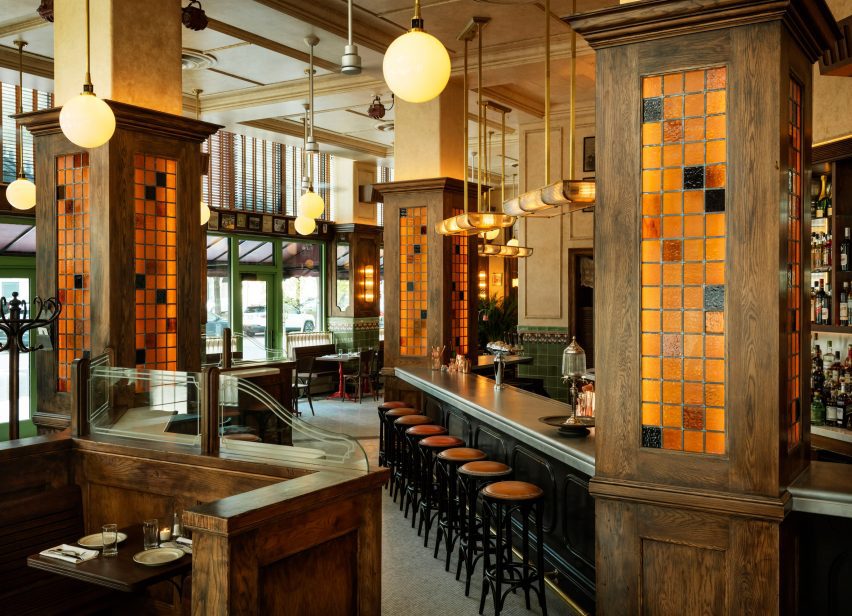
Designed with Stokes Architecture + Design, Le Suprême includes a zinc bar top, hand-made tiles and mosaic marble flooring
Dining options include Le Suprême, a classic French brasserie that offers an all-day menu and both indoor and outdoor seating at street level for up to 210 guests.
Designed in collaboration with Stokes Architecture + Design, the 6,200-square-foot space features a traditional zinc bar top, hand-made art nouveau tiles, mosaic marble flooring and oxblood leather booths.
Furniture and decor were chosen to reflect Detroit’s cultural heritage, and photos on the walls of the Le Mans car race tie to the city’s automobile legacy.
On the 14th floor is Kamper’s, a rooftop cocktail bar designed with ODA
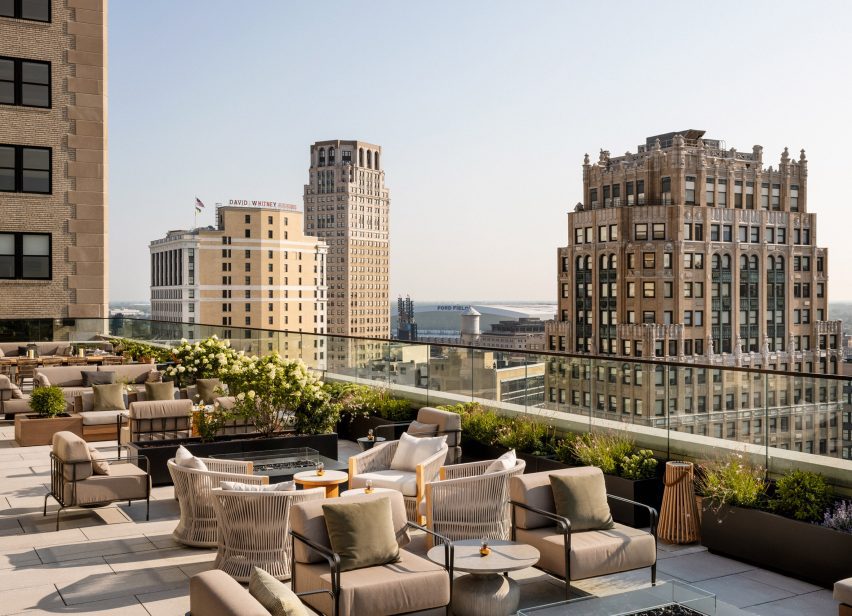
On the 14th floor is Kamper’s, a rooftop cocktail bar designed with ODA comprising an indoor lounge that opens onto an expansive outdoor terrace via large French doors.
The cosy interior has exposed brick walls and dark wood accents, complemented by marble mosaic flooring, antiqued mirrors and velvet drapery.
Kamper’s opens onto an expansive terrace with views across Detroit
Bar Rotunda sits below the glass dome and acts as an all-day lobby cafe and bar, with 70 seats surrounded by ornate architectural details that recall the grand eateries of early 20th-century Paris.
“The space is canopied by a beautifully restored 100-year-old Keppler Glass dome that features more than 7,000 individual jewels and 6,000 glass panels making it an architectural centerpiece,” said Method Co, which also worked with ODA on this space.
Also planned to open soon within Book Tower are sake pub Sakazuki, and izakaya and omakase-style dining spot Hiroki-San.
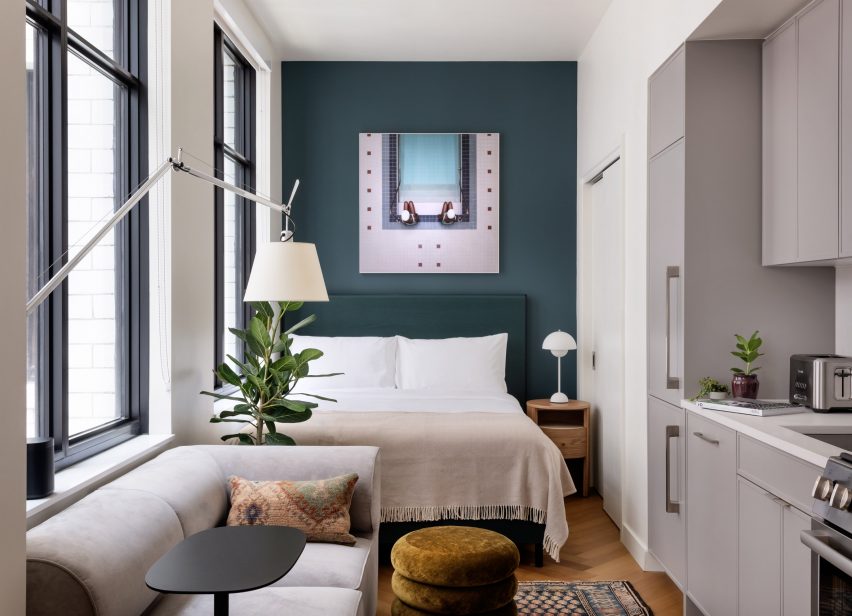
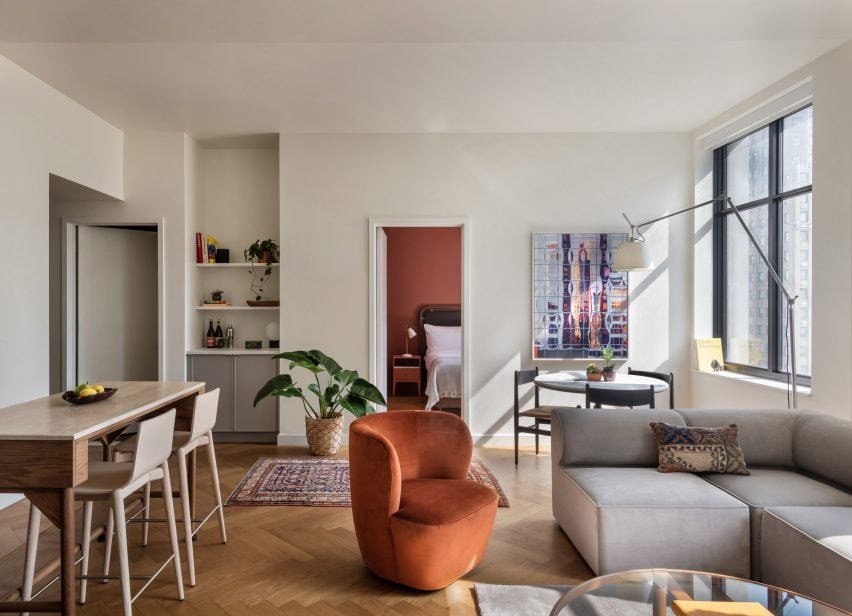
The hotel component of the building, Roost Detroit, offers short and long-stay accommodation in contemporary apartment-style spaces, alongside The Residences that are purchasable as permanent homes.
The building’s accommodation component, Roost Detroit, is Method Co’s latest iteration of its apartment hotel brand
Roost Detroit is the latest iteration of Method Co’s apartment hotel brand, joining multiple outposts in Philadelphia – including the Morris Adjmi-designed East Market – along with Tampa, Cleveland and more across the US.
Roost Detroit offers short and extended stays within contemporary spaces of various sizes and configurations
Downtown Detroit’s revitalisation has taken shape over the past few years, and a handful of new hotels have opened to accommodate visitors who are returning to witness its cultural and creative rebirth.
They include The Siren Hotel, designed by ASH NYC to recall the city’s glamorous past, and the Shinola Hotel, which Gachot Studios designed for the local watch company of the same name.