There’s a whole lot to love about giant dog breeds, from their commanding presence to their gentle personalities. Their unique appearances and characteristics attract “oohs” and “ahhs” no matter where they go. If you’re looking for a big dog with an even bigger heart and wondering what is the largest dog breed, the following dogs are as gargantuan as they get.
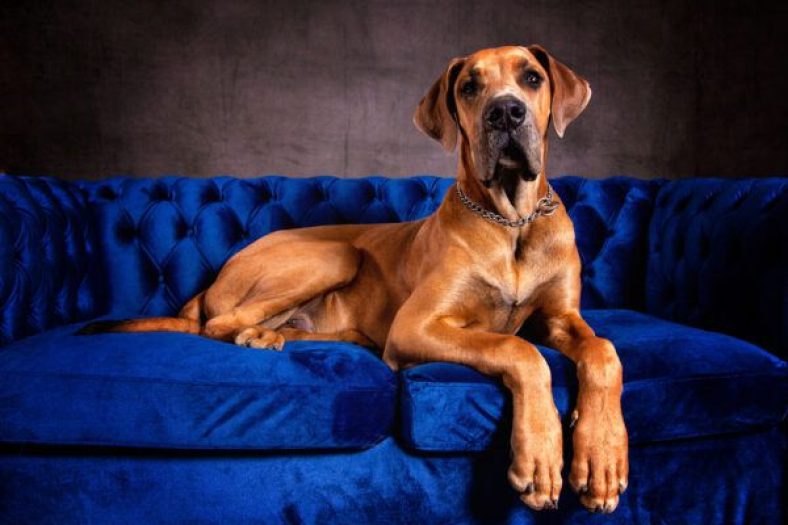
Despite originally being bred to hunt boars, the Great Dane is the embodiment of “gentle giant.” Great Danes can stand 28 to 32 inches tall and weigh anywhere from 110 to 175 pounds. With that, it comes as no surprise that the world’s tallest dog is, in fact, a Great Dane!
“An absolutely enormous beast, they are, however, also known for their very calm and often dopey nature. Not at all what you’d think!” says Dr. Patrik Holmboe, Head Veterinarian for Cooper Pet Care. “A Great Dane can make a great family dog.”
English Mastiffs, or simply Mastiffs, are an ancient dog breed beloved for their loyalty and courage. The massive Mastiff can weigh 120 to 230 pounds and stand 27 to 30 inches tall.
Because Mastiffs don’t reach full physical and mental maturity until they’re 3 years old, Dr. Patrik says, “A Mastiff absolutely requires much more training and dedication to make sure that you have a well-adjusted and social dog.”
The instantly recognizable Saint Bernard is believed to have originated between 1660 and 1670, hailing from the Western Alps between Italy and Switzerland, or the “Great St. Bernard Pass.” This sweet, colossal breed can weigh up to 180 pounds and stand 25 to 27 inches tall.
Dr. Patrik says they “are known for their massive size, which often appears bigger due to their huge coat, and their role in rescue work.”
Newfoundlands are a big-boned breed known to be “exceedingly calm and friendly,” Dr. Patrik says. These mellow sweethearts can weigh up to 150 pounds and stand 26 to 28 inches tall. In addition to being gigantic in size, Newfoundlands have thick, long coats that come in handy for their favorite pastime — swimming!
The Irish Wolfhound is a large, lovable breed with a distinct appearance: a strong build, wiry coat and long face. These laid-back and intelligent dogs can stand 32 to 34 inches tall — around 7 feet when on their hind legs! — and weigh up to 180 pounds. The AKC recognizes the Irish Wolfhound is known as the tallest dog breed (although the Guinness World Record is held by Zeus, the Great Dane right now).
If you want a giant cuddle buddy and have ample space to fully accommodate their living needs, these are the best giant dog breeds for you. An extra-large dog will require lots of food, enormous beds, sturdy toys and perhaps even countless drool bibs! Learn more about each breed’s temperament and care to find your perfect match.
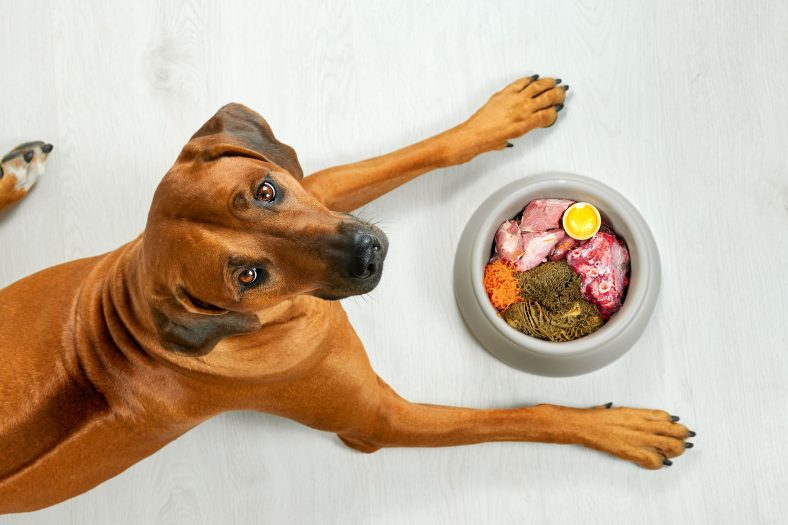
A raw diet for dogs centers around the concept of feeding dogs a similar diet to that of their ancestors and wolf cousins. As the name implies, you feed uncooked meats, bones, and organ meat, plus eggs, fruits, vegetables, grains and dairy. Dogs have a higher stomach acidity and shorter intestinal tracts, which enable them to eat raw meat that may have food born bacteria. Even so, proper food preparation and handling procedures must be practiced, including cleaning and disinfecting work surfaces after each meal.
Some pet parents who feed their dogs a raw diet tout benefits such as improved health and digestion, better stools and more energy; even improvements in some medical conditions. But, a raw diet isn’t necessarily a good idea for dogs with certain medical conditions, young puppies or senior dogs. Do your research and talk a veterinarian nutritionist before making the switch.
Raw dog food diet plans
There are three main types of raw diets for dogs:
The Prey Model Raw diet follows the belief that dogs should eat as their wolf ancestors did by consuming bones, muscle, meat, skin, organs, fat, connective tissue and, sometimes, hide, hair and feathers.
Biologically Appropriate Raw Food (B.A.R.F) or Bones and Raw Food focuses on raw muscle meat to provide essential nutrients to your dog. A B.A.R.F. diet looks like this: 70% muscle meat, 10% raw edible bone, 7% vegetables, 5% liver, 5% other secreting organ, 2% seeds or nuts and 1% fruit.
Keto Dog Diet is high fat, low carb-based diet, similar to the human Keto diet. Keto diets for dogs are currently the subject of studies to see if this feeding pattern helps dogs diagnosed with cancer.
The diets can be either homemade, store-bought, freeze-dried or dehydrated. Each center around feeding your dog’s meals in raw form. Alternatively, gently cook your dog’s meal or subscribe to a meal delivery service where the food has been treated to prevent contaminations.
How to make a raw diet for dogs
Before you give your dog a raw food diet, consult a veterinarian or canine nutritionist to help you create meals containing appropriate amounts of all the nutrients that your dog needs to stay healthy. They will test your dog for food allergies and guide you through starting your dog on a raw diet plan. Lissa Cannady, RVT, Hospital Manager for VCA, advises the feeding amount should be determined by the caloric content of the ingredients included in the diet. Aim for “balance over time,” she says, by rotating proteins with fruits, vegetables and grains in each meal to provide all the amino acids, vitamins and minerals your dog needs to stay healthy.
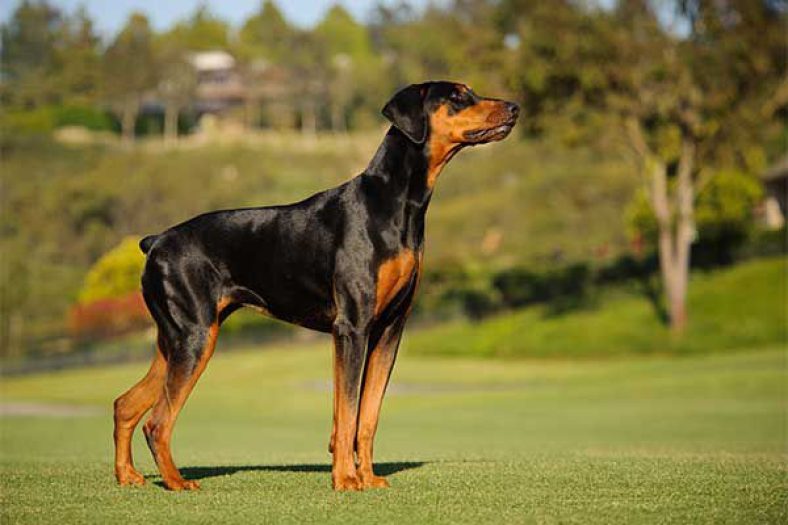
For more than a century, Doberman Pinschers have both safeguarded and prized their families. The breed’s strong work ethic complements his appreciation for sports and play. Observant, affectionate and protective, the Doberman makes a steadfast companion for experienced dog owners.
Doberman Pinscher dog breed’s history
Few dog breeds have such a specifically defined “father-of-the-breed” as the Doberman Pinscher. Early Dobes were initially developed in Apolda, Germany in the late 1890’s by Karl Friedrich Louis Dobermann. A local tax collector, Dobermann also served as warden in the Apolda dog pound. Harassed by thieves as he collected taxes, Dobermann decided to develop a practical dog breed for protection, deterrence and companionship. As pound warden, Dobermann had access to many dogs for his breeding program. He mixed both stray dogs and conventional breeds such as the Rottweiler, German Pinscher and Beauceron.
Because Dobermann didn’t keep stud records, the specific percentages of breeds he used aren’t known. Most historians say, however, that the older version of the German Shepherd was a sizeable contributor to the new breed. Dobermann’s program focused on courage, strength, sharpness, endurance, loyalty and protection. While today’s Doberman has developed into a beautiful as well as capable working dog breed, early Doberman Pinschers weren’t bred for glamor.
After Dobermann’s death, fellow Apolda resident Otto Göller continued breeding Dobermans. The breed took on the original developer’s name, although in time the second N in Dobermann’s name was dropped. The Germans also dropped the Pinscher from the breed name. The American Kennel Club, however, has kept Pinscher (German for biter, terrier) in the Doberman’s name.
Doberman Pinschers during WWII
Dobermans continued to be developed in Germany for police and military work, protection and companionship. In WWII, Dobermans served as sentries and messengers for the U.S Marine Corps in the Pacific. The dogs alerted the soldiers to enemy forces approaching. Doberman Pinschers could detect a human scent some half of a mile away. War Dog platoons were therefore well protected from ambush.
Many dogs were killed in action in the Pacific and others died from tropical illness, heatstroke, disease or accidents. A memorial statue in Guam, “Always Faithful,” commemorates the dedicated Doberman Pinschers that served. The statue sign lists some 25 dogs that made the ultimate sacrifice and is “given in the memory [of these dog] and on behalf of the surviving men, many of whom owe their lives to the bravery and sacrifice of these gallant animals.”
The memorial sculpture features Kurt the Doberman, the first military working dog killed in action in the 1944 Battle of Guam. Kurt alerted his men to the presence of approaching Japanese soldiers before tragically dying by an enemy grenade. The heroic dog is estimated to have saved the lives of 250 Marines on Guam before he was killed.
These days, Doberman Pinschers aren’t used often for military or police work. One reason for this shift is that the Dobe’s short, single coat doesn’t protect him from heat and cold as well as double-coated breeds, such as the German Shepherd Dog. Others speculate that the Dobe thinks slightly too much for himself, or that he’s less trainable and/or less motivated to obey than, for example, the Belgian Malinois or German Shepherd Dog.
The Doberman Pinscher does, however, continue to excel in search and rescue work, as well as service work. In mobility assist work, for example, Dobes may help pull wheelchairs, assist owners by picking things up or help stabilize owners in motion.
Thriving with consistent owner interaction, Dobermans need focused training, regular affection and a hefty dose of exercise. The self-confident Doberman learns quickly. Although he is an obedient breed, he’s also a self-thinker (yes those two traits may conflict!). Dobes shine in both formal and around-the-house obedience. Sports such as agility, rally and Schutzhund keep the Dobe’s mind and body well-exercised. Physically, the Doberman Pinscher requires lengthy exercise sessions. A spirited, motivated and energetic breed, Doberman Pinschers need space to run and play hard. Large, fenced yards are ideal. Apartment living with a Dobe works only if the owners commit to extensive outside activities.
Dobermans usually bond closely with the family’s children and are generally calm around any respectful children. All dogs, however, require supervision with small children.
Do Doberman Pinschers get along with other dogs? While not a classic let’s-hurry-to-the-dog-park type, a highly-socialized Dobe is typically indifferent or well-behaved around new dogs. Some Dobes may show suspicion around new (especially same-sex) dogs. A Doberman Pinscher raised with other pets in the home usually does well with them.
Doberman Pinschers as protectors
An excellent watchdog, the Doberman Pinscher alerts owners to new happenings and often protectively stands between his family and harm’s way. Bred to guard and, in some ways, think for himself, a Dobe sometimes may interpret threats with his own judgment. This is why obedience and socialization are critical in the puppy stages.
To prevent overreaction as adults, Doberman Pinscher pups must be instructed, through many experiences, to discern threatening behavior from non-threatening behavior. The more the family socializes the Doberman puppy to many people, places and behaviors, the sooner he develops the confidence and experience to discern actual threats. And the more obedience the Dobe is taught, the more he’ll likely respond to his owners’ cues in any given situation.
A well-socialized Dobe shows a quiet respect with strangers, enjoys being out and about, and yet saves his most keen enthusiasm for his beloved owners. His reputation as a tough working dog is well-deserved, but his loyalty and affection to family is equally remarkable.
Want to know more about the Doberman Pinscher? Here are some fun Doberman facts:
White Doberman Pinschers
The Doberman Pinscher Club of America and the AKC standard don’t include the color white. The white-coated or white-factored Doberman is deemed a genetic mutation that may correlate with health and/or temperament issues. The AKC uses specialized tracking for albino and albino-factored Dobermans, with special registration numbers (the “z” list). The AKC’s position on white Doberman is contested by some breeders. However the controversy is viewed, potential buyers are rightfully skeptical about any breeders’ higher prices for any “rare” trait.
Doberman Pinschers on drill teams
Along with war-time duty, Dobermans entertained audiences in a touring drill team developed in the 1950’s by Tess Henseler. Rosalie Alvarez next formed Dobe teams that performed in many events, including half-time football shows. For decades, various Dobermans marched in formations and performed agility maneuvers at parades, football games and other public events. The shows exhibited the dogs’ agility, obedience, grace and raw athleticism.
Miniature Doberman
There’s actually no such thing as a miniature Doberman! There is, however, a distinct toy breed that is often mistaken for a small Doberman. The Miniature Pinscher (Pinscher means Terrier in German) was bred centuries ago in Germany to control rats. Now he’s in the Toy Group, although he’s often deemed the King of the Toys. He’s sometimes thought to have been bred down from Doberman Pinschers, but the Miniature Pinscher was actually developed before the Doberman.
Doberman Pinscher ears
Doberman ears are typically cropped and carried erect. Some families who don’t intend to show their dogs choose to keep their pups’ ears naturally floppy. Some countries, such as New Zealand and Australia, have banned cropping for aesthetic reasons. Historically, the thin and floppy ears of the Dobe were cropped to facilitate guard dog work. Short, erect ears were harder, for example, for human or animal foes to grab on to in a conflict.
Right now, ruthless puppy scammers are lurking online — hoping you’ll click on their websites, post or offer to help. Spotting signs of a puppy scam can save you from ending up heartbroken and broke. Scams include “dog breeders” who only accept bank or wire transfers or won’t have a live video call so you can see a puppy, her littermates and mother.
Dogster interviewed animal welfare insiders who revealed these criminals’ tricks and how to recognize a scam.
Before you put a deposit down on that puppy, do your research on the dog breed and on potential breeders. Know how much the puppy should cost, what the size standards are and the colors. Any puppy that seems too good to be true (cost below market value, special color or size outside the breed standard), probably is. Here’s a list of tips to protect yourself from puppy scams.
Pay with a credit card
Find a reputable breeder by answering these questions: Does she belong to the national dog breed club or any other dog organization, does she hold any positions in any organization, do the dogs meet the breed standard, do people on the breed’s Facebook group page know her?
Ask to review the contract
Check if the puppies in question are part of reported puppy scam lists on sites like PetScams.com, which lists the latest website scammers.
Know the going rate for that type of puppy. If the cost is below that rate, it might be too good to be true.
Does the puppy deviate from the breed standard in any way? Fad sizes or colors could indicate a scam or a dog breeder who breeds unhealthy pups
Google the name of the breeder and the company’s name. Look for reviews and comments from previous customers.
Meet the puppy and the litter in person or have a live video chat
How are you to get the puppy? Many breeders ask that you pick the puppy up in person rather than shipping the puppy. If they want to ship the puppy, make sure they are not a puppy shipping scam (see below)
Do a reverse image search of the puppy’s picture to ensure it is not a stock photo
Adopt from a shelter or rescue in person
Types of puppy and lost dog scams
Not sure if it is scam? Dig into these top four puppy and dog scams to know what they look like.
Online puppy scams
The online puppy scam is one of the most prevalent schemes on the internet. Fraudsters set up sharp-looking websites and pretend to be dog breeders offering adorable puppies for sale. They post pictures of popular breeds like French Bulldogs, Goldendoodles, Labradoodles and Dachshunds, banking you’ll fall in love with photos of the happy, fluffy pups. But the images are often stock photos or hijacked from other dog breeders’ websites.
“I have seen videos and pictures of my own puppies being advertised for sale, sometimes old videos of dogs that are now fully grown,” says Vivianne Hulsey, a preservation breeder who runs Vixbull French Bulldogs. “It’s insane and predatory.”
If you contact these so-called dog breeders, they’ll demand a deposit for the puppy, saying something like, “Send us cash now, or you’ll lose the pup. We have 10 people interested.” After you send money, they vanish. Since the “dog breeder” doesn’t accept credit cards, you may have fewer ways to dispute the charge and get your money back.
Some puppy scammers take your deposit money and run. Others transition to the often-ugly shipping phase.
“They find out where you are based, then tell you they are at the opposite end of the country,” says Paul Brady, a cybersecurity consultant who started PetScams.com, which tracks puppy-swindling websites. “If you’re in California, they’re in New York. If you’re in New York, they’re in California — so they can charge you huge money for shipping.”
Then the “dog breeder” tells you there’s a transport problem (for a puppy who doesn’t exist), and things get expensive. Paul knows one person who lost $20,000.
“They’ll say, ‘The airport refused your puppy, and you need to pay for an air-conditioned box (crate),’” Paul says. “If you don’t pay, they will pile on the pressure saying, ‘The puppy will languish in an airport.’” Keep in mind, airlines don’t require temperature-controlled crates.
The scammers may say your puppy missed her flight and demand you pay them for another one. They insist on money for insurance, vaccines or medications.
Once they’ve bilked you, they may give you an actual flight number for your puppy. Some victims have gone to the airport to find no puppy, realize they’ve been scammed and leave crushed.
Want ad, social media and Craigslist puppy scams
Money-sucking thieves also write social media posts and want ads with sad, fake stories.
“They say, ‘I have a rescue dog in need,’ or ‘I’m a missionary assigned to some foreign country. I have to rehome my dog quickly; he’s free,’” says Kathleen Summers, the director of outreach and research at the Stop Puppy Mills Campaign at the Humane Society of the United States.
When you respond, the person may tell you he needs money to get the dog to you, and it morphs into a shipping scam.
“Sadly, kind-hearted animal lovers are often reluctant to give up because they think the animal is in a bad situation,” Kathleen says. “It takes advantage of people who think they’re doing the right thing.”
Some ads are about real dogs up for sale by thieves, puppy mills and backyard breeders. “You get a sick dog, spend thousands on medical bills and the dog dies anyway,” says Madeline. “The seller becomes unreachable, and you’re stuck with the expenses. It’s pretty depressing.”
Lost dog scams
Scammers also troll lost dog posts to dupe worried families.
“It’s devastating,” says Leslie Poole, the executive director of Pet FBI, a free database to list lost and found pets.
Fraudsters call the number on the post and pretend they have your pup. They request money to drive your dog to you or for medical expenses because she was injured. Overjoyed and relieved pooch parents send the money — of course, via a bank transfer, payment app or even gift cards.
“Then they never hear from the person again,” Leslie says. “It’s the worst. You need to get verification that they have your pet before you transfer any funds.”
Like the online puppy-seller scams — you can ask to do a live video chat with the person and your dog. Or find out exactly where they are and contact their local animal control agency or police.
Dog lovers who spotted puppy scams
Madison Nak from California connected with a website selling exactly what she wanted: a cream-colored French Bulldog.
“They’re like, ‘I’m gonna send you videos,’” Madison says. “It wasn’t FaceTime or Skype, but they did say something like, ‘Here are videos of the dogs in our yard this morning.’”
Madison was suspicious and asked them to write her name on a piece of paper, put it next to the puppy and send her the photo. That’s when she spotted it was a scheme. “They photoshopped the picture,” she says. “I never sent the money. Luckily, I didn’t get scammed.”
But Marsha M. from Kansas wasn’t as lucky.
She tried to buy a French Bulldog for her mother, who is battling cancer. “Her dog had just died,” Marsha says.
Marsha found a website offering darling puppies for a reasonable price. (Puppies priced below the usual going rate are a sign of a scam.) When she inquired, they asked a barrage of questions.
“What kind of house do you have? What kind of yard? They said they wanted to make sure their babies were going to the right home,” Marsha says.
Marsha sent an $850 deposit through a payment app. Then she discovered the same “dog breeder” had a dozen similar websites, each selling a different type of dog.
She emailed Petscams.com and it confirmed the site Marsha paid was on its scam list. Despite trying, she did not get her money back.
“I cannot believe people are so evil,” she says. “My mother ordered toys. She got food. I’m so upset.”
How do puppy scammers get away with it?
How do these scammers keep swindling dog lovers?
“Many scammers operate out of Africa with little fear of being caught or extradited to the United States to face criminal charges. The scammers know that,” Paul says.
Paul says the only way to stop the scams is to educate dog lovers to stop falling for them. “If you receive an email saying, ‘My son is a Nigerian prince, and we have 50 million dollars.’ You know it’s a scam,” Paul says.
Marsha says she was hesitant to talk about what happened to her, but she wants to warn others about the pain scammers cause.
“I was so embarrassed,” Marsha says. “But word needs to get out, even if I can help just one person.”
Spot a puppy scam quickly: look for a fake logo
Beware fake and stolen logos on puppy and dog scam websites
Swindlers swipe the names and logos of legit organizations for credibility. If you have a lost dog, a scammer may email you claiming they’re with a real lost pet recovery service — but they’re not.
“They say, ‘I can find your pet, but I will need the fee upfront.’ That’s a red flag right there,” Leslie says.
Some scammers post the American Kennel Club (AKC) logo on their “puppies for sale” website. The AKC is a well-known registry of purebred and pedigree dogs.
“It’s a regular occurrence,” says Brandi Munden, vice president of public relations and communications for the AKC. “Our logo is easily found online. It’s not hard to download and slap it on a website, unfortunately.”
The AKC doesn’t license or certify breeders or dogs. The group registers dogs with the required lineage paperwork. If you have questions about AKC references on a website, email info@akc.org and the AKC will help you separate fact from fiction.
“Dig and do your research,” Brandi says. “The scammers are messing with somebody’s emotional heartstrings, and that’s unfair.”
Right now, ruthless puppy scammers are lurking online — hoping you’ll click on their websites, post or offer to help. Spotting signs of a puppy scam can save you from ending up heartbroken and broke. Scams include “dog breeders” who only accept bank or wire transfers or won’t have a live video call so you can see a puppy, her littermates and mother.
Dogster interviewed animal welfare insiders who revealed these criminals’ tricks and how to recognize a scam.
How to protect yourself from the top puppy scams
Before you put a deposit down on that puppy, do your research on the dog breed and on potential breeders. Know how much the puppy should cost, what the size standards are and the colors. Any puppy that seems too good to be true (cost below market value, special color or size outside the breed standard), probably is. Here’s a list of tips to protect yourself from puppy scams.
Pay with a credit card
Find a reputable breeder by answering these questions: Does she belong to the national dog breed club or any other dog organization, does she hold any positions in any organization, do the dogs meet the breed standard, do people on the breed’s Facebook group page know her?
Ask to review the contract
Check if the puppies in question are part of reported puppy scam lists on sites like PetScams.com, which lists the latest website scammers.
Know the going rate for that type of puppy. If the cost is below that rate, it might be too good to be true.
Does the puppy deviate from the breed standard in any way? Fad sizes or colors could indicate a scam or a dog breeder who breeds unhealthy pups
Google the name of the breeder and the company’s name. Look for reviews and comments from previous customers.
Meet the puppy and the litter in person or have a live video chat
How are you to get the puppy? Many breeders ask that you pick the puppy up in person rather than shipping the puppy. If they want to ship the puppy, make sure they are not a puppy shipping scam (see below)
Do a reverse image search of the puppy’s picture to ensure it is not a stock photo
Adopt from a shelter or rescue in person
Types of puppy and lost dog scams
Not sure if it is scam? Dig into these top four puppy and dog scams to know what they look like.
Online puppy scams
The online puppy scam is one of the most prevalent schemes on the internet. Fraudsters set up sharp-looking websites and pretend to be dog breeders offering adorable puppies for sale. They post pictures of popular breeds like French Bulldogs, Goldendoodles, Labradoodles and Dachshunds, banking you’ll fall in love with photos of the happy, fluffy pups. But the images are often stock photos or hijacked from other dog breeders’ websites.
“I have seen videos and pictures of my own puppies being advertised for sale, sometimes old videos of dogs that are now fully grown,” says Vivianne Hulsey, a preservation breeder who runs Vixbull French Bulldogs. “It’s insane and predatory.”
If you contact these so-called dog breeders, they’ll demand a deposit for the puppy, saying something like, “Send us cash now, or you’ll lose the pup. We have 10 people interested.” After you send money, they vanish. Since the “dog breeder” doesn’t accept credit cards, you may have fewer ways to dispute the charge and get your money back.
Some puppy scammers take your deposit money and run. Others transition to the often-ugly shipping phase.
“They find out where you are based, then tell you they are at the opposite end of the country,” says Paul Brady, a cybersecurity consultant who started PetScams.com, which tracks puppy-swindling websites. “If you’re in California, they’re in New York. If you’re in New York, they’re in California — so they can charge you huge money for shipping.”
Then the “dog breeder” tells you there’s a transport problem (for a puppy who doesn’t exist), and things get expensive. Paul knows one person who lost $20,000.
“They’ll say, ‘The airport refused your puppy, and you need to pay for an air-conditioned box (crate),’” Paul says. “If you don’t pay, they will pile on the pressure saying, ‘The puppy will languish in an airport.’” Keep in mind, airlines don’t require temperature-controlled crates.
The scammers may say your puppy missed her flight and demand you pay them for another one. They insist on money for insurance, vaccines or medications.
Once they’ve bilked you, they may give you an actual flight number for your puppy. Some victims have gone to the airport to find no puppy, realize they’ve been scammed and leave crushed.
Want ad, social media and Craigslist puppy scams
Money-sucking thieves also write social media posts and want ads with sad, fake stories.
“They say, ‘I have a rescue dog in need,’ or ‘I’m a missionary assigned to some foreign country. I have to rehome my dog quickly; he’s free,’” says Kathleen Summers, the director of outreach and research at the Stop Puppy Mills Campaign at the Humane Society of the United States.
When you respond, the person may tell you he needs money to get the dog to you, and it morphs into a shipping scam.
“Sadly, kind-hearted animal lovers are often reluctant to give up because they think the animal is in a bad situation,” Kathleen says. “It takes advantage of people who think they’re doing the right thing.”
Some ads are about real dogs up for sale by thieves, puppy mills and backyard breeders. “You get a sick dog, spend thousands on medical bills and the dog dies anyway,” says Madeline. “The seller becomes unreachable, and you’re stuck with the expenses. It’s pretty depressing.”
Lost dog scams
Scammers also troll lost dog posts to dupe worried families.
“It’s devastating,” says Leslie Poole, the executive director of Pet FBI, a free database to list lost and found pets.
Fraudsters call the number on the post and pretend they have your pup. They request money to drive your dog to you or for medical expenses because she was injured. Overjoyed and relieved pooch parents send the money — of course, via a bank transfer, payment app or even gift cards.
“Then they never hear from the person again,” Leslie says. “It’s the worst. You need to get verification that they have your pet before you transfer any funds.”
Like the online puppy-seller scams — you can ask to do a live video chat with the person and your dog. Or find out exactly where they are and contact their local animal control agency or police.
Dog lovers who spotted puppy scams
Madison Nak from California connected with a website selling exactly what she wanted: a cream-colored French Bulldog.
“They’re like, ‘I’m gonna send you videos,’” Madison says. “It wasn’t FaceTime or Skype, but they did say something like, ‘Here are videos of the dogs in our yard this morning.’”
Madison was suspicious and asked them to write her name on a piece of paper, put it next to the puppy and send her the photo. That’s when she spotted it was a scheme. “They photoshopped the picture,” she says. “I never sent the money. Luckily, I didn’t get scammed.”
But Marsha M. from Kansas wasn’t as lucky.
She tried to buy a French Bulldog for her mother, who is battling cancer. “Her dog had just died,” Marsha says.
Marsha found a website offering darling puppies for a reasonable price. (Puppies priced below the usual going rate are a sign of a scam.) When she inquired, they asked a barrage of questions.
“What kind of house do you have? What kind of yard? They said they wanted to make sure their babies were going to the right home,” Marsha says.
Marsha sent an $850 deposit through a payment app. Then she discovered the same “dog breeder” had a dozen similar websites, each selling a different type of dog.
She emailed Petscams.com and it confirmed the site Marsha paid was on its scam list. Despite trying, she did not get her money back.
“I cannot believe people are so evil,” she says. “My mother ordered toys. She got food. I’m so upset.”
How do puppy scammers get away with it?
How do these scammers keep swindling dog lovers?
“Many scammers operate out of Africa with little fear of being caught or extradited to the United States to face criminal charges. The scammers know that,” Paul says.
Paul says the only way to stop the scams is to educate dog lovers to stop falling for them. “If you receive an email saying, ‘My son is a Nigerian prince, and we have 50 million dollars.’ You know it’s a scam,” Paul says.
Marsha says she was hesitant to talk about what happened to her, but she wants to warn others about the pain scammers cause.
“I was so embarrassed,” Marsha says. “But word needs to get out, even if I can help just one person.”
Spot a puppy scam quickly: look for a fake logo
Beware fake and stolen logos on puppy and dog scam websites
Swindlers swipe the names and logos of legit organizations for credibility. If you have a lost dog, a scammer may email you claiming they’re with a real lost pet recovery service — but they’re not.
“They say, ‘I can find your pet, but I will need the fee upfront.’ That’s a red flag right there,” Leslie says.
Some scammers post the American Kennel Club (AKC) logo on their “puppies for sale” website. The AKC is a well-known registry of purebred and pedigree dogs.
“It’s a regular occurrence,” says Brandi Munden, vice president of public relations and communications for the AKC. “Our logo is easily found online. It’s not hard to download and slap it on a website, unfortunately.”
The AKC doesn’t license or certify breeders or dogs. The group registers dogs with the required lineage paperwork. If you have questions about AKC references on a website, email info@akc.org and the AKC will help you separate fact from fiction.
“Dig and do your research,” Brandi says. “The scammers are messing with somebody’s emotional heartstrings, and that’s unfair.”
Janel Hutton is the recipe developer, food photographer, and entrepreneur behind NellieBellie LLC. Although a Minnesota native, Janel hates the cold and longs for the day when she can become a snowbird. She’s a bossy woman with a heart of gold who adores her husband and two kids more than anything. And she’s a bit of a know-it-all when it comes to dogs (she’s currently owned by two rescues). You can find her on all the socials at @miznelliebellie and her website nelliebellie.com.
It’s a pet parent’s worst nightmare – you find a lump on your dog and immediately think cancer. While about half of dogs over the age of 10 develop cancer, it can be difficult to spot early signs. Early canine cancer signs and symptoms vary and can be the same as many other conditions or illnesses, explains Len Boyko, CEO, the Pet Cancer Foundation. However, the sooner you spot cancer, the better. In many cases with a specific cancer diagnosis there are effective treatments that can help your dog live a long life.
Top six signs of cancer in dogs
Depending on the type of cancer your dog has, overall warning signs to look for can include:
With bladder cancer, a dog may strain to urinate or have blood in his urine, and with stomach cancers, a dog’s vomit may have redness to it, or a “coffee grounds” appearance. If you see any of these signs, consult a veterinarian as soon as possible. Early detection plays a critical part of your pet’s ability to fight the cancer.
The most common cancers in dogs
Osteosarcomas are the most prevalent type of bone cancer in dogs, however there are various types of osteosarcomas. “[A] veterinary oncologist will work to rule out Chondrosarcoma, Squamous Cell Carcinoma, Synovial Cell Sarcoma and Fungal Bone Infections that have similar symptoms. Identifying the specific type of cancer present is part of providing more effective treatment for the type your dog has,” says Len.
The most common type of cancer that Dr. Daniela Korec, a veterinary oncologist at VCA SouthPaws Veterinary Specialists and Emergency Center in Virginia, sees in dogs at her practice is lymphoma. Lymphoma is a cancer of the lymphatic system and lymph nodes, and since the lymphatic system exists throughout the body, there are many different types of lymphoma that can occur. She says that the most common symptom is enlarged lymph nodes, but when it impacts the gastrointestinal tract there may be other signs such as diarrhea, vomiting or changes in bowels movements.
How to spot early signs of cancer in dogs
About half of dogs over the age of 10 will develop cancer, according to the American Veterinary Medical Association. Although cancers typically fall into categories for what parts of the body they affect, such as bladder, bone or lung cancer, within these body parts, there are many different types of cancers and it’s often hard to detect early symptoms.
Len emphasizes the importance of keeping an eye on your dog’s health at home.
“When giving them pets and rubs, feel all over their bodies to search for lumps, bumps, scratches, cuts, lesions, or sores,” he says. “We should recognize that early detection of cancer is an essential part of giving any pet a better chance to fight the disease. This means as pet families that we need to pay attention to their health and wellbeing daily and make note of even slight changes that may be indicators of something more. That doesn’t mean we should overreact, just being aware of their physical and emotional ‘normal,’ is important to helping them stay healthy,” Len says.
Advancements in cancer diagnosis in dogs
A new multi-cancer detection test called the OncoK9, developed by PetDx, detected 26 types of canine cancers in high-risk dogs, who did not show any early signs of cancer. The liquid biopsy test is noninvasive and may be able to help veterinarians diagnose hard-to detect cancers, such as spleen cancer in dogs, liver cancer in dogs and lung cancer in dogs. The study was recently published in the Journal of the American Veterinary Medical Association (JAVMA).
In addition, the Pet Cancer Foundation has a host of resources on its site, www.petcancerfdn.org under “Treatment and Support” to learn more about cancer diagnoses and what to do for your dog.
Who says meal delivery is just for humans? The latest trend in pet nutrition is custom dog food, and it’s a great way to ensure your pet is getting the nutrition he needs to thrive. Not only is it healthy, but it’s also delicious, making mealtime the highlight of your dog’s day.
There are a lot of choices for both custom kibble and wet food varieties. Typically, these dog food companies are subscription-based, where the food is shipped directly to your door in proportioned containers. Just like we humans, our pups can now enjoy the convenience and health benefits of pre-cooked meal delivery based on their needs.
What is personalized dog food versus customized dog food?
On most subscription-based dog food companies’ websites, you first complete a survey about your dog. Some of these questions may include your dog’s age, weight, breed, energy levels, health problems, dietary preferences and restrictions, and lifestyle. Based on your answers, the company suggests a diet personalized or customized to your dog.
Personalized dog food is where the company offers one of its many pre-packaged diets that address common needs based on breed, health, issues, etc. Customized dog food is where the made-to-order company offers a special diet designed specifically for your dog’s individual needs. It is like having your very own personal chef for your dog.
Benefits of a customized dog food diet
A diet customized for your dog’s needs could help improve your dog’s health and well-being by providing the right balance of nutrients, helping him maintain his weight (or lose weight), maintaining strong bones and joints, and even supporting a healthy immune system. Also, a customized dog food diet might help manage these conditions:
food allergies
food sensitivities
GI upset
joint inflammation
skin issues
health conditions, such as diabetes or liver disease
What’s the best custom dog food brand?
When choosing a custom dog food company, look for the following criteria:
reliable (company meets its customers’ expectations regularly without failure)
uses high-quality ingredients
has safety and quality standards
diet is 100% complete and balanced according to AAFCO standards (The Association of American Feed Control Officials (AAFCO) sets nutritional standards and guidelines for pet food.)
animal nutrition experts or veterinary nutritionists who oversee the development of the diets
Top custom dog food picks
Three of my favorite custom dog food picks due to the quality and variety of the food and subscription plans.
Some companies also offer one or two-week trial subscriptions and shipments to make sure your dog will enjoy and eat the food, and it won’t upset his digestive system. This is a great option for those owners who have very picky pups!
How much does custom dog food cost?
Custom dog food can be more expensive than commercial dog food you pick up at the local store, but many pet owners, especially those who have pups with medical issues, feel that the benefits of the customized diet are worth it. Also, if you have pet insurance, some plans cover this type of food if it is prescribed by your vet.
With made-to-order dog food, your dog can enjoy the benefits of a special diet that truly addresses his needs while you enjoy the convenience of pre-portioned meals delivered to your door. So why not give it a try and treat your pet to a gourmet meal? Bon-Appetit!
What does it look like when a dog is having a seizure? Seizures are typically categorized as generalized or focal.
“A generalized seizure is what most people think of when they think of seizures,” says Dr. Nauss, and describes them as ranging from mild to severe.
Generalized seizures include symptoms like:
sudden and uncontrolled movements
vocalization
loss of bowel and/or bladder control
potential loss of consciousness
Focal seizures in dogs are easier to overlook. “Some pets experience focal seizures without their owners even realizing it,” explains Dr. Nauss. “These are usually an abnormal movement of the limbs or a twitching, usually around the head and face.”
What to do when a dog has a seizure
If your dog is having a seizure, follow these steps:
Be calm, steady and gentle. “Use extreme care around your dog’s face to ensure you don’t inadvertently get bitten,” Dr. Nauss says.
Clear the area around your dog. Ensure there is nothing in the pet’s immediate vicinity that may hurt him such as stairs he could fall down, or something close by that could fall on him. And move other pets (and any small children) to a different area in the home.
Record important information. “If possible, try to film the event on your phone,” suggests Dr. Nauss. “Apart from indicating how long the event lasted, it will provide valuable insights for your veterinarian.”
If it wasn’t possible to record the dog’s seizures, write notes recording as many details as possible:
Approximately how long the episode lasted
Whether your pet lost bladder control
Whether your pet lost bowel control
What was going on before the seizure started
What to do after a dog has a seizure
Dogs experience “a postictal phase after seizures where they remain disoriented and may seem blind for a while,” explains Dr. Nauss
After a seizure, create a calm, quiet and safe environment. Turn off the television and music, dim the lights, and make sure your dog is in a safe space.
Can you stop a dog from having a seizure?
No, there isn’t a way to stop a dog from having a seizure, but research shows that CBD may help reduce the frequency of seizures in dogs.
“It’s crucial to have an in-depth discussion with your veterinarian to ensure your pet avoids taking other medications that may lower the seizure threshold, making it easier for a pet to have a seizure. There are adjunctive treatments like taking fatty acid supplements and acupuncture that may help control seizures,” adds Dr. Nauss.
There is a specialized technique called ocular compression that can be taught to a pet owner if he sees a seizure coming on. This is something to be discussed in detail with your veterinarian.
For dogs with epilepsy, ensure he takes any prescribed medications on a regular schedule.
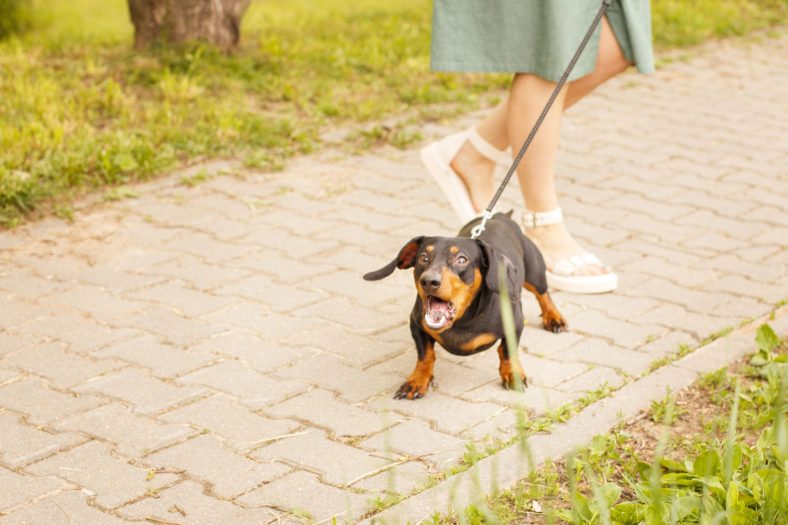
What is a leash-reactive dog? Your usually friendly dog starts barking and lunging when he sees or hears another dog or when a jogger or loud truck passes by. And you wonder what happened. After all, off a leash, he’s calm.
Many dogs can ignore these sights and sounds and take them in stride. But a leash-reactive dog responds to certain stimuli at a higher-than-normal level of intensity. His reactivity is a result of the stress that he’s experiencing. Here are tips to help manage your dog’s leash reactive behavior:
First, determine what he’s reactive to (for example, cars, people or other dogs) and why. Reasons behind leash-reactive behavior can include genetics, the behavior was successful for the dog in the past and barrier frustration, similar to being stuck behind a fence. Then, decide how to manage and develop a program for modifying the behavior.
14 tips to manage a leash-reactive dog
You can take many actions to help manage your dog’s reactivity while he’s on leash.
Remain calm and don’t yank on or tighten the leash.
Your dog can read your voice, body language and scent. If you’re stressed, he becomes more anxious, too. A tight leash can lead to reactivity.
Keep your dog under threshold.
Make sure that he isn’t overstimulated by things, animals or people that would otherwise cause him to be reactive. Often this means keeping him at a sufficient distance from the stimulus. So, for example, if he becomes overstimulated by dogs who are 29 feet away but not when they are 30 feet away, stay at least 30 feet away while you’re working with the issue.
Ensure safety with the proper equipment.
Use equipment that your dog can’t escape from, such as a correctly fitted harness, a Martingale-type collar or a combination of both. Don’t use aversive equipment, such as a prong or shock collar.
Socialize your dog at his own pace.
While you’re working with the cause of his reactivity, slowly expose him to everyday sights, sounds, people and animals that he can handle and to which he isn’t reactive. Always use positive reinforcement of treats, praise and play.
The two most important cues to teach when modifying leash-reactive behavior are “look” and “turn.”
Teach a “look” cue. And also teach your dog to pay attention to you by default. Train him to walk on a loose leash. These skills help him to focus on you rather than the environment. You can also teach your dog to nose-target to your hand, as long as he doesn’t redirect his frustration onto you.
Teach an emergency U-turn when you say the cue “turn.” Lure your dog to turn 180-degrees with you in the other direction away from the stimulus, praising and rewarding immediately after the turn.
Add distractions after he understands and performs the cue. Eventually, you can use the cues when you’re out-and-about with your pup.
An added bonus of this training is that your pup is more confident because he knows what’s expected of him.
Don’t have him greet other dogs while on leash.
A leash interferes with the natural ways dogs greet each other in which they sniff, display body language that each understands and can advance and retreat. On lead, a dog can’t retreat when he feels threatened or if he isn’t in the mood to engage. Also, leashes can become tangled, even leading to a fight.
Don’t reward leash-reactive behavior.
If your dog’s frustrated by the leash, is reactive and wants to greet other people or dogs, don’t allow him to greet them even if he’s friendly when off lead. If he’s pulling and barking to reach them and you allow him to, you reward the behavior. He will continue to be reactive the next time he sees people or canines, believing that he will be allowed to greet them. And he would probably be over threshold and not react appropriately if he were allowed to greet.
Exercise your dog physically and mentally prior to your walk.
Exercise helps him de-stress and take the edge off. Help your dog to succeed.
Take your dog for walks at “off” times.
If he’s reactive to traffic, for example, try not to walk him at rush hour or on very busy streets. If he’s reactive to dogs or people, take routes at times where there aren’t likely to be any.
Classically condition your dog’s response to the stimulus.
You’re changing your dog’s association to — that is, emotional response to — the stimulus. You want to change the way your dog feels. This is a conditioned emotional response. Any change in behavior, such as a lack of reactivity, is a bonus result of your dog’s new, positive association with the stimulus.
Here’s an example: If the stressor is a person, as soon as your dog sees the person, give a steady stream of yummy treats, such as small pieces of deboned chicken. Do this for about 20 second to a minute, depending on how reactive your dog is. The goal is for your dog to realize that the appearance of the stressor makes great things happen.
If your dog goes over threshold, keep giving chicken, but move away at a distance beyond his threshold distance where your dog isn’t reactive. Then start again.
Add counter-conditioning and desensitization (CC&D) of your dog to the stimulus.
Once your dog gives you the conditioned emotional response you desire — happily enjoying the presence of the stimulus — you can counter-condition and desensitize your dog to the stimulus.
Here’s how: Do training setups where the stimulus is beyond your dog’s threshold distance. If your dog’s reactive on lead to other dogs, for example, use a handler with a nonreactive test dog who will ignore your dog. Stay at a distance where your dog is under threshold.
Instruct the handler to go in-sight, then out-of-sight. When the duo is in-sight and your dog is calm, give him a series of treats until the duo goes out-of-sight. The presence of the stimulus makes the yummy chicken appear.
Keep this exercise short and positive. Don’t over-do it and stress your dog. Eventually, your dog should look to you when he sees the other dog, expecting you to provide the chicken pieces. This demonstrates that he understands that the appearance of the other dog makes chicken appear, and he performs a default behavior of looking to you.
Alternatively, you can have the duo in place and you and your dog go in-sight, out-of-sight a few times.
Of course, you give a stream of treats when the other dog is in-sight and give no treats when the other dog’s not in view. End the session on a positive note.
Once your dog understands that he gets treats when a dog appears and he doesn’t become reactive, add a cue. Say in a happy tone “Where’s the dog?” when the dog appears. In subsequent training sessions, your pup will become happy when the dog appears, looking for his yummy treats from you.
If your dog becomes reactive, move away to a distance at which he was successful.
Over your next training sessions — as your dog can handle it — move very slowly closer to the other dog to desensitize him to other canines. Don’t rush the process. It may take weeks or months — or longer — for your dog to move forward. Each dog’s an individual and moves at his own pace. But, if you’re properly doing the CC&D, you should see progress. Keep your dog under threshold.
Also, over time, have him generalize this with many other dogs as test subjects, as well as new settings. This takes time and many training sessions.
Redirect your dog to another activity.
Carry a favorite toy that you toss immediately in front of your dog and tell him to get it. Or have about five small, yummy treats in your hand and toss them down (with him watching). Tell him to “find it.” This also has the bonus of classically conditioning your dog that something positive occurs when the stimulus, such as a dog or person to which he’s reactive, appears.
Use holistic aids if your vet approves.
Many types of products can help reduce a dog’s stress while on a leash. These include CBD oil, calming tabs, ThunderShirt, Adaptil and Rescue Remedy.
Get professional help if needed
If your dog’s reactivity is severe, engage the services of a veterinary behaviorist or other qualified behavior specialist.
What not to do with a leash reactive dog
Don’t punish your dog for his reactivity. Doing so inevitably makes things worse because he’s already stressed and will probably become more reactive. And you’ll lose his trust.
Also, don’t let others interfere with your behavior modification of your pup. For example, if your dog’s afraid of new people, don’t let people rush up to him.
In order to make your canine best friend’s life less stressful, determine why he’s being reactive on leash. Then you can manage the situation and successfully work through his issue. And you can both live a less stressed, happier, more fulfilling life.