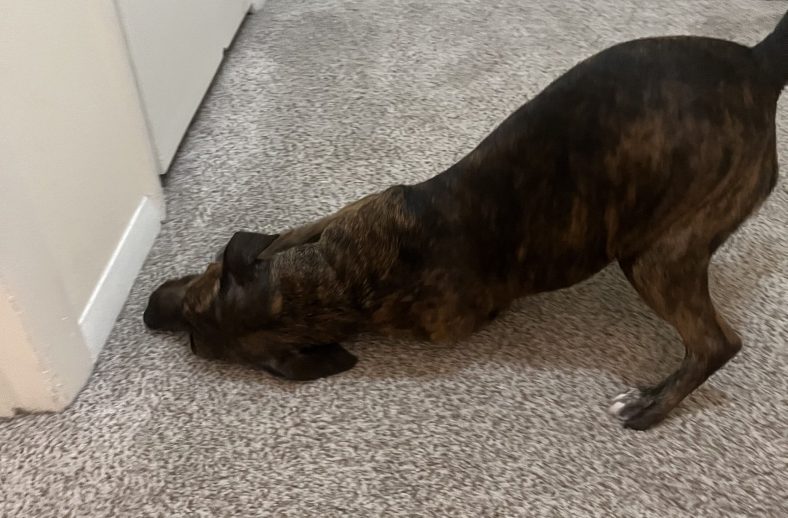
You’re ready to hit the sidewalk or the trails with your dog, ready to get a couple miles of a dog walk in before bedtime, yet your pup constantly stops to rub his face in the grass of the neighbor’s yard next door … and the neighbor down the street … and at the park. Sure, it can be annoying, but it can cause concern as to why your dog rubs his face on the ground all the time.
There are a variety of reasons to explain why your dog is rubbing his face, says Dr. Amy Pike, Diplomat for the American College of Veterinary Behaviorists and owner of the Animal Wellness Center in Fairfax, Virginia. The first question you should ask yourself is, how often is he rubbing his face on the ground?
Does your dog rub his face just occasionally?
Does he rub it in the grass every time you go for walks?
Or does he rub his face after he eats dinner?
Dr. Pike explains to dog owners that there are a lot of outside and inside factors as to why a dog might rub his face.
Outer factor: Scent
The outside world has a lot of good scents on the ground (some maybe not so good to humans). Dogs want to get closer to the scent and, in most cases, try to get that scent on them. They might also try to mark their territory by spreading their scent to tell the rest of the dog world that “Fido was here.”
Inner factor: Itchiness
When your eyes itch, you’re able to use your hands to rub your eyes. Same with scratching your nose. But dogs can’t do that, so the ground provides ample surfaces to scratch that itch. It might also mean your dog has allergies, if he’s really rubbing his face into the ground often.
Outer factor: Annoying facial accoutrements
If you’re starting to utilize an accessory that covers your dog’s face, such as a Gentle Leader head collar or a muzzle, your dog might not appreciate the look and want to remove it with any means necessary.
“If this has something to do with your dog wearing a muzzle or a head collar and he’s trying to rub it off his face, you will definitely want to redirect and distract your dog with high-value food items,” says Dr. Pike.
Inner factor: Sore teeth
It’s difficult to diagnose tooth pain in a dog, unless you go for a thorough veterinarian appointment. If a dog’s tooth hurts, or something is stuck in his teeth, he’ll start rubbing his face in the ground to relieve that annoying pain.
If the behavior is something new and is occurring a lot, Dr. Pike suggests, “You might want to see your veterinarian to rule out any sort of medical concerns.”
If it’s not anything too alarming, let your pup enjoy the pleasures the outside world has to offer!
“If it’s nothing medical or marked as concerning by your vet, let him roll!” Dr. Pike encourages. “Scents are very enriching to dogs, so let them have some fun outside.”
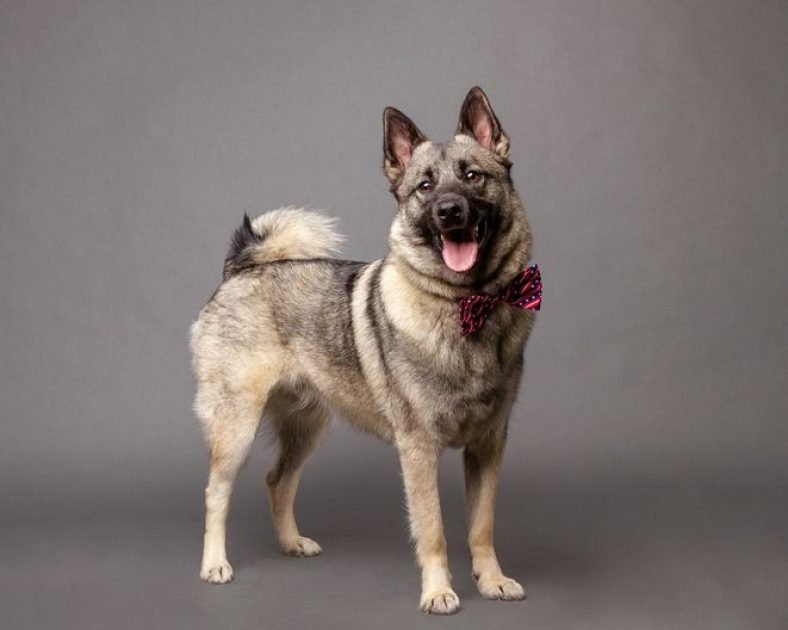
Norway. He is one of the oldest European breeds, is a member of the Nordic Spitz family and is the National Dog of Norway.
How did the Norwegian Elkhound get his name?
The name is a direct translation from the original Norwegian name Norsk elghund, which means “Norwegian moose dog.” That’s right, moose, not elk.
What is the Norwegian Elkhound like?
Friendly, confident, dependable, affectionate. Stubborn and independent. Reserved with strangers until properly introduced.
How active is the Norwegian Elkhound?
Very. This is a hunter, tracker and top-performing athlete so frequent, vigorous exercise is a must, as well as interactive games and play.
Is the Norwegian Elkhound good at any dog sports or activities?
Yes. This is a smart and versatile breed. Agility, flyball, carting and herding are all great dog sports to channel the Elkhound’s energy. They are also fine swimmers.
Does the Norwegian Elkhound need a job?
Yes. Elkhounds are versatile and adaptable. Work around their stubborn streak, be inventive, and make them think the job was their idea.
Is the Norwegian Elkhound good for first-time dog owners?
They can be. They are smart but independent, so training will be a challenge. Don’t expect a push-button dog. They are also vocal, so accept that you will have to control that barking tendency from a young age. Here are some tips on controlling a dog bark.
Is the Norwegian Elkhound a good family pet?
The best match would be active owners and families that enjoy exercise and have a fenced yard. This is a strong, boisterous dog breed with a tendency to pull on the leash so exercising by a young child or a senior probably not advised. The Norwegian Elkhound is bred to hunt, so watch the rodents, pet birds and cats. The breed likes to bark so not ideal for renters, or those who are away for long periods of time.
Is the Norwegian Elkhound a good apartment dog?
Typically, no. A large, securely fenced yard is recommended for safe, off-leash exercise. This is a high-energy dog who can become destructive if suitable outlets are not provided.
Is the Norwegian Elkhound given to excessive barking?
Yes. This is a typical Nordic Spitz so he will be vocal. You will need to train your Elkhound puppy from an early age that random barking is not acceptable. Barking is often a sign of boredom so keep his environment interesting.
Does the Norwegian Elkhound make a good traveler?
Typically, yes. Get him accustomed to car travel early. Crate training is essential for safe car and air travel, hotel and motel stays, overnight visits to the veterinarian, etc.
Is the Norwegian Elkhound easy to groom?
Yes, in terms of not requiring visits to a professional groomer for trimming. However, the breed has a thick, double coat so there is lots of shedding year-round. Frequent, thorough brushing will remove a lot of that dead hair before it ends up on your floors, carpets, furniture and clothes. In his favor, the Elkhound coat does not carry a doggy smell, and so baths are not frequently needed. Regular care of nails, ears and anal glands is necessary, as with every dog.
How popular is the Norwegian Elkhound?
No. 100 in the American Kennel Club list of most popular breeds in 2021, based on annual registrations. (There are 200 AKC-recognized breeds in all.)
Your dog sheds all over the place. While you love him dearly, you want to make sure he doesn’t cover your home in hair or fur.
By researching the best brushes for dogs with short hair and long hair – and purchasing the right product – you can combat shedding and keep your dog looking great at the same time.
The difference between a regular dog brush and a shedding bush
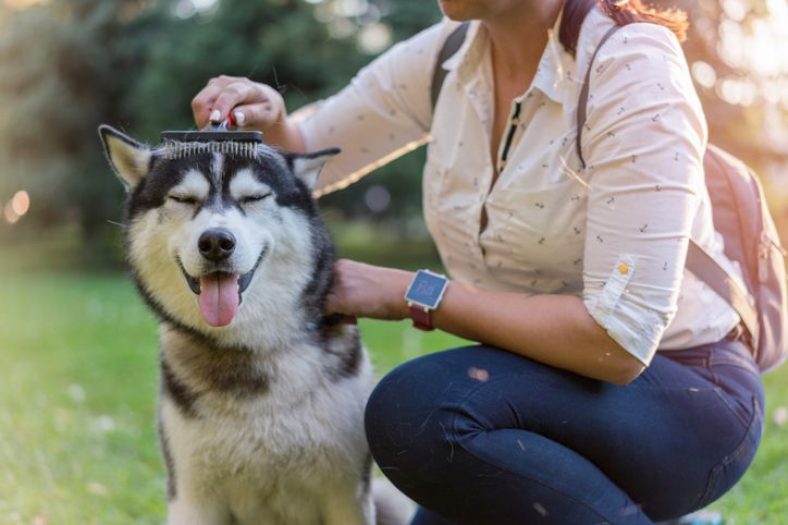
A regular dog brush smoothes the surface of your dog’s fur as well as removes loose debris and hair on the outer coat, according to Megan Conrad, a licensed veterinarian in Oregon and member of online veterinarian service Hello Ralphie. A deshedding tool or a rake will get through your dog’s outer coat and remove loose fur from the undercoat, if your pup has one. Usually, they are designed with metal bristles or teeth and a handle.
Using a dog brush for shedding: Shorthaired vs. longhaired dogs
You can use a deshedding brush or tool on longhaired or shorthaired dogs. However, when it comes to a regular groomer brush, find a dog brush specifically designed for your dog’s coat length. Dr. Conrad says that something with shorter and softer bristles that are closer together is better for shorthaired dogs, while longer bristles will get all the way through to your longhaired dog’s coat.
Dr. Conrad recommends reading reviews and talking to your vet or groomer.
The best dog brush for shedding
An example of one of the best dog brushes for shedding is the Andis Pet Self-Cleaning Animal Slicker Brush, which reduces shedding by up to 90% and has a self-cleaning button that removes hair from the brush. You can also try Andis’ DeShedding Tool, an undercoat grooming tool that will not scratch your dog’s skin and is for dogs of every size.
Remember, if your dog isn’t cooperating while you’re using one of these brushes, try positive reinforcement training. Give him a treat, wait until he’s settled down, and use a calm, nice tone with him. Then, he’ll be more likely to sit still and be open to your deshedding tool or brush.
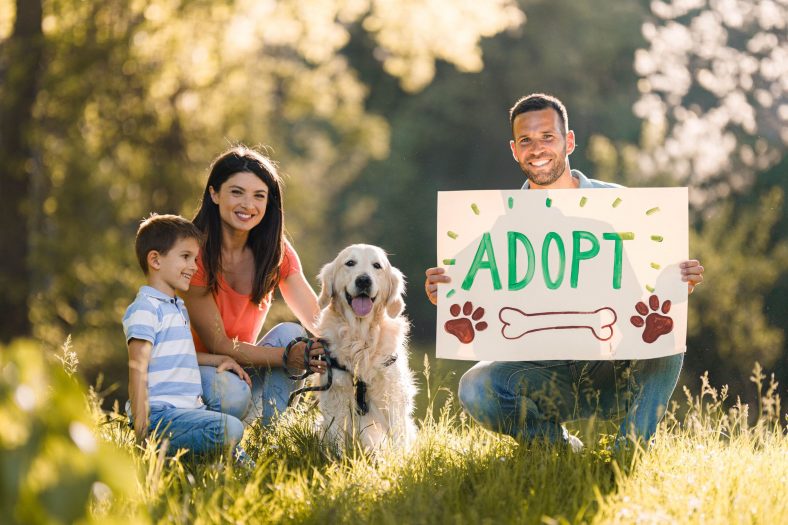
Animal rescue nonprofit organizations share the common goal of finding forever homes for every dog irrespective of age, breed or coat color. Whether you’re looking to adopt, foster or maybe you’re looking to make a financial donation without bringing a pet into your home, do your homework by visiting dog rescue websites as they have all the information you’ll need.
Both the nonprofit animal adoption and fostering processes rely on asking and answering lots of questions to ensure potential pet parents can not only offer a great home but have the time to nurture a new family member. The same applies to successfully fostering.
Here’s our list of the top six animal rescue organizations, including resources that focus on specific groups of dogs, such as senior dogs, who are generally the hardest to place in homes:
Maddie’s Fund is a leading voice in the animal welfare world for bold ideas, providing learning resources, funding and opportunities to aid both rescue groups as well as individual adopters and foster carers. Maddie’s Fund has awarded nearly $300 million in grants to furthering shelter medicine education and establishing foster care as a standard nationwide.
The Senior Dog Project is a one-stop, go-to website that helps to re-home senior dogs, which this rescue considers to be over the age of five. Other organizations consider dogs to be senior when they are 7 years old. The site, through its various categories, re-directs adopters to special organizations in every state that focus on senior dogs. The Senior Dog Project site also lists sanctuaries for senior dogs throughout the country, too. Further, there’s in-depth information on the special kind of care that older dogs may require to be active and healthy family members. Senior dogs make great companions and have a lot of love to give a family in their golden years. It is not a rescue, does not accept donations, advertising nor arrange or supervise the adoption of dogs.
Rural Dog Rescue has a mission to rescue high-risk dogs in economically challenged, high-kill shelters in rural areas. These dogs, who the organization calls “underdogs,” are often overlooked for both adoption and rescue and include hounds, who are abandoned in the southern part of the country after the hunting season. Other dogs who typically have trouble getting adopted:
Visiting all of the above rescue animal organization sites, even if you aren’t adopting or, gives great insight into animal welfare and the future of a no-kill animal world in America.
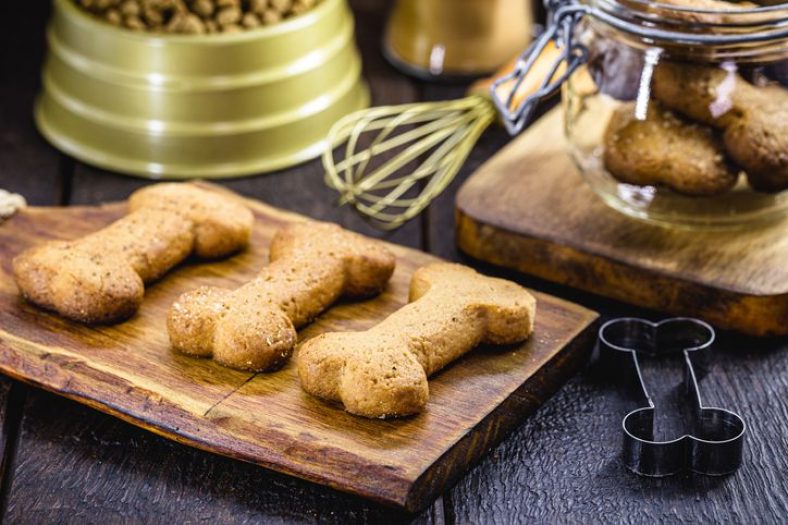
Your dog is most likely enjoying her Christmas treats as much as you enjoy yours! We share a few of our favorite Christmas dog treat recipes and some dog lovers baking gear to kick start your baking.
Do you have a dog treat recipe you’d like to share? Comment with your favorite Christmas or holiday dog treat recipes for us — and our pups — to try.
Dogster’s favorite Christmas dog treats
Peanut Butter Bites
Ingredients
3 tablespoons olive oil
¼ cup all-natural smooth peanut butter, no salt, sugar or xylitol added
¼ cup honey (not raw honey)
2 eggs
2 tablespoons water
2 cups whole-wheat or rice flour
1 ½ teaspoons baking powder
Directions
In a large bowl, mix all the ingredients well until the dough is stiff; if it is too sticky, mix in a small amount of flour.
Knead the dough on a lightly floured surface until firm. Roll out the dough to half-inch thickness and cut out shapes with a cookie cutter.
Put the cookies on a baking sheet ½-inch apart. Bake at 350° F for 20 to 25 minutes.
When done, the cookie should be firm. Turn the oven off and leave the cookies in for 1 to 2 hours to harden.
Yield: approximately 40 2-inch cookies.
Banana Oatmeal Cookies
Ingredients
1 ½ cups whole-wheat or rice flour
½ teaspoon baking soda
1 cup all-natural applesauce, no sugar or xylitol added
¼ cup olive oil
3 bananas, mashed
1¼ cup honey (not raw honey)
1 3/4 cups quick cooking oats, uncooked
Directions
Mix all the ingredients in a large bowl.
With a teaspoon, drop spoonfuls of dough on a baking sheet, about 1½ inches apart. Bake at 350° F for 10 to 15 minutes.
When done, the cookies should be firm. Turn the oven off and leave the cookies in for one to two hours to harden.
Cranberry Mint Holiday Cookies for Dogs
Makes: 10 small cookies
Ingredients
¼ cup coconut flour
½ cup water
½ cup fresh or frozen unsweetened cranberries, chopped
2 tablespoons finely chopped, fresh mint leaves
2 tablespoons organic, unsweetened applesauce (be sure that the applesauce does not contain any added ingredients)
Preheat the oven to 350 degrees F and line a baking sheet with parchment paper.
Make your flax egg by adding the ground flaxseeds with warm water in a large mixing bowl and whisk. Allow this to sit for 10 minutes until it forms a gel-like consistency.
Add the applesauce, chopped apple, mint and cranberries. Stir to combine.
Incorporate the coconut flour and water and stir again.
Drop into bite-sized cookies or cut out and place on the lined baking sheet.
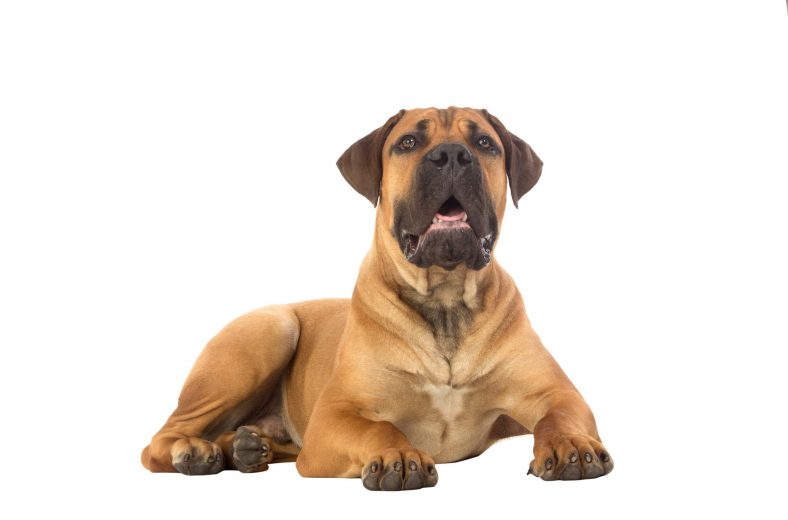
Boerboels were bred in South Africa to protect homes and farms from ferocious predators. The Boerboel dog breed is:
Steadfast, affectionate, loyal and calm with family and those he knows well
Territorial with inborn guarding instincts
Naturally aloof with and wary of strangers
Very strong and muscular, ranging from 150 to 200 pounds, and can easily knock someone over
However, if not bred, socialized and trained properly, the Boerboel can be aggressive and a liability. Because of his size and strength, he can inflict a lot of damage to a person or animal.
Age a Boerboel can become aggressive
From eight to 14 weeks old, Boerboel puppies are easygoing and compliant. They rarely show any aggression during this learning window. Novice owners may be lulled into a false sense of security, believing that they’ll remain that way. They won’t.
By three months old, the pup is still learning but might show a little aggression. No longer a puppy at eight to nine months old, the adolescent Boerboel can become aggressive and overly protective depending on his genetic makeup or he may become fearful or shy, which can also manifest in aggressive behavior when he feels challenged.
Training and socialization required
Of course all dog breeds should be properly socialized and trained. But if a Boerboel isn’t, he may attack any person or animal he sees as a threat and because of his large size and strength, can cause serious harm.
A Boerboel puppy must be socialized and have positive experiences with people, dogs and life events from eight weeks on. This should continue throughout his life, which can span eight to 12 years.
Owners must also demonstrate through consistent training that they are the leaders or the dog will dominate the household. Only positive reinforcement training should be used or a Boerboel can become aggressive even to his pet parents.
Training should begin when a Boerboel is eight weeks old and continue throughout his life. The “nothing in life is free” (NILIF) protocol must be used, in which the dog must work (perform cues) for everything. At a minimum, basic cues for training the Boerboel should include:
Attention work so he focuses on the pet parent not external stimuli
Loose-leash walking so that he doesn’t pull down someone walking him
Sit, down and stay — all of which help with impulse control and avoid him knocking someone over
Recall and emergency recall, which must be rock solid for everyone’s safety
Leave it, which is crucial for him not to randomly approach people or animals
Drop it or give, to help prevent resource guarding
Settle, so that he has impulse control
If the Boerboel dog breed doesn’t get a few hours of physical and mental exercise every day, a Boerboel can become destructive. Long walks, fetching and sturdy puzzle games are necessary. Because of his size, strength and intimidating presence, he should never be left to run free. One of the more agile mastiffs, the muscular Boerboel can thrive if given a job, such as obedience, rally, weight pull, agility, protection sports or stock work.
Boerboels aren’t for inexperienced owners. They need early and ongoing training and socialization to be reliable house dogs. But if bred and raised properly, they can be a welcome member for the right dog-savvy family.
The post Why Is My Dog Shaking? by Arden Moore appeared first on Dogster. Copying over entire articles infringes on copyright laws. You may not be aware of it, but all of these articles were assigned, contracted and paid for, so they aren’t considered public domain. However, we appreciate that you like the article and would love it if you continued sharing just the first paragraph of an article, then linking out to the rest of the piece on Dogster.com.
Shake. Shiver. Tremble. Quiver. All describe the deliberate — and sometimes uncontrollable — body action by dogs.
Dogs shake their bodies for a variety of reasons that run the gamut from displaying utter excitement to fending off cold temperatures to dealing with a serious underlying medical issue.
Some causes of this body shaking are easy to identify, such as witnessing a noise-phobic dog tremble out of fear at the explosive sounds of thunder or fireworks. In other instances, the reason behind the body shaking may be hard to pinpoint. Case in point: dogs with congenital forms of epilepsy do not usually develop shaking seizures until they are around age 2.
Bottom line: Yes, many behavioral, medical and environmental reasons are behind body shaking in dogs. Never ignore or dismiss doggy shakes. Always consult your veterinarian to identify the cause, recommends Dr. Nicholas Dodman, a board-certified veterinary behaviorist, chief scientific officer at the Center for Canine Behavior Studies and best-selling pet author.
She advises pet parents to immediately report all specific clues they see, hear or smell in their shaking dogs. They also should describe the environments to their veterinarians in order to identify the reason and come up with possible remedies. Especially take action if your dog is shaking for more than 20 minutes, refuses to accept a treat or cannot be distracted, adds Dr. Radosta.
Let’s first identify some medical reasons and then highlight some behavioral and situational triggers.
Medical causes of dog shaking
Several medical conditions can spark uncontrollable shaking in dogs. These include:
Addison’s disease: Medically called hypoadrenocorticism, this condition impairs the hormone production of cortisol and aldosterone hormones by the adrenal glands located near the kidneys. Intermittent body shaking as well as chronic diarrhea, increased thirst and weight loss are among the telltale symptoms. Many dogs diagnosed and treated with an injection medication and/or oral medication experience a good prognosis.
Hypoglycemia: Dogs with this low blood sugar condition will often experience tremors, lose their appetites, feel weak and may even faint. Poor nutrition, cancer and liver failure are among the many possible causes. Treatment varies, depending on the identified cause.
Epilepsy: While the cause of this brain disorder is unknown, there is a genetic predisposition in certain breeds, including Beagles, Cocker Spaniels, Golden Retrievers, Poodles and Siberian Huskies. During a seizure, a dog’s body stiffens and trembles heavily. The twitching convulsions can also occur in some dogs who ingest poisons. Veterinarians often prescribe anticonvulsant medications to reduce the number and severity of seizures.
Shaker Syndrome: This neurologic condition is also known as generalized tremor syndrome and causes head and body tremors in some dogs. It is not known why, but most at-risk breeds are white and include Maltese, Poodles and West Highland White Terriers (Westies), but any breed can be affected. Veterinarians may prescribe corticosteroids to reduce episodes.
Exposure to toxins: Uncontrollable body shaking can occur in dogs bitten by venomous snakes as well as by ingesting marijuana. Xylitol, an artificial sweetener, is in a growing number of foods, including peanut butter. The adverse reaction to xylitol is 100 times more severe than that of dark chocolate containing theobromine if ingested by dogs — and ingesting theobromine is bad. Treatment and recovery depend on the cause and promptness of veterinary care.
Preventive actions include keeping dogs on leashes in wooded areas where snakes are, keeping dangerous foods or plants out of a dog’s reach and carefully reading the labels of peanut butter and other foods/candies to ensure they do not contain xylitol.
Dog shaking as a sign of happiness, anxiety or fear
Our dogs experience a wide range of emotions, just like us. Some dogs gleefully do full-body wiggles when being reunited with a favorite person who has been away for a long time. This is definitely pure-joy wiggle action that indicates a strong friendship bond between the dog and the person.
Dr. Radosta calls this happy action in dogs as the noodle wiggle. Although the body is moving side to side, the muscles are relaxed.
However, many dogs shake or tremble due to feeling afraid, anxious or stressed. The sight and sound of thunderstorms, a noisy vacuum cleaner, the screech of a skateboard’s wheels or other noises cause a fight-or-flight mindset in some dogs.
Whether the threat is real or perceived, an affected dog reacts physically by pacing, whining, trembling, panting and even shedding excessively. A dog’s amygdala, the portion of the brain that controls emotions, releases fight-or-flight hormones, adrenaline and cortisol, explains Dr. Radosta.
Dr. Dodman, who has co-authored many behavioral dog studies on the impact of such emotions, shares his home with his now-senior dog, Rusty. He adopted Rusty as an 8-month-old from an animal shelter and quickly discovered that Rusty came with separation anxiety and a shaking, take-flight response to certain sounds and actions.
Rusty shook and ran into a corner as a young rescue whenever Dr. Dodman shook out a large plastic trash bag before putting it in the trash can in the kitchen, or whenever he removed his belt. Rusty also shook and fled the kitchen if hot, smoky oil from a frying pan set off the smoke detector.
Dr. Dodman patiently worked with Rusty to tone down those fears. He cautions pet parents to not dismiss or underestimate fears exhibited by their dogs. Untreated, fears can progress into phobias, defined as persistent, abnormal fears of a person or an object.
Treatment depends on the dog and the level of fear or stress displayed, notes Dr. Radosta, who treats many such dogs at her clinic. She encourages pet parents to assume that their dogs speak another language. This may encourage you to slow down and start to really observe your dog’s actions and sounds.
To help dogs who shake with fear, work with a qualified dog professional, including veterinarians, behaviorists and certified dog trainers. And, seek steady progress, Dr. Radosta adds.
Some dogs benefit when given over-the-counter natural calmers such as Zylkene, a hydrolyzed milk protein. Others may require stronger calming prescriptions. The most go-to ones prescribed by veterinarians are fluoxetine, gabapentin and trazodone.
Taking your dog on daily walks and working his brain with food puzzle challenges can also help elevate your dog’s sense of safety and calmness. These exercises release feel-good hormones called endorphins. So can playing a sound machine or classical music to muffle stress-triggering responses to hearing thunderstorms or fireworks.
Other reasons for dogs shaking
Many dogs do full-body shakes at bath time to rid their bodies of excess water. It’s automatic and helps a dog dry his coat to achieve a healthy body temperature. Dr. Dodman says that the frequency of their shaking depends on their size, but all furry mammals naturally shake to rid their coats of water drops.
Exposure to cold temperatures, especially for long durations, triggers uncontrolled shivering in dogs as their muscles flex and relax in an attempt to elevate their core body temperature. Hairless and thin-coated dogs are more at risk than dogs with thick coats and double coats.
Limiting a dog’s time in cold weather, fitting him with a properly sized sweater and wrapping him in a blanket indoors can counter the dangers of the cold temperatures. However, avoid vigorously rubbing his coat in an attempt to warm his body, as you may unintentionally worsen the spread of frostbite damage to the skin.
When two dogs play, one may stop and shake his body as a signal that he is done playing, adds Dr. Dodman.
And, some dogs twitch when they are sleeping. Like us, dogs go into three sleep stages: non-rapid eye movement (NREM), rapid eye-movement (REM) and short-wave sleep (SWS). Veterinarians and animal scientists theorize that dogs dream during the REM stage and act on their dreams by twitching or moving all four paws as if they were chasing a squirrel.
Avoid putting your hand on a sleeping dog as you risk injury from a startled dog who may reactively bite. Instead, call your dog’s name and speak to him calmly, allowing him to open his eyes on his own.
As you can see, dogs shake for a variety of reasons. Pay attention to their specific actions and places when shaking occurs, and report these findings to your veterinarian to come up with the best game plan to bring out the healthy best in your dog.
The post Why Is My Dog Shaking? by Arden Moore appeared first on Dogster. Copying over entire articles infringes on copyright laws. You may not be aware of it, but all of these articles were assigned, contracted and paid for, so they aren’t considered public domain. However, we appreciate that you like the article and would love it if you continued sharing just the first paragraph of an article, then linking out to the rest of the piece on Dogster.com.
Ann McDonald is a freelance writer and dog enthusiast. Dog mom to two dogs, a super-social Pomeranian named Hunter and a shy, but snuggly Chihuahua named Roscoe, in her spare time Ann likes to make at-home dog agility courses and fosters for a Pomeranian rescue group.
The post Why Is My Dog Shaking? by Arden Moore appeared first on Dogster. Copying over entire articles infringes on copyright laws. You may not be aware of it, but all of these articles were assigned, contracted and paid for, so they aren’t considered public domain. However, we appreciate that you like the article and would love it if you continued sharing just the first paragraph of an article, then linking out to the rest of the piece on Dogster.com.
Shake. Shiver. Tremble. Quiver. All describe the deliberate — and sometimes uncontrollable — body action by dogs.
Dogs shake their bodies for a variety of reasons that run the gamut from displaying utter excitement to fending off cold temperatures to dealing with a serious underlying medical issue.
Some causes of this body shaking are easy to identify, such as witnessing a noise-phobic dog tremble out of fear at the explosive sounds of thunder or fireworks. In other instances, the reason behind the body shaking may be hard to pinpoint. Case in point: dogs with congenital forms of epilepsy do not usually develop shaking seizures until they are around age 2.
Bottom line: Yes, many behavioral, medical and environmental reasons are behind body shaking in dogs. Never ignore or dismiss doggy shakes. Always consult your veterinarian to identify the cause, recommends Dr. Nicholas Dodman, a board-certified veterinary behaviorist, chief scientific officer at the Center for Canine Behavior Studies and best-selling pet author.
She advises pet parents to immediately report all specific clues they see, hear or smell in their shaking dogs. They also should describe the environments to their veterinarians in order to identify the reason and come up with possible remedies. Especially take action if your dog is shaking for more than 20 minutes, refuses to accept a treat or cannot be distracted, adds Dr. Radosta.
Let’s first identify some medical reasons and then highlight some behavioral and situational triggers.
Medical causes of dog shaking
Several medical conditions can spark uncontrollable shaking in dogs. These include:
Addison’s disease: Medically called hypoadrenocorticism, this condition impairs the hormone production of cortisol and aldosterone hormones by the adrenal glands located near the kidneys. Intermittent body shaking as well as chronic diarrhea, increased thirst and weight loss are among the telltale symptoms. Many dogs diagnosed and treated with an injection medication and/or oral medication experience a good prognosis.
Hypoglycemia: Dogs with this low blood sugar condition will often experience tremors, lose their appetites, feel weak and may even faint. Poor nutrition, cancer and liver failure are among the many possible causes. Treatment varies, depending on the identified cause.
Epilepsy: While the cause of this brain disorder is unknown, there is a genetic predisposition in certain breeds, including Beagles, Cocker Spaniels, Golden Retrievers, Poodles and Siberian Huskies. During a seizure, a dog’s body stiffens and trembles heavily. The twitching convulsions can also occur in some dogs who ingest poisons. Veterinarians often prescribe anticonvulsant medications to reduce the number and severity of seizures.
Shaker Syndrome: This neurologic condition is also known as generalized tremor syndrome and causes head and body tremors in some dogs. It is not known why, but most at-risk breeds are white and include Maltese, Poodles and West Highland White Terriers (Westies), but any breed can be affected. Veterinarians may prescribe corticosteroids to reduce episodes.
Exposure to toxins: Uncontrollable body shaking can occur in dogs bitten by venomous snakes as well as by ingesting marijuana. Xylitol, an artificial sweetener, is in a growing number of foods, including peanut butter. The adverse reaction to xylitol is 100 times more severe than that of dark chocolate containing theobromine if ingested by dogs — and ingesting theobromine is bad. Treatment and recovery depend on the cause and promptness of veterinary care.
Preventive actions include keeping dogs on leashes in wooded areas where snakes are, keeping dangerous foods or plants out of a dog’s reach and carefully reading the labels of peanut butter and other foods/candies to ensure they do not contain xylitol.
Dog shaking as a sign of happiness, anxiety or fear
Our dogs experience a wide range of emotions, just like us. Some dogs gleefully do full-body wiggles when being reunited with a favorite person who has been away for a long time. This is definitely pure-joy wiggle action that indicates a strong friendship bond between the dog and the person.
Dr. Radosta calls this happy action in dogs as the noodle wiggle. Although the body is moving side to side, the muscles are relaxed.
However, many dogs shake or tremble due to feeling afraid, anxious or stressed. The sight and sound of thunderstorms, a noisy vacuum cleaner, the screech of a skateboard’s wheels or other noises cause a fight-or-flight mindset in some dogs.
Whether the threat is real or perceived, an affected dog reacts physically by pacing, whining, trembling, panting and even shedding excessively. A dog’s amygdala, the portion of the brain that controls emotions, releases fight-or-flight hormones, adrenaline and cortisol, explains Dr. Radosta.
Dr. Dodman, who has co-authored many behavioral dog studies on the impact of such emotions, shares his home with his now-senior dog, Rusty. He adopted Rusty as an 8-month-old from an animal shelter and quickly discovered that Rusty came with separation anxiety and a shaking, take-flight response to certain sounds and actions.
Rusty shook and ran into a corner as a young rescue whenever Dr. Dodman shook out a large plastic trash bag before putting it in the trash can in the kitchen, or whenever he removed his belt. Rusty also shook and fled the kitchen if hot, smoky oil from a frying pan set off the smoke detector.
Dr. Dodman patiently worked with Rusty to tone down those fears. He cautions pet parents to not dismiss or underestimate fears exhibited by their dogs. Untreated, fears can progress into phobias, defined as persistent, abnormal fears of a person or an object.
Treatment depends on the dog and the level of fear or stress displayed, notes Dr. Radosta, who treats many such dogs at her clinic. She encourages pet parents to assume that their dogs speak another language. This may encourage you to slow down and start to really observe your dog’s actions and sounds.
To help dogs who shake with fear, work with a qualified dog professional, including veterinarians, behaviorists and certified dog trainers. And, seek steady progress, Dr. Radosta adds.
Some dogs benefit when given over-the-counter natural calmers such as Zylkene, a hydrolyzed milk protein. Others may require stronger calming prescriptions. The most go-to ones prescribed by veterinarians are fluoxetine, gabapentin and trazodone.
Taking your dog on daily walks and working his brain with food puzzle challenges can also help elevate your dog’s sense of safety and calmness. These exercises release feel-good hormones called endorphins. So can playing a sound machine or classical music to muffle stress-triggering responses to hearing thunderstorms or fireworks.
Other reasons for dogs shaking
Many dogs do full-body shakes at bath time to rid their bodies of excess water. It’s automatic and helps a dog dry his coat to achieve a healthy body temperature. Dr. Dodman says that the frequency of their shaking depends on their size, but all furry mammals naturally shake to rid their coats of water drops.
Exposure to cold temperatures, especially for long durations, triggers uncontrolled shivering in dogs as their muscles flex and relax in an attempt to elevate their core body temperature. Hairless and thin-coated dogs are more at risk than dogs with thick coats and double coats.
Limiting a dog’s time in cold weather, fitting him with a properly sized sweater and wrapping him in a blanket indoors can counter the dangers of the cold temperatures. However, avoid vigorously rubbing his coat in an attempt to warm his body, as you may unintentionally worsen the spread of frostbite damage to the skin.
When two dogs play, one may stop and shake his body as a signal that he is done playing, adds Dr. Dodman.
And, some dogs twitch when they are sleeping. Like us, dogs go into three sleep stages: non-rapid eye movement (NREM), rapid eye-movement (REM) and short-wave sleep (SWS). Veterinarians and animal scientists theorize that dogs dream during the REM stage and act on their dreams by twitching or moving all four paws as if they were chasing a squirrel.
Avoid putting your hand on a sleeping dog as you risk injury from a startled dog who may reactively bite. Instead, call your dog’s name and speak to him calmly, allowing him to open his eyes on his own.
As you can see, dogs shake for a variety of reasons. Pay attention to their specific actions and places when shaking occurs, and report these findings to your veterinarian to come up with the best game plan to bring out the healthy best in your dog.
The post Why Is My Dog Shaking? by Arden Moore appeared first on Dogster. Copying over entire articles infringes on copyright laws. You may not be aware of it, but all of these articles were assigned, contracted and paid for, so they aren’t considered public domain. However, we appreciate that you like the article and would love it if you continued sharing just the first paragraph of an article, then linking out to the rest of the piece on Dogster.com.
Covering the pet world for more than 30 years, Melissa L. Kauffman has been an editor/writer for a wide variety of pet magazines and websites from the small critters and parrots to cats and dogs. Her advisory team of pets — rescue dogs Tampa Bay and Murphy Brown, plus Cirneco dell’Etna Liberty Belle and rescued parrots Deacon and Pi-Pi — help keep her on top of the latest and greatest pet health research, training and products, anything to give keep them in the high life they are accustomed to. Follow Tampa and his crew on Instagram @tampa.bay.pup.report while Melissa can always be found working on the next issue of Catster and Dogster magazines at caster.com and dogster.com. Contact her ONLY at dogstermag@belvoir.com. (Any email not from belvoir.com is not this Melissa L Kauffman.)