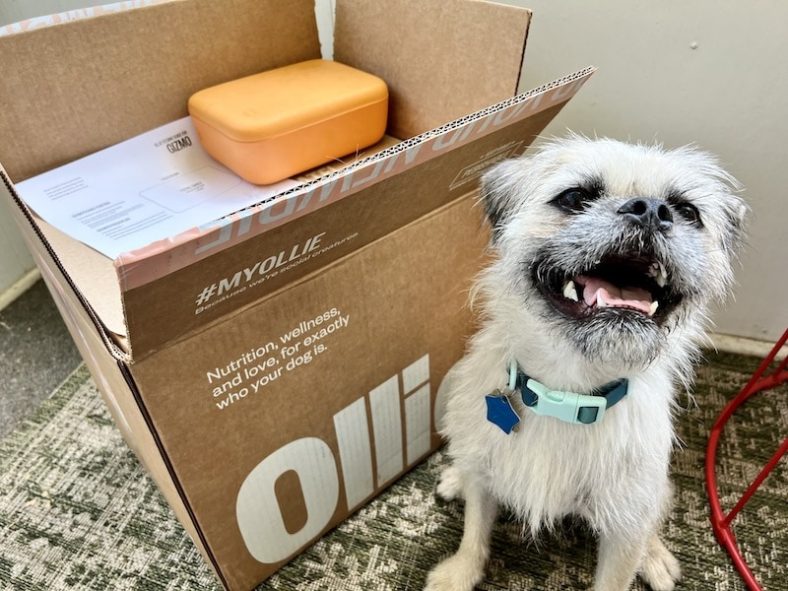
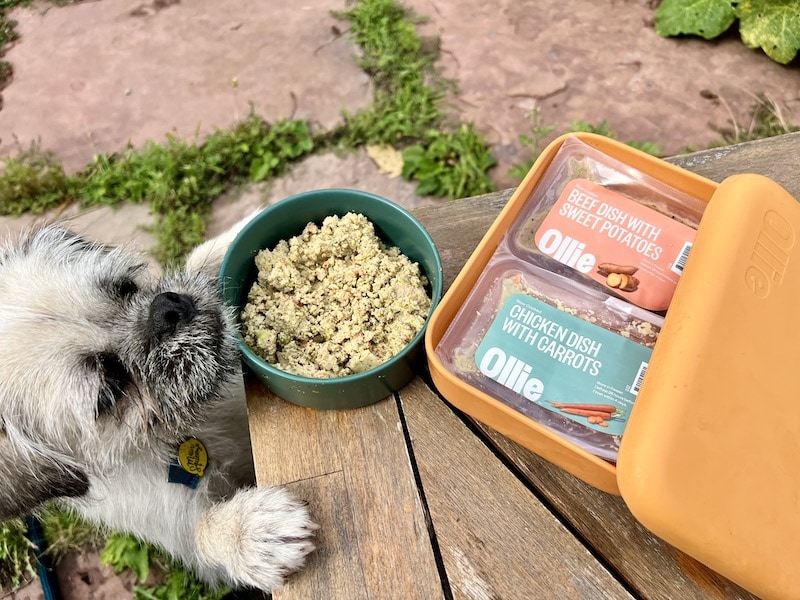
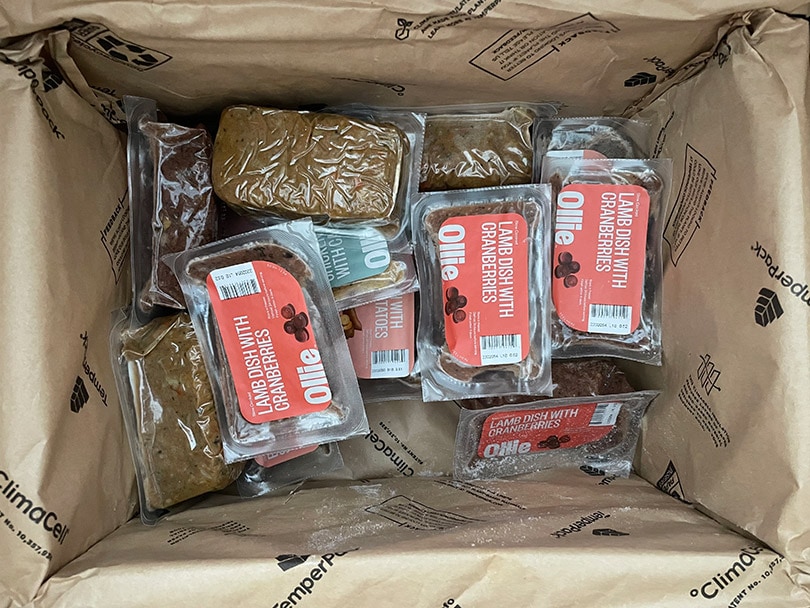
Ollie is a premium subscription-based dog food that offers all-natural, human-grade ingredients delivered directly to your door. For many pet owners, a premium diet like this one has a payoff in better health and wellbeing, but it comes at a price.
So, how much does Ollie dog food cost? Take a look at this breakdown to see what you could expect to spend on your Ollie subscription. Depending on your dog’s size, you can expect to pay between $60-$360 for Ollie Dog Food per month.
The Importance of Dog Nutrition
All animals, including dogs, need proper, species-appropriate nutrition for optimal health. The proper balance of nutrients is essential for your dog, which include protein, carbohydrates, fats, vitamins, minerals, and water. Pet food manufacturers work hard to ensure that commercial dog food brands meet or exceed your dog’s daily nutritional requirements.
Foods can be broken down further to satisfy dogs at different life stages, such as puppies or senior dogs, or to help with specific health conditions. For example, some dogs have food sensitivities or skin allergies and benefit from a food designed with limited ingredients, while others may have a medical condition that requires a prescription food, such as bladder stones or kidney disease.
Without adequate nutrition, dogs would not be able to build muscle, teeth, and bones, perform normal daily activities, or fight off infection. Each nutrient has its purpose, and without all of them, your dog can suffer detrimental health effects.
How Much Does Ollie Dog Food Cost?
Ollie meal plans are designed for twice-daily feeding at $2 per day or $1 per meal. This is only if your dog eats Ollie exclusively. Also, it’s important to remember that this is just the starting price—you may pay more for your dog based on its activity level, formula, size, etc.
Ollie Food Costs
Per Meal
Per Day
Per Month
Small dogs (10–20 lbs)
$1–2
$2–4
$60–120
Small-medium dogs (20–40 lbs)
$2.50–3
$5–6
$150–180
Medium-large dogs (40–65 lbs)
$3.50–4
$7–8
$210–240
Large and giant dogs (65 lbs +)
$4–6
$8–12
$240–360
Your dog’s breed, age, weight, and activity level may vary, and therefore, the food costs may vary. Ollie estimates that most owners pay $6 per day on average.
This table shows approximate costs, so you won’t see a huge increase if you add a few pounds to your dog’s weight. But this table can be used to estimate the costs you can expect for your dog’s size.
Fortunately, Ollie has a sophisticated formula to consider several different factors to develop your dog’s calorie and food content needs. Once you complete the onboarding process, you’ll see fully transparent pricing.
Additional Costs to Anticipate
Fortunately, you won’t get any additional costs—what you see is what you’re billed for with Ollie. Shipping is free, so you simply pay for your subscription on the meal plan of your choosing.
Ollie offers a variety of options, including:
Fresh (Premium): Starting at $1.57 a meal with beef, chicken, turkey, and lamb recipes
Baked (Best Value): Starting at $1 a meal with beef and chicken recipes
Mixed (Best Variety): Starting at $1.36 a meal with six recipes to choose from that combine Fresh and Baked in each meal
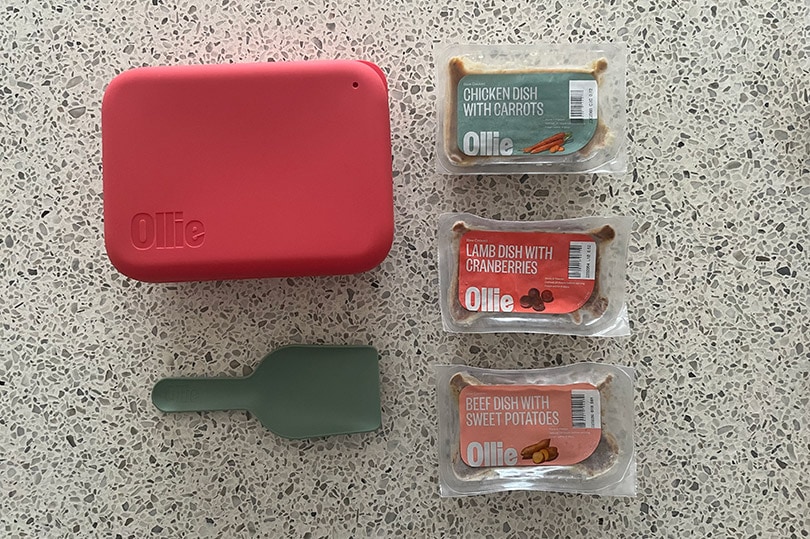
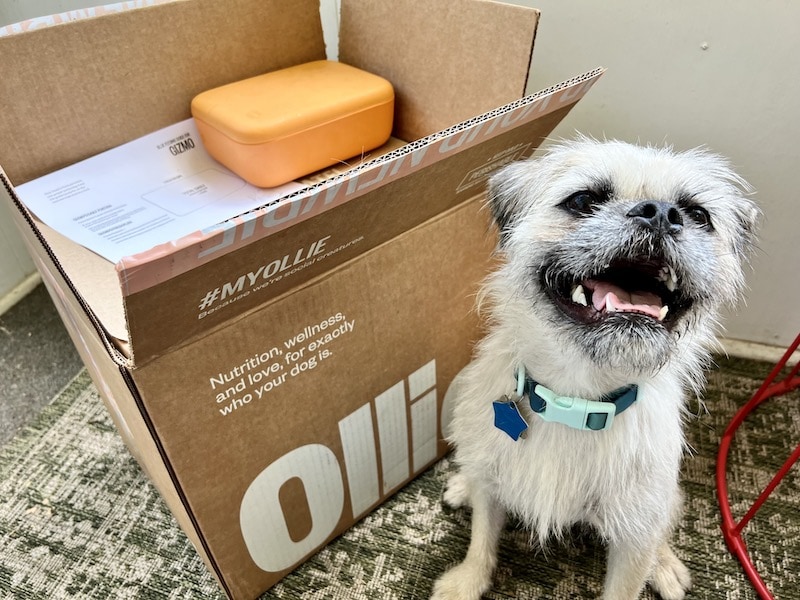
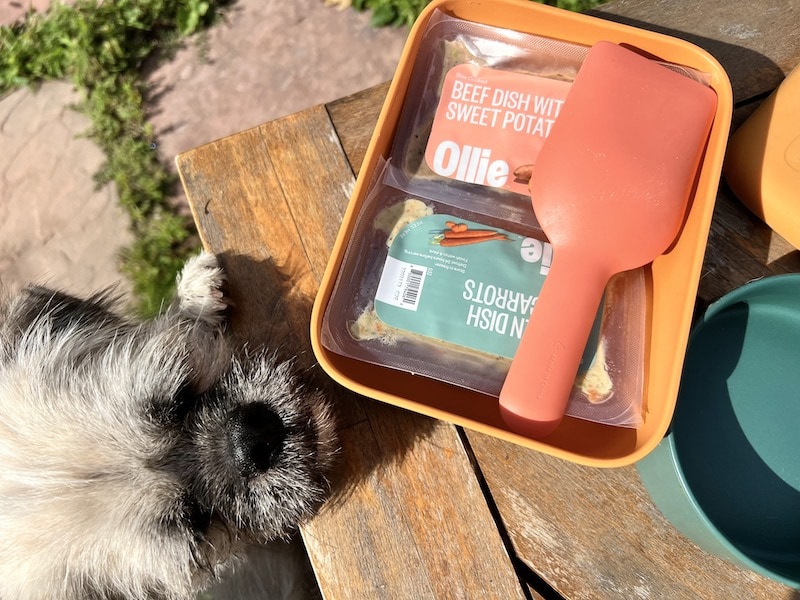
With these options, you can choose the best combination for your pet’s needs and your budget. Each starter box comes with your recipes, a feeding guide with custom instructions to ensure a smooth transition, a handy scoop for perfect portions, and a “puptainer” for Fresh recipes or a bowl for baked recipes.
If your dog doesn’t love it, or the subscription doesn’t satisfy your needs, you can receive a full refund of your starter box. Ollie also runs a promotion to get 50% off your starter box to try the food with no risk.
How Often Should I Purchase Ollie?
Ollie offers flexible subscription plans that ship out automatically based on the delivery options you choose. You pick the schedule, and Ollie is delivered fresh to your door. When Ollie arrives, you store your fresh food in the freezer and defrost it in the fridge at least 24 hours before it’s time to feed.
Baked recipes are shelf-stable and can be stored in their Ollie bag or the storage container of your choice. All you have to do is scoop and serve. You can alter your delivery schedule or recipe selection as needed, or if you are adding dogs to your household, you can easily include your new pups to your account.
Does Pet Insurance Cover Ollie?
Most pet insurance doesn’t cover pet food unless it’s prescription. Ollie may be nutritious, but it’s not a prescription food. These foods are formulated to address specific health conditions and must be approved and prescribed by your vet. Even then, prescription food may not be covered unless you’ve purchased a policy that includes prescription pet food under a wellness plan.
If Ollie is a bit out of your budget, you can save by choosing the Mixed or Baked recipes that offer more value. You can also supplement Ollie with other high-quality commercial dog food to offset the cost. You’ll get the nutrition of Ollie, but with less of a hit on your budget.
Image by: Drazen Zigic, Shutterstock
When Does Ollie Bill?
Ollie bills for your subscription two business days before your box ships, which is every two weeks under the “All Ollie Plan” and every four weeks under the “Mostly Ollie Plan”.
If you need to make changes to your order, you’re expected to make them at least four days in advance of your shipment date to ensure they go through in time.
Summary
If you’re looking for high-quality, nutritious, and convenient food for your dog, Ollie is worth looking into. At dollars per day, this nutrient-dense subscription-based food is worth the price, but it can be a bit expensive for owners on a budget. Fortunately, Ollie offers a few different plans to help you find an option that works best for you and your pet’s needs. The only way to truly know what you can expect to pay is by completing the onboarding process, which shows you the recipe options, subscription options, and costs for your specific dog’s breed, size, energy level, and more.
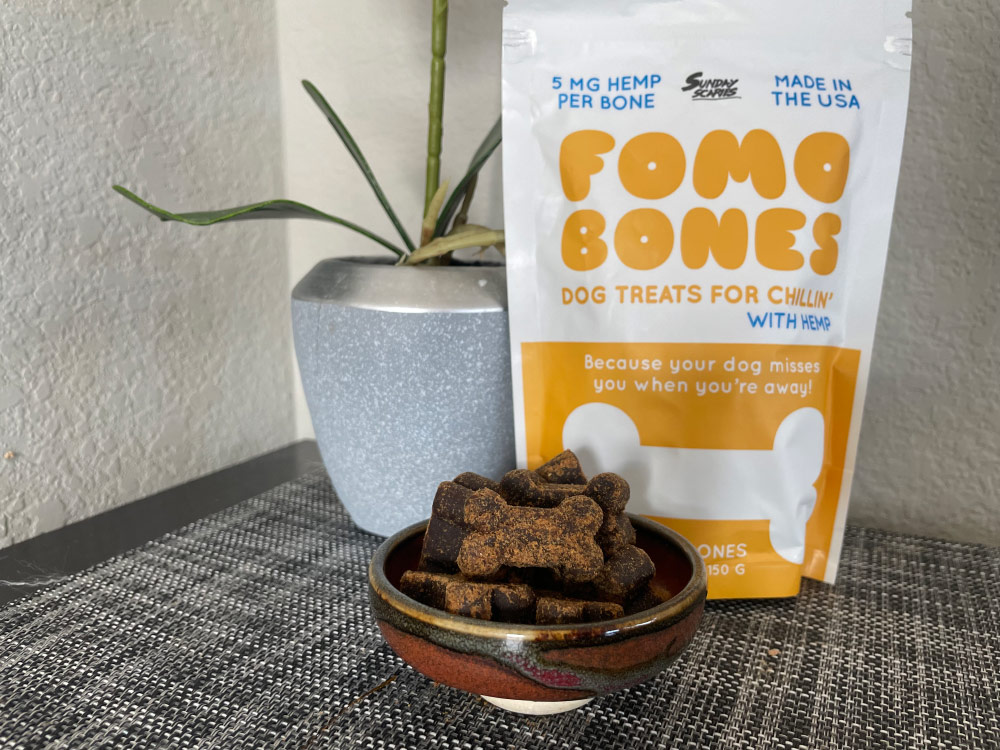
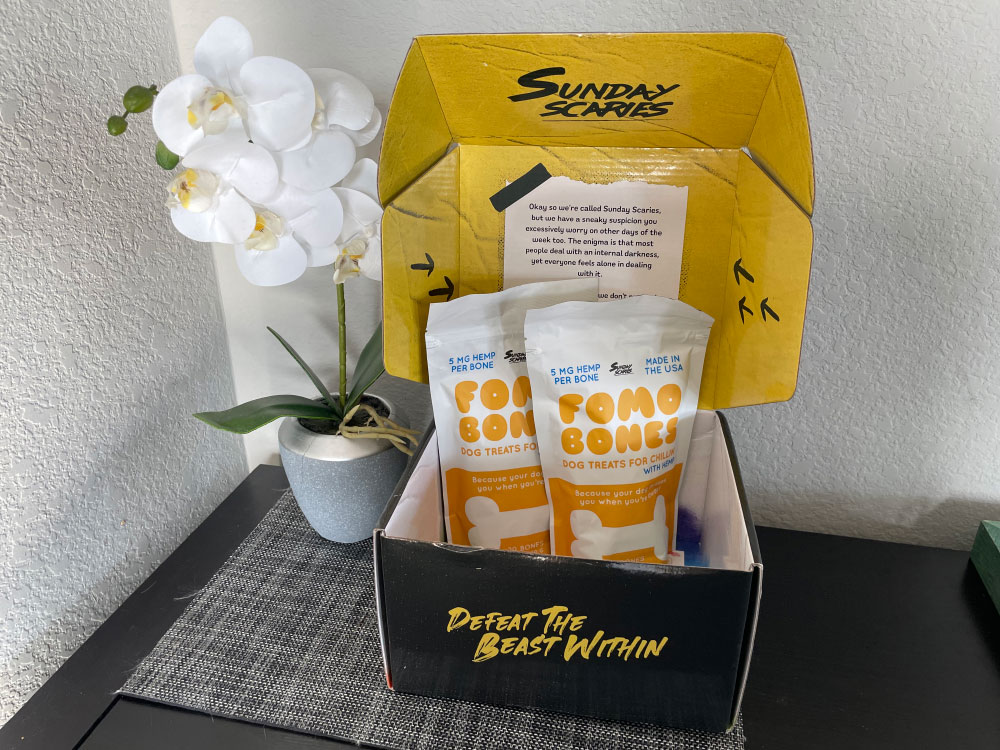
We give Sunday Scaries FOMO Bones a rating of 4.7 out of 5 stars.
Quality: 4.75/5
Effectiveness: 4.5/5
Ingredients: 4.8/5
Value: 4.5/5
“Sunday scaries” is the feeling of dread so many of us get when we realize the weekend is coming to an end and we have to go to work tomorrow. This feeling likely strikes our dogs too, though the more accurate term for them may be the “Monday mournfuls.” This term is especially apt for dogs who suffer from separation anxiety when their owners leave.
Whether your dog reacts to you leaving for work with some woeful whines or by destroying the house, Sunday Scaries FOMO Bones can help. Each of these soft chews contains 5mg of CBD plus a long list of calming herbs to help pups find some chill.
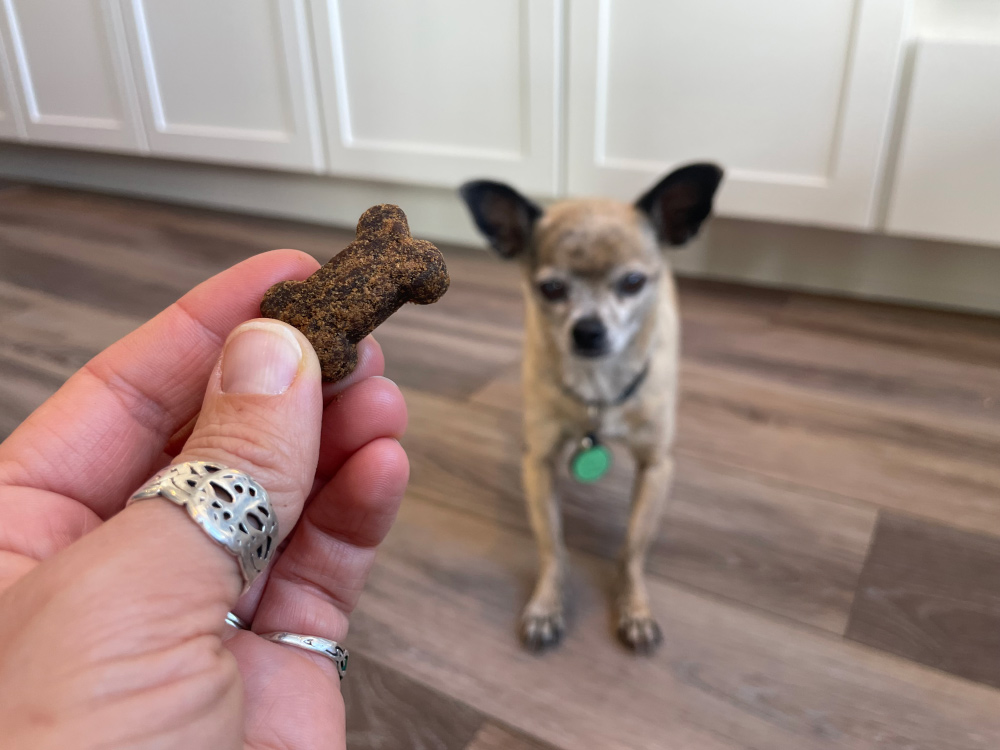
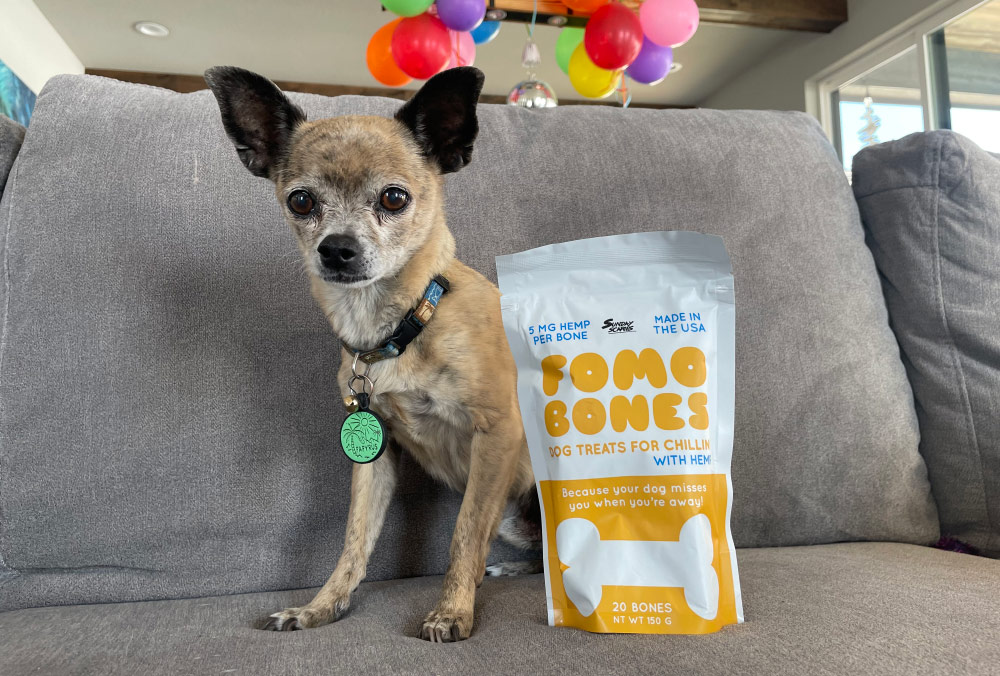
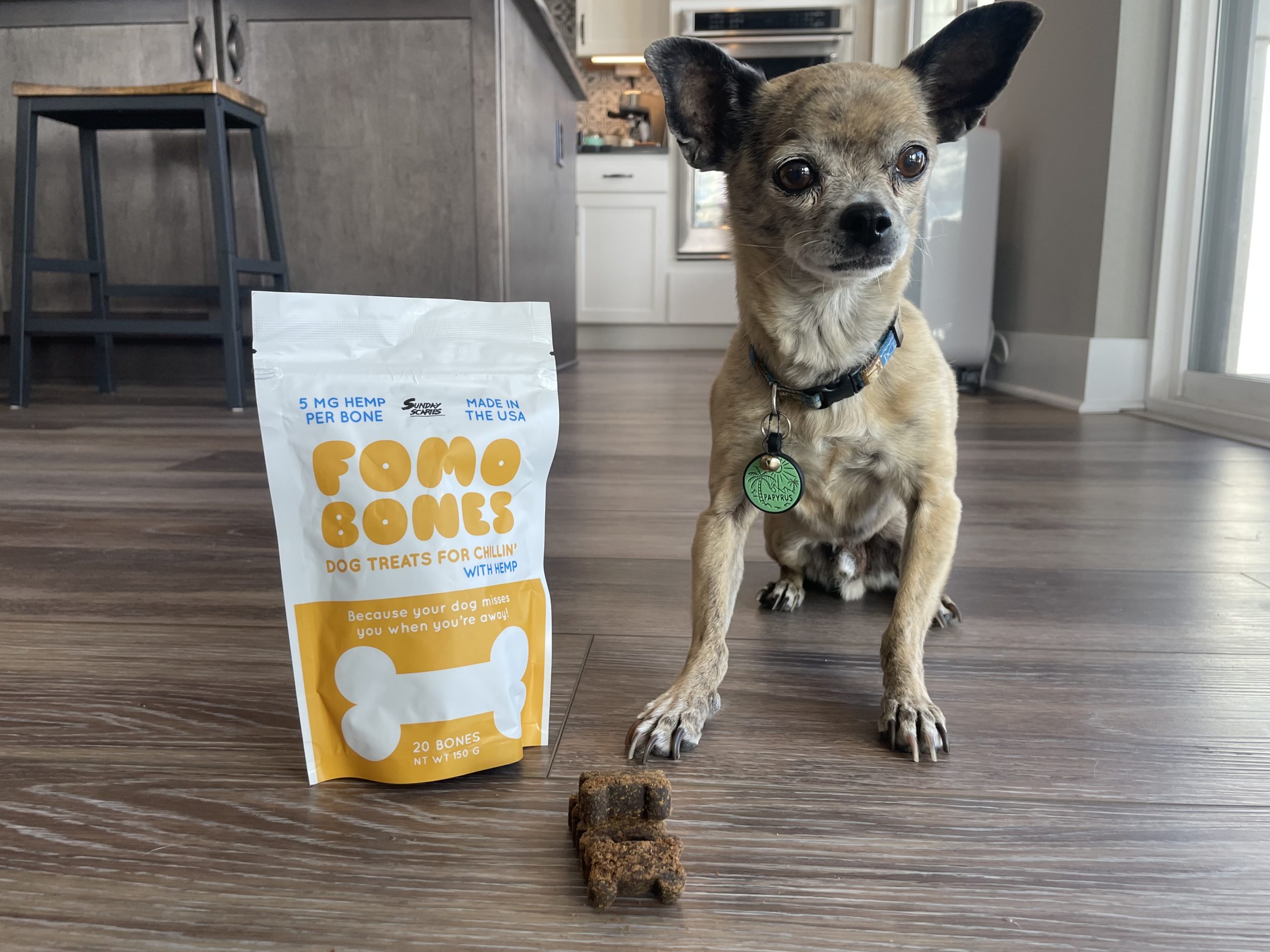
I had the opportunity to test FOMO Bones on my anxious old man Chihuahua, Papyrus. I was hopeful they might help him relax a bit more during the day—whether I’m at home or away—and that they might also help him sleep better through the night.
In the end, I found the calming bones to be very helpful, but not before I experienced some trials and tribulations. Keep reading to find out what I learned about using these bones on small dogs and to see my full Sunday Scaries FOMO Bones review.
About Sunday Scaries
Sunday Scaries is a CBD company with a simple mission: help people everywhere overcome their anxiety on Sunday and every other day of the week.
This fun-loving company was started by Beau and Mike, two restaurant and bar owners who had had enough of the stress associated with their competitive careers.
Today, Sunday Scaries offers a long line of products with various cannabinoid and THC components. One of their newer additions is their FOMO Bones—the company’s first CBD product made for dogs.
Where Are Sunday Scaries Products Produced?
All Sunday Scaries products are made in the USA. They source their CBD isolate extract from KND Labs out of Denver, Colorado, and the hemp they use is grown in Greeley, Colorado.
The company itself is based out of San Diego, California.
What Kinds of Dogs Are FOMO Bones Best Suited For?
FOMO Bones are for any dog that suffers from chronic or occasional anxiety. The soft nature of the bones makes them easy to break in half to dose smaller dogs, while larger dogs can take more than one bone if needed.
Overview
Here is an overview of Sunday Scaries FOMO Bones, including their uses, ingredients, and dosing information.
Uses
The unique mix of calming herbs and cannabinoids in FOMO Bones makes them useful for anxious dogs, no matter what’s causing their scaries.
I recommend them for dogs dealing with:
Chronic anxiety
Separation anxiety
Fear issues
Stranger danger
Noise phobia
Thunder phobia
Vet visits
Grooming
Travel
Sleep disturbances
Like most other anxiety treats, these work best if you give them to your pup before the stressor sets them off. For chronic anxiety, give a consistent dose every day.
Ingredients
FOMO Bones contain more than just CBD to help your dog chill out. They are also packed with medicinal herbs and natural substances well-studied for their ability to help the body and mind relax.
These active ingredients include:
CBD Isolate – CBD acts on certain receptors in the brain to increase serotonin levels. Serotonin is a hormone that helps the body relax.
Passion Flower – This medicinal herb helps increase GABA levels in the brain. GABA is an inhibitory neurotransmitter that reduces nerves’ ability to receive or send chemical messages, thereby reducing hyperactive brain and nerve activity.
Chamomile – One of the most well-known calming herbs, chamomile acts as a relaxant and sleep aid.
FOMO Bones also contain thirteen inactive ingredients. These include all-natural flavor enhancers that help to make sure your pup can’t resist these treats.
Dosage
According to the packaging, FOMO Bones should be dosed according to pet weight:
Dogs under 50 pounds = 1 bone per day
Dogs over 50 pounds = 2 bones per day
In my experience, it may be worth breaking these down even more to tailor the dose to your dog’s size and needs.
For instance, I found that one bone—which contains 5mg of CBD—was too much for my seven-pound Chihuahua. I’m not sure if it was the excess CBD or too much of the other ingredients, but he acted even more anxious than normal after receiving one bone.
After some trial and error, I found that half a bone had a much more desired effect on him.
In Summary
Pros
5mg of CBD per bone
Starts working very quickly
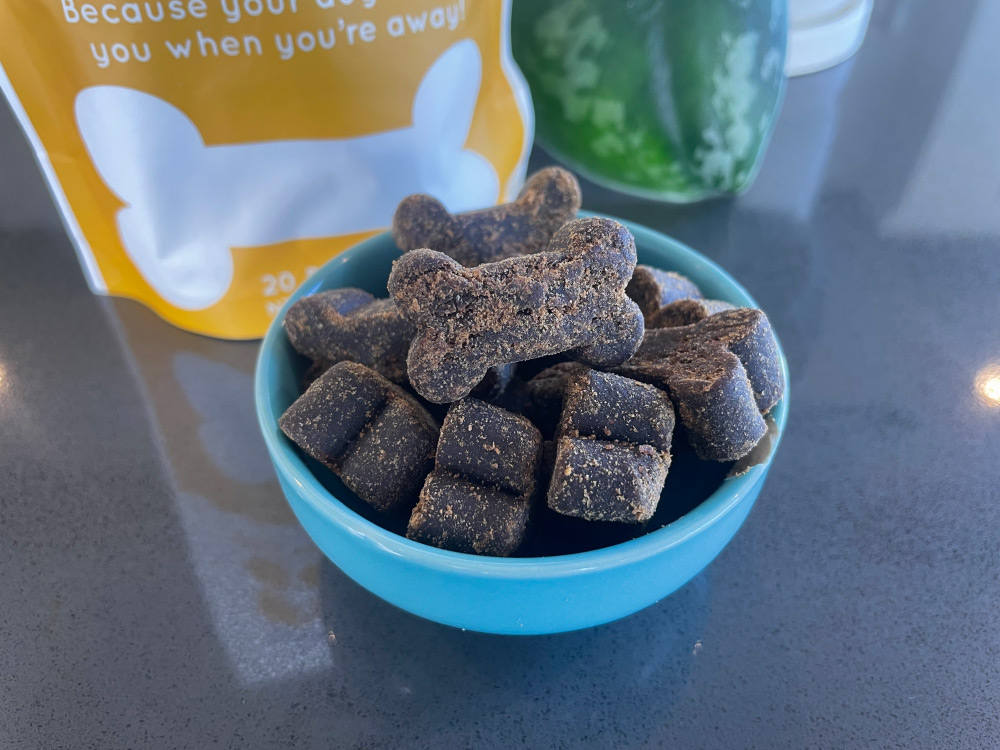
Soft and chewy texture
Great flavor
Easy to dose and give
Cons
Pouches only contain 20 bones
No multi-pack discounts
Pouch zipper breaks easily
Key Features
High Concentration of CBD in Each Bone
One reason I generally opt for CBD oil rather than treats is that most CBD treats don’t actually contain much CBD.
The recommended therapeutic dose of CBD is 5mg per 10 pounds of body weight. Most CBD dog treats contain only about 1 mg of CBD, which would require feeding a big dog quite a few treats to get anywhere near the right dose. Even worse, the vast majority of calming treats are marketed as if they contain CBD but they actually only contain hemp seed oil, which has no cannabidiol in it.
FOMO Bones have a concentrated dose of CBD which makes it easier to give your dog what they need to see an effect. And, unlike CBD oil, these treats are super easy to give and aren’t messy.
Highly Palatable
My dogs aren’t overly picky, but something about herbal supplement chews always seems to turn them off. Luckily that was not the case with these FOMO Bones. They happily ate them up without any idea they were full of helpful herbs and compounds.
I attribute this to all the tasty flavor enhancers these bones contain, including cheese powder, beef protein, and bacon flavor. The soft texture also helps to increase palatability, especially for puppies and older dogs.
Subscription Discounts Available
If you have an anxious dog, you’ll probably go through your bag of 20 FOMO Bones fairly quickly. Luckily, Sunday Scaries offers discounts if you subscribe for regular deliveries.
With the subscription option, you’ll receive 20% off every order. You’ll also get some peace of mind knowing your order of one, two, or three bags will ship automatically each month. Plus, you’ll get first access to any new products, human or pet, that Sunday Scaries releases.
Are Sunday Scaries FOMO Bones a Good Value?
With Sunday Scaries FOMO Bones, you’ll pay about $1.15 per bone if you buy at full price. This is a little more than the average cost of CBD dog treats. However, if you break the cost down by milligrams of CBD, it’s actually a fairly good deal.
FAQ
Does Sunday Scaries offer a guarantee?
Yes, FOMO Bones and all other Sunday Scaries products come with a 100% money-back lifetime guarantee.
Can I increase the dose if my dog needs more CBD?
I would not recommend giving your dog more bones than what the package recommends. This is because each bone contains more than CBD. As I found with my small dog, too much of some of these relaxing herbs can actually cause more anxiety instead of less.
Do I have to pay for shipping?
Shipping does cost extra if your order is less than $50. I recommend getting the three-bag bundle of FOMO Bones to get over this amount. Or, better yet, choose from Sunday Scaries’ long list of human products and get yourself some calm as well!
Our Experience With Sunday Scaries FOMO Bones
When I rescued my Chihuahua, Papyrus, 14 years ago, he was a mess. He had been brought into a shelter as an intact stray and wouldn’t let anyone touch him. He came to the dog daycare I worked at as a foster dog.
Aside from curling up in the workers’ laps out of desperation to stay warm, he didn’t want any humans to interact with him. After a few forced trips home with me and plenty of treats, he finally decided I was worth trusting.
Now, over a decade later, he still holds onto much of this anxiety. I can count on one hand how many people he will let pick him up or leash him. My husband isn’t even on that list!
As you can imagine, I’m always on the lookout for new calming treats and supplements that might help him. When I found these FOMO Bones, I was most hopeful they would help him with his attachment anxiety and his old man sleep disturbances.
At first, these bones had the exact opposite effect—they would make him even more anxious and keep him from resting! That’s when I realized how much CBD was in each treat and decided to try a lower dose.
When I gave him half a bone, the results were much better.
I would also dose him with half a bone whenever he started following me relentlessly through the house during the day. This always helped him chill out. Within fifteen minutes, he would typically go off on his own to find a nice warm place in the sun to curl up and sleep.
Now, I make sure to always have some FOMO Bones on hand. They are much easier to give to Papyrus before bed than his typical CBD oil and they’re a simple and effective solution to reach for when his anxiety acts up during the day.
Each of these bones contains an impressive 5 mg of CBD plus four other well-researched calming herbs and compounds. For my anxious Chihuahua, they helped him chill out fast and allowed him to get better sleep for less anxious days.
If your dog suffers from chronic or situational anxiety, I highly recommend giving these treats a try.
If you are a dog owner, you are probably aware of how often peanut butter is recommended for dogs to eat. Many dogs find the taste of peanut butter irresistible, so it has multiple uses aside from being a tasty treat. Since peanut butter has become so popular for dogs to eat, you probably can’t help but wonder if it is good for them.
Surely something so highly recommended can’t be bad for dogs, right? Well, peanut butter is generally safe for dogs to eat and could be good for them in moderation. However, that is only if the peanut butter contains no harmful ingredients and is specifically formulated for dogs.
Keep reading to discover whether peanut butter is good for dogs and other noteworthy facts about feeding it.
The 4 Reasons the Peanut Butter is Good for Dogs to Eat
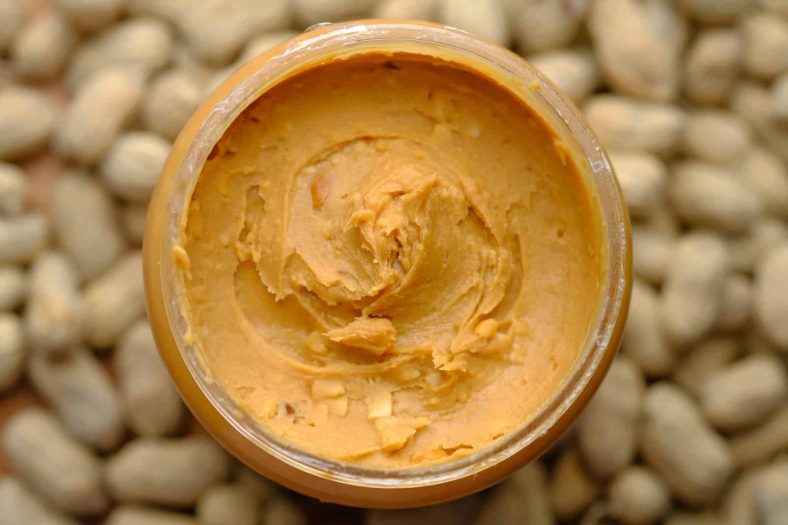
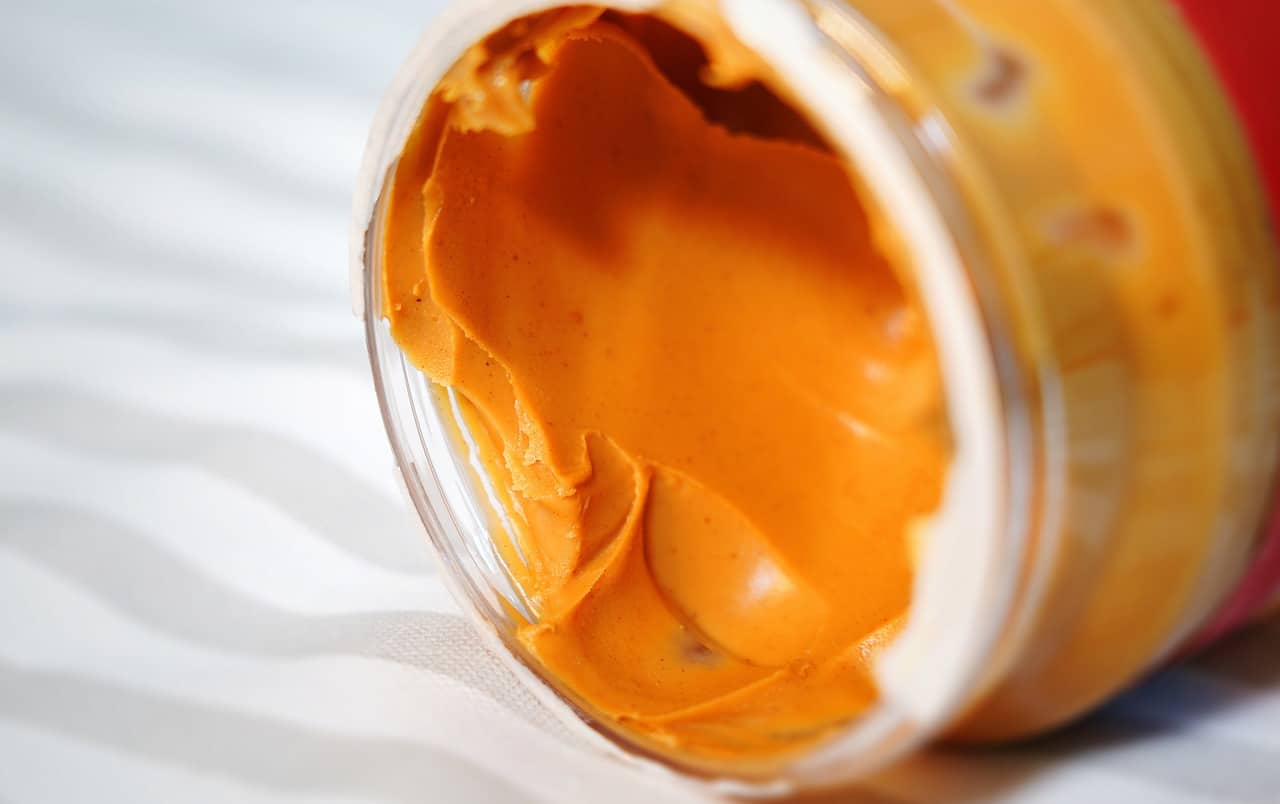
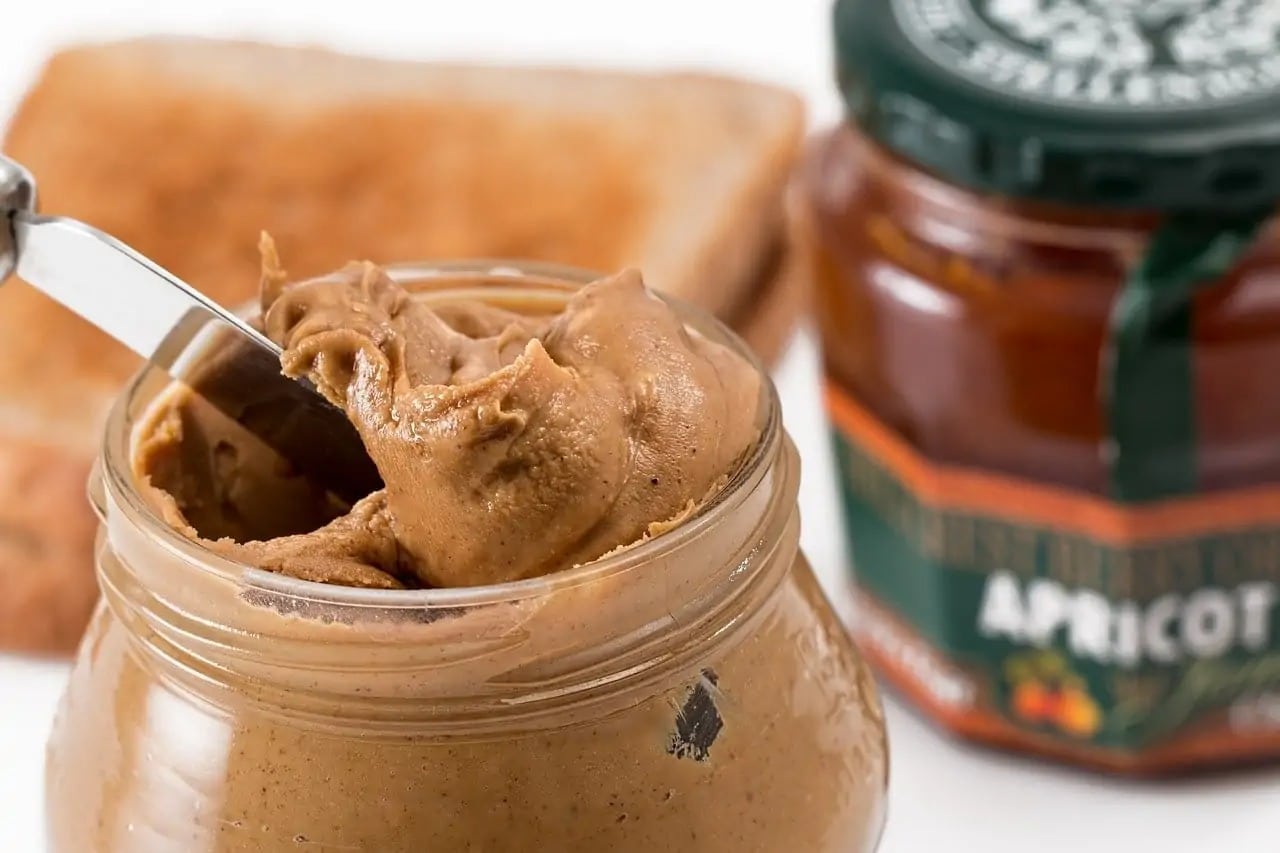
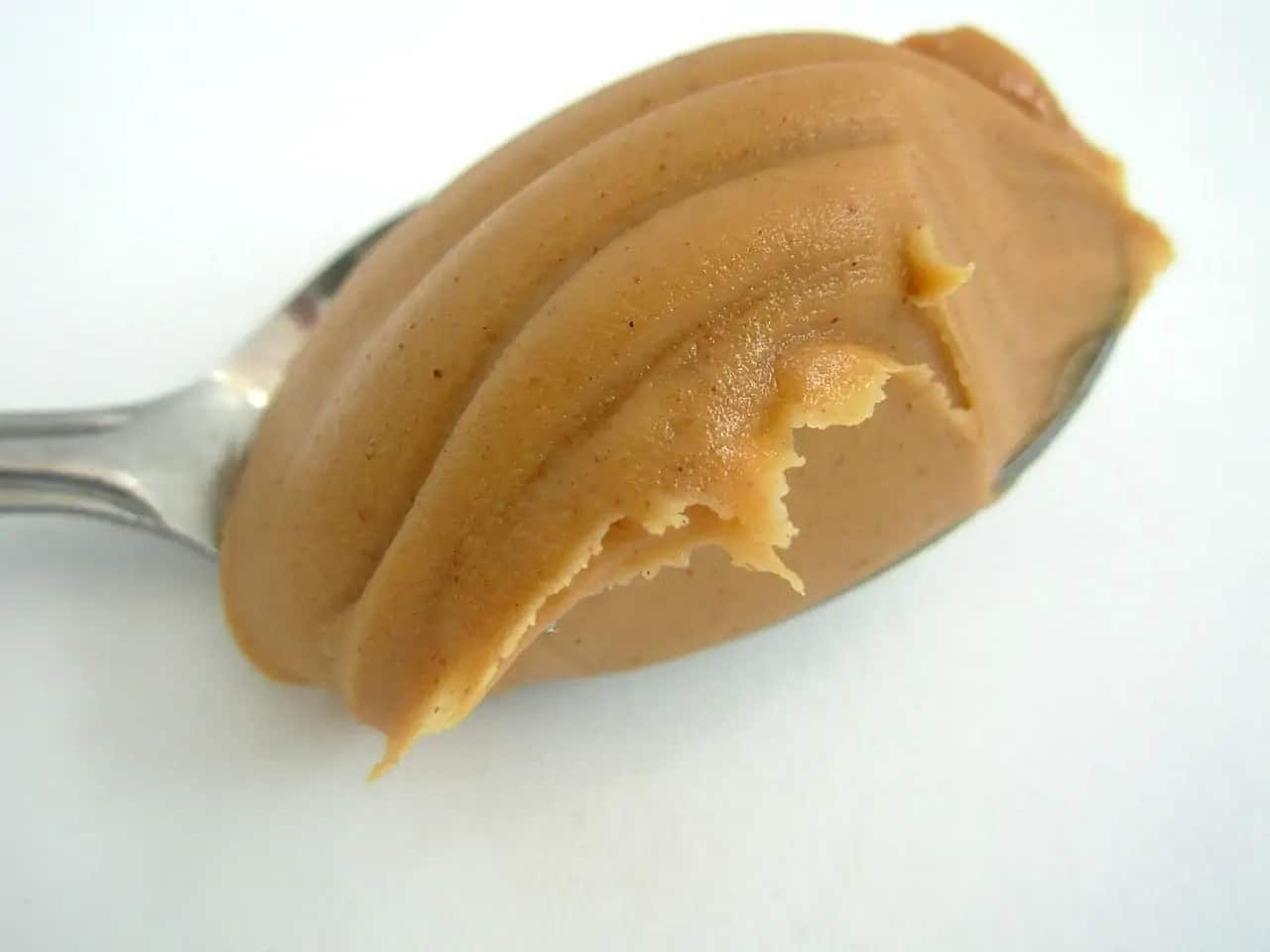
Peanut butter is more than just mashed peanuts in a jar—it’s a blend of healthy fats, proteins, and vitamins. These nutrients have dietary benefits that naturally make them good for dogs to eat.
Not all types of peanut butter are created equal, and some have dangerous ingredients that are not good for dogs. It is best to only feed dog-specific peanut butter and avoid the ones formulated for human consumption.
So, what makes peanut butter good for dogs?
Image Credit: Rigby40, Pixabay
1. High in Plant-Based Proteins
For starters, peanut butter is a rich source of plant-based protein and essential amino acids. Dogs benefit from both animal-based and plant-based proteins in their diet. Peanut butter is particularly rich in the essential amino acids phenylalanine and lysine, amongst others. Phenylalanine is needed for the production of thyroid hormones and leucine is required for muscle protein synthesis.
2. Healthy Fats
Peanut butter is full of healthy polyunsaturated and monounsaturated fats. Peanut butter contains polyunsaturated fats such as linoleic acid which is an omega-6 fatty acid. Linoleic acid is not only essential for dogs since they cannot make it on their own, but benefits their skin and coat health too.
Although the fat in peanut butter is healthy, it still should be fed sparingly as it’s packed with calories. It’s important to offer peanut butter to your dog in moderation, as the calories in treats should not make up more than 10% of your dog’s total calories per day.
Image Credit: stevepb, Pixabay
3. Source of B-Vitamins
Peanut butter is an excellent source of niacin or vitamin B3. Niacin is an important vitamin for dogs and has a role in enzyme and skin barrier function.
4. Multiple Uses
The nutrients in peanut butter are not its only benefits for dogs. Peanut butter has multiple uses for dogs aside from being a tasty snack. Some dog owners use peanut butter to get their dogs to take certain medications. Most dogs won’t resist eating medication if it is covered with peanut butter. Also, peanut butter can be used to encourage dogs to chew their toys or to keep them distracted while being groomed.
Dangers of Feeding Peanut Butter to Dogs
Despite dog-specific peanut butter being safe for dogs to eat, it’s important to know the dangers of certain regular peanut butters. Before you rush to give your dog peanut butter, be sure to check the ingredients on the label. Some seemingly innocent ingredients for us can be deadly for our dogs.
Image Credit: Jumpstory
Xylitol
Although many brands of peanut butter do not contain xylitol, there are several that do. Xylitol is typically used as a sugar substitute for humans, and it is extremely toxic for dogs. Even the smallest amounts of xylitol in peanut butter can put your dog’s health at risk.
Signs your dog has ingested xylitol may include:
Hypoglycemia (low blood sugar)
Liver failure
Seizures
Death
Too Salty
Most peanut butter for humans has added salt, which is not good for your dog in excessive amounts. Dogs should be offered unsalted peanut butter, ideally. Most dogs don’t prefer the taste of salty foods, so feeding them unsalted peanut butter won’t be less of a treat.
Image Credit: inewsfoto, Shutterstock
Feeding Peanut Butter to Dogs Safely
If you feel inclined to feed peanut butter to your dog, ensure that it is specifically formulated for dogs to eat, or that you check the ingredients thoroughly to ensure it doesn’t contain xylitol or extra salt or sugar. Opting for peanut butter sold specifically for dogs can take away the risk of buying the wrong type.
Dog-specific peanut butter, such as the popular Bark Bistro Buddy Butter, is free from harmful ingredients that put your dog’s health at risk. They contain no xylitol or added salt, sugar, or oils. Plus, it has been formulated to fit the dietary requirements of dogs rather than humans.
You should not feed peanut butter to your dog too often and ideally no more than a tablespoon for medium to large dog breeds. Smaller dog breeds should not eat more than a teaspoon of peanut butter at a time.
Conclusion
Peanut butter is generally good for dogs when fed sparingly and in moderation. Aside from being safe if it is xylitol-free and unsalted, peanut butter has dietary benefits for dogs. Peanut butter is rich in healthy fats and essential plant-based proteins.
As with most treats, peanut butter should only be offered in addition to your dog’s complete, balanced diet as it is a treat food.
Featured Image Credit: Towfiqu barbhuiya, Unsplash
We give Ollie dog food a rating of 4.8 out of 5 stars.
Ollie Pets delivers fresh premium dog food straight to your door. All the recipes were crafted by experts in the field and contain very nutrient-dense ingredients.
If you’re looking to make mealtimes more convenient, you’ll want to consider Ollie. Once you complete its simple questionnaire, you’ll receive a portion guide so that you don’t have to spend time worrying about underfeeding or overfeeding your dog.
I’ve tested out Ollie’s delivery service and had our dog try out three recipes. Keep reading this Ollie review to get an honest review of this pet food company and see if it’s a service that your dog will love.
At a Glance: What We Reviewed
Ollie Dog Food Reviewed
Who Makes Ollie Dog Food and Where Is It Produced?
Ollie Pets was founded in 2015 by Randy Jimenez, Alex Douzet, and Gabby Slome. The main headquarters is in New York City, and the company works with farmers and manufacturers located throughout the United States.
Ollie is very deliberate and intentional about the production and manufacturing companies it chooses to partner with to make sure that they’re working with organizations that prioritize sustainability, ethical practices, and producing high-quality food.
Which Types of Dogs is Ollie Dog Food Best Suited For?
Ollie is suitable for puppies and adult dogs that are relatively healthy and don’t have any serious chronic health concerns. The ingredient lists are also very simple, so you can easily select recipes that avoid certain meats that trigger allergic reactions.
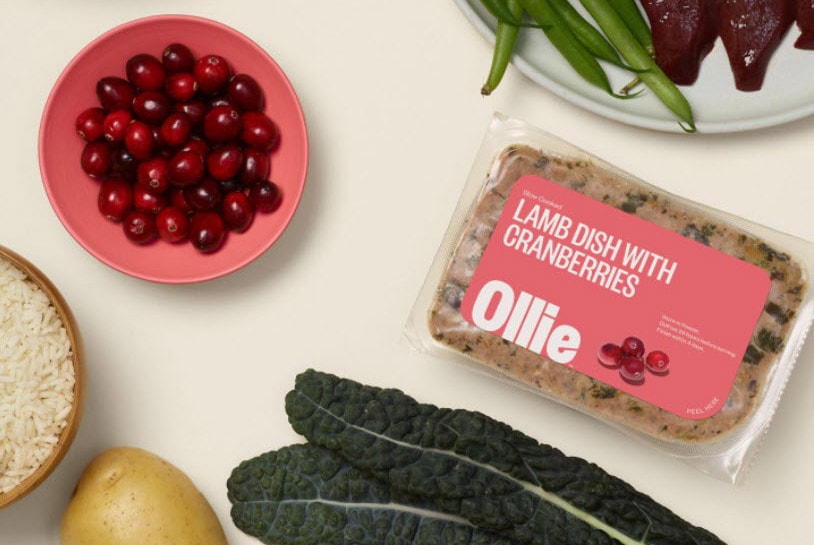
Some recipes are more appropriate for different types of dogs. For example, the Chicken Dish With Carrots recipe is a good recipe for dogs with sensitive stomachs, and the Lamb Dish With Cranberries is great for dogs prone to allergies.
Discussion of the Primary Ingredients (Good and Bad)
Ollie is committed to using fresh ingredients that are prepared and packaged in human-grade facilities.
They use four different kinds of meat protein:
Ollie strives to make sure that all the ingredients in the recipes are purposeful and packed with nutrients. For example, you’ll find spinach, blueberries, and rosemary in a lot of the recipes.
Spinach is a rich source of several different kinds of vitamins, and also contains iron and antioxidants. Blueberries are also rich in antioxidants and packed with fiber. Small doses of rosemary are also good for dogs as it has antibacterial, antiviral, and antifungal properties.
The ingredient lists for Ollie’s recipes don’t contain any artificial flavors or filler ingredients. They’re all relatively healthy and nutritious. If I had to be nitpicky, our one hesitation is the mix of fish oil in the chicken, beef, and lamb recipes. Some dogs have fish allergies, so they might have a reaction if they eat these recipes. However, fish allergies are typically rarer than other meat allergies.
Single Source of Protein
Other than the presence of fish oil, Ollie’s recipes only contain one source of meat. For example, the beef recipe only contains beef and beef organs, and the chicken recipe contains chicken meat and whole dried eggs.
For the most part, all of Ollie’s recipe lists are short and simple, so it’s easy for owners of dogs with food allergies and sensitivities to navigate.
High-Quality Vet-Crafted Recipes
Ollie’s recipes were all developed by a veterinarian team. The company also has its own Canine Council, which consists of animal scientists, behaviorists, and nutritionists. The Canine Council exists to develop and innovate recipes and other products that benefit a dog’s health.
Along with using fresh ingredients, Ollie’s recipes are all minimally processed to significantly reduce nutrient loss. The recipes also omit any filler ingredients and don’t contain any wheat or soy. All the batches are also tested for quality control and pass through a metal detector to scan for any foreign materials.
Convenient Experience
Ollie aims to provide a convenient experience for its customers. After you complete its initial questionnaire, you’re given a list of recommended recipes. Then, Ollie sends a package containing enough food that will last until your next delivery date.
The initial package comes with a convenient food scoop and storage container. Both products are dishwasher-safe, so they’re very easy to keep clean. The package also comes with feeding instructions, so you can make sure that you’re feeding your dog accurate daily portions.
Customers can also easily make changes to their order by logging into their online account. Some specific changes you can make is skipping a delivery, changing up recipes, and adding snacks to the box.
No Specialized Diets
All of Ollie’s dog food recipes meet the nutritional levels set by the AAFCO Dog Food Nutrient Profiles for All Life Stages. So, most puppies and dogs can eat their recipes without adding supplements. However, this dog food may not be the best option for dogs that require even more specialized diets. For example, there isn’t a recipe that’s specifically developed for weight loss.
Although Ollie factors in high-energy dogs, it doesn’t specify if the dog food can sustain athletic and actively working dogs, such as search and rescue dogs. If the recipes can be fed to these types of dogs, the costs may add up quickly if the volume of food you have to feed the dog is significantly larger.
Ollie Reviewed: A Quick Look at Their Food
Pros
High-quality, nutrient-dense recipes
Appropriate for all life stages
Easy to make delivery changes
No artificial flavors, soy, corn, or wheat
Cons
Short shelf life in fridge
Need to wait to thaw
Reviews of the Ollie Dog Food We Tried
Let’s take a closer look at three of Ollie’s best dog food recipes, all of which our pups had a chance to test out.
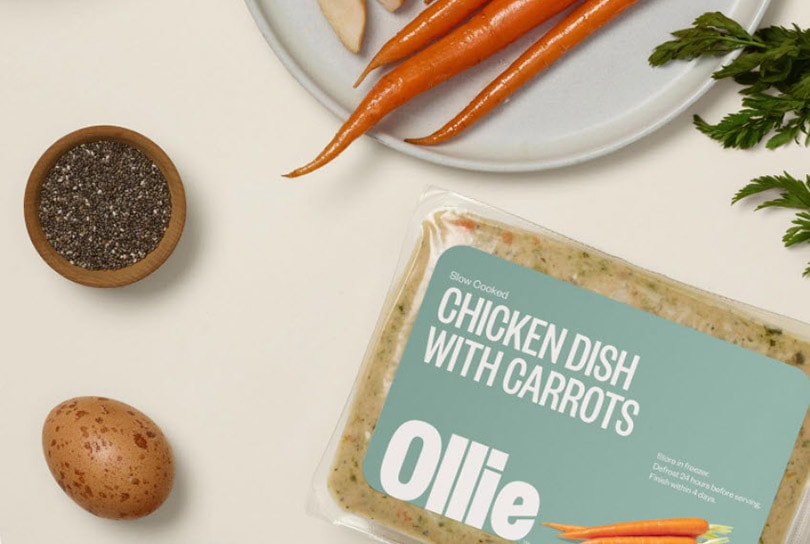
1. Chicken Dish With Carrots
This recipe is our favorite because it takes the standard chicken recipe and elevates it with fresh and nutritious ingredients. Chicken is listed as the first ingredient, and it’s supplemented by carrots, spinach, and blueberries. You’ll also find fish oil and cod liver oil mixed throughout, which are excellent sources of omega-3 fatty acids.
This recipe contains the lowest number of calories out of all the Ollie dog food recipes. So, if you’re concerned about your dog’s weight, your best bet would be feeding your dog the chicken recipe.
As we’ve mentioned before, this recipe contains fish oil and cod liver oil. So, if your dog has fish allergies, it won’t be able to enjoy this meal. Other than that, this is a great recipe for a wide range of dogs.
Pros
Chicken is first ingredient
All ingredients are nutritious
Low-calorie
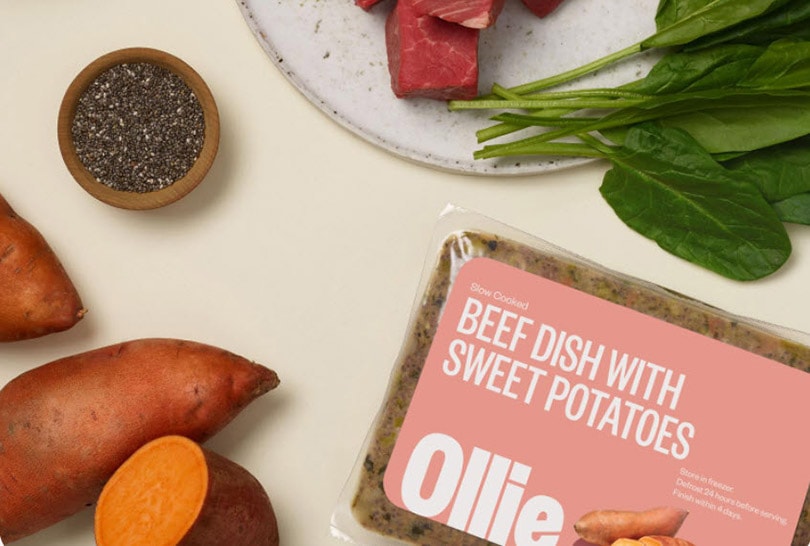
2. Beef Dish With Sweet Potatoes
The Beef Dish With Sweet Potatoes is another solid recipe developed by Ollie. It’s labeled as one of the most nutrient-rich dishes, and we believe it. Along with listing beef as the first ingredient, the recipe also contains beef liver and beef kidney. Beef liver is extremely nutrient-dense and is an excellent source of iron, zinc, phosphorus, copper and selenium.
Again, if I had to be really nitpicky, our only critique is that this recipe tends to have a mushy consistency, which may be due to the starch in the sweet potatoes. So, if you have a particularly picky pup that doesn’t like pate textures, they probably won’t enjoy this recipe.
Pros
Beef is first ingredient
Nutrient-dense
Contains beef liver and beef kidneys
3. Lamb Dish With Cranberries
This recipe is a great choice for dogs with food allergies and sensitivities. It doesn’t contain any common food allergens, but it does incorporate butternut squash, which is easily digestible. Similar to the beef recipe, this lamb recipe is nutrient-dense and contains lamb liver.
Cranberries are also very nutritious and are good sources of antioxidants, calcium, and potassium. However, they’re pretty tart, so dogs may not enjoy the flavor of this recipe.
Keep in mind that this dish contains the highest number of calories. So, it’s important to make sure that you feed your dog the correct proportions to prevent weight gain.
Pros
Recipe for food allergies and sensitivities
Easily digestible ingredients
Nutrient-dense
Cons
May taste too tart
Highly caloric
Our Experience With Ollie Dog Food
I ordered a box of Ollie dog food and I was overall pleased with the experience. To begin with, the packaging was superb. It contained a pack of dry ice to keep the food frozen, and the starter box came with a dishwasher-safe food scoop and silicone container.
I also received a nice feeding guide, which gave me step-by-step instructions for transitioning to the new dog food and the exact portions to give our dog. This inclusion was especially helpful because my dog has a sensitive stomach and takes a while to adjust to new food and treats.
The recipes I received were the chicken, beef, and lamb dishes. All of the food came in vacuum-sealed packages, and it was very convenient for because our dog just had to eat one pack of food every day.
However, since I am used to feeding our dog dry food, it took me a little time to get used to thawing out the food. Therefore, there were times when I’d forget to pull the food out the freezer and into the fridge. Fortunately, I could heat up the food in the microwave for a few seconds if I was short on time.
Due to the recipes being nutrient-dense, I noticed that the portion size was significantly smaller than the portion size of our dog’s previous dog food. This left our dog feeling hungry, and she would beg for more food while she was adjusting to the new food.
I chose to follow the food transition guide religiously because my dog has a sensitive stomach, and she didn’t have an upset stomach as she learned to eat the new food. The recipes were apparently very delicious because she gobbled them all down enthusiastically. This is a high compliment because she tends to be a very picky dog and has been known to spit out popular dog treats.
While Ollie’s delivery service is mostly very convenient and hassle-free, one minor issue I noticed was the extra step you have to take to cancel your subscription. While other changes, like switching up recipes and updating delivery dates, are easily completed through your online account, you have to send a separate email to Ollie’s customer service to completely cancel a subscription.
Conclusion
Overall, Ollie dog food is a great choice if you’re interested in fresh dog food subscriptions. It does take some time to get used to thawing out the food beforehand, but all the recipes are packed with nutrients and also seem to be delicious to dogs.
My dog and I were both satisfied with our experience with Ollie. The only reason why I couldn’t give it a 5-star review is due to some minor details and inconveniences. However, once a dog completely transitions to eating the recipes, feeding times become a much more convenient and worry-free experience.
Pet parents who have yards want their dogs to be able to roam their yards freely without fear of them running away, never to be seen again. While privacy fences are an option, they aren’t affordable for all pet parents and many pet parents might prefer an invisible fence.
Wireless fences come in many varieties leaving pet parents searching through reviews and product information to ensure that they get the best option for their families. Here are PetKeen’s favorite wireless fence systems complete with our reviews of each one!
A Quick Comparison of Our Favorites in 2024
The 4 Best Wireless Dog Fences
1. PetSafe Wireless Containment System – Best Overall
In-Ground or Wireless:
Wireless
Correction Type:
Noise, Static
Waterproof:
Yes
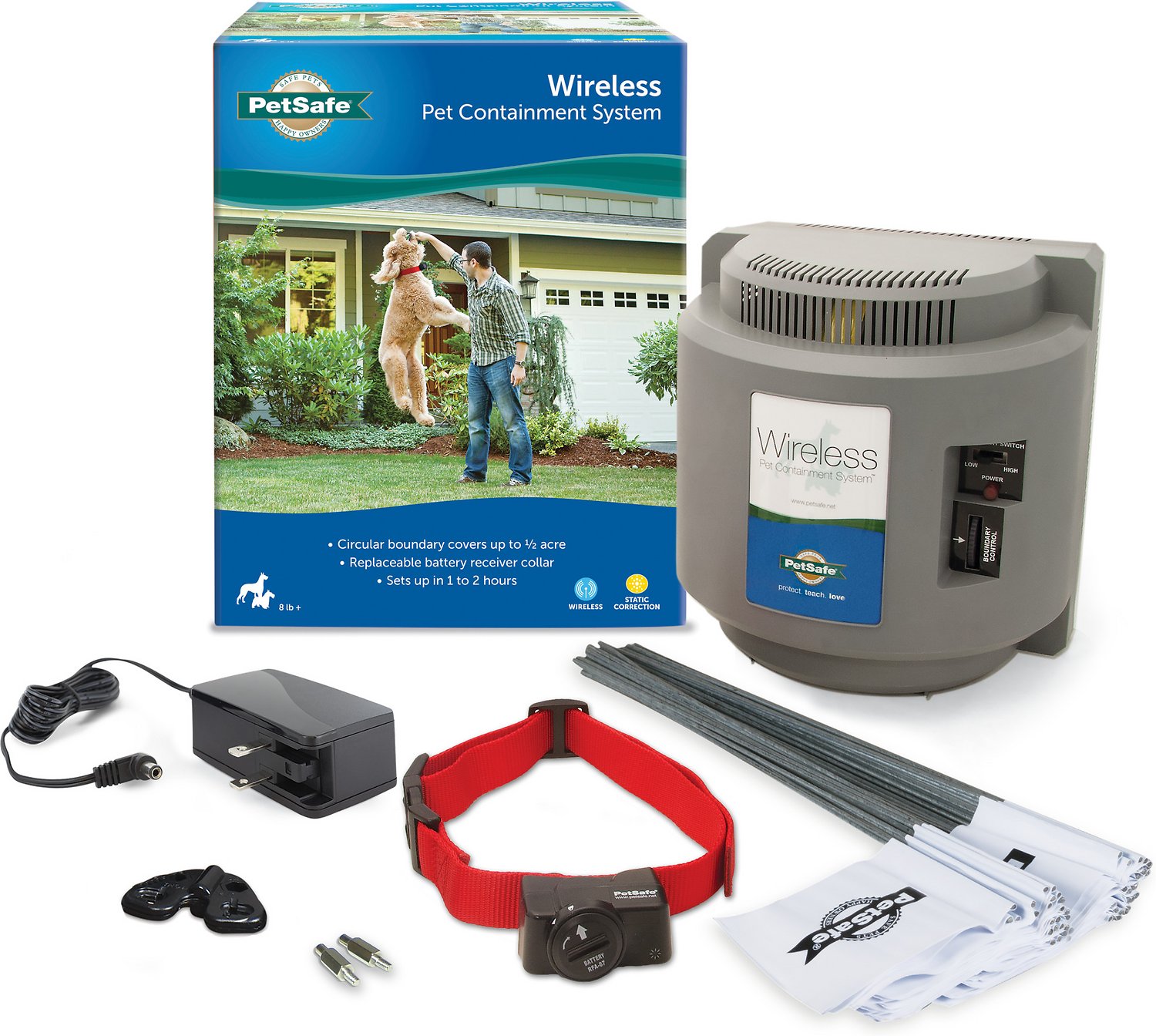
Our choice for the best overall wireless dog fence is PetSafe’s Wireless Containment System. The Wireless Containment System has a home base that covers 3/4 of an acre (approx. 32,000 sq ft). The collar receiver has 5 options for correction including noise-only and static electricity options.
This wireless fence is also great if you have a large property; you can buy multiple home bases and connect them to create a larger zone for your pet to enjoy. If you have multiple dogs, you can buy multiple colors and connect multiple collars to a single receiver as well. So, this is perfect for multi-dog homes.
Both the home base and receiver are waterproof, so you can use this outdoors no matter rain or shine. You can plug this in indoors or outdoors, and you don’t have to worry about the elements destroying it.
Pet parents who have ethical concerns surrounding the use of static shock collars will be able to use tone-only correction. This corrective method emits only an unpleasant noise when the dog leaves the safe zone.
Pros
5 levels of correction methods
Good for multi-dog homes
Can link together multiple home base unit
Cons
Shock collar option may leave some pet parents feeling nervous
2. PetSafe Basic In-Ground Dog Fence System – Best Value
In-Ground or Wireless:
In-Ground
Correction Type:
Static or Beep
Waterproof:
Yes
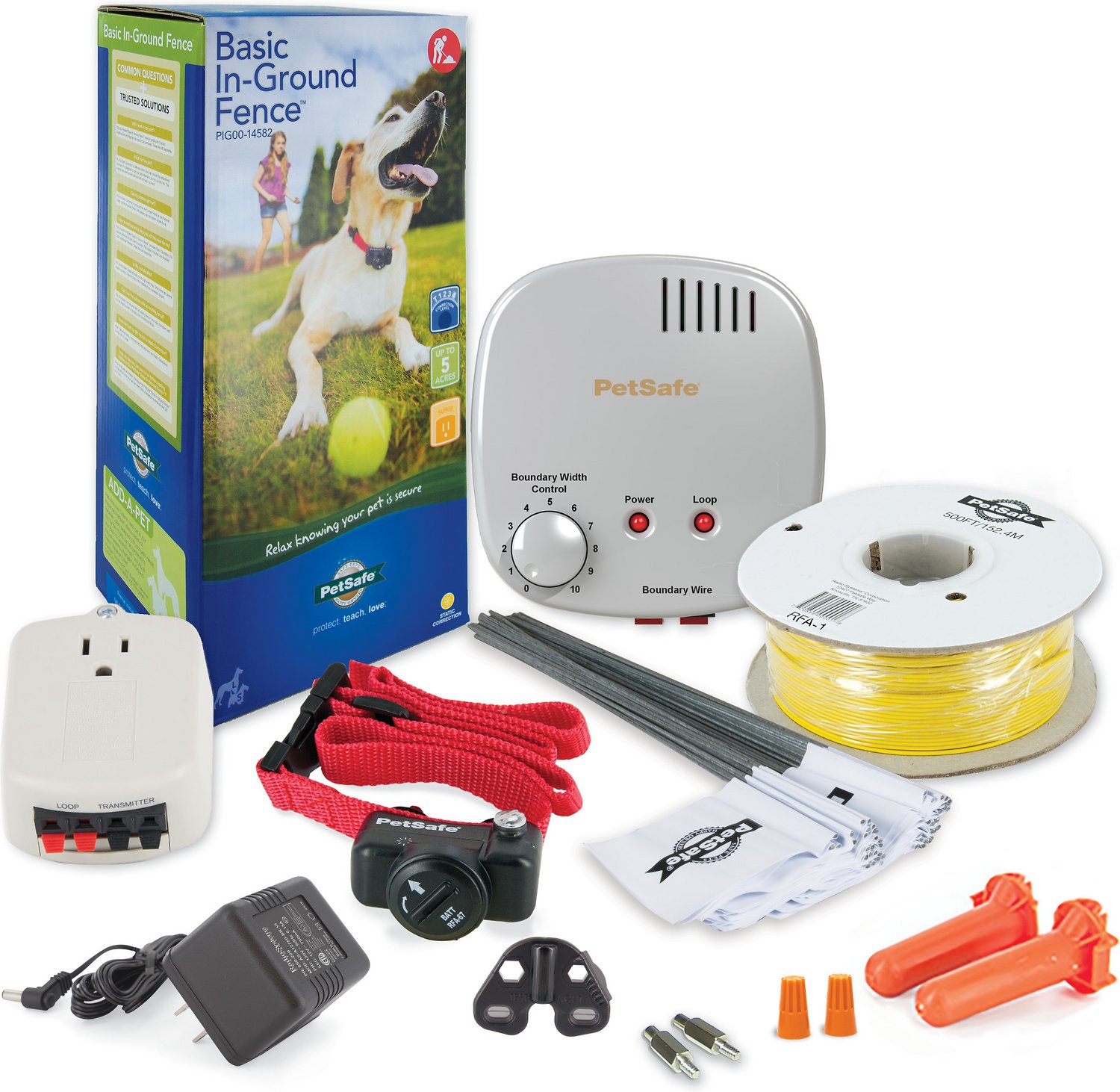
The best wireless dog fence for the money is PetSafe’s Basic In-Ground Fence System. This wireless fence will require you to lay the in-ground wires to mark off the boundary line of your property. The kit also comes with flags that you can use to mark off your boundary to help your dog learn where the boundary line is. The system covers up to 1/3 of an acre (14,000 sq ft), more wire can be purchased separately.
The kit includes a waterproof receiver collar that has 4 levels of behavior correction. If your dog gets too close to the boundary line, it will remind them with a loud beep and gentle static correction if they cross the boundary line. Pet parents with ethical concerns surrounding static collars can use the tone-only mode.
Pros
Cost-efficient
Tone-only mode
3. PetSafe Stay & Play Wireless Dog Fence – Premium Choice
In-Ground or Wireless:
Wireless
Correction Type:
Static, noise
Waterproof:
Yes
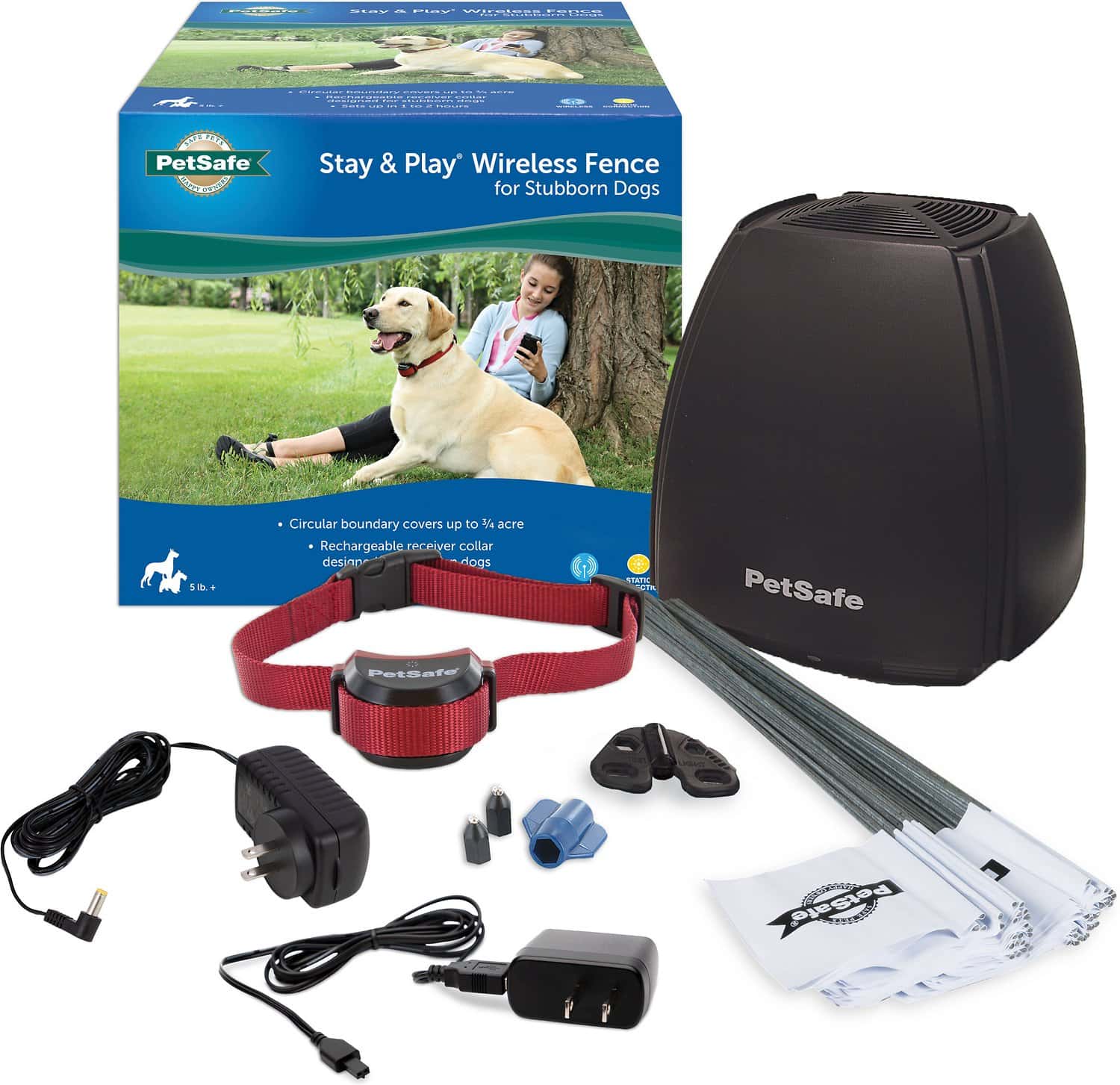
Pet parents looking to spend a little extra for the best of the best will want to check out PetSafe’s Stay & Play Wireless Fence. The Stay & Play Wireless Fence is portable, waterproof, and allows for an unlimited number of pets to be added to the unit, making it perfect for multi-pet households.
The Stay & Play Wireless Fence covers a 3/4 of an acre area out of the box that does not require any buried wires or a physical fence. You can expand the area by adding more home base stations.
The receiver collar has five levels of correction that increase as the dog gets further away from the boundary. Pet parents who don’t want to use a shock option will be able to use the collar’s tone-only option.
Pros
Completely wireless, no need for buried wires
An unlimited number of pets can be added to the unit
4. PetSafe Stay & Play Compact Wireless Dog Fence
In-Ground or Wireless:
Wireless
Correction Type:
Static, noise
Waterproof:
Yes
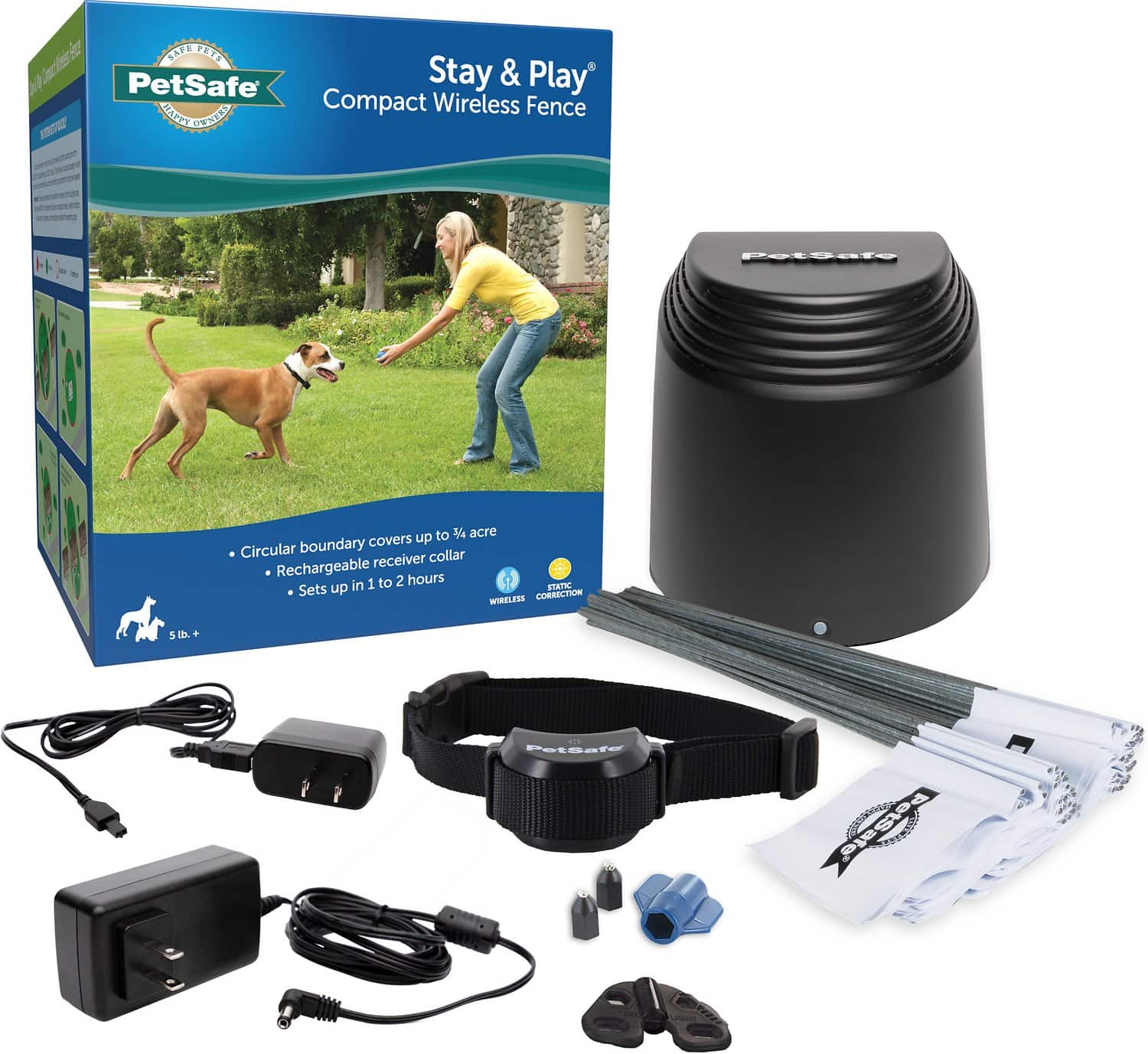
The PetSafe Stay & Play Compact is a smaller version of the PetSafe Stay & Play Wireless Fence. The receiver is smaller and more portable than its larger predecessor. The Compact delivers the same wireless range as the PetSafe Stay & Play.
Like the PetSafe Stay & Play, the Compact covers a 3/4-acre space and has five levels of correction, including a tone-only mode. This wireless fence doesn’t require any buried wires and has a smaller home base unit than other PetSafe wireless fences.
The collar included with this kit is smaller and intended for dogs as small as 5 pounds while the full-sized Stay & Play Fence starts at 8 pounds.
Pros
Suitable for small dogs
Fully wireless
Cons
Does not work in yards with a steep change in elevation
Buyer’s Guide: How to Choose the Best Wireless Dog Fence
Pet parents who are looking to keep their dog in their yard without putting up a 6-foot-tall fence will usually start looking into wireless fences and e-collars. These fences have multiple setup options that pet parents can browse. What’s best for you will be determined by what your family’s exact needs are. Here are some things to consider when purchasing a wireless dog fence.
Image By: EMpro, Shutterstock
Setup Options
The first thing you want to consider is the setup style. There are two main wireless dog fence setups: in-ground and homebase. Which one you choose will largely be determined by how much work you want to do and how much space you need to give your dog or dogs.
In-Ground
In-ground dog fences run a wire that responds to the dog’s movement from a home base station around the property. These fences are generally considered a permanent fixture as setting them up usually requires that you dig up part of the yard to place the fence boundary.
In-ground fences are best for yards that are very large or oddly shaped. They allow your dog to get full use out of the whole yard and allow pet parents to feel safe knowing that the fence will trigger when their dog goes near it.
Once the fence has been set, it runs on its own and requires no further intervention by the owner.
Wireless Home Base
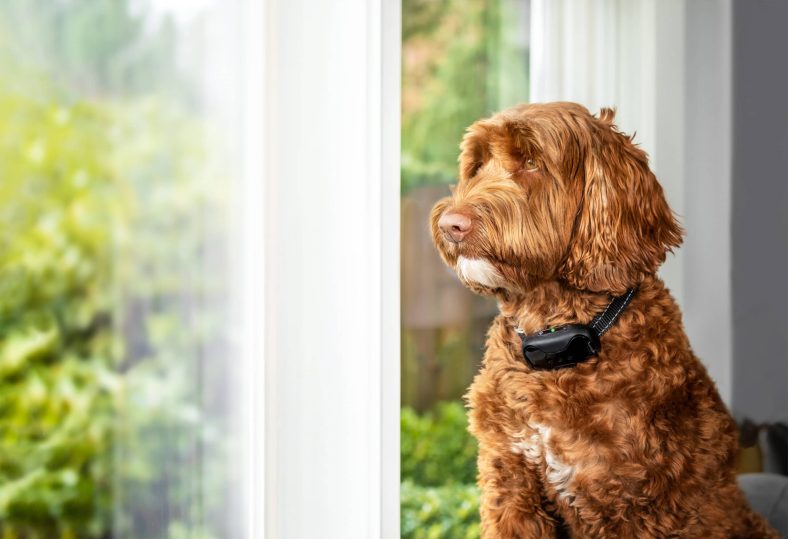
A wireless home base setup uses a transmitter that sends signals to a receiver on your dog’s collar. When your dog gets too far away from the home base the receiver will emit a noise administer shock or noise to let the dog know that it needs to move closer to the home base.
These setups are entirely wireless and have very few setup requirements. Unlike in-ground setups, the wireless home base does not require you to dig up your yard and plug directly into an outlet but the home base covers a smaller ground area.
The area covered by a wireless home base setup is an exact circle centered on the home base unit. Pet parents with very larger or atypically shaped yards may find that a home base unit does not cover their entire yard and does not allow their dog to access the whole yard. Pet parents with very small yards may find that their dog is allowed to roam into their neighbor’s yards which are covered by the circular radius.
Image By: PaigeWhite, Shutterstock
How to Decide Which Fence Is Right for You
When deciding what fence to buy there are many factors that a pet parent will want to consider. The biggest factor is the size and shape of your yard. If your yard is unusually shaped or very small a wireless home base station may include areas of your neighbor’s yards as part of the Safe Zone. If your yard is very large you may need multiple wireless home bases to cover the entire area of your yard.
Another factor that you’ll want to consider when buying a fence is the correction method of the receiver. There are three types of corrective methods: tone, vibration, and shock. A tone correction collar will emit a loud noise when the dog comes near the barrier zone. A vibration collar will vibrate when the dog leaves the zone and won’t stop until the dog returns to the safe zone. A shock collar will administer a harmless electrical shock to the dog when they near the barrier line.
Not all dogs respond the same to each type of correction. Some professional trainers will usually recommend that you buy a fence that has all three options in case your dog doesn’t react appropriately to the first chosen correction method.
Ethical Concerns When Using a Shock Collar
Any pet parents rightfully have concerns about the use of shock collars with their dogs. Proponents of shock collars state that no harm will come to the dog so long as they’re used appropriately, and dogs have been harmed by improper use of shock collars leaving pet parents feeling nervous about employing the corrective method.
The ASPCA recommends that you never use a shock collar, considering them inhumane. Pet Keen does not endorse the use of shock collars with dogs. There is no evidence that shock collars are more effective than any other humane training method and many research observations show them to be less effective.
Image By: Jelena Safronova, Shutterstock
Conclusion
There are so many wireless fences out there and it can be intimidating to try and find the best one! Our choice for the best overall wireless dog fence was PetSafe’s Wireless Containment System. Pet parents willing to put in a little elbow grease to save money will love the PetSafe Basic In-Ground Fence System. Lastly, pet parents looking for the best of the best need not look further than the PetSafe Stay & Play Wireless Fence to keep their dog contained!
Do you need a short-haired dog to save you time and money on grooming? In our list of short-haired dog breeds, you can find any size of dog, from the large Great Dane all the way down to the tiny Chihuahua. Short-haired dogs don’t need to be brushed as often, but be warned that they do still shed, and not all of these dogs are hypoallergenic. With that in mind, let’s take a closer look at each of our picks for short-haired dog breeds:
Top 20 Short-Haired Dog Breeds
1. Weimaraner
Image Credit: celyi, Shutterstock
Height:
22 – 27 inches
Weight:
55 – 90 pounds
AKC Group:
Sporting
This German hunting dog comes from the Weimar region in its native country. Weimaraners are athletic and require lots of exercise. Their coats are short and they come in a variety of grey shades. Weimaraners can be perfect family dogs and can even be good with children, so long as you run their energy out adequately.
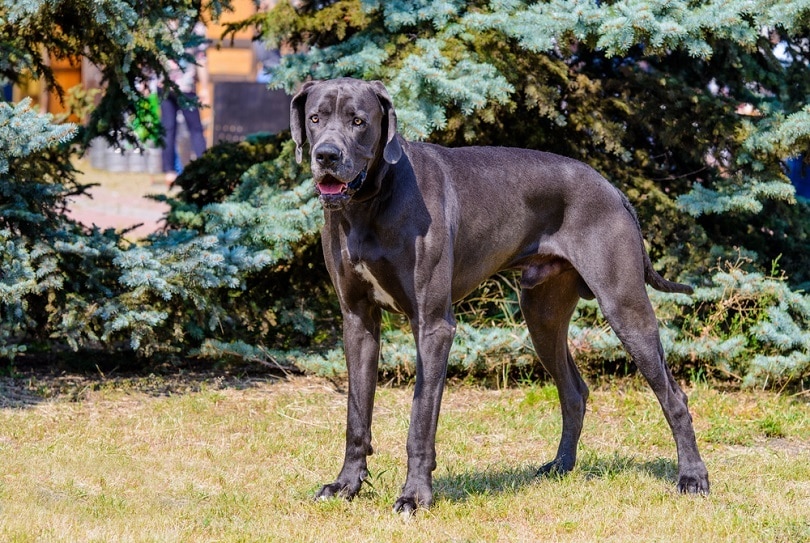
2. Great Dane
Image Credit: volofin, Shutterstock
Height:
28 – 34 inches
Weight:
100 – 200 pounds
AKC Group:
Working
Great Danes, although easy with coat maintenance, will be more work in feeding and finding space for them. Even though they are huge, they have a calm nature and don’t need to let off tons of energy like other large dogs. If you give them a short walk or two a day, they will get all the exercise they need. Train them early on and they will be a lovable, lounging pup for you and your family.
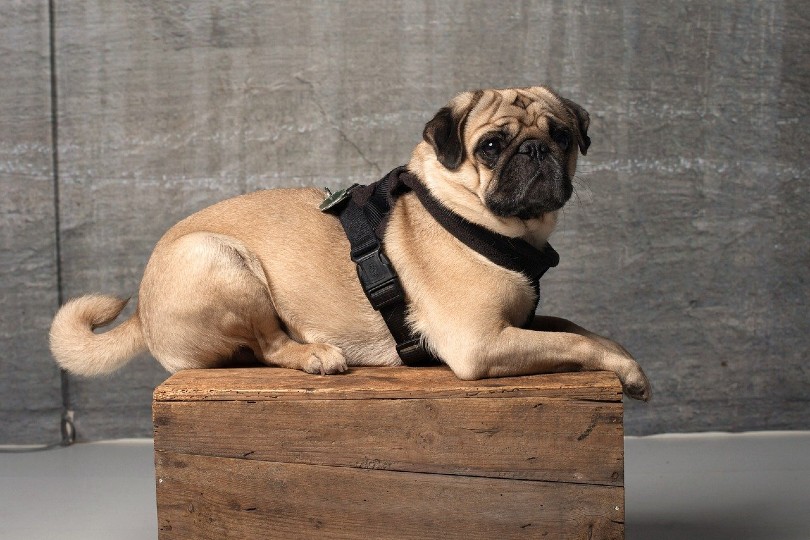
3. Pug
Image Credit: maniablack18, Pixabay
Height:
10 – 13 inches
Weight:
14 – 18 pounds
AKC Group:
Toy
The Pug is a cute little pup that comes from China. Pugs were a sought-after pet back in B.C. times as they were the choice pets of Chinese emperors. They love to be right by your side and make you laugh with their antics. Their hair is short, true, but they will need their wrinkles cleaned out with a wet wipe or cloth every week or so. Pugs also have a hard time in hot weather, so make sure to keep him cooled off.
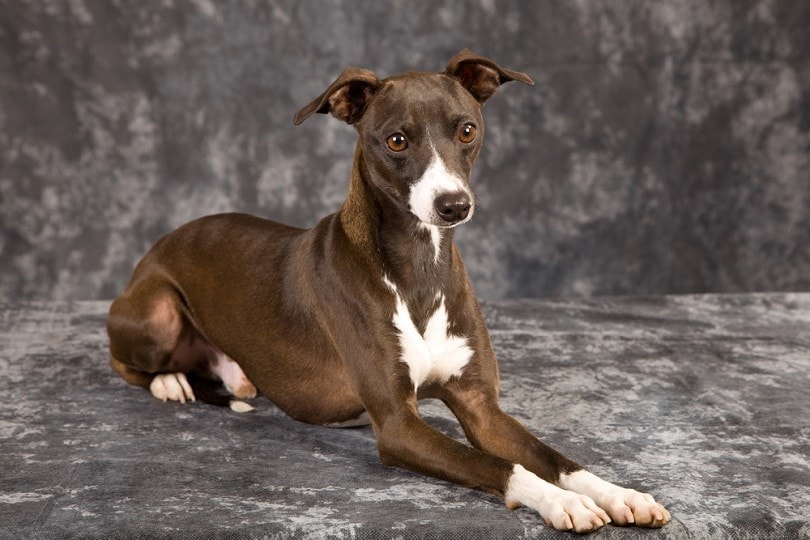
4. Italian Greyhound
Image Credit: Linn Currie, Shutterstock
Height:
13 – 15 inches
Weight:
8 – 11 pounds
AKC Group:
Toy
Italian Greyhounds are very similar to their ancestor, the Greyhound, in these ways: their coats are short, they are sweet and calm, and they don’t need tons of exercise. They make a perfect dog for people who can’t handle the large-sized Greyhound but still want the same good nature. Speaking of its small size, you will need to be careful with it while carrying it around with you because of its vulnerability to injury.
5. Miniature Pinscher
Image Credit: Dorena Beckendorf, Pixabay
Height:
10 – 12.5 inches
Weight:
8 – 10 pounds
AKC Group:
Toy
Miniature Pinschers (Min Pins, for short) are similar to Doberman Pinschers, but Min Pins are actually the older breed. Min Pins have a short coat that needs brushing once a week to make it look sleek and shiny. This dog breed has lots of pride and confidence, and is considered the “King of Toys.” Miniature Pinschers are great for a family with older children that know how to handle small dogs.
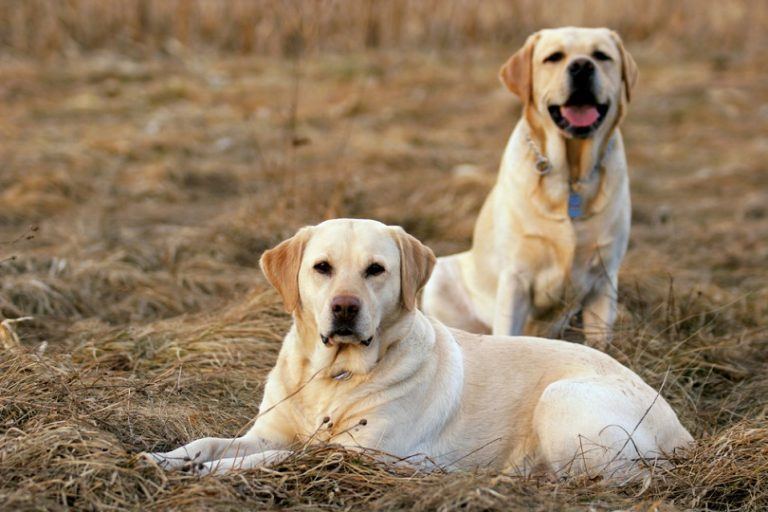
6. Labrador
Image Credit: Tina Rencelj, Shutterstock
Height:
22 – 24 inches
Weight:
55 – 79 pounds
AKC Group:
Sporting
The most popular dog breed in America for 28 years in a row has also got a short coat that’s easy to care for. Labradors love the water, so you won’t have a difficult time bathing them, either. Their personalities are affectionate, caring, and playful. Labs are very easy to train, which is why they are often used as service animals. Labs are great for people of all ages.
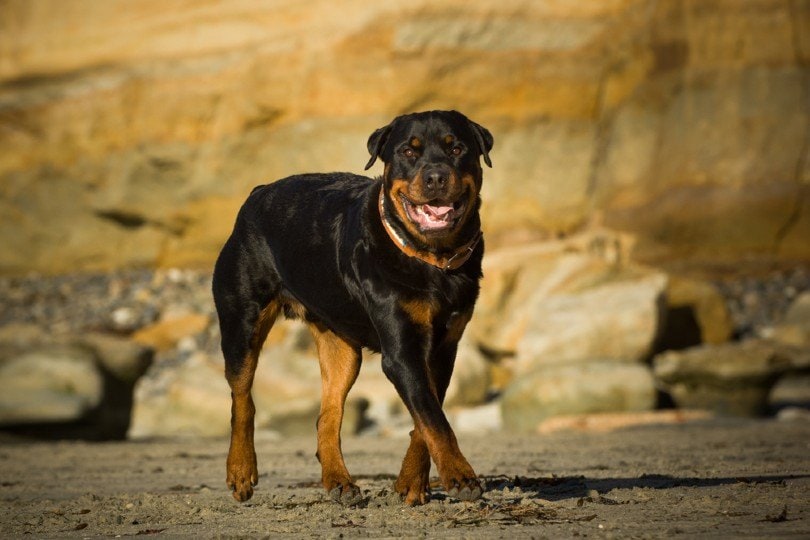
7. Rottweiler
Image Credit: everydoghasastory, Shutterstock
Height:
22 – 27 inches
Weight:
77 – 130 pounds
AKC Group:
Working
Rottweilers have a reputation to guard and protect, and they are fiercely loyal to their families. Long ago in Germany, they were bred to drive cattle and pull carts of meat for butchers. This independent breed needs some good training early on to be manageable. You will likely win over any Rottie with a treat in the form of food, which is a good way to train them, too.
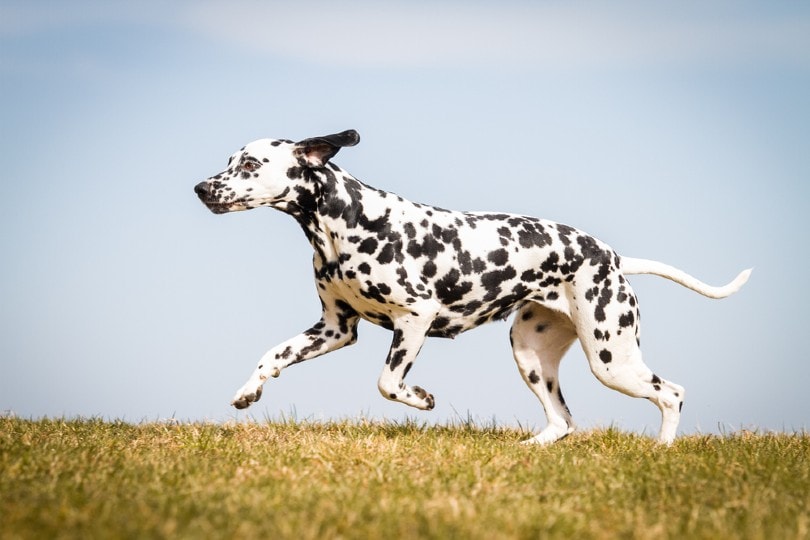
8. Dalmatian
Image Credit: Aneta Jungerova, Shutterstock
Height:
19 – 24 inches
Weight:
45 – 65 pounds
AKC Group:
Non-sporting
Dalmatians are known as fire station dogs for a reason. Before there were fire engines, Dalmatians were used to walk beside the horses drawing the carriage in order to calm them down. This breed is known for its high energy and requires lots of daily exercise to stay happy. Because of this, they might not be the best breed for apartment-dwellers or older folks.
9. Vizsla
Image Credit: martine552, Pixabay
Height:
21 – 24 inches
Weight:
44 – 60 pounds
AKC Group:
Sporting
With characteristics of a pointer and retriever, the Vizsla has striking similarities to the Weimaraner dog, besides it’s brown coat. Vizsla dogs are smaller and don’t require quite as much exercise, though they are quite agile and can run for a long time if they need to. They are graceful dogs with a beautiful coat that does not require much work to maintain.
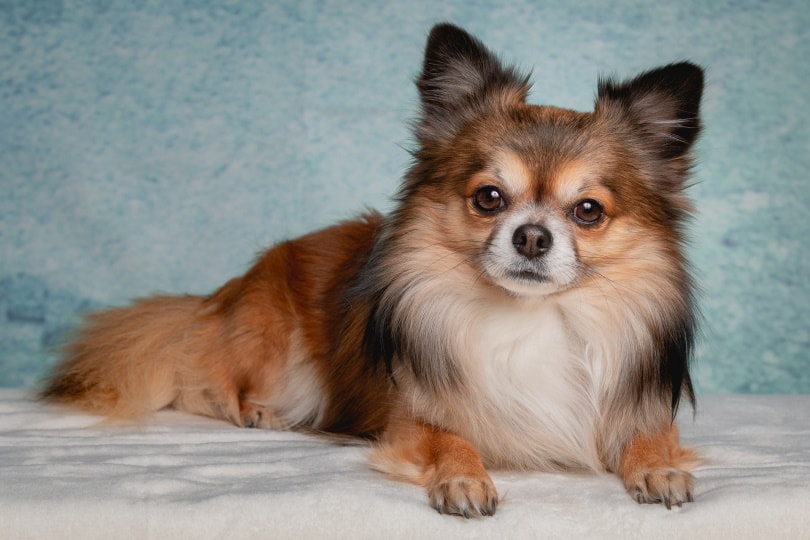
10. Chihuahua
Image Credit: HG-Fotografie, Pixabay
Height:
6 – 9 inches
Weight:
2 – 6 pounds
AKC Group:
Toy
Chihuahuas come in long or short coat varieties that can be many colors. Don’t let its size fool you, these tiny dogs surprisingly carry a lot of energy and a big dog personality. However, if you’re wanting to take fewer trips to the groomer and be able to carry your dog practically anywhere, a short-haired Chihuahua will be a perfect fit for you.
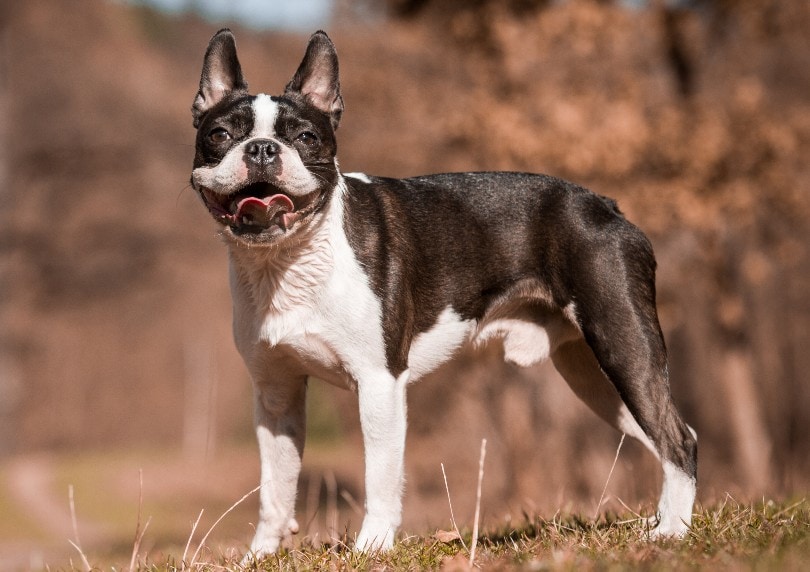
11. Boston Terrier
Image Credit: Aneta Jungerova, Shutterstock
Height:
15 – 17 inches
Weight:
15 – 25 pounds
AKC Group:
Non-sporting
Boston Terriers got the name “American Gentlemen” because of their tuxedo-like short coat that’s easy to care for. These dogs are full of character, keeping families playing and laughing for years. They have a good amount of energy that should be worked out with enough daily play time.
12. Mastiff
Image Credit: GoDog Photo, Shutterstock
Height:
28 – 30 inches
Weight:
120 – 230 pounds
AKC Group:
Working
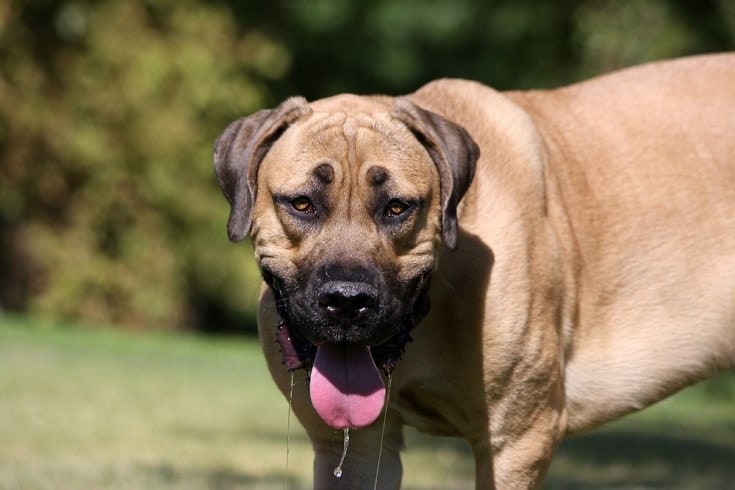
Though not as tall as Great Danes, Mastiffs rival them in weight and sheer mass. These dogs are protective but not aggressive, and they are quite loving towards their human family. They are fairly low-energy dogs that only need a few short walks a day to maintain their weight. Even though their coat is short, Mastiffs tend to shed a lot, and their excessive drooling combined with this makes them a bad dog for people with allergies.
13. German Shorthaired Pointer
Image Credit: Burry van den Brink, Shutterstock
Height:
21 – 25 inches
Weight:
45 – 70 pounds
AKC Group:
Sporting
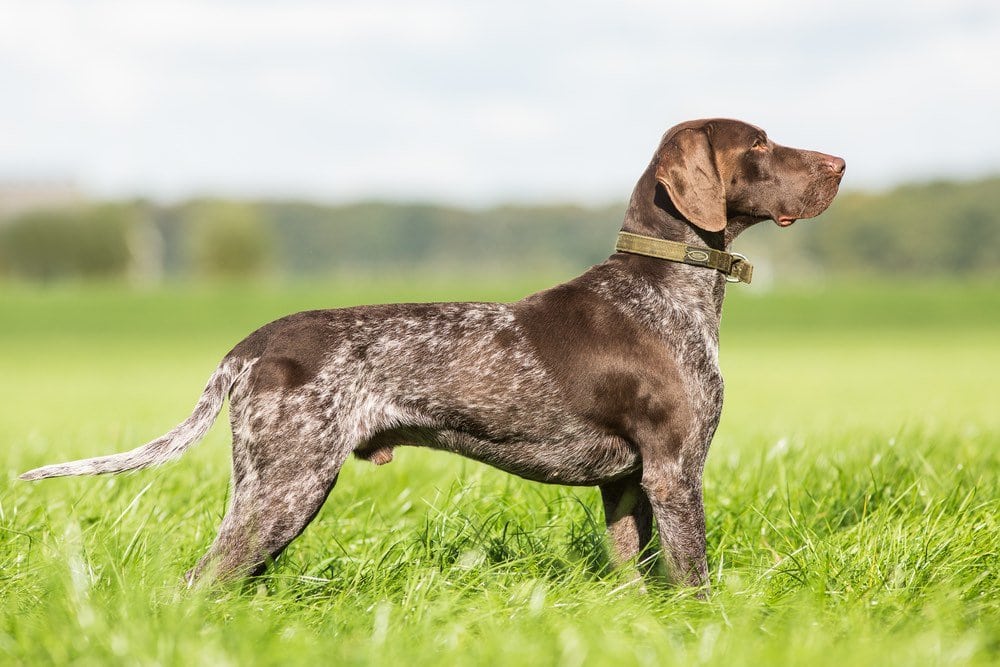
German Shorthairs are bird dogs through and through. Their high-energy needs require them to have lots of entertainment and running around outside, which could be perfect for a family with kids on a ranch or a farm. The best part is that their coats only need one brushing a week, and sometimes a bath when they (likely) swim in muddy waters.
14. Dachshund
Image Credit: NORRIE3699, Shutterstock
Height:
8 – 9 inches
Weight:
16 – 32 pounds
AKC Group:
Hound
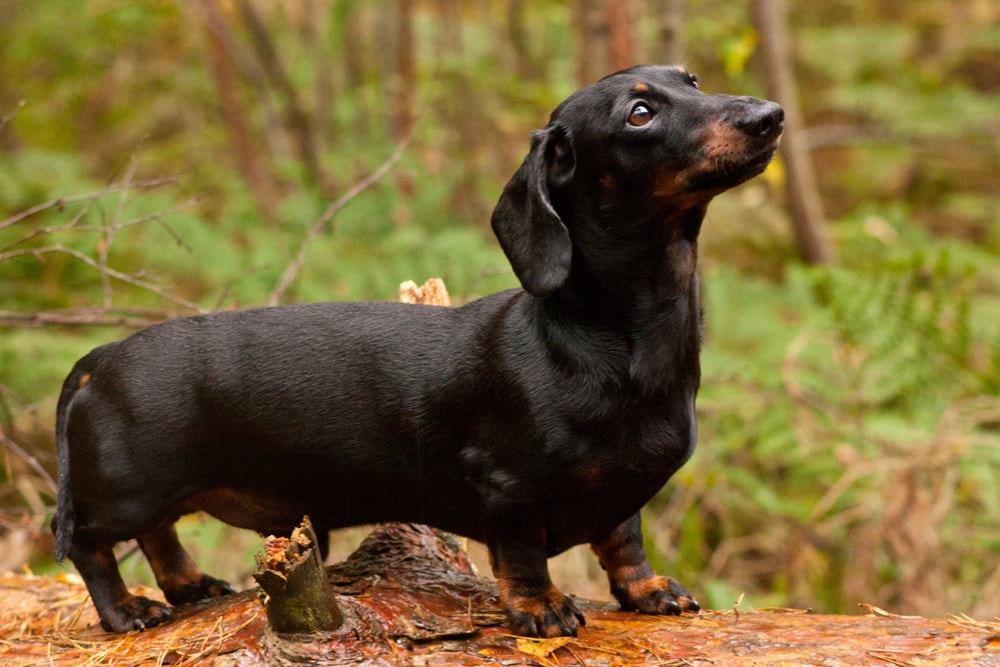
The Dachshund, like the Chihuahua, can be bred with varying coat types, including long-haired, short-haired, and wire-haired. As long as you get a short-haired breed, the coat maintenance will be minimal. Dachshunds (also called Doxies) commonly have skin problems, so they might need to be bathed more often than you’d think. Despite this, Doxies make great little watchdogs and will give you lots of love as long as you pay it forward with your attention.
15. Boxer
Image Credit: Pixel-Shot, Shutterstock
Height:
15 – 22 inches
Weight:
50 – 70 pounds
AKC Group:
Working
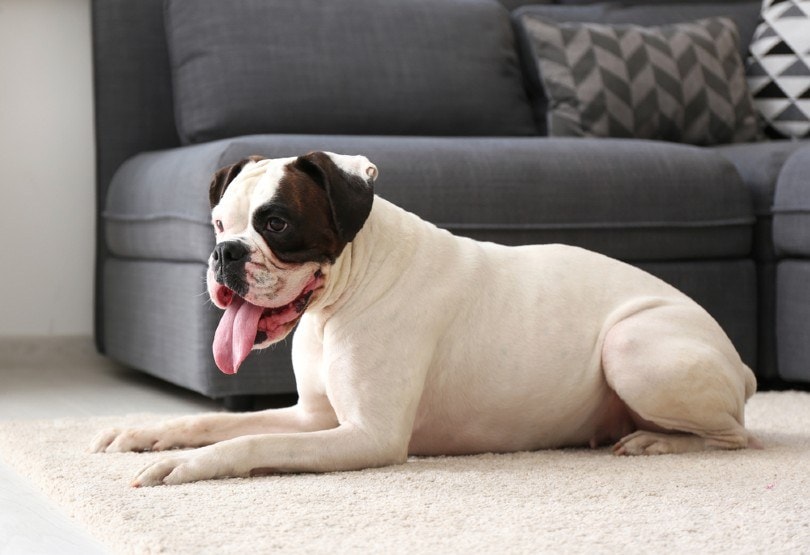
Boxers hail from Germany, dating back to the 1800s. Despite its fighter-style name, it’s quite friendly and cheerful. Boxers not only make great friends with their human family but also pet family members. Make sure you have enough time to give these pups the exercise they need, as they have pretty high energy levels.
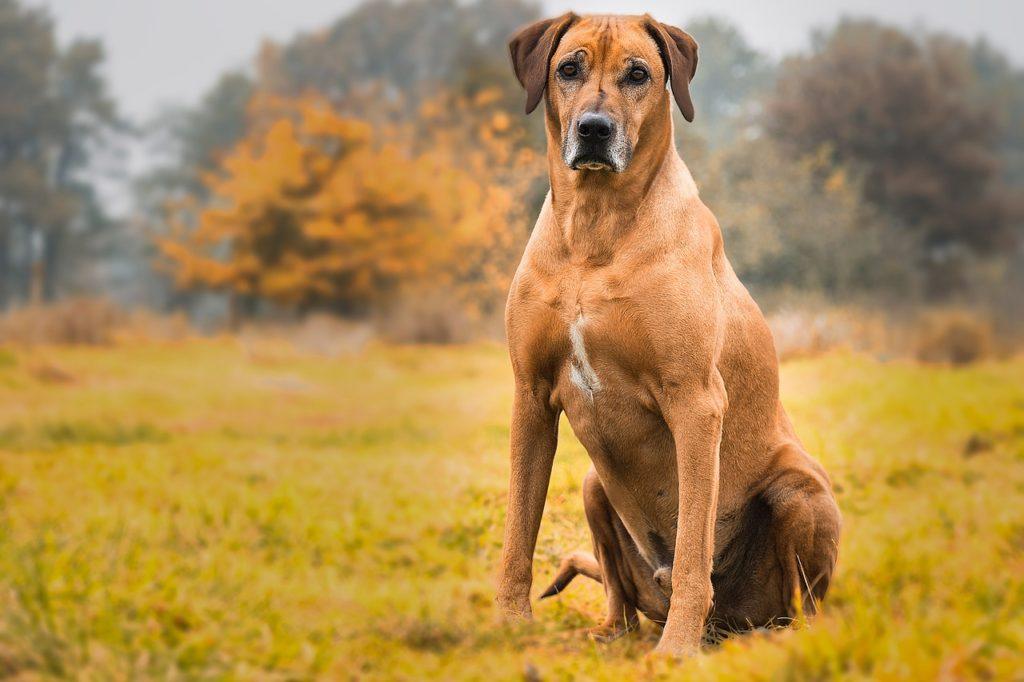
16. Rhodesian Ridgeback
Image Credit: Pixabay
Height:
24 – 27 inches
Weight:
70 – 85 pounds
AKC Group:
Hound
This dog gets its name from a strip of hair on their backs that grows in the opposite direction, causing a “ridge” in its back. The Rhodesian Ridgeback was originally bred in South Africa to hunt lions in the wild. This dog is much more suitable for an active individual or couple, as Ridgebacks need lots of time for running around outside and are strong-willed with strict training necessary.
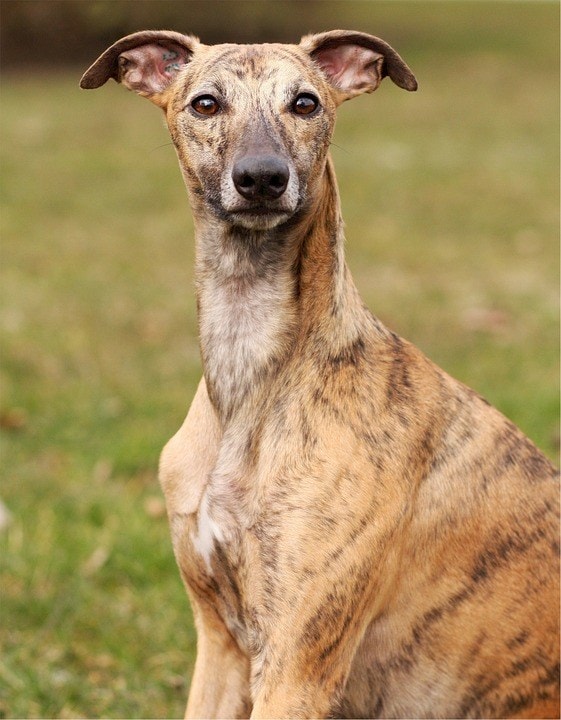
17. Whippet
Image Credit: Pixabay
Height:
18 – 22 inches
Weight:
18 – 48 pounds
AKC Group:
Hound
Whippets have been called the “poor man’s Greyhound,” and were used in the late 18th century and early 19th century as rabbit chasers and race dogs. They are a crossbreed between Italian Greyhounds and Greyhounds. This combination creates a gentle dog with low energy needs. Whippets would make a great apartment dog.
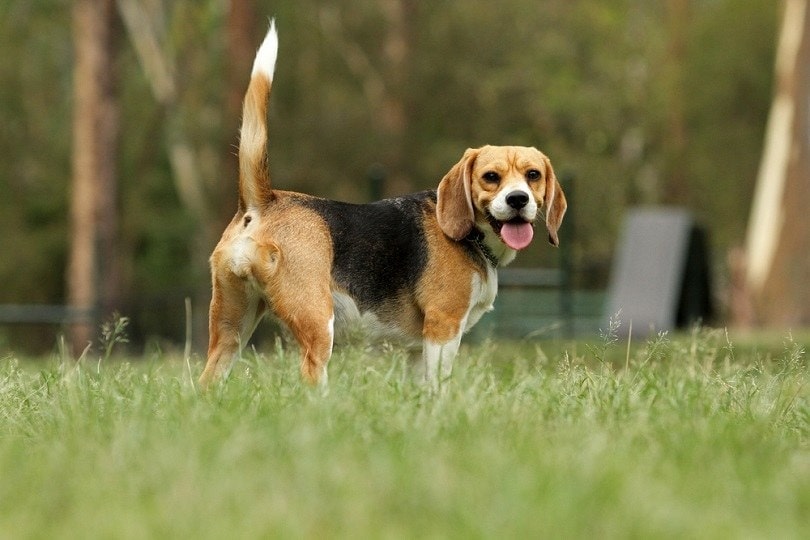
18. Beagle
Image Credit: Ross stevenson, Shutterstock
Height:
13 – 15 inches
Weight:
20 – 25 pounds
AKC Group:
Hound
Beagles are small/medium-sized scent hounds with a happy disposition and a moderate amount of energy. Their coats are water-resistant, which also means that they won’t get dusty too easily. Though they shed a moderate amount, brushing them regularly will keep their coats looking great. Beagles make great family dogs, just be aware that they could get stubborn on you.
19. French Bulldog
Image Credit: Lee Waranyu, Shutterstock
Height:
11 – 12 inches
Weight:
16 – 28 pounds
AKC Group:
Non-sporting
French Bulldogs, or Frenchies, are big-eared and joyful dogs. They are small dogs, but they are not dainty or fragile. It’s difficult to not smile when you see one. Frenchies are companion dogs, as they keep the mood around them light and happy. These dogs are playful, but they don’t need more than a short walk a day.
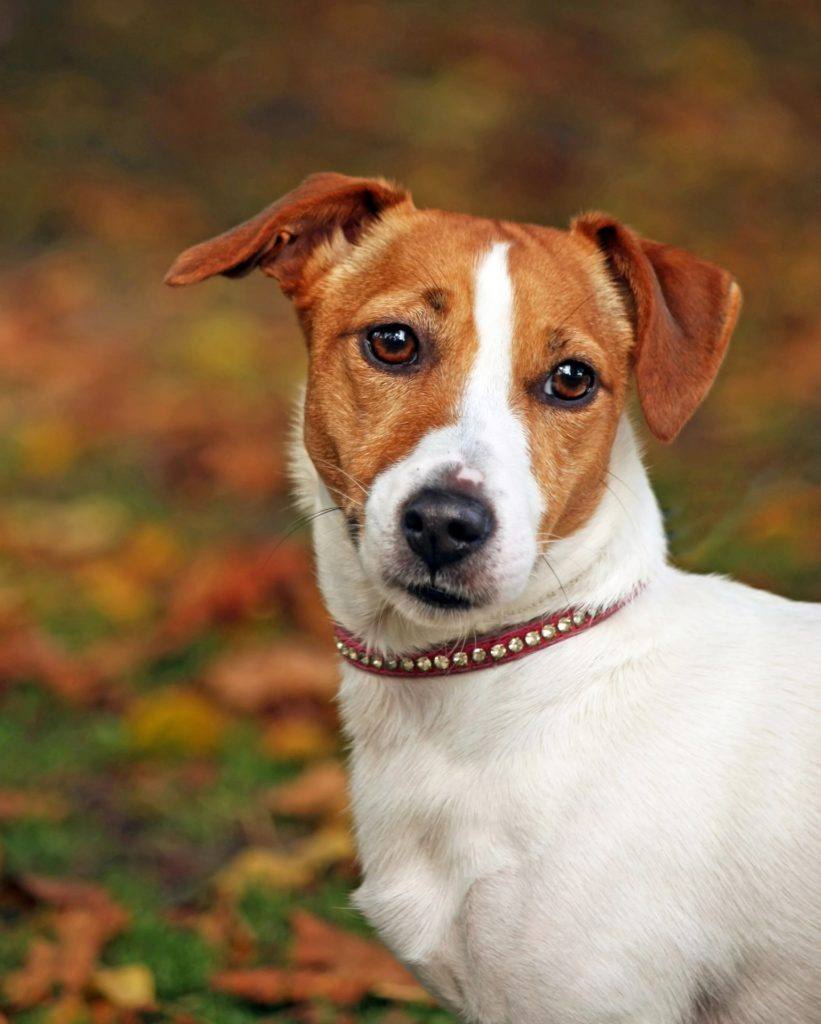
20. Jack Russell Terrier
Image Credit: Public Domain Pictures
Height:
10 – 12 inches
Weight:
14 – 18 pounds
AKC Group:
Terrier
The Jack Russell Terrier is a charming dog breed that once graced the TV as Wishbone in the mid ’90s. You would think that because of its acting reputation, that Jack Russell’s would be easy to train, but this is not the case. It’s best to get a Jack Russell with some dog-owning experience already under your belt. Regardless, these dogs are low maintenance when it comes to grooming, but need a lot of exercise and play time.
Final Thoughts
Dogs with shorter hair have fewer grooming needs than long-haired dogs, which makes them desirable for a certain population of wannabe dog owners. Be warned, though, this does not mean that they shed less and never need brushing! A good comb-through will keep your pup’s hair from getting everywhere and will give you a chance to examine their skin for problems like bumps, skin lesions, and parasites.
We give Popov Leather an overall rating of 4.7 out of 5 stars.
Quality: 5/5
Variety: 5/5
Aesthetic: 5/5
Fit: 4.7/5
Ease of Use: 4.7/5
Your pup deserves better than a nylon leash and collar, just saying. I know there have been so many improvements to the daily walking experience when I started upgrading my pup from the cheap traditional flat collars to something much nicer. Leather is one of the higher quality materials you can invest in, offering both a beautiful aesthetic and the durability that leather is well known for.
Traditional nylon collars tend to chafe skin and cause irritation on your pup, not to mention destroy the fur in that area. Leather collars (especially those lined correctly) are buttery smooth, provide a much more comfortable fit, and keep the fur beautiful underneath. Although leather collars require a little more TLC than nylon, they’re well worth it for your pup’s comfort.
Popov Leather is a leather specialty site offering collars and leashes for your four-legged best friend, and I find that their particular products are top-tier in the market (at a great price!).
At a Glance: What We Reviewed
About Popov Leather
Like many passionate businesses, Popov Leather started as a hobby before it became what it is now. In 2013, the company’s founder Ryan Popoff picked up a leatherworking kit and set a goal to create a leather wallet.
Today, Popov Leather is a thriving business comprising more than just Ryan Popoff and a few leathermaking kits. With many professional leather workers on the team, each piece feels like a beautiful custom-made product (because it is!). You can even watch videos on how they make each product on their social media channels.
The leather dog collars and leashes keep durability at the forefront of their product quality and design. The company promises that the leash will withstand diligent tugging for an excited pup and that you don’t need to worry about the collar snapping off.
Key Features
Popov Leather proudly stands out from the rest of the market, predominantly for their high-end, quality products.
Price
Considering you’re getting a beautiful premium leather combo. The collar (no matter the size) and leash cost $44 each, making a set run for $88.
This is a steal compared to other leather dog leashes and custom collars, which often run well over $100. I have one biothane collar that is $120, and that’s not even leather! It’s also nice that there is no price difference between a larger collar and a smaller one, as large dog owners often get the short end of the stick with this.
Popov Leather offers free shipping on orders over $75 and there is also a 90-day return policy. They even have a lifetime guarantee on all heritage leather products offered, which shows how confident Popov Leather is in their products.
Materials, Quality, and Durability
The quality of the collars and leashes is of the utmost top tier. Each piece feels handmade… and that’s because it is!
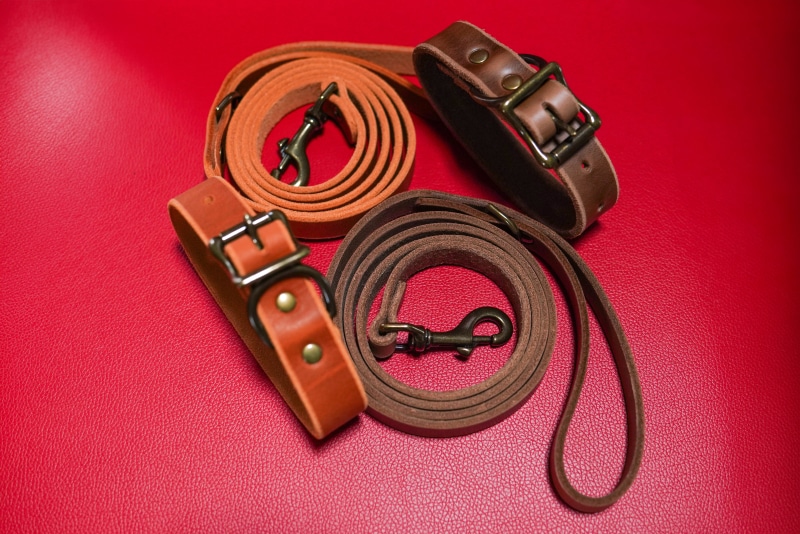
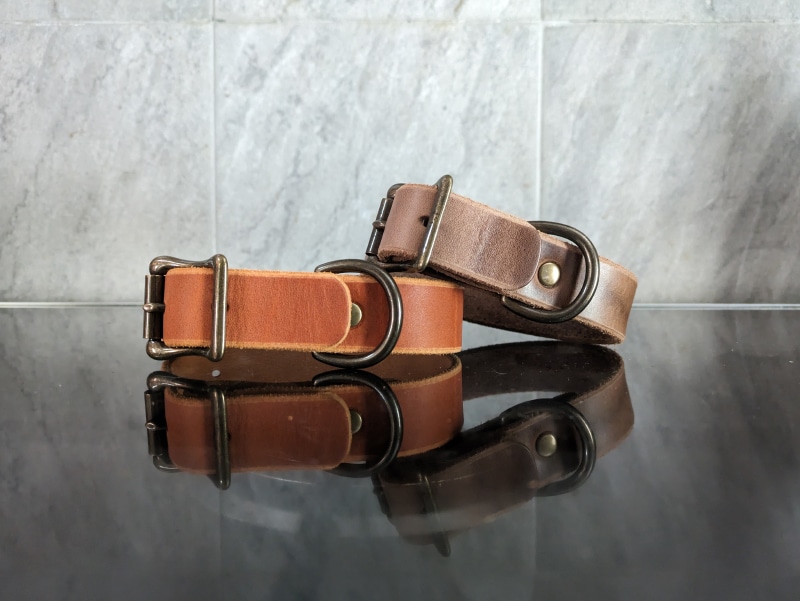
The leather is USA full-grain that will patina over time in a very beautiful way. The hardware is all brass with no nickel in it. The edges of the leather are not dyed, which helps prevent any of the dye from transferring when the collar or leash gets wet. The edges of the collar are beveled and burnished with beeswax, making it super soft and comfortable for your pup.
Leather is known for its ability to withstand many elements and only looks better with wear and age. The collar and leash will both be able to withstand water and the elements, with minimal maintenance required.
Variety
There are four colors to choose from for both the collars and leashes (as they can be a matching set):
English Tan
Heritage Brown
Natural
Black
Style
The collars and leashes are absolutely beautiful. The colors are stunning and rich, and I love the beautiful leather detail. The craftsmanship is top-notch!
Size
All of the collars range in size from 9” to 26”, able to fit on pretty much any dog out there!
All the leashes are 5 feet long, perfect for a comfortable stroll with your pup. Long enough to give your dog some freedom but short enough to always have full control.
Custom Engraving
Popov Leather offers the option of engraving the collar with your pup’s name and/or address! This is an extra $9 but looks beautiful.
Our Reviews of the Popov Leather Dog Collars & Leashes
In my package, I received two collars and their matching leashes in English Tan and Natural.
1. Dog Collar: English Tan & Natural
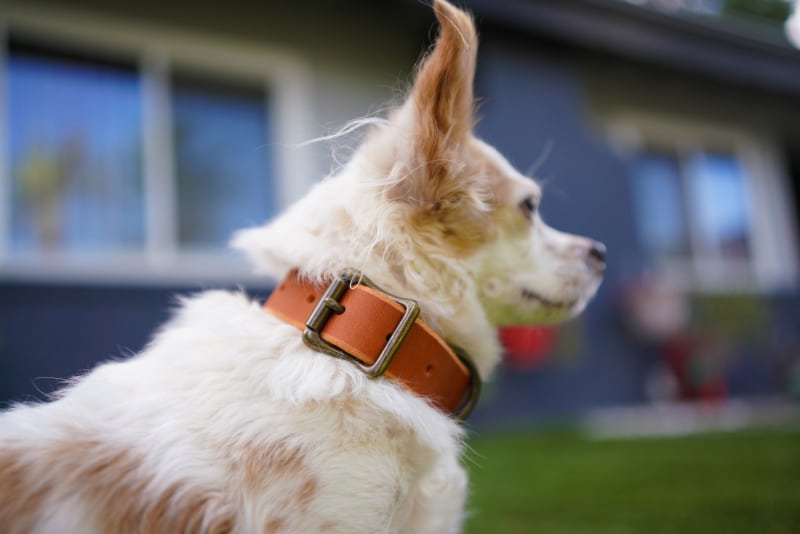
You can immediately feel how much of a premium product the Popov leather collar is, regardless of color. From the soft lining on the inside to the quality leather feel on the outside! The collar was able to withstand the rainstorm that swept across my city well, with no damage to it whatsoever.
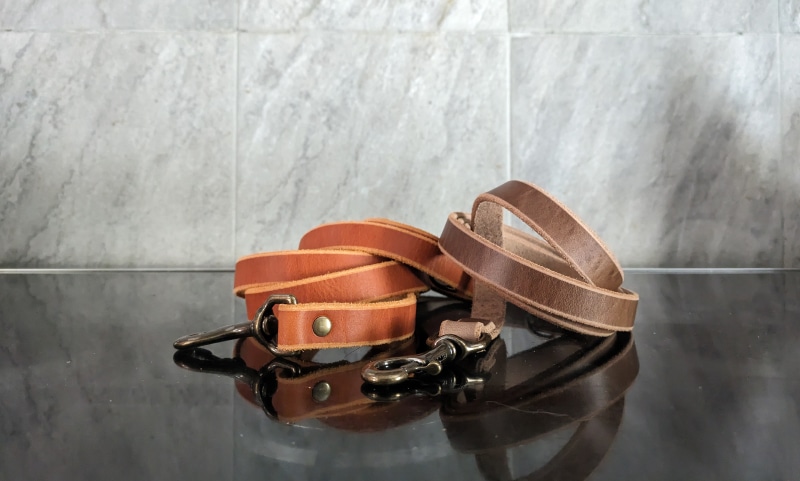
Both colors are absolutely stunning, with the English Tan offering a rich orange tone and the Natural akin to what leather would look like undyed. The bevel edges and craftsmanship make the collar a true beauty to look at, with the brass hardware getting a nice patina over time.
All of the collars range in size from 9” to 26”, so the flexibility in size helps all pups be able to enjoy this collar. With the collar arriving with a few holes under and over the size as well, the fit can be adjusted as the dog changes in size throughout its life.
Pros
Soft lining prevents fur matting and skin irritation
Lots of sizes to choose from
Can withstand water and rain
Perfect length at 5”
Great price
Custom engraving available
Cons
The Natural collar has more difficulty buckling and unbuckling than the English Tan. (I’m not sure if this is just a coincidence or if the material is treated differently)
May be too wide for smaller dogs
2. Dog Leash: English Tan & Natural
The leash colors matched their corresponding collars above perfectly and were equally as comfortable. Just like the other Popov Leather products, the leash felt buttery and perfect in hand, easy to use for hours and hours on end with no chafing or wear on the hand. The construction is very durable, without the feeling that the leather will rip on a hard-pulling pup. At 5’, the length is perfect for some casual walking.
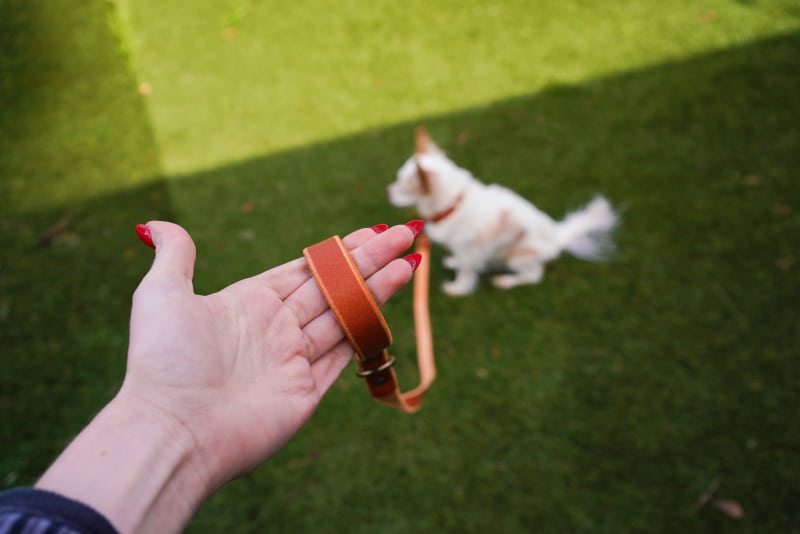
The leash was durable in the rainstorm as well, and it arguably got even more wet than the collar did! There was a moment when the leash was dropped in a puddle on accident and came out unscathed completely. The clasp is very strong but equally easy to use, and I often find myself matching it on other collars I own as well.
Much like the collars, beautiful craftsmanship – you can truly feel how much the company prides itself on the leather goods they make in-house.
Pros
Beautiful, rich colors
Durable and high-quality leather
High-end dust bag included
Comfortable to hold the loop
The clasp is very easy to use
Easy to maintain
Cons
Limited length option, only available in 5”
FAQ
Can you get the collar and leash wet?
Yes, you can! Both the collar and leash can handle rain, even pouring rain. After getting home, just wipe the collar and leash down and let it air dry. Don’t apply heat such as a blow dryer; just let it air dry.
How do you take care of the collar and leash?
Maintenance is very easy. Every once in a while, wash the leather with a damp cloth and allow it to air dry. Popov Leather has leather maintenance scrubs and balms for deeper cleaning needs.
What is the longevity of the collar and leash?
The beauty of leather is that it gets better over time! The collar is designed to remain durable for many, many years. If for any reason something happens, Popov Leather has a lifetime guarantee on all of their quality leather products. Do make note that leather can stretch over time, so do check the fit every once in a while.
Our Experience With Popov Leather
I admit, I am an avid dog collar collector. My pup Lorelei has a full shelf of custom collars, an addiction that started during the pandemic. I didn’t need to shop for myself as I wasn’t going anywhere, but I wanted my dog to be fancy! Needless to say, I was very excited to get my hands on some Popov Leather.
I was impressed before I even opened the package – the bag the collars and leashes were delivered in had such a cute design! What amazing attention to detail. First impressions are everything, and this hit the mark.
The package contained four dust bags containing the four products (two collars and two leashes). I loved the dust bags; they were also thick and durable, with a very subtle logo on the tag. Again, this thoughtfulness from the company ranks them with a big A+ from me. I can feel how much Popov Leather cares about what they do.
In terms of use, as someone who adopted a little dog, the fit is where I have a wee bit of a comment. Lorelei is a 10lb mixed breed (mostly papillon), so, definitely on the small side.
On the positive, the collar fits perfectly in length (she has an exactly 12” neck). There are enough holes to adjust for slightly larger than 12” and smaller than 12”, which allows for fluctuation as she may change in size as she progresses through life. I love this feature.
As for the downside, the collar in width is too thick for her neck, and I feel it would be too wide for any dog even smaller than her. She’s not used to collars that take up her entire neck, so this was something to work around. I am also lucky that she isn’t a dog that pulls, and she’s been trained to heel on a leash, but I can imagine a small dog that tugs wouldn’t be having a great time with this fit.
The buckle is also a bit heavy, which I understand because of its high-quality material and finish. But, again, something to consider if you have a very small dog.
Regarding using the collar, I had a little bit of trouble, which isn’t a dealbreaker for me, but I felt it needed to be mentioned for those with pups that may be more difficult. The leather and the lining make the buckle more difficult to use. It often gets stuck and is a tight squeeze. To be honest, I think this happens to all leather products and might take some time to wear down.
That being said, I have absolutely zero doubt that this collar would ever unbuckle itself or fall off, which is a huge bonus for Lorelei’s safety! I would prefer this over a buckle that is quick to put on but isn’t secure. It’s a huge confidence boost knowing that there is no way my dog can get this collar off on her own.
The leash was perfection – it felt soft and comfortable in my hand, and the length was my preferred 5 feet. It clips easily to the collar, and the matching set looks so fancy. I liked that the lining of the leash was the same as the collar, I can feel the same comfort my pup does.
As I mentioned in the intro, leather does have so many upsides to the usual nylon collars and leashes. Both my pup’s and my skin feel much better using the Popov Leather sets, and her fur is not matted, tangled, or rubbed off. This was always a big deal with Lorelei being a long-haired dog; I hated having to work out mats or damaged fur from using stereotypical collar products.
We had a bit of rain this weekend, and the collar and leash had no trouble with the inclement weather. Again, the awesome benefits of leather – it’s so durable. Yes, it requires a slight bit of extra maintenance, but it’s a few minutes out of your day occasionally – no biggie! The dust bag helps me keep the collar and leashes protected when not in use, and when we are out and about, a possible quick wipe-down is all we need. The collar and leash will look even better over time, as leather tends to age like a fine wine!
We have received many compliments on the Natural color and the English Tan, and I could not be more pleased.
Conclusion
All-in-all, if you’re looking for a high-end leather collar for your pup, Popov Leather is the way to go. You get a lot of bang for your buck on the quality, style, and attention to detail the company put in (such as the beautiful dust bag). You can feel how much Popov Leather cares with their detailed care sheet online and beautiful packaging!
Both the collar and leash feel great in my hand and certainly elevated our walking game for sure. The colors are equally as gorgeous; I could honestly stare at my set all day.
This leash and collar duo would be best for trained pups who don’t mind a bit of fumbling with the buckle here and there in the beginning. I am sure this will become a much easier process over time as the leather and interior fabric wear, but something to note.
When your favorite canine isn’t hyped up and ready to play, chances are good they’re sleeping. Sleep is a big part of a dog’s life; in fact, dogs sleep around 12 to 14 hours a day, if not more! (And that doesn’t even count the time they spend awake but lazing about.) But why do dogs sleep so much?
Your pup sleeps so much for several reasons, ranging from genetics to the world around them. All of these factors can affect how much (or little) your dog sleeps. Ready to find out what these reasons are? Keep reading for the six potential reasons dogs sleep so much!
The 6 Reasons That Dogs Sleep So Much
1. Age
Your dog’s age or life stage can greatly affect how much they sleep in a day. Due to differing energy needs, puppies and senior dogs require more sleep than adult canines.
Puppies are still growing and using tons of energy during play, so they expend a lot of energy each day. This means they need much more sleep than an adult dog who is no longer growing and plays less often. Puppies can actually sleep 20 hours a day during their first few months!
Senior canines tend to sleep more as well. They get tired more easily than they used to and have less energy. This makes them want to sleep more than adult dogs.
Image Credit: Tunde Gaspar, Shutterstock
2. Breed
Some dog breeds simply sleep more often. In general, large and small dog breeds tend to sleep more than medium-sized breeds. And if you have a working dog breed, they likely spend more time being active and hyper alert than a non-working dog breed, which can lead to them sleeping less often.
Every dog breed is different, and some are just hardwired to sleep more than others! Keep in mind that individual dogs within a breed are different too, so some may sleep more than others.
3. Nutrition
Dogs lacking proper nutrition and a balanced diet might be more tired than those that receive all the nutrients they need. Without a balanced diet, a pup may miss out on some of the nutrients that help provide energy, making them more tired than normal. Think about days when you eat nothing but junk food; you probably feel less awake and ready to seize the day than when you eat healthier, right? The same goes for dogs. So, be sure your canine pal is consuming dog food that provides all the nutrients they require for their specific breed and age.
Image Credit: Chendongshan, Shutterstock
4. Boredom
Napping might be the first thing you turn to when you’re lounging around the house, bored out of your mind. It can also be the first thing your pup turns to when bored. And dogs can get easily bored if they don’t have enough to physically and mentally stimulate them. Loneliness can factor in here, too; if you and your family are away from home for most of the day, leaving your pup alone, they’re probably lonely and bored because no one is around to play with them. Even leaving out toys for your dog while you’re away might not ward off the boredom entirely.
You can help prevent boredom by engaging your dog in play or taking them for a nice walk when you’re at home. If your pup is stuck home alone often because everyone is at work or school, consider investing in interactive dog toys or a dog walker. Both can help keep your pet entertained when no one is there.
5. Stress
Stress affects us all, canines included. Just a few things that can cause your pup to become stressed are loud noises, having to share eating space, losing a loved one, and changes to routine. Like us, stress can affect how much or little a dog sleeps, so it could be the reason behind a dog sleeping so much.
How can you tell if your dog is stressed over something? You’ll see certain signs, such as:
Hiding
Aggression
Pacing
Being clingy
Engaging in destructive behavior
If your dog is experiencing stress, you may be able to help them on your own if you can identify the source of the stress. However, you might also want to contact your vet.
6. Health Related Issues
Has your dog been ill recently or suffered an injury? Then, they could be sleeping a lot to aid in recovery. Bodies in recovery require more sleep to help the healing process, so a recently sick or injured pup may sleep more often while on the mend.
If your canine companion hasn’t been ill or injured, they might sleep so much because they’re becoming unwell. Many health issues can cause changes in sleeping patterns, including diabetes and kidney disease. So, if your dog is sleeping more than is normal or exhibiting signs of not feeling well, contact your vet.
Image Credit: RossHelen, Shutterstock
How Much Sleep Is Too Much Sleep?
Because the amount of sleep dogs need varies by canine, it can be difficult to determine how much sleep is too much. Generally, adult dogs won’t need to sleep more than 14 or 15 hours a day. However, some dog breeds might sleep more than that on a normal basis and be fine.
You know your dog and their sleeping patterns best, so you should have a pretty good idea of how often your pup sleeps. If you see them sleeping more than seems typical or are simply concerned, it’s best to contact your dog’s vet for a consultation.
Conclusion
Our canine pals sleep a lot! So, if your dog sleeps 12 to 14 hours a day, it’s probably normal. There are many reasons for dogs to sleep as much as they do, and most of the reasons aren’t something to be concerned about. However, if you see your pup sleeping more often than usual, they could be bored, stressed, or dealing with a health issue.
Keeping an eye on your dog’s habits, sleeping and otherwise, is wise, so you’ll have an easier time noticing when something might be off.
Dogs can suffer from yeast infections similar to humans. Dogs, regardless of their gender, breed, or age can develop a yeast infection at some point due to certain sensitivities, allergies, or a diet high in carbs or sugar. If your dog suffers from inflammation, irritation, or digestive issues, it may be more prone to yeast infections.
There are certain breeds that are more susceptible to this infection, such as German Shepherds, Shih Tzus, Cocker Spaniels, and Dachshunds. Diet plays a huge part in helping a dog that is suffering from a yeast infection.
If your dog has a yeast infection, it’s best to feed it a diet that is low in carbohydrates and sugar, and high in protein. Other ingredients including digestive prebiotics or probiotics, and omega fatty acids, can also be beneficial. It’s best to stay away from grain-heavy products, whether they are wet or dry meals.
Disclaimer: The foods reviewed here were chosen because they have certain characteristics that might help with some of the causes or consequences of this medical condition. However, they are not a medical treatment or a substitute for medical treatment. Keep in mind that each medical case is different and what works for some pets may not work for others. Your veterinarian is the right person to advise you on the best diet for your pet’s individual case.
A Quick Look at Our Favorites in 2024
The 10 Best Dog Foods for Yeast Infections
1. The Farmer’s Dog – Best Overall
The Farmer’s Dog earns the title of the best dog food for yeast infections. This high-quality subscription-based dog food service specializes in creating fresh, tailor-made meals for your canine companion that are conveniently delivered to your doorstep.
To find out which recipes are suitable to your pup and their needs, simply complete a profile detailing your dog’s age, weight, breed, activity level, and any allergies and sensitivities. You can also customize your delivery schedule and select from single-meat protein recipes consisting of chicken, beef, turkey, and pork. Each one is USDA-approved and includes a variety of wholesome ingredients and nutrients, suitable for all ages and breeds. The Farmer’s Dog is company that allows you to choose food that helps eliminate infections for dogs and provides the necessary nutrition to stay in top health.
The only drawback is that The Farmer’s Dog is not available in-store so you’ll need to manage your meal time and delivery schedule based on your dog’s needs to ensure you never run out of food.
Pros
All fresh ingredients
Gently prepared
Arrives frozen
Convenient delivery service
USDA approved
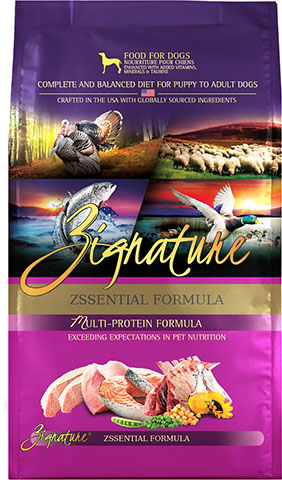
2. Zignature Zssential Multi-Protein Formula – Best Value
Main ingredients:
Turkey, Duck Meal, Salmon, Turkey Meal, Lamb Meal
Protein content:
32%
Zignature Zssential Multi-Protein Grain-Free dry food is the best dog food for yeast infections for the money. It’s a great formula that is nutritionally set up to support yeast infection issues in small and large dogs. This meal is grain-free and full of antioxidants and quality protein. It also has a healthy blend of vegetables and fruit that were specifically selected to help aid nutritional deficiencies and keep the sugar content low.
Low sugar content discourages the overgrowth of yeast and bad bacteria. The limited number of ingredients in this formula makes it a great option for solid nutrition with minimal stomach irritation. This meal also has amino acids to help aid in fast recovery and reduce inflammation. The only downside is that some users have mentioned some quality control issues with this food.
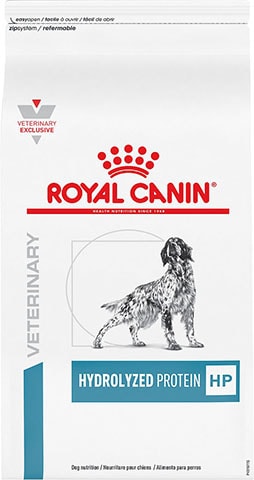
Royal Canin is one of the most highly recommended dog brands by veterinarians. They aim to provide top-quality dog food. This meal not only helps with yeast infections, but it provides a soothing combination of ingredients for dogs with sensitive degenerative systems.
The meal is hypoallergenic and is free from preservatives and other chemicals that may cause stomach upset or irritation. It’s made to effectively reduce skin irritation and GI issues. It also includes a list of prebiotics and fiber to help support regularity. So, if your dog is suffering from sensitivities due to yeast infection or allergies, this meal may be ideal for a fast recovery. The downside is that this food is expensive and there aren’t many flavor options available if your dog is a picky eater.
Pros
Hypoallergenic-free of preservatives
Has prebiotics and fiber
Aids in fast recovery
Cons
Is expensive
Few flavor options
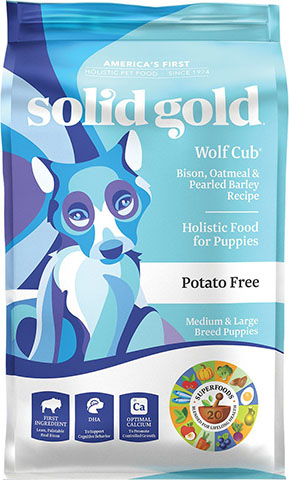
4. Solid Gold Wolf Cub Puppy Food – Best for Puppies
Main ingredients:
Bison, Ocean Fish Meal, Oatmeal, Brown Rice, Peas
Protein content:
26%
This food is specially formulated for small puppies, as they are more prone to stomach sensitivities than their adult companions. These meals are made with holistic recipes and contain all-natural ingredients. They are also potato-free and the main ingredient is protein-packed bison.
These meals also contain omega fatty acids to help support healthy skin and coat. Solid Gold Wolf Cub Potato-Free Puppy food does have whole-grain carbohydrates but contains way more protein. It also has vegetables to provide much-needed vitamins and antioxidants. The downside is that this food is not completely grain-free, and while a grain-free diet isn’t necessary for all dogs, some dogs can benefit from it. Talk to your vet first about whether your puppy needs a grain-free diet.
Pros
Holistic meals
Potato and starch free
Contains no fillers
High-quality fruits and grains
Cons
Not completely grain-free
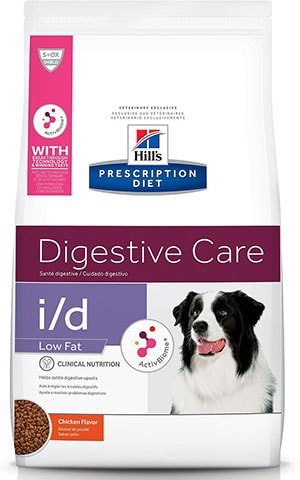
5. Hill’s Prescription Diet Digestive Care Dog Food
Hill’s Prescription Diet Digestive Care dry food is formulated to provide your dog with an easily digestible protein source and a low-carb meal option. This meal is especially helpful for dogs suffering from yeast infections as well as digestive issues. It also contains ActivBiome+ technology which is shown to activate beneficial gut bacteria and provide a healthier microbiome balance.
The formula is full of prebiotics, which are useful for improving gastrointestinal health and promoting regularity in dogs. And it doesn’t stop there, because this meal also has omega fatty acids and ginger for easy digestion and complete anti-inflammatory benefits. The downside is that this food is a bit expensive and there are few flavor options for picky dogs.
Pros
Has anti-inflammatory properties
Promotes regularity
Contains healthy good bacteria
Cons
On the pricey side
Few flavor options
6. Nulo Freestyle Grain-Free Dry Dog Food – Best Overall
Nulo Freestyle Limited dry food is the overall best dog food for yeast infections because it includes a variety of proprietary supplements that help to provide a chest of health benefits and strengthen your dog’s gut flora. Strong gut flora means a healthier immunity system. This dog food is low in carbohydrates, which is essential for dogs suffering from yeast infections. Also, it contains no tapioca, corn, eggs, wheat, tapioca, or artificial preservatives or flavors.
It’s a powerhouse source of protein and contains deboned salmon as well as salmon meal. It’s also full of healthy anti-inflammatory omega 3 and 6 fatty acids to give your dog more sources to help repair irritated and itchy skin. The downside is that it is more expensive, and the kibble sizes are large, so it may not be suitable for small dogs. Overall, this dog food can help your dog stay energized and prevent exacerbating yeast infection symptoms.
This dry food by Blue Buffalo is for adult dogs and is a gluten and grain-free dry meal option. It can help dogs with a yeast infection by providing them with a nice blend of vitamins, antioxidants, and minerals to aid in faster recovery. It also contains omega-3 and omega-6 fatty acids which are known to provide anti-inflammatory properties.
Overall, this meal is worth considering if you’re looking to provide your dog with a meal that can support its immune system. It helps to promote a healthy oxidative balance and is commonly used to treat dogs with ear infections. Though it does have carbohydrates, it has enough protein to balance it out and slow down their digestion. It’s also a bit on the expensive side, especially if you have a large dog.
Pros
Grain-free
Has Omega fatty acids
Contains antioxidants and vitamins
Cons
Can be expensive
Has carbohydrates
8. Wysong Canine Dry Food
Main ingredients:
Chicken Meal, Organic Chicken, Meat Protein Isolate, Chicken Fat
Protein content:
63%
This dry food meal can help to minimize the effects and issues commonly caused by yeast infections. Not only is it low in carbs, but it has a considerable amount of protein and fat, making it especially satiating. All the ingredients are made for easy digestion and the lean protein is sourced from high-quality chicken.
This specific recipe also contains a good mix of probiotics to aid in improving your dog’s immunity system. Lastly, Wysong Epigen’s dry food also has prebiotic fiber to help your dog easily break down the food to minimize stomach and gut irritation. It does have preservatives in it, so this may not be the choice for you if you’re looking for all-natural dog food. There are also few flavors available.
Pros
Aids in inflammation reduction
High in protein and fat
Low in carbs
Contains probiotics and prebiotics
Cons
A few preservatives
Few flavor options
9. Farmina N&D Ancestral Grain Mini Breed Dry Dog Food
This dry food recipe by Farmina is full of nutrients and based on a low-carbohydrate, protein-optimized recipe. It’s formulated to help dogs with skin conditions such as yeast issues, allergies, and food sensitivities.
This meal comes in low on the glycemic index, which makes the dog’s body a hostile environment for yeast. This diet contains no GMO foods. To promote skin and coat health, it’s full of omega 3 and 6 fatty acids, which can help to calm an irritated stomach and GI tract.
Farmina is a recipe specifically created to treat the digestive problems of dogs with yeast problems. It’s a great food option for owners looking for the best dog food that will support yeast infections and dogs with sensitive stomachs. Like other options, this food is a bit pricey. It also isn’t grain-free if your dog needs a grain-free diet.
Pros
Low-carb meal
Good for all breeds
Has several flavors
Cons
Meals are pricey
Isn’t grain-free
10. TruDog Raw Freeze-Dried Dog Food
Main ingredients:
Beef, Beef Tripe, Beef Lung, Ground Beef, Bone Beef, Liver
Protein content:
41%
TruDog Feed Me Crunchy Munchy can also help dogs who are suffering from yeast infections. This formula has a limited amount of ingredients, is high in quality red meat, and contains premium cuts of organic beef and bone.
This recipe also has herring oil added to its formula to support healthy skin and coats. You’ll be happy to find that this formula doesn’t contain gluten, wheat, corn, or soy. It’s also completely free of fillers, artificial colors, and antibiotics.
Hypoallergenic dogs will certainly appreciate this easily digestible freeze-dried dog food. So, if your dog has skin sensitivity or allergies related to yeast infections, this may be a good option to consider. This meal is high in protein, which may not be great for dogs with certain medical conditions, although most dogs will benefit from it. It’s also on the expensive side.
Any dog that is well taken care of is expensive. These expenses come in the form of food, toys, beds, vet bills, and so on. However, some dog breeds are incredibly pricey to acquire due to their rarity, purity, or abilities. So, which are they?
Keep reading for the list of the top 20 most expensive dog breeds in the world.
The 20 Most Expensive Dog Breeds in the World
1. Tibetan Mastiff – $2,000 to Millions!
Image Credit: Tatyana Kuznetsova, Shutterstock
Native to China and Nepal, the Tibetan Mastiff is an ancient breed that was developed to guard flocks and households against wolves and leopards. Tibetan Mastiffs are also among the largest dog breeds in the world, with males weighing up to 160 pounds.
But what is most striking about them is the fur around their necks and shoulders, giving the impression of a mane.
Thanks to the Tibetan Mastiff’s regal look and ferocious reputation, it is considered a status symbol in China. As a result, prices for a purebred Tibetan Mastiff pup range from $2,000 to millions. Yes, millions! In 2014, a Chinese businessman parted with $1.95 million for a Tibetan Mastiff puppy, making the Tibetan Mastiff the most expensive dog in the world.
2. Czechoslovakian Wolfdog – $50,000
Image Credit: Joachim Bartoll, Shutterstock
The Czechoslovakian Wolfdog is Czechoslovakia’s national dog. However, it is incredibly rare, explaining why it is so expensive.
The Czechoslovakian Wolfdog came about in 1955 when working line German Shepherds were crossed with Carpathian wolves. The aim was to create a breed with the intelligence of the German Shepherd and the pack mentality and stamina of wolves.
The price of a Czechoslovakian Wolfdog is around $50,000. Moreover, you might have to go to Czechoslovakia to acquire this breed, as it is not easy to find elsewhere.
3. Samoyed – $14,000
Image Credit: Evgeniia Shikhaleeva, Shutterstock
The beautiful Samoyed is an ancient breed from Siberia. It is named after the Samoyedic people who bred it to assist them in pulling sleds and guarding reindeer. This fluffy white dog is not only expensive to maintain, but also to acquire. A purebred Samoyed pup costs around $14,000.
4. Lowchen – $12,000
Image Credit: chili71, Pixabay
The Lowchen, also known as the “little lion dog,” has been one of the most popular toy dogs in Europe for over 500 years.
However, the Lowchen was on the verge of extinction during the early 1970s, when there were only 65 left in the world. As a result, it became the world’s rarest dog breed.
While conservation efforts allowed this doggo to make a comeback, it remains incredibly rare. Therefore, it does not come as a surprise that a Lowchen pup can cost as much as $12,000 to acquire. Fortunately, this breed gives you one of the best bangs for your buck, as it rarely gets sick and has an average lifespan of 15 years.
5. Chow Chow – $11,000
Image Credit: VKarlov, Shutterstock
Native to China, the Chow Chow is one of the oldest and rarest dogs in the world. A Chow Chow pup costs around $11,000. However, the purchase price is just the tip of the iceberg, as this dog is just as expensive to maintain.
The Chow Chow is susceptible to a host of health issues, such as hip and elbow dysplasia, improper thyroid function, and eye entropion, meaning the vet bills might add up.
It also does not help that the Chow Chow is a notoriously stubborn breed, meaning they are hard to train. Moreover, these dogs have been known to turn on their owners. Nonetheless, under the leadership of an experienced handler, Chow Chows make excellent pets and guard dogs.
6. Azawakh – $9,500
Image Credit: otsphoto, Shutterstock
The Azawakh is a sighthound, meaning it uses sight instead of scent to hunt. Like other sighthounds, this doggo is tremendously fast. It features a slim profile with a colossal chest and a tiny waist. This West African hound can cost up to $9,500 due to how rare it is.
The Azawakh has a lifespan of around 10-12 years.
7. Rottweiler – $9,000
Image Credit: Ricantimages, Shutterstock
You might probably be wondering how the Rottweiler is on this list, considering how common they are—however, pedigree matters. Most Rottweilers you see around are mutts. A purebred Rottweiler from an authentic German breeder can cost up to $9,000.
8. Canadian Eskimo – $8,750
Image Credit: Scalia Media, Shutterstock
The Canadian Eskimo is among the oldest and rarest dog breeds in the world. The Thule people introduced this working dog to North America around 1,000 years ago from Siberia. Unfortunately, diseases and a reduced need for sleds contributed heavily to the drastic decrease of the Canadian Eskimo’s numbers.
Today, estimates show there are only around 300 purebred Canadian Eskimo Dogs left. As such, it does not come as a surprise that a purebred Canadian Eskimo pup can set you back around $8,750.
9. Dogo Argentino – $8,000
Image Credit: thereseb87, Pixabay
The Dogo Argentino, also known as the Argentinian Mastiff, is a large, white, ferocious dog bred to hunt big game such as wild boar and mountain lions. Unfortunately, they are considered one of the world’s most dangerous breeds due to their fiery reputations and are banned in several countries. Consequently, their rarity makes them costly, with a pup costing as much as $8,000.
10. Pharaoh Hound – $7,500
Image Credit: Julia Suhareva,Shutterstock
Despite its name, the Pharaoh Hound is not an Egyptian breed anymore. It bears a striking resemblance to the paintings of dogs found in tombs in Ancient Egypt, because it was first created in Ancient Egypt, but was imported to Malta where it thrived.
Now, the Pharaoh Hound is considered a Maltese breed. In fact, it is the national dog of Malta. This breed is called Kelb tal-Fenek in Malta, meaning “rabbit dog” due to its proficiency in hunting rabbits. This gorgeous hound can set you back around $7,500.
11. Afghan Hound – $7,000
Image Credit: Anna Goroshnikova, Shutterstock
With thick, silky smooth hair covering every inch of its body apart from the face, and a ring curl tail, the Afghan hound is an absolute beauty. This medium-sized sighthound combines panoramic vision and explosive speed to spot and chase down prey. The thick, silky coat was selectively bred to allow the dog to withstand the cold, harsh conditions of Afghanistan’s mountains.
Like other sighthounds, Afghan hounds are somewhat aloof but extremely devoted to their handlers. This animal can cost as much as $7,000.
12. Akita – $6,500
Image Credit: uadrienn, Pixabay
The gorgeous Akita is the embodiment of “speaking quietly but carrying a big stick.” This large and powerful dog is noble in character but can be explosive and violent when need be. Akitas also tend to be extremely strong-willed. As a result, this dog needs you to be a firm and consistent leader, otherwise, it will walk all over you.
The French Bulldog is another pup that commands a hefty price tag due to its exclusivity. French Bulldogs are also notoriously difficult to breed due to their narrow hips, producing a maximum of only three puppies per litter. One of these dogs can set you back around $6,000.
14. Saluki – $5,500
Image Credit: Pixabay
The Saluki is yet another expensive sighthound. According to some sources, the Saluki’s ancestry goes as far back as 7000 B.C. in ancient Egypt, where it is considered a “gift from Allah.” As such, this hound is both one of the oldest and priciest breeds in the world. A pup costs around $5,500. Fortunately, Salukis have a decent lifespan, living up to 14 years. They are also quite hardy.
15. Portuguese Water Dog – $5,000
Image Credit: susan lipschutz, Pixabay
The Portuguese Water Dog is among the most popular dog breeds today due to its hypoallergenic coat. Combine that with the fact that it is popular with the elite, such as former President Barack Obama, and it does not come as a surprise this is one expensive dog. Fortunately, they have long lifespans, giving you a good return on investment (ROI) on your $5,000.
16. English Bulldog – $4,300
Image Credit: Black17BG, Pixabay
The English Bulldog, also known as the British Bulldog, is a medium-sized dog that is extremely popular worldwide, as it does not require much exercise, making it the ideal apartment dog. Unfortunately, this breed is prone to several health issues. To be on the safe side, obtain your pup from a reputable breeder. A genuine English Bulldog pup can set you back around $4,300.
17. Bedlington Terrier – $4,000
Image Credit: No-longer-here, Pixabay
This fluffy munchkin is named after its hometown of Bedlington, Northumberland, where it was bred to hunt rats and other vermin. However, it is now bred for companionship and show purposes. Bedlington Terriers make excellent family dogs, thanks to their sweet nature. If you have $4,000 to spare, consider getting one of these canines.
18. Irish Wolfhound – $3,000
Image Credit: DragoNika, Shutterstock
The Irish Wolfhound is one of the tallest dogs in the world, standing up to 35 inches at the shoulder, and can weigh up to 180 pounds. Irish Wolfhounds were bred centuries ago to be all-around fighters, dragging men off horses and chariots during wars, in addition to hunting and fighting large game such as bears and wolves.
Today, this prehistoric-looking beast makes a beautiful companion. Considering its heritage, we think the $3,000 price tag for an Irish Wolfhound pup is a bargain.
19. Lakeland Terriers – $2,000
Image Credit: eventsfb, Pixabay
Originating from England’s Lake District, the Lakeland Terrier is becoming increasingly popular due to its hypoallergenic coat. This goofy munchkin makes a fun addition to any family. A pup costs around $2,000.
20. Saint Bernard – $1,500
Image Credit: Bernell MacDonald, Pixabay
How about this lazy giant? Despite the Saint Bernard’s languid tendencies, it was bred to be a working dog to rescue lost travelers along the snowy and dangerous Great St. Bernard Pass between Italy and Switzerland.
Today, this giant canine is content watching over the kids and being a great couch companion. A pup costs around $1,500.
Final Thoughts
There is no denying that a dog is man’s best friend. These animals are selfless and will go to any lengths to make their owners happy. But would you be willing to part with thousands of dollars to acquire a furry best friend? Let us know.