You’ve heard the old saying — to calculate your dog’s age in human years you multiply his age by seven. A more modern idea accounts for breed size, where small and medium-sized breeds are thought to age at a slower rate than large and giant breed dogs.
All mammals progress through the life stages of embryonic development, birth, infancy, youth, adolescence, adult and senior, but not at the same rates. The new math for determining how old a dog is in human years changes our perception of just how old our dogs are.
The latest research on converting dog years to human years
In a study published by Cell Systems, researchers from the University of California San Diego School of Medicine, along with leading veterinarians, formulated a new way for determining age in dogs that, pending further research, works for multiple dog breeds.
Here’s the theory: Nuclear DNA stays the same over time, while epigenetic modifications enable cells to act differently depending on what tissue and organs they are a part of, or what stage of life the organism is in.
Methyl groups, or small molecules made of one carbon and three hydrogen atoms, attach themselves to segments of nuclear DNA to start or stop DNA activity without changing the structure. They turn them “off” or “on” to change the gene’s actions. By tracking molecular changes, scientists can determine the age of genomes by translating an individual’s methylome to an accurate estimate of age.
Do humans and dogs age in the same way?
Dogs offered a unique opportunity to the researchers. Dogs share many aspects of human life, including factors that contribute to aging, such as diet, environment and chemical exposure. Physiologically, dogs age in much the same way as humans, although quicker. The study used Labradors and compared their methylation changes to humans. It showed a nonlinear relationship that translates dog-to-human years and matches major physiological events between the two species. The predictability of these changes mapped epigenetic clocks that calculated age accurately and shaped the formula.
How do I figure out how old my dog is in human years?
The research shows that a 1-year-old dog is comparable to a 30-year-old person, while a 4-year-old dog is similar to a 52-year-old human. When a dog reaches 7 years old, his aging process slows.
To calculate the specific age of your dog, start with the natural logarithm (ln) of the dog’s age, multiply by 16 and add 31:
Human Age = 16(ln of Dog Age) + 31.
A natural logarithm is defined as the amount of time it takes “e” units of growth, where e equals the amount of growth after one unit of time. This shows mathematically growth in babies to adolescence is quick and tapers off to a slower rate in the adult and senior years.
For example, an 8-week-old puppy is approximately 0.15 years old (8 weeks divided by 52 weeks in a year). Take the natural logarithm of 0.15, which is -1.897, and multiply by 16 to get -30.35. Add 31 and your puppy is approximately 0.65 human years old. Multiply 0.65 by 52 weeks to get 33.8 weeks, or 8.45 months. This associates the puppy with an 8-and-a-half-month-old baby, corresponding to the infant stage of development.
Improving your dog’s life expectancy
Although other dog breeds need to be researched to confirm these results apply to all dogs aside from Labradors, this study does shed light on how dogs age, which could improve their lifespan overtime based on decisions we make. Knowing how old your dog is in human years is just one part of providing the best care for your dog.
Like many of our Dogster readers, you may have ventured into at-home grooming during the pandemic, but if you’re a Goldendoodle pet parent, it’s worth putting professional grooming back on your to-do list.
Goldendoodles are very high on the list of breeds that need professional grooming regularly, plus weekly brushing at home, says Jay Spainhour, owner of Chicago’s Tucker Pups Pet Resort.
This is because the Goldendoodle is typically low-shedding — a trait she picks up from her Poodle parent — which means the hair will continue to grow and get matted if not brushed and trimmed regularly. There’s also the influence of the Retriever’s thick coat, which, depending on whether your Goldendoodle has more dominant Poodle or Golden Retriever genes, can alter the texture and grooming style of the dog.
Jay gave Dogster tips on keeping the mats out of a Goldendoodle’s coat, keeping grooming costs down and where to find Goldendoodle grooming inspiration.
Is there a standard for Goldendoodle grooming styles?
No, there’s no standard because the Goldendoodle isn’t an official AKC breed. However, there are common styles that groomers continuously get requests for.
The most popular Goldendoodle grooming styles are:
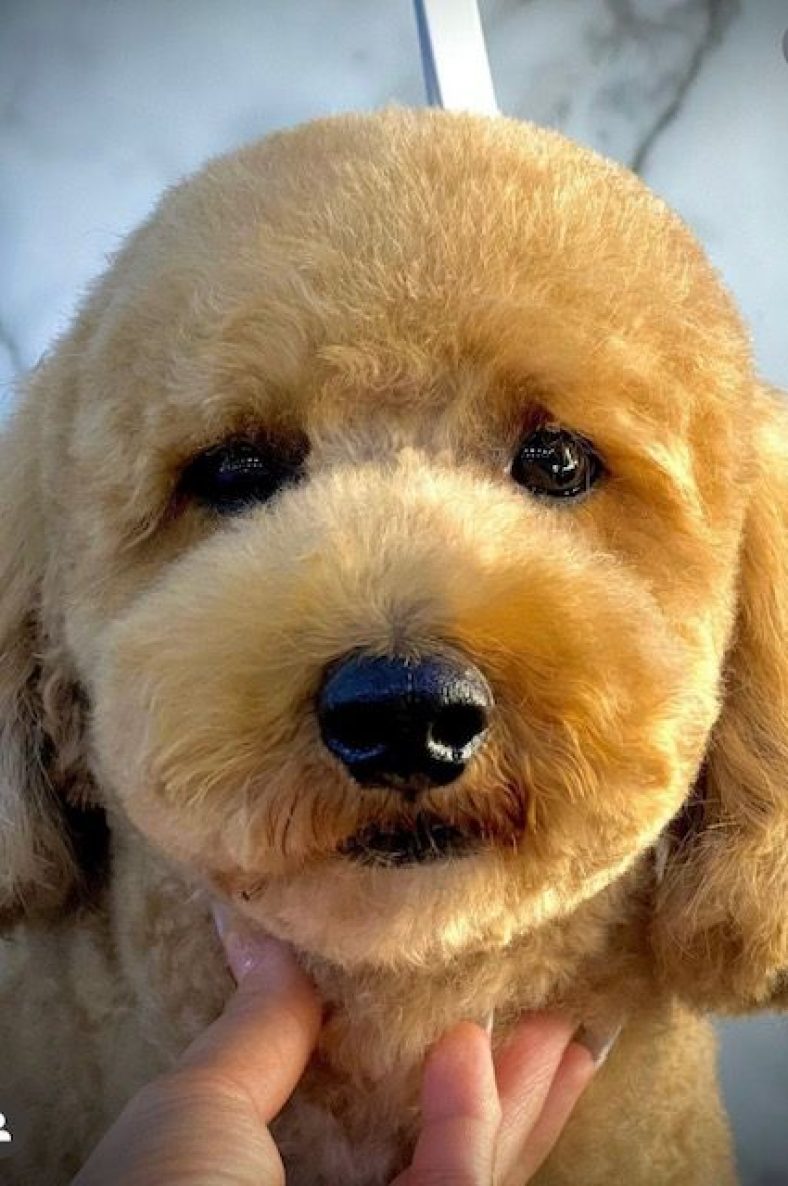
Teddy bear cut: The fur on the dog’s body is trimmed a universal length, typically anywhere from a half inch to 2 inches, while the fur on the head is kept a little longer. The face remains soft and rounded.
Lamb cut: Similar to a teddy bear cut, but the fur on the legs is kept longer than the fur on the body. This is a more balanced look and avoids the possibility of the legs looking too skinny, explains Jay.
The Poodle cut: There’s a wide range of poodle cuts, but typically this involves shaving the face and feet bare and leaving a full top knot on top of the head. This cut only works on Goldendoodles who have more dominant poodle genes and therefore, a curlier coat, than Golden Retriever genes.
The Kennel cut: Also known as the Retriever cut, the coat is cut one length, typically less than an inch, all over the body, including the ears. This cut is ideal if the Goldendoodle participates in lots of outdoor or water activities.
How short should I cut my Goldendoodle’s hair?
Dogs who are very active do better with a shorter cut, explains Jay. He doesn’t use the term shaved Goldendoodle because it can scare people off, but instead refers to this trim as a reset cut.
Some people prefer to have their Goldendoodle’s fur reset, or cut very short, if the dog spends a lot of time outside, especially in the water. The short coat is easy to maintain, can help prevent burrs and matting and can help pet parents easily spot ticks, explains Jay.
“Reset coats can still look very attractive and the hair will grow back quickly,” he adds.
Where can I see pictures of different Goldendoodle grooming styles? A Goldendoodle grooming chart can give you a better idea of what each fur length and style will look like. Some of these grooming guides have samples you can feel.
Groomers have personal styles for each type of cut, so communicate with your groomer about your preferences. Even better, bring a photo of a Goldendoodle into the groomer, so he can emulate the style.
What happens if my Goldendoodle’s hair is matted?
If the Goldendoodle’s hair is extremely matted, it will be necessary to reset the dog’s hair. Matting is more than a bad look. Matted fur can pull the skin, making it painful or uncomfortable when your dog moves, explains Jay. In severe cases, it can block oxygen from reaching your dog’s skin, which can cause skin conditions, such as dryness, lesions or hot spots.
The top grooming issues for Goldendoodles include:
Matting due to lack of grooming
Overgrown nails
Impacted, dirty ears
Impacted anal glands
How much does Goldendoodle grooming cost?
Prices range based on where you live and the complexity of the cut, but in general Goldendoodles are one of the more expensive types of dogs to groom. “Goldendoodles cost more than most breeds because their coats are often thicker than Poodles and more complex than Golden Retrievers,” says Jay.
At Tucker Pups Pet Resort in Chicago, a mini Goldendoodle haircut costs between $85 and $100. Standard Goldendoodles are $100 to $130. These prices include a bath, haircut, ear cleaning, nail trim and brushout. De-matting services cost extra.
At Posh Paws Salon in Seattle, Washington, prices vary based on Goldendoodle size and hair condition, but in general cost between $80 to $100 for a haircut, which is the highest among their list of breed costs. There’s a $20/half hour charge for de-matting services.
Regular home maintenance can sustain the health of your Goldendoodle’s coat and make the groomer’s job easier. However, because the Goldendoodle has higher grooming needs, Jay recommends taking regular trips to a professional groomer every 6 to 8 weeks. Here are our experts’ top home Goldendoodle grooming tips:
Brush and comb your Goldendoodle at least three times a week. Talk to your groomer about how to properly brush your dog at home
Bathe your dog once a month, unless your dog is extremely active outside
Dry and brush your dog immediately after he gets wet.
If you trim your dog’s nails at home between grooming appointments, find a safe space and a partner to help secure your dog.
Do your research using Goldendoodle photo searches and Goldendoodle grooming charts to find the exact style you want.
Scheduled trips to the groomer come hand-in-hand with caring for a Goldendoodle. Keeping up with the home maintenance between trips to the groomer ultimately lessens your grooming costs and keeps your dog, and your family, healthy.
Even the most well-trained dog pees on the carpet sometimes. Dogs pee in the house for a variety of reasons — an infection, old age, boredom, marking or anxiety — so odds are high that you’ll have to deal with it at some point. Carpet cleaning solutions and tools are effective to combat dog pee stains and odors. For a quick fix, at-home remedies, such as hydrogen peroxide, Dawn dish soap or baking soda can be a dog parent’s best friends (other than your dog, of course).
How do I get dog pee smell out of carpet?
To ensure that your dog doesn’t make peeing a regular thing, you need to get any underlying urine smell out of the pee spots. Male dogs in particular will pee on spots that other dogs have already peed on.
To prevent a lingering urine smell, treat the accident quickly. To clean up a new, wet dog pee accident:
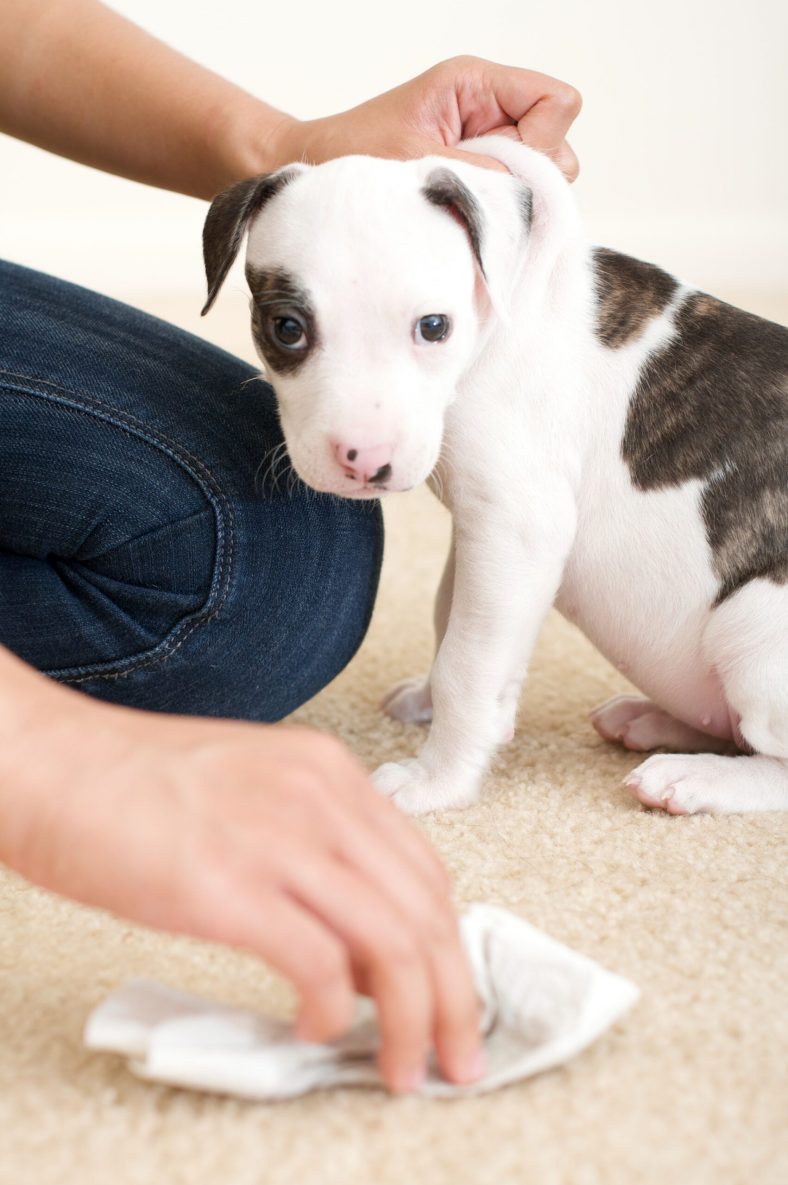
Use a towel to absorb any liquid and then spray a combination of 4 tablespoons of hydrogen peroxide, 2 tablespoons of lukewarm water and a few drops of Dawn dish soap onto the spot. Another homemade option is spraying one part white vinegar and one part water solution onto the pee spot, according to S&S Rug Cleaners, Inc. The vinegar neutralizes the urine smell.
Use a towel or carpet spotter machine to agitate the area and work the dog pee out of the carpet.
Let it set for 20 minutes and then flush out the spot with a cup of warm water and soak it up with a towel or carpet spotter machine.
Sprinkle baking soda over top of the dog pee spot and keep it on for several hours to absorb any lingering odor.
@Cleanthatup on TikTok has some helpful videos on cleaning methods using common household products.
How do I get dried dog pee out of carpet?
Although hydrogen peroxide, Dawn dish soap or vinegar can work in a pinch, having carpet-cleaning products on hand is a good idea for any pet parent – especially when a spot may already have dried into the carpet. When dealing with a dried-on dog pee stain, Hoover spokeperson Cierra Hannah recommends first dabbing the spot with a wet paper towel and then pre-treating the stain with a product such as the Oxy Pet Urine and Stain Eliminator. Let the solution sit on the stain for 5 to 7 minutes and then use a carpet/rug cleaner, such as the Clean Slate Pet Spot, with the concentrate solution that’s included with the carpet cleaner, to permanently remove pet stains and eliminate odors.
If peeing in the house is becoming a more frequent problem, or if it comes on suddenly, reach out to your veterinarian. Urination issues can be linked to a variety of different health issues, so rule out any underlying problems first. With the right products, you can eliminate even dried dog pee stains from your carpet or rug and remove odors so it doesn’t become an on-going problem.
Your dog runs in from his doggy door and jumps on the couch. You smile. Then it hits you. Dog poop smell. It’s the worst. Especially if you now have to clean the couch and your dog’s behind. Luckily, a simple dog sanitary trim will keep poop off you and your furniture.
What is a sanitary cut for dogs?
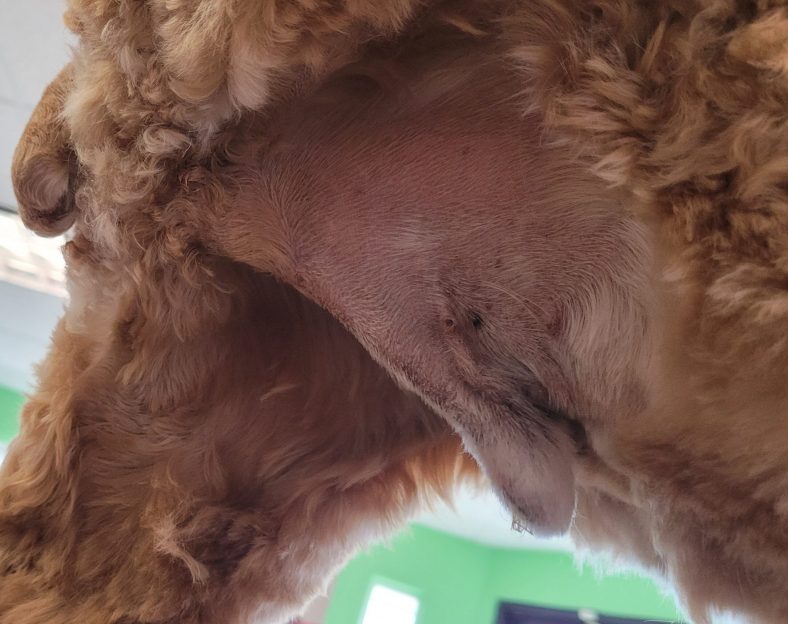
Sanitary trims cut down the hair around the belly, the back of your dog’s legs and private parts, so that when they relieve themselves, it doesn’t get in the hair and then get spread around. Sanitary cuts for dogs are really about preventing the spread of bacteria, more than for appearances, says Morgan Clemens, a certified professional groomer and owner of Pet Grooming by Morgan in Nampa, Idaho. And your dog will smell better if he doesn’t have urine and feces in his coat.
Will I notice a change before and after the dog sanitary trim?
There are a couple differences you’ll notice before and after a dog sanitary trim, but the idea is that when a dog goes the bathroom, the urine or feces has to move past a lot of hair, and that hair can act like a sponge, then gets rubbed off everywhere. After a dog sanitary trim, the urine and feces go onto the ground where they belong, and your dog stays cleaner.
Usually, long-haired dog breeds like Maltese, Yorkshire Terriers, Shih Tzu and Havanese need sanitary trims to control the hair growth around their back sides. However, Morgan says she doesn’t completely rule out sanitary trims for short-haired dogs; it depends on the dog. Talk to your groomer about whether this is a service your dog needs during his routine grooming sessions.
Dogs who can benefit from a sanitary trim, should get one about every four weeks or so, says Morgan.
How to do a sanitary cut on a dog
If your dog already goes in for grooming, having the professional do it is the easiest! However, if you have a dog breed that doesn’t get regular trims, like a Shetland Sheepdog, but notice that the long coat keeps tracking in your dog’s waste, you can do a dog sanitary trim yourself. Here are Morgan’s tips on doing a sanitary cut on your dog:
Do not use scissors!
Use pet clippers with a #10 blade or setting. #10 blade is generally considered the safest option for the sensitive genital area so that you don’t cut too close to the sensitive skin.
Use a short guard comb
Make sure your dog is standing on a hard surface
Have someone help you keep your dog still to avoid injury
Hold up the tail to shave down the butt area
For male dogs, gently lift their back legs on either side to reach underneath them, or stand them up on their back legs if they’re comfortable with that, and shave down where urine may collect on the belly.
The skin around the sanitary area is some of the most sensitive on the dog, says Morgan. Go slow and restrain them with a leash and/or a helper so they don’t move too much, which can up the chance for razor burns or nicks. Watch for the folds of the skin in these areas, she adds, as loose skin is easier to nick. If you do nick your dog or cause razor burn, use a triple antibiotic for healing, and put your dog in a cone so they don’t lick it off.
Sanitary trims are useful in helping prevent the spread of bacteria and keeping your dog clean, but if you’re unsure about technique or product choices, check in with a professional groomer.
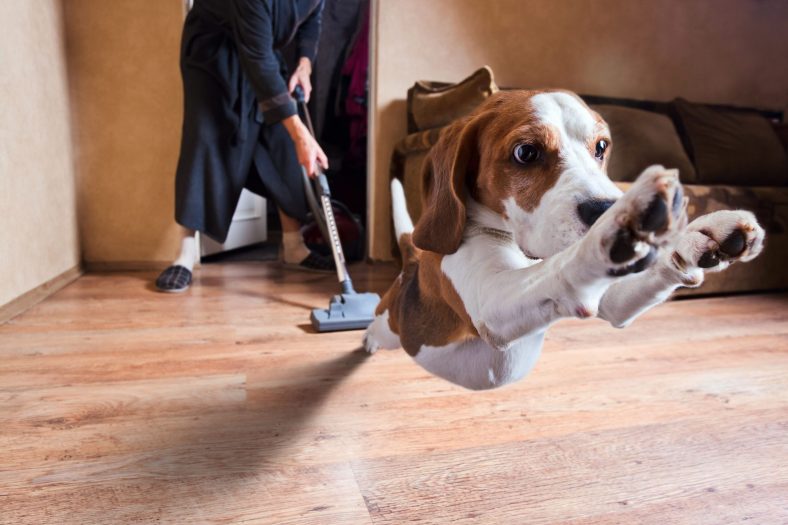
Does your dog run and cower when you bring the vacuum out? Or maybe he lunges and barks at the vacuum? Vacuums are among the sounds dogs hate. Professional dog trainer Marj Ediger explains why dogs are scared of vacuums and what to do about it.
Why Dogs Are Scared of Vacuums?
Vacuums are loud, have a strange odor and are large moving objects inside a dog’s home, explains Marji, which is why dogs bark at vacuums. If you think a vacuum is loud, imagine being a dog. They hear high pitches, that humans can’t, coming from vacuums and other loud appliances. Their barking or cowering is a fear response. In fact, this UC Davis study found that sudden, loud noises are a top trigger for fearful behavior in dogs.
For some dogs, the unpredictability of a moving vacuum may kick in their herding tendencies.
What Can You Do To Stop Your Dog From Being Scared or Barking at a Vacuum
Desensitization is key, says Marj. It’s easier with a puppy, but not impossible with an adult dog. Here are Marj’s tips to help your dog get used to the vacuum:
Start by putting the vacuum in the middle of the room, unplugged, at a comfortable distance from the dog. Give a treat when the dog doesn’t react.
Move the vacuum slowly back and forth, still unplugged. Give your dog another treat for no reaction.
When your dog is comfortable with this, start the vacuum in another room. Come back and treat, treat, treat. Make it a pup party!
Slowly open the door and if the dog is ready — not reacting — do the Hansel and Gretel method of tossing treats in the direction of the vacuum. If the dog’s body language is projecting fear — ears pinned, tail tucked, etc. — then take a step backward and don’t push it.
If your dog is older and has already ingrained a strong fear of vacuums, have him chill in another room or even outside. The key here is to not let him get any more practice at reactivity.
If the sound of the vacuum, even in the other room, is too loud, find vacuum sounds online and play them at low volume. As your dog gets used to the sound, increase the volume gradually.
Since the noise if often the main reason dogs don’t like vacuums, quieter vacuums can help.
Other Sounds Dogs Hate
Dogs not only hear higher pitches than us, but also at lower decibels, so they often hear things we cannot. Anything we think is loud is ear-piercing to a dog. Other sounds dogs hate are include:
fireworks
blenders
lawn mowers
large delivery trucks.
Use Marj’s vacuum tips to help desensitize your dog to other noises in her environment.
While getting your dog used to noises in her everyday life is necessary, remember that part of the reason our four-legged best friends hate vacuums is because they are so loud, it hurts their ears. If possible, keep your dog out of the room where you are vacuuming or using other loud appliances. This is will save your dog’s hearing and make her a happier housemate!
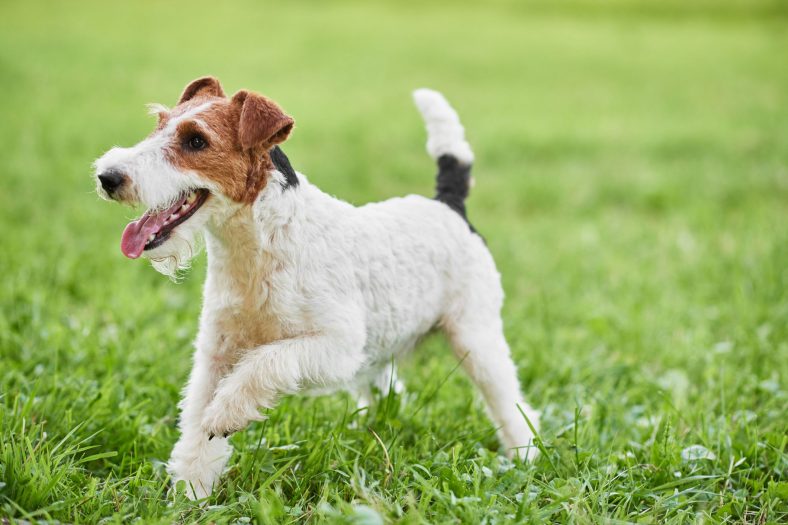
A hardy, mid-sized breed, the Wire Fox Terrier rarely turns down a chase, a hunt or an invite to playtime. Tenacious yet amiable, determined yet devoted, this Terrier stands on the tiptoe of expectation, ever ready for life’s adventures.
Wire Fox Terrier pedigree and history
Developed in the 19th century British Isles, the alert and active Wire Fox Terrier was bred to hunt, as well as to find and kill farm vermin. His likely ancestors were black-and-tan working rough-coated Terriers originating in Wales and northern England.
The Wire Fox Terrier’s history is closely tied to English Fox hunting. Hounds would chase the fox until he went to ground, then Terriers were needed to pester the fox from hiding places. The Wire Fox Terrier, a combination of speed, endurance and tenacity, could run near the hounds and horses during the hunt with energy left to follow a fox into burrows. Some hunters carried the early Terriers in their saddlebags, dropping them to drive the fox out as needed.
Is the Wire Fox Terrier a family dog?
In the 1930s, the Wire Fox Terrier became a popular family dog. The breed’s status correlated to his amiable temperament but also to the success of a detective comedy film series The Thin Man, starring Skippy, a friendly Wire Fox Terrier. Skippy played Asta, the clever, agreeable dog owned by Nick and Nora Charles, the crime-solvers.
Today’s Wire Fox Terriers appreciate both family time and improvisational hunting activities of every sort. Outdoors, Wire Fox Terriers dig holes, spontaneously chase any animal that runs (Wow! Watch the neighbor’s cat sprint!) and pursue the old standbys: squirrels, rabbits and birds. Indoors, this Wire Fox Terrier often enjoys performing tricks and hanging with the family. If left alone and bored, he’ll likely find some mischief; the breed expects family inclusion, lots of action and plenty of variety.
Wire Fox Terriers evidence a natural talent in sports such as earth-dog trials, where the dogs are judged on their abilities for finding rodents (in this case, rats in cages) underground. Some Wire Fox Terriers participate in agility, obedience and rally, but owners will need both patience and enticing dog food delicacies to work with this independent breed. After all, Terriers must be convinced that a job is worth doing. Unquestioning obedience is not their strong suit. The breed has plenty of leaders and only a few followers. Training involves flexibility and a sense of humor. The Wire Fox Terrier is a self-governing thinker with an obstinate streak, but he’s game for high-level challenges when they strike his fancy.
With this active breed, families will have to do more than take walks around the block. Wire Fox Terriers need extensive, diverse and regular exercise. The dog may be happy to snooze some of the day, but when he’s up, he’s up: Bring on the action!
Although the Wire Fox Terrier is mid-size, he thrives in a full-size (necessarily fenced) yard. Apartment living is doable only if the owner is dedicated to frequent exercise. While consistent training will mitigate the breed’s chase instincts, the breed’s highly-developed hunting drive makes his recall unreliable. Off-leash activity is consequently risky. Even the best trained Wire may take off running when prey is spotted.
How social are Wire Fox Terriers?
A socialized and well-trained Wire Fox Terrier can play nicely with older children. While typically affectionate with everyone, Wire Fox Terriers may be too active for very young children.
As for adding other species to the family circle, prospective owners must consider the Wire Fox Terrier’s hunting aptitude. Families realistically can’t expect this dog breed (with perhaps a few exceptions) to cohabitate with gerbils, hamsters, birds, guinea pigs or rabbits. Supervision is also prudent around cats, although some Terriers can learn to coexist peacefully with the family’s own cats.
While many Wire Fox Terriers get along with the family’s dogs, some show skepticism around unknown dogs. After all, these Wire Fox Terriers were bred to work independently, not in groups. Some Wires will play with established friends, but few rejoice at the idea of playing with strange dogs at dog parks.
Bred to chase rats and foxes instead of standing guard, most Wire Fox Terriers don’t prioritize the watchdog role. Although they may alert their owners to newcomers, most tend to welcome human guests instead of running them off.
What health issues do Wire Fox Terriers have?
Generally a healthy breed that ages gracefully, the Wire Fox Terrier lives between 12 and 13 years. Most show energy and spunk even into their senior years, so don’t expect much slowing down as time goes by. Health problems may include skin allergies, leggs perthes and patellar luxation. This dog breed is commonly deemed an easy keeper. He’s not typically clingy or demanding (as long as he’s well-exercised). Travel is usually carefree with the Wire Fox Terrier, too. He’s small but sturdy, fits in a compact car and is light to lift when needed.
Wire Fox Terrier grooming needs
Wire Fox Terriers aren’t big shedders, so they’re a good choice for owners with allergies or simply a loathing to vacuuming. Developed in relatively rainy areas, the breed’s coat does well when wet. A raindrop almost bounces off a well-maintained Wire Fox Terrier’s coat.
The soft puppy coat of a Wire Fox Terrier will become a wiry coat in time. Grooming the Wire involves a weekly commitment to brushing or combing, and then either hand stripping or trimming. Stripping a Wire Fox Terrier coat is complicated, and perhaps best done by professionals. The stripping process involves removing dead hairs from the coat by hand, rather than clipping, to keep the coat neat and healthy.
Pet owners may choose to simply have the dog’s coat clipped. Clipping instead of stripping, however, sometimes makes the coat less wiry and may subdue the dog’s natural colors.
The Wire Fox Terrier is an intense, lively and self-motivated breed. He’s happy, demonstrative and friendly but also stubborn and (don’t tell them we told!) not always compliant. Active owners who can handle the breed’s exercise and inclusion needs will find the Wire Fox Terrier a delightful, spirited companion.
Grooming: Weekly combing or brushing; stripping or trimming every few months
Height/weight: Males not more than 15½ inches at the withers; weight not exceeding 18 pounds. Females lower in height; weighing about 15 to 17 pounds
Activity level: High
Nickname: Wire
Known health problems:Patellar luxation, leggs perthes, skin allergies
Breed quote if they had one: Life is either a daring adventure or nothing at all. ~ Helen Keller
Show dog extraordinaire
The Wire Fox Terrier has received more Best in Show titles (over a dozen!) at Westminster Kennel Club dog shows than any other breed. In general, Terriers of all breeds have done well at the show. But among all the Terrier variations, Wire Fox Terriers have won the most.
Famous Wire Fox Terriers
Charles Darwin (an avid fox hunter) had a Wire Fox Terrier named Polly, who followed him around devotedly until Darwin’s death in 1882. Clearly a dedicated companion and arguably not coincidentally, Polly passed away the day after Darwin died.
King Edward VII of England had a Wire Fox Terrier named Caesar. The dog’s collar had the bold inscription “I am Caesar. I belong to the King.” When Edward died in 1910, Caesar walked by the casket in the funeral procession.
Beauty was a WWII search dog. Working with a rescue squad, she was instrumental in finding buried air raid victims. She received the coveted Dickin Medal for bravery in 1945. The U.K. award goes to animals who have shown a “conspicuous gallantry or devotion to duty while serving or associated with any branch of the Armed Forces or Civil Defense.”
It’s common for dogs to have diarrhea occasionally. A dog’s digestive system is part of his immune system and works to reset itself when things get off track by cleansing the body of harmful materials. A healthy dog with a strong immune system will return to normal in about 2 to 4 days. There are things you can give your dog for diarrhea to help him recover.
What to do if your dog has diarrhea
Many things can cause dog diarrhea, from stress to dietary changes, and even food allergies. If your dog acts otherwise normal, don’t worry about occasional diarrhea. Like people, dogs get upset tummies, and it’s nothing a little pampering won’t fix. (See foods to eat below.)
Call your veterinarian if there are other symptoms such as blood, black tar-like stool and vomiting. If your dog ingested toxins, poisons or foreign objects, seek immediate care. Do not give any over-the-counter medications such as Pepto Bismal without first consulting your veterinarian. These medications can cause more harm.
How to stop dog diarrhea
You can do some simple things to help stop your dog’s diarrhea.
Take away food and treats and fast him for 12 to 24 hours. This will give his body time to reset itself.
A side effect of diarrhea is dehydration. Have plenty of fresh water available. You can also give him a fast hydration broth that includes probiotics, available at pet retail stores.
If things improve after about six hours, offer lukewarm onion-free, low-sodium chicken or bone broth. His stomach needs time to recover and feeding as you normally do can further upset things. Broth provides hydration and will help ease your dog back to eating regular meals.
When a dog has diarrhea, he’s losing nutrients and beneficial bacteria. There are things you can feed him to help your dog with diarrhea. Feeding your dog an easily digestible meal for a week afterward will help return his digestive tract to normal. You can give him:
Cooked squash or pumpkin mixed with chicken broth to make a runny porridge. Pumpkin and squash are the best foods for dogs with diarrhea, they are fiber-rich and contain important vitamins and minerals. They stimulate the growth of beneficial bacteria and inhibit harmful bacteria. Fiber adds substance to your dog’s stool by absorbing water. Look for canned organic pumpkin (not pumpkin pie mix), pumpkin puree or squash puree.
Adding a canine probiotic supplement to his meals can help improve and then maintain a healthy intestinal biome. You can also give your dog:
Homemade meals of cooked lean meats, such as unseasoned boiled chicken or very lean browned beef with white rice (easier on the stomach than brown) to start replenishing lost nutrients. You can prepare them with water or broth.
Dr. TJ Bowe of the North Colony Animal Clinic says the key to diarrhea is small, frequent meals of bland food and not “fueling the fire” so to speak. Do not feed your dog full meals just yet. When your dog starts having normal bowels, then transition back to his regular diet by slowly reintroducing his food.
Dog diarrhea is common and can often be resolved in a few days with care and attention. If diarrhea lasts more than three days, or if you have a puppy with diarrhea, seek veterinary care immediately.
How much food you feed your dog is a more important question than you may think. When incorrect, the caloric and nutritional makeup of your dog’s food and treats can have an adverse effect on his standard of living and overall length of life. Discuss the topic with your trusted veterinarian in an open and honest dialogue. Together you can come up with a plan that will allow you to help your dog remain healthy.
How do I know how much to feed my dog?
When looking at the amount of food per day a dog should have, your vet will look at a number of different data points:
Age
Activity level
Breed
Size
Weight
Health conditions or disease
Living environment
In 2021 the AAHA updated its Nutrition and Weight Management Guidelines for Dogs and Cats. It includes nutritional assessment screening evaluations and energy requirements versus caloric intake calculations your vet can use to keep your pet within a healthy weight.
Should I free-feed my dog?
Free-feeding — making food available to a dog all day without limiting quantity — can have a number of negative side effects.
Over eating, causing a pet to become overweight
Food protecting/aggression in multiple pet households
Limits use of reward-based training
Makes it difficult to identify a lack of appetite, which is often a sign your dog is ill
Tufts Cummings School of Veterinary Medicine notes that today’s pet food industry has done extensive taste tests and research to make dog food as appealing as possible. With constant access to good tasting food there is a higher chance your dog will overeat.
How to measure food and count treats?
The AAHA Nutrition and Weight Management Guidelines suggest that treats should be no more than 10% of your dogs’ caloric intake. Treats can add up fast, especially when passed out multiple times a day. Dogster’s sister pubication, The Whole Dog Journal, places owners wanting to demonstrate their affection as a root cause to overfeeding, citing an increase in obesity with more than 50% of dogs in the US being overweight or obese.
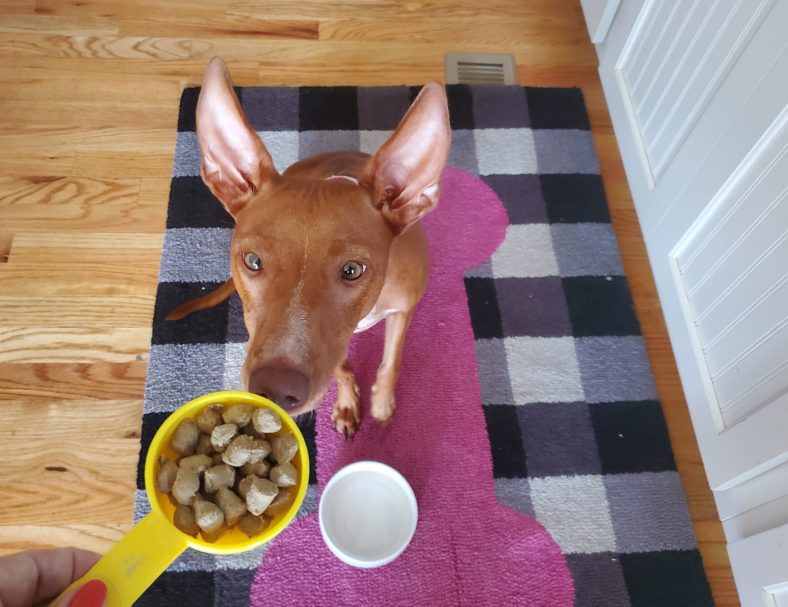
You can measure out food by measuring cup or by scale, noting that amount isn’t as important as the number of calories. Reference the food packaging for calories and suggested feeding guidelines.
How much to feed from puppy to adult?
How much food your dog needs, how often he should eat, and what amount of protein is required changes throughout your dog’s life. During regular checkups with your dog’s vet, update her on your dog’s activity level and ask if your dog’s current age should change the amount of food he receives.
Hanna Zulueta, who is certified in nutrition from the Companion Animal Sciences Institute (CASI), helps her clients understand how much to feed their dogs and suggests owners understand what their dog’s ideal body condition should look like so you can adjust quantity of food as needed. (See the body condition scoring system here. Hanna’s observations have led her to the conclusion that most dogs are overfed and believes the one thing owners can do to help their dog, regardless of diet, is to feed the amount that keeps the dog lean and fit.
A hardy, mid-sized breed, the Wire Fox Terrier rarely turns down a chase, a hunt or an invite to playtime. Tenacious yet amiable, determined yet devoted, this Terrier stands on the tiptoe of expectation, ever ready for life’s adventures.
Wire Fox Terrier pedigree and history
Developed in the 19th century British Isles, the alert and active Wire Fox Terrier was bred to hunt, as well as to find and kill farm vermin. His likely ancestors were black-and-tan working rough-coated Terriers originating in Wales and northern England.
The Wire Fox Terrier’s history is closely tied to English Fox hunting. Hounds would chase the fox until he went to ground, then Terriers were needed to pester the fox from hiding places. The Wire Fox Terrier, a combination of speed, endurance and tenacity, could run near the hounds and horses during the hunt with energy left to follow a fox into burrows. Some hunters carried the early Terriers in their saddlebags, dropping them to drive the fox out as needed.
Is the Wire Fox Terrier a family dog?
In the 1930’s, the Wire Fox Terrier became a popular family dog. The breed’s status correlated to his amiable temperament but also to the success of a detective comedy film series The Thin Man, starring Skippy, a friendly Terrier. Skippy played Asta, the clever, agreeable dog owned by Nick and Nora Charles, the crime-solvers.
Today’s Wire Fox Terriers appreciate both family time and improvisational hunting activities of every sort. Outdoors, Terriers dig holes, spontaneously chase any animal that runs (Wow! Watch the neighbor’s cat sprint!) and pursue the old standbys: squirrels, rabbits and birds. Indoors, this Terrier often enjoys performing tricks and hanging with the family. If left alone and bored, he’ll likely find some mischief; the breed expects family inclusion, lots of action and plenty of variety.
Wire Fox Terriers evidence a natural talent in sports such as earth-dog trials, where the dogs are judged on their abilities for finding rodents (in this case, rats in cages) underground. Some Fox Terriers participate in agility, obedience and rally, but owners will need both patience and enticing dog food delicacies to work with this independent breed. After all, Terriers must be convinced that a job is worth doing. Unquestioning obedience is not their strong suit. The breed has plenty of leaders and only a few followers. Training involves flexibility and a sense of humor. The Wire Fox Terrier is a self-governing thinker with an obstinate streak, but he’s game for high-level challenges when they strike his fancy.
With this active breed, families will have to do more than take walks around the block. Wire Fox Terriers need extensive, diverse and regular exercise. The dog may be happy to snooze some of the day, but when he’s up, he’s up: Bring on the action!
Although the Wire Fox Terrier is mid-size, he thrives in a full-size (necessarily fenced) yard. Apartment living is doable only if the owner is dedicated to frequent exercise. While consistent training will mitigate the breed’s chase instincts, the breed’s highly-developed hunting drive makes his recall unreliable. Off-leash activity is consequently risky. Even the best trained Fox Terrier may take off running when prey is spotted.
How social are Wire Fox Terriers?
A socialized and well-trained Wire Fox Terrier can play nicely with older children. While typically affectionate with everyone, Terriers may be too active for very young children.
As for adding other species to the family circle, prospective owners must consider the Fox Terrier’s hunting aptitude. Families realistically can’t expect this Terrier breed (with perhaps a few exceptions) to cohabitate with gerbils, hamsters, birds, guinea pigs or rabbits. Supervision is also prudent around cats, although some Terriers can learn to coexist peacefully with the family’s own cats.
While many Wire Fox Terriers get along with the family’s dogs, some show skepticism around unknown dogs. After all, these Terriers were bred to work independently, not in groups. Some Terriers will play with established friends, but few rejoice at the idea of playing with strange dogs at dog parks.
Bred to chase rats and foxes instead of standing guard, most Wire Fox Terriers don’t prioritize the watchdog role. Although they may alert their owners to newcomers, most tend to welcome human guests instead of running them off.
What health issues do Wire Fox Terriers have?
Generally a healthy breed that ages gracefully, the Wire Fox Terrier lives between 12 and 13 years. Most show energy and spunk even into their senior years, so don’t expect much slowing down as time goes by. Health problems may include skin allergies, leggs perthes and patellar luxation. This Terrier is commonly deemed an easy keeper. He’s not typically clingy or demanding (as long as he’s well-exercised). Travel is usually carefree with the Wire Fox Terrier, too. He’s small but sturdy, fits in a compact car and is light to lift when needed.
Wire Fox Terrier grooming needs
Wire Fox Terriers aren’t big shedders, so they’re a good choice for owners with allergies or simply a loathing to vacuuming. Developed in relatively rainy areas, the breed’s coat does well when wet. A raindrop almost bounces off a well-maintained Wire Fox Terrier’s coat.
The soft puppy coat of a Wire Fox Terrier will become a wiry coat in time. Grooming the Terrier involves a weekly commitment to brushing or combing, and then either hand stripping or trimming. Stripping a Terrier coat is complicated, and perhaps best done by professionals. The stripping process involves removing dead hairs from the coat by hand, rather than clipping, to keep the coat neat and healthy.
Pet owners may choose to simply have the dog’s coat clipped. Clipping instead of stripping, however, sometimes makes the coat less wiry and may subdue the dog’s natural colors.
The Wire Fox Terrier is an intense, lively and self-motivated breed. He’s happy, demonstrative and friendly but also stubborn and (don’t tell them we told!) not always compliant. Active owners who can handle the breed’s exercise and inclusion needs will find the Wire Fox Terrier a delightful, spirited companion.
Grooming: Weekly combing or brushing; stripping or trimming every few months
Height/weight: Males not more than 15½ inches at the withers; weight not exceeding 18 pounds. Females lower in height; weighing about 15 to 17 pounds
Activity level: High
Known health problems:Patellar luxation, leggs perthes, skin allergies
Breed quote if they had one: Life is either a daring adventure or nothing at all. ~ Helen Keller
Show dog extraordinaire
The Wire Fox Terrier has received more Best in Show titles (over a dozen!) at Westminster Kennel Club dog shows than any other breed. In general, Terriers of all breeds have done well at the show. But among all the Terrier variations, Wire Fox Terriers have won the most.
Famous Wire Fox Terriers
Charles Darwin (an avid fox hunter) had a Wire Fox Terrier named Polly, who followed him around devotedly until Darwin’s death in 1882. Clearly a dedicated companion and arguably not coincidentally, Polly passed away the day after Darwin died.
King Edward VII of England had a Terrier named Caesar. The dog’s collar had the bold inscription “I am Caesar. I belong to the King.” When Edward died in 1910, Caesar walked by the casket in the funeral procession.
Beauty was a WWII search dog. Working with a rescue squad, she was instrumental in finding buried air raid victims. She received the coveted Dickin Medal for bravery in 1945. The U.K. award goes to animals who have shown a “conspicuous gallantry or devotion to duty while serving or associated with any branch of the Armed Forces or Civil Defense.”
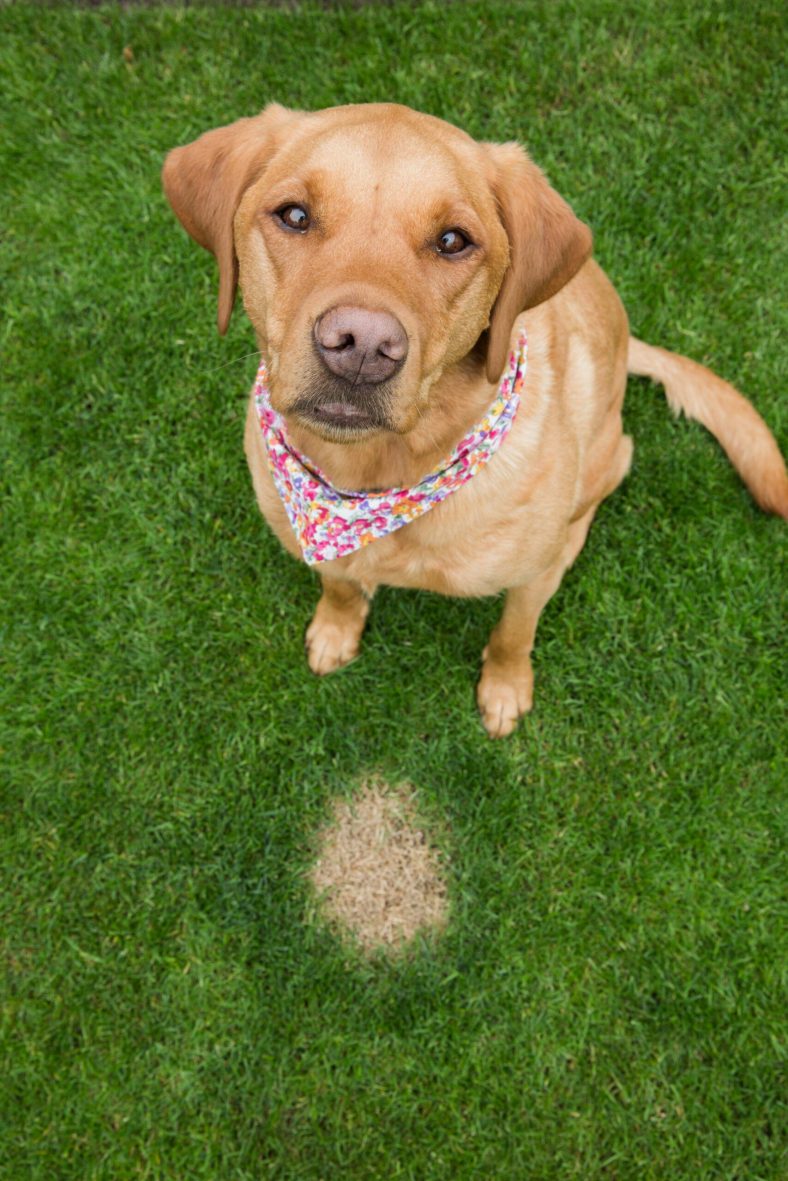
It’s safe to say — brown spots on your grass from dog pee are an eyesore. By understanding what chemicals in your dog’s pee damage grass, plus using the right lawn products, you can protect your lawn. Dogster has your dog-pee killing grass solutions.
Why does dog pee kill grass?
Dog pee can kill, or discolor, grass because of the chemical compounds found in your dog’s pee. Any of the nutrients that your dog eats in their food and supplements that aren’t absorbed in their bloodstream get filtered out through their kidneys and end up in their pee.
So as your dog pees in the grass, and the water is evaporated by the sun, high concentrations of nitrogen are left behind. Even though nitrogen is often used in lawn fertilizers, too much nitrogen can hurt your grass.
How can you tell if dog pee is killing your grass or it’s some other reason?
If your dog’s pee is killing your grass, you’ll see several brown spots that are green around the edges. Moles can also leave patches of dead grass in your yard from digging tunnels. But if you have a mole problem, you’ll also notice a bumpy surface from their tunnels.
What are the top treatments for pee spots on grass?
There are three things you can do to get rid of dog pee spots.
Use a grass-saving product to get your grass back to green. Here are some examples:
Have a lawn care expert perform an aeration treatment, which stimulates root growth. An example of a dog-friendly lawn care company is Natural Lawn of America.
Cut out the damaged sections into squares and replace them with new sod pieces and grass seed.
What can you do to protect your grass from dog pee?
If you don’t want wait to fix the problem, there are some things you can do to head off the brown pee spots before they happen:
Keep your dog well-hydrated – the more hydrated the dog is, the less potent her urine will be. Make sure she has several bowls of fresh water, including one outside that is changed frequently. Feed dog-safe, hydrating fruits (e.g., blueberries, watermelon, apples, cantaloupe)
Use a hose to spray the areas of your grass immediately after your dog pees.
Create a designated pee area for your dog (this could be grass, mulch or gravel).
Reseed your lawn with more urine-resistant grasses like fescues and perennial ryegrasses