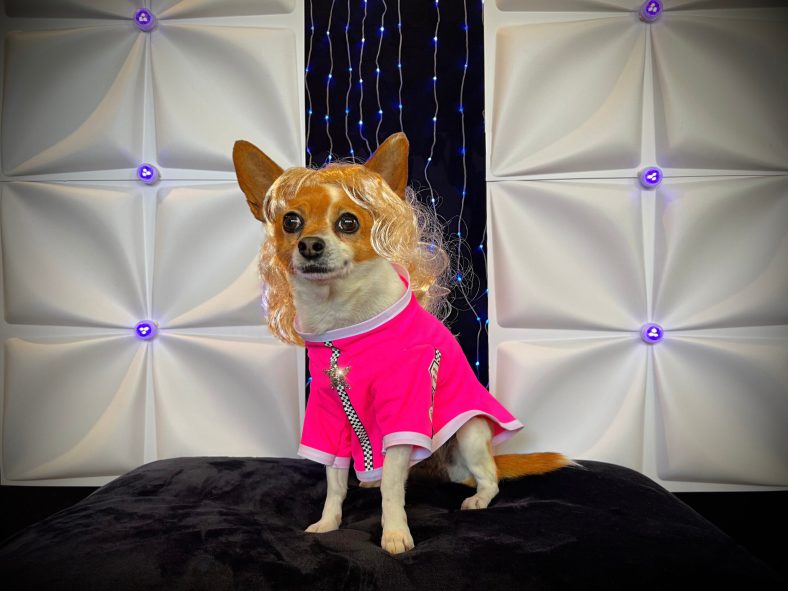
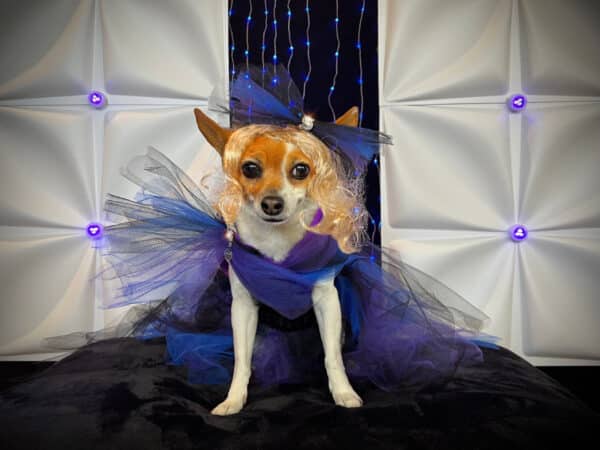
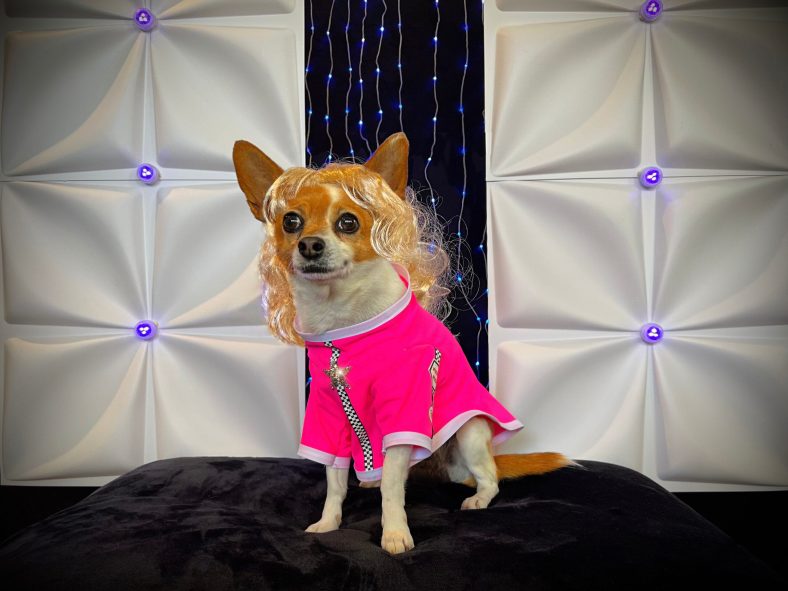
Part Chihuahua, part Poodle, part Australian Cattle Dog and 100% beloved doggie social media influencer, Instagram celebrity dog RuPawl is in a class of their own. RuPawl’s human José Lizárraga tells Dogster that RuPawl’s popularity happened right around the time American reality competition TV series RuPaul’s Drag Race started becoming more mainstream after the show’s move to VH1.
“We quickly became popular amongst fans of Drag Race and the queens themselves.” RuPawl recently turned 6 (actually 9, says José, but you know they don’t want people to know their real age) and loves dressing up, long nature walks, chasing wild bunnies, flirting with wild deer, eating organic and naps. “They dislike carrots … yeah, kinda random,” says José, “but they will literally pick out the smallest piece of carrot from any dish we prepare for them.”
The Doggie Drag fashion line for dogs launched with small and medium canine clothes sizes, but will soon include large sizes too.
It’s not surprising that this two-time Webby Winner and model and their human has set sights on apparel for dogs, especially when their social media page is known for the fun and bold frocks they model inspired by RuPaul’s Drag Race Queens.
Says José, the founder of Doggie Drag, “We will be creating seasonal looks that are distinguishably DRAG, inspired by the queens of Drag Race and beyond. … It felt important to launch a line that unabashedly highlights the beauty and artistry of drag.”
The line launched with small and medium sizes, but will now be selling in large sizes. “Because,” says José, “pooches of all sizes deserve to be FABULOUS!” Want to follow this adorable mix? Strut over to @RuPawl on Instagram, Facebook and TikTok or check out the Doggie Drag online store.
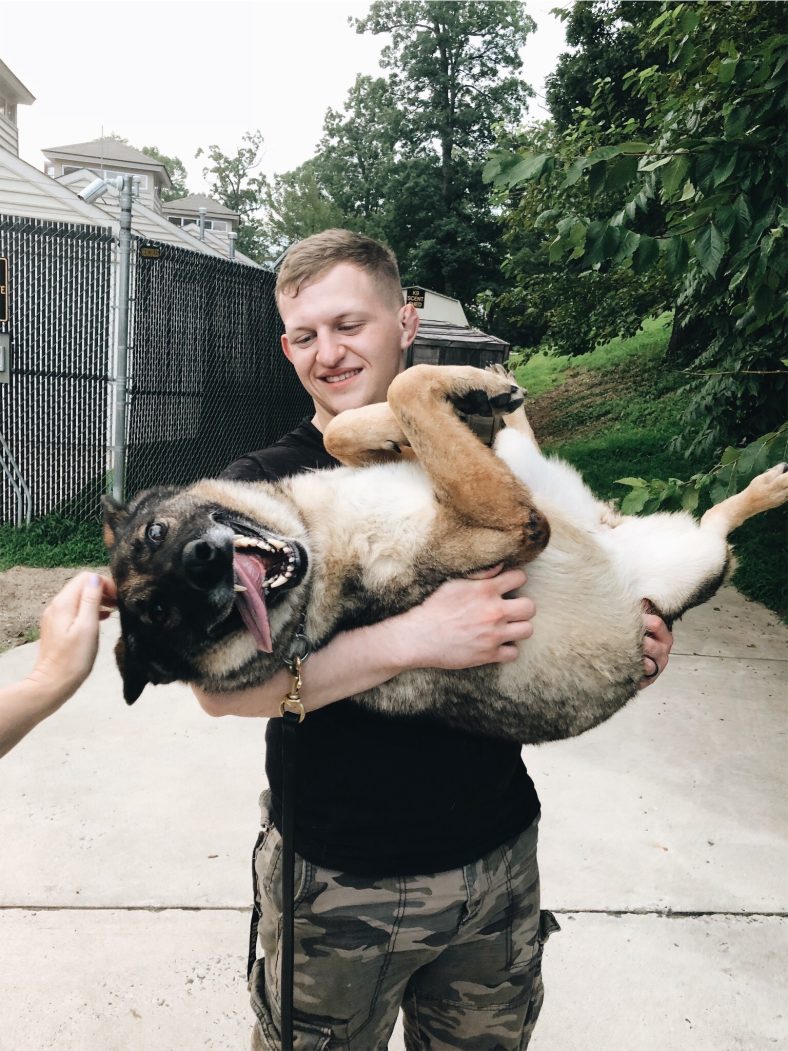
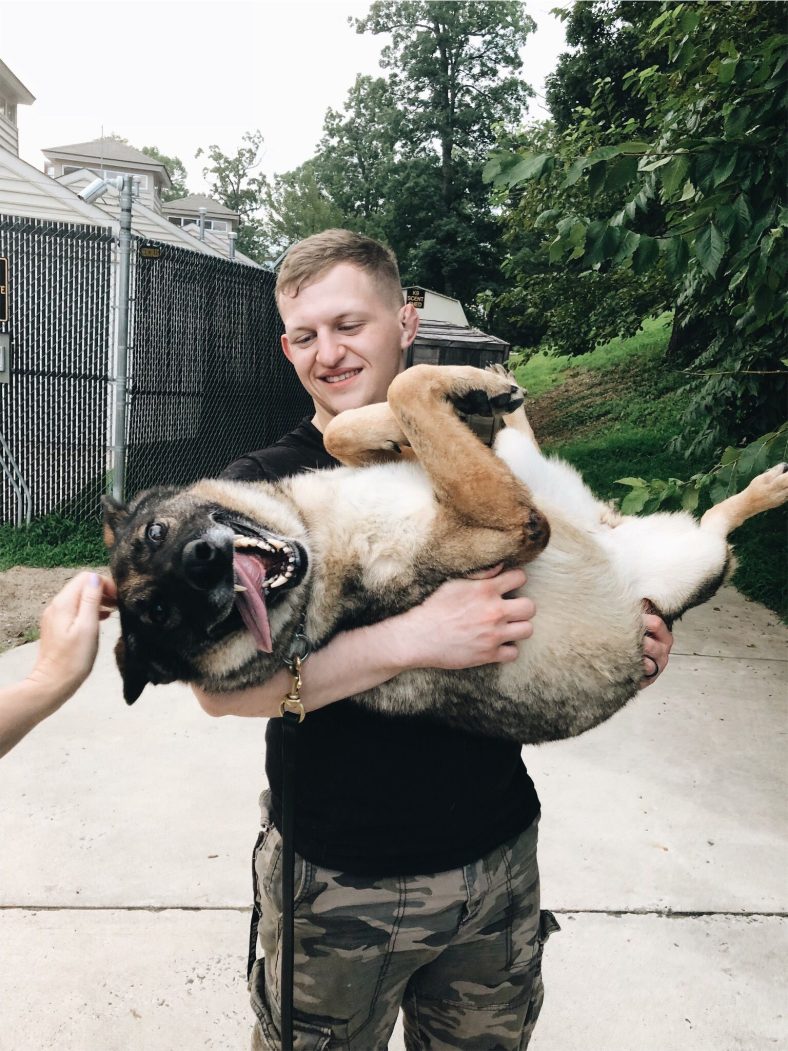
Nothing makes us drool more than organizations that help find loving homes for senior dogs, especially retired working dogs. Mission K9 Rescue (MK9) sniffs out military and contract working dogs who need homes and has saved more than 1,300 from “every corner of the world” since Kristen Maurer, Louisa Kastner and Bob Bryant founded it in 2013. This includes reuniting more than 540 with their former military handlers. The nonprofit 501 (c) 3 organization is based in Houston, Texas, plus has satellite offices in San Antonio and Los Angeles.
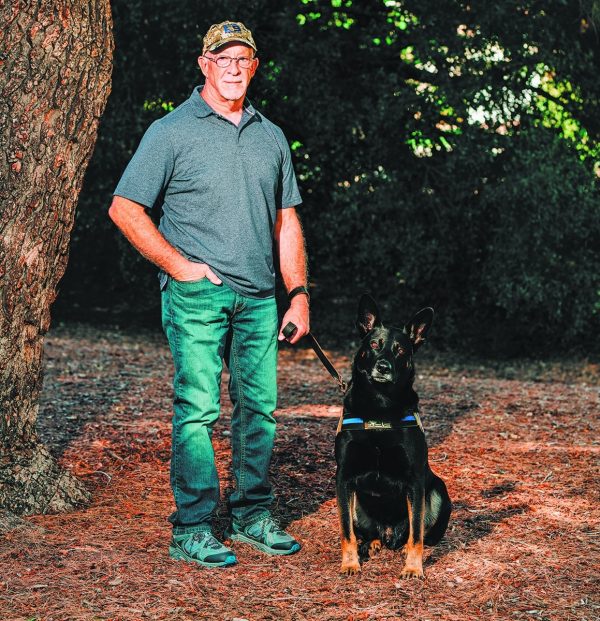
Nonprofit MK9 was co-founded by Kristen Maurer, Bob Bryant (above) and Louisa Kastner to find loving homes for retired working dogs.
Mission K9 focuses on its five Rs: Rescue, Reuniting with former handlers, Re-homing, Rehabilitating (some have PTSD) and Repair (getting them healthy). “Out of every $1 donated, 93 cents are directly used for our work with the dogs,” says Bob. “No waste of donor funds, ever. We don’t take luxury retreats and often spend nights in roadside rest areas on transports, rather than incur hotel expenses. We have a dedicated team that takes pride in serving working dogs around the world.”
Of course, rescuing senior dogs who’ve served comes with its own set of challenges, such as much-needed healthcare funding. For example, in 2022, Mission K9 rescued 10 contract working dogs from Turkey, during the CDC rabies ban that affected many countries. “We were able to get the dogs safely back to the USA via an arduous process,” says Bob. “Once back, we were able to provide heartworm treatment to all the dogs, as they had tested positive. Each dog endured the treatment well and they are all now heartworm free and living in loving homes.”
Mission K9 is looking for more great people and companies to spread the word about what they do so that they can continue to grow. Want to learn more? Visit missionk9rescue.org and follow on social media @missionk9.
Part Chihuahua, part Poodle, part Australian Cattle Dog and 100% beloved doggie social media influencer, Instagram celebrity dog RuPawl is in a class of their own. RuPawl’s human José Lizárraga tells Dogster that RuPawl’s popularity happened right around the time American reality competition TV series RuPaul’s Drag Race started becoming more mainstream after the show’s move to VH1.
“We quickly became popular amongst fans of Drag Race and the queens themselves.” RuPawl recently turned 6 (actually 9, says José, but you know they don’t want people to know their real age) and loves dressing up, long nature walks, chasing wild bunnies, flirting with wild deer, eating organic and naps. “They dislike carrots … yeah, kinda random,” says José, “but they will literally pick out the smallest piece of carrot from any dish we prepare for them.”
The Doggie Drag fashion line for dogs launched with small and medium canine clothes sizes, but will soon include large sizes too.
It’s not surprising that this two-time Webby Winner and model and their human has set sights on apparel for dogs, especially when their social media page is known for the fun and bold frocks they model inspired by RuPaul’s Drag Race Queens.
Says José, the founder of Doggie Drag, “We will be creating seasonal looks that are distinguishably DRAG, inspired by the queens of Drag Race and beyond. … It felt important to launch a line that unabashedly highlights the beauty and artistry of drag.”
The line launched with small and medium sizes, but will now be selling in large sizes. “Because,” says José, “pooches of all sizes deserve to be FABULOUS!” Want to follow this adorable mix? Strut over to @RuPawl on Instagram, Facebook and TikTok or check out the Doggie Drag online store.
Nothing makes us drool more than organizations that help find loving homes for senior dogs, especially retired working dogs. Mission K9 Rescue (MK9) sniffs out military and contract working dogs who need homes and has saved more than 1,300 from “every corner of the world” since Kristen Maurer, Louisa Kastner and Bob Bryant founded it in 2013. This includes reuniting more than 540 with their former military handlers. The nonprofit 501 (c) 3 organization is based in Houston, Texas, plus has satellite offices in San Antonio and Los Angeles.
Nonprofit MK9 was co-founded by Kristen Maurer, Bob Bryant (above) and Louisa Kastner to find loving homes for retired working dogs.
Mission K9 focuses on its five Rs: Rescue, Reuniting with former handlers, Re-homing, Rehabilitating (some have PTSD) and Repair (getting them healthy). “Out of every $1 donated, 93 cents are directly used for our work with the dogs,” says Bob. “No waste of donor funds, ever. We don’t take luxury retreats and often spend nights in roadside rest areas on transports, rather than incur hotel expenses. We have a dedicated team that takes pride in serving working dogs around the world.”
Of course, rescuing senior dogs who’ve served comes with its own set of challenges, such as much-needed healthcare funding. For example, in 2022, Mission K9 rescued 10 contract working dogs from Turkey, during the CDC rabies ban that affected many countries. “We were able to get the dogs safely back to the USA via an arduous process,” says Bob. “Once back, we were able to provide heartworm treatment to all the dogs, as they had tested positive. Each dog endured the treatment well and they are all now heartworm free and living in loving homes.”
Mission K9 is looking for more great people and companies to spread the word about what they do so that they can continue to grow. Want to learn more? Visit missionk9rescue.org and follow on social media @missionk9.
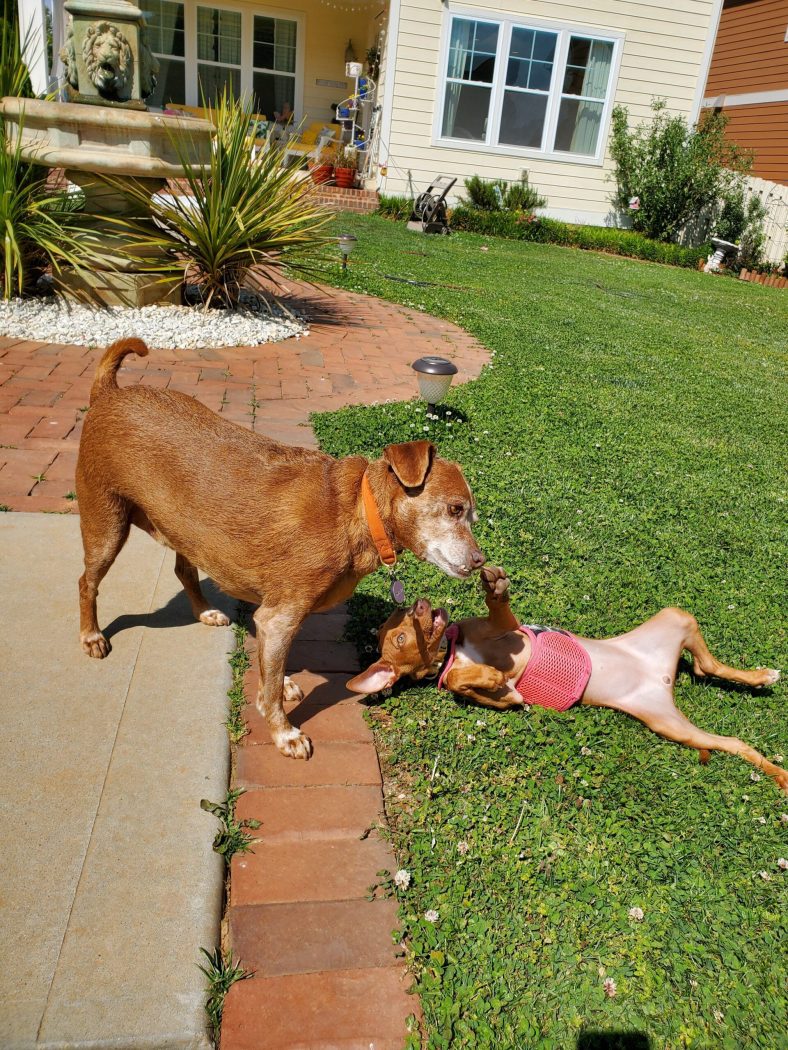
Bringing a new puppy home is exciting for you, but can be stressful for an older dog. Be thoughtful about your dogs’ interactions. In the past, the general advice was to introduce new puppies to older dogs in the home right away. Now we know that isn’t always the best approach.
How to introduce a puppy to an older dog: Follow these 5 steps
Step 1: Create space
Giving puppies and older dogs their own space before introducing them encourages positive interactions in the future. There’s no reason to rush greetings and interactions between dogs; it’s oftentimes helpful to keep dogs and puppies separated for a few days or even weeks. Using baby gates, closed doors, crates and other dividers in the home creates space and lets them get used to the sound, sight and scent of the other dog without directly having to interact. Then, interactions are more relaxed and stress-free, which fosters better ongoing relationships between them.
Step 2: Introduce neutrally
Depending on your dog’s temperament, the introduction may happen on your puppy’s first day home, or if you have a senior dog or a dog who has other health or behavioral issues you may want to wait days, or even weeks before directly introducing them. The goal is to allow them to have adjusted to the presence of the other dog before they interact. We want those initial introductions to happen in neutral spaces outside your house or yard. This helps reduce the likelihood of stress or conflict. Start by taking your dog and puppy on parallel walks where one person has one dog on a leash and someone else has the other dog on a leash to help everyone get used to being close. Once your dog and puppy have met in a neutral area, and if that meeting went well, start to slowly allow them to spend time together in the house and yard.
Step 3: Watch for signs of stress
Once you’ve introduced your dog and puppy, monitor the interactions. Watch the body language from your dog and puppy closely for any signs of stress or discomfort.
Tips to reduce stress between dogs:
Before letting dogs interact, remove high value items like food, chews and toys from the area, especially if you know your older dog might have resource guarding tendencies.
If interactions seem tense, or the dogs become agitated, separate the dogs right away to give them a break.
Keep your dogs separated for a while to allow them to just acclimate to the scent of the other dog.
Step 4: Manage interactions
If you can’t monitor your puppy and dog while they are together, keep them separated. Even if the interactions are going well, continue to manage their playtime and engagement. Don’t allow your puppy to bother or harass your older dog. This is especially important when your older dog is sleeping and eating. We never want older dogs to be put in a position where they feel like they need to correct or “tell off” the puppy. Intervene on your older dog’s behalf and redirect an overly enthusiastic puppy; teach the puppy appropriate ways to interact.
Step 5: Go slowly
It’s tempting to rush the introduction process or encourage them to spend lots of time together right away, but a better approach is allowing your dog and puppy to learn about each other slowly and intentionally. This will help build trust. Make sure they have their own private spaces to retreat like a crate, bed or a designated area of the house, such as a dog room, that the other dog can’t access. The goal is neutral engagement and that can take time. Long-term management strategies like baby gates create a less-stressful house when interactions are tense.
Puppy and older dog: Tips for success
If your older dog has health conditions, behavioral issues like reactivity, or is a senior with age-related conditions like arthritis, be especially thoughtful about how you introduce your puppy and monitor interactions. You may want to keep your puppy separate most of the time. Consult with a dog trainer who utilizes positive reinforcement methods if you have questions. A dog trainer helps you to manage introductions and creates a training plan for future issues.
One could say that Ona, a punky 12-year-old Yorkshire Terrier, has enjoyed a pretty bright and breezy lifestyle over the years soaking up the sun in Southern California. Lots of beach days, a comfy warm bed and a big pile of plush toys. What more could she want? Well, as it turns out, she wants to run!
Weighing in at just 6 pounds and standing a mere 6 inches from the ground, Ona is a seasoned long-distance racer. In the last six years, she’s completed nearly 50, 5k runs with an average pace just over an 8-minute mile. As the adage goes, “Don’t judge a book by it’s cover.” This dog can run!
“I started hiking with Ona after she turned 3 and she loved it,” says Ona’s dad, California Highway Patrolman Jeff Jones. “She always had so much energy.”
As an experienced long-distance runner himself, Jeff decided to sign both of them up for their first race together at the Homeward Bound 5k run in 2016.
“We had already done several long hikes in the past but I didn’t know how she would do running long distance.”
When they reached the halfway mark, Jeff tells me he stopped and offered Ona a quick water break. “She refused and just wanted to keep running,” he added. “People were shouting ‘that dog deserves a medal’ as we ran by.”
Soon after, the duo signed up for several more races and thus Ona’s running journey began. “Even during the pandemic we did 19 virtual races,” said Jeff. “Nothing was going to stop Ona from running!”
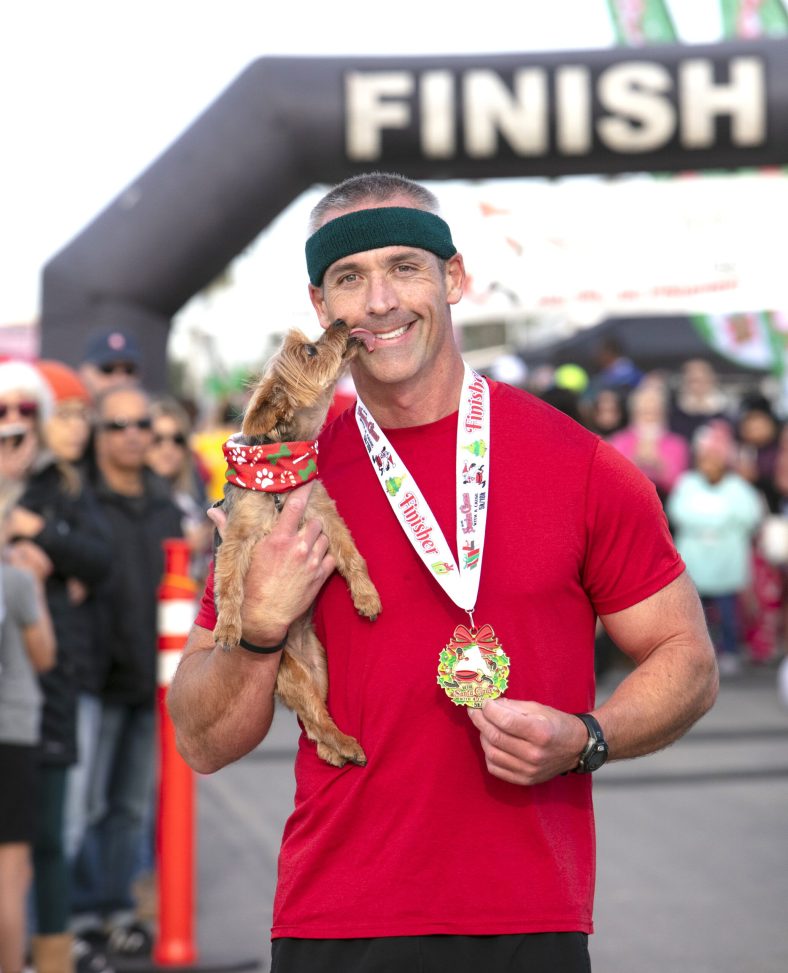
Last December, I joined them one early morning for their 41st race at the Christmas-themed Santa Claus for a Cause 5k run. Decked out in a warm Christmas neck gaiter dawned with little green doggie bones and striped candy canes, Ona looked up at her dad among the crowd of runners towering above her. With a few wags of her tiny tail, she signaled she was ready to go.
At the sound of the buzzer, Ona sprinted out of the starting gate tugging on her leash with all her might, keeping her head forward and focused on the path ahead. “She loves to run out in front of me, so I’m really just chasing her the whole time,” says Jeff.
A determined Ona charged along, unfazed by the cheering spectators or other dogs along her path. “She’s just so razor focused when she runs,” Jeff proudly tells me.
They crossed the finish line not only breaking their all-time record at 24 minutes and 45 seconds, but also making the podium with a first place title in Jeff’s age category. “The older she gets the faster she runs,” Jeff whispered in my ear as they received their honorable medals.
There is a small wooden rack on Jeff’s bedroom wall displaying 45 ribboned medals: An homage to their running adventures together over the years.
“We will need a bigger rack soon,” Jeff tells me with a chuckle.
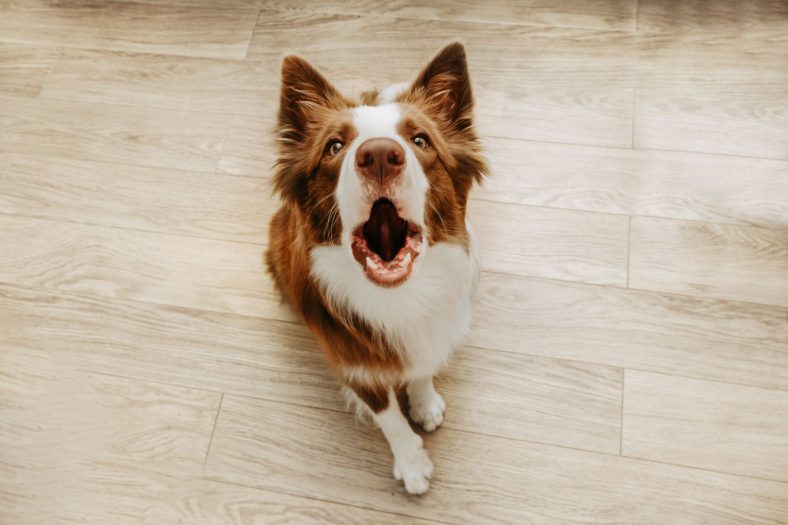
Stopping the excessive barking is the key, not to stop the bark entirely. Barking is a completely normal behavior for dogs, and they bark for many different reasons: alarm, boredom, excitement, frustration, demand, play, stress. You have coping skills and strategies for your emotions: Your dog needs some, too.
First, figure out context. Does he bark when deliveries come? When you leave for work? At the neighbor’s dogs? Knowing what your dog is attempting to communicate with his barking is half the battle. With time, patience and consistency ballistic barking will be a thing of the past.
How to stop your dog from barking
Once you figure out why he’s barking excessively, take these steps to help him adjust the behavior:
Manage the environment
The best time to stop a behavior is before it starts!
Set your dog up for success and minimize (ideally eliminate) repeated opportunities to get his bark on.
Remove your dog from the situation.
If you can’t remove him, manipulate the environment to soften the effects of the trigger, or distract him from it.
Train a positive interrupt
Train the cue during down time to use when he is
Say “Quiet please” or “Thank you,” and when he looks at you, immediately give a high value or favorite treat.
Practice often so it’s second nature for him to stop and look to you when barking starts and you give the cue.
Train an alternative behavior
Train touch, find it or go to mat/place so he has something to focus on other than barking. Here are our trainer’s tips on teaching basic cues.
Once you have your dog’s attention, cue the behavior and have at it!
Bonus tip: Reinforce the quiet. The instant he’s quiet mid-barkfest, mark and treat. Repeat.
How to train dogs not to bark at other dogs
This is a bit tougher. Context, again, is crucial. Is he on leash? In your yard? In your car? Barking is very self-reinforcing, meaning he’s reinforcing himself by barking since he probably likes it! So, setting up your dog for success is critical.
Start here:
Manage the environment
Put up a privacy fence.
Coordinate with neighbors to alternate dog outings .
Only let him out when it’s neighbor-dog free. Caveat: The one time you don’t check, the neighbor dog is out and barkfest starts, then you’ll have to start all over.
This dog training video gives some helpful tips on stopping your dog from barking at other dogs:
Desensitize/countercondition
Leash your dog in your yard.
Feed high value treats in the situation without the trigger (i.e. no other dogs present).
Slowly approach fence on leash, still treating if your dog is calm. If not, go back to last point of calm and practice there a bit longer.
Slowly decrease distance as long as he’s calm when the neighbor dogs are out.
This video has helpful tips for desensitizing your dog from a noisy environment:
Should I use a bark collar to train my dog to stop barking?
No. The allure of instant relief from your dog’s vocalizations might be tempting, but these collars focus on punishment, and not only can they make things worse, but they end up creating unintended associations and fear.
Instead, add more exercise and stimulation to your dog’s day. Fulfilling your dog’s physical and mental needs helps alleviate most behavior issues; it’s an ideal pairing with any dog training. Also, the longer a dog performs a behavior, the harder it is to change it. Act now so you don’t end up with a serial barker on your hands.
Teaching your dog to lie down is a practical cue because it leads to more advanced behaviors. When your dog can lie down on cue, he’ll be able to stay on his bed or master tricks like rolling over or crawling. The sky’s the limit! Your pup will enjoy the training and your friends will be impressed.
How to teach your dog to lie down
Before you start training, follow these tips to set up your surroundings for a successful session:
First, to set your dog up to succeed, exercise him before starting the training session. He needs to be tired enough that he will want to lie down.
Gather his favorite dog treats. The reward should be something that your dog loves and will follow with his nose when you attempt to lure him.
Start training in a room without distractions, not even his favorite dog buddy who may pounce on him in play.
How to teach your dog down: the lure method
Cue your dog to sit in front of you. If he doesn’t know that behavior, teach it to him first during a separate training session.
Hold a small piece of yummy treat in front of his nose. Slowly move the treat straight down towards the floor. When he follows the treat, mark the desired behavior with “yes” and give him the reward.
Dogster tip: Stay calm when marking the behavior. If you get too excited, chances are your dog will get up.
Repeat this several times. During each successive step, continue moving the treat closer to the ground. When successful, praise and reward.
Dogster tip: If your dog gets up, ensure you’re not moving the treat too quickly, causing the behavior. Start again.
If your dog hunches up instead of lying down flat, slightly move the treat away from him after the treat reaches the ground. It should look like an “L” motion.
When your dog lies down flat, with his elbows and hocks on the ground, praise and reward.
Dogster tip: Place the treat reward on the ground just between your dog’s paws. This keep her lying down.
Repeat these steps a few times, always praising and rewarding your pup when she lies down on the ground.
As you lure your dog from the sit position, add the cue “down.” Praise and treat when she lies down, elbows on the ground. Perform this a few times.
Fade the treat lure after your dog understands what’s expected. Still use the hand motion but have the treat hidden in your other hand behind your back. Mark the behavior and treat when she lies down.
After your pup successfully lies down without the treat lure, fade the hand motion. Then use the verbal cue only. Mix it up after your dog understands what’s expected. Sometimes use the verbal cue and hand signal. Other times, use just the verbal cue or the hand signal.
Use a random reinforcement schedule. After your pup understands what you expect, treat less frequently. Do this slowly. You still want your pup to be motivated. And don’t forget the praise.
Teaching this trick will often take more than one training session. Don’t rush the process. It’s most important that your dog understands what’s expected before moving on.
Don’t panic! Try luring your dog to go under something as if there were a bridge and he’s doing a limbo under it.
Sit on the floor and bend your knee as if it were a bridge. Alternatively, lure your dog under a table or chair rung, as long as the piece of furniture is stable and won’t move, which could startle a dog.
Then, follow the steps above, luring your dog with a yummy treat under the “bridge.” Always praise and reward when she lies down.
Eventually, fade the bridge and the treat lure.
If your dog won’t lure down, don’t despair. When you return from a walk or after a play session, have treats handy and wait for your dog to lie down.
Start calmly rewarding the behavior. Behavior that’s rewarded will repeat itself. Then you can start adding a “down” cue when she lies down. Mark and reward the behavior.
After your dog lies down on your cue, start adding distractions. Have someone walk in the room at a distance. Perform the trick in different locations, on different surfaces and at different times of day. Up the distraction ante as your dog can handle it. The goal is for your pup to generalize the behavior in other settings.
Teaching your dog how to lie down on cue is a very useful behavior if you want to take your pup in public settings, especially with other dogs. Think of all the fun you’ll have together taking the show on the road!
Dogs have a thyroid gland in their necks that produces hormones. When excess thyroid hormones are released, hyperthyroidism occurs and results in negative effects in the body. This condition is most common in older dogs but is quite rare overall.
Causes of hyperthyroidism in dogs
A cancerous thyroid mass is the most common cause of hyperthyroidism in dogs. Less commonly, a benign mass called an adenoma can develop in the thyroid gland and cause symptoms.
Giving too much levothyroxine to a hypothyroid dog is also a common cause of hyperthyroidism. This can be prevented through monitoring and dose adjustments.
Signs of hyperthyroidism in dogs
Hyperthyroidism in dogs causes various symptoms, which include the following:
If you notice any of these symptoms, bring your dog to the veterinarian right away to determine the underlying cause and begin treatment.
Management of hyperthyroidism in dogs
Management depends on the underlying cause. For dogs who have received too much levothyroxine, simply adjusting the dose can return thyroid hormone levels back to normal.
In dogs with thyroid masses, surgery may be an option. Radiation therapy can be used alone or in combination with surgery as another form of treatment. Radioactive iodine therapy also destroys thyroid tissue and reduces hormone levels. Your veterinarian can advise you on the best approach based on your dog’s overall health and needs.
Complications of hyperthyroidism in dogs
Hyperthyroid dogs are at an increased risk for other health conditions, such as heart or kidney disease and high blood pressure. Because thyroid cancer has usually spread by the time of diagnosis, most dogs experience a shortened lifespan. However, with the proper management, dogs with hyperthyroidism can still live happy lives.